How to Treat Cat Ear Infection at Home Safely
Safe home care for a cat ear infection begins with diagnosis. Learn what to do before an appointment, which household remedies to avoid, and how to follow a prescribed plan.

BVMS MRCVS
Medically reviewed by Dr. Pippa Elliott, BVMS MRCVS · Last reviewed

This article contains affiliate links. Webvet may earn a commission when you buy through them, at no extra cost to you.
How to treat cat ear infection at home depends on whether a veterinarian has already examined the ear. Before diagnosis, useful home care means keeping your cat comfortable, avoiding further irritation and arranging care. After diagnosis, it means following the exact cleaning and medication plan. A household cat ear infection home remedy cannot identify mites, yeast, bacteria or a damaged eardrum.
Call promptly about pain, discharge, odor or repeated scratching. A new head tilt, falling, unusual eye movements, severe pain or marked illness needs urgent veterinary advice. Leave an undiagnosed painful ear alone while you arrange that help; do not flush it or try another liquid.
 Sponsored
Have a health question about your cat?
Talk to a licensed vet at Dutch over video or message, including nights and weekends.
Use code Pets30
Plans start at $11/month · covers up to 5 pets
- Licensed vets in most states
- Rx for 150+ conditions
- 4.7 on Trustpilot
Safe care before the veterinary appointment
The first step in treating a cat ear infection at home is an ear examination, not choosing a bottle.
Home care before that examination has a narrower purpose: protect the ear and make the veterinary visit more useful. Ask the clinic whether it wants you to avoid cleaning beforehand so there is a useful sample to examine.
Record when the problem began, whether one or both ears are affected, and any change in appetite, balance or normal behavior. Take a photograph of the visible ear opening only if your cat accepts it calmly. Do not insert a camera attachment, cotton swab or tool into the canal to obtain a better view.
Before seeing the vet, avoid selecting an over-the-counter (OTC) remedy for a cat ear infection from appearance alone. A readily available product can still be unsuitable for the eardrum or the actual cause. Ask the clinic whether any care should begin before the appointment and bring the exact product label if you are considering one.

Prepare for the visit
Pack every ear product already used, including a clear label photo if the bottle is unavailable. Keep lids secure and products separate from the cat. Tell the team about leftover medicine, human drops and household mixtures as well as prescribed treatments. The same symptoms after several different products need a more complete history than “the drops did not work.”
A secure carrier helps you bring a painful or frightened cat to the examination. The Frisco Travel Safety carrier is one option to compare if you need one; check its dimensions and your cat's fit before purchase. Place familiar bedding inside and ask the clinic about handling if your cat is difficult to move.

Soft-sided travel safety carrier that keeps a stressed cat secure and well-ventilated on the way to the vet, with mesh panels for airflow and a seat-belt loop.
Webvet may earn a commission when you click through to Chewy, at no extra cost to you.
Reduce further injury
Avoid repeatedly touching the sore ear to see whether it still hurts. If scratching is causing wounds, ask the veterinary team whether a recovery collar is appropriate and which design actually blocks access to the ear. An inflatable collar may leave the hind foot able to reach it. Fit and supervision matter more than choosing a soft-looking product.
Do not give a human pain reliever to make handling easier. The FDA's animal-drug guidance warns that common human pain medicines can harm cats and that acetaminophen must never be given to them. Ask the clinic about appropriate pain control instead.
Household remedies and their limits
Natural, homeopathic or holistic remedies for a cat ear infection do not replace identifying the cause.
An at-home remedy that softens wax or changes the smell has not necessarily treated yeast, bacteria or mites. Temporary improvement also cannot show whether the eardrum is intact. These are the reasons the veterinary plan comes before an ingredient choice.
A cat ear yeast infection home remedy has the same limitation: brown debris does not establish yeast, and a household preparation does not provide a verified antifungal treatment plan. If yeast is confirmed, use the selected medicine and follow-up instructions. A kitten or a cat with deeper ear disease needs individual care rather than a diluted version of an adult-cat recipe.
| Proposed action | Useful role or concern | Better next step |
|---|---|---|
| Record the ear affected and products used | Gives the clinic a clearer history | Bring the record and product labels |
| Follow a prescribed home-care plan | Delivers treatment selected after examination | Confirm dose, timing and recheck |
| Add household mixtures | May irritate tissue or complicate assessment | Ask before putting anything in the canal |
| Buy several ear products together | Ingredients and instructions may conflict | Confirm which single veterinary plan applies |
| Wait because the odor improves | Appearance does not confirm recovery | Keep the agreed follow-up appointment |
Think of comfort and cure as separate questions. Your cat may need a quieter space and gentler handling now, while the ear still needs an examination and organism-specific treatment. The useful home action is the one that supports that process without making the next step harder.
Peroxide, vinegar and alcohol
Do not use hydrogen peroxide, white vinegar or apple cider vinegar as a cat ear infection home remedy. The Merck Veterinary Manual's feline otitis guidance specifically cautions against peroxide and vinegar in inflamed ears because irritation can increase secretions and worsen the environment for microbial growth. Bubbling is not evidence that peroxide is safely curing an infection.
A homemade vinegar dilution is also different from a formulated veterinary ear product.
The concentration, other ingredients, contact with damaged tissue and condition of the eardrum matter. Adding alcohol to dry the ear does not solve those uncertainties. Do not copy a cleaning recipe intended for a healthy dog into a painful cat ear.
If you already used one of these liquids, tell the clinic what it was and when it was applied. Do not try to neutralize vinegar with another household chemical or flush peroxide out on your own. The next action should account for the particular exposure and the cat's current signs.
Oils and suspected ear mites
Tea tree oil and other concentrated essential oils are unsuitable home treatments for a cat ear infection. Pet Poison Helpline identifies tea tree and several other oils as causes of poisoning in cats. Exposure can occur through skin contact or swallowing during grooming. “Natural” describes an origin; it does not establish ear safety.
Coconut oil and cooking oils are not interchangeable with essential oils, but that does not make them established cures for feline ear infection or mites.
Do not pour them into a painful canal. An oily coating may change the debris your veterinarian needs to examine, while the cause of the problem remains uncertain.
For suspected cat ear mites, home treatment should follow confirmation and a cat-appropriate parasite plan. The Companion Animal Parasite Council describes the importance of treating mite infestations and coordinating care for affected contact animals. Dark debris alone is not enough to decide the problem is mites; the cat ear-mite comparison explains that distinction.
SponsoredVet care that's always there
Unlimited video calls and messaging with licensed vets for less than a typical vet visit. One membership covers up to five pets.
Use code Pets30
Plans start at $11/month · covers up to 5 pets
- Licensed vets in most states
- Rx for 150+ conditions
- 4.7 on Trustpilot
Heat, drainage and a swollen ear
A heated sock, salt pack or warm oil does not draw infection out of a cat's ear.
Avoid applying heat to a painful ear or using an object to press on the canal. If you want to offer comfort, ask the clinic what handling is appropriate for your cat rather than attempting to drain or open the ear yourself.
A swollen ear flap is a different problem from debris inside the canal. It can contain a collection of blood called an aural hematoma. Cornell's aural hematoma guidance explains why veterinary treatment addresses both the swelling and the irritation that led to scratching or shaking. Do not lance, squeeze or tightly bandage the flap at home.
If you already put something in the ear
Give the veterinary team a short, factual exposure record. You do not need to decide whether the product caused the problem before calling.
The exact sequence helps distinguish a new reaction from an ear that was already worsening. Be honest about quantities if you are unsure rather than supplying a confident estimate.
- Product label: name, ingredients and concentration when available; photograph all sides of the package.
- Time applied: when it was used and whether there were repeated applications.
- Which ear: left, right or both, and the approximate amount.
- What changed: pain, redness, discharge, vomiting, unusual movement or behavior, with the time each began.
- Other exposure: whether the cat licked the product or it reached the eyes or coat.
New balance problems, tremors, collapse, breathing difficulty or severe distress warrant immediate veterinary help. Keep the container available and follow the professional's instructions. Do not add another product, induce vomiting or begin ear flushing unless specifically directed.
After diagnosis: carrying out care at home
Once the ear has been assessed, home treatment becomes a specific set of jobs.
Confirm which ear needs treatment, the amount and frequency, storage, whether cleaning is part of the plan, and when to return. Ask for a demonstration and then describe the instructions back to the team. This catches misunderstandings before the first difficult dose.

Match the product to the assigned job
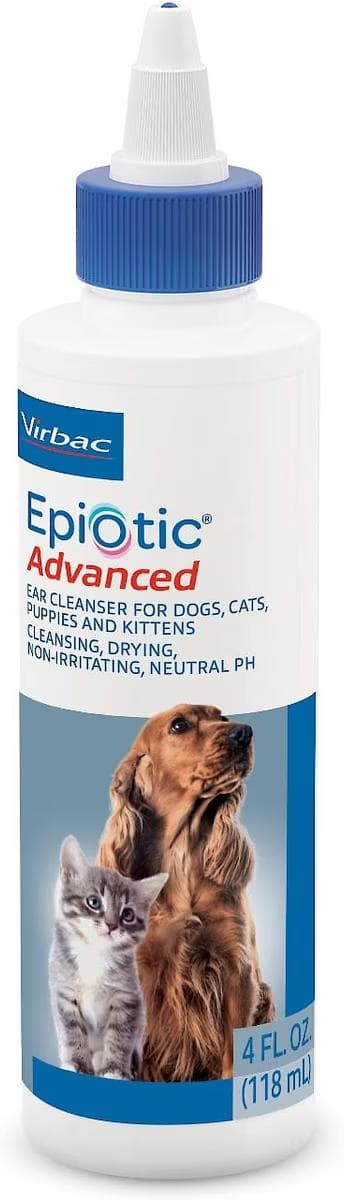
A cleaner helps with debris when cleaning is appropriate; it is not automatically the medicine that treats the infection. Virbac EpiOtic Advanced is a cat-labeled ear cleanser to discuss when a clinician recommends cleaning. Its manufacturer information does not remove the need to check whether your cat should be cleaned at this stage.
Webvet may earn a commission when you click through to Chewy, at no extra cost to you.
For accessible outer-ear care, Veterinary Formula Ear Therapy wipes are a different format. The manufacturer lists them for dogs and cats. Use a wipe only if your veterinarian approves it, and do not push it down the canal. A medicated wipe is not the same thing as plain dry gauze, and using both is not inherently better.

Alcohol-free ear wipes that gently clean and deodorize ears between deep cleanings, an easy maintenance step for itchy or smelly ears. 100 wipes, for dogs and cats.
Webvet may earn a commission when you click through to Chewy, at no extra cost to you.
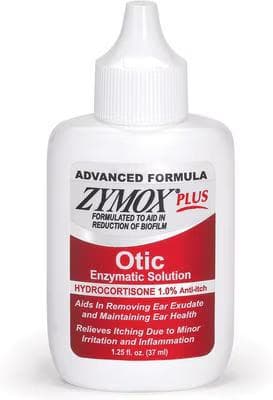
Zymox Plus with 1% hydrocortisone illustrates why instructions must be product-specific. The manufacturer specifies no pre-cleaning for this formulation. Ask whether it fits your cat and whether other ear products should be stopped. Do not combine a cleaner, enzyme solution and prescribed drops simply because each is sold for ear care.
Webvet may earn a commission when you click through to Chewy, at no extra cost to you.
Make the plan workable
Choose a quiet place and prepare the correct supplies before bringing your cat over. Follow the demonstrated handling rather than forcing a painful ear open. VCA's ear-drop guidance supports asking for help when administration is difficult. A dose on the coat is not the same as a dose delivered to the intended site.
Write down missed or uncertain doses and ask the clinic what to do. Do not double the next dose unless instructed. Keep the recheck even if the ear looks cleaner: treatment duration and evidence of recovery belong to the prescribed plan, not to a guess based on odor.
When cost or handling makes care difficult
Tell the clinic the specific barrier when you call. Ask about the examination fee, an itemized estimate, the immediate priorities and any local assistance or payment arrangements it can discuss.
Availability varies. A limited budget is a reason to make the plan explicit, not to keep buying unconfirmed remedies while a painful ear worsens.
If you cannot give the medicine, explain what happens. Does touching the ear cause crying? Does your cat hide at the bottle? Is most of the dose landing outside? A demonstration, pain-management adjustment or another treatment approach may be possible. The team needs that information to distinguish poor delivery from a medicine that is not working.
Related care: causes and diagnosis
Related care: recognizing signs and urgency
Related care: treatment and recovery
Related care: yeast-specific ear disease
Related care: choosing a cat ear cleaner
Questions cat owners ask
Frequently Asked Questions
Can you fix a cat's ear infection at home?
You can carry out a prescribed plan at home after an ear examination. Choosing treatment without that diagnosis is different. Mites, bacteria, yeast and structural disease require different care. Call the clinic about new symptoms or problems following the plan rather than adding a home remedy.
Can I use human ear drops on my cat?
Do not use human ear drops unless your veterinarian has directed use of that exact product for your cat. Ingredients and eardrum safety matter. A product that was appropriate for you, another animal or a previous episode may not fit the current problem.
What is the sock trick for an ear infection?
The phrase usually refers to a heated sock used as a home compress. It does not cure a cat ear infection or draw organisms from the canal. Avoid heat and pressure on a painful ear; ask the clinic about safe comfort measures and the need for an examination.
Can a kitten use the same home remedy as an adult cat?
A kitten needs products chosen for its age and weight, with an appropriate diagnosis. Do not dilute an adult-cat treatment or borrow a dog's medicine. Bring the kitten's current weight and any previous treatment information to the appointment so the team can choose a suitable plan.
Should I clean the ear before the vet visit?
Call before cleaning. The clinic may want an undisturbed sample of discharge for microscopy, and a painful ear may not tolerate home cleaning. If you already cleaned it, report the product and time used. Do not delay the appointment because the original debris is no longer visible.

Editor
The Webvet Editorial Team is the in-house group of pet-care editors and writers behind Webvet, operated by Smart Pet Collective. The team researches, writes, and maintains Webvet's pet health, behavior, and medication content. Every article follows a defined editorial process: research from reputable veterinary and scientific sources, careful drafting, mandatory review of medical content by a credentialed veterinarian, and dated publication. Health and medication articles are medically reviewed by a licensed veterinary professional before they go live and are kept current over time.
Veterinarian · BVMS MRCVS
Dr. Pippa Elliott, BVMS, MRCVS, is a veterinarian with nearly 30 years of experience in companion animal practice. Dr. Elliott earned her Bachelor of Veterinary Medicine and Surgery from the University of Glasgow. She was also designated a Member of the Royal College of Veterinary Surgeons. Married with 2 grown-up kids, Dr. Elliott has a naughty Puggle named Poggle, 3 cats and a bearded dragon.
Related reading

Cat Cremation Cost: Private, Communal, and Additional Charges

Cat Euthanasia Cost: Clinic, At-Home Care, and Aftercare

Dog Microchip Cost: Implantation, Registration, and Ongoing Fees
