Cat Ear Cleaner: Choosing a Product and Cleaning Safely
Choose a cat ear cleaner by its actual job, compare liquid and wipe options, and follow safe cleaning steps without confusing cleanser with treatment.

BVMS MRCVS
Medically reviewed by Dr. Pippa Elliott, BVMS MRCVS · Last reviewed

This article contains affiliate links. Webvet may earn a commission when you buy through them, at no extra cost to you.
A cat ear cleaner should match a specific job: loosening wax, cleaning the accessible ear flap, or supporting a veterinary treatment plan. Most healthy cats do not need routine ear cleaning. If your cat has painful ears, a strong odor, new discharge or repeated head shaking, arrange an examination before choosing a product.
The four options below differ in format and ingredients. None is a universal best choice, and cleaning alone does not diagnose or cure an ear infection or eliminate ear mites. Start with whether cleaning is needed, then ask your veterinarian which exact product and schedule fit your cat.
When cleaning should wait
An ear that suddenly needs frequent cleaning may have a problem beyond wax. Cleaning away discharge repeatedly can make the surface look better while the underlying condition remains. The Merck Veterinary Manual's feline otitis guidance explains why an ear examination and appropriate tests guide care.
- Contact your veterinarian for redness, soreness, odor, scratching, recurrent debris or a cat that resists having one ear touched.
- Seek prompt veterinary help for a persistent head tilt, falling, loss of balance or unusual eye movements. These are not instructions to try a stronger cleaner.
- Stop a cleaning session if it causes pain or marked distress. Tell the clinic what product you used and what changed.
If an appointment is already arranged, ask whether to leave the ear untouched so the team can collect a sample.
Do not scrub until the ear looks spotless or put several products into it in succession. A photograph taken without manipulating a painful ear can help you describe a change, but it cannot show whether the eardrum is intact.
Choosing a cat ear cleaner
The best cat ear cleaner for one cat may be unnecessary or unsuitable for another.
A vet-approved cat ear cleaner means a veterinarian has approved the exact formulation for your cat's current ear condition. A manufacturer's veterinary wording, a high star rating or a product that worked for your dog does not establish that fit.

Separate three decisions before comparing brands: whether you need a liquid cleanser or an outer-ear wipe, whether the product includes medicinal ingredients, and whether it is compatible with anything already being prescribed. A bottle labeled for both cats and dogs can be appropriate, but species labeling alone does not settle the last two questions.
| Product | Format and possible job | Main limitation to discuss |
|---|---|---|
| Virbac Epi-Otic Advanced | Liquid cleanser for a planned routine cleaning | Cleaning does not replace diagnosis or infection treatment |
| Veterinary Formula Ear Therapy Wipes | Outer-ear wipe for reachable surfaces | Cannot deliver a prescribed liquid flush into the canal |
| Veterinary Formula Ear Therapy solution | Liquid with listed antimicrobial ingredients | Its medicated formulation needs a specific reason to use it |
| OticBliss Advanced Vet Strength Medicated Ear Flush | Medicated flush with chlorhexidine and ketoconazole | Manufacturer cautions against use with a ruptured eardrum or an unknown cause |
Cat ear cleaner ingredients matter more than words such as advanced or natural. Read the current container, including age restrictions, warnings and directions. A product line may include several liquids, wipes and drops with similar names. Compare the full product name and active ingredients instead of assuming that two packages from the same brand are interchangeable.
What this comparison evaluates
These are source-based product comparisons, using current manufacturer information to explain format and fit. We have not conducted hands-on testing or a trial showing that one cleanser prevents more infections in cats. Inclusion also does not mean a veterinarian has examined your cat or endorsed every option for that animal.
Practical fit includes whether your cat can tolerate the necessary handling and whether you can follow the instructions consistently. If a liquid application is needed but impossible at home, tell the veterinary team. Substituting a convenient wipe may leave the intended cleaning job unfinished; the useful next step is a different handling or care plan.
Four cat ear cleaner options to discuss with your vet
Virbac Epi-Otic Advanced: routine liquid cleansing
Virbac Epi-Otic Advanced is a liquid option to discuss when your veterinarian wants routine ear cleansing. Virbac identifies the product for cats as well as dogs, including kittens and puppies. That labeling does not mean every kitten needs its ears cleaned or that an adult cleaning schedule should be copied.
Its useful place in this comparison is as a named routine cleanser, rather than a wipe or a promise of infection treatment.
Ask the clinic whether the aim is removing wax, preparing for a prescribed product or maintaining an ear after recovery. That answer determines how you judge whether the cleaner is doing its job.
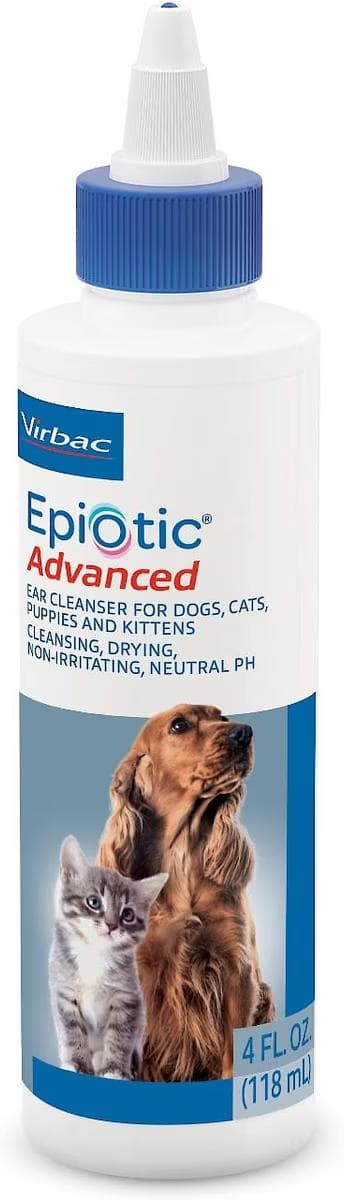
Webvet may earn a commission when you click through to Chewy, at no extra cost to you.
If another ear product is prescribed, confirm the order and interval between applications. Do not infer compatibility from a general statement that a cleaner can be used before treatment products. Write down the exact medicine name alongside the cleanser, particularly if different ears receive different instructions.
Veterinary Formula Ear Therapy Wipes: accessible ear surfaces
Veterinary Formula Ear Therapy Wipes provide a ready-moistened format for material you can reach on the visible ear surface. The manufacturer's instructions call for gentle wiping and a fresh wipe for each ear. Do not twist a wipe into a pointed plug or push it down the canal.
These cat ear cleaning wipes contain listed active ingredients, including ketoconazole and salicylic acid. They are not simply dry cotton. Tell your veterinarian if you plan to use them alongside another medicated ear product; checking the formulation avoids accidentally treating the wipe as an ingredient-free accessory.
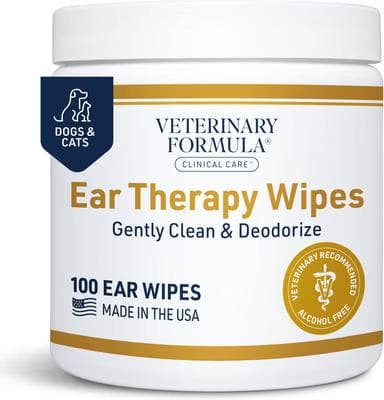
Alcohol-free ear wipes that gently clean and deodorize ears between deep cleanings, an easy maintenance step for itchy or smelly ears. 100 wipes, for dogs and cats.
Webvet may earn a commission when you click through to Chewy, at no extra cost to you.
An outer-ear wipe cannot replace a prescribed canal flush: the pad only reaches accessible surfaces, while a liquid cleanser can be directed into the canal as your veterinarian instructs. Stop if even light contact hurts. Choosing the wipe because it looks less intimidating does not make a painful ear safe to clean at home.
Veterinary Formula Ear Therapy solution: a medicated liquid
Veterinary Formula Ear Therapy solution is a liquid with a different delivery method from the wipes. Its current manufacturer ingredient list includes lactic acid, benzoic acid, salicylic acid and ketoconazole. The presence of an antifungal ingredient does not prove that yeast is causing your cat's symptoms.
Discuss this option when the veterinarian has identified a reason for that formulation. A cleanser can be one component of care without being the entire treatment. Ask what improvement to expect, what would mean stopping, and whether a recheck is needed instead of continuing the product whenever debris returns.
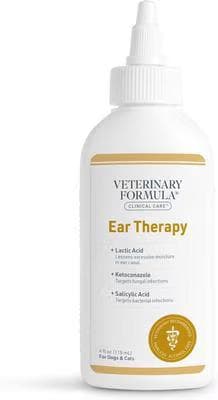
A medicated ear cleaner with lactic acid, ketoconazole, and salicylic acid that flushes debris and targets the yeast and bacteria behind ear infections. For dogs and cats.
Webvet may earn a commission when you click through to Chewy, at no extra cost to you.
Do not copy a general maintenance frequency from a shopping page into a treatment plan. The clinic's directions should account for the ear examination, other medicine and your cat's response. Keep the current container available so the team can confirm precisely which Ear Therapy product you have.
OticBliss medicated flush: distinguish it from routine cleaner
OticBliss Advanced Vet Strength Medicated Ear Flush contains 0.2% chlorhexidine gluconate and 0.2% ketoconazole on the manufacturer's current listing. It is a medicated flush, not the separate OticBliss routine Ear Cleaning Flush. Similar branding makes checking the complete name especially useful here.
The manufacturer says to consult a veterinarian before use and not to use it when the eardrum is ruptured or the cause of the condition is unknown. Those restrictions are central to its fit. A cat with unexplained odor or black debris has an unanswered diagnostic question, not an automatic reason to choose this bottle.
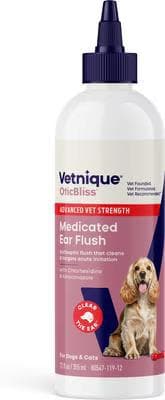
Vet-strength medicated ear flush that clears wax, debris, and odor while its antibacterial and antifungal formula targets the yeast and bacteria behind ear infections. For dogs and cats.
Webvet may earn a commission when you click through to Chewy, at no extra cost to you.
If it is included in your cat's plan, have the clinic confirm its relationship to any prescribed drops. More antimicrobial ingredients do not automatically mean a better cleaning routine. The useful choice is the product the veterinary team intends for the diagnosed problem, used in the way they specify.
A cleanser is different from an ear medicine
Searching for Zymox cat ear cleaner can surface more than one formulation. The manufacturer sells a ZYMOX Enzymatic Ear Cleanser for Cats and Kittens. It also sells distinct otic solutions, including formulations with hydrocortisone. A cleanser and an otic treatment are different products even when both names appear in an ear-care search.
Do not transfer directions from one to another. Some treatment instructions specifically restrict pre-cleaning or combining products.
Before adding a cleanser, read the actual medicine label and ask the prescribing team. Taking both containers, or clear label photos, to the appointment is more reliable than describing everything as ear drops.
 $65 · no membership
Have a health question about your cat?
A licensed vet can assess your cat over video and prescribe online when it's appropriate.
 Talk to a vet
- Licensed vets
- All 50 states
- same-day Rx
Webvet may earn a commission if you book.
How to clean cat ears after your vet has cleared it
For cat ear cleaning at home, first establish which ear needs cleaning and whether the task is surface wiping or liquid cleansing.
Prepare gauze or cotton balls, the approved product and a towel in a quiet place. Let your cat settle; do not turn a difficult session into a prolonged restraint struggle.

Follow the agreed cleaning method
- Gently expose the ear flap without pulling hard. If you are only clearing an accessible surface, use the approved wipe or gauze as instructed.
- For a liquid cleanse, apply the amount directed for that product without inserting the bottle tip into the canal. Gently massage the base only if your cat is comfortable with it.
- Let your cat shake out loosened material. Wipe away what reaches the visible opening and flap; do not chase material deeper into the ear.
- Use fresh material for the other ear. Reward calm cooperation and finish when the agreed task is done, rather than repeatedly scrubbing for a perfect appearance.
Virbac's cat-ear cleaning guidance emphasizes gentle handling and avoiding cotton-tipped applicators. A cotton swab, narrow tool or tightly rolled tissue can injure the canal or push debris inward. A cleaner spray also needs product-specific directions; do not spray toward the ear simply because misting seems gentler.
Keep the session manageable
Prepare supplies before bringing your cat over, and ask the clinic to demonstrate the technique if the instructions are unclear. A second person may help with calm support, but neither person should continue through pain. If your cat cannot tolerate the procedure, report exactly what you managed to do so the team can adapt the plan.
Homemade cleaner, water and household substitutes
A homemade ear cleaner for cats is not an equivalent replacement for a veterinary-selected formulation. Online recipes do not establish a safe concentration, suitability for an inflamed ear or compatibility with medicine. Avoid hydrogen peroxide and rubbing alcohol in the ear; VCA's ear-cleaning instructions warn that these ingredients can irritate the canal.
If you are wondering how to clean cat ears without solution, do not improvise a flush with water, vinegar or oils.
Ask whether cleaning can wait until you have the recommended product. Water is not interchangeable with a formulated cleanser, and putting liquid into an unexamined painful ear is not a useful shortcut.
Natural cat ear cleaner is a marketing description, not a safety test. A mixture can be natural and still be irritating or inappropriate for the intended site. If you have already applied a household product, stop adding further substances and tell the clinic the ingredient, concentration if known, amount, time and any reaction. Keep the packaging or recipe available.
Cleaning when mites or infection are suspected
The next useful guide depends on the unanswered question:
Abnormal discharge and behavior
Brown or black material can be wax or disease-related debris; it does not identify a single organism. The cat ear-infection symptoms guide explains what observations to report.
Underlying ear disease
Repeated buildup may reflect inflammation, an allergy, a blockage or another cause that cleaning will not remove. The cat ear-infection overview explains the diagnostic process.
Veterinary treatment
Prescription ear medicines have different purposes from cleansers. The cat ear-infection treatment guide explains how medicines, cleaning and rechecks fit together.
Home care after diagnosis
Comfort measures and following a prescribed plan are different from choosing a homemade cure. The home-care guide covers safe actions and household-remedy limits.
Yeast-specific diagnosis
Ear cytology helps determine whether yeast is clinically important; dark wax alone cannot answer that. The cat yeast ear-infection guide covers antifungal care and recurrence.
Make a cleaning plan you can actually follow
Before leaving the clinic, fill out a short plan in your phone or on paper.
This is particularly helpful in a household with several pets or when one ear is affected more than the other. Keep one current version so another caregiver can follow the same instructions without guessing.
| Record | What to clarify |
|---|---|
| Exact product | Full cleanser name and formulation; keep the label available |
| Which ear | Left, right or both; whether directions differ |
| Cleaning job | Accessible surface wipe or liquid cleansing |
| Amount and cleaning schedule | The clinic's directions, including when to reassess |
| Medicine timing | Whether cleaning is allowed and any interval before prescribed drops |
| Stop-and-call rule | Pain, distress, worsening signs or failure to deliver the planned care |
Record what you actually managed, including missed sessions or a product your cat resisted. This helps the team distinguish a plan that was ineffective from one that could not be carried out. Do not double the next cleaning, combine products or increase frequency to compensate without checking.
Questions cat owners ask
Frequently Asked Questions
What can I clean my cat's ears with?
Use the cat-labeled product your veterinarian selects for the specific cleaning job, with cotton or gauze as directed. Some cats need only accessible-surface care, some need liquid cleansing, and healthy ears may need neither. Ask what to clean a cat's ears with before buying a formulation intended for a different purpose.
Should I clean the black stuff out of my cat's ears?
Unexplained dark debris, especially with scratching, odor or pain, deserves an ear examination before repeated cleaning. Black material does not prove ear mites, and its removal does not prove recovery. If a visit is booked, ask the clinic whether to preserve the material for a sample.
Can I use a dog ear cleaner on a cat?
Only consider it if the exact label includes cats and your veterinarian agrees it fits this cat's ears. A dog-only product, a different concentration or a similar brand name is not enough. The same principle applies when sharing a cat-and-dog cleanser: each pet still needs an appropriate reason and schedule.
How often should I clean my cat's ears?
Use an individual schedule from your veterinarian rather than a universal weekly rule. Many healthy ears need no cleaning, and excess cleaning can cause irritation. If debris returns sooner than expected, ask whether the underlying problem needs reassessment instead of simply cleaning more often.
$65 · no membershipHave a health question about your cat?
A licensed vet can assess your cat over video and prescribe online when it's appropriate.
Talk to a vet- Licensed vets
- All 50 states
- same-day Rx
Webvet may earn a commission if you book.
Veterinarian · BVMS MRCVS
Dr. Pippa Elliott, BVMS, MRCVS, is a veterinarian with nearly 30 years of experience in companion animal practice. Dr. Elliott earned her Bachelor of Veterinary Medicine and Surgery from the University of Glasgow. She was also designated a Member of the Royal College of Veterinary Surgeons. Married with 2 grown-up kids, Dr. Elliott has a naughty Puggle named Poggle, 3 cats and a bearded dragon.


