Clavamox for Dogs: Dosage Chart, Side Effects, Drops vs Chewable, and Cost
Clavamox is a prescription amoxicillin and clavulanate antibiotic that vets use for bacterial infections in dogs and cats. This guide covers dosing by weight, chewables versus drops, side effects, and when to stop and call the vet.

BVMS MRCVS
Medically reviewed by Dr. Pippa Elliott, BVMS MRCVS · Last reviewed

Drug facts
Clavamox· amoxicillin and clavulanate potassium
Clavamox (amoxicillin trihydrate and clavulanate potassium, Zoetis) is an FDA-approved prescription antibiotic for dogs and cats, given as chewable tablets or reconstituted oral drops. It is labeled for skin and soft tissue infections and canine periodontal infections, and for E. coli urinary tract infections in cats.
 Sponsored
Is Clavamox right for your pet?
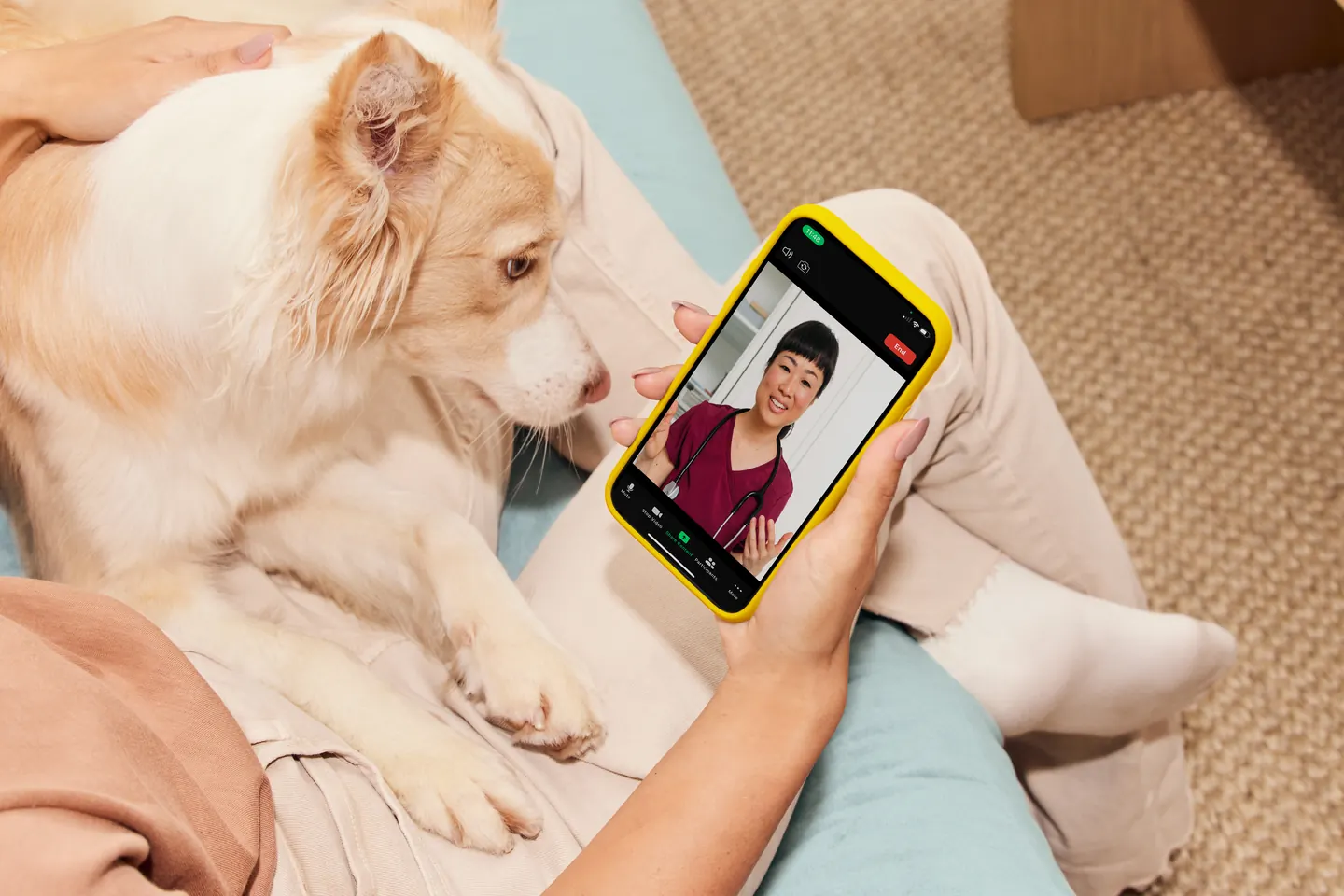
A licensed vet at Dutch can assess your pet over video and prescribe treatment when it's appropriate, delivered to your door.
Use code Pets60
Plans start at $12/month · covers up to 5 pets
- Licensed vets in most states
- Rx for 150+ conditions
- 4.7 on Trustpilot
Clavamox for dogs and cats: what it treats, prescription status, and whether today is a vet day
Clavamox for dogs and cats is a prescription antibiotic from Zoetis that pairs amoxicillin trihydrate with clavulanate potassium. The Clavamox Chewable label on DailyMed lists skin and soft tissue infections and periodontal infection in dogs, plus skin infections and E. coli bladder infections in cats.
Clavamox for dogs is FDA-approved and sold only on a veterinarian's order: the chewables under NADA 055-099 and the drops under NADA 055-101, per the Clavamox Drops label on DailyMed. The vet sets the dose by weight, the pet finishes the full course, and human Augmentin is not a swap. A suspected infection makes today a vet day.
- 1What Clavamox treats: bacterial skin, wound, dental, and some urinary infections in dogs and cats, on a vet's prescription only.
- 2For dog dosing by weight band, the label rate is 6.25 mg per pound twice a day, built from whole chewable strengths the vet chooses.
- 3Cats get one flat label dose: a 62.5 mg chewable or 1 mL of drops, twice a day.
- 4Stomach upset is the common problem; facial swelling, rash, fever, or irregular breathing means calling the vet now.
- 5Finish the full course unless the vet says otherwise, and never substitute human Augmentin.
Cats can take Clavamox too: both forms are labeled for cats, at a different dose than dogs. If a cat or dog seems better halfway through, keep giving it. VCA Animal Hospitals says to give it for the entire prescribed time even when the pet appears to feel better, so stopping early is the vet's call.
Is Clavamox a strong antibiotic for dogs?
It is broad-spectrum, and the clavulanate is what sets it apart from plain amoxicillin. The chewable label explains that clavulanic acid extends amoxicillin's reach to bacteria that make beta-lactamase, enzymes that otherwise destroy amoxicillin. The Merck Veterinary Manual calls this pairing synergistic, markedly enhancing spectrum and efficacy. Strength still depends on the bacteria involved.
Whether a vet chooses Clavamox, cephalexin (a cephalosporin), or another antibiotic for a dog depends on the infection site and culture results. The label does not explain in owner terms how Clavamox is metabolized, but VCA calls it short-acting: it should stop working within 24 hours, though effects can last longer in pets with liver or kidney disease.
Other names for the drug include amoxicillin-clavulanic acid, the generic name VCA uses, and FDA-approved generic brands such as Clavacillin and Kesium. The 62.5 mg chewable is the one tablet strength labeled for both dogs and cats, and Chewy Pharmacy fills it only with a veterinarian's prescription.
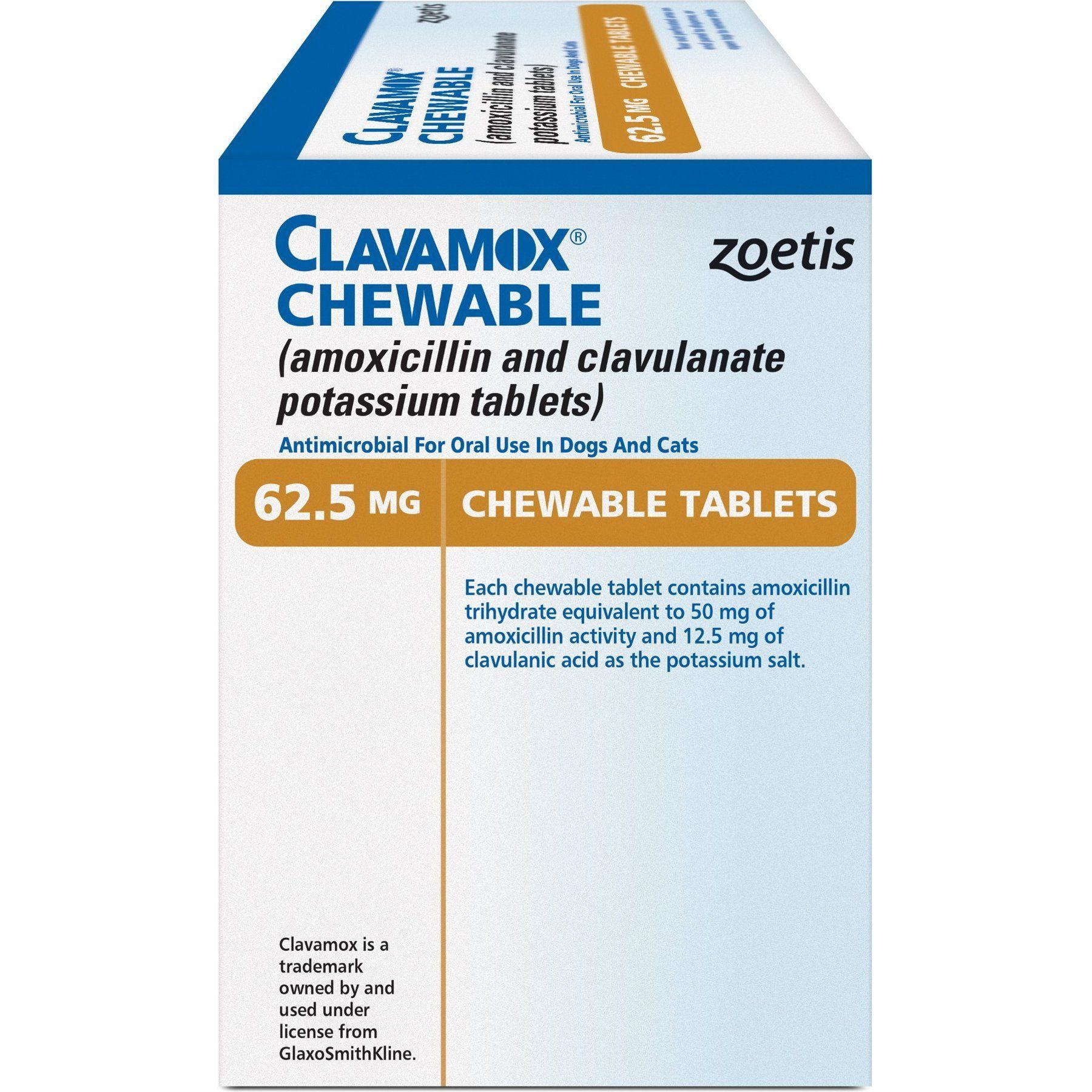
The 62.5 mg Clavamox chewable labeled for dogs and cats, filled only with a veterinarian's prescription.
Webvet may earn a commission when you click through to Chewy, at no extra cost to you.
Clavamox dosage for dogs by weight
The label gives one rate for dogs rather than a printed weight chart, so the veterinarian calculates the exact dose and matches whole chewable strengths to the dog's weight band. Each figure comes from the label or the Merck Veterinary Manual and describes what a vet prescribes, never an at-home calculator.
| Form and strength | Labeled for | What the label directs | How the vet uses it by weight band |
|---|---|---|---|
| Chewable 62.5 mg (50 mg amoxicillin, 12.5 mg clavulanic acid) | Dogs and cats | Dogs: 6.25 mg/lb (12.5 mg/kg) twice a day | Smallest whole chewable strength, combined with others to reach the dose for the dog's weight band |
| Chewable 125 mg (100 mg amoxicillin, 25 mg clavulanic acid) | Dogs only | 6.25 mg/lb twice a day | Whole tablets combined to match the weight band |
| Chewable 250 mg (200 mg amoxicillin, 50 mg clavulanic acid) | Dogs only | 6.25 mg/lb twice a day | Whole tablets combined to match the weight band |
| Chewable 375 mg (300 mg amoxicillin, 75 mg clavulanic acid) | Dogs only | 6.25 mg/lb twice a day | Largest whole chewable strength, combined with others to match the weight band |
| Clavamox Drops (62.5 mg per mL: 50 mg amoxicillin, 12.5 mg clavulanic acid) | Dogs and cats | Dogs: 6.25 mg/lb, 1 mL per 10 lb, twice a day | Measured by volume for the dog's weight band |
| Merck Veterinary Manual reference range | Dogs | 12.5–25 mg/kg by mouth every 8–12 hours | Wider range vets work within; the vet picks the dose and interval |
The chewable label sets the dog dose at 6.25 mg per pound of body weight twice a day (12.5 mg/kg) and tells vets to prescribe whole tablets of 62.5, 125, 250, and 375 mg. Beyond that single rate there is no per-pound dosing chart, so a chart by weight is the vet's own calculation.

Clavamox drops, the oral suspension, follow the same rate as the chewable pills: 1 mL per 10 lb twice a day, with 62.5 mg in each mL. The label gives no separate puppy dose, so the vet works out a puppy's amount from its weight. At the other end, the 375 mg chewable is the largest tablet and is labeled for dogs only.
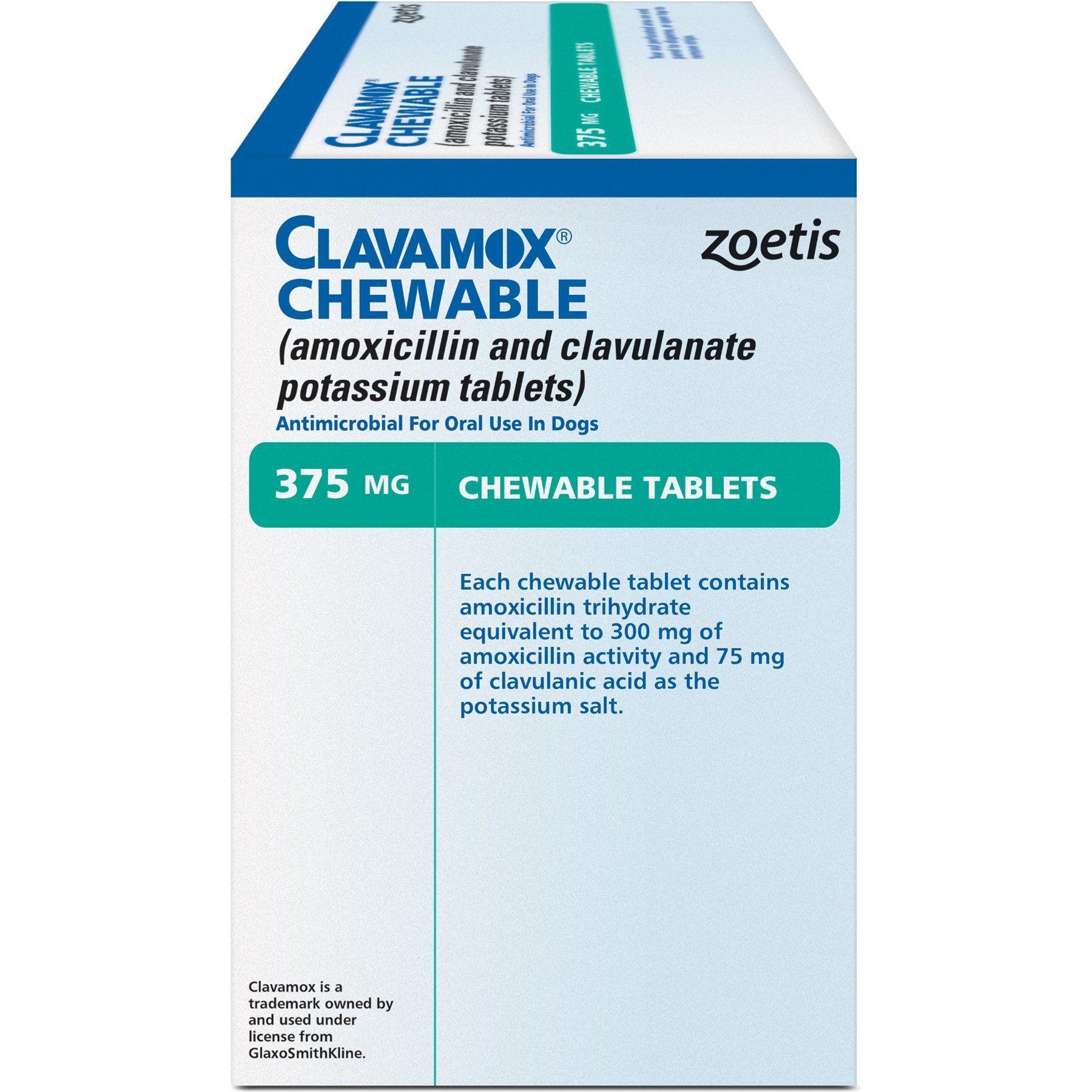
The 375 mg Clavamox chewable tablet for dogs, filled only with a veterinarian's prescription.
Webvet may earn a commission when you click through to Chewy, at no extra cost to you.
The Merck Veterinary Manual lists a wider range of 12.5–25 mg/kg every 8–12 hours for amoxicillin-clavulanate, so a prescription can sit above the label rate. Give exactly what the vet prescribed, as often per day as directed, and never change or stop the dose without the vet.
How long a dog's course lasts
- Skin and soft tissue infections, wounds, abscesses, and periodontal infections: 5–7 days, or 48 hours after all signs clear.
- Deep pyoderma: may need 21 days, never more than 30.
- No response after 5 days: the label says the vet should stop and reevaluate the case.
Clavamox dosage for cats and kittens
Cats are dosed differently from dogs. The label gives one flat dose instead of a per-pound rate, so there is no Clavamox dosage calculator or by-weight chart for cats on the label, and the vet confirms the dose for each cat or kitten.
| Situation | What the label directs | Form |
|---|---|---|
| Cat on chewables | 62.5 mg twice a day | Clavamox Chewable 62.5 mg, the only chewable strength labeled for cats |
| Cat on drops | 1 mL (62.5 mg) twice a day | Clavamox Drops |
| Skin and soft tissue infection | 5–7 days or 48 hours after signs clear, not over 30 days | Chewable 62.5 mg or drops |
| Urinary tract infection | 10–14 days or longer, not over 30 days | Chewable 62.5 mg or drops |
| Kitten | No separate kitten dose or minimum age on the label; the vet sets the dose in mL | Drops or chewable as prescribed |
| Vet reference (Merck Veterinary Manual) | 62.5 mg per cat every 12 hours, or 10–20 mg/kg every 8 hours | Amoxicillin-clavulanate by mouth |
For most cats the label dose is the same whatever the weight: one 62.5 mg chewable or 1 mL of the liquid drops, twice a day. A per-pound figure for a cat, or the dose for a 2-pound kitten, comes from the vet, because the labels give no separate kitten dose or minimum age.
The Merck reference adds a weight-based option of 10–20 mg/kg every 8 hours, which is why some cats go home with instructions that differ from the label. If a cat shows no response after 3 days, the label says the vet should reevaluate. Shake liquid doses well and measure them carefully, as VCA advises.
The cat labels are narrower than the dog labels:
- Only the Clavamox 62.5 mg chewable tablets are labeled for cats; the 125, 250, and 375 mg tablets are for dogs only.
- Labeled feline uses are skin and soft tissue infections and urinary infections. Dental infection is a labeled use in dogs only, so any dental course for a cat is set by the vet.
- Clavamox drops treat the same infections as the chewable, and the liquid lets the vet set a small kitten's dose in mL.

What Clavamox is used for: skin, wound, dental, urinary, and respiratory infections
The labels name the infections Clavamox treats in each species:
- Dogs: wounds, abscesses, cellulitis, and superficial, juvenile, and deep pyoderma.
- Dogs: periodontal infection from aerobic and anaerobic bacteria; the label reports Clavamox clinically effective for canine periodontal disease.
- Cats: wounds, abscesses, and cellulitis or dermatitis.
- Cats: urinary tract infections (cystitis) caused by susceptible E. coli.

Urinary use differs by species. The label covers UTI in cats only, while VCA describes urinary tract infection use in dogs and cats as off label. Merck lists amoxicillin with or without clavulanic acid among first-choice antimicrobials for canine and feline urinary infections. WebVet covers the full workup in dog UTI treatment and cat UTI treatment.
Clavamox does not relieve pain directly; it treats the bacterial infection behind it. Parvo is a viral disease, and the label warns that antibiotics given without a proven or strongly suspected bacterial infection are unlikely to help and may encourage resistant bacteria.
Is Clavamox good for a dog's ear infection?
Ear infections are not a labeled use. The Merck Veterinary Manual on otitis externa says treatment, beyond cleaning, may need both topical and systemic antimicrobial and anti-inflammatory therapy. Clavamox is one oral antibiotic a vet can use extra-label alongside ear medication, depending on what testing of the ear shows. Mastitis in dogs is likewise not a labeled use.
Can Clavamox be used to treat a cat's respiratory infection?
Yes, for secondary bacterial infection. Merck on feline respiratory disease complex lists amoxicillin with clavulanic acid among broad-spectrum options for a sneezing cat or a kitten with a URI, while noting treatment of a cat cold is largely supportive. Merck adds that tetracyclines and fluoroquinolones work best against Chlamydia felis and Mycoplasma felis.
Coughing dogs need an approach based on the cause, covered in kennel cough in dogs. The Clavamox label lists Bordetella bronchiseptica as susceptible in lab testing, though clinical significance in animals is not shown for some listed organisms. Choosing an antibiotic for a dog's chest infection is covered in pneumonia in dogs.
For cats with urinary, skin, or secondary respiratory infections, Clavamox Drops are the liquid form labeled for both species. Chewy Pharmacy fills the 15-mL bottle only with a veterinarian's prescription.
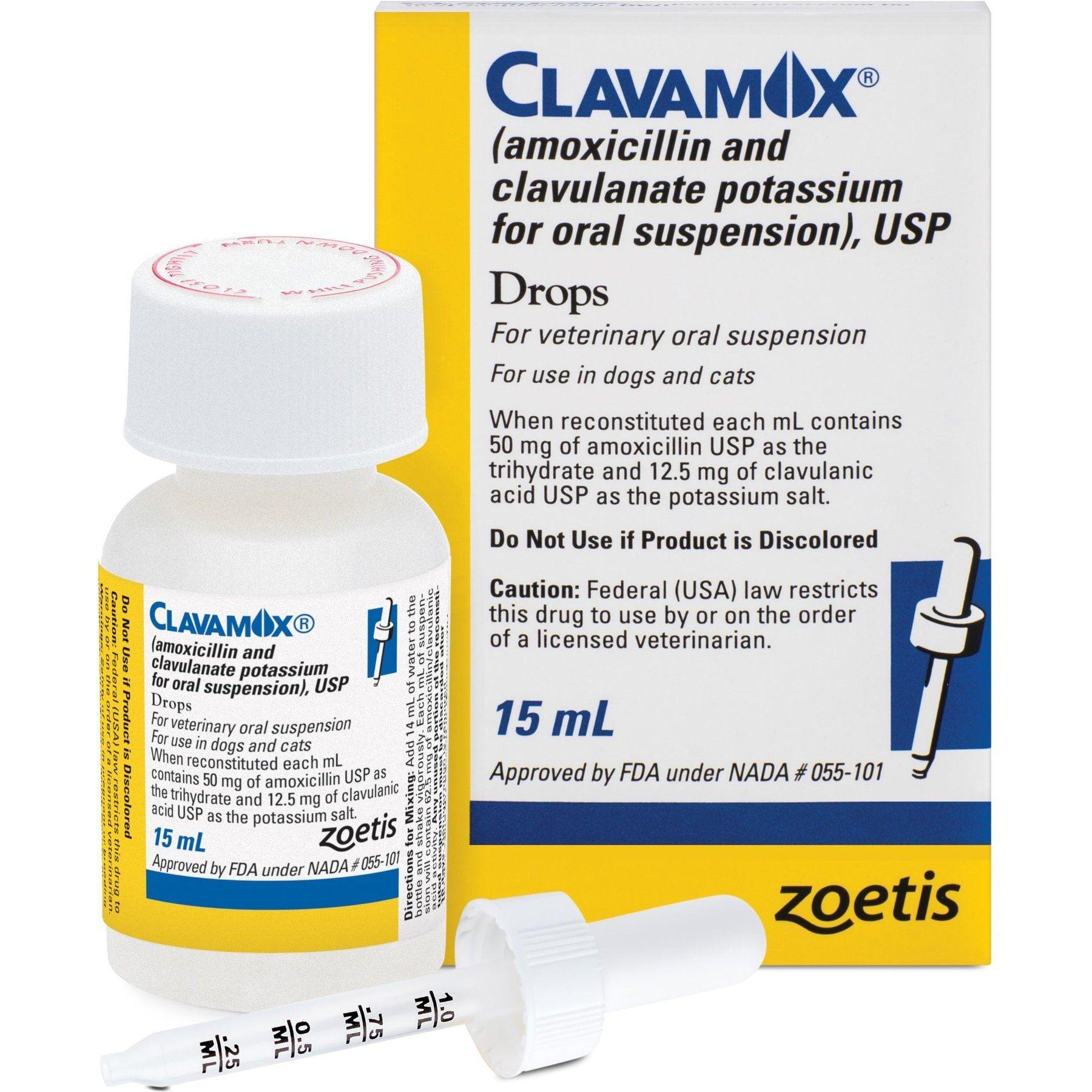
Liquid Clavamox for dogs and cats in a 15-mL bottle, filled only with a veterinarian's prescription.
Webvet may earn a commission when you click through to Chewy, at no extra cost to you.
Clavamox side effects in dogs and cats
The chewable label lists post-approval reports in dogs and cats from most to least often reported: anorexia (poor appetite), lethargy, vomiting, and diarrhea. It gives no percentages and notes that frequency cannot be reliably estimated from these reports. What owners tend to notice:
- Poor appetite, or a cat that won't eat
- Lethargy: a tired, drowsy, or sleepy pet
- Vomiting
- Diarrhea or loose stool, in dogs or cats
VCA lists stomach upset, vomiting, and diarrhea. If Clavamox seems to be making a cat or dog sick to its stomach, VCA suggests giving the dose with food and says these signs should go away during treatment. If they continue, VCA advises contacting the vet.
 Sponsored
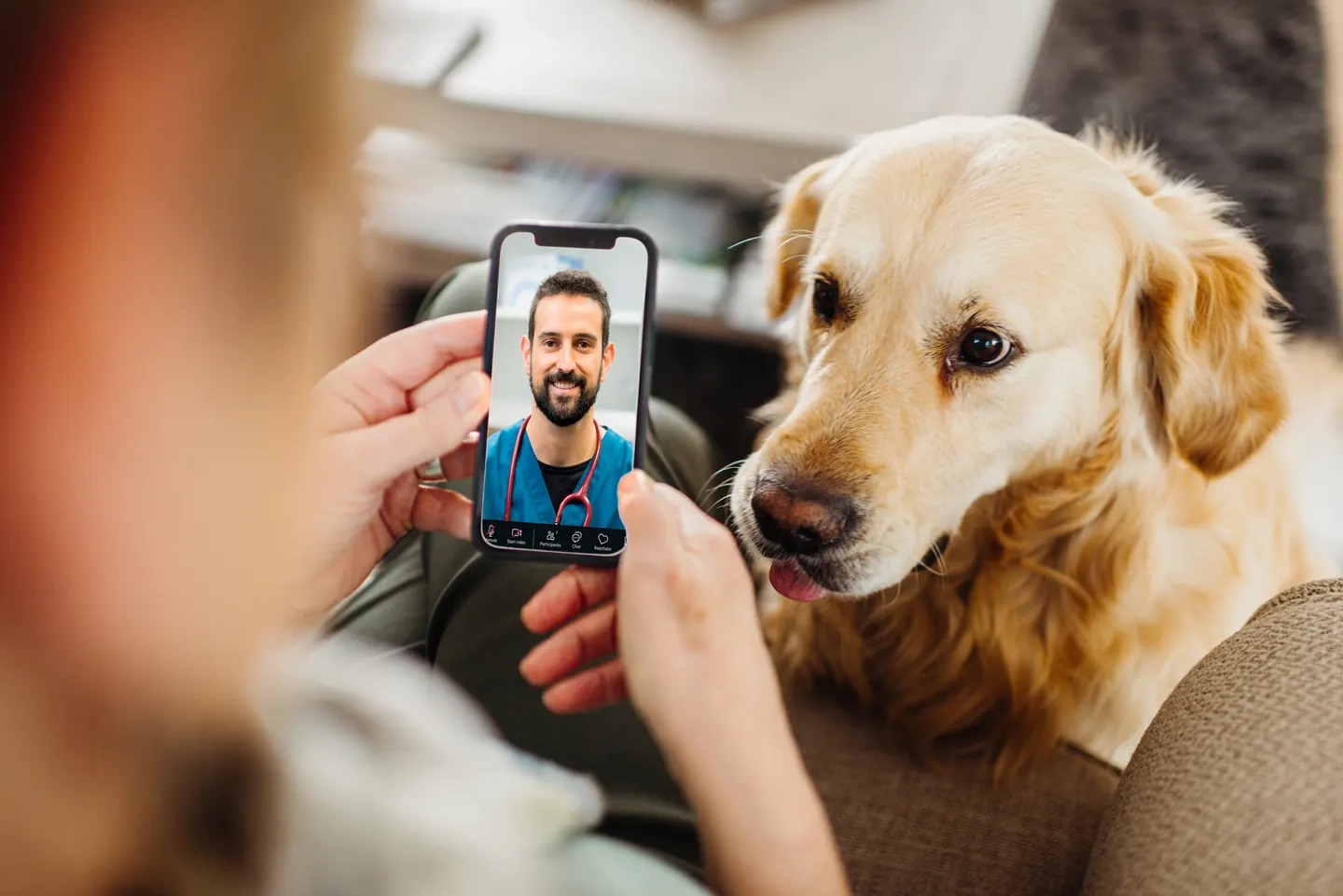
Vet care that's always there
Unlimited video calls and messaging with licensed vets for less than a typical vet visit. One membership covers up to five pets.
Use code Pets60
Plans start at $12/month · covers up to 5 pets
- Licensed vets in most states
- Rx for 150+ conditions
- 4.7 on Trustpilot
What are the potential side effects of taking amoxicillin and clavulanic acid?
In dogs and cats the reported effects are mostly digestive: poor appetite, lethargy, vomiting, and diarrhea. The Merck Veterinary Manual adds that broad-spectrum penicillins can lead to superinfection and that organ toxicity from penicillins is rare in animals. The serious exception is an allergic reaction, which can appear at any point in a course.
The label's reported list does not include a thirsty dog or cat drinking more, constipation, or frequent urination. If any of these appears during a course, mention it to the vet rather than assuming Clavamox is the cause.
Some owners pair an antibiotic course with a probiotic, and WebVet's guide to dog probiotics after antibiotics covers the timing questions. Purina's FortiFlora is a probiotic powder marketed to help manage diarrhea and excess gas in dogs; it is a supplement, not a treatment for the infection.
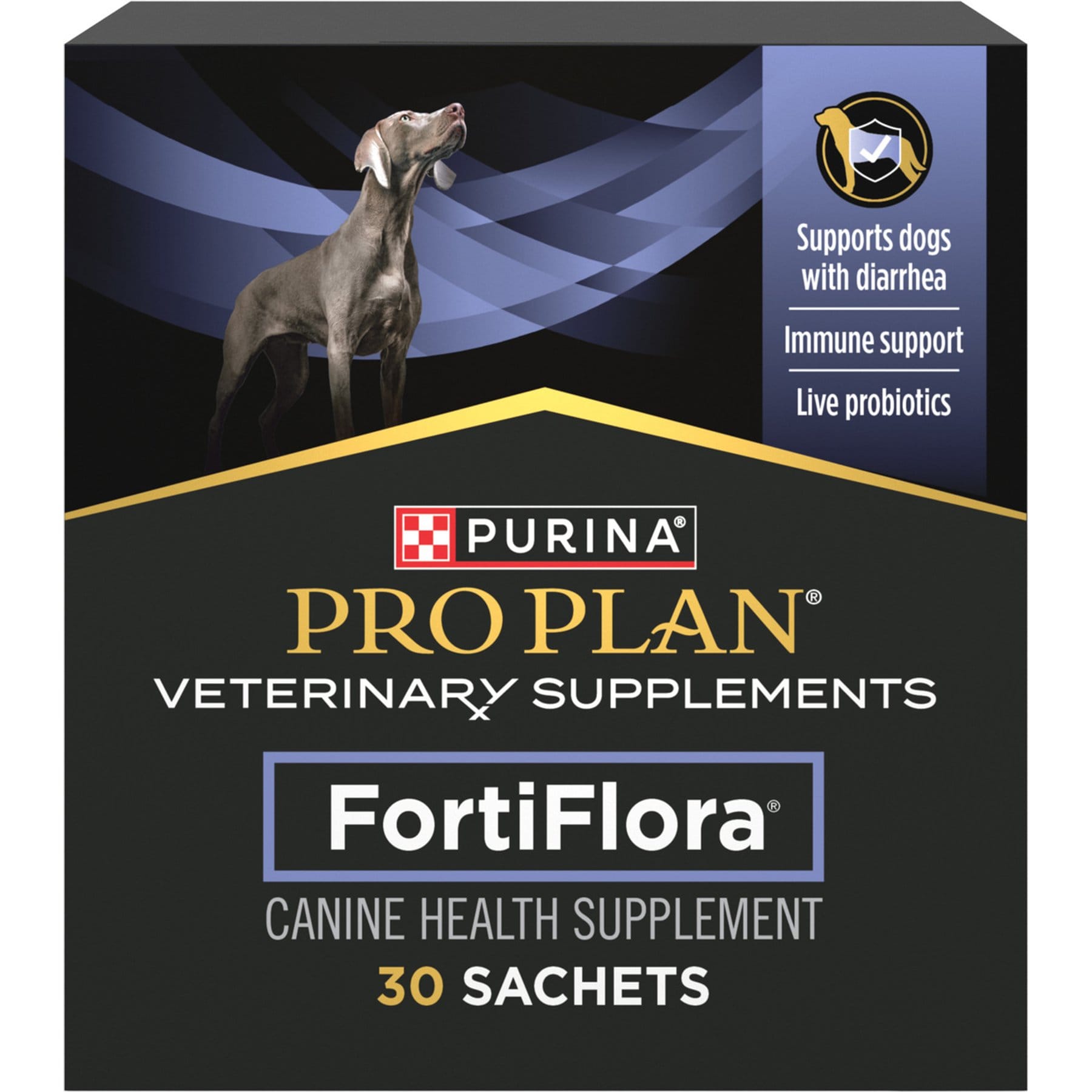
A Purina probiotic powder for dogs, marketed to help manage diarrhea and excess gas.
Webvet may earn a commission when you click through to Chewy, at no extra cost to you.
No strength-specific side effect list exists, so the same signs apply whether a pet takes a 62.5 mg chewable, a 125 mg chewable, or Clavamox drops.
When to stop Clavamox and call the vet now
Most Clavamox side effects are mild, but a few signs mean calling the vet or an emergency clinic right away, before giving another dose. VCA warns that a pet may have no reaction after the first doses and develop a sensitivity later, so watch through the whole course.
If a dog, cat, or kitten got too much, such as an accidental double dose or chewed-open tablets, call the vet right away rather than waiting for signs. VCA says to call immediately for a suspected overdose and never to give two doses at once, and the label says to keep chewables secured out of reach of pets.

Seizures, collapse, and foaming at the mouth are not among the reactions the labels or VCA list, so treat any of them as an emergency and let the vet find the cause. The most dangerous scenario is anaphylaxis, part of the penicillin hypersensitivity the Merck Veterinary Manual describes alongside skin reactions, facial swelling, and drug fever.
Call the clinic the same day, rather than the emergency line, for:
- Vomiting or diarrhea that keeps going instead of easing
- A pet that refuses food or stays unusually lethargic
- No improvement after 5 days in a dog or 3 days in a cat, when the labels say the case should be reevaluated
Drug interactions and pets that should not take Clavamox
For dogs and cats without a penicillin allergy, Clavamox is a routine prescription, but the labels and VCA flag these exceptions:
- Any past allergic reaction to a penicillin or cephalosporin: the drops label says the drug is contraindicated.
- Pregnant or breeding animals, including pregnant dogs and cats: the label says safety has not been determined.
- Rabbits, hamsters, guinea pigs, and other rodents: VCA says never, because it can cause life-threatening diarrhea.
- Pets with liver or kidney disease, including cats with kidney failure: VCA notes effects can last longer, a point the vet weighs when prescribing.
- People with a penicillin allergy who handle the drug: the label advises avoiding direct contact with skin and mucous membranes.
The labels give no specific guidance for nursing dogs, nursing cats, or nursing puppies, or for diabetic dogs, so the vet decides case by case. Liver damage is not a reported effect; Merck notes organ toxicity from penicillins is rare in animals. The labels restrict Clavamox to use on a veterinarian's order and do not mention any controlled-substance schedule.
VCA lists pentoxifylline, chloramphenicol, erythromycin, tetracycline-class drugs such as doxycycline for dogs, and cephalosporins as medicines to use with caution alongside Clavamox.
Metronidazole, gabapentin, prednisone, Benadryl, and fluoroquinolone antibiotics are not on that caution list. Whether any of them can be taken together with Clavamox is still the vet's decision, so share every medicine and supplement the pet is given. WebVet's page on metronidazole for dogs and cats covers that drug.
Chewable tablets vs Clavamox drops: how to give, store, and finish the course
Many dogs take the chewable readily. In the label's 112-dog field trial, dogs freely ate 83% of doses within 5 minutes, 16% needed a treat, food, or forced intake, and 1% were refused. The label has no matching cat data, so whether the taste is bad to cats is not something it measured.
Handling the chewable tablets:
- Keep each tablet in its foil strip until dose time.
- Store tablets in a dry, cool place no warmer than 25°C (77°F), per the label; VCA adds a tightly sealed container, protected from light, at room temperature.
- Tablets do not need to be refrigerated.
- The label tells vets to build doses from whole tablets, though tablets are scored into two pieces; split only if the vet directs, and even a broken tablet should be eaten entirely.
The label does not say whether Clavamox can be crushed, for dogs or cats. Ask the vet or pharmacist whether it is safe to crush a chewable, or ask whether the drops suit a pet that refuses tablets.
Handling Clavamox drops:
- Mixing directions: the label directs adding 14 mL of water to the 15-mL bottle and shaking vigorously.
- Once mixed, the liquid must be refrigerated; the label says refrigeration is required for dogs and cats alike.
- Do not freeze it: VCA says to keep the liquid from freezing.
- Discard any unused liquid after 10 days.
- Shake well and measure each dose carefully.
The labels state no shelf life for the tablets or for the unmixed powdered drops; once mixed, the drops expire after 10 days, which serves as their expiration date. The sources give no guidance on giving an expired or frozen product, so call the pharmacy before using one.
Mixed drops left out of the fridge overnight have not been stored as the label requires, so call the clinic or pharmacy before the next dose. If the liquid has turned yellow or darker than when it was mixed, the carton says not to use a discolored product.
VCA advises giving Clavamox with food rather than on an empty stomach. The Chewy listing notes chewables can be disguised in food, and treat pouches such as Greenies Pill Pockets Feline salmon treats or Greenies Pill Pockets dog treats, tablet size are another way to give a tablet to a cat or dog.

Finishing the course
VCA says Clavamox starts to work in dogs and cats within about 1 to 2 hours, though outward improvement may take a few days, and to give it for the entire prescribed time. For a missed dose, give it when remembered unless the next dose is almost due; then skip it and never give two at once.
Clavamox cost, generics, and how it compares with amoxicillin and Augmentin
Clavamox is not sold over the counter. Federal law restricts it to use by or on the order of a licensed veterinarian, so buying it online without a vet prescription is not a legal option. Chewy Pharmacy fills orders for dogs and cats, including drops for cats, only with a veterinarian's prescription, and clinics dispense it directly. Prices for Clavamox on Chewy:
- Clavamox 375 mg chewable tablets, 30 count: listed at $99.85 on Chewy when we checked in November 2026
- Clavamox 62.5 mg chewable tablets, 30 count: listed at $25.25 on Chewy when we checked in November 2026
- Clavamox Oral Suspension, 15-mL: listed at $34.81 on Chewy when we checked in November 2026
Generic versions exist, all FDA-approved for dogs and cats:
- Clavacillin tablets (Dechra), ANADA 200-592
- Kesium chewable tablets (Ceva), ANADA 200-749
- Amoxicillin and Clavulanate Potassium Drops, ANADA 200-709
Plain amoxicillin is the same antibiotic without clavulanate. The drops label says amoxicillin alone does not resist beta-lactamase, so it fails against bacteria that make that enzyme, and Merck lists plain amoxicillin at 11–30 mg/kg every 8–24 hours, separately from the combination. WebVet's guide to amoxicillin for dogs and cats covers it.
Augmentin and Clavamox share the same amoxicillin and clavulanate combination, and the Clavamox label notes both trademarks trace to GlaxoSmithKline. The difference is the patient: the Augmentin label covers human infections and human dosing, so it is not a stand-in for a pet's prescription.
None of the sources ranks another antibiotic as stronger than Clavamox. Merck's feline respiratory guidance lists cephalosporins and fluoroquinolones among the alternatives, and the vet picks among them based on the infection and culture.
Clavamox questions
Frequently Asked Questions
Does Clavamox need to be refrigerated?
Only the liquid. Once water is added, Clavamox drops must be refrigerated, kept from freezing, and thrown out after 10 days. The chewable tablets are not refrigerated; they stay in their foil strip in a dry, cool spot no warmer than 77°F.
Can you crush Clavamox tablets?
The label does not say whether to crush a Clavamox chewable. It does say to keep each tablet in its foil until use and that a broken tablet should still be eaten entirely. For a pet that will not take the chewable, ask the vet whether the drops are a better fit.
Is Augmentin the same as Clavamox?
Not for pet use. Augmentin is the human brand of the same amoxicillin and clavulanate combination, and the Clavamox label even uses Augmentin discs to test bacterial susceptibility. Human tablets are made and dosed for people, so only a veterinarian should choose the product and dose for a dog or cat.
Does Clavamox make dogs sleepy?
It can. Lethargy is the second most reported effect in the label's post-approval reports, after loss of appetite. Mild tiredness during a course is a known effect; marked lethargy, or an appetite that does not come back, is a reason to call the vet.
How long does Clavamox take to work?
VCA says it starts working within about 1 to 2 hours, but visible improvement can take a few days. Give the full course even after the pet looks better. If a dog shows no response after 5 days, or a cat after 3 days, the label says the vet should reevaluate.
Veterinarian · BVMS MRCVS
Dr. Pippa Elliott, BVMS, MRCVS, is a veterinarian with nearly 30 years of experience in companion animal practice. Dr. Elliott earned her Bachelor of Veterinary Medicine and Surgery from the University of Glasgow. She was also designated a Member of the Royal College of Veterinary Surgeons. Married with 2 grown-up kids, Dr. Elliott has a naughty Puggle named Poggle, 3 cats and a bearded dragon.
Related reading

Diphenoxylate for Dogs (Lomotil): Dosage, Safety, and Why Vets Use Caution

Budesonide for Dogs: IBD Dosage, Side Effects, and How It Compares With Prednisone

Visbiome for Dogs: Probiotic Dosage, Safety, and How It Differs From Pet Probiotics
