Budesonide for Dogs: IBD Dosage, Side Effects, and How It Compares With Prednisone
Budesonide is a prescription steroid vets use for inflammatory bowel disease in dogs and cats. This guide covers how the dose is set, side effects to watch, how it compares with prednisone, and what it costs.

BVMS MRCVS
Medically reviewed by Dr. Pippa Elliott, BVMS MRCVS · Last reviewed

Drug facts
Budesonide (Entocort EC, Uceris)· budesonide
Budesonide is a prescription glucocorticoid steroid that vets use extra-label for inflammatory bowel disease in dogs and cats, often when other steroids are not tolerated. The liver breaks down most absorbed drug, but it can still cause steroid side effects and adrenal suppression.
 Sponsored
Is Budesonide (Entocort EC, Uceris) right for your pet?
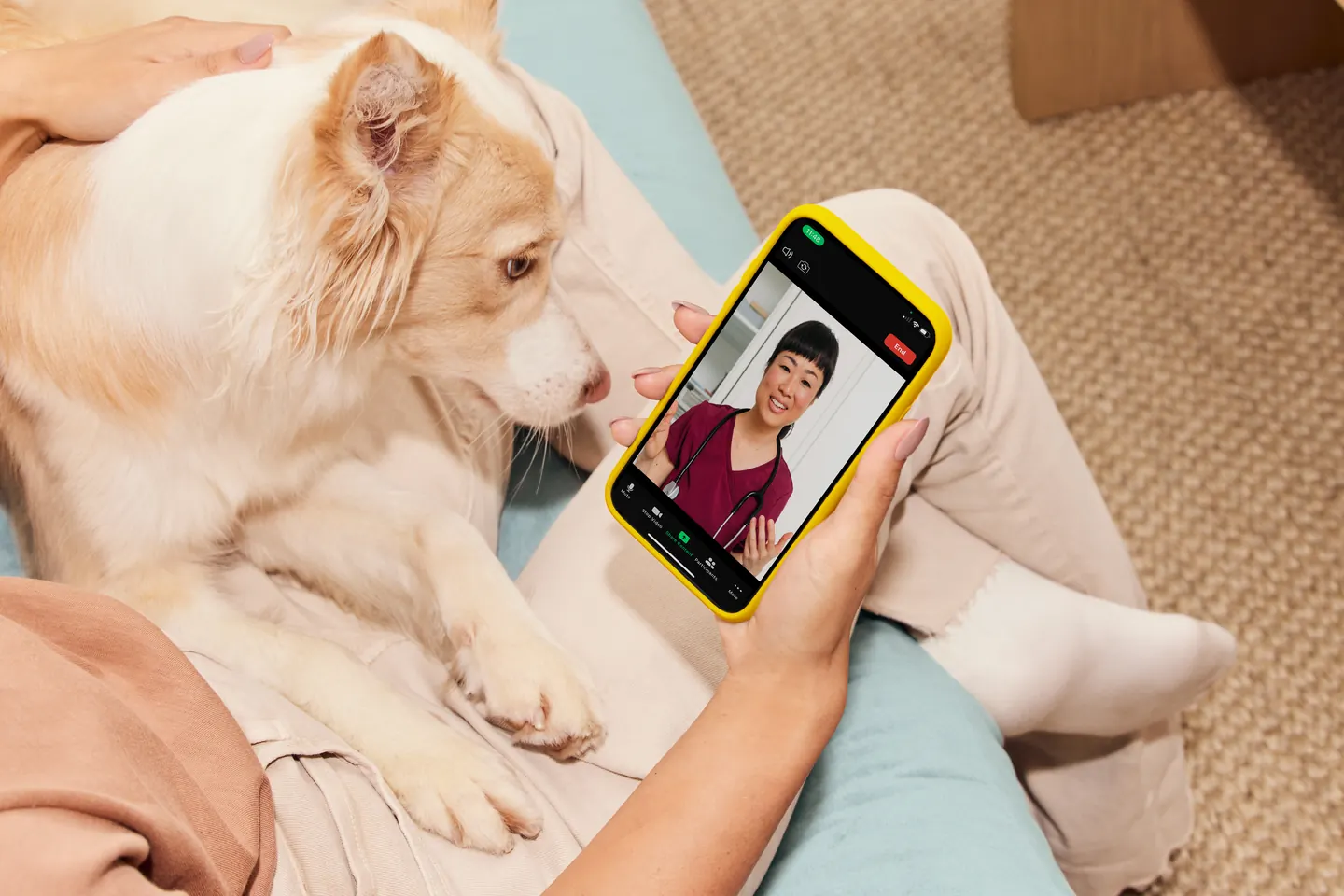
A licensed vet at Dutch can assess your pet over video and prescribe treatment when it's appropriate, delivered to your door.
Use code Pets60
Plans start at $12/month · covers up to 5 pets
- Licensed vets in most states
- Rx for 150+ conditions
- 4.7 on Trustpilot
What budesonide is for dogs, what it treats, and whether it needs a prescription
Budesonide for dogs is a prescription glucocorticoid (a steroid) that veterinarians use extra-label, mainly for inflammatory bowel disease (IBD) in dogs and cats, especially when other steroids have not worked or a pet cannot tolerate them, according to VCA Animal Hospitals.
The drug is designed to act mostly in the gut, but steroid side effects can still occur, so the veterinarian always sets the dose of budesonide for dogs. A dog starts it only after a vet diagnosis, and a dog on it that seems unwell needs a call to the vet today.
- 1What budesonide treats in dogs: mainly inflammatory bowel disease and some types of colitis, prescribed extra-label.
- 2How a vet sets the dose: from body size, usually once daily, often as a compounded capsule.
- 3It is a strong steroid that the liver mostly deactivates, yet it can still suppress the adrenal glands.
- 4Never stop it suddenly; any change in dose comes from your veterinarian.
Budesonide is a synthetic corticosteroid approved by the FDA for people, not animals. The human delayed-release capsules are indicated for mild to moderate Crohn's disease and are labeled Rx only, per the DailyMed prescribing information. The generic 3 mg delayed-release capsule is filled for a dog only with a veterinarian's prescription.
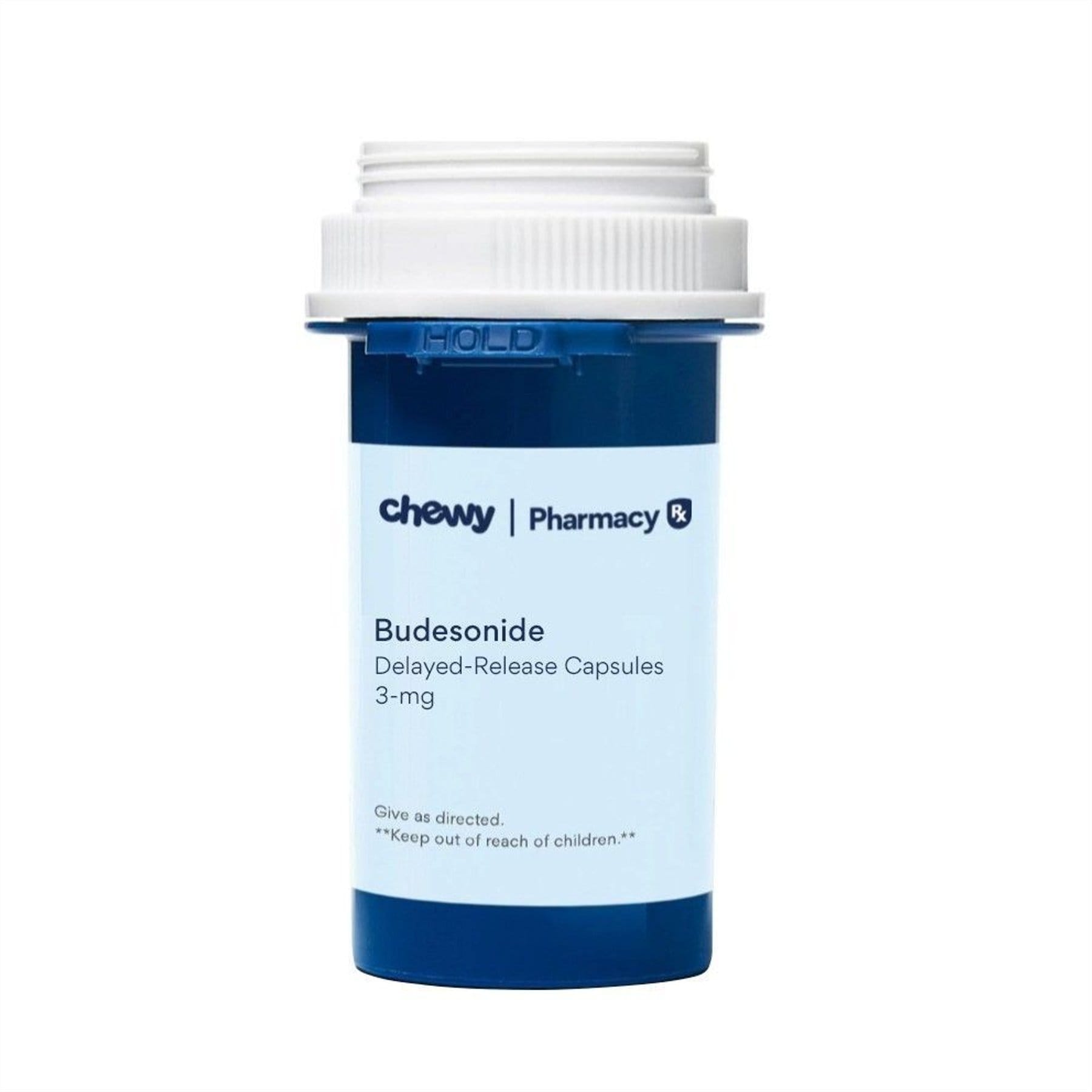
Generic 3 mg delayed-release budesonide capsules, a human drug vets can prescribe extra-label for dogs.
Webvet may earn a commission when you click through to Chewy, at no extra cost to you.
VCA lists the brand names Entocort EC, Uceris, Pulmicort, and Rhinocort. Veterinary reviews of the evidence, including a 2023 Veterinary Evidence Knowledge Summary, explain that budesonide was developed to limit the whole-body side effects of steroids in people with IBD.
Is budesonide a strong steroid?
Yes. Veterinary Partner describes budesonide as a strong corticosteroid, about 15 times stronger than prednisolone. It is absorbed and then promptly deactivated by the liver, which keeps most of its effect in the gut lining. Even the small amount that escapes the liver can be significant, so it is not a mild steroid.
Budesonide dosage for dogs by weight
There is no veterinary label for budesonide, so no official dosage chart by weight exists. Vets work from the reference dose in the Merck Veterinary Manual and the weight-band doses given in one randomized trial (Dye et al. 2013). Your vet calculates the exact budesonide dose for your dog.
| Weight band or group (source) | Dose vets work from | Form |
|---|---|---|
| Dogs and cats, IBD (vet reference) | 3 mg/m2, PO, q 24 h (Merck Veterinary Manual) | capsule, often compounded |
| Dogs 3-7 kg (Dye 2013 trial dose) | 1 mg PO q24h for 6 weeks | powder-based capsule |
| Dogs 7.1-15 kg (Dye 2013 trial dose) | 2 mg PO q24h for 6 weeks | powder-based capsule |
| Dogs 15.1-30 kg (Dye 2013 trial dose) | 3 mg PO q24h for 6 weeks | powder-based capsule |
| Dogs over 30 kg (Dye 2013 trial dose) | 5 mg PO q24h for 6 weeks | powder-based capsule |
The Merck figure is a dose per square meter of body surface, which the vet works out from your dog's weight. The trial bands are study doses given for 6 weeks, not a label chart. That trial enrolled only dogs over 3 kg, per the Knowledge Summary, so no published band covers smaller dogs.
Whatever strength the vet picks, the capsule goes down whole. Veterinary Partner says budesonide capsules should not be opened or crushed if the drug is to work properly, and a capsule-size treat pouch such as Greenies Pill Pockets for Capsules is one way to hide it intact.
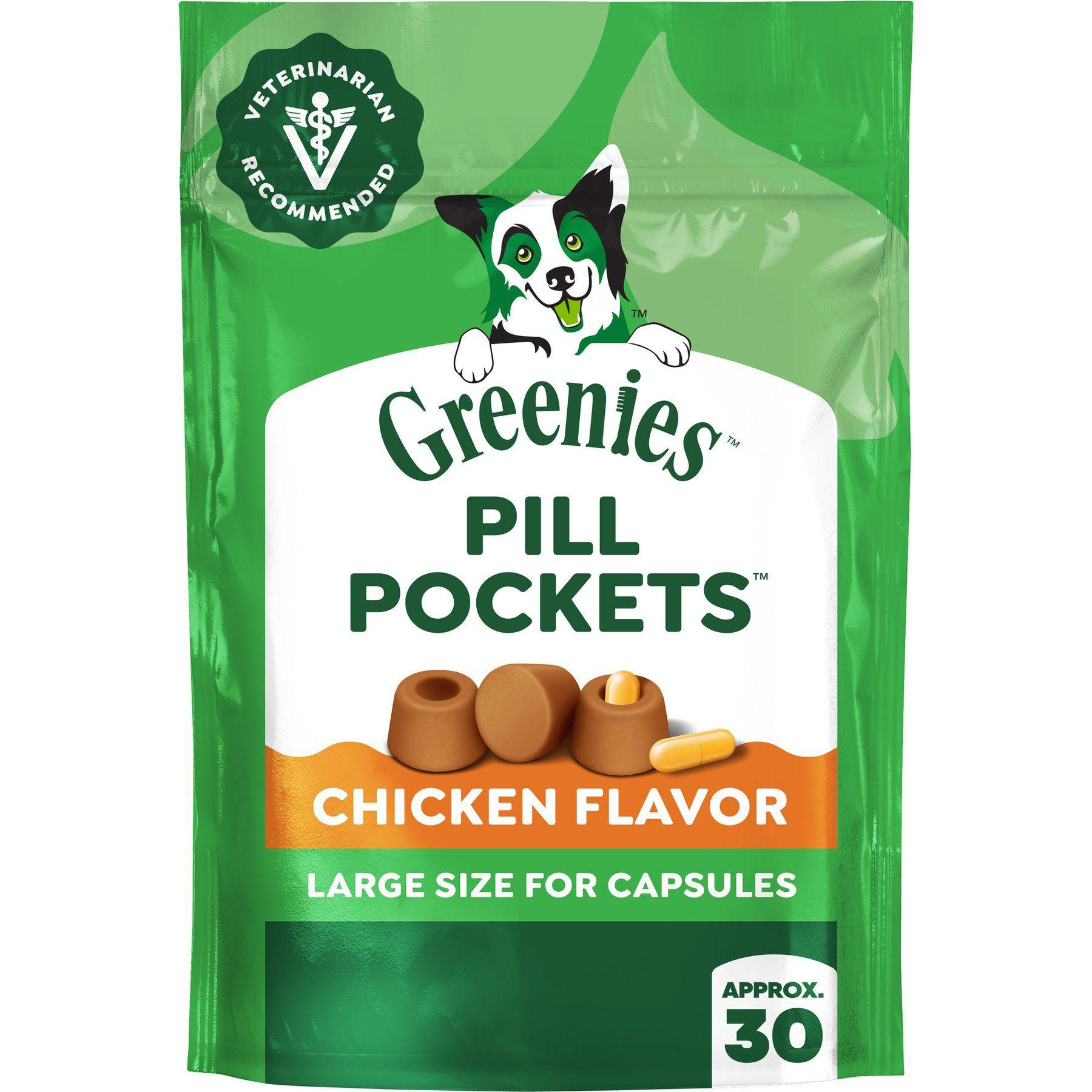
Chicken-flavored treat pouches shaped to hold most large capsules, for hiding a whole budesonide capsule at pill time.
Webvet may earn a commission when you click through to Chewy, at no extra cost to you.
Veterinary Partner notes budesonide is typically given once daily for IBD, and that appropriate dosing matters so as not to defeat the purpose of avoiding steroid side effects. VCA adds that a vet's directions for extra-label use may differ significantly from the human label.

Commercial capsules come in 3 mg and 9 mg strengths, so a compounding pharmacy frequently prepares smaller capsules or an oral liquid for small animals, says Veterinary Partner. Give exactly what your vet prescribed, and never change or stop the dose without talking to the vet first. Strengths you may see on a prescription include:
- Budesonide 1 mg for dogs: the trial dose for the 3-7 kg band, usually as a Budesonide Compounded Capsule, 1 mg.
- Budesonide 3 mg for dogs: the trial dose for the 15.1-30 kg band, matching the strength of the Budesonide (Generic) Delayed-Release Capsule, 3-mg.
- Budesonide liquid for dogs: a compounded oral suspension, which Wedgewood Pharmacy lists from 0.3 to 10 mg/ml, alongside compounded capsules from 0.1 to 5 mg.
What vets prescribe budesonide for in dogs
Budesonide for dogs with IBD is the main use. VCA describes it for inflammatory bowel disease in dogs and cats, and Wedgewood, a veterinary compounding pharmacy, adds some types of colitis. Merck notes that glucocorticoids are used when biopsy results suggest eosinophilic or plasmacytic-lymphocytic colitis.
In the Knowledge Summary's case scenario, budesonide was an immunosuppressive option after a dog's chronic gut disease did not improve with diet and microbiome trials and biopsies showed lymphoplasmacytic inflammation. Long-running loose stools prompt that vet visit; why a dog has diarrhea and mucus in dog poop cover what those signs can mean.
Two other uses come up less often:
- Airway disease: budesonide inhalation for dogs is a separate use. Merck notes the drug treats asthma and rhinitis in people, and VCA says it may be given as a nasal spray or inhalant for sinus inflammation or asthma. No veterinary reference gives a budesonide nebulizer or nasal spray dose for dogs, so any airway plan comes from your vet.
- Protein-losing enteropathy (PLE): veterinary drug references describe budesonide for IBD and colitis but set out no separate plan for PLE. Whether budesonide for PLE in dogs suits a particular case is a decision for the vet managing it.
Budesonide vs prednisone for dogs: how the two steroids compare
Prednisone is a prodrug that the liver converts to prednisolone, which acts throughout the body; budesonide was developed to limit those whole-body effects. Merck explains why: first-pass metabolism in the liver converts about 90% of absorbed budesonide to less active forms, so in theory it works locally. The human label gives 80% to 90%.
Here is how budesonide compares with prednisone on the points that shape a vet's choice, per Merck and Veterinary Partner:
- How it acts: prednisone works throughout the body; budesonide is meant to act in the gut lining before the liver deactivates it.
- Strength: Veterinary Partner puts budesonide at about 15 times stronger than prednisolone, so even a small absorbed amount counts.
- Schedule: Merck describes prednisone at immunosuppressive doses slowly tapered to the lowest effective dose every 48 hours; budesonide is typically given once daily.
- Adrenal effects: dogs with IBD given budesonide still showed adrenal (HPA) axis suppression, per Merck.
- Price: Merck notes glucocorticoids such as prednisone are often first-line in dogs because they are inexpensive.
The only randomized trial in dogs with IBD, Dye 2013, compared the two drugs for 6 weeks:
- Remission: 78% with budesonide and 69% with prednisone, not a significant difference.
- Side effects: similar frequency in both groups.
- Dosing: prednisone at 1 mg/kg twice daily for 3 weeks, then 0.5 mg/kg twice daily for 3 weeks; budesonide once daily by weight band.
- Strength of evidence: the Knowledge Summary rates it weak, since it rests on one small 6-week study.

Is budesonide better than prednisone for dogs?
Not clearly. In the one head-to-head trial of budesonide vs prednisone for IBD in dogs, remission and side-effect rates were similar, on weak evidence. Its edge is mainly a theory of fewer whole-body effects, which matters most for dogs that do not tolerate traditional steroids. Veterinary Partner cautions it is not fully without steroid activity.
Switching from prednisone to budesonide in dogs happens on the vet's schedule. The human label advises monitoring anyone moved from a high-systemic steroid to budesonide for steroid withdrawal signs, including adrenal suppression.
The forms differ too. Budesonide doses for many dogs fall between commercial capsule sizes, so vets often prescribe a compounded strength such as the Budesonide Compounded Capsule, 1 mg, made specifically for pets and filled only with a veterinarian's prescription.
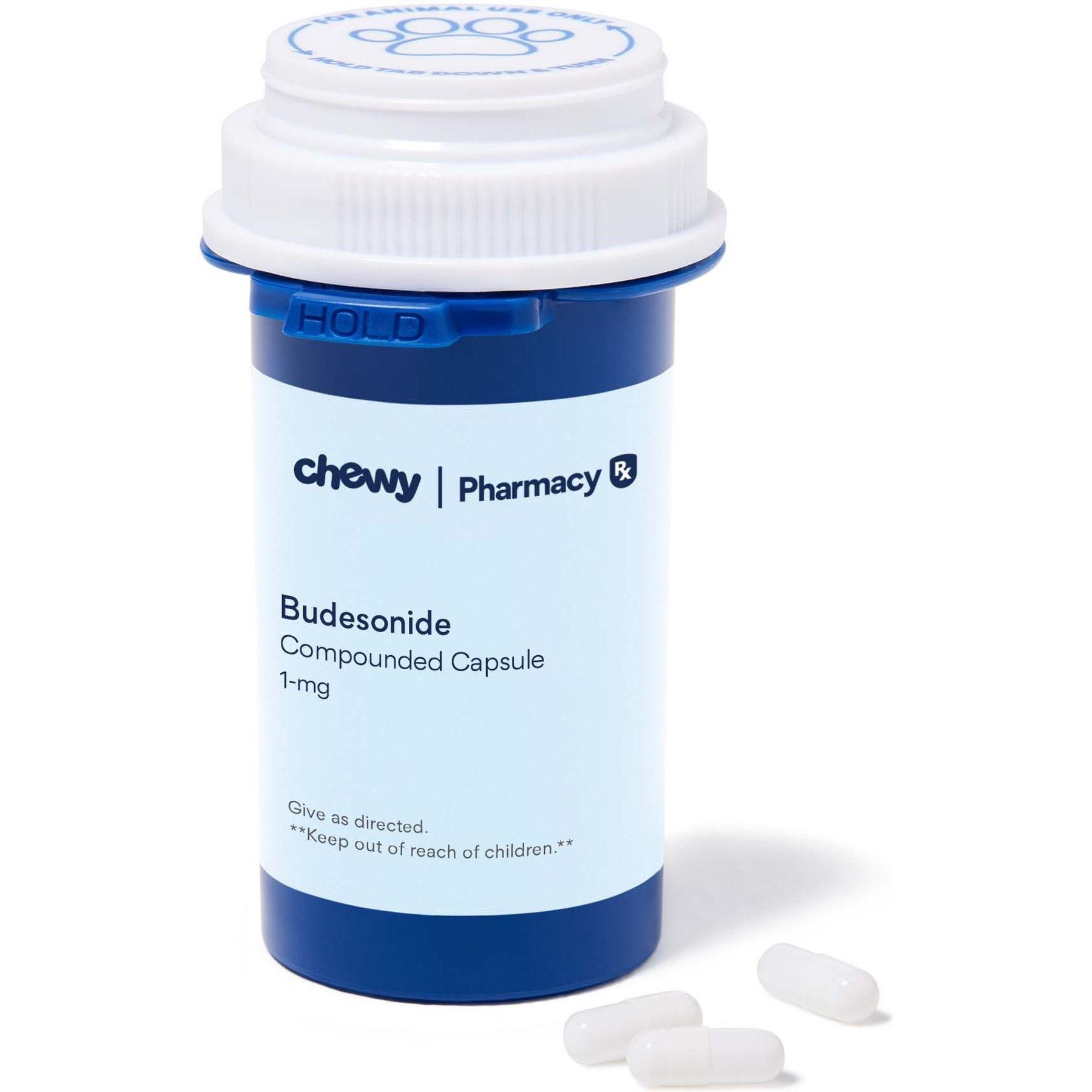
Compounded 1 mg budesonide capsules made for pets with inflammatory intestinal conditions, filled with a vet's prescription.
Webvet may earn a commission when you click through to Chewy, at no extra cost to you.
Budesonide side effects in dogs, including long-term use
These are the common side effects VCA lists as most likely with budesonide in dogs:
- Increased appetite
- Increased drinking and urination
- Lethargy and muscle weakness
- Increased panting
- Skin and haircoat changes
- Weight gain and a potbellied appearance
 Sponsored
Vet care that's always there
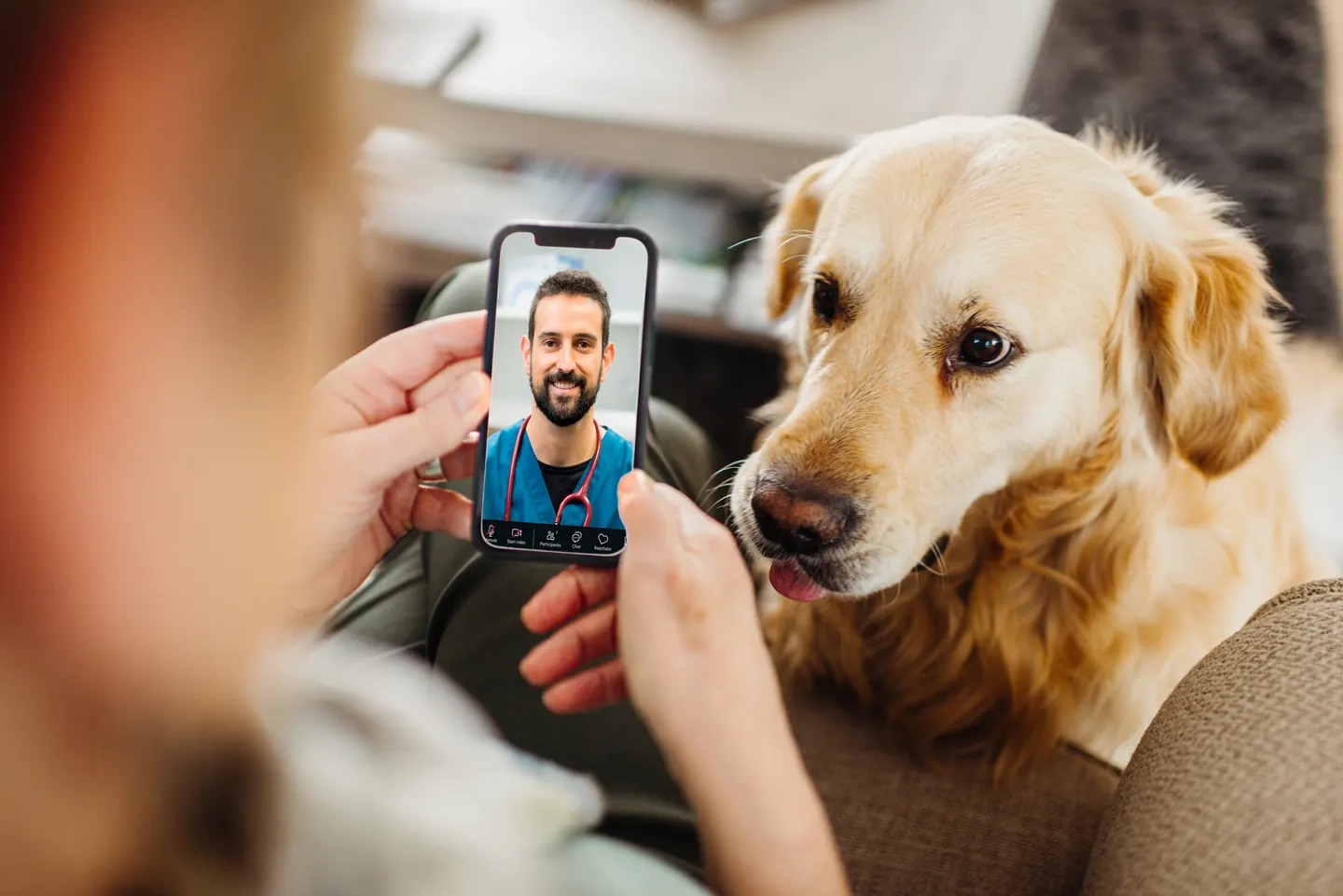
Unlimited video calls and messaging with licensed vets for less than a typical vet visit. One membership covers up to five pets.
Use code Pets60
Plans start at $12/month · covers up to 5 pets
- Licensed vets in most states
- Rx for 150+ conditions
- 4.7 on Trustpilot
What is the most common side effect of budesonide in dogs?
VCA names increased appetite and increased drinking and urination first among the most likely effects, with panting, lethargy, and weight gain also on that list. Veterinary Partner adds that the more inflamed the bowel lining is, the more budesonide appears to be absorbed, so a dog with severe IBD may show more of these signs.
Keeping these effects down depends on the right dose. Veterinary Partner stresses that dosing matters with this drug and that small pets need small doses, which is why a vet may prescribe a low compounded strength such as the Budesonide Compounded Capsule, 0.5 mg, filled only with a prescription.
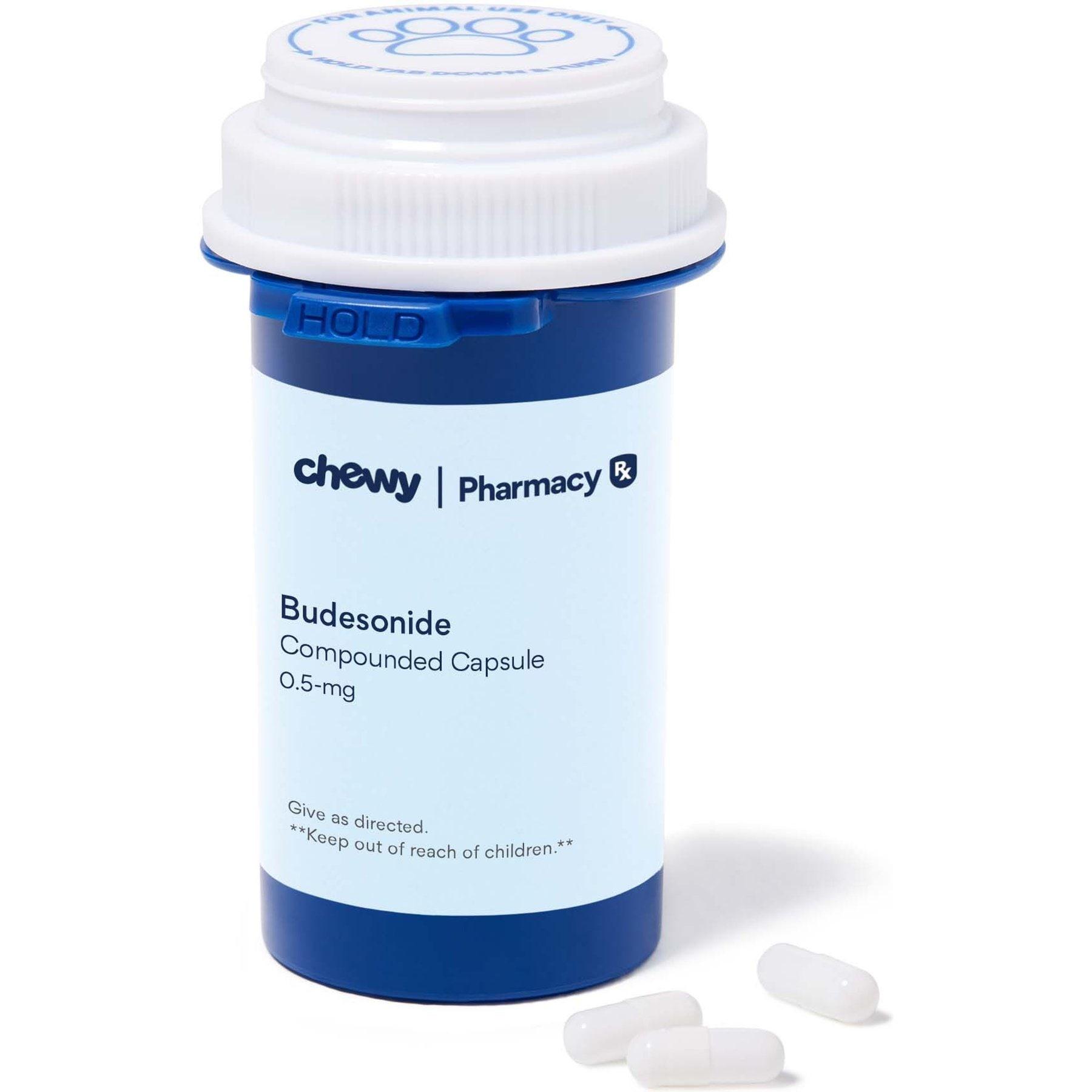
Compounded 0.5 mg budesonide capsules made specifically for pets, filled only with a veterinarian's prescription.
Webvet may earn a commission when you click through to Chewy, at no extra cost to you.
What are the long term side effects?
Budesonide for dogs long term can produce the signs of Cushing's disease if enough steroid is absorbed: hair loss on the trunk, a potbellied look, and thin skin in advanced cases, per Veterinary Partner. Merck cites a study in which dogs with IBD given budesonide developed adrenal (HPA) axis suppression.
In that study, Tumulty et al. 2004 gave six dogs 3 mg/m2 daily for 30 days. Adrenal suppression was significant even though blood and urine markers and owner-noticed side effects did not change. The comparison trial lasted only 6 weeks, so long-term side effect rates in dogs are not known.

VCA advises watching for adverse effects throughout treatment and notes the vet may also monitor to confirm the drug is working. Effects can last several days after the last dose, and longer in dogs with liver or kidney disease.
When to stop budesonide and call the vet
Do not stop budesonide on your own. VCA says it should not be stopped abruptly unless your veterinarian instructs it, and the human label warns that withdrawal of steroid therapy can bring on signs of adrenal suppression.
What are the serious side effects of budesonide?
The serious risks are adrenal (HPA) axis suppression, Cushing-like signs from excess steroid, and a higher chance of new or worsening infection, all named on the human DailyMed label, which also reports serious allergic reactions, including anaphylaxis. In cats particularly, steroid exposure can trigger diabetes mellitus, Veterinary Partner notes.
Veterinary Partner frames the watch list simply: if enough steroid is absorbed, the usual steroid side effects are the problems to look for. The human label also advises monitoring for new or worsening infection, so report any sign of illness to your vet promptly.
If your dog vomits or acts sick after a dose, VCA suggests giving it with food. Tell your vet if the problem continues.
Dogs that should not take budesonide and drug interactions
As for who should not take it, VCA and Veterinary Partner point to these dogs, some of which need extra caution rather than a strict no:
- Dogs allergic to budesonide.
- Pregnant or nursing dogs, unless the benefits outweigh the risks; Veterinary Partner says it should not be used in pregnancy.
- Dogs facing surgery or another stressful procedure.
- Dogs with stomach or intestinal ulcers, active infections, diabetes mellitus, or cataracts, which steroids can worsen.
- Dogs with liver disease, which may increase steroid side effects; the human label says to avoid it in severe liver impairment.
What to avoid when on budesonide?
Avoid starting any other medicine, including pain relievers, antacids, and grapefruit products, without checking with your vet. Budesonide is broken down by the liver enzyme CYP3A4, and in people the antifungal ketoconazole raised budesonide exposure eight-fold, per the DailyMed label. VCA advises caution with:
- Erythromycin and cimetidine
- Ketoconazole, itraconazole, and fluconazole
- Diltiazem
- Grapefruit juice powder
- Aspirin and NSAIDs such as carprofen, deracoxib, or robenacoxib
- Oral antacids
Antacids interfere with how the capsule coating works, so a Mar Vista Animal Medical Center handout suggests separating them from budesonide by a couple of hours. VCA adds a 2-week withdrawal before allergy skin testing and stopping 3-4 weeks before an ACTH stimulation test, both only on the vet's direction.
Budesonide for cats: uses and side effects
Cats get budesonide for the same main reason: VCA describes extra-label use for IBD in both cats and dogs, and Merck gives one shared dose of 3 mg/m2, PO, q 24 h. There is no budesonide dosage chart for cats by weight; the vet calculates each cat's dose.

IBD is how cats use it most often, though Veterinary Partner also describes an inhaled form for feline asthma. Budesonide side effects in cats follow the same steroid pattern VCA lists for pets in general, with one added concern: steroid exposure can induce diabetes mellitus, particularly in cats.
Long-term use of budesonide in cats has no published side-effect rates, so the monitoring plan comes from your vet. A cat with loose stools should see the vet before any treatment; why your cat has diarrhea explains common causes and next steps.
How to give budesonide, taper it, and what it costs
VCA says budesonide is given by mouth as a capsule or tablet, or as a nasal spray or inhalant. Do not open or crush the capsule or let your dog chew it; Veterinary Partner explains the capsules must stay intact for budesonide to work properly.
Hiding the whole, unopened capsule in a treat can help. Greenies Pill Pockets, Chicken, for Capsules have a built-in pouch that holds most large capsules and are listed at $8.79 on Chewy when we checked in November 2026.

A few daily habits from VCA keep treatment on track:
- Missed dose: give it when you remember, unless the next dose is close; then skip it. Never give two doses at once.
- Storage: keep capsules at room temperature in a tight container, in a dark, dry place.
No published budesonide taper schedule exists for dogs. Your vet decides when and how to reduce the dose, and VCA's rule stands: do not stop abruptly unless instructed.
No veterinary source publishes a standard cost of budesonide for dogs; the price depends on strength and form. These prescription listings are filled by Chewy Pharmacy only with a veterinarian's prescription:
- Budesonide (Generic) Delayed-Release Capsule, 3-mg, 30 capsules: listed at $24.00 on Chewy when we checked in November 2026.
- Budesonide Compounded Capsule, 1 mg, 60 capsules: listed at $50.40 on Chewy when we checked in November 2026.
- Budesonide Compounded Capsule, 0.5 mg, 60 capsules: listed at $48.60 on Chewy when we checked in November 2026.
Compounded capsules are custom preparations from a compounding pharmacy rather than FDA-approved products, so ask your vet which form fits your dog. Other gut products work differently and do not replace budesonide:
- Visbiome and Nutramax Proviable Probiotics & Prebiotics are probiotic supplements; Proviable is listed at $19.97 on Chewy when we checked in November 2026.
- Pro-Pectalin is a digestive supplement.
- Diphenoxylate is a separate human drug used extra-label.
- Metronidazole is an antibiotic.
Budesonide for dogs questions
Frequently Asked Questions
How long does budesonide take to work in dogs?
VCA says budesonide takes a few days to have effects, which may not be obvious. Vets judge improvement over weeks: the Dye trial rechecked dogs at 3 and 6 weeks, and in a 2013 study by Pietra et al., 8 of 11 dogs showed an adequate response when assessed on days 20 and 30.
Can a dog switch from prednisone to budesonide?
Yes, when the vet directs it. Moving from prednisone to budesonide is a planned change, and any taper of the prednisone follows the vet's schedule rather than an abrupt stop. The human label notes adrenal function monitoring may be needed after this kind of switch.
Is budesonide safe for long-term use in dogs?
Published trials have not established long-term safety in dogs, and adrenal suppression has been documented at a standard dose. If your vet keeps your dog on it, regular monitoring visits and prompt reports of changes in thirst, appetite, coat, or energy help catch problems early.
Can budesonide be given to dogs with a nebulizer?
VCA notes budesonide can be given as an inhalant or nasal spray for airway problems such as sinus inflammation or asthma. Veterinary Partner describes inhaled budesonide for feline asthma, but no veterinary reference gives an inhaled or nebulizer dose for dogs, so any such plan is set by your vet.
Does budesonide come as a liquid for small dogs?
Yes, as a compounded product. Veterinary Partner says budesonide is commonly compounded into an oral liquid, and Wedgewood lists suspensions from 0.3 to 10 mg/ml. A liquid can suit the very small doses that small dogs need.
Veterinarian · BVMS MRCVS
Dr. Pippa Elliott, BVMS, MRCVS, is a veterinarian with nearly 30 years of experience in companion animal practice. Dr. Elliott earned her Bachelor of Veterinary Medicine and Surgery from the University of Glasgow. She was also designated a Member of the Royal College of Veterinary Surgeons. Married with 2 grown-up kids, Dr. Elliott has a naughty Puggle named Poggle, 3 cats and a bearded dragon.
Related reading

Diphenoxylate for Dogs (Lomotil): Dosage, Safety, and Why Vets Use Caution

Visbiome for Dogs: Probiotic Dosage, Safety, and How It Differs From Pet Probiotics

Pro Pectalin for Dogs: Dosage, Side Effects, and When Diarrhea Needs a Vet
