Diphenoxylate for Dogs (Lomotil): Dosage, Safety, and Why Vets Use Caution
Diphenoxylate with atropine (Lomotil) is a controlled human drug some vets prescribe for diarrhea in dogs. This guide covers how the dose is set, side effects, dogs that should not take it, and how it compares with Imodium.

BVMS MRCVS
Medically reviewed by Dr. Pippa Elliott, BVMS MRCVS · Last reviewed

Drug facts
Lomotil· diphenoxylate and atropine
Diphenoxylate with atropine (Lomotil) is a human prescription opioid antidiarrheal and Schedule V controlled drug that veterinarians use extra-label to slow intestinal movement in dogs with certain types of diarrhea, and sometimes for cough.
Treats

 Sponsored
Is Lomotil right for your dog?
A licensed vet at Dutch can assess your dog over video and prescribe treatment when it's appropriate, delivered to your door.
Use code Pets60
Plans start at $12/month · covers up to 5 pets
- Licensed vets in most states
- Rx for 150+ conditions
- 4.7 on Trustpilot
What diphenoxylate (Lomotil) is for dogs, what it treats, and why it needs a vet
Diphenoxylate for dogs is the active ingredient in Lomotil, a human prescription opioid antidiarrheal combined with a small amount of atropine. VCA Animal Hospitals says vets use it to treat diarrhea or coughing in dogs, and that this use is extra-label, meaning the FDA has not approved it for animals.
Lomotil is an FDA-approved human drug and a DEA Schedule V controlled substance, according to its DailyMed label. Using diphenoxylate for dogs with diarrhea is a decision for the veterinarian, who sets the dose by the dog's weight. Diarrhea with blood, vomiting, or lethargy needs a vet visit today, not an antidiarrheal from the medicine cabinet.
- 1On what diphenoxylate treats in dogs: vets use it extra-label to slow certain kinds of diarrhea, and sometimes for cough.
- 2It is a human prescription drug and a Schedule V controlled substance, so a dog needs its own prescription.
- 3On how a vet sets the dose: the vet works from a mg/kg reference range and the dog's body weight.
- 4Never use it for diarrhea caused by an infection or a toxin, and call the vet if vomiting or lethargy appears.
The Merck Veterinary Manual explains how it works. Opiates such as diphenoxylate decrease the pushing contractions of the intestine and increase segmentation, which slows the movement of gut contents. They also stimulate absorption of fluid, electrolytes, and glucose, so stools firm up.
The atropine in each tablet is there by design. The DailyMed label says a subtherapeutic amount is included to discourage deliberate overdose, and Merck adds that at therapeutic doses the atropine has no effect.
That is a different job from a probiotic. Purina Pro Plan Veterinary Diets FortiFlora is a powdered probiotic supplement that supplies live microorganisms and is sold to help manage the signs of dog diarrhea and gas. It does not slow the gut, needs no prescription, and is no substitute for a drug the vet has chosen.
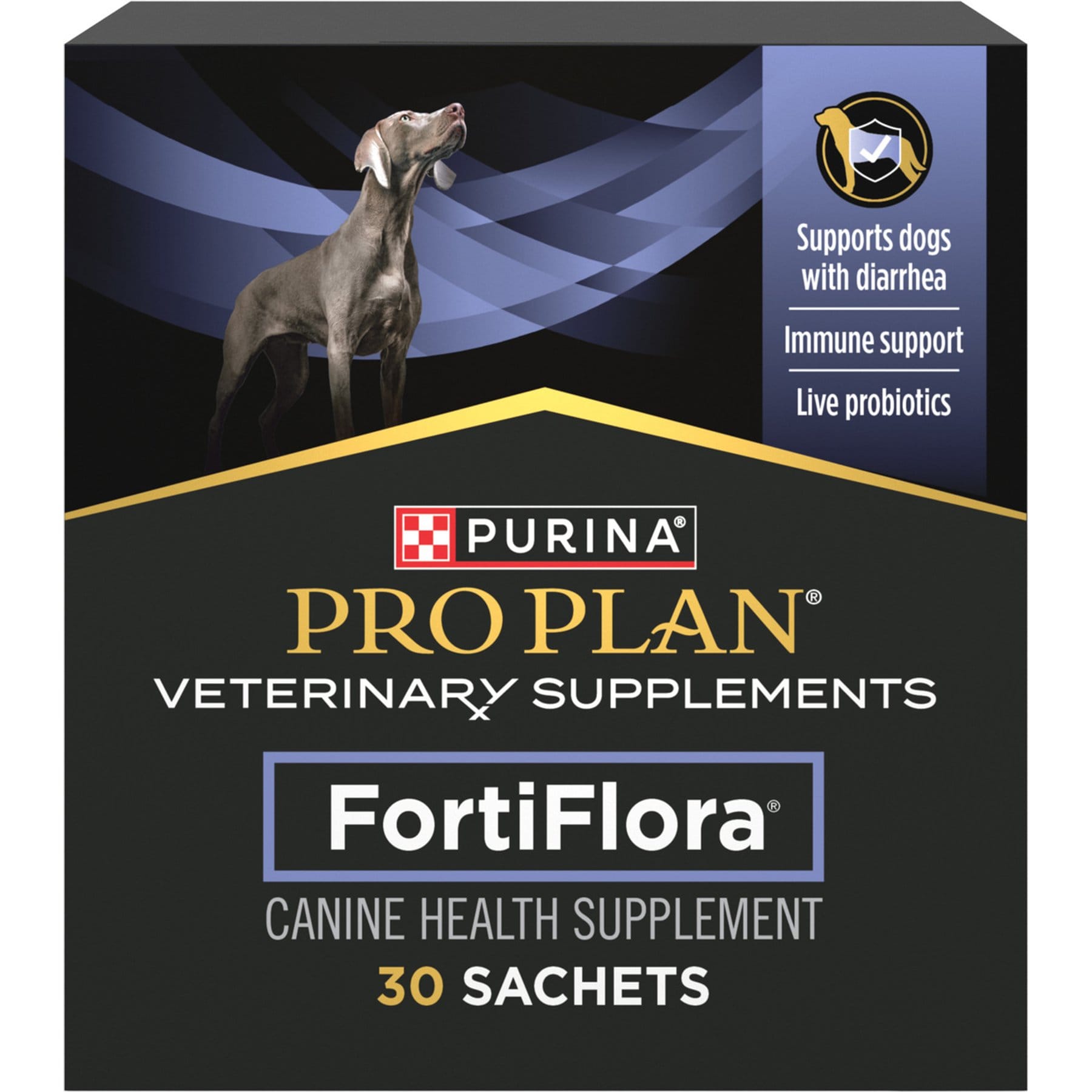
A probiotic powder sprinkled on food that supplies live microorganisms to support the gut during bouts of loose stool.
Webvet may earn a commission when you click through to Chewy, at no extra cost to you.
Does Lomotil help dog diarrhea?
It can, in the right dog. Merck states that diphenoxylate and loperamide are synthetic opiates frequently used to treat diarrhea in dogs. The drug eases the signs by slowing the gut rather than curing the cause, which is why the human label calls it adjunctive therapy and why the vet first rules out infection, toxins, and blockage.
The guide to dog vomiting and diarrhea covers common triggers and the signs that need same-day care.
Diphenoxylate (Lomotil) dosage for dogs by weight
No veterinary label or weight chart exists for diphenoxylate, because it is a human drug used extra-label. The range vets work within comes from the Merck Veterinary Manual, and the veterinarian calculates the exact dose from the dog's weight and picks the form.
| Patient | What the vet works within (source) | Form | Status |
|---|---|---|---|
| Dogs with diarrhea, any body weight | 0.05–0.1 mg/kg by mouth every 8–12 hours (Merck Veterinary Manual); the vet calculates the dose from the dog's weight | Lomotil tablet (2.5 mg diphenoxylate HCl and 0.025 mg atropine sulfate) or liquid | Human prescription drug, Schedule V controlled, extra-label in dogs |
| Dogs with diarrhea, loperamide for comparison | 0.08 mg/kg by mouth every 6–8 hours (Merck Veterinary Manual) | Loperamide (Imodium) | Over the counter, not a controlled drug |
| People 13 and older (human label, not a dog dose) | 2 tablets four times daily, maximum 20 mg diphenoxylate HCl per day (DailyMed) | Lomotil tablet | Human prescription, Schedule V controlled |

Each Lomotil tablet contains 2.5 mg of diphenoxylate hydrochloride and 0.025 mg of atropine sulfate, per the DailyMed label. VCA says it is given by mouth as a tablet or liquid. Some dogs take a tablet more readily hidden in a soft treat such as Greenies Pill Pockets.
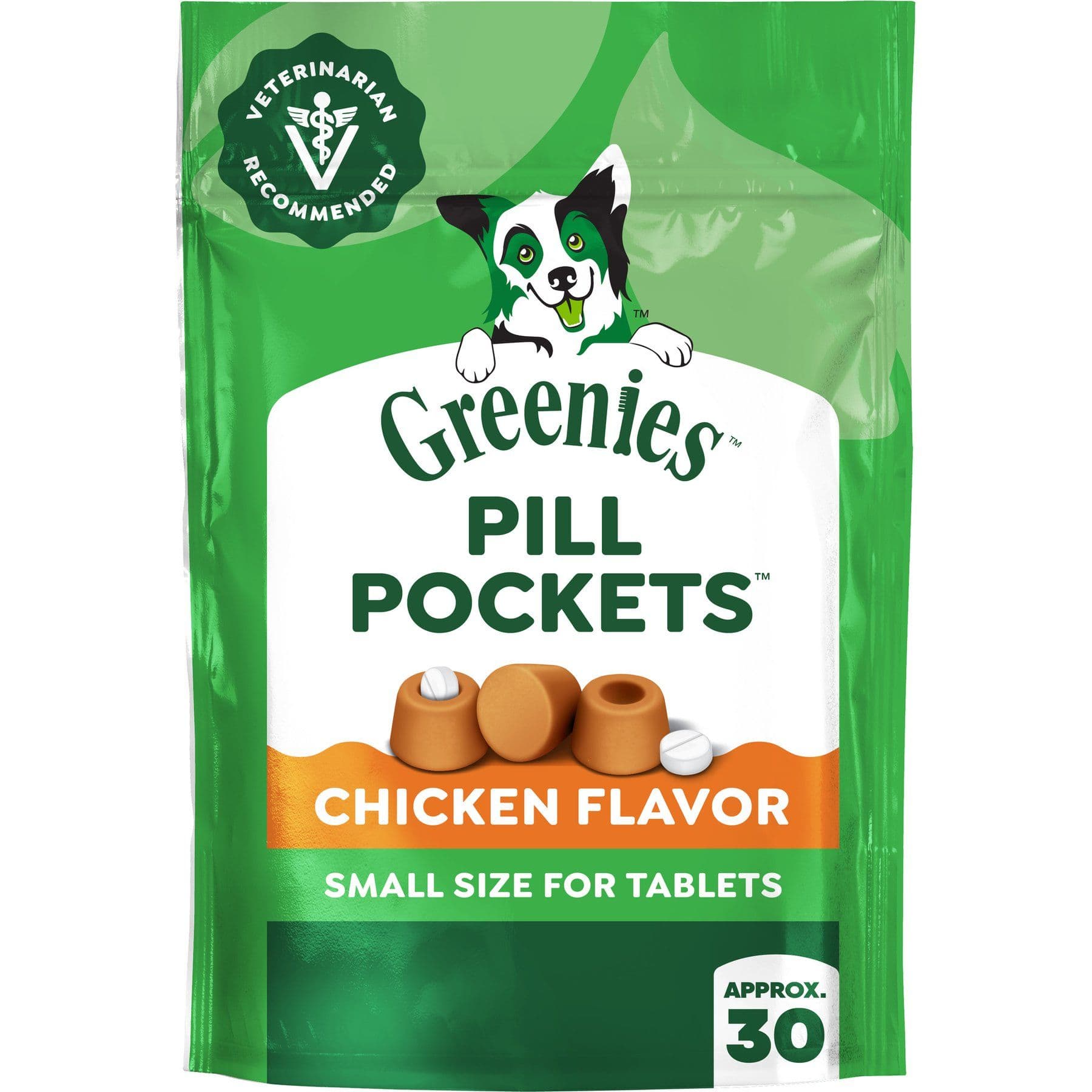
Chicken-flavored treats with a built-in pouch for hiding a tablet so pill time feels like treat time.
Webvet may earn a commission when you click through to Chewy, at no extra cost to you.
The human dose shows why the household Lomotil bottle is not a shortcut. A dose built for a person is not scaled to a dog's weight, and the dog's dose depends on what the vet finds. VCA adds that the vet's directions may differ significantly from the label, so the vet's instructions are the ones to follow.
When a vet works out the dose, the main inputs are:
- The dog's body weight, which the mg/kg range is applied to
- The form, either the 2.5 mg tablet or a liquid that must be measured carefully
- How often to give it, which Merck puts at every 8–12 hours
- Whether the cause of the diarrhea rules an opiate out, such as an infection or a toxin
- Any other medicines the dog already takes
Give exactly what the veterinarian prescribed, at the times prescribed. Never raise, lower, or stop the dose without talking to the vet first, and measure liquid forms carefully, as VCA advises.
What vets use diphenoxylate for in dogs
Vets reach for diphenoxylate in a few specific situations. Based on VCA and Merck, the main uses are:
- Diarrhea in dogs where the vet wants to slow intestinal movement and reduce fluid loss
- Coughing in dogs, a use VCA lists alongside diarrhea
- Short-acting relief, since VCA says each dose should stop working within 24 hours
The drug's effect in dogs is direct. The Lomotil label notes that in dogs, diphenoxylate acts on the circular smooth muscle of the bowel, which can produce segmentation and prolong transit time through the gut. Merck adds that opiates have both antisecretory and antimotility effects through mu- and delta-opioid receptors.
The cough use comes from the same opioid action. Mar Vista Animal Medical Center notes that cough suppression can be either a side effect or the desired effect, depending on why the dog is being treated.
The human DailyMed label lists only one indication: adjunctive therapy for diarrhea in people 13 and older, with no veterinary use listed. Merck adds that opiates can have potent effects on the gut and should be used cautiously. Before prescribing, the vet weighs:
- What is causing the diarrhea, since Merck explains that slowing the gut in infectious diarrhea may increase absorption of bacterial toxins
- The dog's age and its liver, kidney, and breathing health, since Mar Vista says it should not be used in debilitated patients
- Other medicines that could add to sedation
What diphenoxylate does not do is treat the cause. Parasites such as giardia in dogs, gastroenteritis in dogs, and bacterial or inflammatory conditions call for their own plans, which may include medicines covered in the guides to metronidazole for dogs and cats and budesonide for dogs.

Owners asking which drug stops diarrhea fastest will find that the answer depends on the cause, explained in what causes diarrhea in dogs.
For dogs whose loose stool keeps coming back, the vet may look at diet instead of a drug. Royal Canin Hydrolyzed Protein Adult PS is a veterinary-exclusive hydrolyzed soy protein food for adult dogs with food sensitivities, sold with a veterinarian's prescription. Its listing describes a fiber blend to support digestion in dogs prone to upsets, including diarrhea.
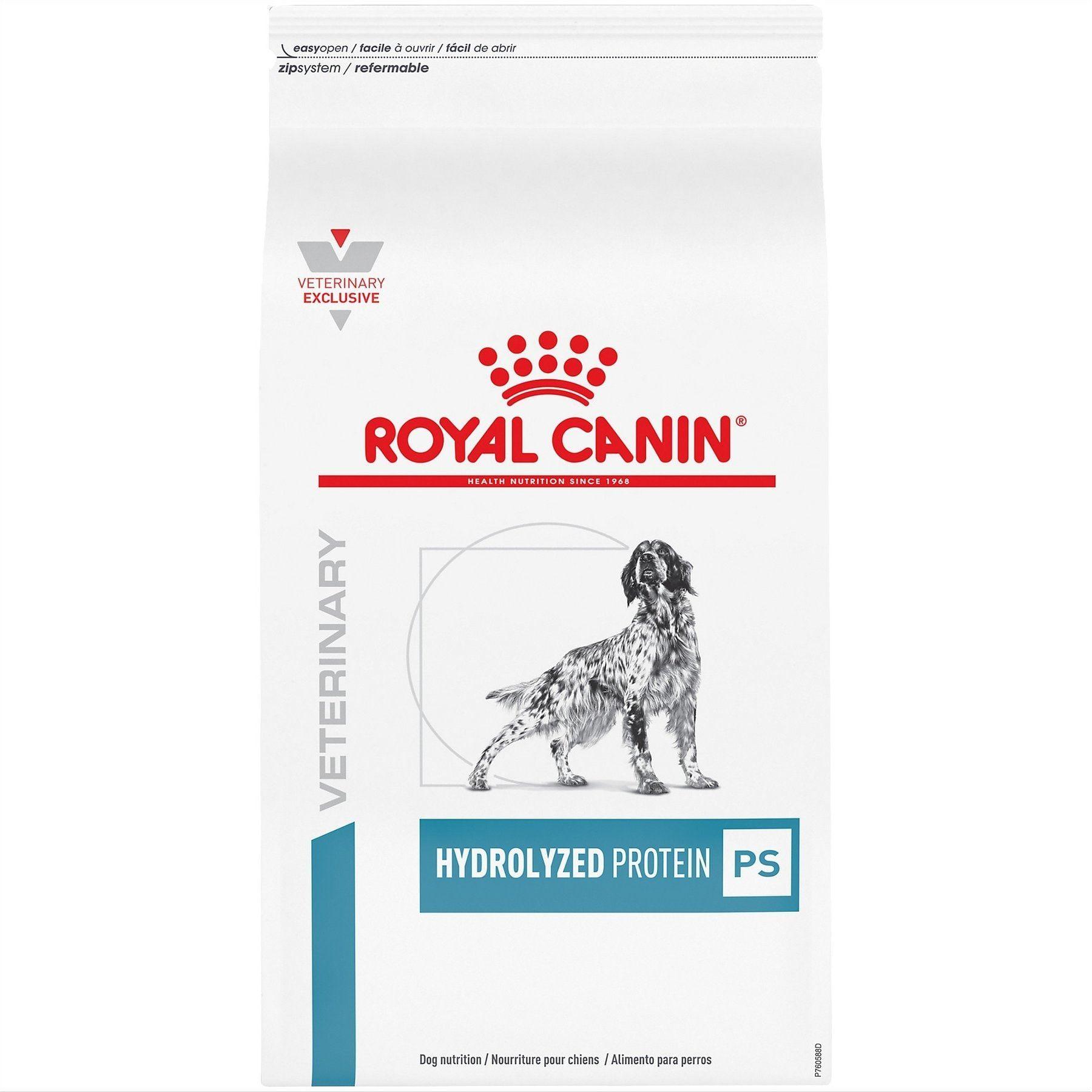
A prescription hydrolyzed soy protein diet for adult dogs with food sensitivities, with fibers to support digestion.
Webvet may earn a commission when you click through to Chewy, at no extra cost to you.
Cats are a different story. VCA says use in cats is not generally recommended, and Merck calls it controversial because these drugs may cause excitement in cats. The Merck range applies to both species, but a cat should never get a dog's tablets.
How long a dog stays on it is also the vet's call. The published guidance is limited:
- VCA calls it short-acting, with each dose wearing off within 24 hours
- In people, DailyMed says improvement usually shows within 48 hours, and to stop if none comes within 10 days
- No equivalent limit is published for dogs, so the vet sets the length and rechecks a dog that is not improving
Gut support products sit alongside, not in place of, a vet's plan. Kaolin and pectin products such as Pro-Pectalin for dogs and probiotics such as Visbiome for dogs are supplements, not controlled drugs, and the guide to probiotics for dogs with diarrhea compares the options.
Nutramax Proviable is another probiotic and prebiotic supplement for dogs and cats, sold in sprinkle capsules and chewable tablets. Its listing describes billions of CFUs of beneficial bacteria, plus prebiotics meant to encourage the growth of those probiotics in the gut.
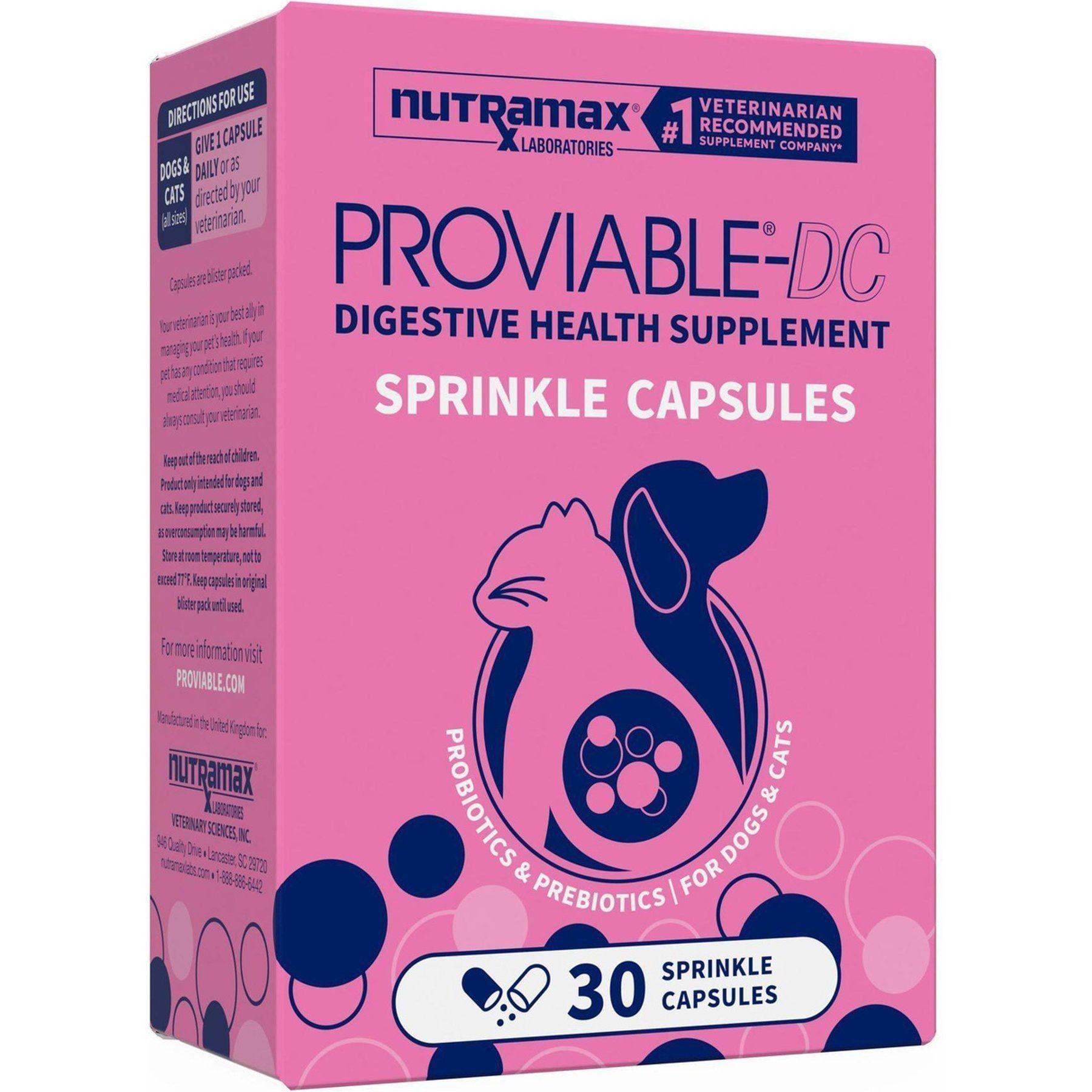
A multi-strain probiotic and prebiotic supplement for dogs and cats, in sprinkle capsules or chewable tablets.
Webvet may earn a commission when you click through to Chewy, at no extra cost to you.
Diphenoxylate side effects in dogs
Mar Vista says side effects are not common. Merck names constipation and bloat as the most common in dogs, and VCA lists:
- Constipation
- Bloating
- Sleepiness

Merck warns that more serious problems could potentially occur, especially in cats: paralytic ileus (a gut that stops moving), toxic megacolon, pancreatitis, and nervous system effects. No published figure shows how often any of these happen in dogs.
VCA says to stop the medicine and contact the veterinarian immediately if any of these appear:
- Signs of pancreatitis
- Vomiting
- Worsening diarrhea
- Appetite loss
- Extreme lethargy
- Jaundice, a yellowing of the skin, eyes, or gums
VCA also advises watching for an allergic reaction over the entire course of treatment, since sensitivity can develop with repeated doses.
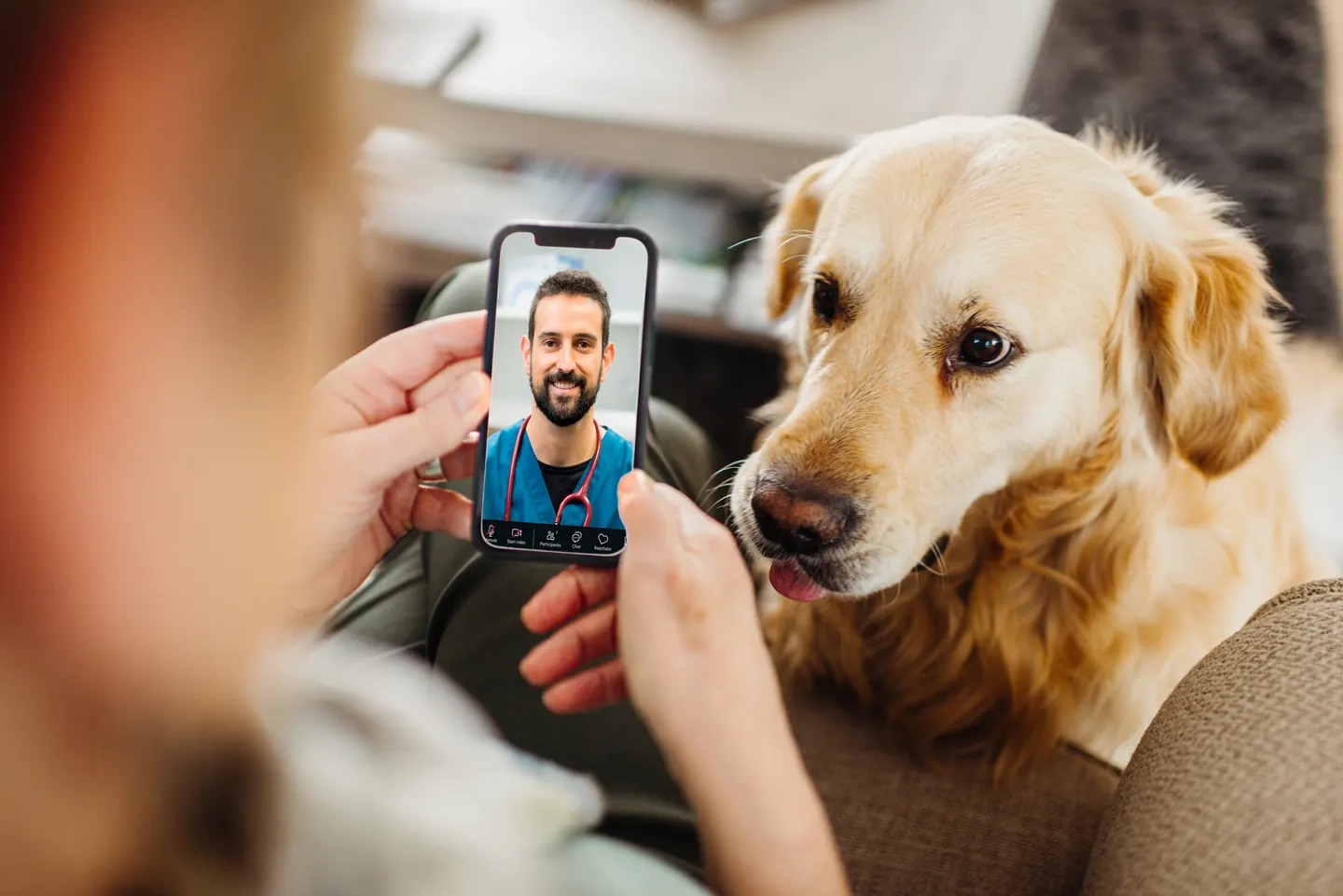 Sponsored
Vet care that's always there
Unlimited video calls and messaging with licensed vets for less than a typical vet visit. One membership covers up to five pets.
Use code Pets60
Plans start at $12/month · covers up to 5 pets
- Licensed vets in most states
- Rx for 150+ conditions
- 4.7 on Trustpilot
Overdose signs and when diarrhea needs a vet instead
VCA states that an overdose may cause fever and a high heart rate. The DailyMed label describes overdose in people as potentially life-threatening, with opioid and atropine-type signs.

The overdose signs the human label lists include:
- Respiratory depression (slowed breathing)
- Lethargy or coma
- Dry skin and mucous membranes, flushing, and fever
- Fast heart rate and fast breathing
- Pupils that are too wide or too small
- Seizures
The label explains the delay: diphenoxylate slows stomach emptying, so first signs may not show for up to 30 hours. Breathing depression is treated with a narcotic antagonist such as naloxone, given by a veterinary team.
Some diarrhea should never be slowed down. The label says to withhold Lomotil until severe dehydration or electrolyte imbalance is corrected, and bloody diarrhea, repeated vomiting, or a weak, lethargic dog needs a veterinarian, not an antidiarrheal.
Dogs that should not take diphenoxylate and drug interactions
VCA says not to use diphenoxylate with atropine in dogs that:
- Are allergic to either drug in the combination
- Have diarrhea caused by a toxin or an infection, such as parvovirus
- Have liver failure or obstructive jaundice
- Have an intestinal obstruction
VCA advises extra caution in cats, older or debilitated pets, and dogs with Addison's disease, hypothyroidism, liver disease, severe kidney failure, or respiratory disease. The human label adds extreme caution with abnormal liver function.
Tell the vet about every medicine and supplement the dog takes. VCA lists these as drugs to use with caution alongside diphenoxylate:
- MAO inhibitors such as selegiline and amitraz, which the human label says may trigger a hypertensive crisis
- Anything that causes sedation, including phenobarbital, CBD, and acepromazine
- Antihistamines
- Amitriptyline and clomipramine
- Amantadine
- Promotility drugs such as metoclopramide and cisapride
Diphenoxylate vs loperamide (Imodium) for dogs
Here is how diphenoxylate compares with Imodium (loperamide): both are synthetic opiates that act on the gut, and Merck lists both for diarrhea in dogs. Mar Vista notes that definitive studies comparing them are lacking, so no published figure ranks their strength in dogs.

- Prescription and controlled status: diphenoxylate (Lomotil) is a prescription-only Schedule V controlled substance; Merck notes loperamide is available over the counter.
- Dosing interval: Merck lists diphenoxylate every 8–12 hours and loperamide every 6–8 hours.
- MDR1 breeds: Merck says loperamide should not be used in ivermectin-sensitive breeds such as Collies, Australian Shepherds, and Old English Sheepdogs without genetic testing, and Washington State University says it causes neurological toxicity in dogs with the MDR1 mutation at diarrhea doses.
- Shared limits: neither belongs in infectious or toxin-related diarrhea.
WSU's list of problem drugs for MDR1 dogs names loperamide and does not include diphenoxylate. That does not make diphenoxylate risk-free for herding breeds; the vet weighs each dog's history and breed.
Is diphenoxylate stronger than Imodium?
No published head-to-head study answers that for dogs. Mar Vista notes loperamide may be preferable for dogs and is believed to work faster and last longer, but adds that definitive studies are lacking. Strength matters less than fit: the vet picks the drug that suits the dog's breed, health, and cause of diarrhea.
How to give diphenoxylate and why it is a controlled drug
VCA's directions for giving it at home are straightforward:
- Give it by mouth, with or without food; if the dog vomits after a dose on an empty stomach, give later doses with food
- Measure liquid forms carefully
- If a dose is missed, never give two doses at once
- Store it at 68–77°F (20–25°C), away from light, children, and pets

For a tablet, a treat pouch such as Greenies Pill Pockets Canine Chicken Flavor Dog Treats can hide the pill.
A soft paste such as Pet MD Wrap-A-Pill Peanut Butter Pill Paste is listed at $14.99, and the Vet Worthy Pill Gun for Dogs at $5.49, on Chewy when we checked in November 2026. None of these changes the dose.
Is diphenoxylate atropine controlled?
Yes. The DailyMed label classifies Lomotil as a Schedule V controlled substance under federal regulation. VCA explains that the DEA gives this status to drugs with a potential for diversion to people other than the patient, and that using a controlled substance in any person or animal other than the one it was prescribed for is illegal.
Diphenoxylate for dogs questions
Frequently Asked Questions
How quickly does Lomotil work in dogs?
VCA says diphenoxylate with atropine should take effect within about 1 to 2 hours. It wears off within 24 hours. If diarrhea is not easing as the veterinarian expected, call the clinic.
Is Imodium or Lomotil better for a dog with diarrhea?
Neither suits every dog. Loperamide (Imodium) is over the counter but causes neurological toxicity in dogs with the MDR1 mutation; Lomotil is a controlled prescription drug. The veterinarian chooses based on breed, health, and cause.
Why is Lomotil considered a narcotic?
Diphenoxylate is a synthetic opioid, and the DailyMed label says it is chemically related to the narcotic pain reliever meperidine. It is a Schedule V controlled substance, though the label says antidiarrheal doses have not produced addiction.
What do vets use instead of Lomotil for dogs?
Merck lists loperamide as the other synthetic opiate used for diarrhea in dogs. Often no antidiarrheal is needed, because the vet treats the cause instead, whether parasites, infection, diet, or inflammation.
Can diphenoxylate cause constipation in dogs?
Yes. Merck names constipation and bloat as the most common adverse effects in dogs, and VCA adds sleepiness, a mild sedation. If the dog strains, seems bloated, or is very drowsy, call the vet before the next dose.
Can I give my dog my own Lomotil tablets?
No. Lomotil is a controlled human prescription drug, and VCA says using it in anyone other than the prescribed patient is illegal. A veterinarian has to examine the dog, set the dose, and write the prescription.
Is diphenoxylate used for cough in dogs?
Sometimes. VCA lists coughing in dogs as one of its uses, and Mar Vista explains that its cough suppressant effect can be a side effect or the goal, depending on the dog. A coughing dog still needs a diagnosis first.
How long can a dog stay on diphenoxylate?
No maximum course is published for dogs. Whether a course is short-term or longer is the veterinarian's decision, based on how the dog responds and what is causing the diarrhea.
When should a dog with diarrhea not get diphenoxylate?
VCA says never when the diarrhea comes from a toxin or an infection such as parvovirus. It is also off limits with liver failure, obstructive jaundice, intestinal obstruction, or an allergy to either drug.
Veterinarian · BVMS MRCVS
Dr. Pippa Elliott, BVMS, MRCVS, is a veterinarian with nearly 30 years of experience in companion animal practice. Dr. Elliott earned her Bachelor of Veterinary Medicine and Surgery from the University of Glasgow. She was also designated a Member of the Royal College of Veterinary Surgeons. Married with 2 grown-up kids, Dr. Elliott has a naughty Puggle named Poggle, 3 cats and a bearded dragon.
Related reading

Budesonide for Dogs: IBD Dosage, Side Effects, and How It Compares With Prednisone

Visbiome for Dogs: Probiotic Dosage, Safety, and How It Differs From Pet Probiotics

Pro Pectalin for Dogs: Dosage, Side Effects, and When Diarrhea Needs a Vet
