Visbiome for Dogs: Probiotic Dosage, Safety, and How It Differs From Pet Probiotics
Visbiome Vet is a high-potency, eight-strain probiotic vets recommend for some dogs with diarrhea or chronic gut disease. This guide covers dosing by weight, capsules versus packets, side effects, and how it compares.

BVMS MRCVS
Medically reviewed by Dr. Pippa Elliott, BVMS MRCVS · Last reviewed

Drug facts
Visbiome Vet· De Simone Formulation multi-strain probiotic
Visbiome Vet is a high-potency 8-strain probiotic (De Simone Formulation) sold as 112.5 billion CFU capsules and 225 billion CFU powder packets, dosed by body weight. It is a supplement, not an FDA-approved drug. ACVIM says it might be considered for dogs with chronic enteropathy after failed diet trials.
Treats
 Sponsored
Is Visbiome Vet right for your dog?
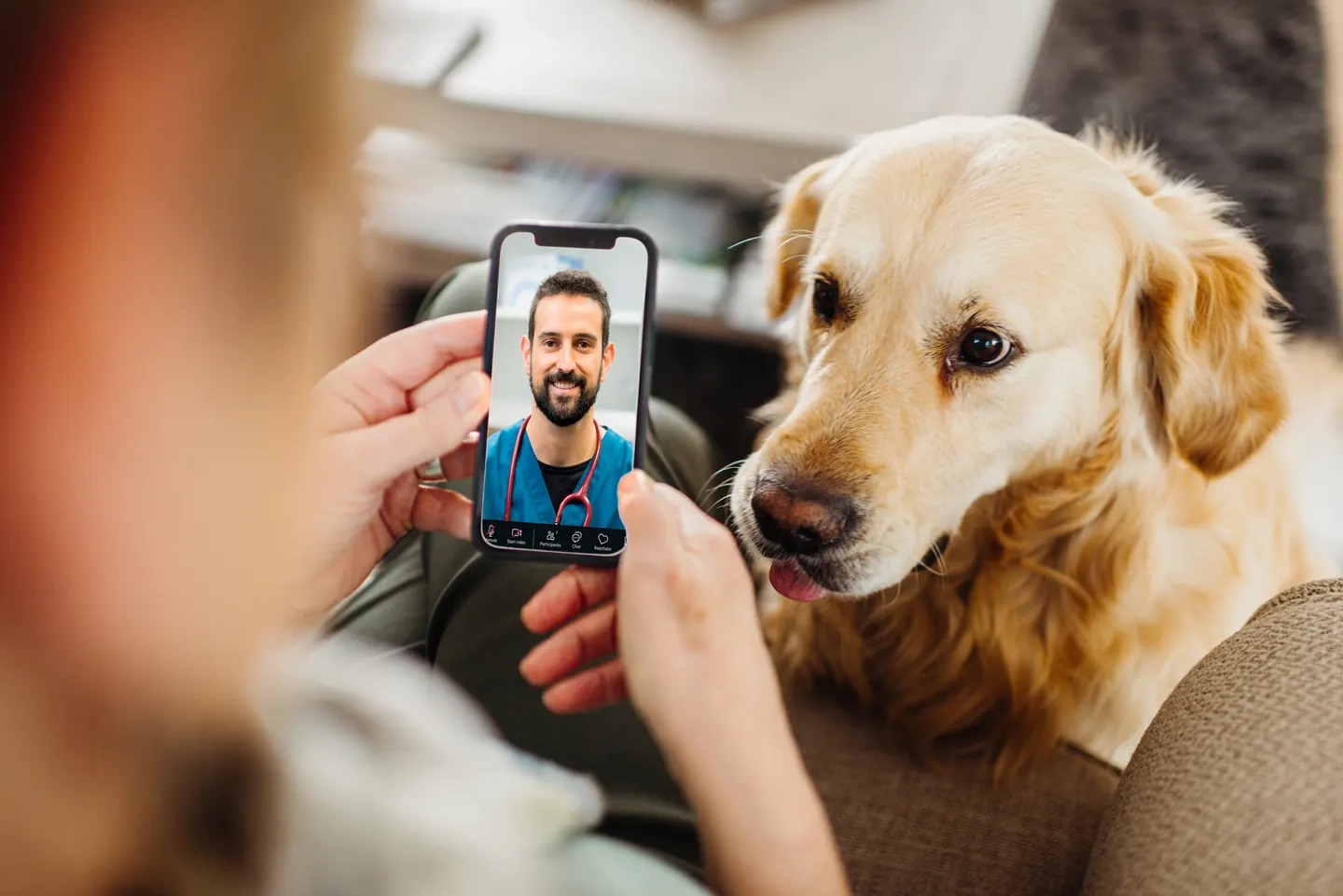
Ask a licensed vet at Dutch over video before you start Visbiome Vet. Unlimited calls and messaging are included.
Use code Pets60
Plans start at $12/month · covers up to 5 pets
- Licensed vets in most states
- Rx for 150+ conditions
- 4.7 on Trustpilot
What Visbiome is, what vets use it for in dogs, and whether you need a vet first
Visbiome for dogs means Visbiome Vet, a high-potency probiotic with eight strains of live bacteria in every capsule and powder packet, according to its maker, ExeGi Pharma. It is a supplement sold for dogs and cats, not an FDA-approved drug, and no prescription is needed to buy it.
The maker positions Visbiome for dogs as support for occasional digestive upset, and veterinarians also use it for chronic gut inflammation, including inflammatory bowel disease. The daily amount is set by body weight. If your dog has blood in the stool, keeps vomiting, or seems unwell, today is a vet day, before any probiotic.
- 1What makes Visbiome Vet different: eight strains at 112.5 billion CFU per capsule or 225 billion CFU per packet.
- 2It is a supplement, not an FDA-approved drug, and no prescription is required.
- 3The dose set by body weight comes from the maker's chart; your vet can tailor it.
- 4Bloody diarrhea, vomiting, or a dull, weak dog needs a veterinarian first.
What makes Visbiome Vet different from most pet probiotics is the amount and mix of bacteria. ExeGi says the vet product is the same eight-strain formula sold for people, and its pet page claims 112.5 billion CFU per capsule is the highest concentration among pet probiotics. That is the maker's claim, not an independent ranking.
Ordinary pet probiotics are usually far smaller doses. Purina's FortiFlora powder, for example, is a single-strain probiotic given as one sachet a day on food, per Purina's veterinary directions, and Cornell's Riney Canine Health Center cites a current recommendation of 1-10 billion CFU a day for dogs.
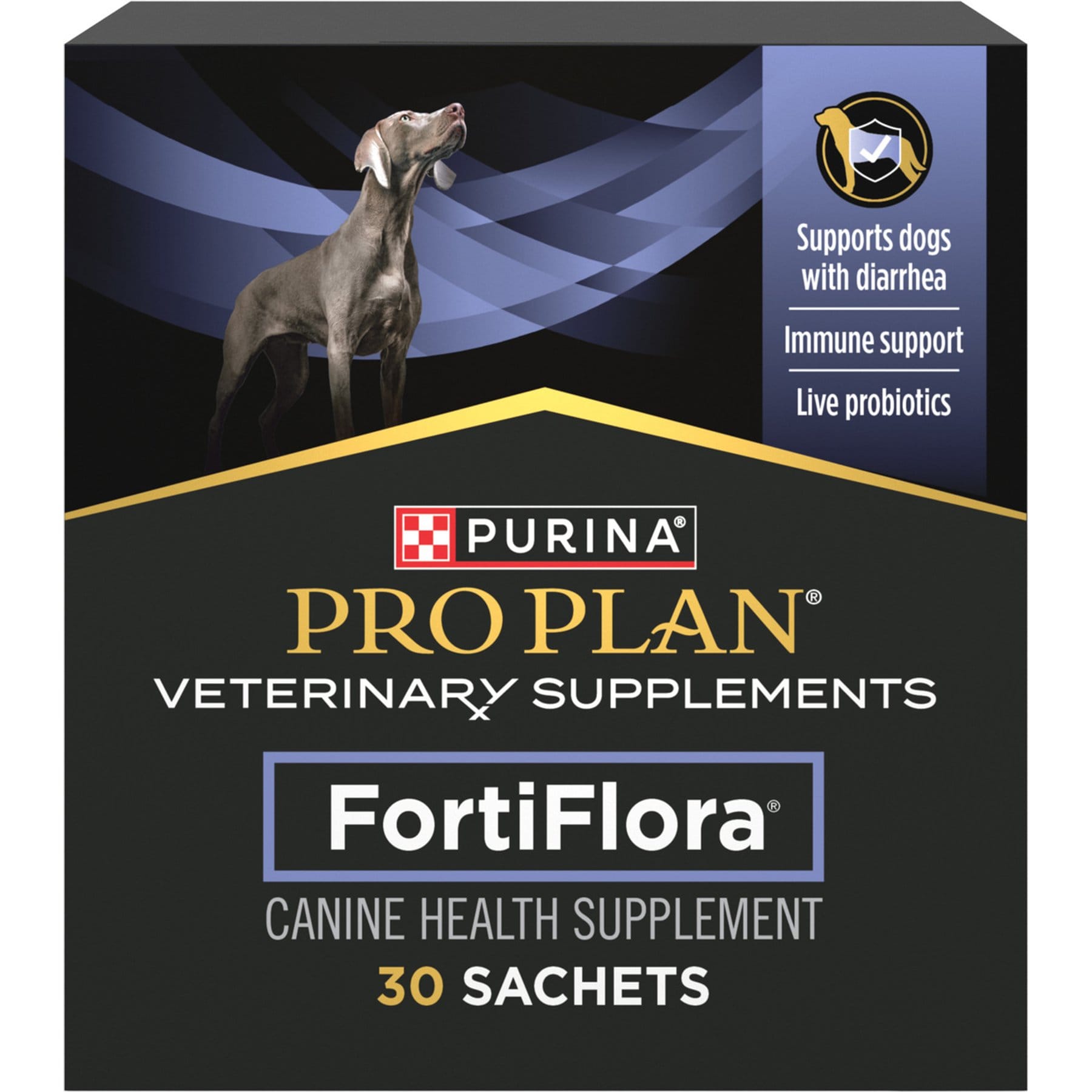
A probiotic powder designed to manage the symptoms of diarrhea and excessive gas in dogs.
Webvet may earn a commission when you click through to Chewy, at no extra cost to you.
Visbiome Vet uses the De Simone Formulation, a blend of eight named strains listed in a canine study published in Gut Microbes (2017):
- Lactobacillus plantarum, Lactobacillus paracasei, Lactobacillus acidophilus, and Lactobacillus delbrueckii subsp. bulgaricus
- Bifidobacterium breve, Bifidobacterium longum, and Bifidobacterium infantis
- Streptococcus thermophilus, which made up about 40 percent of the product by weight in that study

Do you need a vet before starting Visbiome? Legally, no. ExeGi sells it straight to owners, and the label carries the standard notice that its statements have not been evaluated by the FDA and that it is not intended to diagnose, treat, cure, or prevent disease.
Practically, a vet visit is wise. VCA Animal Hospitals advises asking your veterinarian before giving any probiotic, because the quality and effectiveness of these products are not always known. The vet can also rule out a cause that needs real treatment.
The FDA Center for Veterinary Medicine treats any live-microbe animal product that claims to cure or treat disease as an unapproved new animal drug. That is why the Visbiome Vet label talks about digestive support rather than treating a condition.
Visbiome dosage for dogs by weight
| Dog's weight or situation | Daily amount and source | Form and strength | How often |
|---|---|---|---|
| Less than 20 lbs | 1-2 capsules daily (manufacturer daily intake) | Advanced GI Care capsule, 112.5 billion CFU | Once-daily total |
| 20-60 lbs | 2-3 capsules daily (manufacturer daily intake) | Advanced GI Care capsule, 112.5 billion CFU | Once-daily total |
| Larger than 60 lbs | 4 capsules daily (manufacturer daily intake) | Advanced GI Care capsule, 112.5 billion CFU | Once-daily total |
| Less than 20 lbs | Up to 1 packet daily (manufacturer daily intake) | Advanced GI Care packet, 225 billion CFU | Once-daily total |
| 20-60 lbs | 1-2 packets daily (manufacturer daily intake) | Advanced GI Care packet, 225 billion CFU | Once-daily total |
| Larger than 60 lbs | 2 packets daily (manufacturer daily intake) | Advanced GI Care packet, 225 billion CFU | Once-daily total |
| Chronic inflammatory enteropathy after failed diet trials | 112-225 x 10^8 lyophilized bacteria/kg PO q24h (ACVIM 2026 consensus, conditional) | De Simone formulation, capsule or packet | Every 24 hours |
Because Visbiome Vet is a supplement, there is no FDA label dose. The dosing chart comes from the maker's Visbiome Vet pet owners page, which uses weight-based daily intake guidelines rather than one dose for every pet. Your vet picks the exact amount within that range.
How often should I give my dog visbiome?
Once a day, as a daily total. Both the manufacturer's chart and the ACVIM consensus describe Visbiome as a once-every-24-hours amount, not a per-meal dose. Give the full daily amount your vet sets each day, and ask the vet before splitting it across meals so the daily total stays the same.
Several capsules a day can be a lot to hand a picky dog. Cornell notes that a capsule is easy to disguise in a treat, and Greenies Pill Pockets for Capsules are a chicken treat with a built-in pouch that, per the Chewy listing, holds most large capsules.
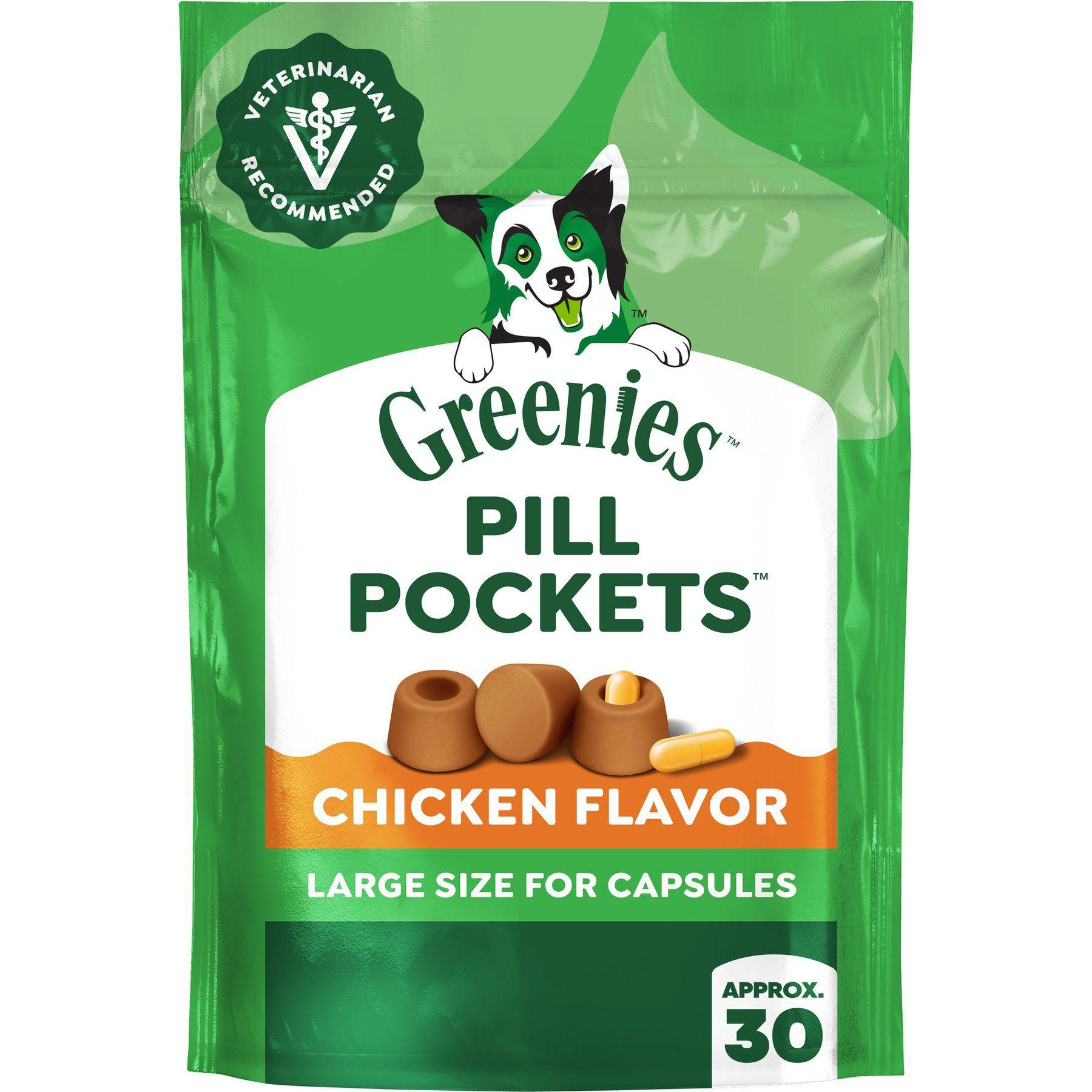
Chicken treats with a pouch that holds most large capsules, for dogs that refuse a plain capsule.
Webvet may earn a commission when you click through to Chewy, at no extra cost to you.
Pill treats add calories, so count them toward the day's food if your dog is on a weight plan. For a dog on an elimination diet trial, ask the vet which wrap, if any, fits that diet.
Why might your vet's dose differ from the chart?
For dogs with chronic gut inflammation, the vet may work from the ACVIM consensus statement (2026) instead. It gives a range of 112-225 x 10^8 lyophilized bacteria per kilogram by mouth once every 24 hours, and the vet calculates the dose for your dog's weight.
Other details can change the number too:
- Older figures: a 2018 dvm360 launch report gave 2 capsules daily for dogs of 20 to 60 lb, while the current manufacturer chart says 2-3 capsules daily; the current chart is the one to follow
- Research doses: in the 2017 canine IBD trial, dogs weighing 10-20 kg received capsules containing 450 billion probiotic bacteria daily, a dose set by the investigators
- Early bloating: ExeGi's dosing guidelines say some dogs bloat in the first few days, and the daily amount may need to be reduced while the gut adjusts
Give exactly the amount your vet recommends, and check with the vet before changing or stopping it.

Visbiome Vet capsules vs powder packets
The two Visbiome Vet Advanced GI Care forms hold the same De Simone formulation; only the strength and format differ, according to the Visbiome Vet pet owners page:
- Capsules: 112.5 billion CFU each, 40 per bottle, unflavored
- Powder packets: 225 billion CFU each, 30 per box, slightly sweet
- Both: no added flavoring, and described by ExeGi as non-GMO, lactose-free, gluten-free, and vegetarian
ExeGi says both the capsules and the powder can be mixed with food or given directly, and capsules can be pulled apart. That means a dog that will not swallow a capsule can still get the contents sprinkled on a meal.
The packets have no added flavoring, so they are effectively unflavored, though ExeGi describes the powder as slightly sweet and says some dogs will lick it straight from a hand. Because one packet carries the strength of two capsules, packets also make sense for large dogs on higher daily amounts.

Capsules or packets: which suits your dog?
Visbiome capsules for dogs suit small dogs and owners who want finer steps in the dose, since the chart for dogs under 20 lbs moves in single capsules, while it allows up to one packet a day for the same dogs. Capsules are also easier to hide whole in a treat.
Do not confuse the products. Visbiome Vet Constipation Care uses a different eight-strain blend called Slab 51 and is listed for cats, not dogs. For dogs, the high-potency probiotic vets mean is Advanced GI Care, in capsules or packets.
What Visbiome is used for in dogs and how long it takes to work
ExeGi markets Visbiome Vet Advanced GI Care for occasional GI upset. The stronger veterinary evidence concerns dogs with IBD and other chronic gut inflammation, where it is used alongside diet and medication rather than alone.
The key study is the 2017 Gut Microbes trial. It randomized 34 dogs with IBD to standard therapy, meaning diet plus prednisone, with or without the probiotic. The results were close:
- At about 3 weeks, 12 of 14 probiotic dogs (86 percent) and 10 of 12 standard-therapy dogs (83 percent) were in clinical remission
- Both groups improved quickly, but gut tissue inflammation did not improve on biopsy in either group
- Probiotic dogs had more tight junction proteins in the gut lining, which the authors say suggests a possible benefit to the intestinal barrier
The ACVIM consensus statement weighs that evidence carefully:
- It calls the role of probiotics in chronic inflammatory enteropathy limited, but says they seem well tolerated
- It singles out the De Simone formulation as one probiotic that might be considered in dogs that have failed diet trials
- It describes a trial in which this probiotic brought dogs into remission about as well as prednisone plus metronidazole, though more slowly, and grades that evidence as weak
Dogs with IBD often still need drugs such as budesonide, so Visbiome is an add-on decision for the vet, not a replacement for diet or medication.
The Merck Veterinary Manual adds caution: probiotics are generally well tolerated, but contents and potency can differ from the label, and evidence of benefit in chronic enteropathy is scarce.
For a routine bout of loose stool, a simpler, lower-dose product may be enough. A nutrition professor quoted by Cornell names FortiFlora and Proviable as probiotics with studies behind them, and the FortiFlora chewable tablets are listed on Chewy as formulated for dogs with diarrhea.
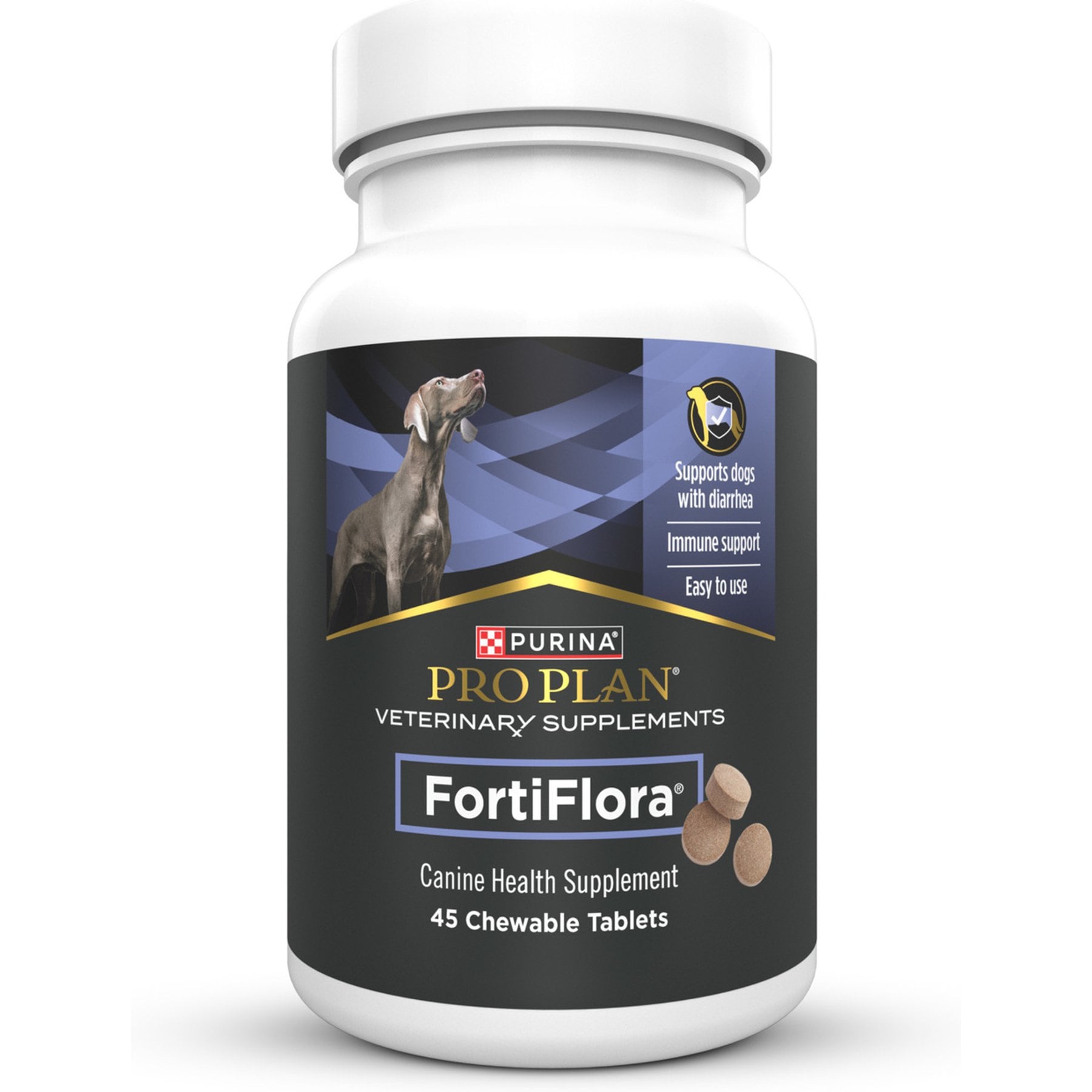
A chewable probiotic tablet formulated to promote normal intestinal microflora in dogs with diarrhea.
Webvet may earn a commission when you click through to Chewy, at no extra cost to you.
How long does it take for Visbiome to work in dogs?
No published figure gives a set time for Visbiome to work in dogs. In the 2017 trial, dogs were rechecked at about 3 weeks and about 8 weeks, and most were in remission at the 3-week visit, but they were also on diet and prednisone. The ACVIM-cited trial ran the probiotic for 60 days.
Merck adds that how long any probiotic-driven change in the gut bacteria lasts is unknown, so a recheck with your vet is the usual way to judge whether it is helping. For simple diarrhea, VCA says a dog that does not improve within two days may need more testing or stronger treatment, probiotic or not.
Proviable is the other name owners meet most often. Nutramax's Chewy listing describes it as a multi-strain probiotic with prebiotics, sold as sprinkle capsules and chewables, and the label directs one capsule daily for dogs of all sizes.
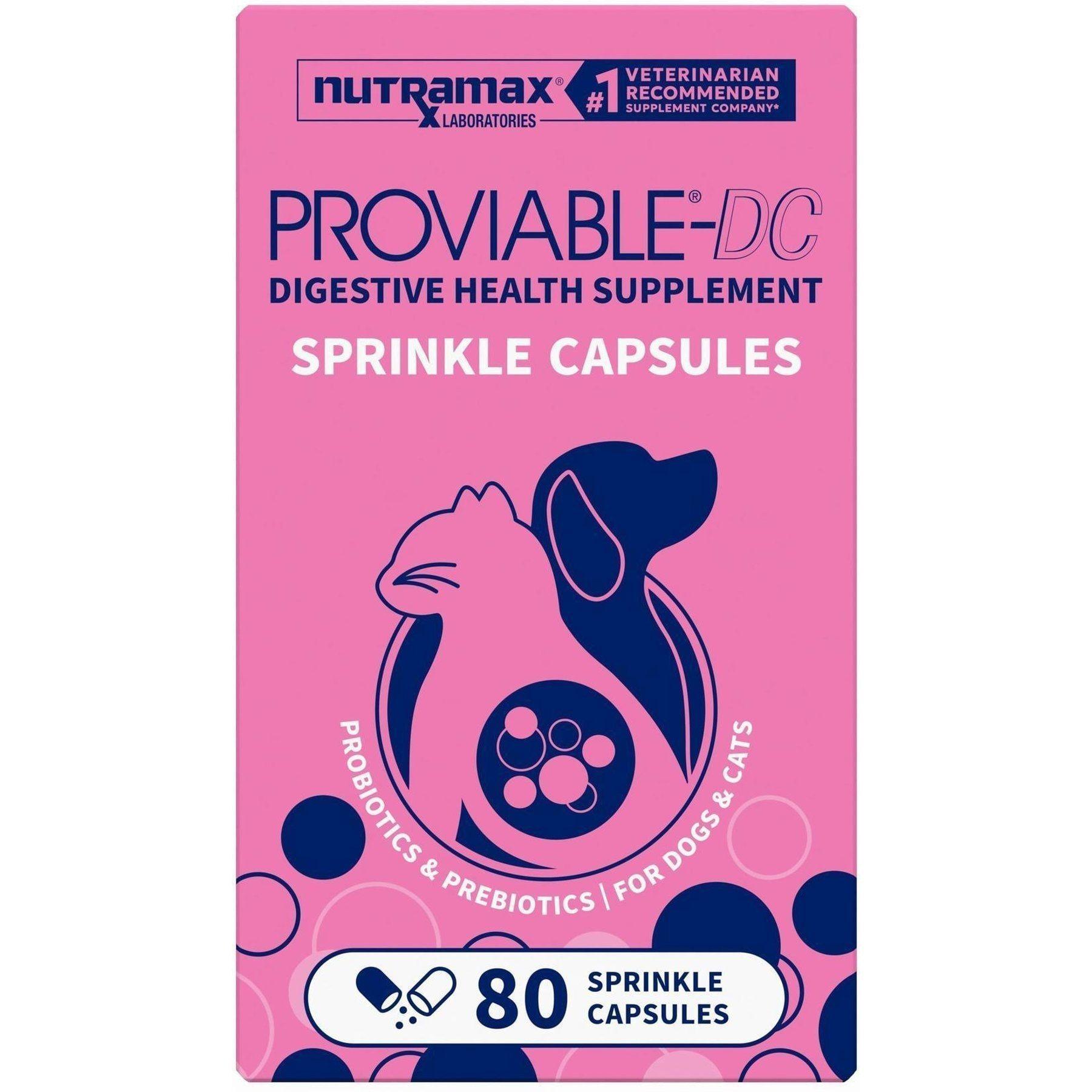
A multi-strain probiotic with prebiotics, in sprinkle capsules, to help support intestinal balance in dogs and cats.
Webvet may earn a commission when you click through to Chewy, at no extra cost to you.
Visbiome side effects in dogs: gas, loose stool, and when to stop
Visbiome Vet is generally gentle. In the canine trial, no major adverse effects were reported, and owners described the product as palatable and well tolerated. The side effects that do show up are digestive and usually early.
 Sponsored
Vet care that's always there
Unlimited video calls and messaging with licensed vets for less than a typical vet visit. One membership covers up to five pets.
Use code Pets60
Plans start at $12/month · covers up to 5 pets
- Licensed vets in most states
- Rx for 150+ conditions
- 4.7 on Trustpilot
What are the side effects of Visbiome for dogs?
The common Visbiome side effects in dogs are early gas or loose stool while the gut bacteria shift. ExeGi warns of bloating in the first few days. In the 2017 trial, two dogs had soft stools in the first week, and one dog vomited more in week two and left the study, cause undetermined.
Two other points to know:
- One trial dog vomited more often, though the cause was never determined
- Dogs allergic to milk protein may react, since ExeGi says trace milk protein may be present
Can Visbiome cause loose stools?
It can, briefly. Soft stools in the first week were the most common problem in the canine trial. A softer stool for a few days as the dose starts is expected; diarrhea that gets worse, lasts more than two days, or comes with other signs is not, and it needs your vet.
Severe diarrhea is not a reported effect. Track the stool daily so the vet can tell a short adjustment from a real illness.
Constipation is not a reported side effect. ExeGi lists bloating, and the trial reported soft stools, not hard ones. If stool becomes hard or your dog strains, call the vet rather than adjusting the amount on your own.
When a dog with diarrhea needs a vet, not a probiotic
A probiotic supports the gut; it does not find out why a dog has diarrhea. Common causes of diarrhea in dogs range from a diet change to infection, and some need treatment fast.
VCA also advises seeing a veterinarian if frequent liquid or semi-liquid stools last more than two days. Other diarrhea signs that need a vet:
- Severe or bloody diarrhea at any point
- Diarrhea alongside vomiting, low energy, or loss of appetite
- Weight loss along with the diarrhea
- Diarrhea that is not improving within two days

For a bright, eating adult dog with mild loose stool, the vet may suggest a short bland diet for dogs first. When a medicine is needed, options such as diphenoxylate are a vet's call, not a home choice.
Dogs that should not get Visbiome and timing around antibiotics
ExeGi publishes no dog-specific list of reasons to avoid Visbiome Vet. A few dogs still need the vet's go-ahead first:
- Severely immunocompromised dogs: Cornell says probiotics should be given only with caution and under veterinary supervision
- Dogs with milk protein allergy: the Advanced GI Care products are lactose-free but may contain trace milk protein
- Dogs with red-flag diarrhea: blood, vomiting, or lethargy needs an exam before any supplement
Antibiotics are the main timing issue. ExeGi says certain antibiotics may inactivate some strains, so the two should not be given together. The maker's wording differs between its two sites, so ask your vet which spacing to use:
- visbiome.com: give the antibiotic 4 hours before or 4 hours after Visbiome
- visbiomevet.com: do not give Visbiome Vet within 2-4 hours before or after an antibiotic
The Merck Veterinary Manual notes that antibiotics can disrupt the gut microbiota and suggests probiotics to help repair it. More on that pairing is in the WebVet guide to dog probiotics after antibiotics.
How to give Visbiome: timing, food, and storage
Giving Visbiome Vet is simple once the dog accepts it. The practical steps from ExeGi and Cornell:
- Mix capsules or powder into a small portion of food, or give them directly
- Pull a capsule apart and sprinkle the contents if the dog will not take it whole
- Hide a whole capsule in a treat, which Cornell says works for picky dogs
For dogs that spit out treats, a soft paste such as Pet MD Wrap-A-Pill Peanut Butter pill paste can hold a capsule. The Chewy listing describes it as a peanut butter flavored wrap for hiding medications or supplements.
Storage matters because these are live bacteria. The Visbiome Vet pet owners page gives these rules:
- Keep it in the refrigerator at 36-46 F (2-8 C), and do not freeze it
- It can stay at room temperature for up to one week without losing potency
- If left out overnight, it is still effective; put it back in the fridge as soon as possible
- Keep it away from heat, which can inactivate some strains

What is the best time to take Visbiome?
There is no published best time of day. ExeGi says Visbiome can go with food or be given directly, and its only timing rule is spacing it away from antibiotics. Pick a time you will remember each day, such as breakfast, and keep the daily total consistent.
Morning versus evening is a common question for every dog probiotic, and the WebVet guide on when to give a dog probiotics walks through the options.
Visbiome vs FortiFlora, Proviable, and other pet probiotics, and where to buy it
Visbiome vs Proviable for dogs, and Visbiome vs FortiFlora, comes down to strain count, potency, form, and price. The manufacturers report:
- Visbiome Vet: 8 strains; 112.5 billion CFU per capsule or 225 billion CFU per packet; dosed by weight, per ExeGi
- Proviable-DC: 7 strains plus prebiotics; at least 5 billion CFU per capsule; 1 capsule daily for all sizes, per Nutramax
- FortiFlora: 1 strain, Enterococcus faecium SF68, at 5 x 10^8 CFU per gram in 1 gram sachets, 1 sachet daily, per Purina's UK veterinary page; US packaging may differ
Higher numbers do not automatically mean better results. Merck notes that a probiotic's effects depend on both the dose and the exact strain mix, so evidence for one product does not carry over to another. FDA guidance also states that claims for probiotic animal products are unproven.
For a broader look at which probiotics veterinarians tend to recommend for dogs, the WebVet guide to probiotics for dogs compares the main options. Kaolin and pectin products such as Pro-Pectalin are a different approach aimed at firming stool.
Is Visbiome a good probiotic for dogs?
For the right dog, yes. It is the one specific probiotic the ACVIM consensus names as worth considering for chronic inflammatory enteropathy after failed diet trials, and the canine trial found it well tolerated. For a routine upset, a lower-dose product such as FortiFlora or Proviable may be all your vet suggests.
Owner reviews of Visbiome Vet are anecdotes. The more useful evidence is the trial data and the ACVIM guidance, both of which frame it as an add-on for chronic disease rather than a cure.
How much does Visbiome cost?
On the Visbiome Vet site, a 2-pack of capsule bottles (80 capsules) is listed at $94.95 one-time or from $85.46, and a box of 30 packets at $66.95 when we checked in November 2026. At the one-time price, a capsule works out to about $1.19 and a packet to about $2.23, so daily cost rises with the dog's weight.
For comparison on Chewy when we checked in November 2026:
- Purina Pro Plan Veterinary Diets FortiFlora Dog Supplement, 30 count was listed at $30.99, about $1.03 per daily sachet
- Nutramax Proviable Probiotics & Prebiotics, 80 count was listed at $44.99, about 56 cents per daily capsule
- A FortiFlora Powder 7 count trial box was listed at $8.99
ExeGi sells Visbiome Vet from its own website with free shipping in the continental US, and offers to invite your vet to carry it. Ask your clinic whether it stocks Visbiome Vet before buying from other pet stores, since heat can inactivate a refrigerated probiotic.
Visbiome for dogs questions
Frequently Asked Questions
Does Visbiome need a prescription for dogs?
No prescription is needed. Visbiome Vet is sold directly to owners as a supplement. Still, a veterinarian should confirm the cause of your dog's gut trouble first, since VCA notes that probiotic quality and effectiveness vary.
How is Visbiome Vet different from the human Visbiome?
ExeGi says Visbiome Vet contains the same eight strains as the human formula. The human product is marketed as a medical food for use under a doctor's supervision, while Visbiome Vet carries a supplement disclaimer and the National Animal Supplement Council quality seal.
Can Visbiome be given with antibiotics?
Yes, but not at the same moment. Some antibiotics can inactivate the strains. visbiome.com says to separate them by 4 hours, while the Visbiome Vet site says 2-4 hours, so ask your vet which gap to use.
Can Visbiome cause constipation in dogs?
Constipation is not among the effects the maker or the canine trial reports; the trial saw softer stool, not harder. If your dog strains or passes hard, dry stool after starting it, tell your vet.
How long can a dog stay on Visbiome?
No maximum duration is published. Cornell says probiotics can be given daily as part of long term care, and the ACVIM-cited trial used Visbiome for 60 days. Your veterinarian can decide whether your dog stays on it, steps down, or stops.
Veterinarian · BVMS MRCVS
Dr. Pippa Elliott, BVMS, MRCVS, is a veterinarian with nearly 30 years of experience in companion animal practice. Dr. Elliott earned her Bachelor of Veterinary Medicine and Surgery from the University of Glasgow. She was also designated a Member of the Royal College of Veterinary Surgeons. Married with 2 grown-up kids, Dr. Elliott has a naughty Puggle named Poggle, 3 cats and a bearded dragon.
Related reading

Diphenoxylate for Dogs (Lomotil): Dosage, Safety, and Why Vets Use Caution

Budesonide for Dogs: IBD Dosage, Side Effects, and How It Compares With Prednisone

Pro Pectalin for Dogs: Dosage, Side Effects, and When Diarrhea Needs a Vet
