How Long Can Fleas Live Without a Host? The Flea Life Cycle Explained
Moved out, lost a pet, or back from a flea-filled house? A vet explains how long each flea life stage can wait without a host, where fleas survive in carpet, furniture, and bedding, whether they live on people, and how to break the cycle.

BVMS MRCVS
Medically reviewed by Dr. Pippa Elliott, BVMS MRCVS · Last reviewed

This article contains affiliate links. Webvet may earn a commission when you buy through them, at no extra cost to you.
How long can fleas live without a host? It depends on the life stage. A newly emerged adult flea can survive about 1 to 2 weeks before it needs a blood meal, according to the Merck Veterinary Manual.
A fully formed flea still sealed in its cocoon can wait far longer: up to 5 months in Texas A&M AgriLife Extension guidance, and up to 12 months at cool temperatures according to UC IPM. That waiting stage is why an empty home can still greet people with biting fleas.

 Sponsored
Need flea, tick, or parasite care for your pet?
A licensed vet at Dutch can recommend the right preventive and prescribe it when it's appropriate. Annual members get 20% off their first flea and tick order.
Use code Pets60
Plans start at $12/month · covers up to 5 pets
- Licensed vets in most states
- Rx for 150+ conditions
- 4.7 on Trustpilot
How long can fleas live without a host? The answer by life stage
Fleas can survive without a host for days to months, depending on the stage: unfed adult fleas last about 1 to 2 weeks, while pupae in their cocoons can wait for months. UC IPM notes that adult cat fleas remain on the host, where they feed, mate, and lay eggs. The eggs, larvae, and pupae live in the home instead, so the real question is how long each stage can hold out once the dog or cat is gone.
- 1Flea survival by life stage: newly emerged adult fleas last about 1 to 2 weeks without a blood meal, and eggs hatch within days.
- 2Larvae need humidity and the dried droppings adult fleas leave behind, so dry air kills them.
- 3This is why cocooned pupae wait: a fully formed flea can stay sealed in its cocoon for months until warmth, pressure, or breath signals that a host is near.
- 4Treating every pet, vacuuming often, and treating the home together ends the waiting cycle.
Each stage lasts a different length of time off the host:
- Adult fleas (newly emerged, unfed): about 1 to 2 weeks before they need to feed, per Merck. The Companion Animal Parasite Council (CAPC) says that in most homes, newly emerged fleas die within 1 to 2 weeks without a host. Texas A&M gives a few days to 2 weeks.
- Eggs: they hatch in 1 to 6 days (Merck) or about 2 to 5 days (UC IPM), so eggs do not wait long.
- Larvae: they feed for 5 to 11 days (Texas A&M) or 8 to 15 days (UC IPM) before spinning a cocoon, and only where humidity is high enough.
- Cocooned pupae: the pupa is fully developed in 1 to 2 weeks, but the adult inside can stay put for up to 30 weeks in cool, humid conditions (CAPC), up to 5 months (Texas A&M), or up to a year (Merck).
Because the stages that wait off the host sit in carpet fibers and upholstery, a labeled home product reaches places a pet treatment cannot. The ADAMS Plus Flea & Tick Carpet Spray, 16-fl oz spray is a carpet and upholstery spray whose label targets adult fleas, flea eggs, and larvae.
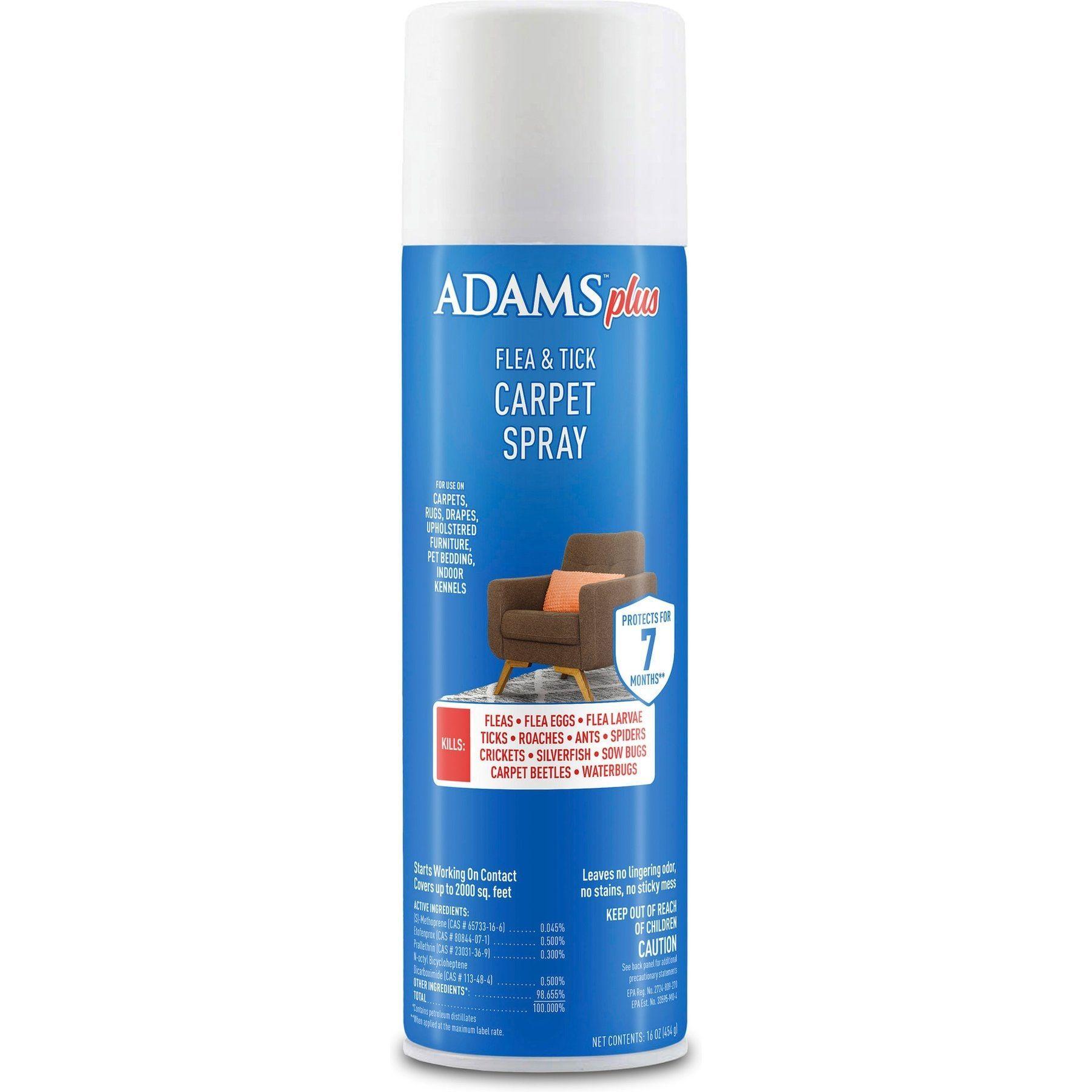
A carpet and upholstery spray labeled for adult fleas, eggs, and larvae in the rooms where fleas wait off the pet.
Webvet may earn a commission when you click through to Chewy, at no extra cost to you.
The outer limit for the cocoon varies because conditions change it. UC IPM ties the 12-month figure to cool temperatures, and the University of Minnesota Extension says pupae can take 12 months or longer when temperature and humidity are unfavorable.

Dog fleas and cat fleas follow the same timeline here. The Merck Veterinary Manual states that most of the fleas found on both dogs and cats are cat fleas (Ctenocephalides felis, as UC IPM names the species), so the answer is the same whether the pet who left was a dog or a cat.
Ticks are a separate question with their own life cycle, so these survival figures apply to fleas only.
The flea life cycle: eggs, larvae, pupae, and adults, and which stage waits
| Life stage | Where it waits off the host | What sustains or wakes it | What ends it |
|---|---|---|---|
| Egg | Falls from the coat onto pet bedding, carpet, and soil | Warmth and humidity; hatches in about 1 to 6 days | Vacuuming, hot washing of bedding, an insect growth regulator |
| Larva | Deep in carpet, under furniture, and in pet bedding | Adult flea droppings and humidity of at least 75 percent | Vacuuming, dry air below 50 percent humidity, an insect growth regulator |
| Pupa in its cocoon | Carpet base, upholstery, and bedding | Cool, undisturbed conditions; warmth, pressure, and carbon dioxide wake it | Vacuuming to coax it out, then a preventive on every pet so the new flea dies |
| Newly emerged adult | Carpet surface and floors where people and pets walk | Needs a blood meal within about 1 to 2 weeks | A treated pet, vacuuming, or starvation without a host |
| Adult on the pet | The coat of a dog or cat | Blood meals; lays eggs within 2 days | A vet-recommended preventive on every pet and flea combing |

The flea life cycle has four stages: egg, larva, pupa, and adult. Only the adult feeds on the host, and UC IPM notes that adult cat fleas stay there. The other stages each have their own limits off the host, which is why a home can stay a flea risk after an infested pet has gone.
How long does a flea live on a dog or cat? UC IPM says an adult cat flea generally lives about 30 to 40 days on the host. Grooming shortens that: Texas A&M reports that fleas on short-haired cats and dogs survive an average of 8 days, and longer on long-haired animals.
A fine-toothed comb is the simplest way to see whether adult fleas are riding on a pet. The Safari Flea Comb for Cats has closely spaced teeth meant to pull fleas and flea debris from the coat.
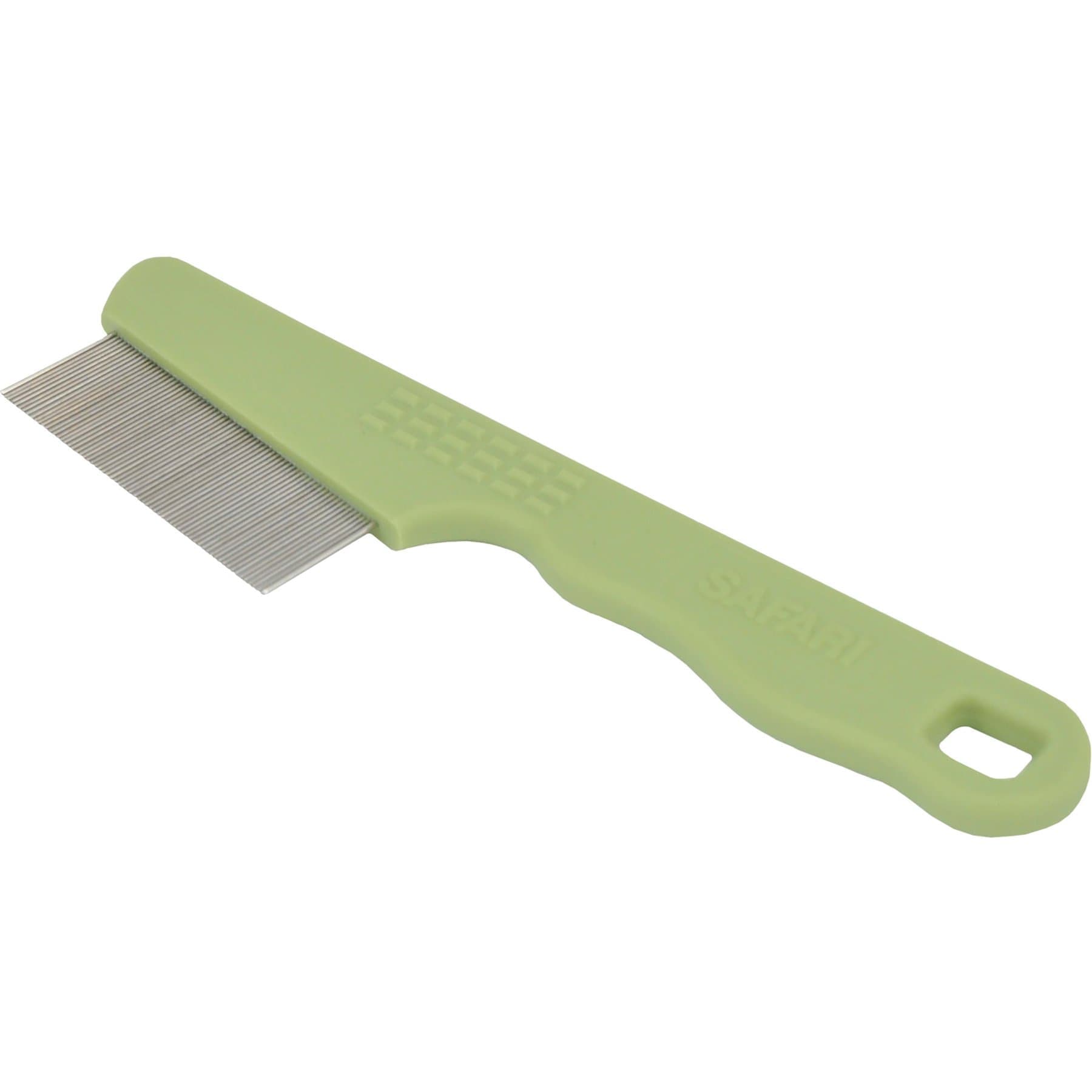
A fine-toothed comb for checking a cat for adult fleas and flea debris after a move or a visit to a flea-infested home.
Webvet may earn a commission when you click through to Chewy, at no extra cost to you.
Flea eggs do not stay on the coat. Merck explains that they readily fall from the fur onto bedding, carpet, or soil, where they hatch in 1 to 6 days. Off the host, an egg lasts days, not weeks. Spotting flea eggs on dogs means eggs are landing wherever that dog rests.
Larvae are the most fragile stage. Texas A&M AgriLife Extension notes that flea larvae feed on adult flea excrement and cannot survive without it. That dark, gritty flea dirt on cats and dogs is their food. After 5 to 11 days, a larva spins a silk cocoon and pupates inside it.
The flea pupa is the stage that waits. Inside its cocoon, the adult forms within about 1 to 2 weeks but does not have to leave. CAPC reports that adults may stay quiet in the cocoon for up to 30 weeks at about 52°F and 75 percent humidity. The University of Minnesota Extension lists what wakes them:
- Warmth: body heat from a person or pet nearby.
- Carbon dioxide: the breath of a passing host.
- Pressure or vibration: footsteps, furniture use, and vacuuming.
Once out, a flea needs food fast. Merck gives 1 to 2 weeks for a newly emerged adult, and Purdue University Extension Entomology says adult cat fleas can survive for weeks indoors without feeding.
How long until fleas infest a house?
A house can have a new generation of fleas in about 18 days, which is how long UC IPM says the full life cycle can take at normal room temperatures. CAPC reports that egg production begins within 20 to 24 hours of a female's first blood meal, and Texas A&M says she soon averages 27 eggs per day.
That pace explains why a few fleas on one pet become a household problem within a few weeks. Each female keeps laying, and the eggs drop wherever the pet sleeps.
 Sponsored
Vet care that's always there
Unlimited video calls and messaging with licensed vets for less than a typical vet visit. One membership covers up to five pets.
Use code Pets60
Plans start at $12/month · covers up to 5 pets
- Licensed vets in most states
- Rx for 150+ conditions
- 4.7 on Trustpilot
How long fleas survive in carpet, furniture, bedding, cars, and an empty house

Off the host, fleas survive in a home for weeks to months, in the carpets, bedding, and other surfaces pets frequent, which is where the CDC says fleas can live. Those are the places eggs drop, larvae feed, and cocoons wait, so they set how long a home stays a risk.
Carpet is the classic shelter. Fleas last there as long as their cocoons hold out: weeks to months, depending on temperature. Without a pet, newly emerged adults in the carpet die within about 1 to 2 weeks (CAPC), but cocooned pupae deeper in the pile can keep producing new adults long after that.
Smaller spaces follow the same life-stage rules:
- Furniture and bedding: the same stages settle here as in carpet. Texas A&M finds larvae under furniture and in pet bedding, and bedding a pet sleeps on collects eggs every night.
- Cars: the home timeline applies. A seat or cargo mat where an infested pet rides catches eggs just like a pet bed.
- Clothes: adults need a blood meal within about 1 to 2 weeks, so clothing mainly carries fleas rather than housing them: Merck notes that people can act as carriers, bringing fleas into the household and infesting unprotected pets.
For a heavier carpet problem, a labeled carpet product can reach eggs and larvae in the pile. The ADAMS Flea & Tick Carpet Powder, 16-oz bottle combines pyrethrins and linalool for adult insects with pyriproxyfen, an insect growth regulator, for eggs and larvae. Use it per the label with pets out of the room.
For upholstered furniture, the Zodiac Carpet & Upholstery Flea & Tick Spray, 24-fl oz is a pump spray made for carpets, rugs, upholstery, and pet bedding, never for the pet itself. More home options are compared in WebVet's guide to the best flea spray for home.
Can dog fleas live on furniture?
Yes, dog fleas can live on furniture, though mostly as eggs, larvae, and cocoons rather than as adults. Merck says eggs fall from the fur, so any sofa or chair a dog rests on collects them. Adults that emerge from cocoons in the cushions last about 1 to 2 weeks without a host.
Can fleas live in your bed?
Yes, fleas can live in your bed if a pet sleeps there. Eggs fall into the bedding, and larvae and cocoons can follow. The University of Minnesota Extension advises washing human bedding if it becomes infested, and the CDC recommends cleaning bedding, especially pet bedding, frequently with soap and water.
Fleas in an empty home
An empty house is where the cocoon matters most. Texas A&M warns that long-vacant homes or apartments can come alive with fleas when new inhabitants move in. Pupae have waited, undisturbed, until footsteps and warmth wake them, and the newly emerged adults bite whatever is nearest.
Fleas can also turn up with no pets at all. The University of Minnesota Extension notes that raccoons, opossums, or squirrels nesting in the attic, fireplace, or crawlspace can bring fleas in.
A cat moving into a home that had fleas meets the emerging adults first. The 6.2-13.8 lbs, Bravecto Topical Solution for Cats, 1 treatment, 250 mg Fluralaner is a vet-prescribed topical labeled for 12 weeks of flea protection, one option a vet may choose.
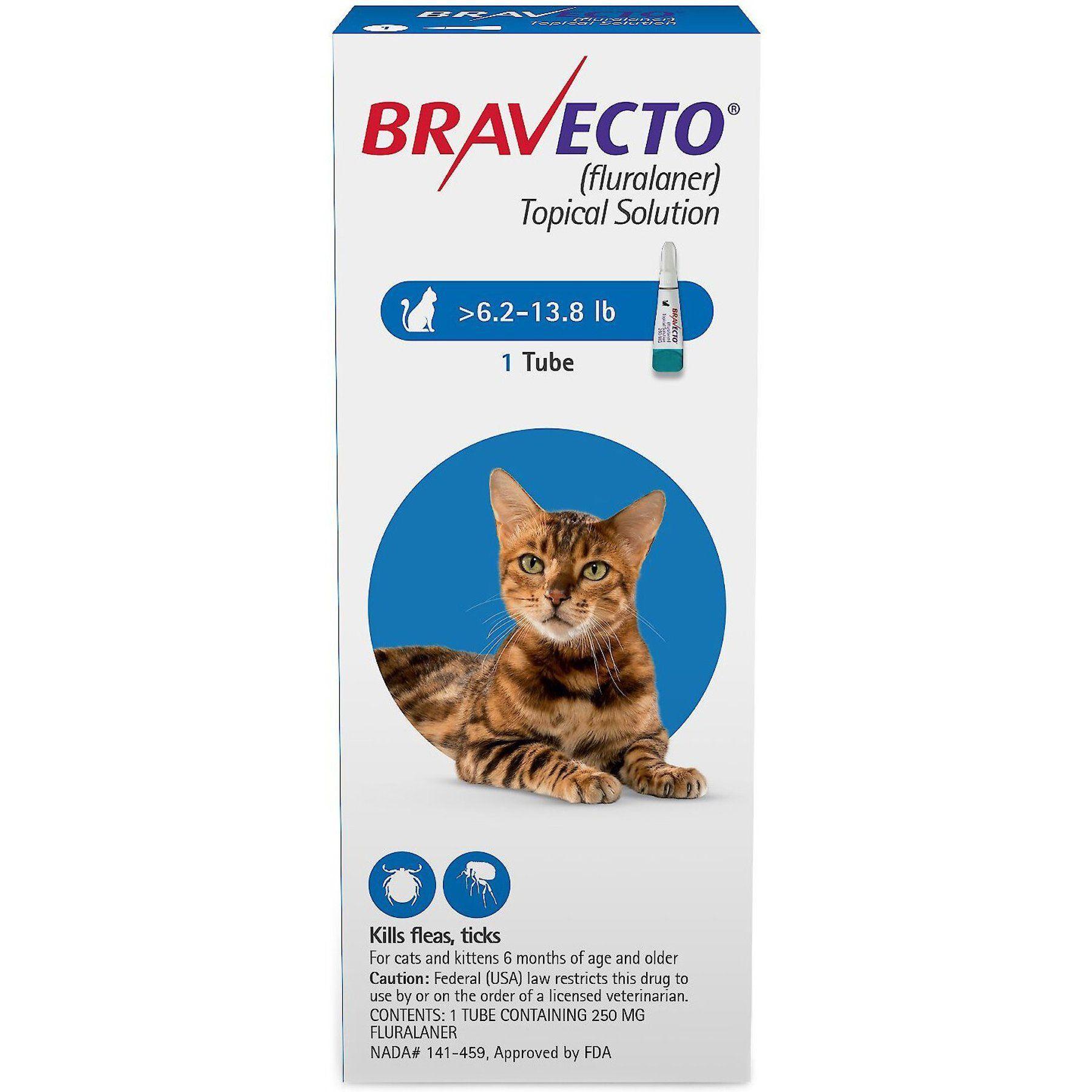
A vet-prescribed topical a vet may choose so fleas emerging in a treated home die on the returning cat.
Webvet may earn a commission when you click through to Chewy, at no extra cost to you.
What to do after visiting a house with fleas
How fast can fleas spread from house to house? As fast as a person or pet can carry them. CAPC notes that adult fleas can transfer directly from one host to another, and they move by jumping, not flying (see can fleas fly). After a visit, these steps keep a stray flea from starting a new cycle:
- Check pets with a flea comb, paying attention to the neck and the area in front of the tail.
- Wash the clothes worn during the visit, and vacuum where people sat or set bags down.
- Keep every pet on a vet-recommended preventive, so any flea that arrives dies before laying eggs.
Can fleas live on humans, and how long do they last on people?
No, fleas do not live on humans the way they live on pets. Texas A&M AgriLife Extension says cat fleas do not normally live on humans, but do bite people who handle infested animals. The CDC adds that fleas prefer animal hosts but will resort to biting people when animals are unavailable.
That is why people in an empty, flea-infested home get bitten. CAPC notes that people in infested environments are often bitten by newly emerging fleas. The bites are small, red, itchy bumps, usually on the ankles and lower legs, according to Texas A&M.
People are a poor substitute for a pet:
- Human blood: not enough to sustain a population. The University of Minnesota Extension explains that fleas can bite people, but females require a blood meal from a non-human host to produce eggs.
- Hair: cat fleas do not normally live on humans, hair included. Texas A&M notes that other kinds of fleas, including the human flea, are less common on pets and in homes.
- A home with only people: without a dog, cat, or other animal, the population runs out once the waiting cocoons have emerged and the adults die.
The CDC's advice is direct: the best way to prevent fleas on people is to keep pets free of fleas. That means a year-round preventive on every dog and cat in the household. For larger dogs, a monthly chewable such as NexGard Chewables for Dogs, 24.1-60 lbs, (Purple Box), 1 Chewable Tablet (1-mo. supply) is one prescription option.
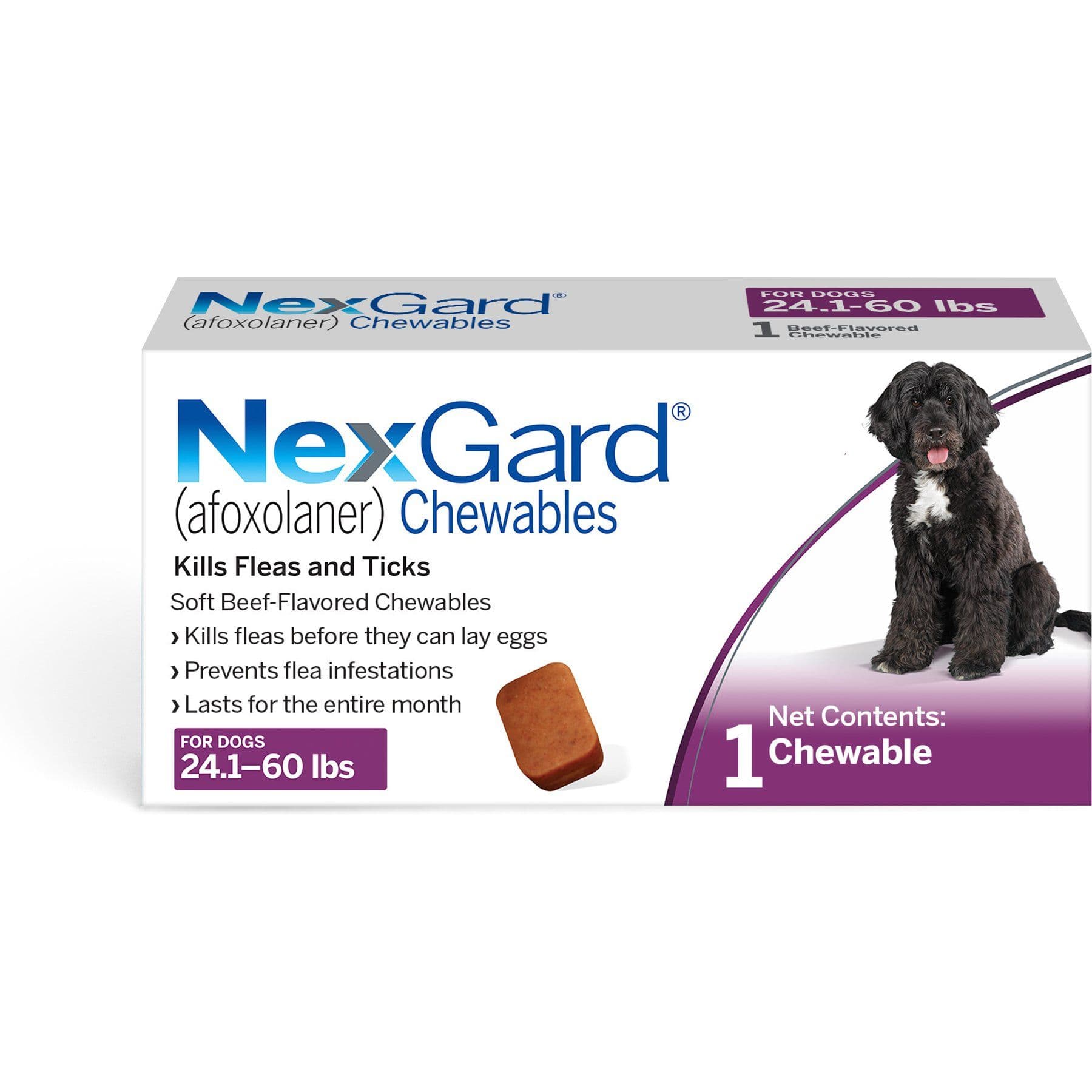
A monthly prescription chewable a vet may choose so fleas emerging from waiting cocoons die on the dog.
Webvet may earn a commission when you click through to Chewy, at no extra cost to you.
Indoor-only pets are not immune, because fleas arrive on people, other pets, and wildlife. WebVet's guide to whether indoor cats can get fleas and worms explains how. Covering skin with long sleeves and pants limits bites while a home is being treated, according to the CDC.
Fleas can also carry disease to people. The CDC states that flea-borne (murine) typhus is spread to people by infected cat fleas, which is one more reason to end an infestation rather than wait it out.
What heat, cold, humidity, and season do to fleas off the host

Warm, humid conditions help fleas survive off the host, while dry air kills the larvae and lasting cold kills every stage. Humidity matters most for larvae. UC IPM says larval development is restricted to protected places with at least 75% relative humidity, and larvae develop faster at 70 to 90°F.
Dry air kills them. Merck states that exposure to relative humidity under 50% kills larvae, and CAPC notes that Ctenocephalides felis is uncommon where humidity stays below 50%. Cold works more slowly: Merck says cat fleas in any life stage die if the temperature falls below 37°F (3°C) for several days.
Cool temperatures help the pupa, not hurt it. UC IPM links the longest cocoon waits, up to 12 months, to cool conditions, while warm temperatures and the pressure of walking or vacuuming stimulate emergence.
Fleas outdoors
Outdoors, fleas survive only in sheltered spots. Texas A&M says fleas do not survive well in hot, sunny lawns, and that relative humidity under 50 percent or soil hotter than 95°F kills flea larvae. Moist, shaded spots near pet resting areas are where outdoor fleas collect.
Outdoor fleas follow the same stage limits, shortened by heat, dryness, and cold. The University of Minnesota Extension says fleas are rarely found in lawns or other outdoor sites in Minnesota.
Fleas in winter
Dogs can get fleas in the winter, mainly indoors. Purdue University Extension Entomology reports that only adult cat fleas appear capable of surviving winter in Indiana, and that eggs, larvae, and pupae are not known to survive winter outdoors. A heated home is a different story, staying within the temperatures fleas prefer.
That is why CAPC recommends that all cats be treated year-round with flea control products, with the same advice for dogs. The CDC also says to treat pets for fleas year-round.
Soapy water versus drowning
Rather than trying to drown fleas in plain water, Texas A&M suggests dipping the flea comb in soapy water to kill fleas pulled off a pet, and the CDC says soap acts as a gentle insecticide against adult fleas. A bath does nothing for the stages waiting in the home.
When to call a vet or a pest professional
Some flea situations need a veterinarian rather than a store product. CAPC lists flea allergy dermatitis, a reaction to flea saliva, along with anemia in young animals. Cat fleas can also carry the tapeworm Dipylidium caninum and bacteria such as Bartonella and Rickettsia, according to CAPC.
Age and species change what is safe. Texas A&M notes that pets younger than 4 weeks generally should not be treated directly for fleas, and that products safe for dogs may not be safe for cats, puppies, or kittens. A vet can choose a product that fits each pet's age, weight, and health.
A pest professional is the right call for a home that stays infested. The CDC says a licensed commercial pest control applicator can help decide which products are best for inside the home. These are the signs it is time:
- Fleas keep emerging weeks after the pets and home were treated.
- The home has fleas but no pets, which points to wildlife.
- Bats, roof rats, squirrels, or raccoons may be nesting in the structure. Texas A&M notes that an experienced pest control company can treat for fleas and seal the openings wildlife use.
People react to bites too. Texas A&M says people with allergies to flea bites can develop hives, rashes, or generalized itching, usually 12 to 24 hours after a bite.
Breaking the waiting cycle: vacuuming, washing, home treatment, and a preventive on every pet

Because the cocoon outlasts everything else, ending fleas in a home means treating the pets and the home at the same time, then keeping it up until the last cocoons hatch. The CDC says moderate to severe infestations will take months to control. These steps end the waiting cycle:
- Treat every pet. The CDC and CAPC both say every pet in the home must be treated. Ask your vet which preventive suits each dog and cat.
- Vacuum often. Texas A&M reports that vacuuming removes up to 30 percent of larvae and up to 60 percent of flea eggs from a carpet. The pressure also triggers cocoons to open, sending new fleas onto treated pets.
- Wash bedding hot. UC IPM advises laundering pet bedding in hot, soapy water at least once a week.
- Treat the home with an insect growth regulator. An insect growth regulator stops eggs and larvae from developing, according to Texas A&M.
- Repeat. Texas A&M says pupae are hard to kill with insecticides, so a follow-up treatment is usually needed 7 to 10 days later. The CDC advises two or more follow-ups within 5 to 10 days.
Expect a few fleas after treatment. UC IPM explains that a home spray kills larvae but not pupae, so fleas may continue to emerge for up to 2 weeks. Keep vacuuming during that time, and see WebVet's guide on how to get rid of fleas in your house and yard for the full plan.
Advice on vacuum bags varies. Texas A&M says fleas can continue to develop inside vacuum cleaner bags, while UC IPM says recent studies suggest destroying the bags isn't necessary. The CDC's middle ground is simple: empty the vacuum bag outside when finished.
Quick fixes and home remedies have limits:
- Killing adult fleas fast on a dog: a soapy bath followed by combing is the CDC's pet-treatment step, and WebVet's guide on how to get rid of fleas on dogs covers the vet options.
- Smells and folk remedies: Texas A&M says there is little scientific evidence that garlic, brewer's yeast, cedar bedding, or herbal sachets control fleas, and some pets, especially certain cat breeds, are sensitive to citrus oil products. See WebVet's natural remedies for fleas on cats.
- Dusts: WebVet's guide to diatomaceous earth for fleas explains what it does and its safety limits.
For a cat carrying adult fleas back into a treated home, Capstar Over 2-25lbs, 6ct, Cats Flea Tablets contain nitenpyram and are labeled for cats and kittens from 2 to 25 pounds. They act on adult fleas, and WebVet's best flea treatment for cats covers the longer-acting preventives.
Can fleas survive the washing machine?
A hot, soapy wash is the laundering step UC IPM and the University of Minnesota Extension recommend for flea-infested bedding, and the CDC says soap acts as a gentle insecticide against adult fleas. Wash bedding weekly alongside vacuuming and treating every pet.
How long can fleas live without a host questions
Frequently Asked Questions
How long can fleas live in carpet?
Fleas can live in carpet for weeks to months. Adults that emerge without a host die within about 1 to 2 weeks, but pupae in their cocoons can wait up to 30 weeks in cool, humid conditions according to CAPC, and up to 12 months at cool temperatures according to UC IPM. Vacuuming the carpet regularly while every pet is treated draws them out.
How long can fleas live on humans?
Fleas do not live on humans for long, because a person is not a real host for a cat flea. Fleas bite people, but the University of Minnesota Extension says females need blood from a non-human host to produce eggs. Without a pet in the home, the fleas biting people die out once the waiting cocoons are spent.
How long can flea eggs survive without a host?
Flea eggs last only days without a host: they fall from the pet's fur and hatch in about 1 to 6 days, according to Merck. Purdue notes that eggs hatch under warm temperatures and relatively high humidity. Once the eggs hatch, the larvae are the stage to target.
How long will fleas live in a house without pets?
An empty house can harbor fleas for months. Newly emerged adults die within 1 to 2 weeks without a host, but pupae can stay in their cocoons for up to 5 months by Texas A&M's estimate, or up to a year by Merck's, and emerge when people return.
Do fleas survive in winter?
Indoors, fleas can carry on through winter because a heated home stays warm. Outdoors, Purdue reports that only adult cat fleas appear to survive Indiana winters, and Merck notes that cat fleas in any life stage die below 37°F for several days. CAPC still recommends flea prevention year-round.
Veterinarian · BVMS MRCVS
Dr. Pippa Elliott, BVMS, MRCVS, is a veterinarian with nearly 30 years of experience in companion animal practice. Dr. Elliott earned her Bachelor of Veterinary Medicine and Surgery from the University of Glasgow. She was also designated a Member of the Royal College of Veterinary Surgeons. Married with 2 grown-up kids, Dr. Elliott has a naughty Puggle named Poggle, 3 cats and a bearded dragon.


