Tick Removal Tool: The Best Options and How to Use One Safely
A good tick removal tool lifts the whole tick out without squeezing it. How the twister, key, card, and spoon designs differ, which suits your dog or cat, how to use one safely, the myths to skip, and our picks.

BVMS MRCVS
Medically reviewed by Dr. Pippa Elliott, BVMS MRCVS · Last reviewed

This article contains affiliate links. Webvet may earn a commission when you buy through them, at no extra cost to you.
Tick removal tool: what makes a good one for dogs and cats, and how vets judge the designs
A tick removal tool grips a tick right where it enters the skin and lifts the whole tick out without squeezing its body. The Centers for Disease Control and Prevention (CDC) treats plain fine-tipped tweezers as the reference: grip close to the skin, then pull away with steady, even pressure.
A dedicated tick removal tool earns its place when it makes that grip easier on your pet. Hooks suit a fat tick on a large dog, cards and spoons suit a walk bag, and slim slots suit a tiny tick on a cat. The CDC warns against heat, petroleum jelly, nail polish, or other substances on an attached tick, and essential oils can poison cats.
- 1Know how each tool design grips a tick: tweezers pinch the head end, while hooks, keys, cards, and spoons slide a narrow notch under it.
- 2Understand why squeezing is the mistake to avoid: pressure on the body can push infected fluid into your pet.
- 3Use the CDC method with any tool: grip at the skin, pull steadily, no twisting or jerking, then clean the bite.
- 4Skip match heads, petroleum jelly, nail polish, alcohol, and essential oils on an attached tick.
- 5See your vet if the bite turns red or swells, your pet seems unwell, or you cannot get the tick out.
| Pick | Tool design | Best for | Key specification |
|---|---|---|---|
| ZenPet Tick Tornado Tick Removal Tool | Twist-style hook | Owners who like a hook-and-lift motion | Hook, twist, and lift action per the maker |
| TickCheck Premium Dog Tick Removal Kit | Two-tool kit with a fork | A home or trail first-aid bag | Two stainless-steel tools for partially and fully embedded ticks |
| TickCheck Remover Spoon with Tick ID Card, 3-pack | Notched spoon | Spares for several bags, keeping the tick for ID | Three plastic spoons with a thin notch, plus an ID card |
| The Tick Patrol Aluminum Tick Remover Tool, 1 count | Metal keychain remover | A durable tool clipped to keys or a leash | Aluminum body that attaches to keys or a backpack |
| PetVet Medic Card Tick Remover for Dogs, 6 x 4 x 0.25-in, 3 count | Flat card | A wallet or walk bag | Built-in magnifier and printed step-by-step directions |
| Summit Tick Take Tick Remover Tool, 3 count | Notched spoon | Budget multipack for people and pets | Notch you slide forward and a bowl-shaped end that holds the tick |
Vets judge these designs on three plain questions. Does the tool hold the tick at the skin rather than by its swollen body? Does it let you pull steadily without squeezing? Can you see and reach the attachment point on your pet's coat and body?
Speed matters too. The Merck Veterinary Manual explains that the longer a tick stays attached, the more saliva carrying germs or toxins it injects, so prompt removal is imperative. So never wait for the perfect tool: remove the tick with what you have.

If you keep finding ticks, the bigger picture on ticks on dogs, their symptoms, and treatment explains how prevention and regular checks fit around removal. A tool is the backup plan; a vet-recommended preventive is the main one.

 Sponsored
Need flea, tick, or parasite care for your pet?
A licensed vet at Dutch can recommend the right preventive and prescribe it when it's appropriate. Annual members get 20% off their first flea and tick order.
Use code Pets60
Plans start at $12/month · covers up to 5 pets
- Licensed vets in most states
- Rx for 150+ conditions
- 4.7 on Trustpilot
Our picks: the best tick removal tools for dogs and cats
Each pick below is judged only on its label and the maker's stated design and specification, not on hands-on testing. The question for each design is whether it can grab and hold a tick close to the skin and remove it without squeezing. Prices were checked on Chewy in November 2026.
For a dog, the right tool is the one you will have with you and can use calmly. Choose a purpose-made tick tool or fine-tipped tweezers over a homemade one, since CDC and veterinary guidance describe tweezers and purpose-made removers.
ZenPet Tick Tornado Tick Removal Tool: best twist-style remover
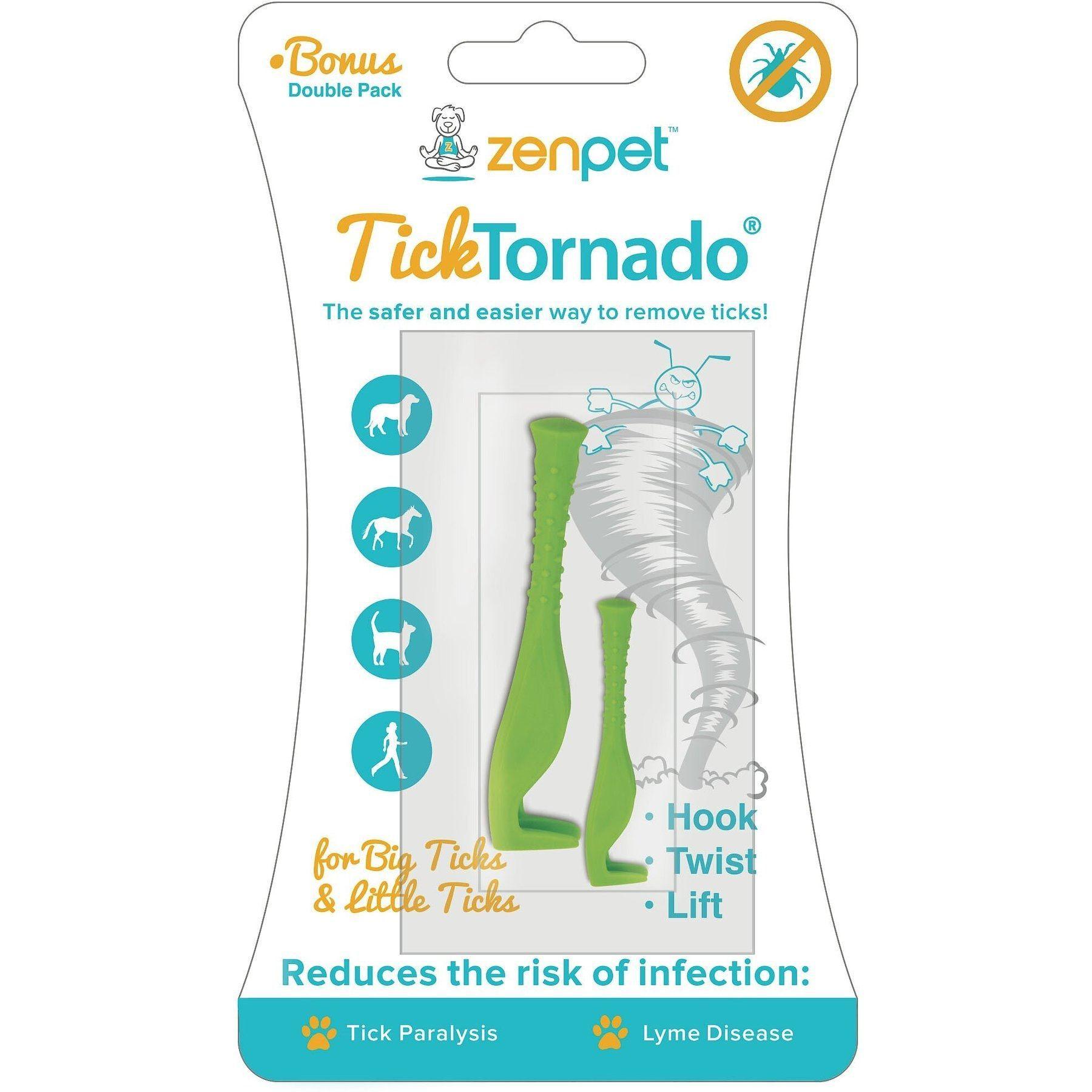
A twist-style hook remover for owners who want to slide under a tick and lift it out in one motion.
Webvet may earn a commission when you click through to Chewy, at no extra cost to you.
ZenPet describes this tool as working with a simple hook, twist, and lifting motion. It is listed at $4.99 on Chewy when checked in November 2026, which makes it one of the lowest-cost single tools here.
- Suits: owners of medium and large dogs who find a hook easier to position than tweezers, and anyone who wants one small tool in the glove box.
- Skip it if: you would rather follow the straight, steady pull the CDC and veterinary guides describe without any rotation; a notched spoon or card suits that approach better.
- How it differs: it is the only pick whose maker describes a twisting motion.
If you choose a twist-style remover, keep the hook flush against the skin and move slowly. The veterinary guides warn against twisting and jerking, so know that this design's directions differ from that guidance; a straight, steady pull is the method they support.
TickCheck Premium Dog Tick Removal Kit: best all-in-one kit
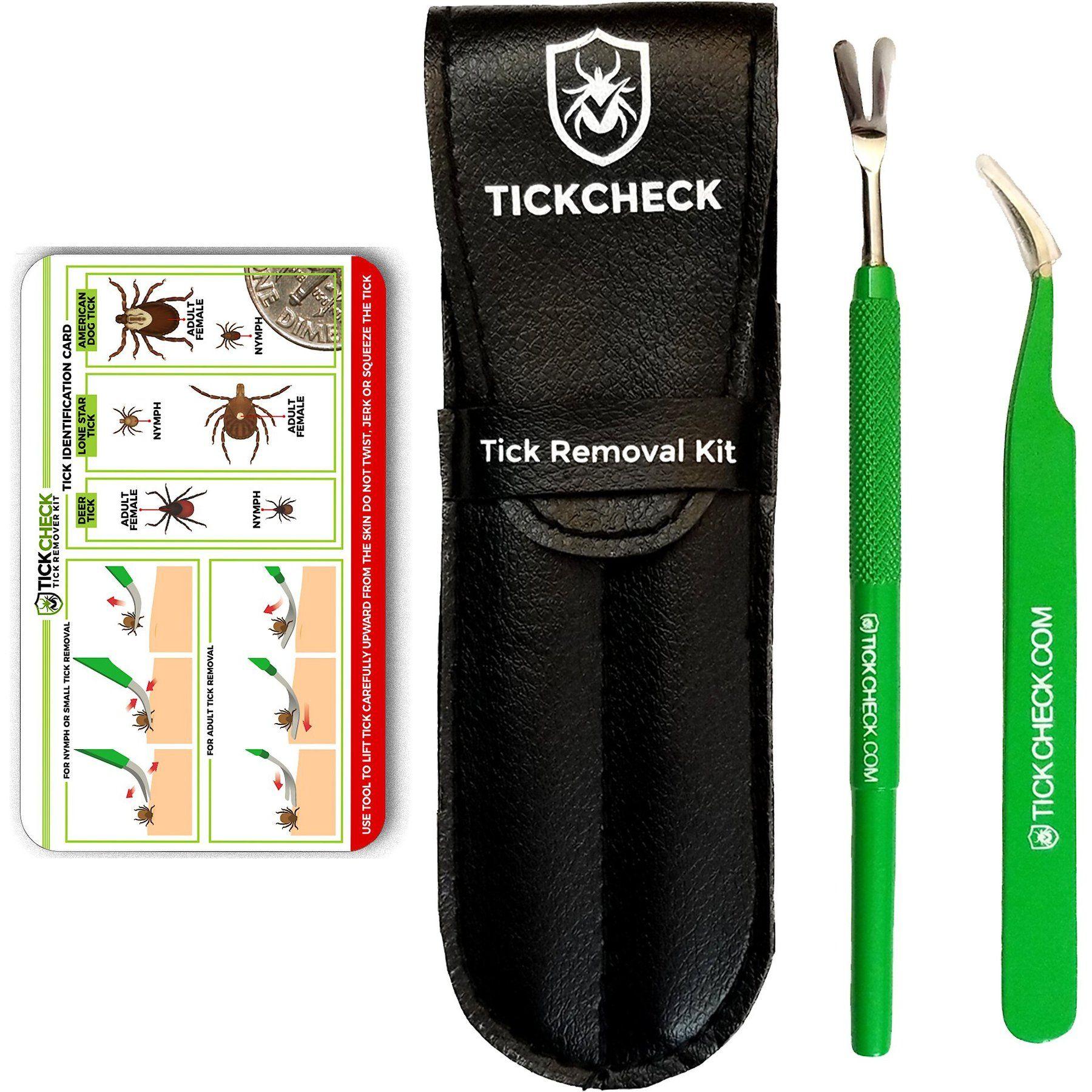
A two-tool stainless-steel kit for a home or trail first-aid bag, covering small and large embedded ticks.
Webvet may earn a commission when you click through to Chewy, at no extra cost to you.
TickCheck describes this kit as two stainless-steel tools for removing partially and fully embedded ticks of any size, made for people as well as dogs, cats, and other pets. Its tick removal fork is designed to slide under larger, embedded ticks. It is listed at $12.95 on Chewy when checked in November 2026.
- Suits: households with more than one pet, hikers who want a metal kit that lives in a first-aid pouch, and owners who see both tiny and engorged ticks.
- Skip it if: you only need a single spare for a walk bag; a card or spoon is cheaper and lighter.
- How it differs: it is the only pick with two stainless-steel tools in one kit.
TickCheck Remover Spoon with Tick ID Card: best slot-spoon remover
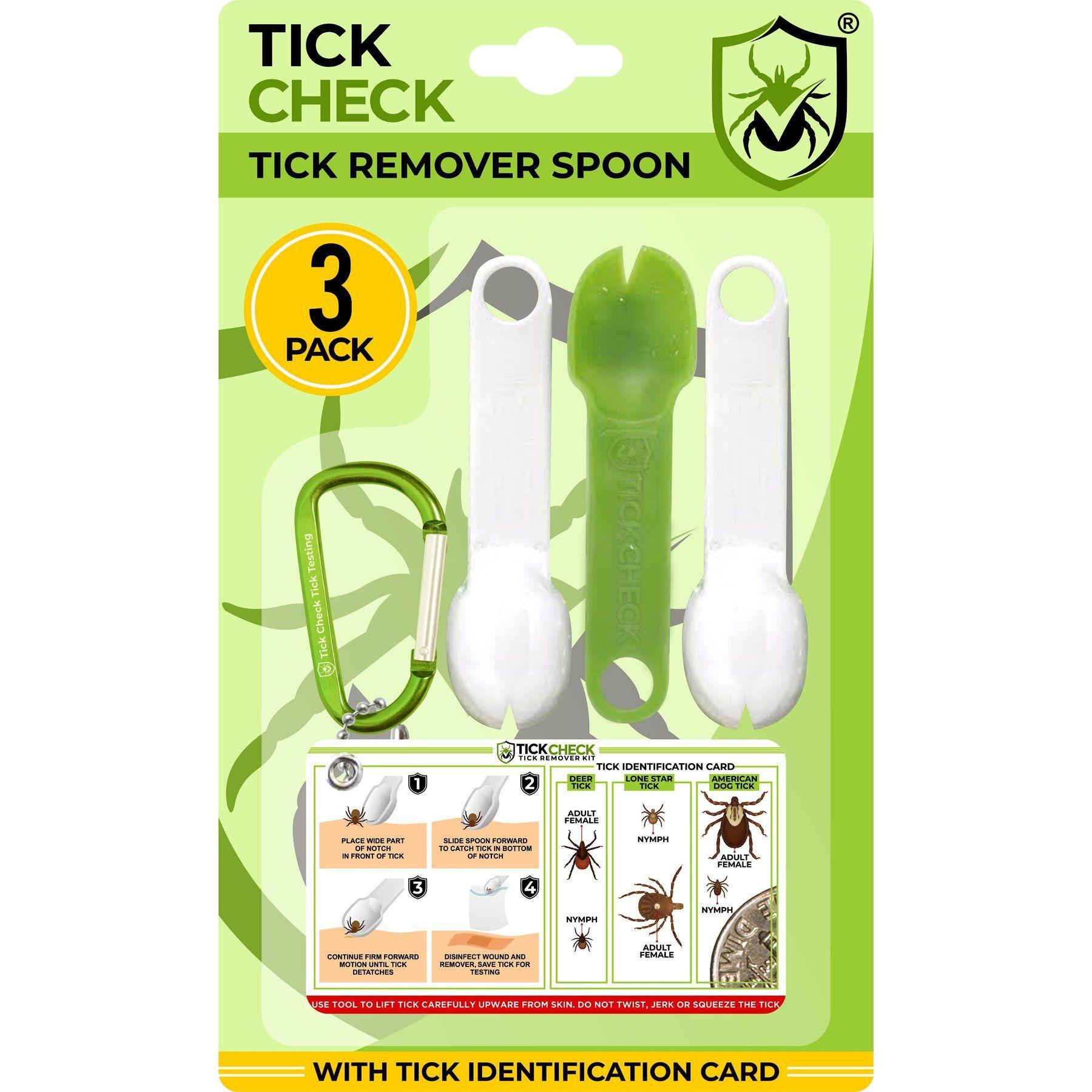
Three plastic notched spoons that hold the tick after removal, with a tick ID card for later identification.
Webvet may earn a commission when you click through to Chewy, at no extra cost to you.
This pack holds three lightweight plastic tick-removal spoons. TickCheck states each spoon has a thin notch for large or small ticks, and the spoon shape keeps the tick from being lost, which helps if your vet wants it identified or tested. Laminated instructions and a tick identification card are included.
- Suits: owners who want a spare in the car, the walk bag, and the house, and anyone who wants to save the tick for the vet.
- Skip it if: you prefer a metal tool for long-term use.
- Price: listed at $5.95 on Chewy when checked in November 2026.
The Tick Patrol Aluminum Tick Remover Tool: best metal remover
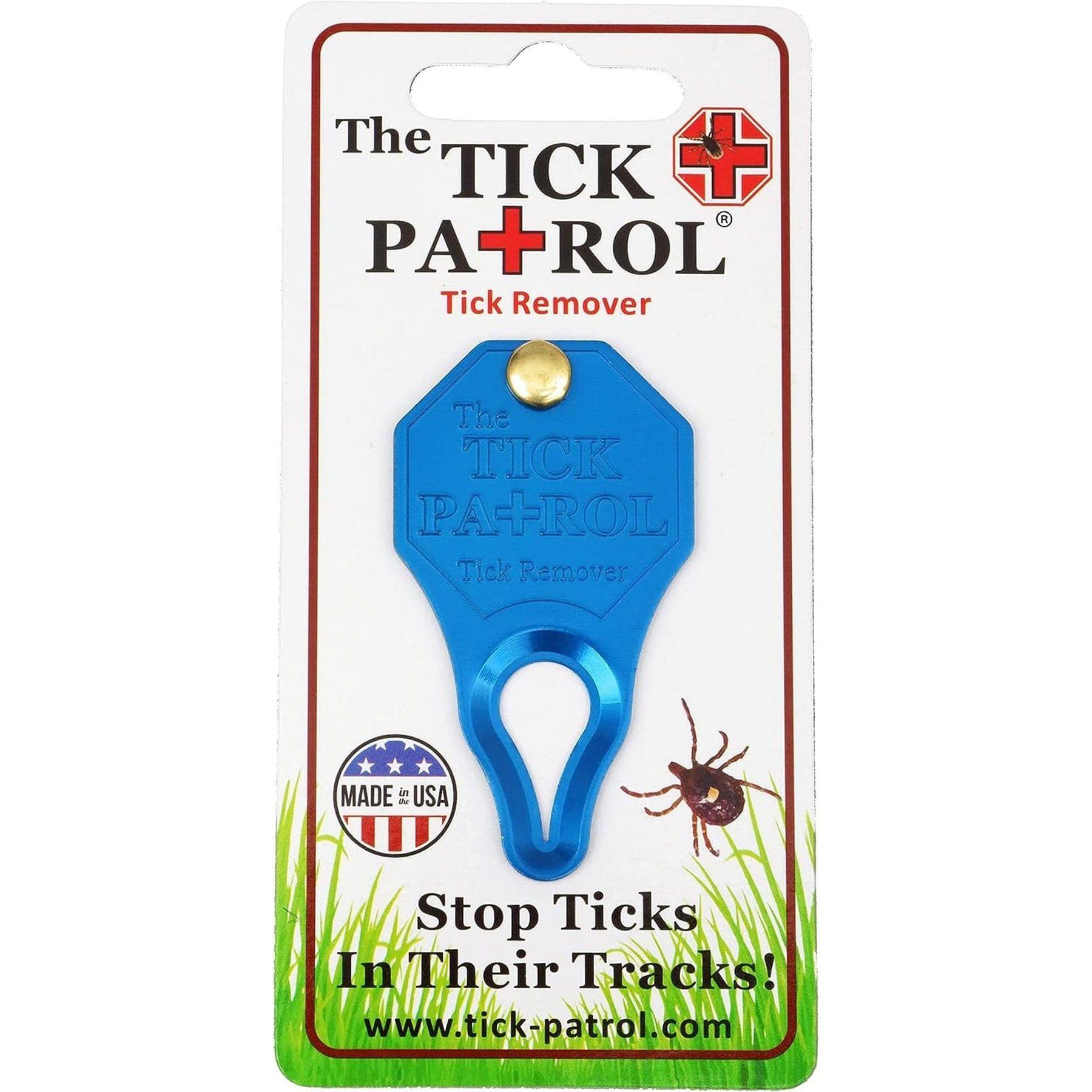
A durable aluminum tick remover that clips to keys, a backpack, or a leash so it is with you on walks.
Webvet may earn a commission when you click through to Chewy, at no extra cost to you.
The Tick Patrol describes an aluminum remover designed to take ticks off a dog's skin, and it can be attached to your keys, a backpack, or a dog leash. It is listed at $6.99 on Chewy when checked in November 2026.
- Suits: daily walkers, trail dogs, and owners who lose small tools; a tool clipped to your keys rarely gets left at home.
- Skip it if: you need a magnifier for very small ticks; pair it with a card that has one, or with good light.
- How it differs: it is the only pick whose maker says it attaches to keys, a backpack, or a leash.
PetVet Medic Card Tick Remover for Dogs: best card for a walk bag
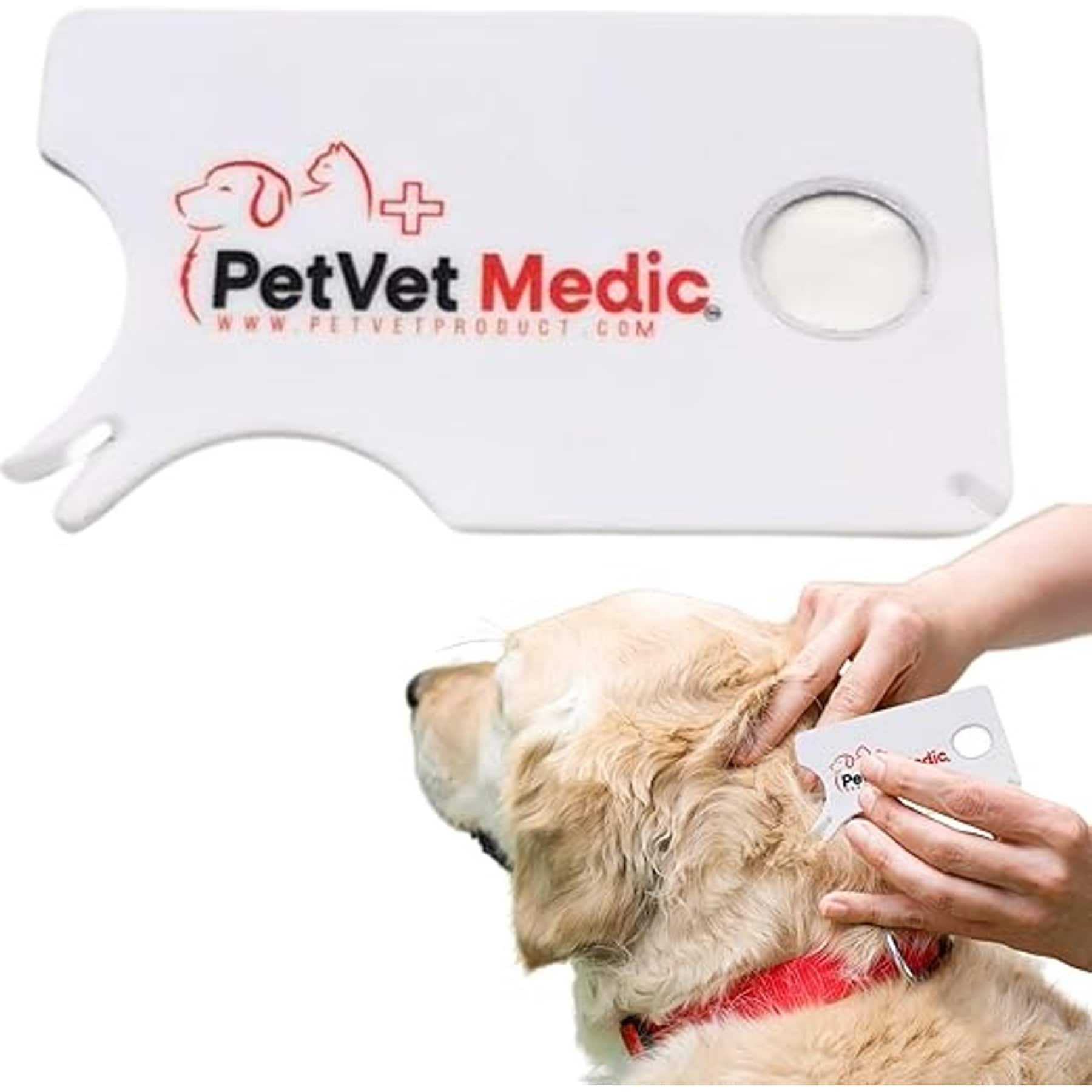
A flat card remover with a built-in magnifier and printed steps that fits a wallet or walk bag.
Webvet may earn a commission when you click through to Chewy, at no extra cost to you.
PetVet Medic sells this as a compact card tick remover in a pack of three. The maker describes a credit card-sized design with a built-in magnifier and step-by-step instructions. It is listed at $10.47 on Chewy when checked in November 2026.
- Suits: owners who struggle to see tiny ticks, and anyone who wants removal steps written on the tool itself.
- Skip it if: you need a tool with a handle for a thick coat; a flat card is harder to angle deep into fur.
- How it differs: it is the only pick with a magnifier built in.
Summit Tick Take Tick Remover Tool, 3 count: best budget multipack
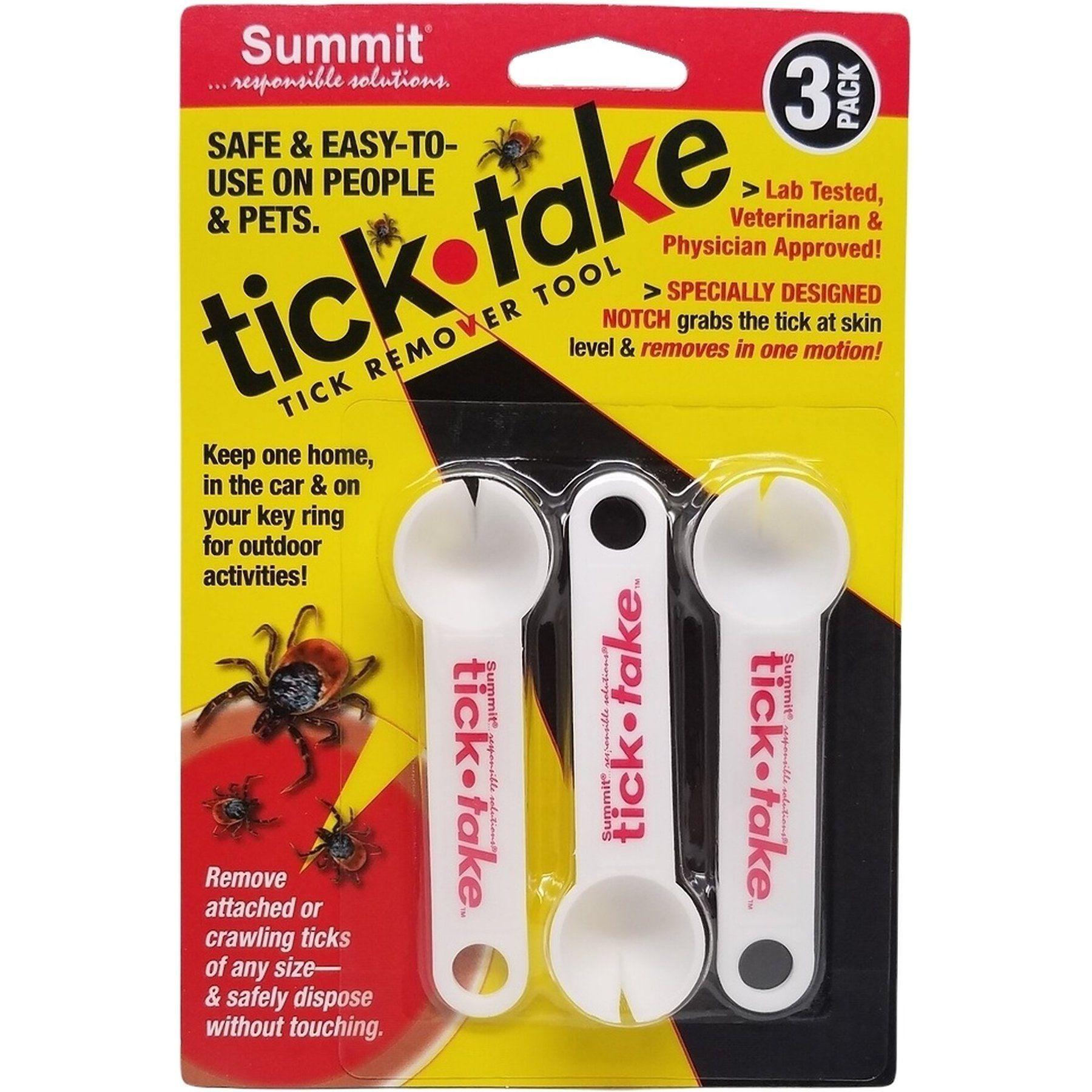
A low-cost three-pack of notched spoons for removing ticks from both people and pets.
Webvet may earn a commission when you click through to Chewy, at no extra cost to you.
Summit describes these as removal spoons with a notch: you place the notch on the tick and slide it forward until the tick detaches. A bowl-shaped end holds the tick after removal. The pack is listed at $4.59 on Chewy when checked in November 2026 and is meant for both you and your pet.
- Suits: budget-minded owners, multi-pet homes, and families who want the same tool for people and dogs.
- Skip it if: you want a keychain attachment or metal durability.
- How it differs: it is the lowest-cost multipack in this group, with a similar notched-spoon design to the TickCheck spoons.
 Sponsored
Vet care that's always there
Unlimited video calls and messaging with licensed vets for less than a typical vet visit. One membership covers up to five pets.
Use code Pets60
Plans start at $12/month · covers up to 5 pets
- Licensed vets in most states
- Rx for 150+ conditions
- 4.7 on Trustpilot
Twister, key, card, spoon, or tweezers: how to choose a tick removal tool
Match the tool design to your pet, its coat, the size of tick you usually find, and where you will carry it.
| Tool design | Best situation | How it grips | Common mistake |
|---|---|---|---|
| Fine-tipped tweezers | Any tick, especially tiny nymphs on a cat or small dog | Pinches the tick at the skin, not the body | Squeezing the swollen body or gripping too far from the skin |
| Tick twister or hook | A fat, engorged tick on a medium or large dog | Slides under the tick and lifts as the hook turns | Any jerking; the CDC and veterinary guides advise against twisting at all |
| Tick key or slot remover | Walk bags and keychains for dogs on trails | A narrowing slot wedges under the head end as you slide | Lifting before the slot is fully under the tick |
| Card remover | A wallet or first-aid pouch, small ticks in short coats | Thin notches slide along the skin under the tick | Using it in a thick coat without parting the fur first |
| Spoon remover | Keeping the removed tick for identification | A notch catches the tick and the bowl holds it | Pressing down hard instead of sliding forward |
Fine-tipped tweezers remain the reference tool design. The Merck Veterinary Manual says plain fine-tipped tweezers remove ticks most effectively, and the CDC says a plain set of tweezers works very well. The CDC adds that regular tweezers can be used if you do not have fine-tipped ones.
Specialist tools are still a sensible choice. VCA Animal Hospitals lists fine-tipped tweezers, a tick twister, a tick key, or a fine-tooth comb as tools that can grasp the tick close to the skin. VCA's Lyme disease guidance also names a tick twister or tick key alongside fine tweezers.

Here is how to match the design to your situation:
- Tool or tweezers: tweezers give the most control on tiny ticks, while a hook such as the ZenPet Tick Tornado Tick Removal Tool or a notched remover suits owners who worry about pinching the body. Many owners keep both.
- Tick size: VCA notes that deer or blacklegged tick nymphs are pinhead-sized, while an engorged American dog tick female may reach 1/2 inch (10-12 mm). A tiny deer tick suits fine tweezers or the thinnest notch; a fat tick suits a hook or fork.
- Plastic or metal: a plastic spoon such as the TickCheck Remover Spoon with Tick ID Card, 3-pack is light and cheap enough to keep several; a metal tool is sturdier.
- Carry need: a card like the PetVet Medic Card Tick Remover for Dogs, 6 x 4 x 0.25-in, 3 count fits a wallet and keeps your hands free of bulky gear, while a tick key or keychain tool such as The Tick Patrol Aluminum Tick Remover Tool, 1 count rides on your keys.
- Kit or single tool: a kit with a fork and a second tool covers both small and large ticks in one pouch.
Slotted tweezers, forks, and loop tools pass or fail on the same test: does the tool hold the tick at the skin and let you pull steadily without squeezing the body?
How long a tick has fed changes what you see. The Merck Veterinary Manual for dog owners explains that ticks attached for a short time (an hour to a few days) look flat, while those attached for days look rounded with blood. Flat ticks are small and low to the skin, so a fine tip or thin notch matters more.
How to use a tick removal tool safely on a dog or cat
The method is the same whichever tool you choose. These steps follow the CDC, VCA, and the Companion Animal Parasite Council (CAPC):
- Put on gloves. VCA explains you can pick up infections through breaks in the skin or mucous membranes just by handling infected ticks.
- Part the fur so you can see exactly where the tick enters the skin.
- Slide the notch, hook, or tweezer tips under the tick as close to the skin as possible.
- Pull away from the skin with steady, even pressure. CAPC describes slow, steady, rearward pressure.
- Keep going if the tick does not let go at once. VCA notes it may take a minute or two of constant, slow pulling.
- Clean the bite and your hands with soap and water.
- Never crush the tick with your fingers. Seal it in a container, or keep it in a labeled, sealed container of rubbing alcohol if your vet may want it identified.

Twist-style tools, such as a tick twister, are where maker directions and public-health guidance part ways. Twist-style makers, including ZenPet, call for a hook, twist, and lift. The CDC, Merck, VCA, and CAPC all say not to twist or jerk, because the mouthparts can break off. To follow that guidance exactly, use tweezers or a notched tool and pull straight.
Do not try to make a tick removal tool from household items. For a long or thick coat, the Safari Tick Remover Dog Comb, Green is a comb-style remover designed to grasp ticks close to the skin.
For one kit you can keep in a first-aid pouch, the TickCheck Premium Dog Tick Removal Kit holds two stainless-steel tools, including a fork for larger, embedded ticks. Whatever you use, the step-by-step guide on how to remove a tick from a dog covers the method without a dedicated tool.
What is the best way to take a tick off?
Grip the tick as close to the skin as possible with fine-tipped tweezers or a removal tool and pull away with steady, even pressure, the CDC advises. Do not twist, jerk, or squeeze the body, and clean the bite with soap and water afterward.
How to draw out a burrowed tick?
You draw out a deeply attached tick with the same slow, steady pull, held for longer. What looks burrowed is the mouthparts anchored in the skin, and VCA notes it may take a minute or two of constant pulling. No substance draws a tick out; your vet can help if it will not release.
Tick removal myths to skip: burning, petroleum jelly, essential oils, and squeezing
Most tick myths promise the tick will let go on its own. The CDC says not to use petroleum jelly, heat, nail polish, or other substances, because this may force infected fluid into the skin. VCA's myth check agrees that painting a tick with any substance is not reliable.
Here are the myths and the reason each fails:
- A match head or hot nail: VCA calls applying heat with a match or hot nail a dicey and ineffective hack, and the Merck Veterinary Manual says a hot match will not make a tick back out.
- Petroleum jelly or nail polish: smothering does not make the tick release quickly, and the CDC says it may push infected fluid into the skin.
- Essential oils: Pet Poison Helpline lists tea tree, peppermint, eucalyptus, and clove oils among those known to poison cats, and says concentrated essential oils should never be applied directly to cats. The ASPCA Animal Poison Control Center warns that seven or eight drops of concentrated tea tree oil may cause problems for pets.
- A tick remover spray: any spray sold to make an attached tick let go falls under the substances the CDC says not to use. Anti-tick sprays are a separate thing: the Merck Veterinary Manual lists sprays, spot-ons, and dusts as treatments your vet helps you choose.
- Twisting it out: the CDC says not to twist or jerk, because the mouthparts can break off.
Killing ticks fast is a different decision, and it calls for a vet-recommended product rather than a home remedy; see what kills ticks on dogs instantly. Keeping ticks off in the first place comes down to a preventive product, compared in the best flea and tick prevention for dogs.
Why shouldn't you squeeze ticks?
Pressure on a tick's body can push germs from the tick into your pet, as VCA explains; the CDC also advises against squeezing the tick's body. Squeezing a tick between your fingers exposes you too: Merck notes its contents can transmit disease through skin abrasions.
Will rubbing alcohol make a tick come out?
No, rubbing alcohol will not make an attached tick come out. The Merck Veterinary Manual says alcohol, petroleum jelly, and a hot match will not make a tick back out and may add disease-carrying saliva to the wound. Alcohol helps afterward, in a sealed container for keeping the tick.
Does Dawn soap get rid of ticks?
No, Dawn soap does not get an attached tick off your pet. VCA says coating a tick with any substance is not a reliable way to make it detach, and the CDC uses soap and water only to clean the bite and your hands. For fleas, see does Dawn dish soap kill fleas.
When a tick bite needs a vet, and what to do if part of the tick stays in
An attached tick should come off as soon as you find it. CAPC notes Ehrlichia and Rickettsia can pass within 3-6 hours of attachment, and the Lyme bacterium can require 24-48 hours of feeding. VCA's Lyme disease guide gives around 12 to 24 hours. Both point the same way: remove it quickly.
No tick removal tool prevents Lyme disease on its own. Removing the tick early reduces the feeding time, but Lyme signs in dogs usually appear two to five months after infection, according to VCA, and include lameness, swollen joints, and fever. Read more in Lyme disease in dogs and the wider guide to tick-borne diseases in dogs.
Watch the bite site and your pet for these signs:
- Red or swollen bite: the Merck Veterinary Manual for dog owners says a prompt trip to the vet is warranted.
- A lump that persists: CAPC notes mouthparts left in the skin may lead to a granuloma, a firm inflammatory lump.
- Limping, fever, or not eating in the weeks and months afterward.
- Weakness or paralysis: CAPC describes tick paralysis as an acute, ascending, flaccid paralysis caused by a toxin from female ticks.
- Many ticks at once: Merck advises taking a severely infested dog promptly to a vet for removal.

For people, the CDC advises seeing a doctor for a rash or fever within several days to weeks after a tick bite, so check yourself after handling ticks too. For what normal and abnormal bites look like on a pet, see what tick bites look like on dogs.
If a deeply attached tick, or one near the eye or inside the ear, will not release with slow, steady pressure, stop. VCA advises seeing your veterinarian if you are unsure or unable to remove the tick.
What happens if the tick's head stays in?
If the tick's head stays in, the skin usually pushes it out as it heals, according to the CDC. What breaks off is really the tick mouthparts. Lift them with clean tweezers if they come easily; if not, leave them alone. Merck says that infection risk is minor compared with leaving a tick feeding.
VCA notes leftover mouthparts can raise the chance of infection, so watch the spot. The CDC's advice is to leave stubborn fragments alone rather than dig at the skin. If the area becomes red, swollen, or a lump forms, have your vet look at it.
Tick removal tools for cats, small dogs, and long coats
Cats need the gentlest approach. VCA explains that cats groom so thoroughly that it is rare to see more than one or two ticks on one, and many ticks may signal illness. The Merck Veterinary Manual for cat owners notes ticks are much less common on cats than on dogs.
On a cat, small dog, or puppy, use the same slow pull. A light notched spoon like the Summit Tick Take Tick Remover Tool, 3 count gives a low-profile grip on short fur. For prevention, a cat-labeled collar such as Seresto Cats & Kittens 10 weeks or older, Flea & Tick Collars is one option to discuss with your vet.
On a cat, the thinnest grip works best. Look for a tool that is:
- Fine: fine-tipped tweezers or the narrowest card or spoon notch suits the small ticks that cats and small dogs pick up.
- Short and steady: a tool you can hold close to the skin while someone steadies your cat.
- Free of scents or sprays: VCA warns never to use dog flea and tick products on cats because they can be toxic and cause seizures; essential oils are a cat poisoning risk too.

Long and double coats hide ticks. VCA says ticks tend to move toward dark, moist areas, and its tick check list includes these places:
- In and around the ears, including the small flap at the base of the ear
- Around the eyelids, where a tick can look like a skin tag
- Under the collar
- Under the front legs and between the back legs
- Between the toes and near the pads
- Under the tail
VCA notes the brown dog tick usually attaches around the ears or between the toes of a dog; read more in brown dog tick. In a long coat, part the hair with your fingers or a comb until you see skin before sliding any tool in.
Lyme disease is extremely unlikely to occur in cats, according to VCA, but cats face other tick risks. CAPC notes Cytauxzoon felis can pass after 36-72 hours of feeding, and VCA says signs of cytauxzoonosis usually start about 10 days after a bite. Low energy, poor appetite, trouble breathing, or pale gums in a cat need a vet urgently.
Tick removal tool questions
Frequently Asked Questions
Do tick removal tools work on cats?
Yes, as long as the grip is fine enough for a small tick. Check a cat's head, neck, and ears closely; writing about dogs, the Merck Veterinary Manual notes some ticks feed chiefly on the head, neck, and shoulders. Use the narrowest notch or fine-tipped tweezers, and have someone steady your cat gently.
Is a tick removal tool better than tweezers?
Not by default. Merck calls plain fine-tipped tweezers the most effective option, and the CDC says they work very well. A notched tool helps owners who tend to squeeze, because it slides under the tick rather than pinching it. Keep tweezers for tiny ticks and a notched tool for a walk bag, and never squeeze the body with either.
How do you use a tick twister?
A tick twister is a small forked hook. Slide it along the skin until the tick sits in the slot, then lift gently as you rotate the tool slowly, as twist-style makers describe. Keep the hook flush with the skin and never jerk. The CDC and veterinary guides advise against twisting, so the method they support is a straight, steady pull with tweezers or a notched tool.
Should you twist a tick when removing it?
The CDC, Merck, VCA, and CAPC all say not to twist or jerk a tick, because the mouthparts can break off in the skin. Their method is a steady pull straight away from the skin. Twist-style tools come with maker directions that call for rotation, which this guidance does not support; a notched tool or tweezers lets you follow the straight pull.
What is the best tick removal tool for dogs?
The best design depends on your dog. A fine-tipped pair of tweezers handles any tick; a hook or fork suits a large, engorged tick; a card or keychain remover suits a walk bag. For a long or double coat, choose a tool with a handle and part the coat to the skin before you start.
Veterinarian · BVMS MRCVS
Dr. Pippa Elliott, BVMS, MRCVS, is a veterinarian with nearly 30 years of experience in companion animal practice. Dr. Elliott earned her Bachelor of Veterinary Medicine and Surgery from the University of Glasgow. She was also designated a Member of the Royal College of Veterinary Surgeons. Married with 2 grown-up kids, Dr. Elliott has a naughty Puggle named Poggle, 3 cats and a bearded dragon.


