Brown Dog Tick: Identification, Diseases, and How to Get Rid of Them
The brown dog tick is the tick that can move indoors and stay. How to recognize it on your dog, why a home infestation happens, which diseases it is linked to, and the vet-plus-home plan that actually clears it.

BVMS MRCVS
Medically reviewed by Dr. Pippa Elliott, BVMS MRCVS · Last reviewed

This article contains affiliate links. Webvet may earn a commission when you buy through them, at no extra cost to you.
Brown dog tick: what it is, how to recognize it, and why it is different from other ticks
The brown dog tick (Rhipicephalus sanguineus) is a small reddish-brown tick that feeds mainly on dogs and, unlike outdoor ticks, can live and breed indoors. The Centers for Disease Control and Prevention says dogs are its primary host at every life stage, though it may also bite people or other mammals.
That indoor habit is what makes a brown tick on your dog different. According to the University of Maine Cooperative Extension, it can complete its entire life cycle indoors, so one tick can turn into a home infestation. Clearing it takes a vet-recommended preventive for every dog in the home plus treatment of the house itself.
- 1How to tell a brown dog tick from outdoor ticks: look for a plain reddish-brown body with no markings, and ticks that keep turning up indoors on dogs, walls, and dog beds.
- 2Why it can breed indoors: all three feeding stages feed on dogs and then hide in cracks, crevices, and furniture inside the home.
- 3Diseases linked to it include canine ehrlichiosis, canine babesiosis, and Rocky Mountain spotted fever; it is not a known Lyme disease carrier.
- 4The plan that works is a vet-chosen tick preventive on every dog, treatment of the home, and professional pest control if ticks keep appearing.

The Merck Veterinary Manual groups the brown dog ticks as R. sanguineus sensu lato, separating a temperate form from the tropical brown dog tick, R. linnaei, found in tropical areas worldwide. For an owner, the practical point is simpler: this tick lives wherever dogs live.
The Companion Animal Parasite Council (CAPC) describes brown dog ticks living inside and around homes and kennels anywhere there are dogs. CAPC adds that brown dog ticks can infest homes and kennels every month of the year, so ticks that keep turning up on a dog indoors, even in winter, fit this species.
Because the source of the problem is the home and the dogs in it, CAPC's guidance is that all dogs should be treated year round, throughout their lives, with tick control products. A long-acting collar is one format a vet may suggest for every dog in the household.
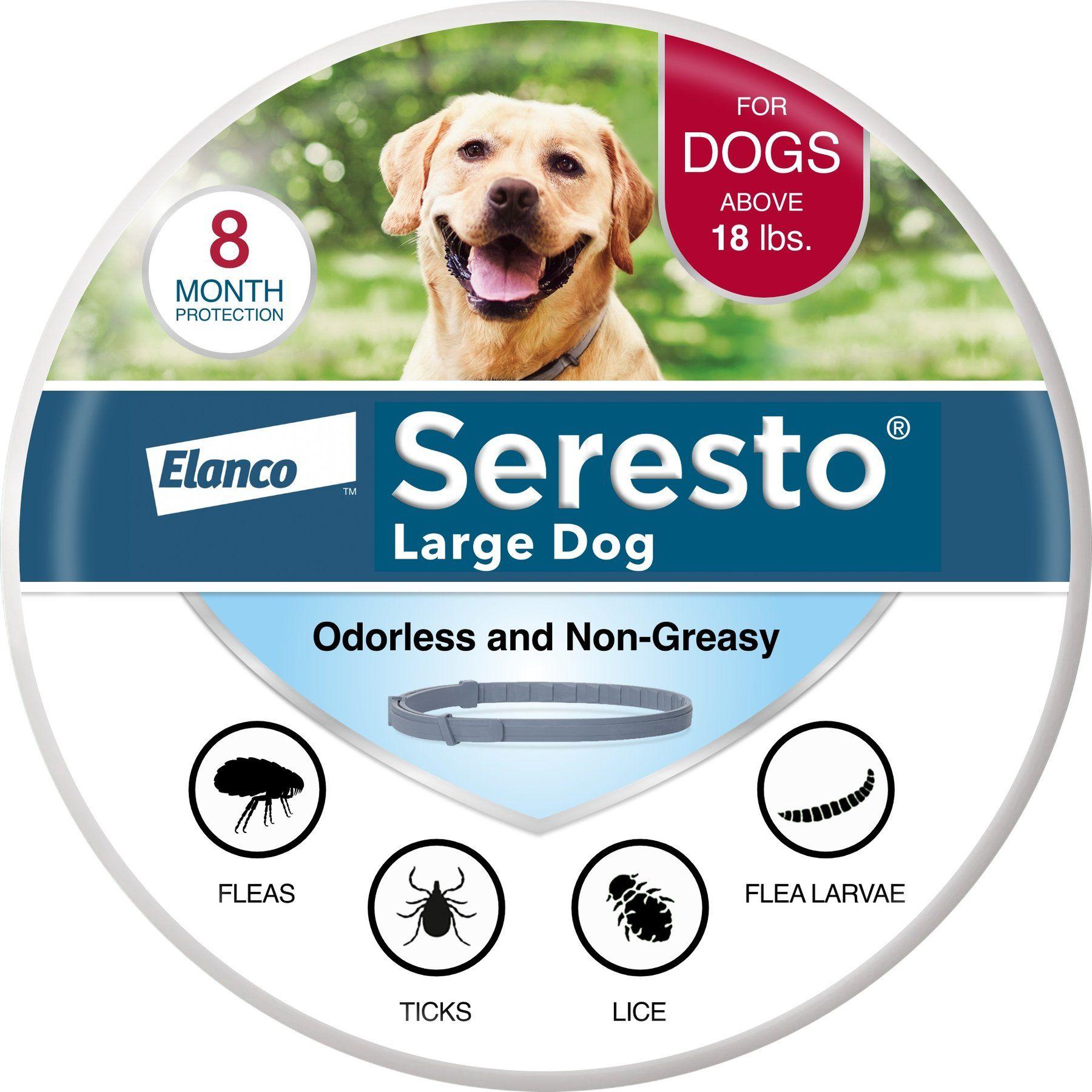
A long-acting flea and tick collar for dogs over 18 lbs, to discuss with your vet for every dog in the home.
Webvet may earn a commission when you click through to Chewy, at no extra cost to you.
For symptoms and treatment across every tick species dogs pick up, see ticks on dogs: symptoms and treatment.

 Sponsored
Need flea, tick, or parasite care for your dog?
A licensed vet at Dutch can recommend the right preventive and prescribe it when it's appropriate. Annual members get 20% off their first flea and tick order.
Use code Pets60
Plans start at $12/month · covers up to 5 pets
- Licensed vets in most states
- Rx for 150+ conditions
- 4.7 on Trustpilot
How to identify a brown dog tick: size, color, engorged ticks, and how it compares with other dog ticks
A brown dog tick looks like a small, flat, reddish-brown tick with no markings, so identification starts with color and markings. Ohio State University Extension describes the adult as reddish brown and lacking markings, with unfed adults about 1/8 inch long. On a dog, it shows as a plain back with no white spots and no silvery patterning.
Size changes a lot with feeding. These are the sizes extension services give:
- Unfed adults: about 1/8 inch long, per Ohio State.
- Adult females: between 1/8 and 1/4 inch before feeding, according to the University of Maine.
- Engorged females: a fed female may grow to 1/2 inch and turns bluish gray, per Ohio State.
- Males: similar in color but slightly smaller than the female, per the University of Maine.
A large tick on a dog that looks gray and swollen is usually an engorged female; a Parasites & Vectors review notes females can feed for several weeks. The Texas A&M AgriLife Tick App describes adults as light to dark brown, so a light brown tick on a dog can still be this species.

Brown dog tick vs deer tick and other dog ticks
Each common dog tick has a different look, and these comparison points come from Ohio State and the CDC:
- Brown dog tick: reddish brown, no markings, about 1/8 inch unfed.
- Deer tick (blacklegged tick): both sexes dark chocolate brown, but the rear half of the adult female is red or orange, and all stages are smaller than other medically important ticks.
- American dog tick: brownish with light grey mottling on the shield behind the head, and that pale patterning is what separates it from a brown dog tick.
- Lone star tick: the CDC says the adult female has a white dot, or lone star, on her back.
A brown tick with a white spot on its back is more likely a lone star female. Engorged ticks of different species are hard to tell apart, so compare markings on an unfed tick found crawling on the dog or in the home. The full comparison lives in deer tick vs dog tick.
Under a microscope or hand lens, Penn State Extension points to a hexagonal base behind the mouthparts as the most definitive feature, although magnification may be needed. Your vet clinic can confirm the species from a tick kept in a sealed container.
Finding several ticks on the same dog over a few days is a sign worth acting on, because it suggests ticks are reattaching from somewhere in the home. Monthly oral preventives are one route a vet may choose, with the product and weight band left to the vet.
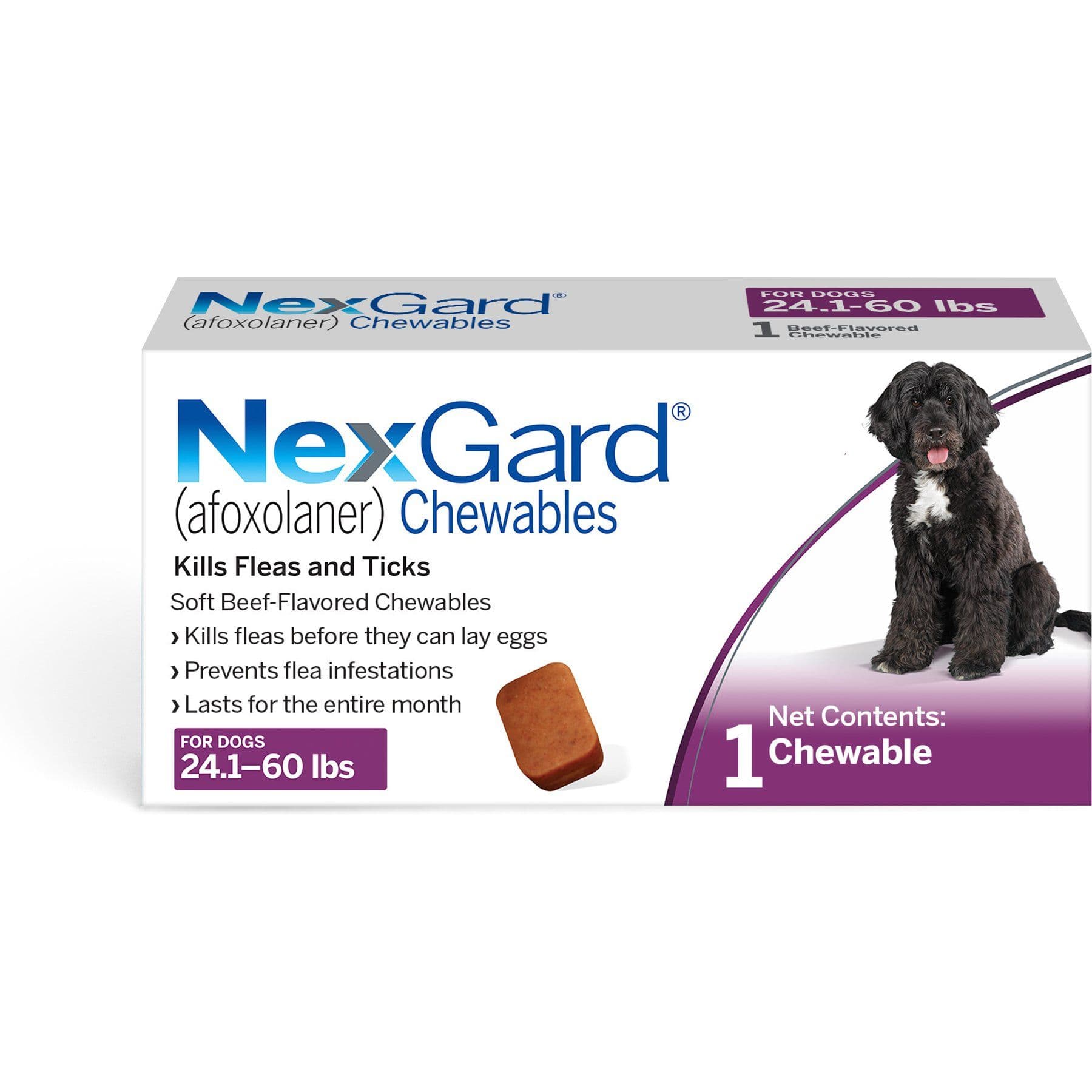
A monthly chewable flea and tick preventive for dogs 24.1 to 60 lbs, used when your vet prescribes it.
Webvet may earn a commission when you click through to Chewy, at no extra cost to you.
The brown dog tick life cycle: why it can live and breed inside a home
The brown dog tick life cycle runs through egg, larva, nymph, and adult. A review in Parasites & Vectors by Dantas-Torres describes it as a three-host tick that spends most of its lifetime off the dog, in the environment, and as adapted to indoor living.
Each feeding stage climbs onto a dog, feeds, drops off, and hides to molt or lay eggs. Dantas-Torres gives these timings:
- Eggs: females lay an average of 1500-4000 eggs, deposited in hidden places such as cracks and crevices in walls.
- Hatching: egg incubation ranges from 6 days to some weeks.
- Feeding: from two days for larvae to several weeks for females.
- Generations: up to three or four generations per year.

Larvae and nymphs are small and easy to miss on a dog or a floor. Because dogs are the host at every stage, a brown dog tick infestation in the home can keep cycling as long as an unprotected dog is there to feed on.
How long will a tick last in a house?
A brown dog tick can last many months in a house without feeding. The Texas A&M AgriLife Tick App says larvae and nymphs may persist for 6-9 months and adults have been reported to survive unfed for over 18 months. It adds that all stages resist drying out, which helps them persist in and around homes.
That long survival is why removing the dog for a few weeks does not clear a home. Fleas follow a different timeline; see how long can fleas live without a host if both pests are in play.
What state has the biggest tick problem?
No single state owns the brown dog tick problem. The University of Rhode Island TickEncounter says it is found throughout the United States but is encountered more often in the southern tier of states, and Penn State Extension says it occurs throughout North America, especially in warmer areas of the south and west.
Beyond the U.S., the CDC lists the tick as found worldwide. Ohio State notes it is very uncommon in Ohio yet is the only tick that can become established indoors there, so a home in a colder state can still have an infestation.
Disease risk is more local. For Rocky Mountain spotted fever spread by this tick, the CDC ties the risk to the southwestern U.S. and the U.S.-Mexico border, and Merck names focal areas of Arizona. In every region, the tick lives in and around homes and kennels with dogs.
Where ticks hide in a home
A brown dog tick in the house rarely stays on the dog between meals. These are its usual hiding places:
- Floor-level cracks and crevices, where the Merck Veterinary Manual notes adults and immature ticks are often seen emerging in heavily infested houses and kennels.
- Walls, which the same source says ticks are frequently observed climbing.
- Carpets, walls, and furniture, where Dantas-Torres says the tick is usually found indoors.
- Dog beds and sleeping areas, since the University of Maine notes these ticks can be found in homes and even on beds where dogs are present.
The ADAMS Flea & Tick Home Spray, 24-fl oz bottle is a flea and tick spray made for use in the home. It is listed at $14.46 on Chewy when checked in November 2026, and it is used by label directions and never on the dog itself.
Treating these spots matters because an indoor infestation is a population problem, not a single-tick problem. Ticks found walking up a wall, rather than only on the dog, are a strong sign the life cycle is already running indoors.
 Sponsored
Vet care that's always there
Unlimited video calls and messaging with licensed vets for less than a typical vet visit. One membership covers up to five pets.
Use code Pets60
Plans start at $12/month · covers up to 5 pets
- Licensed vets in most states
- Rx for 150+ conditions
- 4.7 on Trustpilot
Brown dog tick diseases in dogs and people: what the sources name
The brown dog tick is dangerous mainly because of the infections it can carry. CAPC lists these organisms for R. sanguineus:
- Ehrlichia canis, the cause of canine ehrlichiosis. CAPC's Ehrlichia guidelines say it cycles primarily between domestic dogs and the brown dog tick, and Merck names the tick as its main carrier.
- Babesia vogeli and Babesia gibsoni, causes of canine babesiosis.
- Rickettsia rickettsii, the cause of Rocky Mountain spotted fever.
- Hepatozoon canis, the cause of hepatozoonosis.
- Anaplasma platys, where CAPC notes transmission is suspected but not yet documented in North America.
The University of Maine states plainly that canine ehrlichiosis and canine babesiosis are transmitted to dogs through the feeding of brown dog ticks. Merck adds a nuance: only the tropical lineage of the tick can maintain and transmit E. canis, so risk varies by where the tick population came from.
Every one of these infections depends on the tick, so breaking the indoor cycle is part of disease prevention. Treating the cracks, baseboards, and bedding areas where ticks hide cuts the number waiting for the next meal.
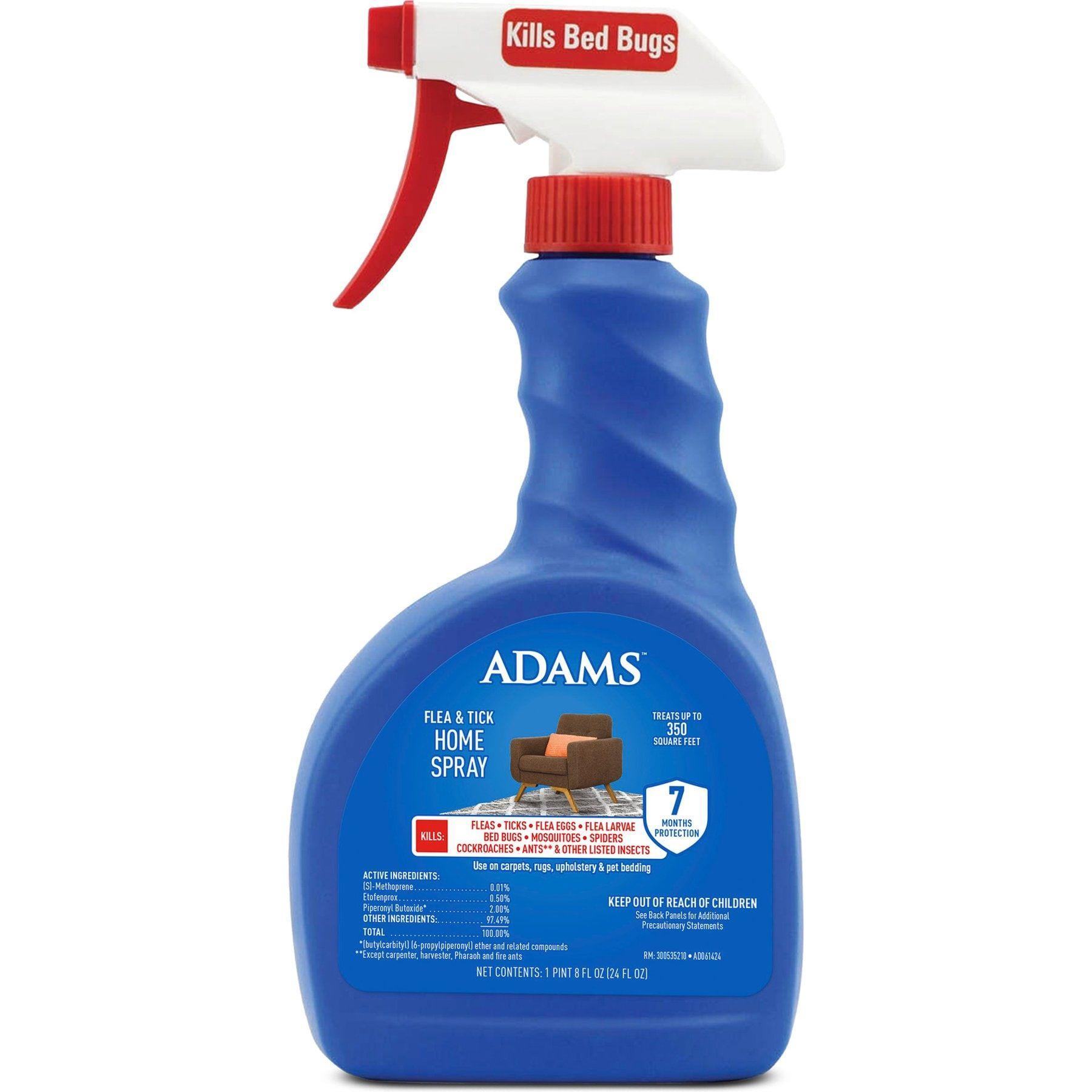
An indoor flea and tick spray for treating the home, used by label directions and never on pets.
Webvet may earn a commission when you click through to Chewy, at no extra cost to you.
Does the brown dog tick carry Lyme disease?
No, brown dog ticks are not known to carry Lyme disease. CAPC states that only Ixodes ticks, the blacklegged ticks, are known competent vectors of the bacteria behind Lyme disease. A dog with brown dog ticks still needs protection, because ehrlichiosis and babesiosis are the concerns instead. Read more in tick-borne diseases in dogs.
Rocky Mountain spotted fever and the brown dog tick
Merck's page on Rocky Mountain spotted fever in dogs describes it as a disease of both humans and dogs, with the brown dog tick the primary vector in some focal areas of Arizona. Merck also notes that dogs can act as sentinels of risk for people, but direct transmission from dogs to humans has not been documented.
Merck states that ehrlichiosis can be prevented by controlling tick exposure of dogs. The Simparica Trio Chewable Tablet for Dogs, 22.1-44.0 lbs, (Teal Box), 1 Chewable Tablet (1-mo. supply) is a monthly prescription chew listed for ticks, fleas, heartworm disease, and some intestinal worms, at $43.48 on Chewy when checked in November 2026.
The choice of product, and how it fits a dog's age, weight, and health, belongs with the vet. The best flea and tick prevention for dogs guide compares the main preventive formats.
Brown dog ticks on people and cats: bites, risk, and what to do
Brown dog ticks on humans are uncommon but do happen. Merck notes that humans are attacked infrequently, more often in situations where children play and sleep, so children who share play and sleeping spaces with an infested dog are the most likely to be bitten.

The bite itself is usually just a small attached tick; the bigger concern is infection afterward. The CDC lists the most common symptoms of Rocky Mountain spotted fever as fever, headache, and rash, and says it can be deadly if not treated early.
Any rash or fever after a tick bite needs a doctor. CDC advice is clear: if you develop a rash or fever within several weeks of removing a tick, see your doctor and mention the tick bite.
Can brown dog ticks attach to humans?
Yes, brown dog ticks can attach to humans, but it is uncommon. The CDC says the tick may bite people even though dogs are its primary host, and Dantas-Torres describes human cases only sporadically in the literature. Merck notes bites happen more often where children play and sleep, so check children after time on the dog's bed or favorite spots. Because the dog is the tick's main host, CAPC's advice to keep every dog in the home on year-round tick control also protects the people who share those spaces, and a monthly chew is one option a vet may prescribe.

A monthly prescription chew covering ticks, fleas, and heartworm for dogs 22.1 to 44 lbs, chosen with your vet.
Webvet may earn a commission when you click through to Chewy, at no extra cost to you.
Does showering get rid of ticks?
Showering helps but does not remove every tick. The CDC's tick prevention advice says showering may help wash off unattached ticks and is a good opportunity to do a tick check. It also notes that showering within two hours of coming indoors has been shown to reduce Lyme disease risk. An attached tick needs removing by hand.
Can a tick stay on you after a shower?
Yes, an attached tick can stay on you after a shower, because water washes off only unattached ticks. The CDC also warns that ticks can ride into the home on clothing and pets and attach later. After a shower, check these areas, which the CDC lists:
- Under the arms and in and around the ears.
- Inside the belly button and around the waist.
- Back of the knees and between the legs.
- In and around the hair.
The CDC adds that tumbling dry clothes on high heat for 10 minutes kills ticks on dry clothing.
Removing a brown dog tick from a person
The CDC's after-a-bite steps are simple:
- Grasp the tick as close to the skin's surface as possible with clean fine-tipped tweezers.
- Pull it away with steady, even pressure; do not twist or jerk, since the mouthparts can break off.
- Do not crush the tick with your fingers.
- Skip petroleum jelly, heat, and nail polish.
The same method applies to dogs; see how to remove a tick from a dog.
Brown dog ticks on cats
A brown dog tick on a cat is unusual. Dantas-Torres calls feeding on hosts other than dogs quite unusual in certain areas, and the University of Maine says the tick only occasionally feeds on other hosts. Cats in an infested home can still pick up ticks, so ask the vet for a cat-labeled product.
When a dog with brown dog ticks needs a vet
A dog with brown dog ticks needs a vet when signs of illness appear, such as fever, lethargy, bleeding, or pale gums. Many dogs with a few ticks show no illness at all, but signs of tick-borne disease can take weeks to appear. CAPC says ticks can also cause irritation and itching at the bite site and anemia from blood loss, and that a secondary infection at the attachment site can lead to sepsis.
Signs in a dog that point to infection include:
- Ehrlichiosis, acute: CAPC says it is commonly characterized by fever, lethargy, depression, and anorexia, with bleeding such as nosebleeds or bruising in some dogs.
- Ehrlichiosis, chronic: VCA Animal Hospitals lists anemia, bleeding episodes, lameness, and eye problems.
- Babesiosis: VCA lists abnormal dark urine, fever, weakness, pale mucous membranes, depression, swollen lymph nodes, and an enlarged spleen.
- Rocky Mountain spotted fever: Merck lists fever, small skin bleeds, enlarged lymph nodes, and joint inflammation among early signs.
The outlook is often good with prompt care. VCA says that when ehrlichiosis treatment starts early in the acute phase, the prognosis is generally good, while Merck notes most dogs clear the infection within 2–4 weeks and some develop a chronic form. Ask the vet whether a tick-borne disease blood test makes sense for your dog.
A heavy tick load on a puppy, a small dog, or a dog that is already unwell deserves a vet visit even without other signs, because of the anemia risk CAPC describes. VCA also notes there is no effective vaccine against babesiosis, so prevention is the main defense.
How to get rid of brown dog ticks: on the dog, in the house, and when to call pest control
| What you see | Likely situation | What to do | When to call a pro |
|---|---|---|---|
| One tick on the dog after a walk or trip, none indoors | Likely a single tick picked up outside, not necessarily a brown dog tick | Remove it, keep the dog on a vet-recommended preventive, keep checking after outings | Not needed unless more ticks appear |
| Ticks on the dog again and again, even with little time outdoors | Possible indoor population feeding on the dog | Ask the vet about a preventive for every dog in the home; vacuum pet areas, furniture, and baseboards | If ticks keep appearing after a few weeks of treatment |
| Ticks crawling on walls, baseboards, curtains, or dog beds | Established indoor population | Treat every dog, treat cracks, crevices, and bedding areas by label directions | Call licensed pest control now; infestations can take months |
| Tiny ticks (larvae or nymphs) plus adults, several pets affected | Life cycle running indoors through several stages | Vet visit for all dogs, whole-home treatment, keep cats on cat-only products | Professional pest control plus follow-up treatments |
| Ticks in a kennel, shelter, or multi-dog home | Shared indoor population across many dogs | Treat all dogs at once and clean all housing | Licensed pest control for the building |
Getting rid of brown dog ticks means treating two places at once: the dogs and the house. CAPC warns that once established, brown dog ticks may take several months to bring under control, and that a licensed exterminator is sometimes necessary to eliminate an infestation from buildings.

Step 1: protect every dog
Treatment starts with a preventive on every dog in the home, not just the one where ticks were found. Merck suggests effective long-acting tick collars on all susceptible dogs in areas where tick-borne disease is endemic. Common formats a vet may discuss include:
- Collars: the Seresto Over 18lbs Large Dogs & Puppies Flea & Tick Collar is described by its maker as killing and repelling fleas and ticks for eight continuous months, by contact; it is listed at $59.97 on Chewy when checked in November 2026.
- Monthly chews: the NexGard Chewables for Dogs, 24.1-60 lbs, (Purple Box), 1 Chewable Tablet (1-mo. supply) kills fleas and ticks for a month per its listing; listed at $38.99 on Chewy when checked in November 2026.
- Longer-interval chews: the 22-44 lbs, Bravecto Chews for Dogs, 1 treatment, 500 mg Fluralaner is listed as giving up to 12 weeks of protection against fleas and ticks; listed at $83.99 on Chewy when checked in November 2026.
The EPA advises consulting your vet, reading and following the label, matching products to the animal's weight, and never applying dog products to cats. Merck also notes that certain American populations of brown dog ticks have become resistant to insecticides, so tell the vet if ticks persist on a treated dog.
Step 2: treat the house
Home treatment targets the cracks, baseboards, walls, and bedding where ticks hide. A practical routine:
- Vacuum the areas your pets use most: furniture, cracks and crevices in floors, baseboards, walls, and even crown molding, as the University of Rhode Island TickEncounter advises.
- Dispose of the vacuum bag afterward.
- Dry washable dog blankets on high heat, the same step the CDC recommends for killing ticks on clothing.
- Treat floor-level cracks, crevices, and dog bedding areas, where ticks molt and lay eggs.
- Use any household tick spray only by label directions, with pets kept off treated areas until dry.
CAPC notes that acaricides such as pyrethroids can be sprayed into cracks and crevices, and TickEncounter warns that control may take several months and several treatments.
Plant-based options exist too: the Vet's Best Indoor Flea & Tick Peppermint Home Spray for Dogs, 32-fl oz bottle uses peppermint oil and eugenol, per its listing, and is listed at $15.48 on Chewy when checked in November 2026. EPA's rule against using dog products on cats applies to any dog-labeled spray in a home with cats.
Step 3: remove attached ticks
Remove any tick you find on the dog with the CDC method of fine-tipped tweezers and steady, even pressure. Twist-style tools are sold too; the ZenPet Tick Tornado Tick Removal Tool uses a hook-and-twist motion its maker describes, which differs from the CDC's advice not to twist. Compare designs in the tick removal tool guide.
For the options that kill attached ticks fastest, and why home remedies fall short, see what kills ticks on dogs instantly.
When to call pest control
Home treatment has limits. Call licensed pest control when you see any of these:
- Ticks on walls, curtains, crown molding, or furniture.
- Ticks still appearing after several weeks of treating every dog and the home.
- Larvae, nymphs, and adults together, a sign of an indoor population.
- A kennel, shelter, or multi-dog home with ticks across several animals.
TickEncounter's advice is that it is probably best to call in a trained professional with experience controlling brown dog ticks. Keep every dog on its preventive while that work happens, because the dogs are what keep the population alive.
Brown dog tick questions
Frequently Asked Questions
Do brown dog ticks carry Lyme disease?
No. Lyme disease is spread by Ixodes ticks such as the blacklegged tick, and CAPC names only that genus as a competent Lyme vector. In dogs, the brown dog tick is linked instead to ehrlichiosis and babesiosis, plus Rocky Mountain spotted fever in some areas.
Can brown dog ticks live in your house?
Yes. This is the one common tick that can complete its whole life cycle indoors, from egg to adult, feeding on dogs and then hiding in cracks, walls, and furniture between meals. That is why an indoor population can last for months even after the first tick is removed.
Can cats get brown dog ticks?
A cat can occasionally pick one up, but it is uncommon. The tick is not strictly a dog-only parasite, but dogs are its main host and it feeds on other animals only occasionally. Treat cats only with products labeled for cats.
Are brown dog ticks dangerous to humans?
The risk to people is low but real. Bites on humans are infrequent, yet the CDC links brown dog ticks to Rocky Mountain spotted fever in the southwestern U.S. and along the U.S.-Mexico border. See a doctor about any fever or rash in the weeks after a bite.
What does an engorged brown dog tick look like?
An engorged female swells to about 1/2 inch and turns bluish gray after feeding, losing the flat reddish-brown look of an unfed tick. Males are similar in color but slightly smaller. A swollen gray tick on a dog has been feeding, possibly for days, since females can feed for several weeks; remove it promptly.
Veterinarian · BVMS MRCVS
Dr. Pippa Elliott, BVMS, MRCVS, is a veterinarian with nearly 30 years of experience in companion animal practice. Dr. Elliott earned her Bachelor of Veterinary Medicine and Surgery from the University of Glasgow. She was also designated a Member of the Royal College of Veterinary Surgeons. Married with 2 grown-up kids, Dr. Elliott has a naughty Puggle named Poggle, 3 cats and a bearded dragon.


