Can Fleas Fly? How Fleas Really Get on Your Pet
Can fleas fly, or are those flying bugs in your house something else? A vet explains how fleas move without wings, how they reach dogs, cats, and people, which flying insects get mistaken for fleas, and how to keep fleas off your pet.

BVMS MRCVS
Medically reviewed by Dr. Pippa Elliott, BVMS MRCVS · Last reviewed

This article contains affiliate links. Webvet may earn a commission when you buy through them, at no extra cost to you.
Can fleas fly? No: how fleas get around without wings
Can fleas fly? No. Fleas have no wings, and no species of flea can fly, glide, or hover. The UC Statewide IPM Program describes fleas as reddish-brown, wingless insects flattened from side to side. They get around by jumping, on legs built to launch them onto a passing dog, cat, or person.
The more useful questions are what that flying bug really is, and how the fleas reached the pet. Small insects flying around a room are usually something else, such as fungus gnats or fruit flies. Fleas arrive by jumping from the places they wait.
- 1Fleas cannot fly: they are wingless insects that move by jumping, never by flying.
- 2Fleas have no wings; a pad of resilin, an elastic protein in the thorax, stores the energy that launches each jump.
- 3A small bug flying around the house is most likely a fungus gnat or fruit fly; a jumping beetle in the garden may be a flea beetle.
- 4Fleas reach pets from yards, wildlife, other pets, and visits, so a vet-recommended preventive plus home cleaning is the plan that works.
The flea found on most dogs and cats is the cat flea, Ctenocephalides felis. The Companion Animal Parasite Council (CAPC) calls it the most common external parasite of both dogs and cats in North America. Despite the name, it is just as happy on a dog.
Entomologists at Texas A&M AgriLife Extension add that adult cat fleas feed on dogs, cats, and a variety of furred animals. So a flea never has to fly into a home. It rides in on an animal, or waits in a cocoon as a flea pupa until a host passes.
Signs that the insect is a flea rather than a flying bug:
- It never takes off into the air; it disappears in a single hop.
- It is dark reddish-brown with a hard body flattened side to side, as University of Kentucky entomologists describe it.
- It turns up in fur, especially on the face, neck, and the area in front of the tail, the spots the CDC advises combing.
- Bites on people often show up on the lower legs and feet.
A fine-toothed flea comb is the quickest way to settle it. The Four Paws Flea Catcher Comb, listed at $7.29 on Chewy when checked in November 2026, has extra-fine teeth and short tines suited to short coats. Comb over a pale towel after walks or yard time and check the teeth.
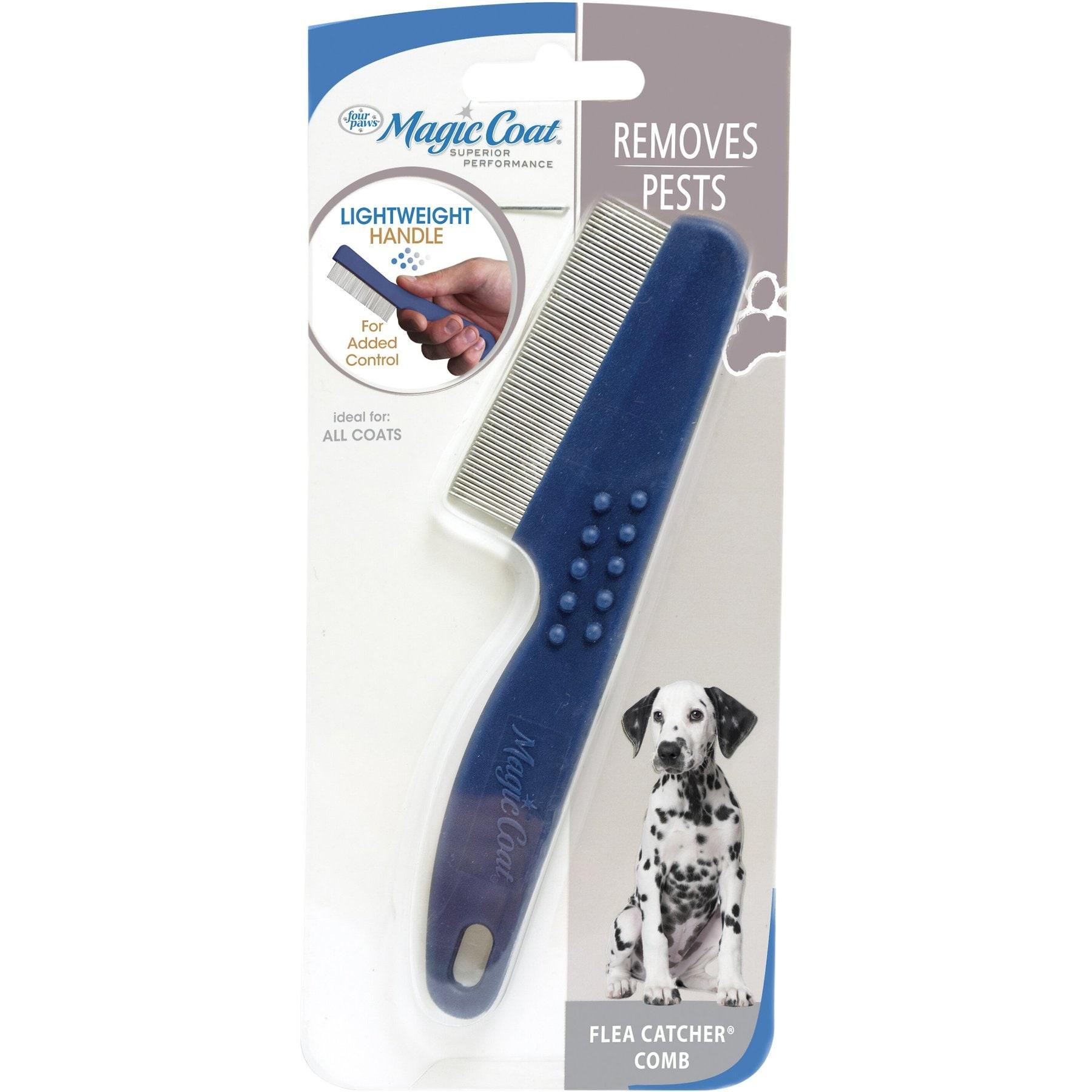
A fine-toothed comb for checking a dog or cat for fleas after walks, yard time, or visits.
Webvet may earn a commission when you click through to Chewy, at no extra cost to you.
For a closer look at what turns up in the comb, see what fleas on dogs look like and how to stop them and what fleas look like on cats. Both walk through flea dirt, bite patterns, and the coat areas fleas favor.


 Sponsored
Need flea, tick, or parasite care for your pet?
A licensed vet at Dutch can recommend the right preventive and prescribe it when it's appropriate. Annual members get 20% off their first flea and tick order.
Use code Pets60
Plans start at $12/month · covers up to 5 pets
- Licensed vets in most states
- Rx for 150+ conditions
- 4.7 on Trustpilot
Why fleas have no wings, and how their jump works
Fleas have no wings; they rely on strong jumping legs instead. Texas A&M AgriLife describes the adults as small, about 1/8 inch long, wingless, and brown to black. A flea has no wings at any stage of its life.
So how do fleas move? On the animal, they move through the fur on foot. To get from the ground or carpet onto a host, they jump.
The power behind that jump is stored, not muscled out in the moment. A 2011 study in the Journal of Experimental Biology notes that fleas jump by storing and releasing energy in a cuticular spring. The researchers describe areas of resilin, an elastic protein, in the thorax next to each hind leg.

The same study filmed fleas with high-speed cameras and concluded that the force reaches the ground through the ends of the legs. A University of Cambridge summary puts it simply: fleas use their toes to push off. What the measurements showed:
- Take-off velocity of 1.3 m/s (plus or minus 0.25) for jumps starting with the leg's trochanter off the ground.
- Acceleration over about 1.4 milliseconds (plus or minus 0.20).
- Take-off angles from 28 to 52 degrees, with a mean of 39 degrees.
- Speeds as fast as 1.9 meters per second, per the Cambridge summary.
How far can fleas jump? About 20 to 30 cm on average, roughly 8 to 12 inches, in a 2000 study in Veterinary Parasitology that measured both distance and height. The cat flea's mean jump length was 19.9 cm (plus or minus 9.1 cm). The dog flea jumped farther, averaging 30.4 cm, with a range from 3 to 50 cm.
How high can fleas jump? In the same study, half of the fleas cleared 15.5 cm (dog flea) and 13.2 cm (cat flea). That is ample reach for a cat lying in a shaded corner of the yard, or a dog nosing along a fence line, to pick up a newly emerged flea in a single jump.
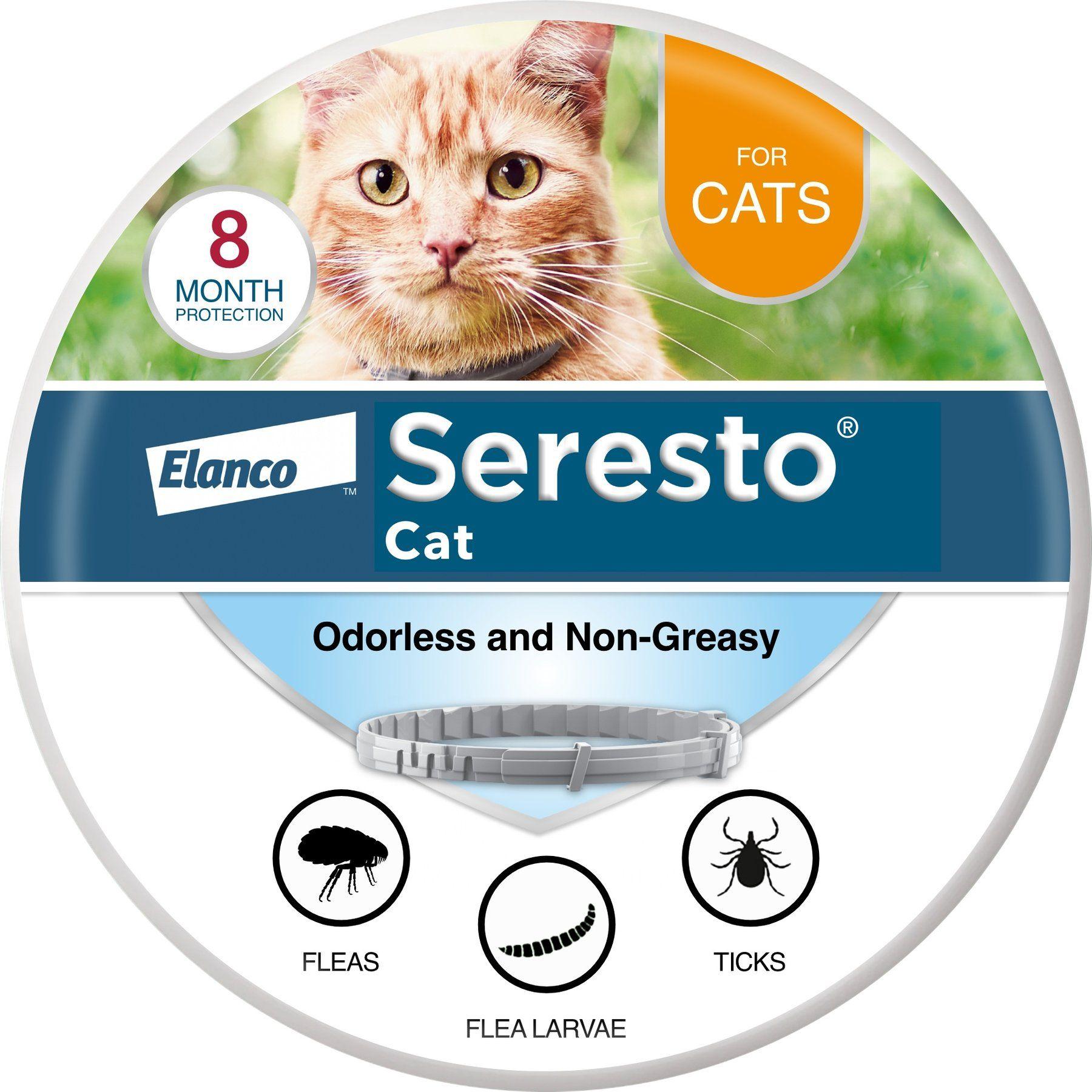
A long-acting flea and tick collar a vet may discuss for cats 10 weeks or older, so fleas that land do not settle.
Webvet may earn a commission when you click through to Chewy, at no extra cost to you.
That reach is why prevention focuses on the pet and the places it rests, not on swatting at the air. CAPC advises year-round flea control for dogs and cats, so a flea that makes the jump lands on a treated host.
Do fleas fly through the air?
No, fleas do not fly through the air; they jump through it. Fleas are wingless, so every trip through the air is a single ballistic leap launched by the resilin spring and the legs. The Veterinary Parasitology measurements put the cat flea's average jump at 19.9 cm, after which it lands and must jump again.
Why should you not squish fleas?
Squishing is a poor way to kill fleas. They have hard, flattened bodies that resist squeezing, and crushing one between the fingers can smear it and its feces onto the skin. The CDC notes that flea-borne typhus can spread when infected flea feces are rubbed into bite wounds or other wounds.
Swallowing an infected flea is how tapeworms spread to people and pets, according to the CDC. A safer habit is to drop combed fleas into a cup of soapy water: the CDC notes that soap acts as a gentle insecticide that kills adult fleas. Wash hands afterward.
Flying bugs mistaken for fleas: gnats, fruit flies, and flea beetles
If the bug flies, it is not a flea. Owners who think they have flying fleas in the house are almost always looking at a different insect. Fleas cannot fly around the house the way gnats do.

What usually gets mistaken for a flea, and how to tell them apart:
- Fungus gnat: dark, delicate flies that look like tiny mosquitoes, about 1/16 to 1/8 inch long, with light gray to clear wings, per the UC IPM fungus gnat guide. They breed in moist potting soil and stay near houseplants.
- Fruit fly: brown to yellowish flies with red eyes, 2 to 3 mm long, according to the UC IPM fruit fly guide. Their larvae develop in damaged or fermenting overripe fruit.
- Flea beetle: a garden beetle under 1/8 inch, dark and shiny, with enlarged hind legs, as South Dakota State University Extension describes it. When disturbed, it springs away like a flea.
- Springtail: a tiny jumping creature found in damp spots such as basements. University of Kentucky entomologists note springtails can be confused with fleas but do not bite or sting people or animals.
- Flea: wingless, dark reddish-brown, with a hard body flattened side to side, found on the animal or where it sleeps.
Telling gnats and fleas apart comes down to wings and habits. A fungus gnat is about the same size as a flea, but it has wings, flies weakly, and hovers around houseplants. Fungus gnats do not bite people, per UC IPM, so itchy bites point to fleas, not gnats.
Fleas and fruit flies are just as easy to separate. A fruit fly is a winged, red-eyed, brown to yellowish fly that gathers around ripe or fermenting fruit. Side by side, a flea is a flat, wingless, dark insect and a fruit fly is plainly a fly.
When it is hard to tell, check the animal rather than the air:
- Comb the pet's coat and look for wingless, reddish-brown insects and dark specks.
- Look at where the insects gather: houseplants and fruit point to gnats or fruit flies; pet beds and carpets point to fleas.
- Note any bites: itchy bites on people's lower legs point toward fleas.
- If the culprit is a fungus gnat, let the surface of houseplant soil dry between waterings, as UC IPM advises.
- If it is a springtail in a damp basement, the fix is drying out the space, not flea treatment.
A small winged insect near a pet or its bed is most likely a fungus gnat or fruit fly that wandered in. Any flea found in a pet's coat will be wingless.
A small dark bug that jumps but is not on the pet is usually a flea beetle outdoors or a springtail indoors. Flea beetles feed on garden plants such as tomatoes, peppers, beans, squash, and lettuce, per SDSU Extension.
Springtails show up in damp spots indoors, and Kentucky's entomologists say they come in many colors, often look gray, and have softer bodies than fleas. A gray, soft jumper in a damp basement points to moisture, not fleas.
 Sponsored
Vet care that's always there
Unlimited video calls and messaging with licensed vets for less than a typical vet visit. One membership covers up to five pets.
Use code Pets60
Plans start at $12/month · covers up to 5 pets
- Licensed vets in most states
- Rx for 150+ conditions
- 4.7 on Trustpilot
How fleas get onto dogs and cats: yards, wildlife, other pets, and visits
| Route fleas take | Where fleas wait | Prevention step that closes the route |
|---|---|---|
| Yard and shaded soil | Cool, shady spots where pets rest, in moist protected ground | Keep every pet on a vet-recommended preventive year-round; mow, rake, and open shady resting spots to sun |
| Visiting wildlife and strays | Spots where opossums, raccoons, feral cats, squirrels, or stray dogs and cats bed down or feed | Do not feed strays or wildlife; store pet food and trash sealed; clear brush and debris |
| Another pet in the home | On the other pet and in its bedding | Treat every pet in the home, not just the itchy one, as part of prevention |
| Boarding, kennel, or grooming visit | On other animals and in shared spaces | Keep prevention current before the visit; comb the pet afterward |
| New or previously occupied home | Cocoons in carpets, under furniture, and along baseboards | Vacuum thoroughly and often; plan follow-up treatment with a pest professional if fleas keep emerging |
| People's shoes and pant legs | Infested homes or yards a person has visited | Check pets after visits elsewhere; vacuum entry areas and rugs |
Where do fleas come from? Usually from the environment. The Companion Animal Parasite Council says that picking up newly emerged fleas from an infested environment is the main way an infestation starts. Outdoors, larvae develop in cool, shady areas where pets rest, so each route fleas take onto a pet needs its own prevention step.
That is how fleas get on dogs: a dog resting in a shady yard spot where larvae have developed collects newly emerged adults as they jump. The Seresto Over 18lbs Large Dogs & Puppies Flea & Tick Collar is one long-acting collar a vet may discuss for dogs that spend time in yards.
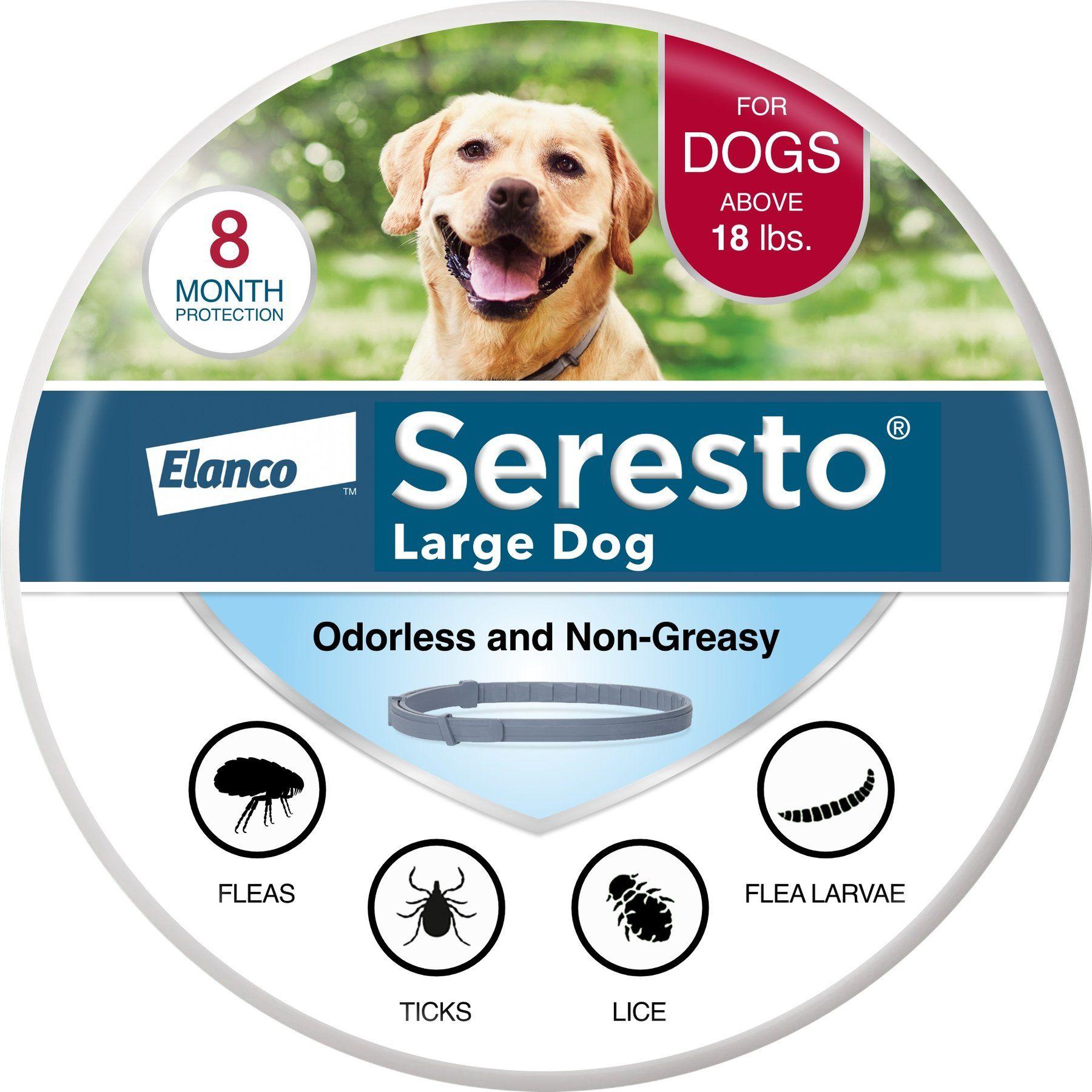
A long-acting flea and tick collar a vet may discuss for larger dogs that spend time in yards.
Webvet may earn a commission when you click through to Chewy, at no extra cost to you.
Besides the yard, wildlife is the other big outdoor source of fleas for dogs. UC IPM lists feral cats, opossums, squirrels, and coyotes. University of Kentucky entomologists add stray dogs and cats and wildlife, especially opossums and raccoons, and warn that pets can pick up new fleas at the kennel or groomer.
Another pet in the home closes the loop. If one animal brings fleas in, every animal it shares a bed or couch with becomes a host, which is why CAPC states that every pet in the home must be treated to achieve control.
Neither dog fleas nor cat fleas can fly. Both species are wingless jumpers; the dog flea jumped farther than the cat flea in lab measurements. Indoors, the cocoon stage makes fleas seem to appear from nowhere, and it explains how even indoor cats can get fleas and worms.

The Merck Veterinary Manual explains that a fully formed flea waits inside its cocoon and emerges in response to:
- Physical pressure, such as footsteps.
- Exhaled carbon dioxide in the breath of warm-blooded animals.
- Movement of the surface it rests on.
- Heat.
Merck adds that emergence can be delayed up to 30 weeks if the waiting fleas are protected from drying out. That is why a home that sat empty, or a room no one used, can produce a burst of hungry fleas when people and pets move back in.
Flea eggs hatch in about 2 to 5 days, according to UC IPM, and at normal room temperatures the whole life cycle can run in about 18 days. For how long eggs last and where they collect, see flea eggs on dogs.
Where fleas develop indoors, according to CAPC and UC IPM:
- Undisturbed, protected spots: carpets, under furniture, and along baseboards.
- Places with at least 75% relative humidity, which flea larvae need.
- Carpet that gets warmth and footsteps or vacuuming, which prompts waiting adults to leave their cocoons.
Can fleas live in your bed?
Fleas can develop in a bed a pet sleeps on, though adult fleas live on the animal, not the person. CAPC places indoor flea development in protected spots such as carpets and under furniture, and a pet's favorite bedding works the same way. Wash the bedding often with soap and water, as the CDC advises.
Carpets, upholstery, and pet bedding are where a labeled home spray belongs. The Zodiac Carpet & Upholstery Flea & Tick Spray, 24-fl oz is made for those surfaces; follow its label for use around pets.
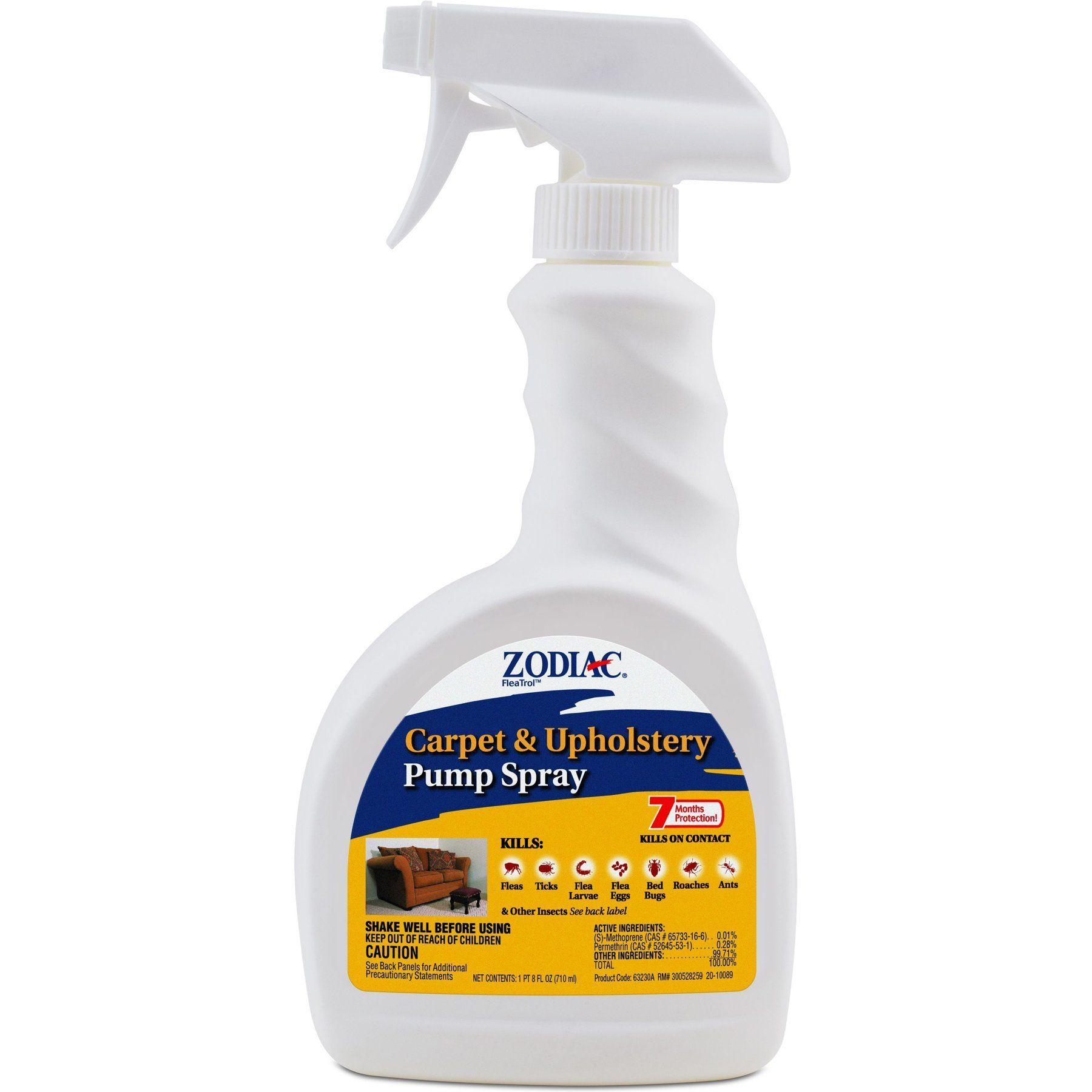
A labeled carpet and upholstery spray for the indoor spots where fleas wait, used per the label.
Webvet may earn a commission when you click through to Chewy, at no extra cost to you.
Can fleas jump onto people, and do they live on humans?
Fleas can jump onto people and bite them, but they do not live on humans the way they live on pets. The CDC says fleas prefer animal hosts but will bite people when animals are unavailable. Adult cat fleas stay on the animal host, where they feed, mate, and lay eggs, per UC IPM.
People get bites, not a colony. Fleas can jump from a dog onto a person, and the Merck Veterinary Manual notes that newly emerged, unfed fleas, the ones waiting in carpets and bedding, are what bite humans. Texas A&M AgriLife notes people may be bitten especially when flea numbers are high.
How fleas end up on a person:
- Jumping from a dog or cat that is carrying fleas, or from its bedding.
- Jumping up from carpets or yards where newly emerged fleas are waiting.
- Riding on clothing: University of Kentucky entomologists note adult fleas can hitch a ride on the shoes and pant legs of a person.
Fleas do not make a home in human hair, since people are not their preferred host: the CDC says fleas prefer animals, and bites on people often land on the lower legs and feet, the parts fleas jumping up from the floor reach first. A persistently itchy scalp is worth showing to a doctor.
Fleas can also ride on a person's shoes and pant legs into another home. How long they last on that trip depends on how soon they find an animal; see how long fleas can live without a host.
Every flea species is wingless, including the human flea, so no flea can fly to a person. Each one reaches a person the same way it reaches a pet: by jumping.
Do fleas bite humans?
Yes, fleas bite humans, though they prefer animals. MedlinePlus, from the U.S. National Library of Medicine, describes flea bites as small red bumps, often three together, that are very itchy. They often appear on the legs and where clothes fit close to the body.
What flea bites on people typically look like:
- A small, central red spot surrounded by a red halo, usually without much swelling, per UC IPM.
- Bumps grouped in small clusters, often three together.
- Bites concentrated on the lower legs, ankles, and feet.
- Strong itching that tempts scratching.
When flea bites need a vet or a doctor
Most flea bites on pets and people are itchy rather than dangerous. A few situations need professional care promptly.
For pets, the Companion Animal Parasite Council warns that heavy infestations may lead to iron deficiency anemia and death. The Merck Veterinary Manual notes that young animals are particularly at risk, so a puppy or kitten crawling with fleas needs a vet visit, not just a bath.
Flea allergy is the other common reason for a vet visit. VCA Animal Hospitals describes flea allergy dermatitis as an allergic reaction to proteins in flea saliva, where a single bite can cause itching for several days. Signs a pet needs a vet:
- Scabs, sores, or skin infections from scratching.
- Hair loss or irritated skin from the middle of the back to the tail base and down the rear legs.
- Itching that continues even after fleas are found and treated.
- A puppy, kitten, or other young animal with a heavy flea load, since young animals are most at risk of anemia.
- A pet that has fleas and may have swallowed some while grooming, since swallowed fleas spread tapeworms.
More detail on the allergy is in flea allergy dermatitis in dogs, including why strict flea control is part of treatment.
For people, MedlinePlus notes that scratching flea bites can lead to a skin infection. Fleas can also carry germs. The CDC says flea-borne typhus is spread by infected cat fleas, infected rat fleas, or their feces, and CAPC notes that cat fleas transmit the agents behind cat scratch disease.
Signs that mean a person should see a doctor:
- Fever, chills, headache, or rash within 3 to 14 days of contact with fleas or flea dirt, the window the CDC gives for flea-borne typhus.
- Bites that look infected after scratching.
- A child who may have swallowed a flea, since the CDC notes tapeworms spread that way.
The CDC notes that almost all typhus cases resolve completely with appropriate antibiotics, which is why early care matters.
Stopping the jump: keep fleas off your pet and out of your home

Because fleas jump rather than fly, prevention works on two fronts: make the pet a place fleas cannot settle, and make the home and yard a place where they cannot develop. Neither step works alone, since fleas waiting in carpets and shade will keep jumping onto any pet that passes.
The Companion Animal Parasite Council recommends that all dogs be treated year-round and throughout their life with flea control products, and the Merck Veterinary Manual states that lifelong control is needed to prevent reinfestation. The CDC advises talking with a veterinarian about the right product.
Options a vet may discuss, each used only as the label and the vet direct:
- A prescription chewable for dogs, such as Simparica Trio chewable tablets, which the listing describes as a monthly prescription preventive.
- A long-acting collar for cats, such as Seresto Cats & Kittens 10 weeks or older, Flea & Tick Collars, labeled for cats and kittens 10 weeks or older.
- A long-acting collar for larger dogs, such as the Seresto large dog collar, for dogs over 18 pounds per its label.
For a dog-by-dog comparison of preventives, see the best flea and tick prevention for dogs.
The U.S. EPA sets the label rules that keep these products safe:
- Never apply dog products to cats, or cat products to dogs, because some pesticides are more toxic to one species.
- Use each product only on the species and size or weight the label lists.
- Follow label warnings for weak, aged, medicated, sick, pregnant, or nursing pets.
- Watch the pet after applying any product.
Home and yard steps that leave fleas nowhere to land:
- Vacuum carpets, rugs, and chair and sofa cushions often, per the CDC.
- Launder pet bedding in hot, soapy water at least once a week, per UC IPM.
- Spot-treat pet resting areas indoors with a labeled home spray, such as ADAMS Flea & Tick Home Spray, 8-fl oz bottle, used per its label.
- Mow the yard: the CDC notes mowing exposes soil to the sun, which fleas try to avoid.
- Open shady resting spots to sunlight; UC IPM notes larvae are unlikely to survive in sun or heavy foot traffic.
- Seal pet food and trash so wildlife and strays stay away.
Once fleas are in the house, the CDC says two or more follow-up treatments within 5 to 10 days are needed, so no single spray finishes the job, and a licensed pest control applicator can help. The full plan is in how to get rid of fleas in your house and yard.
Diatomaceous earth is a popular home method. The National Pesticide Information Center explains that it kills insects by drying them out, absorbing oils and fats from their outer layer. It only works on insects that contact the dust, so it does nothing for fleas already on the pet and cannot replace a vet-recommended preventive.
NPIC also notes that breathed-in dust can irritate the nose and nasal passages, and that it can dry and irritate skin. That matters for cats, kittens, puppies, and pets with breathing problems. The trade-offs, including food-grade versus pool or filter grade, are covered in diatomaceous earth for fleas.
What do fleas hate to avoid?
Fleas avoid sunlight, dry ground, and disturbance. The CDC notes fleas try to avoid sun-exposed soil, and UC IPM says larvae need at least 75% relative humidity and rarely survive in sun or heavy foot traffic. Mowing, raking, vacuuming, and washing bedding turn those dislikes into prevention.
Scents are a different story. Essential oils are often sold as natural flea repellents, but the Merck Veterinary Manual warns that concentrated essential oils should never be applied directly to pets, that cats are more sensitive, and that tea tree oil is the most commonly reported essential oil poisoning in pets.
Old-fashioned and farm remedies get the same caution. The sourced options, and the ones that are unsafe for cats, are covered in natural remedies for fleas on cats.
Can fleas fly questions
Frequently Asked Questions
How high can a flea jump?
In a 2000 Veterinary Parasitology study, the highest cat flea jump was 17 cm and the highest dog flea jump was 25 cm. The flea does this with no wings at all: the energy comes from a resilin spring inside its body, released through the legs in a fraction of a second.
Do fleas have wings?
No. Fleas are wingless at every life stage, from egg to adult. Instead of wings, adults have strong legs built for jumping, and they crawl through fur once they land on a host.
Can fleas jump from a dog to a human?
Yes. A flea on a dog or in its bedding can jump onto a nearby human and bite, usually on the lower legs and feet. Fleas prefer animals, so people are a fallback host rather than a home.
What insect resembles a flea but has wings?
The usual suspects are the fungus gnat, a tiny dark fly that hovers around houseplants, and the fruit fly, a red-eyed fly drawn to ripe fruit. Neither lives on pets, and fungus gnats do not bite people.
How do fleas get on dogs?
Most dogs pick up fleas from the yard, where newly emerged fleas wait in shady soil, or from places wildlife such as opossums and raccoons visit. Other pets, kennels, groomers, and infested homes are the other common routes.
Veterinarian · BVMS MRCVS
Dr. Pippa Elliott, BVMS, MRCVS, is a veterinarian with nearly 30 years of experience in companion animal practice. Dr. Elliott earned her Bachelor of Veterinary Medicine and Surgery from the University of Glasgow. She was also designated a Member of the Royal College of Veterinary Surgeons. Married with 2 grown-up kids, Dr. Elliott has a naughty Puggle named Poggle, 3 cats and a bearded dragon.
Related reading

How Long Can Fleas Live Without a Host? The Flea Life Cycle Explained

Does Dawn Dish Soap Kill Fleas? What It Does and What It Misses

Diatomaceous Earth for Fleas: Does It Work, and Is It Safe for Pets?
