Diatomaceous Earth for Fleas: Does It Work, and Is It Safe for Pets?
Thinking about diatomaceous earth for fleas? A vet explains what the powder physically does to fleas, which life stages it misses, why the grade on the bag matters, how to use it safely at home, and the plan that actually ends an infestation.

BVMS MRCVS
Medically reviewed by Dr. Pippa Elliott, BVMS MRCVS · Last reviewed

This article contains affiliate links. Webvet may earn a commission when you buy through them, at no extra cost to you.
Diatomaceous earth for fleas: does it work, and is it safe for pets?
Diatomaceous earth for fleas works only in part. The dry powder kills some adult fleas and larvae that crawl through it by stripping the oily film that stops them drying out. It does not stop eggs from hatching, it cannot get through the cocoons that protect pupae, and it does nothing for the fleas living on your pet.
So diatomaceous earth is not a cure on its own. If you use it, use food-grade product indoors only, keep the dust away from your lungs and your pet's face, and pair it with a vet-recommended preventive on every pet in the home. That combination, not the powder, is what breaks the flea life cycle.
- 1What the powder does to a flea: it dries out adults and larvae that touch it, slowly, and only while it stays dry.
- 2Life stages diatomaceous earth misses: eggs, pupae sealed in cocoons, and the adult fleas living on your pet.
- 3Only food-grade diatomaceous earth belongs indoors; pool and filter grades can carry far more crystalline silica.
- 4The dust irritates eyes, noses, and skin, so keep it off cats, kittens, and any pet with breathing trouble.
- 5The plan that works is a vet-recommended preventive on every pet plus vacuuming and a labeled home treatment.
Diatomaceous earth is a powder made from the fossilized remains of tiny aquatic organisms called diatoms, according to the National Pesticide Information Center (NPIC). NPIC lists products registered against bed bugs, cockroaches, crickets, and fleas, and more than 150 registered for use in and around buildings, farms, gardens, and pet kennels.
NPIC notes that dusts are the most common form. Wettable powders and pressurized liquids also exist, but wetting the powder changes how well it works against fleas.

The bigger limit is where fleas actually live. Diatomaceous earth powder only touches fleas that walk through it on the floor, while most adult fleas stay on the dog or cat. Other home methods, such as a Dawn dish soap bath, raise the same question about the eggs and pupae left behind in the house.
The Companion Animal Parasite Council (CAPC) says comprehensive flea control should eliminate fleas on pets and eliminate existing infestations in the environment. For the home half of that plan, a spray labeled for floors and furniture is one option, used exactly as its label directs.
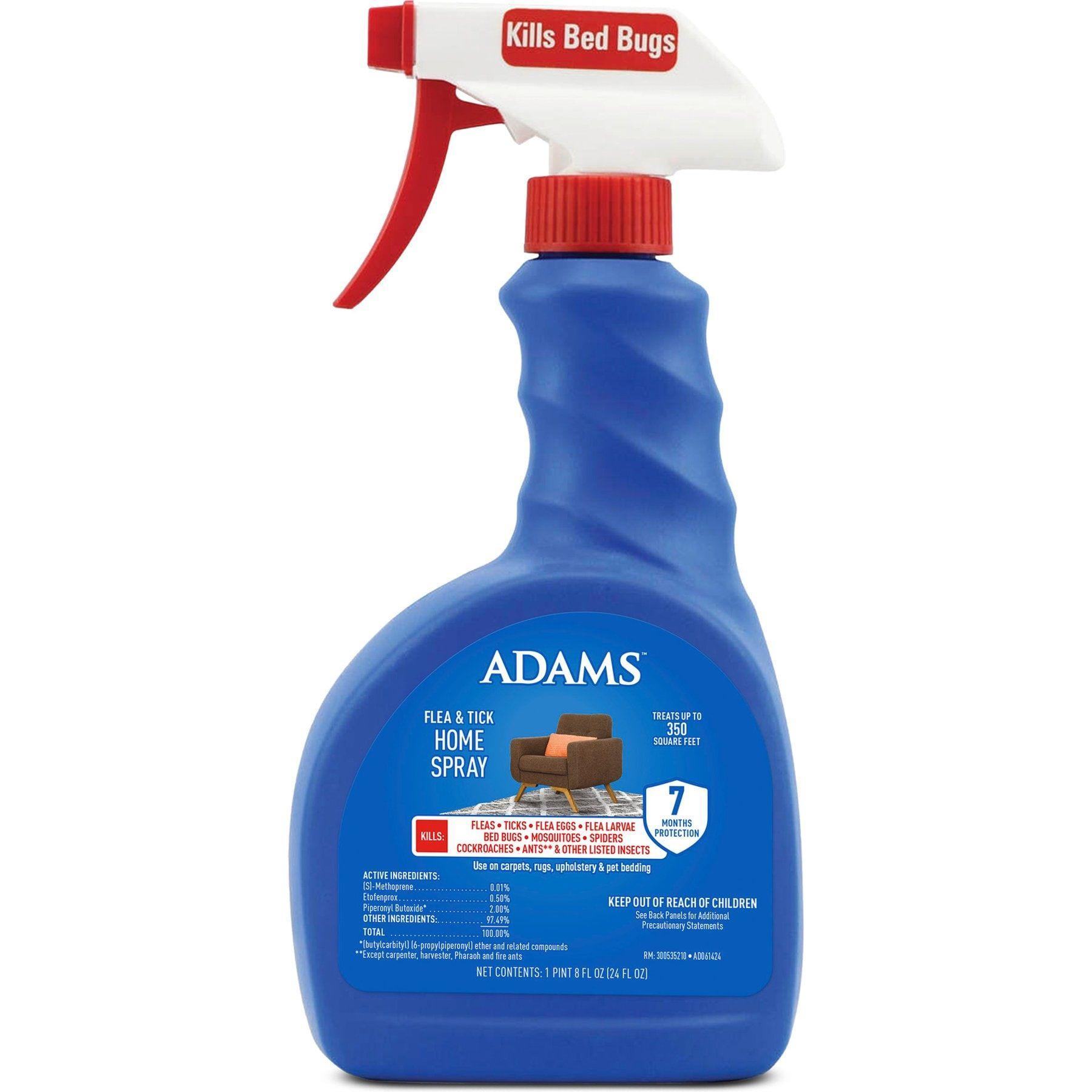
A home spray labeled for fleas on household surfaces, used per the label alongside on-pet flea control, never on the pet.
Webvet may earn a commission when you click through to Chewy, at no extra cost to you.
How diatomaceous earth acts on fleas, and which life stages it misses
Diatomaceous earth dries out adult fleas and larvae that crawl through dry powder, and it misses eggs, pupae in cocoons, and the fleas on your pet. This life-stage table shows which flea stages diatomaceous earth reaches, which it misses, and what reaches the rest.
| Life stage | Where it is | Does diatomaceous earth reach it? | Safety limit | What covers the gap |
|---|---|---|---|---|
| Adult fleas on the pet | In the coat, feeding | No, unless dusted onto the pet | Dust irritates eyes, nose, and skin; skip on cats and kittens | A vet-recommended preventive on every pet |
| Eggs | Fall off the pet into bedding, carpet, and resting spots within hours | Not a reliable egg treatment | Repeated dusting adds to breathing exposure | Vacuuming, hot-washing bedding, and an insect growth regulator |
| Larvae | Deep in carpet, under furniture, along baseboards | Partly, only where the powder stays dry | Keep pets and people out until dust settles | Vacuuming every other day and a labeled carpet treatment |
| Pupae | Inside debris-covered cocoons in carpet, soil, and bedding | No, the cocoon shields them | More powder does not help; it only adds dust | Keep vacuuming and keep pets on a preventive as adults emerge |
| Adults in a damp yard | Shady, moist spots where pets rest | Rarely, humidity and rain cut its effect | Outdoor dust drifts and is easy to breathe in | Yard treatment focused on shady resting areas, or nematodes |
The US Environmental Protection Agency (EPA) describes it as abrasive and a desiccant: it removes the oily, protective film covering an insect's body, so the insect dries out and dies. NPIC adds that it stays effective only as long as it is kept dry and undisturbed.
That physical action is also why it is slow. A review of diatomaceous earth insecticides by Korunić and colleagues in the journal Poljoprivreda states that it takes from one to several days to kill insects, even in a dry environment. Fleas must keep contact with the powder for that long, so a food-grade dust only has a chance in dry indoor spots where it can sit undisturbed.
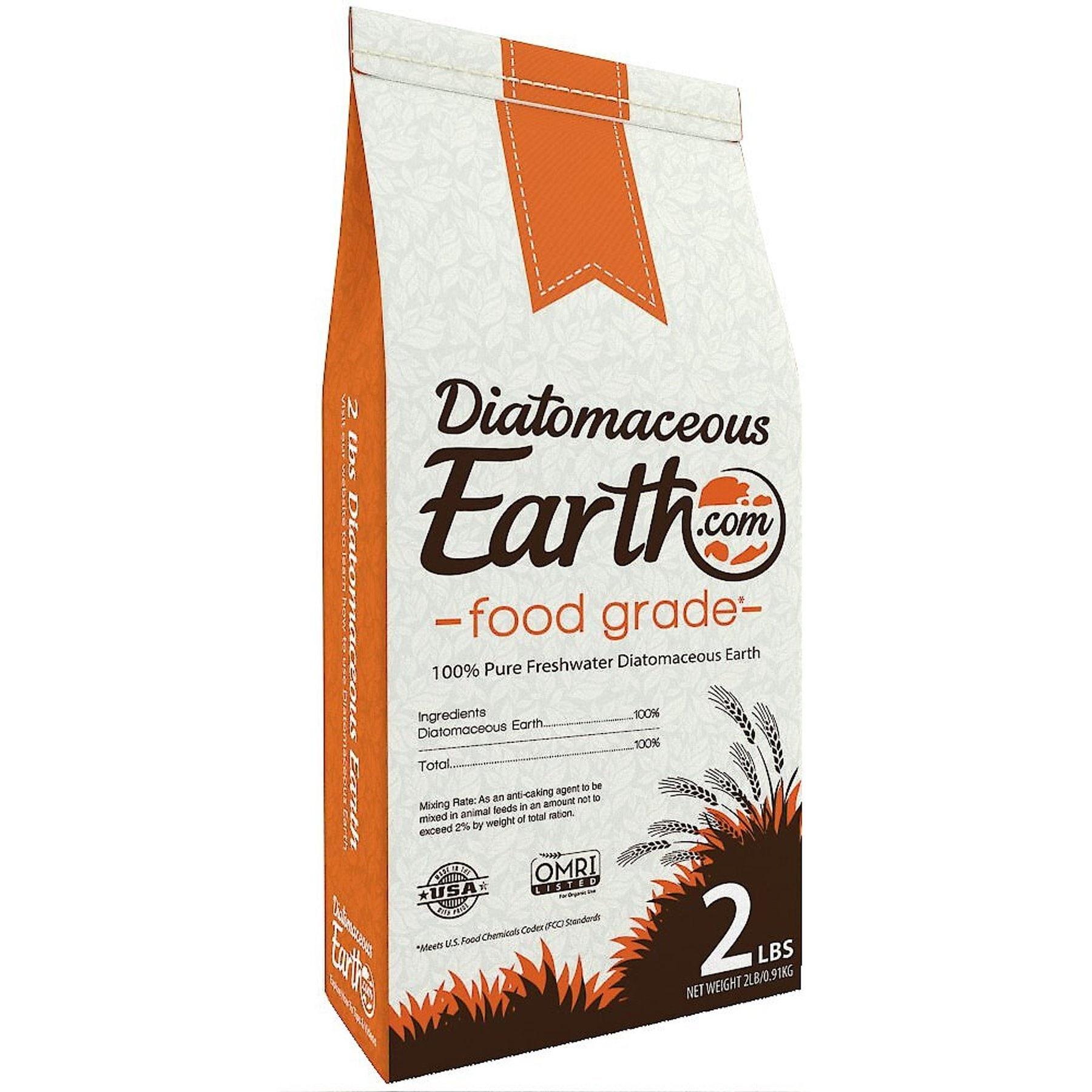
A food-grade diatomaceous earth dust for dry indoor spots, applied thinly with pets out of the room.
Webvet may earn a commission when you click through to Chewy, at no extra cost to you.
The cat flea, Ctenocephalides felis, is the most common external parasite of dogs and cats in North America, says CAPC. Females start laying within 20 to 24 hours of their first blood meal, produce 40 to 50 eggs per day, and the eggs fall off within a few hours. From there:
- Eggs hatch in about 2 to 5 days, according to the UC Statewide IPM Program.
- Larvae develop in undisturbed, protected sites such as carpets, under furniture, and along baseboards (CAPC), and only where relative humidity is at least 75% (UC IPM).
- Pupae mature inside silken cocoons covered with debris, says Ohio State University Extension, and can rest there until a host is near.
- At 24°C (75.2°F) and 78% relative humidity, adults begin emerging about 8 days after pupal development starts and are usually all out by day 13. In temperate climates, 90 to 95% of fleas emerge within 21 to 35 days (CAPC).
That waiting stage is also why how long fleas can live without a host depends so much on temperature and humidity. A home can look clear for weeks and then fill with newly emerged adults.
Here is the mismatch. The damp, protected spots larvae need are where the powder works least well; the Korunić review says high humidity and especially rain greatly reduce or destroy its efficacy outdoors. The University of Kentucky entomology fact sheet adds that the cocoon is impervious to insecticides, so pupae sit out any treatment.
Eggs are the other gap. The action EPA describes works on an insect's protective body film, and the tool CAPC names for stopping eggs from hatching is an insect growth regulator, which prevents flea eggs from hatching and kills larvae or early pupae.

Where diatomaceous earth does help is in dry sites. Texas A&M AgriLife urban entomologist Michael Merchant writes in Safer Flea Control that it can be useful in killing flea larvae when applied as a dust to dry sites such as pet houses, while being unlikely to provide practical flea control outdoors.
How effective is diatomaceous earth in killing fleas?
Diatomaceous earth is only partly effective at killing fleas. It can kill adult fleas and larvae that stay in contact with dry powder, over one to several days, but it misses eggs, pupae, and the fleas on your pet. Texas A&M lab evaluations found it unlikely to control fleas outdoors.
Water makes it worse, so mixing it with water and spraying it is no fix. Merchant notes that a water spray appears to stop fleas picking up the dust easily. NPIC says it does not dissolve well in water, and the Korunić review says the powder is wholly ineffective while wet.
Ticks are a separate problem. EPA lists silicon dioxide among products for controlling insects, mites, and ticks, but for tick control on a dog, the CDC advises a tick preventive product chosen with your vet plus daily tick checks.
What are the downsides of diatomaceous earth?
The main downsides are speed, moisture, missed life stages, and dust:
- It is slow, taking one to several days even when dry.
- Humidity, rain, and wetting reduce or destroy its effect.
- It does not reach eggs, pupae in cocoons, or fleas on the pet.
- The dust can irritate the nose, eyes, and skin (NPIC).
- Pool and filter grades can carry far more crystalline silica.

 Sponsored
Need flea, tick, or parasite care for your pet?
A licensed vet at Dutch can recommend the right preventive and prescribe it when it's appropriate. Annual members get 20% off their first flea and tick order.
Use code Pets60
Plans start at $12/month · covers up to 5 pets
- Licensed vets in most states
- Rx for 150+ conditions
- 4.7 on Trustpilot
Food-grade vs pool-grade diatomaceous earth: which bag is which
Use only food-grade diatomaceous earth for fleas; pool-grade and filter-grade bags are a different, riskier material. Food-grade diatomaceous earth products are purified, NPIC says, and EPA notes that silicon dioxide is Generally Recognized as Safe as a food additive. EPA also states that the amorphous silicon dioxide used in pesticide formulations has not been associated with silicosis, while crystalline silicon dioxide has long been linked to that progressive lung disease.
Pool-grade and filter-grade bags are a different material. The New Jersey Department of Health explains that heating diatomaceous earth (calcining) above 1,832°F (1,000°C) converts part of the silica into cristobalite, a crystalline form. Calcined material can contain anywhere from 1% to 75% cristobalite, against typically around 1% crystalline silica uncalcined.
That crystalline silica is the hazard. OSHA notes that the crystalline silica in calcined diatomaceous earth is primarily cristobalite, classified as carcinogenic to humans. NIOSH links excessive exposure to respirable crystalline silica to silicosis, lung cancer, COPD, and chronic renal failure.
- Choose a bag marked food grade with directions for indoor insect or flea use, and follow that label; reviews and star ratings do not change the grade.
- Never bring a pool, filter, or calcined product indoors or near a pet.
- Words such as organic or natural on the front say nothing about crystalline silica; the grade does.
- If the ingredient list adds other materials, such as calcium bentonite clay, the bag is a blend, so follow that product's own directions.
Using food-grade diatomaceous earth for fleas comes down to that label and keeping the dust down. One example of a food-grade bag sold for flea use is DiatomaceousEarth Food Grade Flea & Tick Powder for Cats & Dogs, 2-lb bag, listed at $16.99 on Chewy when checked in November 2026.
Some food-grade bags also carry feeding directions and benefit claims for dogs and cats. Feeding it is a separate matter from flea control: EPA describes its effect on insects as physical contact with dry powder. Ask your vet before adding any supplement to a dog's or cat's food.
Does diatomaceous earth expire?
No, diatomaceous earth does not go bad with age in the usual sense. NPIC says it is not degraded by microbes or sunlight and stays effective as long as it is kept dry and undisturbed. Moisture is what ruins it, so store the bag sealed and dry and follow any date on the label.
 Sponsored
Vet care that's always there
Unlimited video calls and messaging with licensed vets for less than a typical vet visit. One membership covers up to five pets.
Use code Pets60
Plans start at $12/month · covers up to 5 pets
- Licensed vets in most states
- Rx for 150+ conditions
- 4.7 on Trustpilot
How to use diatomaceous earth for fleas in the house, carpet, and yard
If you use it, treat diatomaceous earth as a carpet treatment, not a pet treatment. Ohio State University Extension suggests sprinkling it in the corners of rooms and near furniture where pets often sleep, then vacuuming thoroughly. It fits inside a wider plan for how to get rid of fleas in your house and yard.
To apply it indoors with the least dust:
- Move pets and children out of the room; NPIC advises keeping them away while any product is applied.
- Vacuum first. UC IPM notes that warmth and the pressure of walking or vacuuming stimulate fleas to emerge from cocoons.
- Use a hand duster or powder applicator to lay a thin, barely visible film. EPA notes that this dust is applied with a hand-held or power duster.
- Wear a dust mask. EPA notes that labels for dust formulations require one for prolonged use.
- Keep your face away from the application site and avoid throwing excess dust into the air (NPIC).
- Keep people and pets out until any airborne dust settles.
- Vacuum thoroughly afterward, and wash your hands, face, and clothing (NPIC).

Vacuuming is the right way to clean it up. Ohio State's method ends with vacuuming, and the New Jersey Department of Health advises using a vacuum or a wet method to reduce dust during clean-up and not dry sweeping.
Excess powder should not stay on the carpet; NPIC advises cleaning up visible dust according to the label. Keep vacuuming every other day, as Ohio State advises; Merchant reports that thorough vacuuming with a beater-type vacuum can remove 15-30% of larvae and 30-60% of flea eggs from carpeting.
A flea comb shows whether fleas are still on the pet. UC IPM notes that metal flea combs help remove adult fleas, and the Merck Veterinary Manual explains that flea dirt dissolves reddish brown on a damp paper towel. A fine-toothed comb such as the Wondercide Dog & Cat Flea Comb makes that check quick.
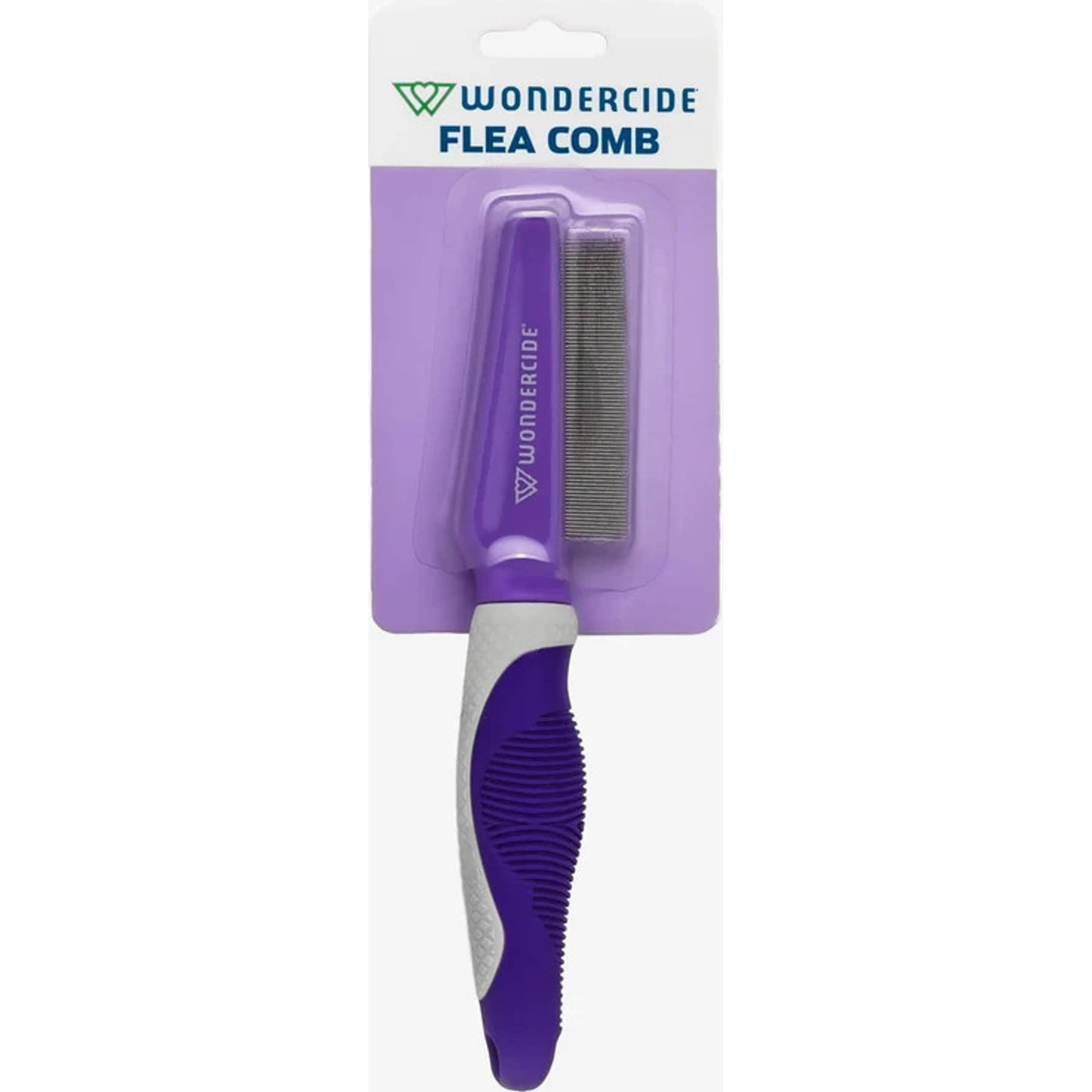
A fine-toothed stainless steel flea comb for checking the coat for fleas and flea dirt during home treatment.
Webvet may earn a commission when you click through to Chewy, at no extra cost to you.
Keep the powder off your own bed, where it would sit against your skin and face; NPIC notes it can irritate and dry the skin and irritate the nose. Pet bedding is different: Merchant mentions it as a dry site where the dust can kill larvae, but UC IPM's alternative avoids the dust entirely: launder pet bedding in hot, soapy water at least once a week.
A labeled carpet product such as ADAMS Flea & Tick Carpet Powder, 16-oz bottle works differently. Its catalog listing names pyrethrins and linalool for adult insects and pyriproxyfen, an insect growth regulator, for eggs and larvae. It is listed at $11.48 on Chewy when checked in November 2026; use it per the label.
The yard is where diatomaceous earth does least, since rain destroys its effect. UC IPM says outdoor sprays are only needed for significant numbers of adult fleas, focused on shady pet resting areas; see our guide to the best flea and tick yard treatment.
Is diatomaceous earth safe for humans?
Yes, food-grade diatomaceous earth has low toxicity for people, with dust as the main caution. EPA rates silicon dioxide as having moderate to low acute toxicity. NPIC says breathing it can irritate the nose, an extremely large amount may cause coughing and shortness of breath, and the amorphous form is only associated with mild, reversible lung inflammation.
The serious lung risk belongs to crystalline silica in pool and filter grades. If the dust makes you cough or feel short of breath, leave the room and stay out until it settles.
Can I touch diatomaceous earth with bare hands?
Yes, but expect dry skin. NPIC says that on skin diatomaceous earth can cause irritation and dryness, and that it can irritate the eyes because it is abrasive. Gloves help, and NPIC advises washing your hands and face afterward.
Can I sprinkle diatomaceous earth around my house?
Yes, food-grade diatomaceous earth can be sprinkled around the house in a thin layer along baseboards, in room corners, and near furniture where pets sleep, as Ohio State describes. Keep it dry and avoid outdoor borders, where rain and humidity cancel it out.
Diatomaceous earth on dogs and cats: dust, dry skin, kittens, and when to skip it
Food-grade diatomaceous earth is low in toxicity for pets but not free of risk. NPIC says very little is absorbed when it is eaten and some products can be used directly on dogs and cats, but it irritates the nose, eyes, and skin. On a pet, the powder sits where the animal breathes and grooms.
On a dog, use it only if the bag's label allows on-dog use, and then exactly as directed. Keep the powder away from the eyes, nose, and mouth, and do not rub it into the skin. A dog with dry, itchy, or broken skin, or any breathing problem, should skip it.
On-pet protection comes from a preventive your vet chooses for the dog's weight, age, and health; the CDC also urges a tick preventive for dogs.
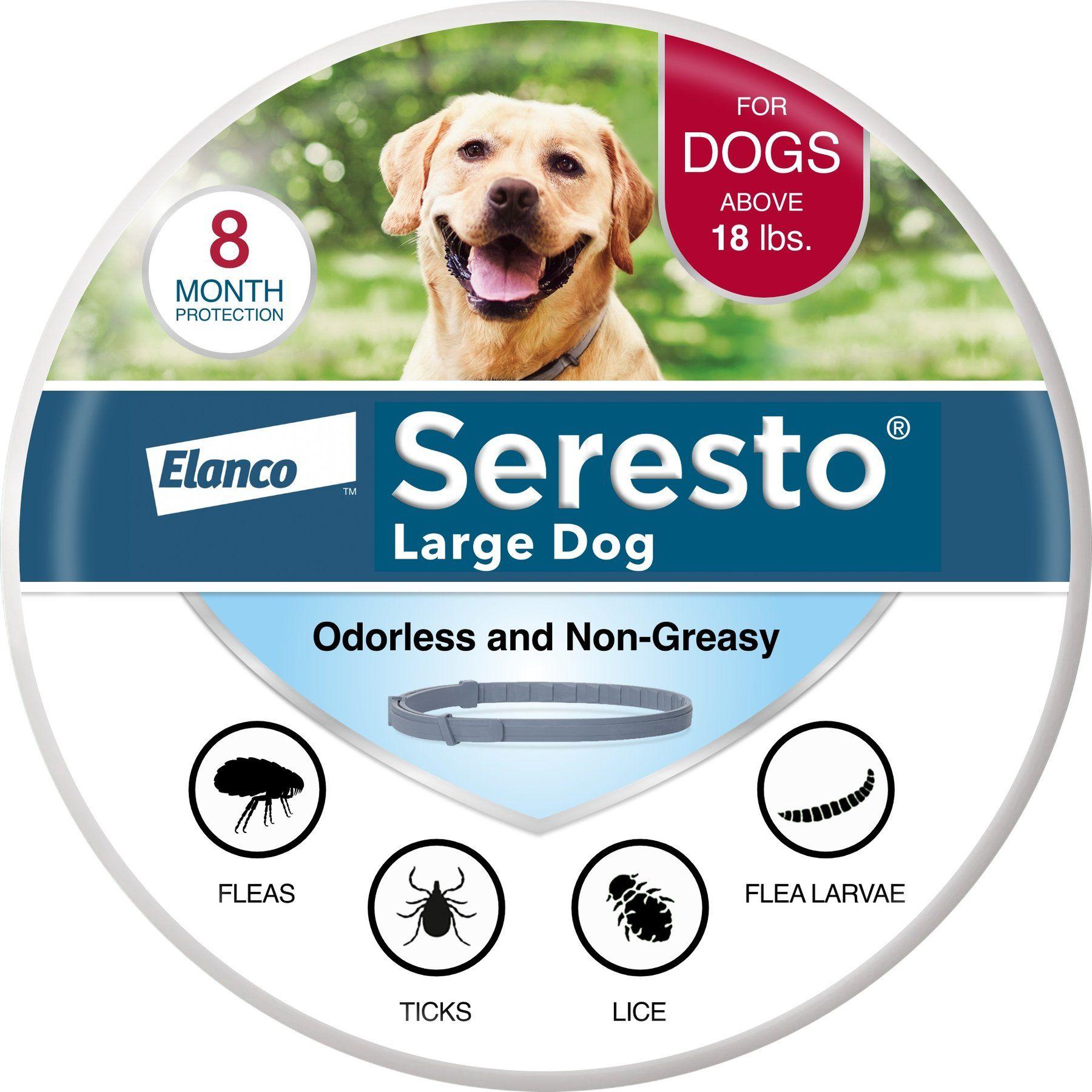
A flea and tick collar for dogs over 18 pounds, an on-pet preventive option to discuss with your vet.
Webvet may earn a commission when you click through to Chewy, at no extra cost to you.
A preventive works on the fleas that land on your pet; diatomaceous earth only reaches fleas that crawl through dry powder on the floor. CAPC adds that every pet in the home must be treated to achieve control, so a treated dog and an untreated cat will keep the cycle going.
The dust can still hurt a dog through irritation of the nose, eyes, and skin, so a dog that sneezes, coughs, or scratches after contact should not be dusted again. People who react to the dust should do the same: reduce the exposure rather than push through it.
It is bad to inhale diatomaceous earth in any real quantity. In people, NPIC says breathing a little food-grade dust mainly irritates the nose, and an extremely large amount may cause coughing and shortness of breath. A pet's nose sits right in the coat and on the floor where the powder lies, which is why the powder stays off the coat and away from faces.

What if my dog licks diatomaceous earth?
A small lick of food-grade diatomaceous earth is unlikely to poison your dog. NPIC says very little is absorbed when it is eaten. Watch instead for sneezing, coughing, or eye irritation from inhaled dust.
Pool or filter grade, or a powder blended with insecticides, is a different case. Call your vet or ASPCA Animal Poison Control at (888) 426-4435 (a consultation fee may apply), and keep the bag to read the label to them.
How do you use diatomaceous earth for fleas on cats?
The safest way is to keep diatomaceous earth off the cat entirely and use it only on carpets in rooms the cat can stay out of until the dust settles. Cats need extra caution: the CDC notes that cats are extremely sensitive to a variety of chemicals, and cats groom constantly, so powder on the coat ends up swallowed and breathed in.
Breathing is the bigger concern. Cornell Feline Health Center says asthma affects between 1 and 5% of cats, is caused by an allergic reaction to inhaled allergens, and has suspected triggers including dusty kitty litter. EPA adds that flea products should not go on kittens unless the label allows it. See also natural remedies for fleas on cats.
Skip diatomaceous earth on or near these pets:
- Kittens and puppies, unless a label specifically allows it.
- Cats with asthma, and any dog or cat with coughing, wheezing, or other breathing trouble.
- Weak, aged, medicated, sick, pregnant, or nursing pets, following EPA's label guidance.
- Pets with dry, irritated, or broken skin, including pets with flea allergy.
When fleas need a vet: kittens, flea allergy, weakness, and tapeworms
See a vet for fleas on a kitten or puppy, signs of anemia or flea allergy, or tapeworm segments, because fleas are more than an itch. CAPC warns that heavy infestations may lead to iron deficiency anemia and death, particularly in young animals. The Merck Veterinary Manual says that in kittens, iron-deficiency anemia is usually caused by fleas, lice, or intestinal worms, and that anemic animals become weak and tired.
See your vet when you notice any of these:
- A kitten or puppy carrying fleas.
- Pale gums, weakness, tiredness, or poor appetite, which Merck lists as signs of anemia.
- Crusted, itchy skin over the hips, base of the tail, and thighs, with hair loss or scabs, the classic flea allergy pattern Merck describes in dogs.
- A cat that overgrooms or loses hair even when you cannot find fleas; Merck notes fleas may not be visible on extremely allergic cats because of grooming.
- Small, rice-like segments near your pet's rear or on fresh stool.
- Fleas that persist after several weeks of home treatment.
Flea allergy dermatitis is a hypersensitivity to material from flea salivary glands, CAPC explains. Merck notes the itching can lead to hair loss, scabbing, and secondary infections that need veterinary treatment.
Tapeworms come from fleas too. The CDC explains that dogs and cats get Dipylidium tapeworm by swallowing an infected flea, often while grooming, and that dried segments look like grains of rice about 2 mm long. Treatment is simple and very effective, the CDC adds.
The same fleas matter to people, too. CAPC lists these among the organisms the cat flea can transmit:
- Rickettsia typhi and Rickettsia felis.
- Bartonella henselae.
- Dipylidium caninum, the flea tapeworm, which children have developed after swallowing infected fleas.
A vet visit adds what home treatment cannot. Merchant writes that heavier or chronic infestations are best treated by a veterinarian, who knows what can be safely used on your pet and can supply materials for home treatment. EPA also asks owners to watch for side effects or signs of sensitivity after applying any flea product.
For massive infestations, or severe flea allergies in pets or people, the Merck Veterinary Manual notes that treating the house may also be necessary alongside the pet.
What works better than diatomaceous earth: a vet-recommended preventive plus home treatment
The plan that ends an infestation treats the pet and the home together. CAPC says all dogs and cats should be treated year-round, throughout their life, with flea control products. Ohio State calls regular preventive treatment the most reliable way to keep pets clean of fleas.
That makes diatomaceous earth a poor way to prevent fleas. It kills only on contact and does not act as a flea repellent, so it cannot stop a new flea from jumping onto your pet. The University of Kentucky notes that adult fleas spend most of their time on the dog or cat, not in the carpet.
Here is the plan that works:
- On every pet: a preventive your vet recommends. Compare options in our guides to the best flea and tick prevention for dogs and the best flea treatment for cats.
- In the home: vacuum every other day, hot-wash bedding weekly, and use a labeled home product; UC IPM notes the most effective ones contain the insect growth regulator methoprene or pyriproxyfen.
- Over time: expect fleas to keep emerging for about 2 weeks after treatment, because sprays do not kill pupae (UC IPM), and allow 4-6 weeks for significant reductions with IGR treatments alone (Texas A&M).
- Outdoors: treat only if you find significant numbers of adult fleas, focusing on shady pet resting areas.
For the home, a spray such as ADAMS Flea & Tick Home Spray, 24-fl oz bottle, listed at $14.46 on Chewy when checked in November 2026, is used on household surfaces per its label, never on the pet. More choices are in our guide to the best flea spray for home.
On a dog, your vet may suggest a collar such as the Seresto Over 18lbs Large Dogs & Puppies Flea & Tick Collar, listed at $59.97 on Chewy when checked in November 2026. EPA warns never to apply dog products to cats.
For cats, the Seresto Cats & Kittens 10 weeks or older, Flea & Tick Collars is sold for cats and kittens 10 weeks or older, listed at $59.92 on Chewy when checked in November 2026.

To knock down adult fleas on a small dog while the house is treated, a vet may suggest an oral product such as Capstar Over 2-25lbs, 6ct, Dogs Flea Tablets, whose catalog listing names nitenpyram as the active ingredient. It is listed at $42.97 on Chewy when checked in November 2026; follow the label and your vet.
How the other home options compare with diatomaceous earth:
- Borax and boric acid: Merchant notes that boron-based carpet products such as disodium octaborate tetrahydrate are chemically similar to boric acid, have little skin toxicity, and kill larvae that eat them, but do not control adult fleas. Like diatomaceous earth, they treat carpet, not the pet.
- Sevin dust: Sevin is a carbaryl insecticide brand, and NPIC states that no carbaryl products are currently registered for use inside homes or on pets. NPIC also lists vomiting, drooling, and tremors reported in dog feeding studies, so it has no place on a pet or indoors.
- Nematodes: Ohio State notes that parasitic nematodes, especially Steinernema carpocapsae, are labeled for flea larvae and pupae in yards and gardens, the damp outdoor spots where diatomaceous earth fails.
Diatomaceous earth for fleas questions
Frequently Asked Questions
How long does diatomaceous earth take to kill fleas?
Expect days, not minutes. A flea has to stay in contact with dry powder, and even then the Korunić review puts the kill time at one to several days. Eggs already in the carpet keep hatching on their own schedule, which is why vacuuming and a vet-recommended preventive continue for weeks.
CAPC notes that eggs fall off an infested pet within a few hours of being laid, so new ones keep arriving until the pet itself is protected.
Can I put diatomaceous earth on my dog for fleas?
Only if the product label allows it, and even then it is rarely the best choice.
Fine dust in the coat ends up near your dog's nose and eyes, and NPIC notes it can leave skin irritated and dry. If a label does allow it, keep the powder off the face and stop if your dog sneezes or scratches more. A preventive your vet recommends protects your dog far more reliably.
How long should diatomaceous earth stay on the carpet for fleas?
Follow the time on your product's label, keeping pets and people out until any airborne dust settles. Ohio State's method is to sprinkle it, then vacuum the carpet thoroughly. After that, vacuum every other day, because new fleas keep emerging from cocoons for weeks.
Each pass also pulls up a share of the eggs and larvae in the carpet, and UC IPM suggests sealing and discarding the bags so fleas do not escape.
Is borax or diatomaceous earth better for fleas?
Neither one is enough alone. Borate carpet products kill larvae that eat them but not adults, and diatomaceous earth acts slowly and only while dry.
Both stay in the carpet, while most adult fleas live on the pet, so ask your vet for an on-pet preventive and use any carpet product as a supporting step. Borate products have little skin toxicity, Merchant notes, but CAPC is clear that every pet in the home must be treated for control.
Does diatomaceous earth still work when it gets wet?
No. The Korunić review says diatomaceous earth is effective only under dry conditions and is wholly ineffective while wet.
Treat a soaked area as untreated, let it dry completely before reapplying, and keep the bag sealed so damp air does not reach it. Outdoors, the same review notes that its use is limited, especially in regions with high rainfall.
Veterinarian · BVMS MRCVS
Dr. Pippa Elliott, BVMS, MRCVS, is a veterinarian with nearly 30 years of experience in companion animal practice. Dr. Elliott earned her Bachelor of Veterinary Medicine and Surgery from the University of Glasgow. She was also designated a Member of the Royal College of Veterinary Surgeons. Married with 2 grown-up kids, Dr. Elliott has a naughty Puggle named Poggle, 3 cats and a bearded dragon.
Related reading

Natural Tick Repellent for Dogs: What Works, What Doesn't, and How to Use It

Myiasis in Dogs and Cats: Maggots in a Wound, Signs, and What to Do

Screwworm Treatment and Prevention for Dogs and Cats: What Works
