Deer Tick vs Dog Tick: Pictures, Diseases, and Removal
Learn how blacklegged deer ticks differ from American dog ticks, why photos can mislead, and what to do safely after finding either tick attached to a dog.

BVMS MRCVS
Medically reviewed by Dr. Pippa Elliott, BVMS MRCVS · Last reviewed

This article contains affiliate links. Webvet may earn a commission when you buy through them, at no extra cost to you.
The fastest deer tick vs dog tick distinction is adult size and back pattern. A deer tick, usually the blacklegged tick, is smaller, with dark legs and a dark shield over an orange-brown adult female abdomen. An American dog tick is usually larger and has pale gray or cream ornamentation on its dark back. Life stage, sex, camera scale, and blood feeding can change that appearance, so remove any attached tick promptly even when identification is uncertain.
In casual use, “dog tick” can also mean a brown dog tick or simply any tick found on a dog. This guide compares the blacklegged tick, Ixodes scapularis, with the American dog tick, Dermacentor variabilis or the closely related western D. similis. A veterinarian, extension entomologist, public-health department, or tick-identification service can confirm a difficult specimen. For the removal step, compare the TickCheck Premium Dog Tick Removal Kit discussed below.
How to tell a deer tick from a dog tick
- 1Deer tick usually means blacklegged tick. Dog tick usually means American dog tick, but the common name can be ambiguous.
- 2Adult blacklegged ticks are smaller and plainer. Adult female American dog ticks are larger with ornate pale markings on the shield behind the mouthparts.
- 3Nymphs and engorged females may not match the familiar adult-female comparison picture.
- 4Do not delay removal while trying to identify the species. Save a clear photo and the specimen when possible.
Begin with an adult female that has not fed heavily, because this is the comparison most field guides show. The blacklegged female has black or very dark legs, a dark scutum behind the mouthparts, and an orange-brown abdomen. The American dog tick female has a broader body and pale gray, cream, or white ornamentation on the scutum. Adult males look different because the scutum covers nearly the entire back.
For a rough size comparison before feeding, adult blacklegged ticks are about 3 millimeters long, while an unfed female American dog tick is about 5 millimeters. The University of Florida blacklegged-tick reference and American dog tick reference illustrate the distinction. American dog tick males are smaller than females, and engorged females may reach 15 millimeters. Measure beside a ruler; these approximate sizes are clues, not a diagnosis.
For a close specimen, compare the shield behind the mouthparts, called the scutum. The small grooves around the rear edge are festoons: American dog ticks have them; blacklegged ticks do not. A magnifying lens can help, but do not squeeze or handle a tick with bare fingers. In western states, the western blacklegged tick, Ixodes pacificus, is another important Lyme-disease vector.
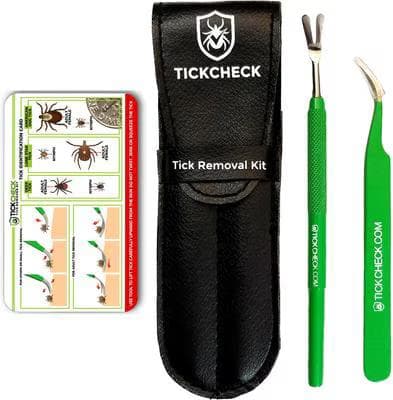
A vet-style tick removal kit with fine-tip tools that grip the tick right at the skin for a clean, straight pull, plus a tick ID card. Easy to keep in your dog-walking bag.
Webvet may earn a commission when you click through to Chewy, at no extra cost to you.


| Feature in an unfed adult | Blacklegged or deer tick | American dog tick |
|---|---|---|
| Female back | Dark shield; orange-brown area behind it | Pale patterned shield; brown area behind it |
| Male back | Dark shield covers almost the entire back | Pale ornate pattern spreads over most of the back |
| Mouthparts | Relatively long and narrow | Relatively short and broad |
| Rear edge under magnification | No festoons | Festoons present |
| Typical setting | Woodland, brush and leaf litter | Grassy paths and brushy edges |
| Feeding limitation | Female abdomen expands; adult-female color comparison becomes unreliable | Female abdomen expands; pale shield remains small compared with the body |
Male, nymph and engorged ticks: what changes?
A male deer tick can look almost entirely dark because its shield covers most of the back. The orange-brown female pattern is therefore a poor rule for identifying every blacklegged tick. A male American dog tick has a broader area of pale ornamentation than the female. Compare males with males rather than rejecting a match because it differs from the familiar female photograph.
A blacklegged nymph is much smaller than an adult, roughly poppy-seed sized; an unfed adult is closer to a sesame seed. Nymphs have eight legs, while larvae have six. Counting legs requires magnification and a clear specimen. A tiny dot in a phone photo cannot reliably establish the species, and a small tick is not automatically a deer tick.
What an engorged tick looks like
After a female feeds, the abdomen behind the shield swells into a rounded, pale gray or tan sac. The mouthparts, legs and shield do not enlarge at the same rate. This explains why a tick that looked flat and reddish may later resemble a small gray bean. Size or color after feeding cannot reliably tell you how long it was attached.
For additional real specimens, the CDC tick identification atlas shows male and female American dog ticks and a blacklegged series containing a larva, nymph, male, female and engorged female. Compare the labeled stage first, then the shield and mouthparts. The close-ups on this page show adult females at different magnifications; they are not a same-scale size comparison.
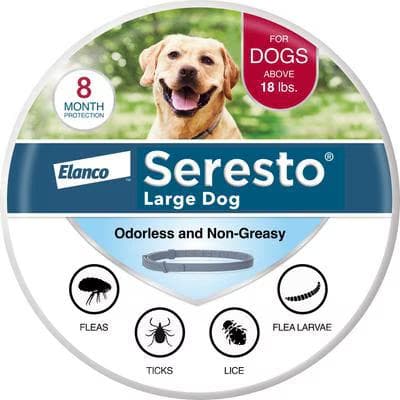
An eight-month flea and tick collar for dogs over 18 lbs that releases protection steadily. A low-effort layer to help keep ticks off between vet-recommended preventives.
Webvet may earn a commission when you click through to Chewy, at no extra cost to you.
The CDC tick distribution reference identifies American dog ticks as widespread east of the Rocky Mountains with limited western distribution, while blacklegged ticks are widely distributed across the eastern United States. Western blacklegged ticks occur along the Pacific Coast. Local health departments and cooperative extension offices offer more precise regional information.
Why photo identification can be difficult
A tiny flat nymph does not look like an engorged adult female. After feeding, the expandable abdomen can become gray, tan, or bluish and many times larger while the scutum stays relatively small. A close camera crop erases size, and fur, blood, debris, or damaged mouthparts hide useful features.
Use a confidence ladder:
- Higher confidence: Clear dorsal photograph, scale reference, known life stage, visible scutum and rear edge, and regional fit.
- Moderate confidence: Clear adult specimen but no underside view or exact scale.
- Low confidence: Blurry photo, engorged body, damaged specimen, uncertain common name, or only the bite site remains.
- No visual identification: A red bump, scab, or attached fragment without the tick body cannot establish species.
Do not diagnose a tick-borne disease from species or color. Not every tick is infected, attachment time is often uncertain, and several pathogens can cause overlapping signs. Species identification changes the list of possibilities, not the dog's diagnosis.
 $65 · no membership
Need flea, tick, or heartworm prevention for your dog?
A licensed vet can recommend and prescribe the right preventive for your dog online when it's appropriate.
 Talk to a vet
- Licensed vets
- All 50 states
- same-day Rx

Webvet may earn a commission if you book.
Diseases linked to deer ticks and dog ticks
Blacklegged ticks can transmit Borrelia burgdorferi, the bacterium that causes Lyme disease, and pathogens associated with anaplasmosis and other infections. American dog ticks do not transmit Lyme disease bacteria, according to the CDC's Lyme transmission guidance, but they can transmit organisms associated with Rocky Mountain spotted fever and tularemia.
Deer tick diseases and American dog tick diseases overlap in the signs a sick dog may show, even though the organisms differ. A healthy-looking tick can still carry a pathogen, and an identified species may be uninfected. Save the specimen and exposure history for veterinary follow-up instead of choosing an antibiotic from a photograph.
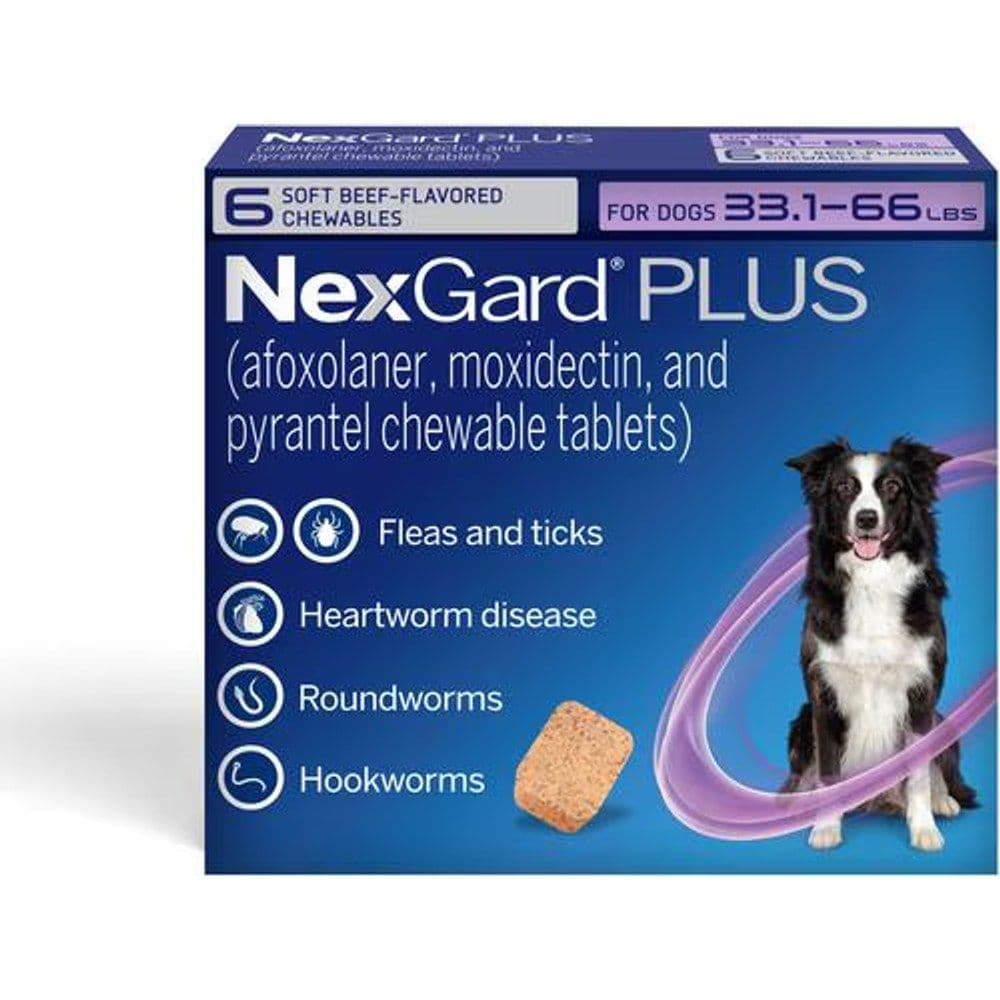
Beef-flavored monthly chew that protects dogs from fleas, ticks, heartworm disease, roundworms, and hookworms.
Webvet may earn a commission when you click through to Chewy, at no extra cost to you.
Petful's guide to ticks on dogs and Lyme disease explains what owners may notice after an exposure and why species identification alone cannot diagnose infection.
| Tick group | Important disease associations | What dog owners should watch for | What the comparison cannot tell you |
|---|---|---|---|
| Blacklegged or deer tick | Lyme disease, anaplasmosis, and other regional pathogens | Fever, reduced appetite, lethargy, shifting-leg lameness, joint pain, weakness, or unusual behavior | Species alone does not show infection or transmission |
| American dog tick | Rocky Mountain spotted fever, tularemia, and other regional risks | Fever, lethargy, appetite change, bruising, weakness, stiffness, or neurologic signs | An ornate pattern does not establish disease |
| Either or uncertain tick | Local diseases vary and coinfection is possible | Any illness after a known or suspected bite | A phone photo cannot replace veterinary history, exam, and testing |
Contact your veterinarian promptly if illness follows a bite, including fever, poor appetite, marked tiredness, lameness or painful joints. Breathing trouble, collapse, severe weakness, bruising or neurologic changes need urgent care. For a dog that feels well, ask the regular clinic about follow-up based on the exposure location and prevention history.
Testing too soon after an exposure can be uninformative. The veterinarian will choose the test and timing from the dog’s symptoms, travel and tick history. Save the removal date and location so that information is available if the dog becomes unwell later.
The CDC notes that signs of tick-borne disease in pets may not appear for seven to 21 days or longer. Record the date, likely attachment location, travel, tick photo, and product history. Do not start leftover antibiotics or use a human tick-bite plan for a dog.
Where and when each tick is found
Blacklegged ticks prefer wooded, brushy, and leaf-litter environments where deer, rodents, birds, and other hosts move. Nymphs can be active in warmer months, while adults may quest in cooler conditions when temperatures rise above freezing. The western blacklegged tick occupies a different broad range from the eastern blacklegged tick.
American dog tick adults are common along grassy and brushy edges and are most active in spring and summer in many regions. Dogs can pick them up along paths, fields, roadside vegetation, yards, and transitions between maintained lawn and taller growth.
Range maps describe where populations occur, not an individual dog's exact disease risk. Tick abundance varies within a county, and travel can move a dog or tick beyond the expected region. A dog that visited another state, boarding facility, trail, hunting area, or wildlife-heavy property may have a different exposure history from the home address.
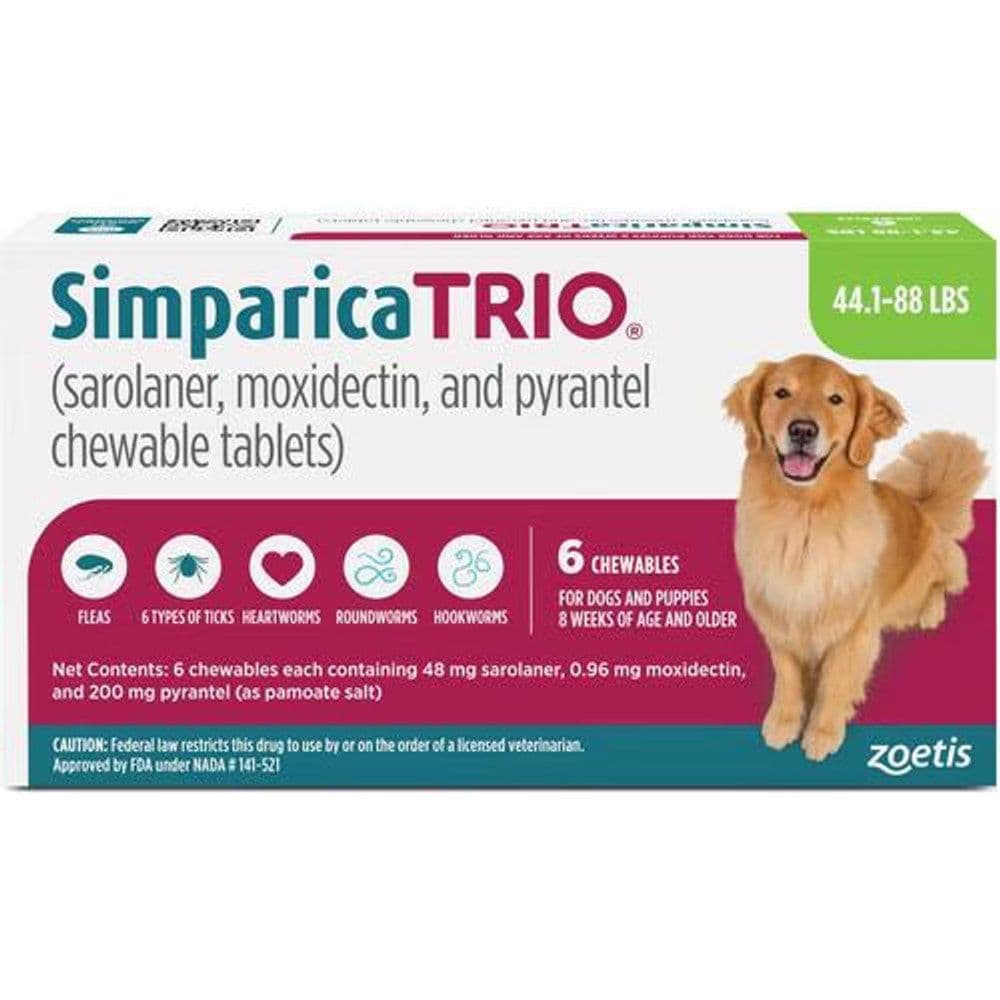
Monthly chew that protects dogs from fleas, six species of ticks, heartworm disease, roundworms, and hookworms.
Webvet may earn a commission when you click through to Chewy, at no extra cost to you.
What about brown dog ticks?
Brown dog ticks add another common-name problem. Rhipicephalus sanguineus uses dogs as a primary host and can infest homes and kennels. It is generally reddish brown without the ornate pale pattern of an American dog tick. If several similar ticks appear indoors or around kennel cracks, ask a veterinarian or pest professional about brown dog tick identification and environmental control.
Remove any attached tick promptly
The species comparison should never delay action. Follow WebVet's detailed guide to removing a tick from a dog for the full technique. In brief, part the fur, grasp close to the skin with fine-tipped tweezers or a purpose-made tool, and pull with steady upward pressure. Do not crush the body, burn the tick, coat it in petroleum jelly, or wait for it to release.
A TickCheck Premium Dog Tick Removal Kit is an exact-fit tool for this section because it provides fine removal tools and an identification card. A plain clean set of fine-tipped tweezers can also work. Technique and promptness matter more than owning a particular kit.

After removal:
- Check the dog for additional ticks around ears, eyelids, collar, armpits, groin, toes, and tail.
- Clean the bite area and tool as directed by your veterinarian.
- Save the tick in a sealed container or photograph it clearly with date, location, and scale.
- Wash your hands and prevent children or pets from handling the specimen.
- Monitor appetite, energy, movement, temperature concerns, and the bite site.
- Call a veterinarian about local disease risk, testing timing, and prevention.
The live guide to what tick bites look like on dogs covers bite-site reactions and warning signs. For products and why “instant kill” is the wrong removal goal, use what kills ticks on dogs.
Prevent the next tick attachment
Daily tick checks remain important even when a dog uses prevention. Check after walks, hikes, hunting, field work, boarding, or yard time. A tick can crawl on a treated dog or hitchhike indoors before a product kills it.
Prevention formats include oral prescriptions, topical products, and collars. For dogs that meet the exact label, a Seresto collar for dogs over 18 pounds is one long-duration collar option. NexGard PLUS and Simparica TRIO are prescription oral options with additional parasite indications.
These products are not interchangeable. A veterinarian should match the product to the dog's weight, age, region, travel, health history, seizure risk, and other medications.
Tick comparison questions
Frequently Asked Questions
How do you tell a deer tick from a dog tick?
To tell a deer tick from a dog tick, compare an unfed adult's size, scutum pattern, leg color, and festoons. A blacklegged deer tick is smaller, with dark legs and an adult female orange-brown abdomen behind a dark scutum and no rear festoons. An American dog tick has a larger adult body, ornate pale markings on the scutum, and festoons. Life stage, sex, lighting, and feeding can change appearance, so remove promptly even when uncertain and save a scaled photo.
What's the worst tick to get bitten by?
There is no single worst tick to get bitten by. Risk depends on the species, region, pathogen, attachment and feeding, the host's health, and how quickly illness is recognized and treated. Blacklegged ticks, American dog ticks, lone star ticks, and other regional species have different disease associations, but appearance cannot prove infection. Remove any attached tick promptly, document it, and contact the appropriate physician or veterinarian rather than ranking risk from color or size alone.
Why shouldn't you flush ticks in the toilet?
You can flush ticks down a toilet, as CDC guidance allows. There is no general rule that you shouldn’t. Saving it or taking a clear photograph first preserves identification evidence. Put the specimen in a sealed container and record the date and location. Keeping this tick can help if illness develops, although not every tick needs testing. Keep the specimen away from children and pets and do not crush it with bare fingers. Wash your hands after handling the container.
What color ticks carry Lyme disease?
There is no single color that proves a tick carries Lyme disease. Lyme bacteria are transmitted by blacklegged ticks, and adult females often show dark legs, a dark scutum, and an orange-brown abdomen. Males, nymphs, engorged ticks, lighting, and camera settings can look different, and western blacklegged ticks add regional variation. Color alone does not confirm species, infection, or transmission. Remove the tick, save evidence, and discuss the dog's exposure and local disease risk with a veterinarian.
Sources
$65 · no membershipNeed flea, tick, or heartworm prevention for your dog?
A licensed vet can recommend and prescribe the right preventive for your dog online when it's appropriate.
Talk to a vet- Licensed vets
- All 50 states
- same-day Rx
Webvet may earn a commission if you book.

Editor
The Webvet Editorial Team is the in-house group of pet-care editors and writers behind Webvet, operated by Smart Pet Collective. The team researches, writes, and maintains Webvet's pet health, behavior, and medication content. Every article follows a defined editorial process: research from reputable veterinary and scientific sources, careful drafting, mandatory review of medical content by a credentialed veterinarian, and dated publication. Health and medication articles are medically reviewed by a licensed veterinary professional before they go live and are kept current over time.
Veterinarian · BVMS MRCVS
Dr. Pippa Elliott, BVMS, MRCVS, is a veterinarian with nearly 30 years of experience in companion animal practice. Dr. Elliott earned her Bachelor of Veterinary Medicine and Surgery from the University of Glasgow. She was also designated a Member of the Royal College of Veterinary Surgeons. Married with 2 grown-up kids, Dr. Elliott has a naughty Puggle named Poggle, 3 cats and a bearded dragon.


