Tylosin for Dogs: Uses, Dosage, and Side Effects
Tylosin, sold as Tylan powder, is an antibiotic vets prescribe off-label for chronic diarrhea in dogs. This guide covers how the dose is set, powder versus capsules, side effects, long-term use, and the tear stain question.

BVMS MRCVS
Medically reviewed by Dr. Pippa Elliott, BVMS MRCVS · Last reviewed

Drug facts
Tylosin (Tylan) for Dogs· Tylosin
Tylosin (Tylan) is a macrolide antibiotic that vets prescribe extra-label for dogs, mainly to control chronic or recurrent diarrhea such as tylosin-responsive diarrhea. It is dispensed as a vet-measured powder or as compounded capsules, only with a veterinarian's prescription.
Treats

 Sponsored
Is Tylosin (Tylan) for Dogs right for your dog?
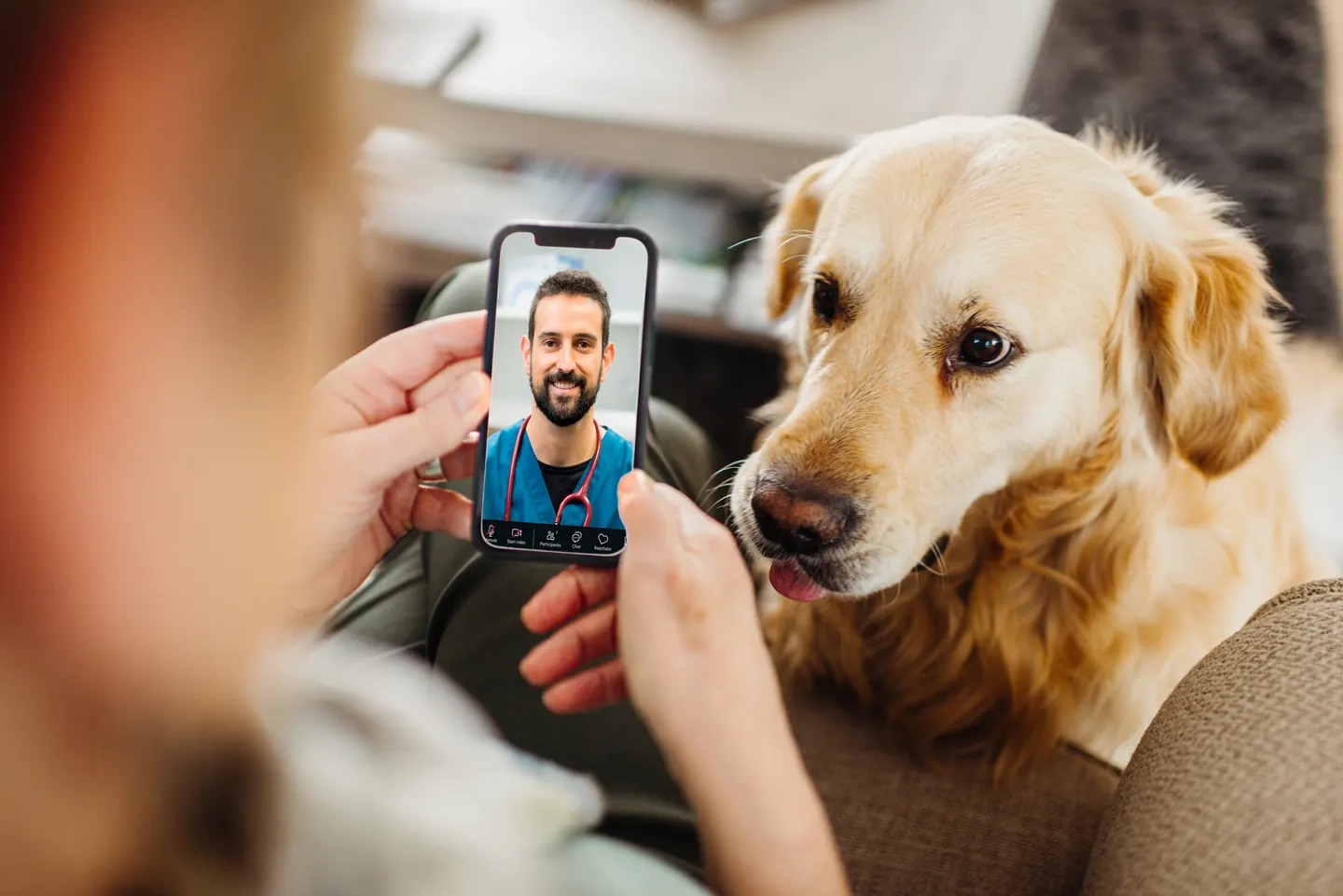
A licensed vet at Dutch can assess your dog over video and prescribe treatment when it's appropriate, delivered to your door.
Use code Pets60
Plans start at $12/month · covers up to 5 pets
- Licensed vets in most states
- Rx for 150+ conditions
- 4.7 on Trustpilot
Tylosin for dogs: what it treats, prescription status, and whether today is a vet day
Tylosin for dogs is a macrolide antibiotic, sold for animals as Tylan, that vets prescribe mainly to control chronic or recurrent diarrhea, including tylosin-responsive diarrhea. It is prescription only, and in dogs it is extra-label: the Tylan Soluble label on DailyMed covers chickens, turkeys, swine, and honey bees, not dogs.
Tylan powder for dogs is that same livestock product, measured out by a veterinarian for one dog. Clinician's Brief notes tylosin is not FDA approved for dogs and cats, so this is extra-label drug use under a vet's direction. It is not a cosmetic, and it is not a tear stain fix.
Today is a vet day if your dog has diarrhea with fresh blood, black or tarry stool, vomiting, lethargy, or a refusal to eat, the signs Cornell's Riney Canine Health Center lists for veterinary care. Tylosin itself only starts after a vet has examined the dog and chosen the dose and form.
- 1Tylosin (Tylan) is a macrolide antibiotic, and what tylosin treats in dogs is mainly chronic or recurrent diarrhea, as extra-label use.
- 2It needs a veterinarian's prescription, and the vet picks the form: Tylan soluble powder or a compounded capsule.
- 3The dosing ranges the vet works within differ between references, so the vet sets the exact dose for your dog.
- 4Blood in the stool, black stool, vomiting, or a dog that stops eating needs the vet the same day.
- 5Tylosin is not a tear stain treatment; veterinary guidelines now call that use irresponsible antibiotic use.

At home, tylosin usually comes as Tylan soluble powder the vet measures, or as compounded capsules made at the strength the vet orders. A compounded capsule such as the Tylosin Compounded Capsule, 90 mg, 30 capsules for Veterinary use is filled by Chewy Pharmacy only with a veterinarian's prescription, and the vet chooses the strength.
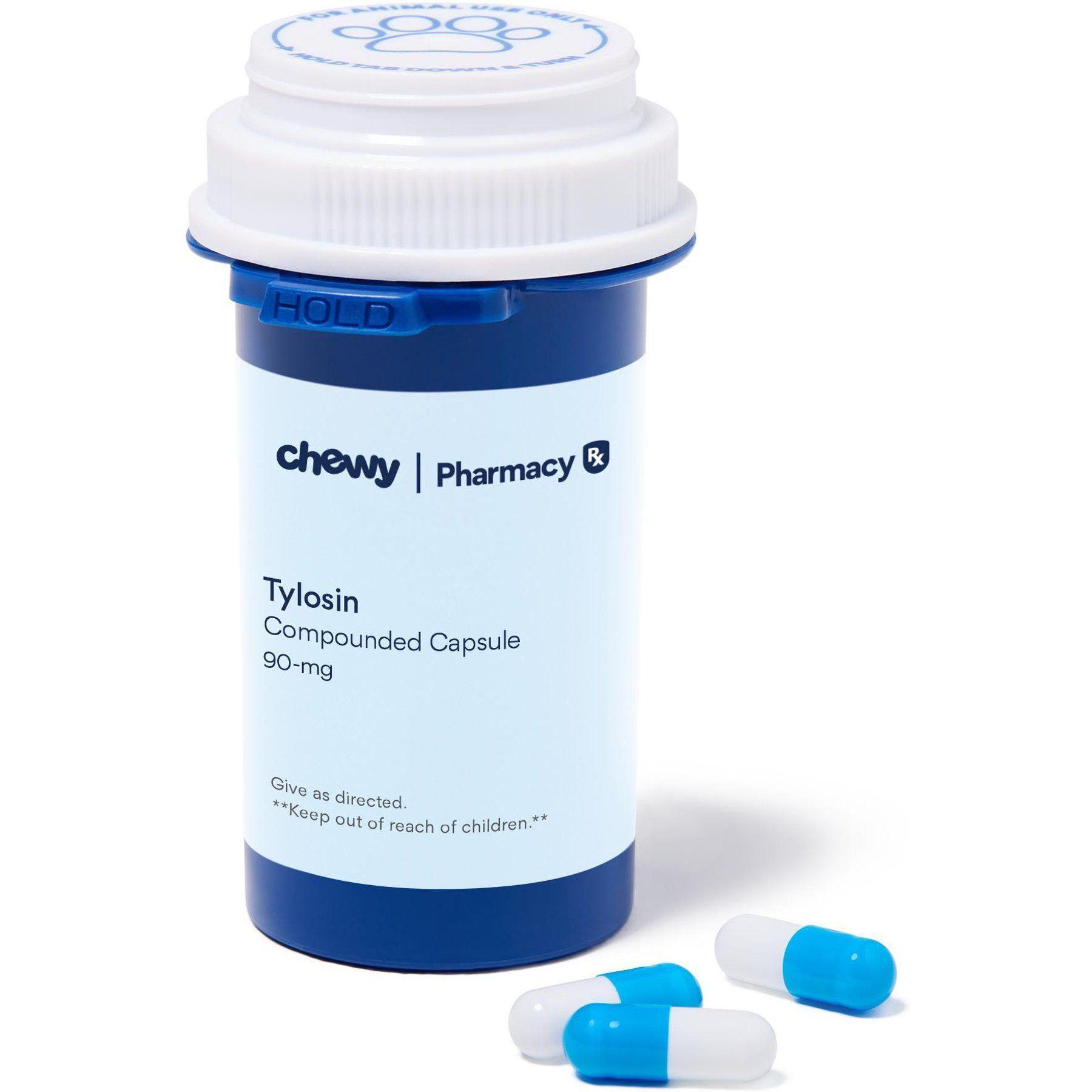
A compounded tylosin capsule your vet can prescribe when the bitter powder is hard to give.
Webvet may earn a commission when you click through to Chewy, at no extra cost to you.
What does tylosin do for a dog?
Tylosin settles diarrhea that responds to it, usually within a few days, and keeps the stool normal while the dog stays on it. Researchers in a placebo-controlled trial from the University of Helsinki describe tylosin-responsive diarrhea in exactly those terms, and note that the exact mechanism of action is still unknown.
The Ohio State University antimicrobial guidelines describe it as a bacteriostatic macrolide antibiotic and list it for control, "but not necessarily cure," of inflammatory bowel disease and idiopathic antibiotic-responsive diarrhea. In other words, it manages the problem rather than removing its cause.
Tylosin dosage for dogs by weight
Tylosin dosage for dogs, whether Tylan powder or a compounded capsule, is a range per kilogram of body weight that the vet works within, not a fixed dose. There is no official dog dose and no standard dosage chart by weight band; the vet calculates how much tylosin your dog gets from its weight and condition.
| Form and use | What the named reference states | How it is given |
|---|---|---|
| Tylan soluble powder or compounded capsule, idiopathic antibiotic-responsive diarrhea | Ohio State University: 6-16mg/kg by mouth every 24 hours, extra-label use | Vet-measured dose by mouth, adjusted toward the lowest effective dose |
| Powder or compounded capsule, inflammatory bowel disease | Ohio State University: 12-20mg/kg by mouth every 8-24 hours, gradually increasing the dosing interval, extra-label use | By mouth, with the vet lengthening the interval over time |
| Powder or compounded capsule, clostridial diarrhea | Ohio State University: 20-40mg/kg by mouth every 12-24 hours for 7-14 days, extra-label use | Short course set by the vet |
| Dogs and cats, general tylosin range | Merck Veterinary Manual: 6–20 mg/kg by mouth every 8–24 hours, extralabel drug use | By mouth as prescribed |
| Chronic enteropathy treatment trial | Merck Veterinary Manual: 10–15 mg/kg by mouth every 8–12 hours, as a 3- to 4-week trial | Trial reviewed by the vet before it continues |
| Relapse of tylosin-responsive diarrhea (small field trial) | Helsinki field trial: 5 mg/kg or 15 mg/kg once daily for seven days worked in 14 of 15 dogs that had responded to 25 mg/kg | Research finding only; the vet decides whether a lower dose suits your dog |
Some dogs go home with Tylan 100-g Soluble Powder, the brand powder the vet measures a dog-sized dose from. It is dispensed only on a veterinarian's prescription: the label states federal law restricts it to use "by or on the order of a licensed veterinarian."
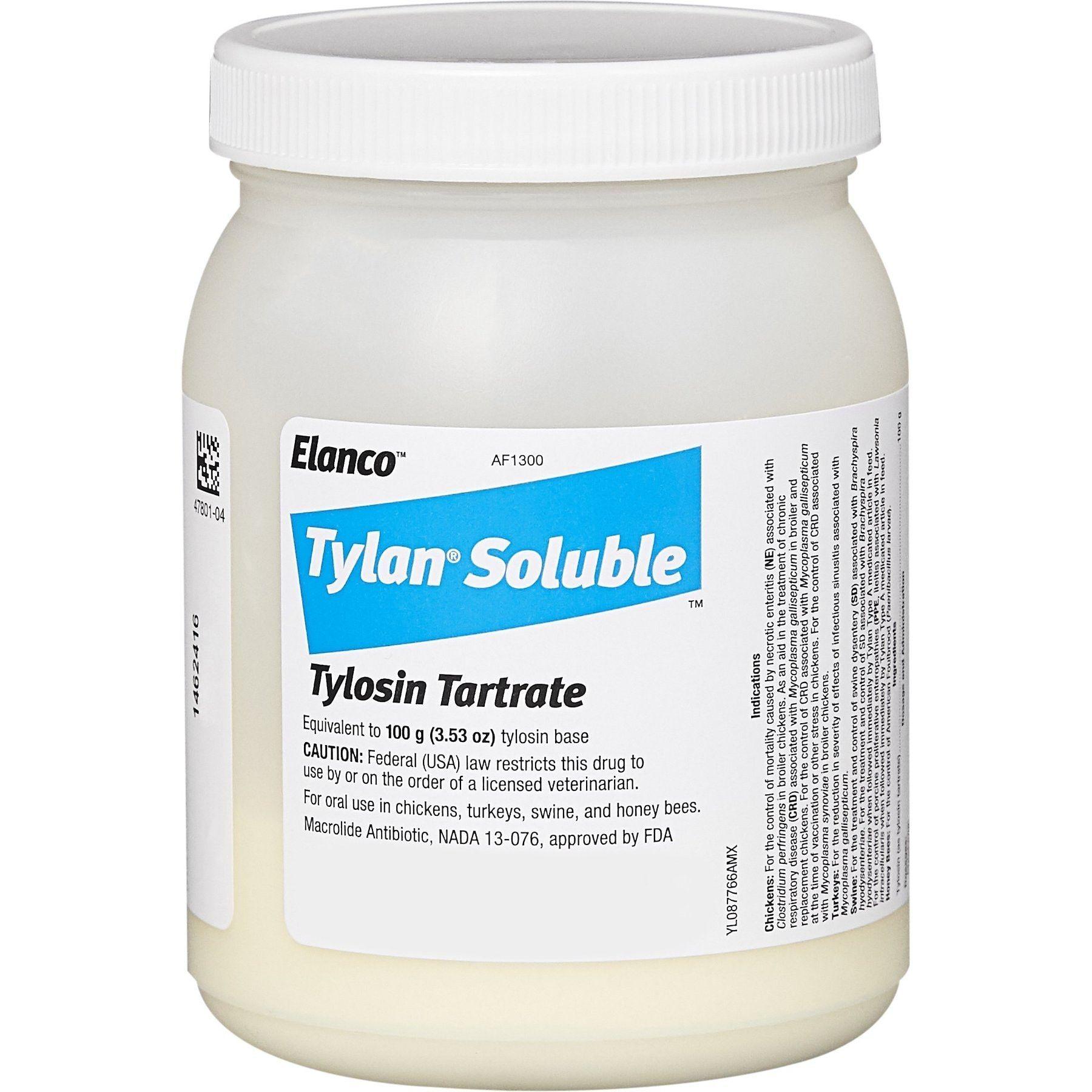
The Tylan soluble powder a vet prescribes and measures for dogs with tylosin-responsive diarrhea.
Webvet may earn a commission when you click through to Chewy, at no extra cost to you.
The dosing references do not agree. The 2014 Helsinki dose trial points out that textbook daily recommendations vary from 25 to 80 mg/kg, given one to three times a day, while its own small, non-randomized trial found relapses controlled at doses as low as 5 mg/kg once daily.
In the earlier placebo-controlled trial, 25 mg/kg once daily "appears sufficient," and doubling it to twice daily did not help any dog that had failed to respond. That is the evidence behind vets working toward the lowest effective dose rather than reaching for more.
Give exactly what the vet prescribed. Never change the amount or the interval, and never stop early, without talking to the vet first, because the dose was worked out for your dog's weight and condition.

Hiding the bitter powder is the everyday challenge. Clinician's Brief suggests placing the dose in an empty capsule rather than sprinkling it over food, or hiding it in a high-value treat or strong-smelling food. Ask your vet which option suits your dog's diet.
That bitterness is one reason vets prescribe compounded capsules instead. The FDA notes that animal drugs compounded from bulk drug substances are not FDA-approved and have not been reviewed for safety, effectiveness, or labeling, so compounded capsules should come only from a pharmacy filling your vet's prescription.
Tylosin powder can irritate skin, eyes, and lungs, and the Tylan Soluble label warns that exposure may cause a rash in people. Clinician's Brief advises owners handling the powder to:
- wear gloves
- wash their hands afterward
- avoid touching their eyes
- avoid breathing in the powder
The Tylosin Compounded Capsule, 90 mg, 30 capsules for Veterinary use is listed at $19.50 on Chewy when checked in November 2026. The Tylan 100-g Soluble Powder is listed at $82.53 on Chewy when checked in November 2026. Chewy Pharmacy fills both only with a veterinarian's prescription.
What tylosin is used for in dogs, including chronic diarrhea and tear stains
Tylosin for dogs with diarrhea is the main use. The Helsinki placebo-controlled trial enrolled 71 client-owned dogs with recurrent diarrhea; when diarrhea returned, 85% (17/20) of dogs on tylosin had normal stool at the end of treatment, compared with 29% (2/7) on placebo.
The same researchers recommend a full work-up to rule out systemic disease, parasites, and food-responsive diarrhea before a tylosin trial. For what to give a dog with diarrhea in general, see WebVet's guide to dog diarrhea causes; Cornell warns against Pepto Bismol or Imodium unless a vet directs them.
When diarrhea comes with vomiting, WebVet's guide to dog vomiting and diarrhea explains what to watch. Beyond diarrhea, the Ohio State guidelines list these accepted uses for tylosin in dogs:
- campylobacteriosis, clostridial diarrhea, or cryptosporidiosis
- upper respiratory tract disease associated with Mycoplasma or Chlamydia
- control, but not necessarily cure, of inflammatory bowel disease or idiopathic antibiotic-responsive diarrhea
Owners sometimes hear heartworm disease called the silent killer of dogs; tylosin does not treat or prevent it, and WebVet's heartworm prevention guide covers it.

Veterinary guidelines do not support giving tylosin for tear stains. The Ohio State guidelines state that low doses were once used to reduce tear-staining, but this "is now considered irresponsible antimicrobial use," and that the FDA has removed tylosin products sold solely for tear-staining from the market.
In a 2017 FDA warning letter to a tear stain remover maker, the agency wrote that using tylosin tartrate in that product is not a use covered by its approved application. The underlying concern is antibiotic stewardship: the Merck Veterinary Manual lists antimicrobial resistance among the reasons antibiotic use in chronic gut disease is debated.
Nor is tylosin the answer to watery eyes, because the tearing has causes a vet can find. The Merck Veterinary Manual's owner guide to tear duct disorders says tear gland and tear duct disorders can cause eyes that water excessively or dry eyes, and can stem from:
- problems present at birth
- infection
- foreign objects in the eye
- trauma
For the cosmetic stain on the fur, a cleaning wipe such as Vet Worthy Tear Stain Dog Wipes, 60 count, listed at $22.99 on Chewy when checked in November 2026, involves no antibiotic. It is an over-the-counter grooming product and does not treat the cause of the tearing or replace the vet exam.
Tylosin for dogs with IBD is a control measure, not a cure. Merck says a 3- to 4-week antimicrobial trial, usually tylosin or metronidazole, can be considered in dogs that have not responded to other steps, but that antibiotics' usefulness in most chronic enteropathies is uncertain.
A trial of several weeks means many daily capsule doses. Greenies Pill Pockets Cheese Flavor Natural Dog Treats, Capsule Size, 30 count are over-the-counter treat pouches sized to wrap a capsule; they help with giving the dose and do not replace the prescribed tylosin. WebVet's pill pocket guide compares other options.
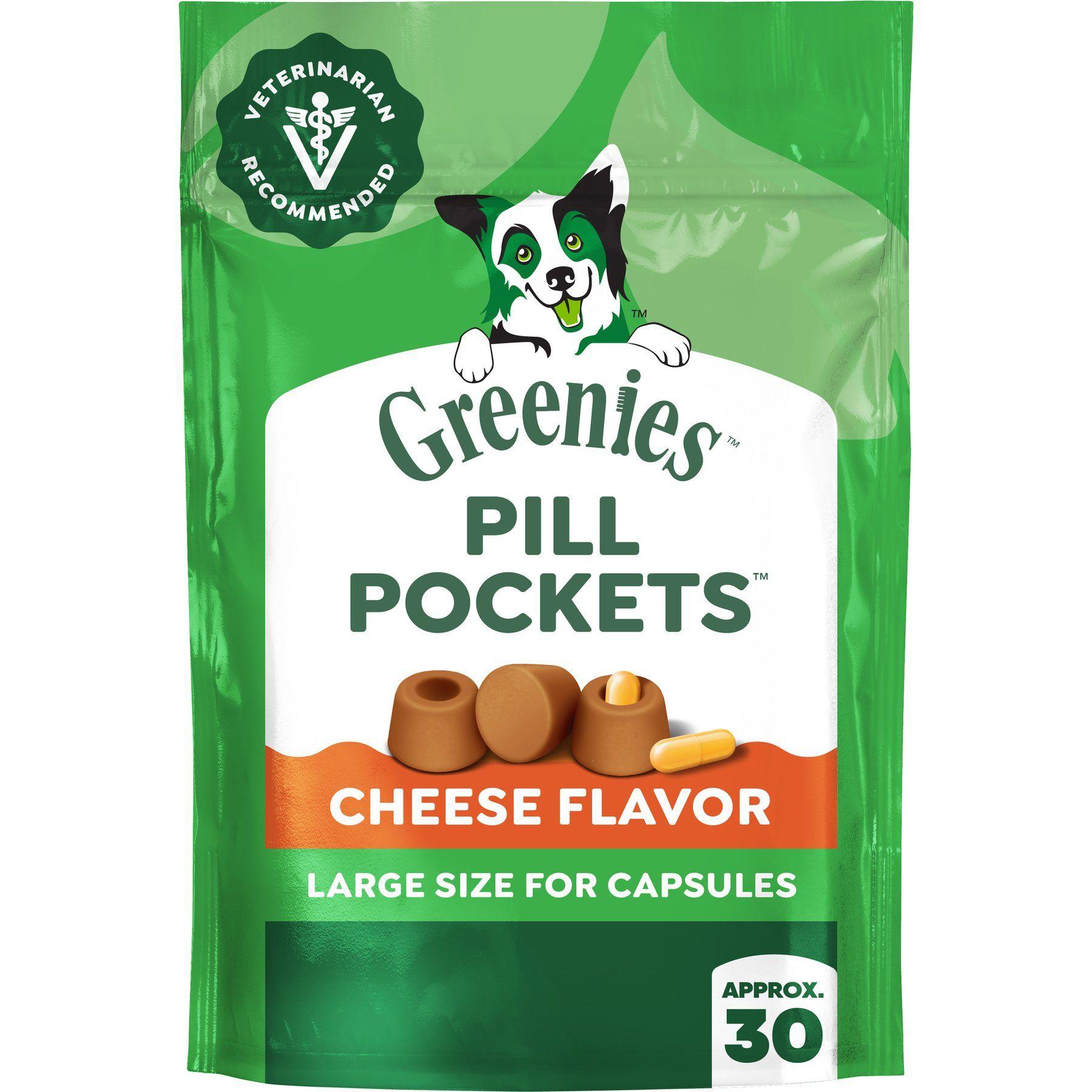
A capsule-size treat pouch that wraps a tylosin capsule so each dose is easier to give.
Webvet may earn a commission when you click through to Chewy, at no extra cost to you.
Merck recommends a hypoallergenic diet trial for at least 2 weeks, and dogs with large intestinal diarrhea may benefit from diets high in insoluble fiber. A prescription fiber diet such as Hill's Prescription Diet w/d Gastrointestinal Dry Dog Food, 27.5-lb, listed at $133.99 on Chewy when checked in November 2026, is sold only with vet authorization.
Merck sets out the goals of treating these long-running gut problems as:
- decreasing diarrhea and vomiting
- promoting appetite and weight gain
- decreasing intestinal inflammation
Vets sometimes add a probiotic. Cornell notes a vet may send a dog home with a veterinary probiotic, while Merck cautions that probiotic contents can differ from the label claim and evidence of benefit is scarce. More detail is in WebVet's guide to probiotics for dogs with diarrhea.
Purina Pro Plan Veterinary Diets FortiFlora Dog Supplement, 30 count is one veterinary probiotic powder. Ask your vet before adding it; it does not replace tylosin or the exam.
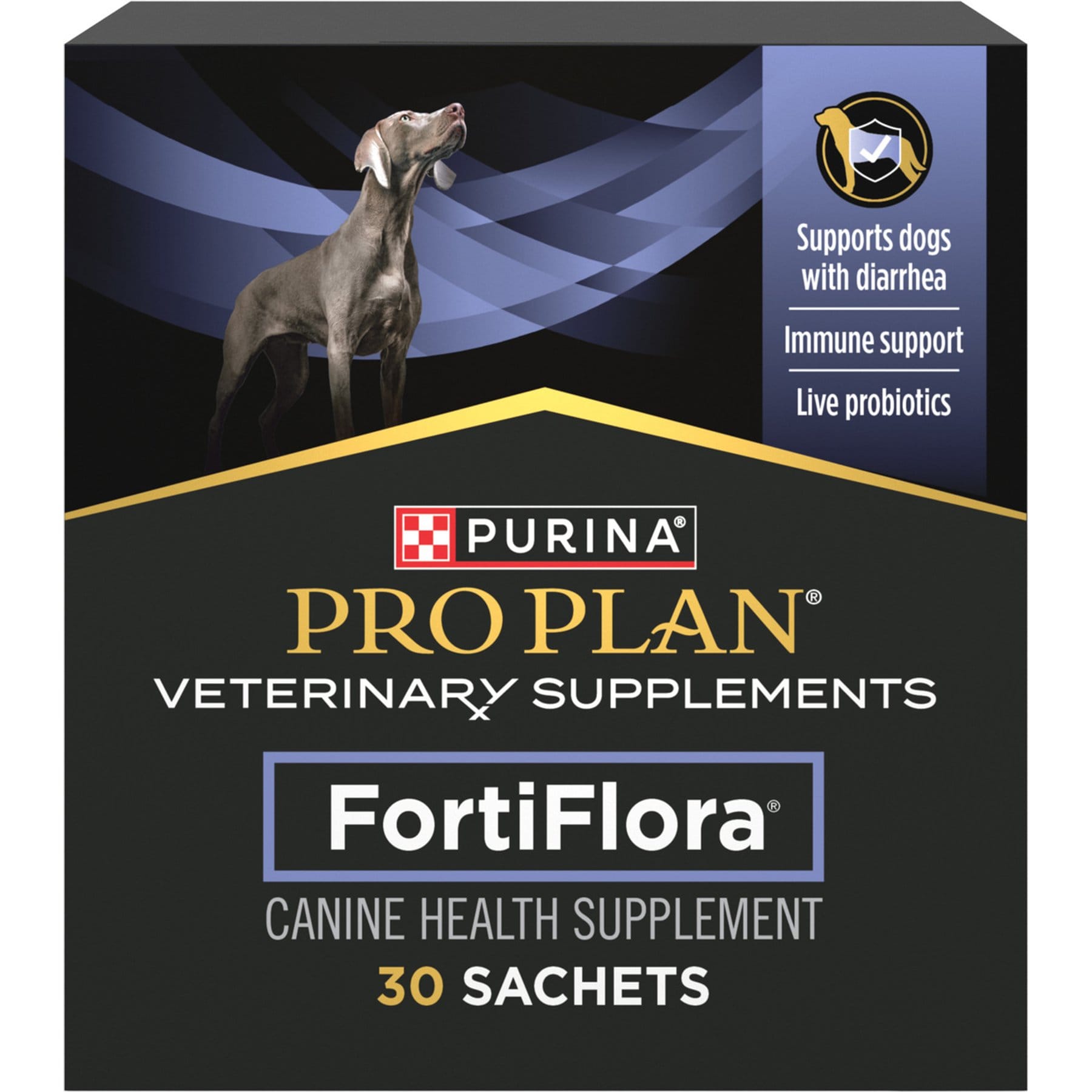
A veterinary probiotic powder some vets pair with a diet or tylosin plan for chronic diarrhea.
Webvet may earn a commission when you click through to Chewy, at no extra cost to you.
Tylosin side effects in dogs
Tylosin side effects in dogs are usually mild. The Merck Veterinary Manual says macrolides are generally well tolerated in dogs and cats, and neither Helsinki trial recorded adverse events. Side effects to watch for while your dog takes tylosin:
- diarrhea or softer stool
- decreased appetite
- stomach upset, which giving the dose with food can help prevent
- any sign of an allergic (hypersensitivity) reaction, which Merck says occasionally occurs with macrolides

 Sponsored
Vet care that's always there
Unlimited video calls and messaging with licensed vets for less than a typical vet visit. One membership covers up to five pets.
Use code Pets60
Plans start at $12/month · covers up to 5 pets
- Licensed vets in most states
- Rx for 150+ conditions
- 4.7 on Trustpilot
What are the side effects of Tylan powder for dogs?
The side effects of Tylan powder for dogs are mainly diarrhea and decreased appetite, according to Clinician's Brief, which tells owners to contact the clinic if bloody diarrhea appears. The powder can also irritate skin, eyes, and lungs, so the person giving it should wear gloves and avoid breathing it in.
What are the side effects of tylosin in dogs?
Side effects of tylosin in dogs are uncommon and mostly digestive; the controlled trials recorded none. Merck notes hypersensitivity reactions occasionally occur with macrolides, and its macrolide chapter reports that at 5 mg/kg/day dogs showed a greater tendency to ventricular tachycardia and fibrillation during acute myocardial ischemia. Raise heart disease with the vet.
When to stop tylosin and call the vet now
Call the vet before giving the next dose if any of these signs appear. The vet decides whether to stop, change, or continue tylosin.
Lack of improvement is a reason to call too. The 2014 Helsinki authors concluded that without a response after a few days of tylosin, treatment should be stopped and further tests started as soon as possible, a decision the vet makes with you.
Any suspected allergic reaction after a dose also needs prompt veterinary attention. If your own vet's office is closed, follow its instructions for reaching an emergency clinic.
When you call, note when the signs started, what the stool looks like, and the time of the last dose. Cornell advises bringing a stool sample so the veterinarian can see what the diarrhea looks like.
Drug interactions and dogs that should not take tylosin
Drug interactions with tylosin in dogs are not well mapped, so references reason from macrolides as a class. Merck advises that macrolides probably should not be used with chloramphenicol or the lincosamides, because they may compete for the same binding site in bacteria, though how much this matters in a living animal is unclear.
Merck also lists drugs whose breakdown erythromycin and other macrolides can slow, including theophylline, midazolam, carbamazepine, omeprazole, and ranitidine. Merck describes erythromycin as the macrolide that interferes with this liver enzyme system and says tylosin appears to be eliminated in an active form. Tell your vet about every medicine and supplement your dog takes.
Dogs and households where tylosin needs extra care include:
- a dog that has had a reaction to tylosin or another macrolide before
- a dog with heart disease, given the heart-rhythm finding Merck reports in its macrolide chapter
- a dog already taking chloramphenicol or a lincosamide
- homes with rabbits, guinea pigs, rodents, or other small mammals, for which tylosin ingestion can be fatal
- homes with horses, because Merck reports tylosin has caused fatal colitis in horses and is not indicated in that species
If your dog is on, or has recently finished, another antibiotic such as cephalexin, cefpodoxime, or marbofloxacin, tell the vet before tylosin starts so the courses can be planned together.
How to give Tylan powder or capsules, how long dogs stay on it, and where it comes from
How tylosin is given comes down to the form the vet chose, food, and consistency. Give each dose at the times on the pharmacy label, keep the capsule or powder routine the same each day, and finish the course exactly as prescribed.
Should tylosin be given with food?
Yes, tylosin can be given with food, and that often helps. Clinician's Brief says tylosin can be given with or without food, and that giving it with food "can help prevent stomach upset." Merck notes food can make macrolide absorption erratic, so keep the routine consistent unless your vet changes it.
How long until tylosin works?
Most dogs with tylosin-responsive diarrhea improve within a few days. In the 2014 Helsinki trial, diarrhea stopped between days 1 and 5 (median day 3) at 25 mg/kg once daily, and earlier courses had stopped every enrolled dog's diarrhea within two days. No improvement after a few days means calling the vet.
How long can a dog stay on tylosin?
There is no fixed limit; the vet decides, and the evidence favors short courses. Merck describes a 3- to 4-week trial, the Helsinki researchers concluded a seven-day course may be sufficient, and a 1976 study reported courses from one week to five years. After a seven-day course, 88% of dogs relapsed within two months.
Keeping a dog on tylosin long term carries a cost. The Helsinki authors write that tylosin, like all antibiotics, causes resistance in gut bacteria, and that chronic diarrhea should preferably be treated without long-term antibiotics. Merck adds that long-term treatment seems adequate only for food-responsive enteropathy.
Questions to bring to each recheck when a dog stays on tylosin:
- Is my dog on the lowest effective dose? In one case series, owners lowered the dose as far as possible (6–16 mg/kg per day) while keeping their dogs well.
- Can the interval be lengthened or the dose tapered? Ohio State's inflammatory bowel disease range gradually increases the dosing interval.
- Has a diet trial of at least 2 weeks been done, as Merck recommends?
- Have parasites and other causes been ruled out?
- Is a probiotic worth adding during or after the course?
Store Tylan powder at or below 25°C (77°F), as the label directs, in a dry place with the cap sealed tightly. Do not flush leftovers or pour them down a drain; Clinician's Brief notes tylosin is harmful to aquatic life.

Where to buy tylosin for dogs: only through a veterinarian's prescription. The vet may dispense Tylan powder, or send the prescription to a pharmacy; Chewy Pharmacy fills the Tylosin Compounded Capsule, 90 mg and the Tylan 100-g Soluble Powder only with a veterinarian's prescription.
For capsule doses, a treat pouch such as Greenies Pill Pockets Cheese Flavor Natural Dog Treats, Capsule Size, 30 count, listed at $10.96 on Chewy when checked in November 2026, can make each dose easier. It is a treat, not a substitute for the medicine.
At a recheck, your vet may suggest a probiotic such as Nutramax Proviable Probiotics & Prebiotics Digestive Health Supplement for Dogs & Cats, 30 count, listed at $19.97 on Chewy when checked in November 2026. It is over-the-counter and does not replace tylosin. See WebVet's guide to dog probiotics after antibiotics for timing.
Tylosin questions
Frequently Asked Questions
Is tylosin safe for dogs long term?
Tylosin is generally well tolerated in dogs, and over the long term the main concern is antibiotic resistance rather than toxicity. A recheck lets the vet decide whether the dose can come down, the interval can be lengthened, or the drug can stop while the stool stays normal.
Does tylosin help tear stains in dogs?
Tear stains are not a reason to give tylosin. Ohio State's guidelines call that use irresponsible antimicrobial use, and the FDA has acted against tylosin tear stain products. The Helsinki authors warn that uncritical antibiotic use feeds antibiotic resistance, a public health risk, while the cause of the tearing goes untreated.
Can tylosin help dogs with IBD?
It can help control some cases. Ohio State lists tylosin for control, not necessarily cure, of inflammatory bowel disease, and Merck reserves the IBD label for chronic gut inflammation confirmed on biopsy. Your veterinarian usually works through diet and other steps first, then decides whether a tylosin trial fits.
Where can you buy tylosin for dogs?
Only with a veterinarian's prescription. The vet may dispense it directly or send the prescription to a pharmacy, including an online pharmacy or a compounding pharmacy that makes capsules at the strength the vet orders.
What is Tylan powder for dogs?
Tylan Soluble is Elanco's tylosin tartrate powder, labeled for chickens, turkeys, swine, and honey bees. Vets prescribe it extra-label for dogs and measure a dog-sized dose from it, often packed into an empty capsule because the powder is so bitter.
Veterinarian · BVMS MRCVS
Dr. Pippa Elliott, BVMS, MRCVS, is a veterinarian with nearly 30 years of experience in companion animal practice. Dr. Elliott earned her Bachelor of Veterinary Medicine and Surgery from the University of Glasgow. She was also designated a Member of the Royal College of Veterinary Surgeons. Married with 2 grown-up kids, Dr. Elliott has a naughty Puggle named Poggle, 3 cats and a bearded dragon.


