Marbofloxacin for Dogs: Uses, Dosage, and Side Effects
Marbofloxacin, sold as Zeniquin, is a prescription fluoroquinolone antibiotic for dogs. This guide covers what it treats, how vets choose the tablet strength by weight, side effects, which dogs should not take it, and cost.

BVMS MRCVS
Medically reviewed by Dr. Pippa Elliott, BVMS MRCVS · Last reviewed

Drug facts
Marbofloxacin (Zeniquin) for Dogs· Marbofloxacin
Marbofloxacin is an FDA-approved prescription fluoroquinolone antibiotic tablet for dogs and cats, sold as Zeniquin by Zoetis and as generics. It treats infections caused by susceptible bacteria, with label effectiveness confirmed in skin, soft tissue, and urinary tract infections. The label dose is 1.25 mg/lb once daily, which may be increased to 2.5 mg/lb.

 Sponsored
Is Marbofloxacin (Zeniquin) for Dogs right for your dog?
A licensed vet at Dutch can assess your dog over video and prescribe treatment when it's appropriate, delivered to your door.
Use code Pets60
Plans start at $12/month · covers up to 5 pets
- Licensed vets in most states
- Rx for 150+ conditions
- 4.7 on Trustpilot
Marbofloxacin for dogs: what it treats, prescription status, and whether today is a vet day
Marbofloxacin for dogs is a prescription fluoroquinolone antibiotic tablet, sold as the brand Zeniquin by Zoetis and as FDA-approved generics. The Zeniquin label on DailyMed says it treats infections in dogs and cats caused by bacteria susceptible to marbofloxacin, with effectiveness confirmed in skin and soft tissue infections and urinary tract infections.
Federal law restricts marbofloxacin for dogs to use by or on the order of a licensed veterinarian, so a vet visit comes first. Your vet confirms a bacterial infection, chooses the tablet strength from your dog's weight, and sets how long the course runs. Once started, the full course is given exactly as prescribed.
Today is a vet day if your dog shows signs of an infection and has no prescription yet. It is also a vet day if a dog already taking marbofloxacin has a seizure, starts trembling or walking unsteadily, keeps vomiting, or stops eating.
- 1Knowing what marbofloxacin treats starts with the label: bacterial infections, with effectiveness confirmed in skin, soft tissue, and urinary tract infections.
- 2It is a prescription fluoroquinolone, and your vet chooses among tablet strengths by weight band from the label dose of 1.25 mg per lb once daily.
- 3The most common label side effects are reduced appetite, lower activity, and vomiting; a seizure means calling the vet now.
- 4Growing puppies, dogs with seizure disorders, and dogs on antacids or mineral supplements need a vet review before starting.
Zeniquin is the original brand, approved by FDA under NADA 141-151 and labeled for oral use in dogs and cats only. Its lowest strength, Zeniquin (marbofloxacin) Tablets for Dogs & Cats, 25-mg, 30 tablets, is the brand tablet a vet may choose for a small dog. Chewy Pharmacy fills it only with a veterinarian's prescription.
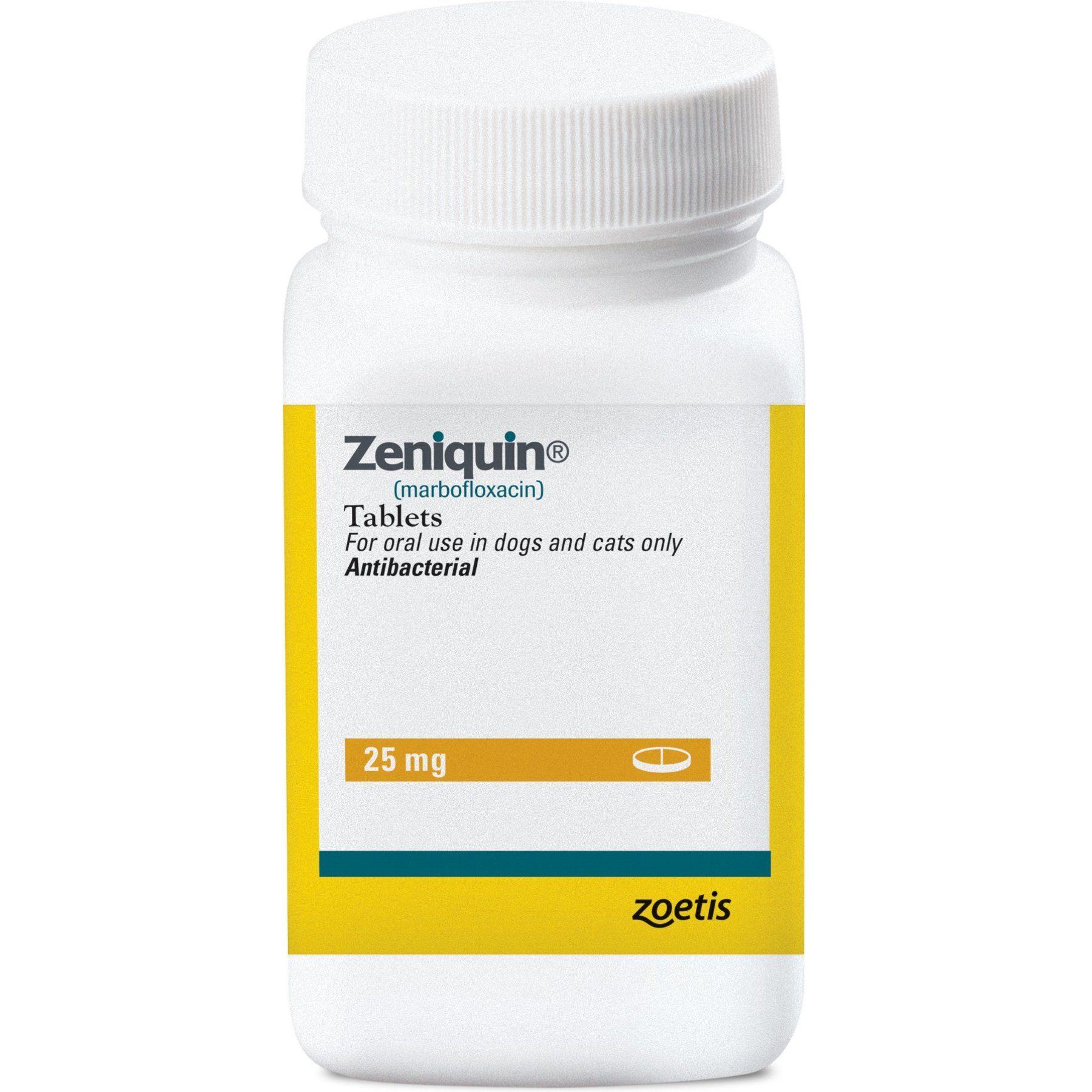
The 25 mg brand marbofloxacin tablet, filled only with your vet's prescription for the strength your dog needs.
Webvet may earn a commission when you click through to Chewy, at no extra cost to you.
What kind of antibiotic is Zeniquin?
Zeniquin is a fluoroquinolone antibiotic. Its active ingredient, marbofloxacin, is a synthetic broad-spectrum antibacterial, and the label explains that fluoroquinolones work by blocking a bacterial enzyme called DNA gyrase. The Merck Veterinary Manual describes quinolones as usually bactericidal and concentration dependent: they kill bacteria rather than only slowing their growth.

Is marbofloxacin a strong antibiotic?
Yes, in the sense that it kills bacteria: the Zeniquin label says marbofloxacin is bactericidal against a broad range of gram-negative and gram-positive organisms. It is not a fit for every infection, though. Merck notes that obligate anaerobes tend to resist most quinolones, and that resistance to one fluoroquinolone is likely to affect all of them.
Marbofloxacin dosage for dogs by weight
Marbofloxacin dosage for dogs on the Zeniquin label is 1.25 mg per lb once daily, which the label says may be increased to 2.5 mg/lb. It states that rate rather than a weight chart, so your vet calculates the exact dose for your dog and then picks the tablet strength.
| Weight band or situation | What the label states | Tablet strength |
|---|---|---|
| Every weight band, standard label dose | 1.25 mg marbofloxacin per lb of body weight, once daily, by mouth | Vet chooses from 25, 50, 100, or 200 mg scored tablets |
| Every weight band, upper label dose | Dosage may be safely increased to 2.5 mg/lb, once daily | Same scored tablet strengths, chosen by the vet |
| Per-kg range (Merck Veterinary Manual) | 2.75–5.5 mg/kg by mouth every 24 hours | Vet matches the dose to a tablet strength |
| Skin and soft tissue infection | Give for 2–3 days beyond the end of clinical signs, maximum 30 days | As prescribed |
| Urinary tract infection | Give for at least 10 days | As prescribed |
| Puppies still growing: small and medium breeds up to 8 months, large breeds up to 12 months, giant breeds up to 18 months | Contraindicated | Not used |
Because the label gives no weight chart, there is no printed weight band and no fixed cutoff for a 50 mg or a 100 mg tablet. Your vet multiplies the label rate by your dog's weight, then chooses the scored tablet strength, whole or split, that fits.
Generic tablets come in the same four strengths as Zeniquin. Marbofloxacin (Generic) Tablets for Dogs & Cats, 100-mg, 30 Tablets is one generic option a vet may prescribe for a larger dog, and Chewy Pharmacy fills it only with a veterinarian's prescription.
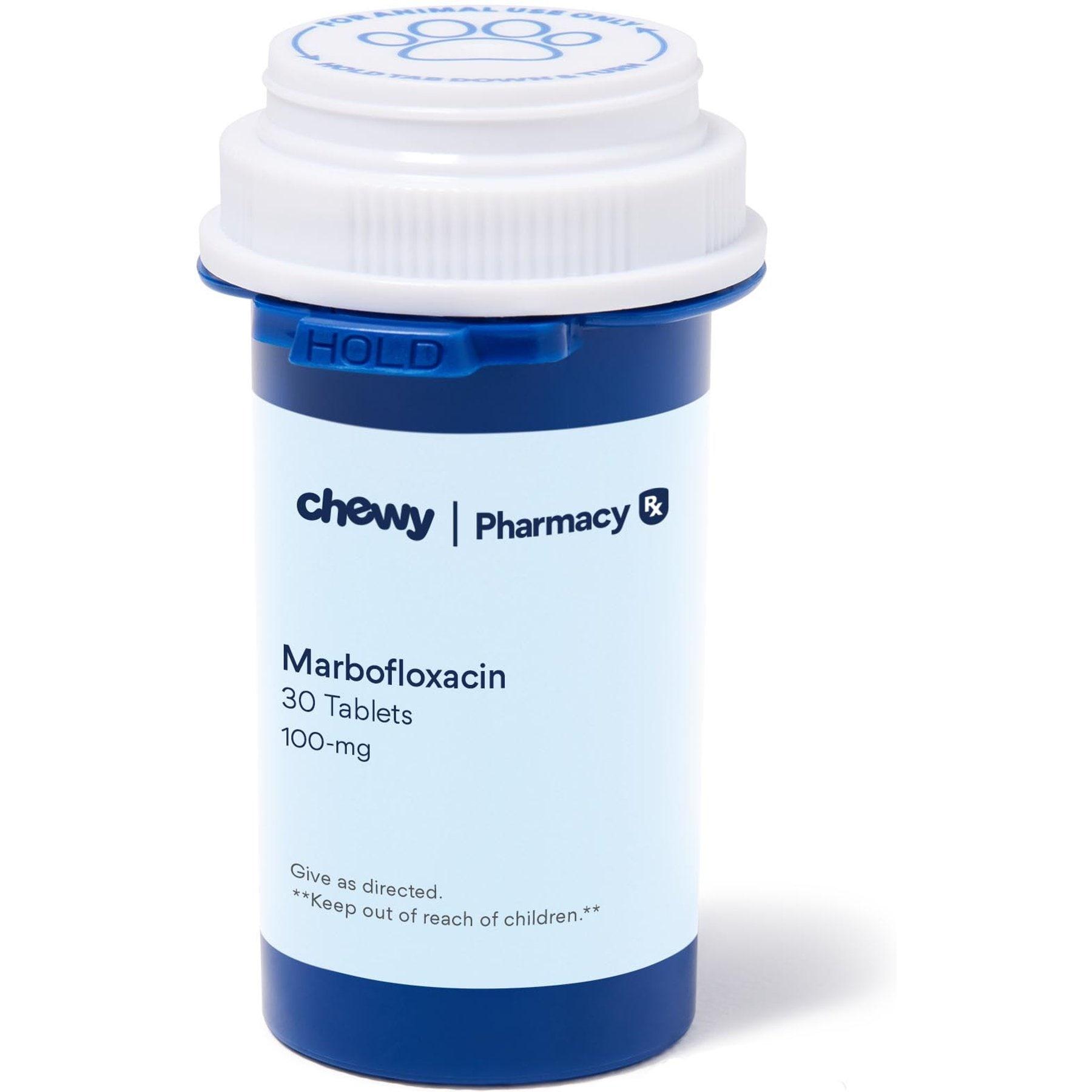
A generic 100 mg marbofloxacin tablet for larger dogs, dispensed only against your vet's prescription.
Webvet may earn a commission when you click through to Chewy, at no extra cost to you.
The dose per kg works the same way. The label writes its rate in pounds, while the Merck Veterinary Manual gives the range for dogs as 2.75–5.5 mg/kg by mouth every 24 hours. The dosage per day is a single dose, once daily.
How long can a dog take marbofloxacin?
Up to 30 days for a skin or soft tissue infection: the Zeniquin label says tablets are given for 2–3 days beyond the end of clinical signs, for a maximum of 30 days. For a urinary tract infection, the label sets a course of at least 10 days. Your vet sets the exact length for your dog's infection.

The label explains why a range works. Absorption of the tablet rises in proportion to the dose across 1.25 to 2.5 mg/lb, and in healthy beagles 94% of a tablet dose reached the bloodstream. So the dose your vet picks within that range is closely reflected in your dog's drug level.
Because the dose is set per pound, an accurate weight matters. If your dog has gained or lost weight since the last weigh-in, ask the clinic to weigh them again. Then give exactly what was prescribed, and never raise, lower, or stop the dose without your vet.
The daily routine matters as much as the number on the bottle. These points come from the label's directions and cautions:
- Give one dose a day, at about the same time each day, for the full number of days prescribed.
- The label says absorption is almost complete in fasted dogs and that the effect of feeding has not been determined, so ask your vet whether to give it with or without a meal.
- Keep dairy, antacids, and iron, calcium, magnesium, aluminum, or zinc supplements away from the dose unless your vet has planned the timing.
- Ask your vet what to do about a missed dose, and never double a dose on your own.
When your vet prescribes half a tablet, a JorVet Pill Splitter cuts a scored tablet cleanly along the line so each half is even.
What marbofloxacin is used for in dogs
The label indication is broad: infections caused by bacteria susceptible to marbofloxacin. Label field studies confirmed effectiveness in these conditions:
- Urinary tract infections (cystitis) in dogs, a common form of UTI in dogs; the dog UTI symptoms guide covers the signs that suggest one.
- Bacterial skin infections such as pyoderma, shown in these pyoderma in dogs pictures.
- Soft tissue infections, such as infected wounds.
The bacteria isolated from dogs in those field studies, run from 1994 to 1996, included these organisms named on the label:
- Staphylococcus intermedius and Staphylococcus aureus
- Escherichia coli and Klebsiella pneumoniae
- Proteus mirabilis and Pasteurella multocida
- Beta-hemolytic Streptococcus and Enterococcus faecalis
- Pseudomonas species, including Pseudomonas aeruginosa
Beyond those, a vet may use it for another infection when testing shows the bacteria are susceptible. The Merck Veterinary Manual says fluoroquinolone use is ideally based on bacteriological culture and antimicrobial susceptibility testing when possible. A culture and sensitivity test grows the bacteria from a urine or skin sample and checks which drugs stop them.
That testing matters because Merck notes resistance to one fluoroquinolone is likely to affect all of them. Depending on the infection and the culture result, your vet may weigh other antibiotics such as cephalexin for dogs, cefpodoxime for dogs, or tylosin for dogs.
Whatever the infection, the course only works if every tablet goes down. Greenies Pill Pockets Cheese Flavor Natural Dog Treats, Tablet Size, 30 count are pocket-shaped treats that hold most small tablets. Ask your vet whether a cheese-flavored treat suits this drug, as the label cautions against foods containing calcium.
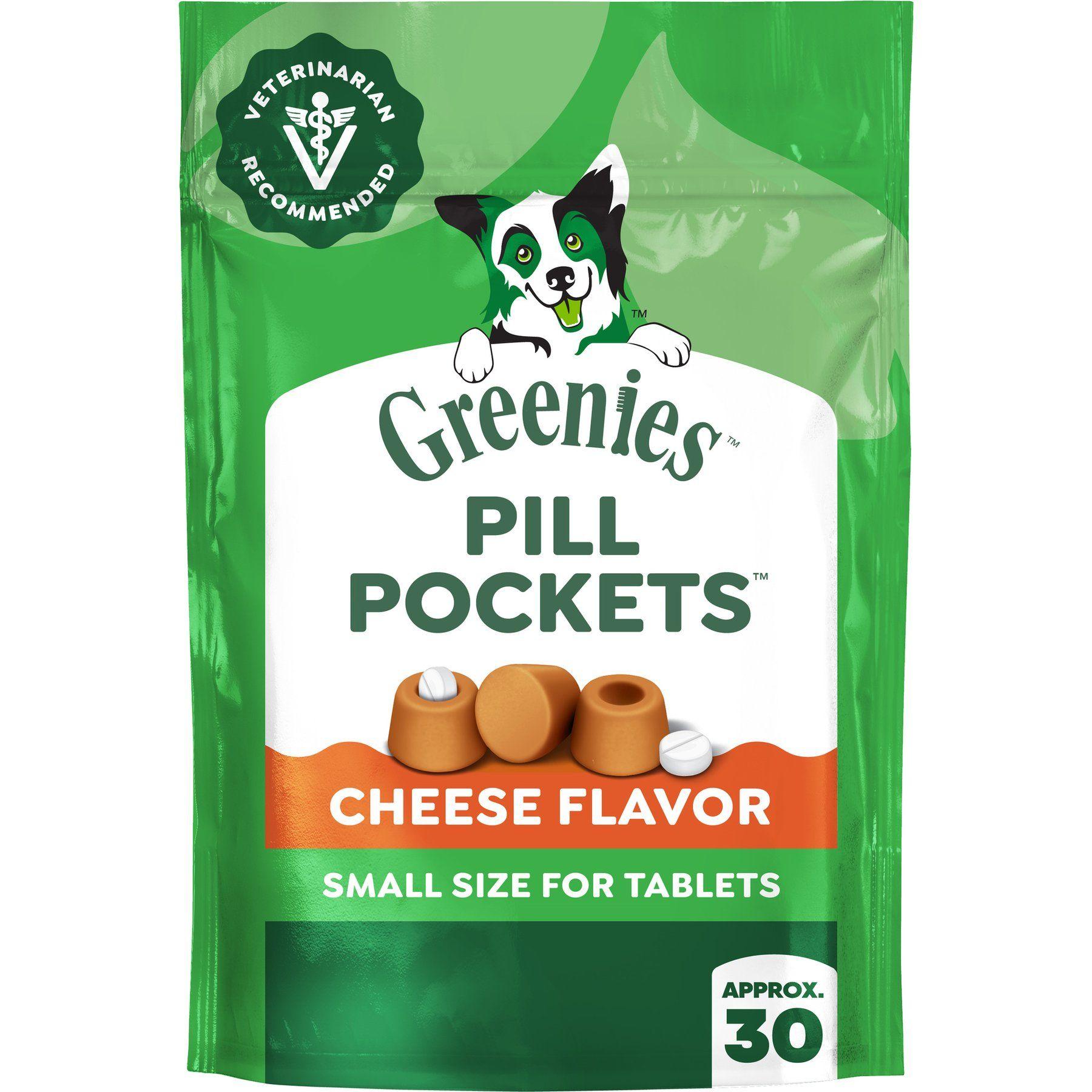
Soft treat pockets that hide a small tablet, for dogs that refuse pills; check the treat with your vet first.
Webvet may earn a commission when you click through to Chewy, at no extra cost to you.
Marbofloxacin side effects in dogs
What are the side effects of marbofloxacin in dogs?
The most common are decreased or lost appetite (5.4%), decreased activity (4.4%), and vomiting (2.9%), according to field studies reported on the Zeniquin label in dogs given up to 2.5 mg/lb daily. These are the expected side effects to mention to your vet, not emergencies on their own.

The label lists rarer signs, each reported in less than 1% of dogs:
- Increased thirst
- Soft stool or diarrhea
- Behavioral changes
- Shivering, shaking, or tremors
- Ataxia (unsteady, wobbly walking)
Zeniquin side effects are the ones listed above, and generic marbofloxacin contains the same active ingredient. The Merck Veterinary Manual adds that vomiting and diarrhea may develop with fluoroquinolones in general.
If stools soften during the course, ask your vet whether a probiotic such as Purina Pro Plan Veterinary Diets FortiFlora Dog Supplement, 30 count suits your dog, and when to give it. It does not replace the prescribed antibiotic. The guide to dog probiotics after antibiotics explains how vets time them.
Courses run from at least 10 days to as long as 30 days, and once-daily doses are easy to lose track of. The Ezy Dose Weekly 7-Day Dog Pill Organizer has seven compartments for laying out a week of doses. It is a scheduling aid and does not replace your vet's directions.
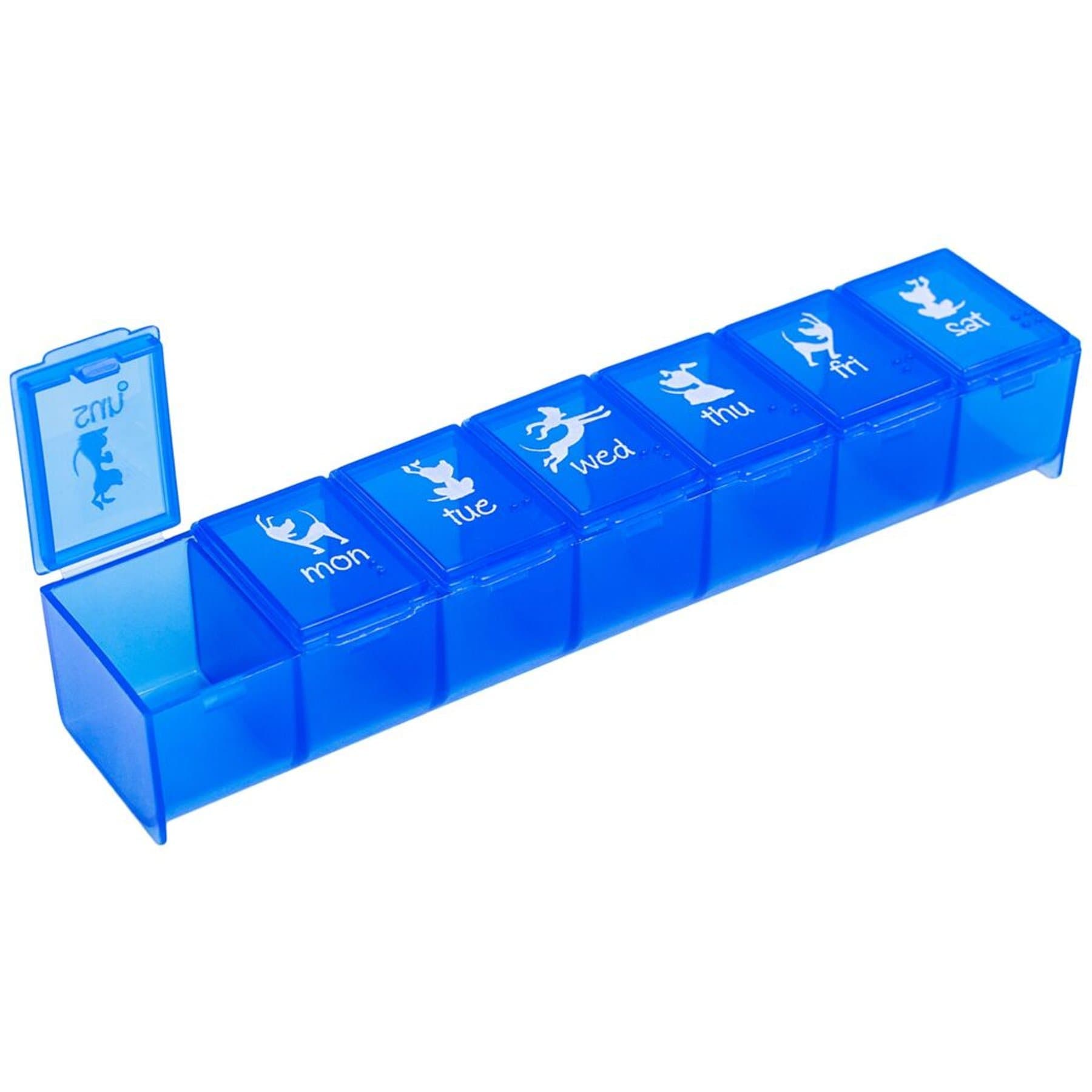
A seven-day pill organizer that keeps a once-daily course on schedule through every prescribed day.
Webvet may earn a commission when you click through to Chewy, at no extra cost to you.
Keeping a short note of when each dose went down, and any change in appetite or stools, gives your vet a clear picture at the recheck.
Reduced appetite is the most frequent label side effect. A dog that stops eating altogether or vomits repeatedly needs a call to the vet the same day.
 Sponsored
Vet care that's always there
Unlimited video calls and messaging with licensed vets for less than a typical vet visit. One membership covers up to five pets.
Use code Pets60
Plans start at $12/month · covers up to 5 pets
- Licensed vets in most states
- Rx for 150+ conditions
- 4.7 on Trustpilot
When to stop marbofloxacin and call the vet now
The label says quinolones should be used with caution in dogs with known or suspected central nervous system disorders, because in rare instances they have been associated with CNS stimulation that may lead to convulsive seizures. In the label's field studies, one dog that had a seizure the day before enrollment had another seizure during treatment.
These are reasons to call the vet today rather than wait:
- A seizure, or new trembling, shaking, or wobbly walking
- Any sign of an allergic reaction; the label bars marbofloxacin in dogs known to be hypersensitive to quinolones
- Repeated vomiting, refusal of food, or signs of dehydration
- Limping or joint pain in a young dog, since quinolones can damage growing cartilage
- A suspected double dose or a dog that got into the bottle
Overdose is serious. In a label safety study, dogs given 25 mg/lb/day for 12 days showed decreased food consumption, vomiting, dehydration, excessive salivation, tremors, reddened skin, facial swelling, decreased activity, and weight loss. Merck notes convulsions can occur with quinolones at high doses.
Drug interactions and dogs that should not take marbofloxacin
Some dogs should not take marbofloxacin at all, and others need a vet to weigh the risk first. Tell your vet before the first dose if your dog:
- Is still growing: the label contraindicates it in small and medium breeds up to 8 months, large breeds up to 12 months, and giant breeds up to 18 months
- Has ever reacted to a quinolone antibiotic such as enrofloxacin
- Has epilepsy, a seizure history, or another nervous system disorder
- Has kidney disease; the label gives no kidney dosing guidance, but about 40% of a dose leaves the body unchanged in the urine
- Is pregnant, nursing, or used for breeding, since the label says safety in these dogs has not been demonstrated
- Takes antacids, sucralfate, or iron, calcium, magnesium, aluminum, or zinc supplements
- Takes theophylline or cyclosporine
The age limits exist because quinolones cause cartilage damage in immature animals, and the label says the dog is particularly sensitive. In one label study, 3- to 4-month-old large-breed puppies given 5 mg/lb/day developed marked lameness from articular cartilage lesions.

The drug interactions follow the same logic. The label warns that sucralfate, antacids, and mineral supplements containing iron, aluminum, calcium, magnesium, or zinc can interfere with absorption, so they should not be given together by mouth. Merck adds that quinolones slow the breakdown of theophylline and that, in people, they can raise cyclosporine levels.
Can people take marbofloxacin?
No. The Zeniquin label says it is for use in animals only and should be kept out of reach of children. People who have had a reaction to fluoroquinolones should avoid handling it, excessive exposure carries a risk of sun sensitivity, and any contact with the eyes needs flushing with plenty of water for 15 minutes.
The FDA notes that fluoroquinolones are considered medically important antimicrobials in human medicine, and Merck records a 2008 FDA boxed warning in people for an increased risk of tendinitis and tendon rupture.
Giving marbofloxacin, Zeniquin vs generic cost, and how it compares with enrofloxacin
Marbofloxacin is given by mouth as a tablet once a day, whole or split as your vet prescribes. These aids suit different dogs, and none replaces the prescription:
- A Vet Worthy Pill Gun for Dogs, designed to dispense tablets and capsules, for a dog that spits tablets out of treats
- Greenies Pill Pockets Cheese Flavor Natural Dog Treats, Tablet Size, 30 count, once your vet has approved the treat
- An Ezy Dose Weekly 7-Day Dog Pill Organizer to lay out the week's doses
Store tablets below 30°C (86°F), as the label directs. Marbofloxacin for dogs cost depends on the tablet strength and the number of days, both set by your dog's weight and infection. Current Chewy listings:
- Zeniquin (marbofloxacin) Tablets for Dogs & Cats, 25-mg, 30 tablets: listed at $68.72 on Chewy when checked in November 2026
- Marbofloxacin (Generic) Tablets for Dogs & Cats, 100-mg, 30 Tablets: listed at $148.20 on Chewy when checked in November 2026
Those are different strengths, so ask for a quote on your dog's exact prescription in both the Zeniquin and generic forms. Both are filled only with a veterinarian's prescription.
Generic marbofloxacin tablets are FDA-approved. The FDA approved Marboquin in March 2020 as the first generic marbofloxacin tablet, noting it shares its active ingredient with Zeniquin. A generic from ZyVet (marbofloxacin label on DailyMed) lists the same four scored strengths and once-daily dose.

Marbofloxacin vs enrofloxacin is a common question, because both are veterinary fluoroquinolones in dogs. They work the same way, but they are separate drugs with different labels and approvals.
Is marbofloxacin the same as enrofloxacin?
No. Both are fluoroquinolone antibiotics, but they are different drugs. The Merck Veterinary Manual lists enrofloxacin as approved for dogs, cats, cattle, and swine, and marbofloxacin as approved for dogs and cats. Because resistance to one fluoroquinolone is likely to affect all of them, an infection that failed on enrofloxacin is not a simple swap.
What are common fluoroquinolone antibiotics?
Common fluoroquinolones listed in the Merck Veterinary Manual include:
- Enrofloxacin: dogs, cats, cattle, and swine
- Marbofloxacin and orbifloxacin: dogs and cats
- Difloxacin: dogs
- Pradofloxacin: cats; not approved for dogs in the US
- Ciprofloxacin: a human fluoroquinolone
How long does it take for marbofloxacin to work?
The label's checkpoint is 5 days: if no improvement is noted within 5 days, the diagnosis should be re-evaluated and a different treatment considered. With once-daily dosing, the label says steady blood levels are reached after the third dose. Keep giving every dose even after your dog looks better.
Is marbofloxacin stronger than Amoxicillin?
Not in a simple sense, because they belong to different drug classes and suit different infections. Marbofloxacin is a bactericidal fluoroquinolone with broad gram-negative and gram-positive activity. Amoxicillin for dogs and cats is an aminopenicillin that many bacteria can break down with beta-lactamase enzymes, which is why Merck describes pairing it with clavulanate, as in Clavamox for dogs and cats.
Marbofloxacin questions
Frequently Asked Questions
What is Zeniquin for dogs?
Zeniquin is the Zoetis brand of marbofloxacin, a prescription antibiotic tablet for dogs and cats. It was the original FDA-approved marbofloxacin product, and generic marbofloxacin tablets now carry the same active ingredient.
How much does marbofloxacin cost for dogs?
The price depends on the tablet strength, the number of tablets in the course, and whether the vet writes for Zeniquin or a generic. A small dog on a short urinary course needs far fewer milligrams than a large dog on a month-long skin course, so ask your vet or pharmacy for a quote on both forms.
What strengths does marbofloxacin come in for dogs?
Marbofloxacin comes as a scored tablet in four strengths: 25 mg, 50 mg, 100 mg, and 200 mg. Your vet picks the strength that fits your dog's dose. The label lists the 25 mg and 50 mg tablets in bottles of 100 or 250, and the 100 mg and 200 mg tablets in bottles of 50.
How often is marbofloxacin given to dogs?
Once daily. The label directs a single daily dose by mouth, and your veterinarian decides the dose within the label range and the number of days. Do not split one dose into two daily doses unless your vet tells you to.
What are the side effects of Zeniquin?
In the label's dog field studies, the most frequent were loss of appetite, lower activity, and vomiting. Rarer signs included increased thirst, soft stool, behavior changes, tremors, and wobbly walking. Zeniquin is not given to growing puppies because of the risk of joint cartilage damage.
Veterinarian · BVMS MRCVS
Dr. Pippa Elliott, BVMS, MRCVS, is a veterinarian with nearly 30 years of experience in companion animal practice. Dr. Elliott earned her Bachelor of Veterinary Medicine and Surgery from the University of Glasgow. She was also designated a Member of the Royal College of Veterinary Surgeons. Married with 2 grown-up kids, Dr. Elliott has a naughty Puggle named Poggle, 3 cats and a bearded dragon.


