Cefpodoxime for Dogs: Uses, Dosage, Side Effects, and Cost
Cefpodoxime, sold as Simplicef and Cefpoderm, is a prescription antibiotic for dogs. This guide covers what it treats, how the vet sets the dose by weight, side effects, when to stop, and what it costs.

BVMS MRCVS
Medically reviewed by Dr. Pippa Elliott, BVMS MRCVS · Last reviewed

Drug facts
Cefpodoxime (Simplicef, Cefpoderm)· Cefpodoxime proxetil
Cefpodoxime proxetil is a prescription, once-daily oral cephalosporin antibiotic for dogs. Its FDA-approved label covers skin infections (wounds and abscesses) caused by susceptible bacteria at 5-10 mg/kg (2.3-4.5 mg/lb) once a day; vets also use it extra-label for urinary tract infections.

 Sponsored
Is Cefpodoxime (Simplicef, Cefpoderm) right for your dog?
A licensed vet at Dutch can assess your dog over video and prescribe treatment when it's appropriate, delivered to your door.
Use code Pets60
Plans start at $12/month · covers up to 5 pets
- Licensed vets in most states
- Rx for 150+ conditions
- 4.7 on Trustpilot
Cefpodoxime for dogs: what Simplicef treats, prescription status, and whether today is a vet day
Cefpodoxime for dogs is a prescription cephalosporin antibiotic sold as Simplicef, Cefpoderm, and generic cefpodoxime proxetil tablets. The Simplicef label on DailyMed covers skin infections (wounds and abscesses) in dogs, and federal law restricts it to use by or on the order of a licensed veterinarian.
Your veterinarian sets the dose from your dog's weight, gives it once a day, and decides how long the course runs. VCA Animal Hospitals stresses finishing the full course even when your dog seems better. If your dog has a new wound, abscess, or suspected infection and no prescription yet, today is a vet day.
- 1What cefpodoxime treats: the label covers skin infections (wounds and abscesses) in dogs caused by susceptible bacteria.
- 2Dog dosing by weight band: the label range is 5-10 mg/kg (2.3-4.5 mg/lb) once a day, and the vet sets the exact dose.
- 3It is a prescription drug and is never started without a veterinarian.
- 4Stop it and call the vet now for skin rash, trouble breathing, pale gums, or facial swelling.
- 5Dogs allergic to penicillins or cephalosporins should not take it.
Cefpodoxime proxetil is a prodrug. The gut converts it into the active drug, cefpodoxime, which kills bacteria by interfering with how they build their cell walls, according to the Simplicef label.
VCA calls it a third-generation cephalosporin antibiotic, and Veterinary Partner notes it is one of the few in that generation that works by mouth.
The strongest evidence on how well it works is the label's own field study. Across 23 sites, 216 dogs with infected wounds or abscesses received either Simplicef once daily or a comparison antibiotic twice daily. Simplicef was judged noninferior, with success rates of 88.7% versus 88.4%.

Simplicef for dogs is the Zoetis brand, sold as scored 100 mg and 200 mg tablets. It is approved by FDA under NADA # 141-232. Chewy Pharmacy fills Simplicef only with a veterinarian's prescription.
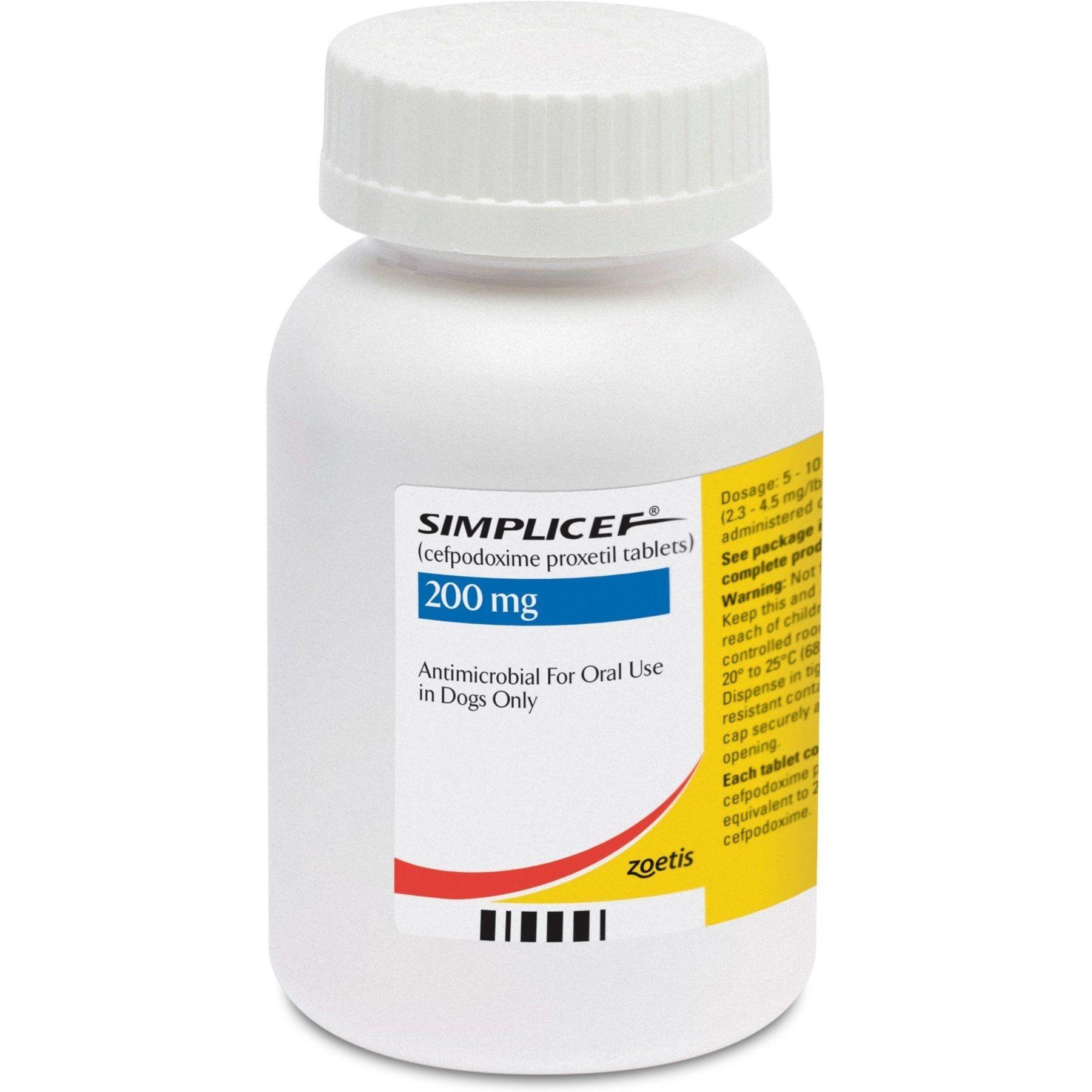
Brand-name cefpodoxime proxetil 200 mg tablets for dogs, dispensed only against a veterinarian's prescription.
Webvet may earn a commission when you click through to Chewy, at no extra cost to you.
Cefpodoxime dosage for dogs by weight
The Simplicef label sets a dose range of 5-10 mg/kg (2.3-4.5 mg per pound) of body weight, by mouth, once a day, and prints two charts: one at 5 mg/kg and one at 10 mg/kg.
Your veterinarian chooses the dose within that range and calculates it for your dog. These are the weight bands the label charts list.
| Weight band (label chart) | What the label states | Tablet strength |
|---|---|---|
| 11 lb (5 kg) | 10 mg/kg chart: 0.5 tablet | 100 mg |
| 22 lb (10 kg) | 5 mg/kg chart: 0.5 tablet; 10 mg/kg chart: 1 tablet | 100 mg |
| 44 lb (20 kg) | 5 mg/kg chart: 1 tablet of 100 mg; 10 mg/kg chart: 1 tablet of 200 mg | 100 mg or 200 mg |
| 66 lb (30 kg) | 5 mg/kg chart: 1.5 tablets of 100 mg; 10 mg/kg chart: 1 tablet of 100 mg plus 1 tablet of 200 mg | 100 mg and 200 mg |
| 88 lb (40 kg) | 5 mg/kg chart: 1 tablet of 200 mg; 10 mg/kg chart: 2 tablets of 200 mg | 200 mg |
| 132 lb (60 kg) | 5 mg/kg chart: 1 tablet of 100 mg plus 1 tablet of 200 mg; 10 mg/kg chart: 3 tablets of 200 mg | 100 mg and 200 mg |
| Every weight band | Once daily for 5-7 days or 2-3 days past the end of signs, up to 28 days; acute infections with no response in 3-4 days should not continue, so the vet rechecks | Same tablets |
The label explains why the vet, not a chart, picks the number. The right dose depends on how severe the infection is, which bacteria are involved, and how well your dog's immune defenses are working. The label also asks vets to take a culture and sensitivity sample before starting, then adjust once results arrive.
The Simplicef and Cefpoderm labels both list 100 mg and 200 mg tablets. Both Simplicef strengths are scored, and so is the Cefpoderm 100 mg tablet; the Cefpoderm 200 mg tablet is not, so the vet or pharmacist says whether a given tablet can be halved. Veterinary Partner also lists an oral suspension. It warns that tablet size is not a guide to the proper dose.
The full Simplicef label on DailyMed is the official dosage chart, including both tables, and DailyMed offers it as a downloadable PDF. Doses are written as the active cefpodoxime, so a 100 mg tablet contains cefpodoxime proxetil equivalent to 100 mg of cefpodoxime.

A generic cefpodoxime proxetil 100 mg tablet carries the same drug and the same 5-10 mg/kg label range as the brands. Chewy Pharmacy fills generic cefpodoxime only with a veterinarian's prescription.
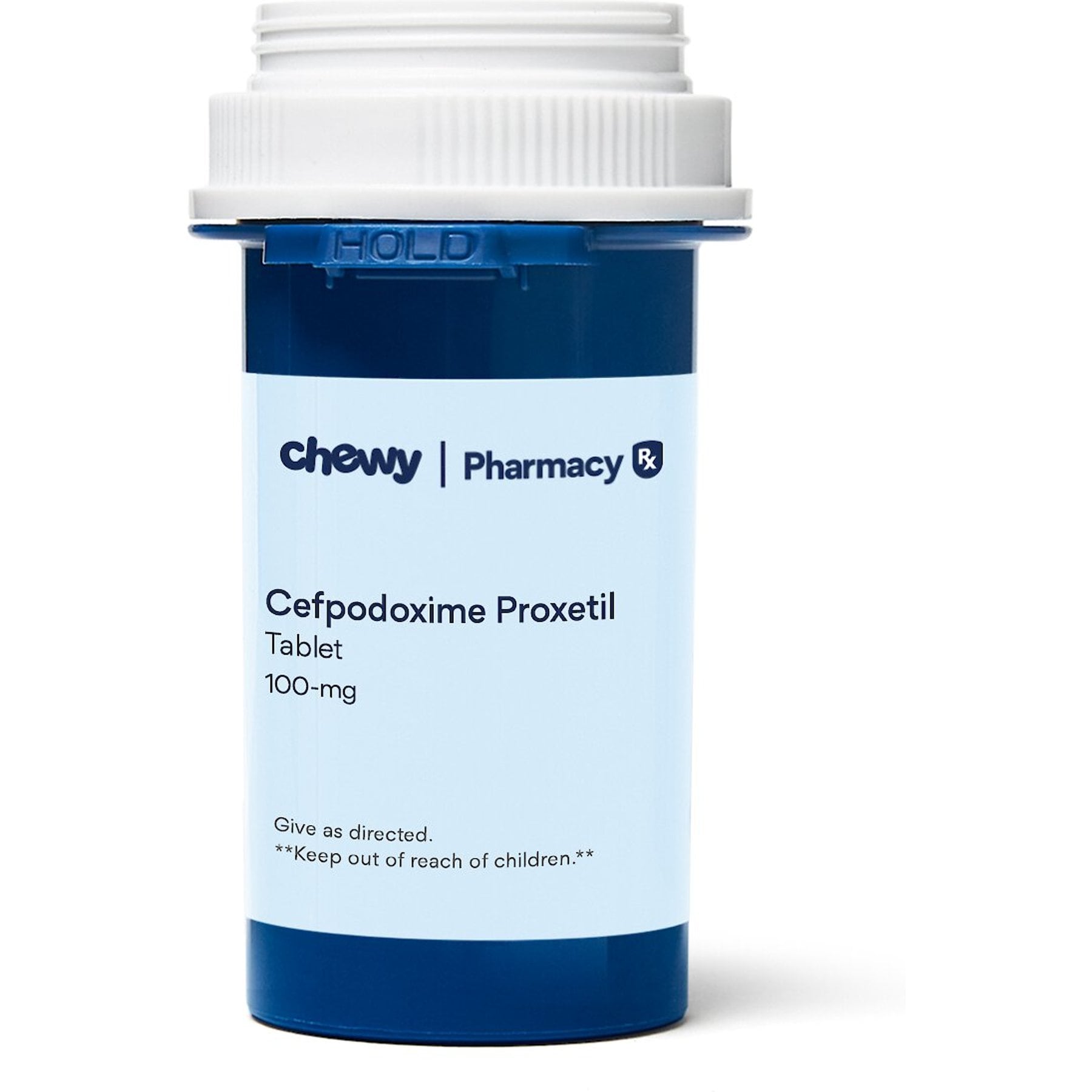
Generic cefpodoxime proxetil 100 mg tablets, filled only on a veterinarian's prescription.
Webvet may earn a commission when you click through to Chewy, at no extra cost to you.
Dechra's Cefpoderm (cefpodoxime proxetil) Tablets for Dogs, 100-mg, 30 tablets are another prescription-only option at the same strength. Your vet's prescription names the product, strength, and number of tablets each day.
Sources differ slightly on how often to give it. The dog label and the Merck Veterinary Manual skin-infection table say every 24 hours. Merck's general cephalosporin dosage table lists 5-10 mg/kg every 12-24 hours for dogs and cats, so your vet's written schedule is the one to follow.
On overdose, dogs tolerated 100 mg/kg a day, 10 times the maximum label dose, for 13 weeks in label safety studies. VCA says most overdoses cause diarrhea, vomiting, poor appetite, and lethargy, but some are more serious, so call your vet right away. Apart from stopping for the allergic-reaction signs below, never change or stop the dose without your vet.
What cefpodoxime is used for in dogs and how fast it works
On the label, cefpodoxime is for skin infections (wounds and abscesses) caused by susceptible strains of Staphylococcus pseudintermedius, Staphylococcus aureus, Streptococcus canis, Escherichia coli, Pasteurella multocida, and Proteus mirabilis, as the Cefpoderm label lists them. Vets also use it in other ways:
- Skin infection, including canine pyoderma: deep or recurring bacterial skin infection, usually when a bacterial culture shows the bacteria are susceptible.
- Wounds and abscesses: the labeled use, including a wound that becomes infected after an injury or surgery.
- Bladder infection (UTI): an extra-label use, guided by a urine culture.
- Respiratory infections: VCA lists bacteria that cause some respiratory infections among those cefpodoxime can kill.
Merck treats cefpodoxime as a second-line skin antibiotic, chosen when culture shows the bacteria resist first-line drugs such as cephalexin, cefadroxil, or amoxicillin-clavulanate. It groups cefpodoxime with fluoroquinolones such as marbofloxacin for dogs. Veterinary Partner adds that it is meant for specific infections, not used without justification.
The label notes cefpodoxime is not active against most obligate anaerobes, Pseudomonas, or enterococci. Preventing infection at surgery is not a labeled use; Merck's example there is injectable cefazolin given 1 hour before surgery. Home wound cleaning is covered in dog wound care.
Some problems owners link to infection are not a typical cefpodoxime job:
- Itching and hot spots: cefpodoxime kills bacteria; it does not stop itch. The Merck Veterinary Manual says pyoderma is usually triggered by allergies, parasites, or other problems, allergic dogs often need anti-itch treatment, and topical therapy alone should treat most surface or superficial pyoderma. Pyoderma in dogs pictures show what infected skin looks like.
- Kennel cough: Merck's kennel cough guidance says it is often self-limiting and antibiotics are usually not needed unless there is evidence of pneumonia; cefpodoxime is not on its list of recommended antibiotics.
Can cefpodoxime be used for UTI?
Yes, as an extra-label choice by a vet. The Merck Veterinary Manual says cefpodoxime is approved for skin infections but used extra-label for canine UTI.
The label notes it leaves the body mainly in urine. Merck calls a urine culture with susceptibility testing the gold standard for diagnosis. More on bladder infections is in dog UTI treatment.
Can I use cefpodoxime for my dog's ear infection?
Only if your vet prescribes it, and usually not as the main treatment. Merck says topical medication is key for outer ear infections because oral drugs do not reach the canal in high enough concentration. Veterinary Partner notes vets use higher doses for ear infections; the label lists no ear use.
In short, good ear care starts with the vet: the vet cleans and examines the ear, looks at a swab under the microscope, and chooses ear medication matched to what it shows; Merck notes the canal must be free of exudate (discharge) before medication goes in.
Oral versus ear medication, how to get relief quickly, and which products need no prescription are covered in dog ear infection treatment. Telling bacterial from yeast infections is explained in dog ear infection.
What are the uses of CefPET tablets for dogs?
CefPET is not a name on any U.S. cefpodoxime label. DailyMed's animal-drug labels for cefpodoxime list Simplicef, Cefpoderm, Dermaceph, and generic cefpodoxime proxetil tablets.
If a product called CefPET contains cefpodoxime proxetil, the U.S. labeled use for that drug is skin infections (wounds and abscesses) in dogs. Confirm the active ingredient with your vet before giving it.
How quickly does cefpodoxime work in dogs?
Cefpodoxime reaches peak blood levels about 2.21 hours after a dose, and the label sets a 3-4 day checkpoint: an acute infection with no response by then should not stay on the drug.
The half-life is about 5-6 hours, and the label gives no day-by-day recovery timeline. If your dog is not clearly better within those first days, call your vet.
Cefpodoxime side effects in dogs
Most cefpodoxime side effects in dogs are mild stomach upsets. If your dog vomits after a dose given on an empty stomach, VCA suggests giving the next dose with food.
A treat pouch such as Greenies Pill Pockets Cheese Flavor Natural Dog Treats, Tablet Size, 30 count can hold a small tablet at mealtime. It is an over-the-counter treat and does not replace the prescribed antibiotic.
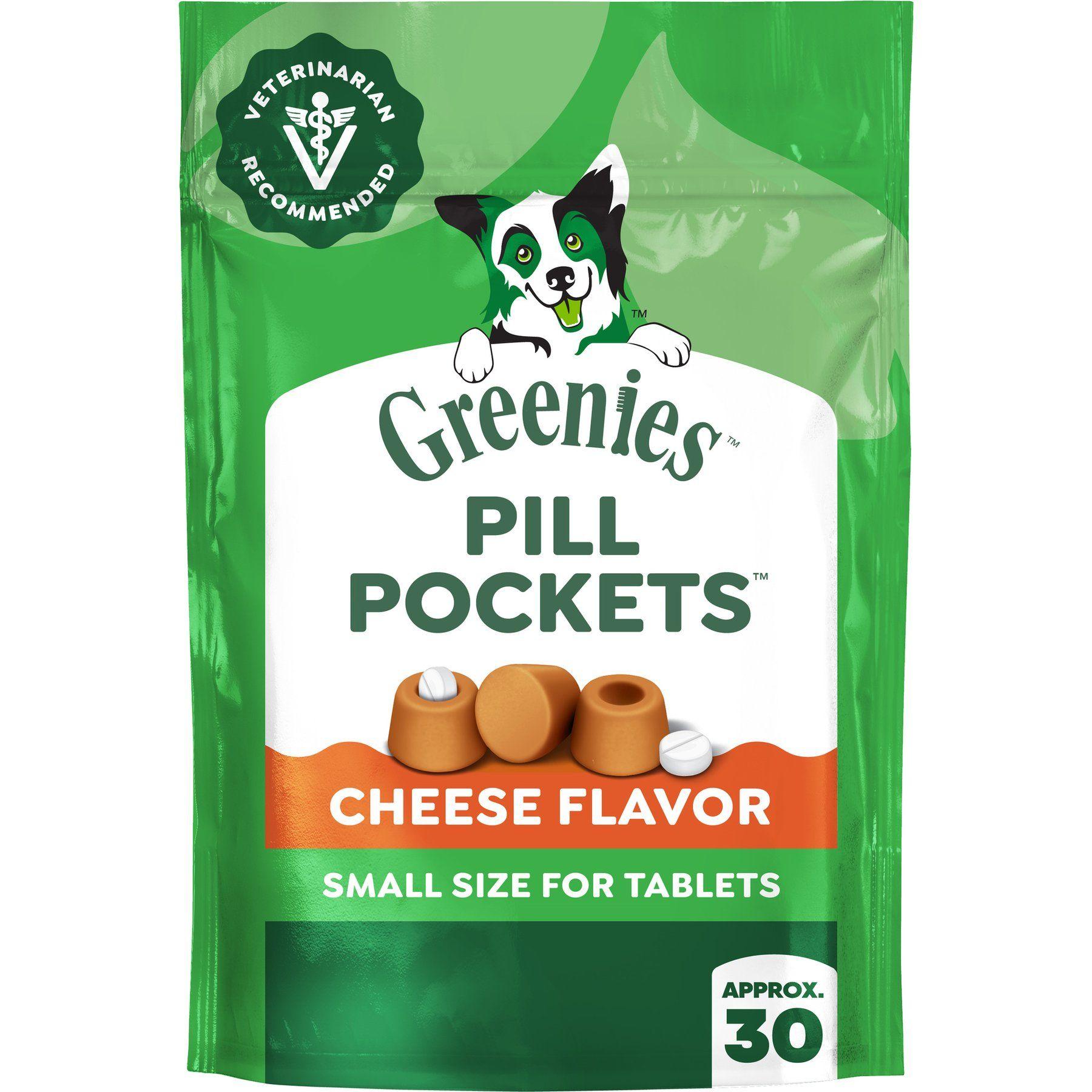
Cheese-flavored treat pouches sized for tablets, to help a dog take each prescribed dose.
Webvet may earn a commission when you click through to Chewy, at no extra cost to you.
The label's field study recorded these numbers among dogs aged 2 months to 15 years:
- Vomiting: 2 of 118 dogs on Simplicef, versus 4 of 98 on the comparison antibiotic
- Diarrhea: 1 of 118, versus 1 of 98
- Decreased appetite: 1 of 118, versus 1 of 98
- Increased water drinking: 0 of 118, versus 2 of 98
Veterinary Partner puts it the same way in percentages: about 2% of dogs vomit, 1% have diarrhea, and 1% eat less. VCA adds lethargy to the list and advises contacting your vet if any of these worsen, become severe, or continue.
Merck describes the cephalosporins as relatively nontoxic. It notes that nausea, vomiting, and diarrhea occasionally occur, and that antibiotic-related colitis from disrupted gut bacteria has been reported.

Some owners ask the vet about a probiotic during an antibiotic course. Purina Pro Plan Veterinary Diets FortiFlora is a probiotic powder made for dogs with diarrhea and gas. Check with your vet before adding it, and remember it does not treat the infection or replace a vet call for ongoing diarrhea.
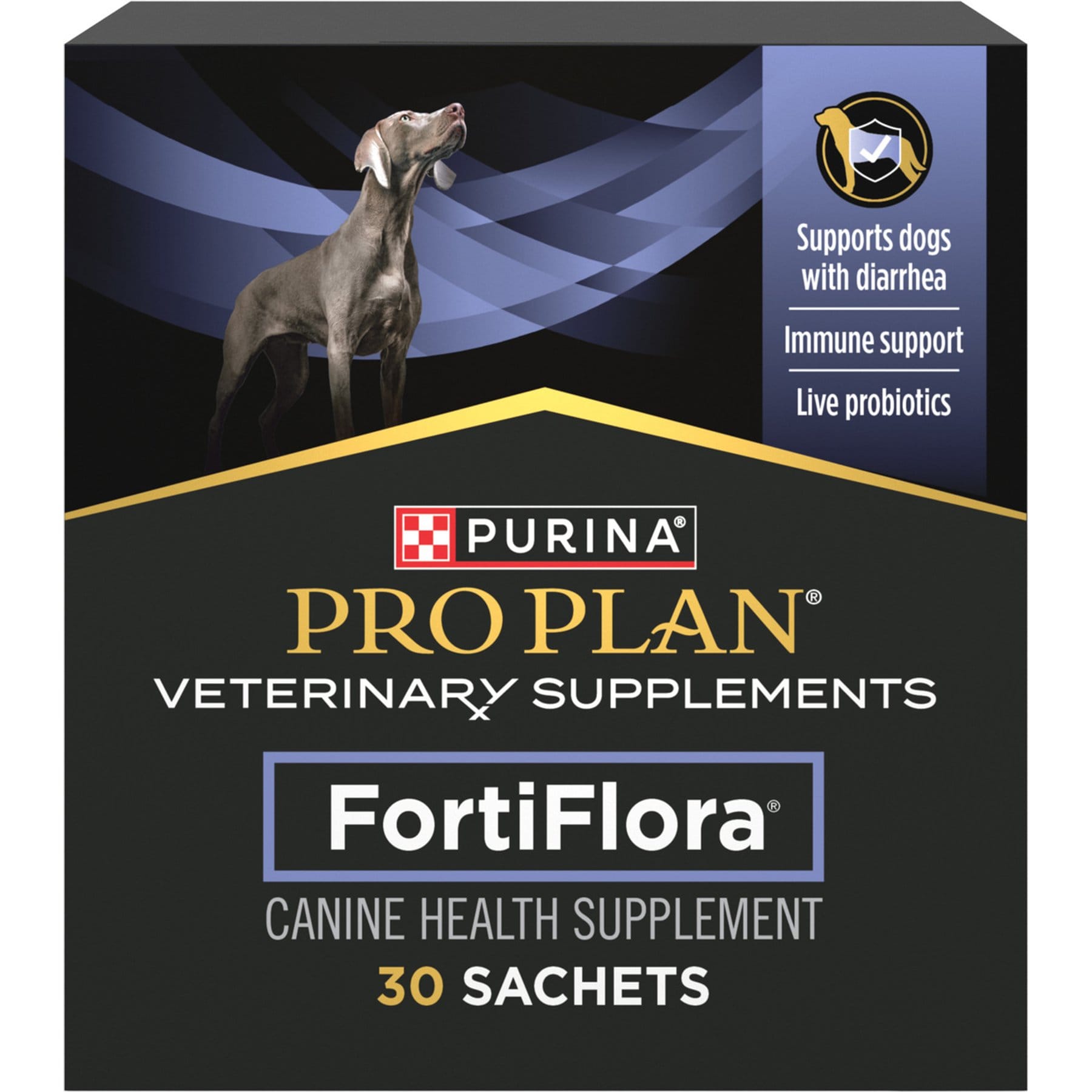
Probiotic powder for dogs with loose stool, worth asking your vet about during an antibiotic course.
Webvet may earn a commission when you click through to Chewy, at no extra cost to you.
Cefpodoxime can also change some test results without causing illness. Merck notes cephalosporins may raise liver enzymes (ALP, AST, ALT) and BUN on blood work, and may cause false-positive Coombs and urine glucose results. Tell anyone running tests that your dog is on cefpodoxime.
 Sponsored
Vet care that's always there
Unlimited video calls and messaging with licensed vets for less than a typical vet visit. One membership covers up to five pets.
Use code Pets60
Plans start at $12/month · covers up to 5 pets
- Licensed vets in most states
- Rx for 150+ conditions
- 4.7 on Trustpilot
When to stop cefpodoxime and call the vet now
VCA warns that serious reactions can occur without warning and, in rare cases, lead to death. If any of these signs develop, stop the drug and contact your vet immediately:
- Skin rash
- Trouble breathing
- Pale gums
- Facial swelling
An allergy can appear late. VCA explains that a dog may have no reaction to the first few doses and then develop a sensitivity, so keep watching for an allergic reaction for the whole course.

If your dog eats extra tablets, call your vet or an emergency clinic right away.
Other reasons to call the vet the same day:
- Vomiting that continues after you try giving the dose with food
- Diarrhea or poor appetite that worsens, becomes severe, or continues
- No improvement after 3-4 days, the label's limit for an acute infection without response
The label adds that high doses of cephalosporins can cause blood disorders, including low neutrophil counts, and that the drug should be stopped in such cases. Your vet decides this from blood work. Suspected reactions to Simplicef can be reported to Zoetis at 1-888-963-8471, as listed on the label.
Drug interactions and dogs that should not take cefpodoxime
The label rules out one group of dogs outright: those with a known allergy to cefpodoxime or to the beta-lactam antibiotics, which include penicillins and cephalosporins. A dog that reacted to amoxicillin for dogs and cats or to Clavamox for dogs and cats falls into that group.
VCA and the label add these cautions:
- Do not use: dogs allergic to cefpodoxime, other cephalosporins, or penicillins (VCA, label)
- Pregnant dogs: VCA says avoid unless necessary; the label says safety in breeding, pregnant, or nursing dogs has not been shown
- Use with caution: dogs with kidney disease, nursing dogs, and dogs with a history of seizures (VCA)
Veterinary Partner agrees on seizures. It says cefpodoxime may be a problem for animals with seizure disorders, and that another antibiotic may be the better pick if one will do the job. The seizure caution comes from human use; VCA notes it has not been tested in animals.
Known drug and test interactions are short:
- Antacids: drugs that lower stomach acid may reduce absorption and effectiveness, per Veterinary Partner
- Urine glucose dipsticks: may read falsely positive, which matters for diabetic dogs (VCA, Veterinary Partner)
- Urine ketone (nitroprusside) test: may also read falsely positive (Veterinary Partner)
- Coombs' test: may occasionally turn positive (label)
VCA advises telling your vet about every medication, vitamin, supplement, and herbal product before cefpodoxime starts. The label also notes it is not for human use, and that people handling the tablets should avoid direct contact with skin and mucous membranes.
How to give cefpodoxime, finish the course, and what it costs
Give cefpodoxime once a day, at about the same time, exactly as your vet prescribed. The label says it may be given with or without food.
If you miss a dose, VCA says to give it when you remember, unless the next dose is nearly due; never give two doses at once. These steps make each dose easier:
- Check the bottle for the strength and number of tablets your vet prescribed.
- Hide the tablet in a small piece of food, or place it gently in your dog's mouth.
- Ask your vet before you crush a tablet, since the label gives no crushing instructions.
- Give no antacid or new medicine alongside it unless your vet approves; among the few drug interactions, Veterinary Partner notes antacids can reduce absorption.
- Watch that your dog swallows it, and offer water after.
- Wash your hands after handling tablets, as the label advises people to avoid skin contact.
For a dog that spits tablets out, a Dee Pet Piller for Dogs & Cats, 1 count uses a plunger to deliver the tablet by mouth. If your vet has prescribed half tablets, a JorVet Pill Splitter cleanly cuts a scored tablet. Both are over-the-counter tools that do not replace the prescription or change the dose your vet set.

Finishing the course matters. Merck lists undertreatment, the wrong dose, and failure to recheck among the common reasons skin infections come back. Book a recheck, or call your vet, when:
- Your dog is not clearly better after 3-4 days
- Signs return after the course ends
- A culture result changes the antibiotic plan
- You want to stop early because your dog seems well
How long can a dog take cefpodoxime?
Up to 28 days on the label, which sets a dosage of once daily for 5-7 days or for 2-3 days beyond the end of clinical signs. Veterinary Partner notes skin infections are often treated for several weeks, so your vet decides how many days your dog needs and confirms the end at a recheck.
Cefpodoxime for dogs is not sold over the counter; federal law restricts it to use by or on the order of a licensed veterinarian, so you cannot buy it without a vet prescription. You can buy it from your vet's clinic or an online pharmacy such as Chewy Pharmacy, which fills it after your vet approves.
Price depends on brand-name Simplicef versus generic tablets, the strength, and the tablet count. When checked in November 2026, costs on Chewy were:
- Simplicef (Cefpodoxime Proxetil) Tablets for Dogs, 200-mg, 30 tablets: listed at $141.89 on Chewy when checked in November 2026
- Cefpodoxime Proxetil (Generic) Tablets, 100 mg, 30 tablets: listed at $24.90 on Chewy when checked in November 2026
- Cefpoderm 100 mg, 30 tablets: listed at $24.90 on Chewy when checked in November 2026
Each of these is a prescription product. Simplicef and Cefpoderm contain the same drug: the Cefpoderm label from Dechra, approved under ANADA # 200-543, lists the same skin infection use and dose range. Ask your vet whether a generic or Cefpoderm is acceptable for your dog, since the strength and tablet count must match the prescription.
Merck's skin-infection table shows how cefpodoxime differs from cephalexin: cephalexin for dogs is a first-line choice given every 12 hours, while cefpodoxime is second-line, given every 24 hours, usually after a culture. Merck notes daily-dosed drugs such as cefpodoxime make it easier to give every dose.
For storage, keep tablets at 20° to 25°C (68° to 77°F) in a tight, light-resistant container with the cap replaced after each use, per the label. VCA says any liquid suspension goes in the fridge and is discarded after 14 days. Check the expiration date printed on the bottle before each course.
Cefpodoxime for dogs questions
Frequently Asked Questions
Can you crush cefpodoxime for dogs?
The label gives no instructions for crushing a tablet, so ask your vet or pharmacist before you crush one. Some cefpodoxime tablets are scored for splitting in half; ask your vet or pharmacist whether yours can be split.
If you do crush a tablet on your vet's advice, avoid touching the powder, since the label warns that antibiotics can cause allergic reactions in sensitized people.
Should cefpodoxime be given with food?
Either works. Veterinary Partner says it can be given on a full or empty stomach with no change in effectiveness. If your dog's stomach is upset after a dose without food, VCA suggests pairing the next dose with a meal, and calling the vet if vomiting continues.
Is cefpodoxime better than cephalexin for dogs?
Not better overall; they suit different cases. Cephalexin is a first-line skin antibiotic with twice-daily dosing in Merck's table, while cefpodoxime has once-daily dosing and is kept for infections where culture shows it is needed. Your vet picks based on the bacteria involved and how easily your dog takes tablets.
Can you get cefpodoxime for dogs over the counter?
No. Cefpodoxime is a prescription drug in the U.S., and federal law limits its use to a licensed veterinarian or someone acting on a veterinarian's order. Any pharmacy, online or local, needs a valid prescription from your vet before it can dispense cefpodoxime.
How many days should a dog take cefpodoxime?
As many days as your vet prescribes, which on the label is usually 5-7 days, or 2-3 days beyond the end of signs, never more than 28 days. Give the whole course, and book a recheck if your dog is not better after 3-4 days or if signs come back.
Veterinarian · BVMS MRCVS
Dr. Pippa Elliott, BVMS, MRCVS, is a veterinarian with nearly 30 years of experience in companion animal practice. Dr. Elliott earned her Bachelor of Veterinary Medicine and Surgery from the University of Glasgow. She was also designated a Member of the Royal College of Veterinary Surgeons. Married with 2 grown-up kids, Dr. Elliott has a naughty Puggle named Poggle, 3 cats and a bearded dragon.


