Tabby Cats: Patterns, Colors, Personality and Care
Tabby cats are defined by a coat pattern, not a breed. Learn the five common tabby patterns, possible colors, personality facts, genetics, lifespan, and everyday care.


BVMS MRCVS
Medically reviewed by Dr. Pippa Elliott, BVMS MRCVS · Last reviewed

This article contains affiliate links. Webvet may earn a commission when you buy through them, at no extra cost to you.
Tabby cats are easy to recognize but often misunderstood. The stripes, spots, swirls, or bands that make a cat look "tabby" describe a coat pattern, not a breed. A tabby can be a mixed-breed domestic shorthair, a fluffy domestic longhair, or a pedigreed cat whose breed standard accepts tabby markings.
That distinction helps explain why tabbies do not share one size, temperament, or life expectancy. Coat pattern is only one part of a cat's identity. Breed ancestry, genetics, early socialization, health, home environment, and individual experience have much more to say about how a particular cat behaves.
This guide explains the five tabby patterns commonly discussed by cat owners, the difference between pattern and color, the famous forehead marking, and what scientists know about how the pattern develops. It also offers practical ways to identify and care for the tabby in front of you.
What Makes a Tabby Cat Special?
What is so special about tabby cats? Their shared feature is a flexible coat-pattern system that can produce narrow stripes, marbled whorls, spots, banded hairs, or color patches while appearing across many breeds and mixed-breed cats. The M-shaped forehead marking and facial lines are useful identification clues, but the practical next step is to describe pattern, color, and coat length separately instead of assuming a breed or personality.
A tabby coat has a visible pattern created by darker and lighter areas of hair. Depending on the cat, those markings may look like narrow stripes, broad marbled whorls, separate spots, fine bands on each hair, or a combination of tabby markings with orange or cream patches. Many tabbies also have facial lines, rings around the legs and tail, and a darker shape resembling the letter M on the forehead.
Tabby is one of the most widespread feline coat patterns. It appears in cats of many colors and ancestries, which is why two tabbies can look and act very different from each other. One may be a small brown mackerel domestic shorthair; another may be a large silver classic Maine Coon. They share a pattern category, not necessarily close breed ancestry or a predictable personality.
- 1Tabby describes a coat pattern, not a cat breed.
- 2The five commonly discussed patterns are mackerel, classic, spotted, ticked, and patched.
- 3Brown, gray, silver, orange, cream, and other colors can all occur with tabby markings.
- 4The forehead M is a normal part of the facial pattern, not proof of a specific breed.
- 5Coat pattern does not determine whether a cat is friendly, calm, vocal, or affectionate.
- 6In short: coat pattern not breed, and five tabby patterns do not imply five personality types.
Indoor tabbies benefit from a home that lets them climb, hide, scratch, and watch the room from a safe height. A stable, properly anchored multi-level cat tree can add vertical territory when floor space is limited.
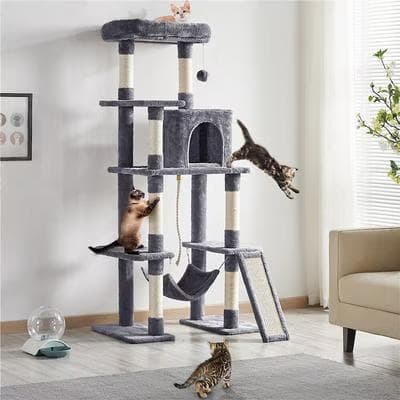
63-inch multi-level cat tree with plush perches, a condo, a hammock, sisal scratching posts, and a dangling toy. Dark gray.
Webvet may earn a commission when you click through to Chewy, at no extra cost to you.
The Five Tabby Patterns
People sometimes say there are four tabby patterns: mackerel, classic, spotted, and ticked. That is a useful basic classification. Many cat references and everyday discussions also include patched tabby as a fifth grouping because it creates a distinct appearance that owners often want help identifying. Patched describes tabby markings combined with patches of red, orange, or cream, rather than a completely separate stripe-producing mechanism.
The five tabby patterns can be separated with a simple comparison table rather than a breed guess. Use the identification cues on the torso first: narrow vertical stripes suggest mackerel, broad whorls suggest classic, separate marks suggest spotted, banded hairs suggest ticked, and orange or cream patches over tabby markings suggest patched. The comparison below covers all five patterns including patched tabby, and flags common look-alikes so owners can describe what they actually see.
The pattern is usually easiest to identify on the torso. Look at the sides of the body in good natural light, then check the legs, tail, shoulders, and face. Long hair, pale coloring, white spotting, and a broken pattern can make the answer less obvious.
| Pattern | Identification cues: what to look for | Common point of confusion |
|---|---|---|
| Mackerel | Narrow, mostly vertical stripes running from the spine down the sides | Broken stripes may look like rows of spots |
| Classic | Broad swirls, curves, and a target or bull's-eye shape on each side | Dark, dense markings can hide the center of the swirl |
| Spotted | Separate round, oval, or irregular spots across the body | Spots may actually be broken mackerel stripes |
| Ticked | Individual hairs with alternating light and dark bands, with few obvious torso stripes | Face, leg, and tail markings can still be visible |
| Patched | Tabby markings plus distinct orange, red, or cream patches | Often called a torbie when tortoiseshell color and tabby pattern occur together |
Mackerel tabby
Mackerel is the striped pattern many people picture first. A darker line often runs along the spine, with thinner lines extending down the sides like the bones of a fish. The legs and tail commonly show rings, and the chest may have curved necklaces. The stripes can be straight, gently curved, continuous, or broken.
A broken mackerel pattern can resemble a spotted coat. To tell them apart, look for several marks that still line up vertically or connect near the spine. If the markings are mostly independent spots without an obvious stripe arrangement, spotted is the more useful description.
Classic tabby
Classic tabbies have broader, more dramatic markings. Their sides often show rounded whorls or a target-like shape, and their shoulders may carry a dark mark sometimes described as a butterfly. In the United Kingdom, the same pattern may be called blotched tabby.
The classic pattern can look almost solid from a distance when the dark markings are wide. Step back, then view each side separately. The lighter background between the bands usually reveals the curve of the swirl.

Spotted tabby
Spotted tabbies have discrete marks on the torso. The spots can be small or large, round or elongated, evenly arranged or irregular. Some cats have clear spots on the sides but retain stripes on the legs, tail, and face. That combination is normal.

Because a spotted appearance can result when stripes break into shorter segments, the boundary between spotted and broken mackerel is not always crisp. You do not need a genetic test to use a practical visual label. Describe what you see, especially if you are sharing identifying details with a shelter, veterinarian, or pet sitter.
Ticked tabby
A ticked tabby may look nearly solid from across the room. Up close, each coat hair has alternating lighter and darker bands. This creates a finely speckled or salt-and-pepper effect across much of the body. More recognizable tabby lines may remain on the face, lower legs, and tail.

The Abyssinian is famous for a ticked coat, but a ticked-looking cat is not automatically an Abyssinian. Domestic cats and other breeds can have similar patterning. Appearance alone cannot establish a pedigree.
Patched tabby or torbie
A patched tabby has a tabby pattern plus areas of orange, red, or cream. When tabby markings appear within a tortoiseshell color arrangement, people often use the word "torbie," a blend of tortie and tabby. White areas may also be present.
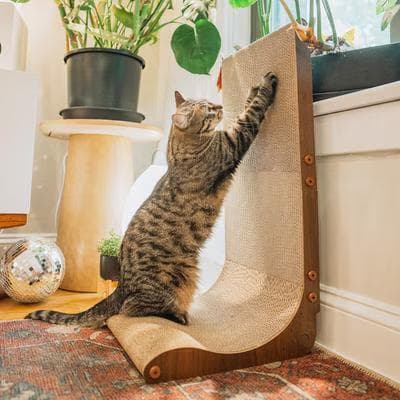
Curved cardboard wall scratcher with a wood frame that protects walls and gives cats a satisfying vertical scratch surface.
Webvet may earn a commission when you click through to Chewy, at no extra cost to you.
Most tortoiseshell and calico cats are female because the major orange-color gene is carried on the X chromosome, although uncommon genetic arrangements can produce males. That color genetics fact does not change the central point: patched refers to the visual combination of color patches and tabby pattern.

Tabby Colors and Coat Combinations
Pattern and color answer different questions. Pattern describes how markings are arranged. Color describes the pigment you see. A breed name describes ancestry documented to a recognized standard. Keeping those three categories separate makes identification much clearer.
Pattern, color, and breed answer three different questions, so the table keeps them apart. Pattern identifies the arrangement of markings, color identifies the pigment, and breed identifies documented ancestry. Start with the stripe, spot, swirl, or hair-banding arrangement, add the visible color, and use a breed name only when pedigree records support it. This sequence prevents appearance from being mistaken for ancestry.
Common tabby colors
A brown tabby usually has black or very dark brown markings over a warmer brown or gray-brown background. A silver tabby has dark markings over a pale, cool silver ground. A blue tabby has diluted gray markings. Orange, red, or ginger tabbies have deeper orange markings over a lighter orange or cream background. Cream tabbies are the paler diluted counterpart.

White spotting can cover part of any tabby pattern. A cat may have a tabby head and tail with a mostly white body, a white chest and paws, or only a small white locket. Colorpoint cats can also show tabby markings on the cooler parts of the body; these are often called lynx points.

Coat length and formal descriptions
Hair length changes how easy the markings are to read. Short hair tends to show crisp edges. Long hair can soften stripes and break up the outline of spots or swirls. A groomed coat viewed in daylight gives a more reliable impression than a single flash photograph.

The Cat Fanciers' Association uses precise color and pattern language in its breed color descriptions. Those formal terms are useful for pedigreed show cats, but a household cat's everyday description can stay straightforward: for example, "brown mackerel tabby with white" or "orange classic tabby."
Interactive play matters more to a cat than the label attached to the coat. A feather teaser wand can support short chase-and-pounce sessions, provided a person supervises and stores the toy after play so feathers and strings are not swallowed.
 $65 · no membership
Have a health question about your cat?
A licensed vet can assess your cat over video and prescribe online when it's appropriate.
 Talk to a vet
- Licensed vets
- All 50 states
- same-day Rx
Webvet may earn a commission if you book.
Is Tabby a Breed?
No. Tabby is a coat pattern, not a breed. It is found across the domestic cat population and in multiple pedigreed breeds. Calling a cat "a tabby" is perfectly normal shorthand, but it does not identify that cat's breed.
Search language can blur these categories. The phrase "tabby cat cats" is redundant, while "tabby cats long hair" describes coat length rather than ancestry. Tabby cats may have short or long hair, and the different types of tabby cats refer to mackerel, classic, spotted, ticked, or patched markings. None of those phrases proves a breed. Describe the pattern and coat length separately, then use pedigree documentation for breed identity.
What a tabby label can and cannot tell you
This matters when owners try to predict adult size, grooming needs, disease risk, or temperament from the word tabby. Those traits can vary widely. A shorthaired mixed-breed tabby may need little coat maintenance, while a longhaired tabby may need frequent combing. A pedigreed Bengal, Maine Coon, American Shorthair, or Oriental Shorthair with tabby markings still has the characteristics and care considerations associated with that breed and individual.
Visual resemblance is not proof of ancestry. Ear shape, facial structure, body size, coat length, and pattern can suggest possibilities, but many unrelated cats share those features. A pedigree documents breed. A DNA test may estimate ancestry or identify genetic variants, but results depend on the company's reference data and should not be treated as the same thing as a registered pedigree.
For an adopted cat of unknown background, the most useful description records observable facts:
- Approximate age and weight
- Hair length and coat condition
- Main color and tabby pattern
- White patches or other distinctive markings
- Eye color
- Sex and reproductive status
- Microchip number
- Any mobility, hearing, vision, or medical needs
Those details help with veterinary records and lost-pet identification without assigning a breed that cannot be confirmed.
Let care needs, not a guessed breed, guide the home
Is a tabby cat a good house cat? A tabby can be a good house cat when the individual has suitable resources, respectful handling, safe introductions, and care matched to age and health. Coat pattern does not decide indoor compatibility. The practical next step is to assess the cat's actual activity, social comfort, grooming needs, litter-box habits, and response to people and other animals.
An appearance label should never replace observation. Choose grooming tools for the cat's actual coat length and texture. Choose resting surfaces and climbing routes for current mobility. Adjust food portions to body condition and veterinary advice rather than a presumed breed size. Offer play styles the individual cat seeks out, whether that is chasing, batting, climbing, food puzzles, or quiet object play.
The same rule applies to introductions and handling. A cat who looks like a breed known for sociability may still need a slow transition, while a mixed-breed tabby may confidently greet visitors. Record what helps the cat feel safe and share those details with pet sitters and veterinary staff. That practical behavioral history predicts a smoother experience better than an unverified ancestry label.
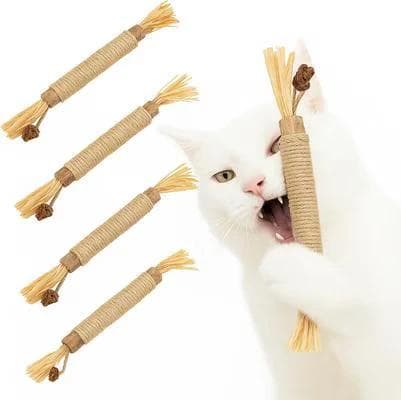
Silvervine and catnip dental chew sticks that give cats a safe, satisfying outlet for biting and chewing while helping scrape away plaque.
Webvet may earn a commission when you click through to Chewy, at no extra cost to you.
How Tabby Genetics Shape the Coat
The tabby pattern begins developing before a kitten grows visible fur. Researchers studying fetal cat skin found that alternating areas of gene activity foreshadow the later light and dark markings. Work published in Nature Communications identified an important role for DKK4 in establishing this early pattern and connected variation in the gene to different appearances.
Other genes help determine how that underlying pattern is displayed. Taqpep variants are associated with mackerel or blotched arrangements, while agouti signaling protein helps control whether individual hairs alternate between lighter and darker pigment bands. These processes act at different stages, so neither gene alone explains the whole coat. Separate color genes, dilution, white spotting, and hair length then alter the final appearance.
This is why pattern, color, and breed should not be collapsed into one label. A cat can inherit the biological instructions for tabby patterning while other genes make the markings subtle, cover large areas with white, or combine them with orange patches.
The darker lines above a tabby's eyes often meet in an M-shaped forehead marking. It is a normal feature of facial tabby markings. Stories from different cultures give the M symbolic meanings, but it is not a breed stamp, a sex marker, or evidence that every cat with the mark has the same ancestry.
Genetics can describe how coat markings form, but it cannot turn the pattern into a personality test. Genes that affect pigment do not provide a simple forecast of sociability, handling tolerance, activity, or affection.
Can a tabby pattern change over time?
The underlying pattern does not normally switch from mackerel to classic or from spotted to ticked as a cat ages. However, its visibility can change. Kitten coats may be softer or less sharply defined than adult coats. Seasonal shedding, a longer winter coat, sun exposure, and changes in hair texture can make the contrast look stronger or weaker. Lighting and camera processing also affect whether pale stripes appear in a photograph.
Normal aging may bring scattered white hairs or a gradual loss of color intensity. That is different from sudden patchiness, broken hair, bald areas, inflamed skin, heavy dandruff, or a coat that becomes greasy and unkempt. Those changes can reflect parasites, allergies, infection, pain, hormonal disease, nutrition problems, overgrooming, or difficulty grooming and should be discussed with a veterinarian.

Do not apply human hair dye, bleach, essential oils, or cosmetic coloring to make markings more visible. Cats groom chemicals from their coats, and products designed for people may irritate the skin or be toxic when swallowed. Routine brushing, good nutrition, parasite prevention, and medical care are the safe ways to support coat condition.
How to document coat changes
If you are comparing a cat's pattern over time, use photographs taken in similar natural light and from the same angle. This is particularly useful for recording the edges of a skin lesion or an area of hair loss for a veterinary appointment. Photos can show a trend, but they cannot identify the cause on their own.
Do Tabby Cats Have a Distinct Personality?
No single tabby personality applies to all tabby cats. Claims that tabbies are universally friendly, lazy, mischievous, bold, or cuddly are stereotypes. A coat pattern spans too many breeds and family lines to support that kind of prediction.
Pattern is not personality. Stripes, spots, or whorls cannot establish whether a cat will be affectionate, bold, quiet, vocal, tolerant of handling, or comfortable with other animals. Individual behavior must be assessed from body language, inherited temperament, socialization, learning history, current health, relationships, and the present environment. Use observed behavior rather than coat stereotypes to guide interaction.
Read the individual cat
A cat's behavior reflects many influences, including inherited temperament, prenatal and early-life conditions, socialization, learning history, current health, resources in the home, and relationships with people and other animals. A review of research on feline personality notes both genetic and environmental contributions and the challenges of measuring stable traits across contexts (Animals review).
Observe the individual instead of expecting the coat to supply an answer. A cat who approaches with a raised tail, relaxed ears, soft eyes, and loose posture may welcome interaction. A cat who crouches, freezes, lashes the tail, flattens the ears, or turns away is asking for space. Our guide to cat body language explains these signals in more detail.
Do tabby cats like to be held?
Some do and some do not. Handling preference is individual and may change with context. Even an affectionate cat may dislike being restrained, lifted suddenly, or held near a noisy visitor. Let the cat initiate contact, support the chest and hindquarters, and put them down before they struggle.
Build positive associations with very short holds followed by a reward if the cat remains relaxed. Never force repeated handling to prove that a cat should enjoy it. A sudden new aversion to being touched or picked up can reflect pain, so arrange a veterinary exam if the change persists or comes with hiding, reduced appetite, limping, or other signs.

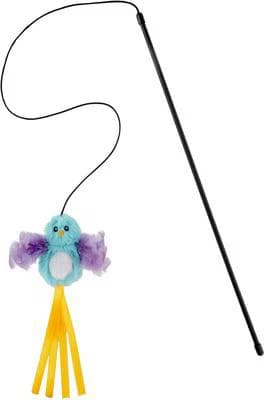
Teaser wand with a feathered bird charm and catnip to trigger your cat's chase-and-pounce instinct.
Webvet may earn a commission when you click through to Chewy, at no extra cost to you.
Tabby Personality, Lifespan, and Care
A tabby's expected lifespan is not set by the stripes. Breed background, inherited disease risks, indoor or outdoor exposure, nutrition, weight, dental health, preventive veterinary care, and chance all matter. Many well-cared-for cats live into their teens, and some live longer, but a population estimate cannot predict one individual's lifespan.
Rather than assigning an expiration date from coat pattern, focus on the health information in front of you. Schedule routine veterinary visits at intervals appropriate for the cat's age and medical history. Keep vaccines, parasite prevention, and dental care aligned with your veterinarian's recommendations. Seek care promptly for changes in appetite, thirst, urination, breathing, mobility, grooming, or social behavior.
Planning care for an individual cat therefore starts with the cat's actual health, history, and environment rather than the tabby label.
Everyday care for a tabby cat
- Feed for body condition. Choose a complete and balanced food appropriate for the cat's life stage. Measure portions, monitor weight, and ask the veterinary team to show you how to assess body condition. Ribs should be palpable under a light fat covering, and the waist should be visible from above. Individual needs vary, so package directions are a starting point rather than a guarantee.
- Support hydration. Provide clean water in more than one quiet location. Some cats prefer wide bowls that do not press on the whiskers, and some drink more from a fountain. Wet food can add dietary moisture when it suits the cat's nutritional plan.
- Make litter boxes easy to use. A common starting point is one box per cat plus one extra, distributed through the home rather than lined up in one place. Scoop at least daily. Unscented litter and large, uncovered boxes suit many cats, but preference matters. A sudden litter-box change warrants veterinary attention before it is treated as a behavior problem.
- Protect the scratching routine. Offer sturdy horizontal and vertical scratching surfaces near sleeping areas and social spaces. Scratching stretches muscles, maintains claws, and leaves visual and scent signals. Reward use of the preferred surface and protect furniture during training; punishment can increase stress without teaching a good alternative.
- Provide active play. Two or more brief play sessions can be more inviting than one long session. Move wand toys like prey, allow stalking and capture, and finish with a small food reward when appropriate. Rotate toys to preserve novelty. See these cat exercise ideas for ways to adjust play to age and ability.
- Groom according to the coat. Shorthaired tabbies may need only occasional brushing, while longhaired cats often need more frequent combing to prevent mats. Grooming is also a chance to notice fleas, skin changes, lumps, tenderness, or uneven hair. Do not assume thinning fur is a normal pattern change. Hair loss in cats can have medical or behavioral causes that deserve evaluation.

- Keep enrichment safe. Climbing furniture should be stable and ideally anchored according to the manufacturer's instructions. Put string, ribbon, feathers, rubber bands, and small pieces away after supervised play. Silvervine or catnip toys can interest some cats, but not every cat responds. Remove a chew toy if pieces loosen, and do not treat it as a replacement for tooth brushing or veterinary dental care.

304 food-grade stainless steel pet water fountain, 101 oz. The circulating, filtered water encourages cats to drink more, which supports urinary tract and kidney health.
Webvet may earn a commission when you click through to Chewy, at no extra cost to you.
Care changes with age
Kittens need safe socialization, frequent age-appropriate meals, play, and a veterinary plan for vaccines, parasite control, spay or neuter timing, and microchipping. Adult cats benefit from weight monitoring and consistent preventive care even when they appear healthy. Cats are skilled at hiding illness, so subtle changes deserve attention.
Senior cats may need easier access to favorite resources. Low-entry litter boxes, nonslip rugs, steps to a preferred perch, warm resting places, and food and water on the main living level can reduce unnecessary effort. Reduced jumping is not automatically "just old age." Arthritis, vision changes, dental disease, kidney disease, hyperthyroidism, and other conditions can alter behavior and mobility.
Helping a tabby settle into a new home
Give a newly adopted cat a quiet starting room with food, water, a litter box, a hiding place, a bed, a scratcher, and a perch. Keep food and water away from the litter box. Let the cat choose whether to hide, explore, or approach rather than pulling them from a safe spot. Some cats investigate within hours; others need days or longer.
Use predictable meal and play times to make the environment easier to understand. Sit quietly, offer a hand at the cat's level, and reward voluntary approaches. If the cat lives with other pets, begin with scent exchange and controlled separation. Gradual introductions are usually safer than placing unfamiliar animals together and hoping they resolve the situation.
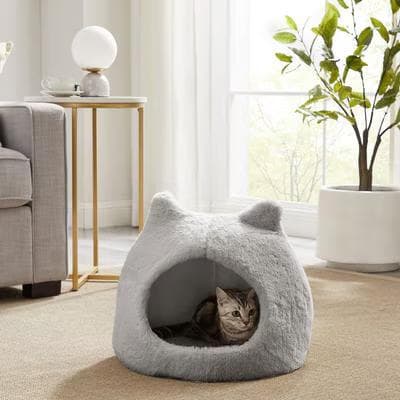
Covered, igloo-style cat bed in soft plush with a water-resistant bottom, giving cats a cozy enclosed spot to curl up. Grey.
Webvet may earn a commission when you click through to Chewy, at no extra cost to you.
Health and identification checks
Track eating, drinking, urination, bowel movements, and medication during the transition. Stress can temporarily change behavior, but not eating can become dangerous for cats. Contact a veterinarian promptly if a cat refuses food, strains in the litter box, repeatedly vomits, has trouble breathing, or seems weak. A baseline veterinary visit also helps establish weight, dental status, parasite needs, and an age-appropriate preventive plan.
For identification, confirm that the microchip registration contains current contact information and use a breakaway collar with an ID tag when appropriate. Take clear photographs of the cat's face, both sides, and unique tabby markings. Those practical records are much more useful in an emergency than a guessed breed label.
How to Identify a Tabby Cat
Start with a whole-body view in daylight. Photographs taken from both sides, above, and straight on help because the pattern may be clearer in one area than another.
Useful pictures of tabby cats show the torso, forehead, legs, and tail in even natural light. Comparison images of tabby cats are most informative when the cat is standing side-on and the coat is not hidden by shadow or heavy editing. Take photos of tabby cats from both sides because markings can differ in clarity. Add a close image of the forehead M and tail rings, but use the body pattern for the main classification.
- Find repeated markings. Look for stripes, swirls, spots, or banded hairs on the torso.
- Check the face. Tabby facial lines often run from the eyes and meet in an M-like forehead shape.

- Inspect the legs and tail. Rings can remain visible even when the body is ticked, pale, longhaired, or mostly white.
- Name the pattern. Choose mackerel, classic, spotted, ticked, or patched based on the dominant appearance.
- Name the color separately. Brown, silver, blue, orange, cream, and white are color descriptions, not pattern names.
- Describe coat length and white areas. Add shorthaired or longhaired and note the placement of white.
- Leave breed unknown unless documented. Pattern recognition does not establish pedigree.
Do not worry if one label is imperfect. Natural patterns vary continuously, and a broken stripe may look like a spot. For a lost-pet notice, clear photos, microchip information, location, and distinctive features matter more than deciding between two close pattern terms.
Orange tabbies and hidden tabby markings
Most orange cats visibly show tabby markings because of how orange pigment is expressed in the hair. The contrast may be bold or faint, but facial lines and rings often reveal the pattern. That does not make every orange cat the same tabby subtype.

Some cats that look solid can show faint "ghost" markings, especially as kittens or under bright light. These subtle lines do not change the cat's breed or care needs. They are simply another example of how pigment and pattern expression interact.
Frequently Asked Questions
What is so special about tabby cats?
What is so special about tabby cats is the variety produced by one broad coat-pattern family: stripes, swirls, spots, banded hairs, and patched color combinations can appear across many breeds and mixed-breed cats. The most useful approach is to separate appearance from ancestry and individual behavior. As a practical next step, record the cat's pattern, color, coat length, and unique markings separately.
Is a tabby cat a good house cat?
Whether a tabby cat is a good house cat depends on the individual cat and the home, not on stripes or spots. A good home provides climbing space, scratchers, active play, clean litter boxes, quiet resting places, veterinary care, and handling the cat accepts. The practical next step is to watch body language and adjust resources, introductions, and routines to that cat's needs.
What are the 4 types of tabby cats?
The four types of tabby cats usually mean mackerel, classic, spotted, and ticked. Most complete descriptions also include patched tabby as a commonly discussed fifth appearance, especially when tortoiseshell colors form a torbie coat. The practical next step is to inspect the torso in daylight, then compare stripes, whorls, separate spots, banded hairs, or orange and cream patches in the table above.
Do tabby cats like to be held?
Whether tabby cats like to be held varies by individual and situation. Coat pattern does not predict whether a cat likes being held. Support the chest and hindquarters, keep the first hold brief, and release the cat before struggling. The practical next step is to watch ears, tail, muscle tension, and attempts to leave; a sudden loss of tolerance can justify a veterinary pain check.
What is the lifespan of a tabby cat?
The lifespan of a tabby cat is not set by the pattern because tabbies include many breeds and mixed-breed cats. Lifespan depends on genetics, indoor or outdoor exposure, body condition, dental health, preventive care, and diagnosed disease. Many cats live into their teens, but no chart predicts one outcome. The practical next step is routine veterinary care and prompt attention to appetite, thirst, mobility, or behavior changes.
Are all orange cats tabbies?
Nearly all orange cats are tabbies in the sense that an orange coat generally displays visible tabby markings, although contrast can be faint. Look for facial lines, an M-shaped forehead mark, leg or tail rings, and changes in shade across the torso. Orange names the pigment color, while mackerel, classic, spotted, or ticked names the arrangement. Good daylight photographs make subtle markings easier to compare.
Can a tabby cat be a purebred cat?
A tabby cat can be a purebred cat because many registries accept a purebred tabby pattern within particular breeds. The relevant breed standard specifies which colors and patterns are allowed. However, a tabby coat alone cannot prove ancestry, since the same markings occur widely in mixed-breed cats. Use pedigree registration to establish purebred status and use visual pattern terms only to describe appearance.
The Bottom Line
The best way to understand a tabby is to separate pattern from color, breed, and personality. Identify the markings you can see, use breed terms only when ancestry is documented, and learn the individual cat's preferences through calm observation. Good nutrition, preventive veterinary care, safe enrichment, and a responsive home matter far more to a tabby's wellbeing than the shape of the stripes.
$65 · no membershipHave a health question about your cat?
A licensed vet can assess your cat over video and prescribe online when it's appropriate.
Talk to a vet- Licensed vets
- All 50 states
- same-day Rx
Webvet may earn a commission if you book.

Wendy Toth is an entrepreneurial writer, editor, and mom of two humans, two dogs and one cat. She’s currently Content Director here at PetFul. For the last 15 years she has held positions at Parents Magazine, NBC, PetSmart, and GreatPetCare, where she was co-founder. Her writing has appeared in many national outlets including Pet Lab Co., Retail Me Not, Ask Men, Wild Society Nutrition, and The New York Times. Because she loves her work so much, she’s obsessed with helping others find career fulfillment, and covers it regularly at PowerSuiting.
Veterinarian · BVMS MRCVS
Dr. Pippa Elliott, BVMS, MRCVS, is a veterinarian with nearly 30 years of experience in companion animal practice. Dr. Elliott earned her Bachelor of Veterinary Medicine and Surgery from the University of Glasgow. She was also designated a Member of the Royal College of Veterinary Surgeons. Married with 2 grown-up kids, Dr. Elliott has a naughty Puggle named Poggle, 3 cats and a bearded dragon.


