JustFoodForDogs for Senior Dogs: Picking the Right Formula
A veterinarian explains how nutritional needs shift in older dogs and which JustFoodForDogs recipes fit each senior need, from Joint & Skin Support to gentle options for touchy stomachs and vet-directed diets.

BVMS MRCVS

This article contains affiliate links. Webvet may earn a commission when you buy through them, at no extra cost to you.
This article contains affiliate links. Webvet may earn a commission when you buy through them, at no extra cost to you.
There is something quietly lovely about a graying muzzle. The puppy zoomies have mellowed into a slower, more deliberate trot, and the dog who once inhaled anything edible now lifts his head from the bowl and considers. Those changes creep in gradually, and the food in that bowl should evolve just as gradually to keep pace. If you are weighing JustFoodForDogs for senior dogs, the good news is that the brand's fresh, gently cooked recipes map rather neatly onto the needs that matter most in later life: quality protein for muscle, joint-supporting nutrients, soft textures, and flavors that tempt a fading appetite.
In this guide, I will walk through why an older dog's nutritional needs shift, when to rethink the feeding plan, and which JustFoodForDogs recipes fit which senior needs.
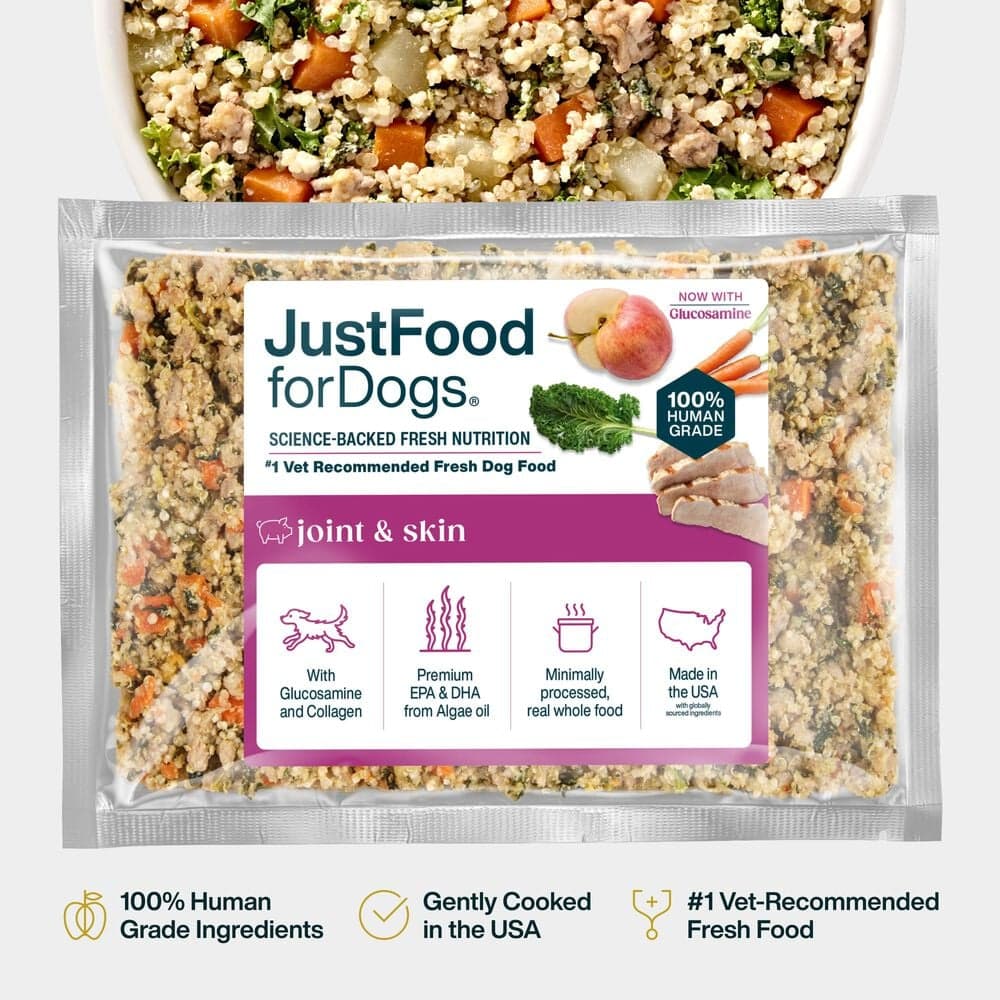
Match the recipe to your senior dog’s most pressing need, as this guide walks through.
- Single-protein pork recipe with glucosamine
- EPA and DHA from marine microalgae oil
- 32 kcal per ounce, adult maintenance
Webvet may earn a commission when you click through to JustFoodForDogs, at no extra cost to you.
- 1Senior dogs generally need fewer calories but more concentrated nutrition, especially high-quality protein to help preserve lean muscle.
- 2JustFoodForDogs Joint & Skin Support is the brand's most senior-relevant recipe, formulated with glucosamine and omega-3s to help support joint health. Forbes Vetted named it "Best for Joint Health" in its best senior dog food rankings.
- 3Lighter recipes such as Healthy Weight suit older dogs who need to hold a lean body condition.
- 4Dogs with diagnosed conditions such as kidney or liver disease should be fed vet recommended diets for senior dogs with those conditions, such as the JustFoodForDogs Vet Support line, under veterinary guidance.

How Nutritional Needs Change as Dogs Age
Let me start with the most important point I make to owners in the consulting room: "senior" is not a disease. An older dog is not a sick dog. But the machinery under the fur does change, and nutrition is one of the few levers we can adjust every single day.
Here is what shifts as the years accumulate:
Protein quality matters more, not less. An old myth held that senior dogs should eat less protein to "spare" their organs. Modern thinking has moved on. Healthy older dogs actually tend to need more high-quality, highly digestible protein than young adults, because aging bodies become less efficient at maintaining lean muscle. Sarcopenia, the gradual loss of muscle mass with age, is one of the biggest threats to an older dog's mobility and resilience. Quality protein, fed consistently, helps support the lean muscle that keeps a senior dog standing, walking, and climbing stairs.
Calorie needs drop while nutrient needs hold steady. Metabolism slows and activity declines, so most seniors need fewer calories. Feed the same portions of the same rich food and the weight creeps on, and extra weight is genuinely unkind to aging joints. The trick is a food that trims calories without trimming nutrition.
Joints appreciate targeted nutrients. Nutrients such as glucosamine and the omega-3 fatty acids EPA and DHA are widely included in senior-focused diets to help support joint health and comfortable movement.
Appetite and senses fade. Smell and taste dull with age, and some seniors become genuinely picky. Aroma, moisture, and palatability move from nice-to-have to essential.
Hydration and texture count. Older dogs often drink less than they should, and worn or missing teeth can make hard kibble a chore. Soft, moisture-rich food helps on both fronts.
These are not my observations alone. The American Animal Hospital Association's 2023 AAHA Senior Care Guidelines for Dogs and Cats emphasize individualized nutritional assessment as a core part of senior care, including body condition and muscle condition scoring at every senior visit. Nutrition is not an afterthought in senior medicine. It is part of the treatment room conversation.
When to Consider a Senior-Focused Feeding Plan
Dogs do not age on a single schedule. Size sets the tempo:
- Small breeds (under about 20 pounds) are usually considered senior around 10 to 12 years.
- Medium breeds reach senior status around 8 to 10 years.
- Large breeds are seniors by roughly 7 to 8 years.
- Giant breeds such as Great Danes may be seniors as early as 6.
Those ages are guideposts, not switches. I care far less about the birthday than about what the dog in front of me is doing. Signs that it is time for a feeding-plan conversation with your veterinarian include:
- Stiffness after rest, hesitation at stairs, or reluctance to jump into the car
- Gradual weight gain despite unchanged portions, or unexplained weight loss
- A dull coat, flaky skin, or slower wound healing
- Picking at meals the dog once finished with enthusiasm
- Softer stools, more frequent digestive upsets, or increased gassiness
- Drinking or urinating noticeably more, which always warrants a vet visit before any diet change
Most of these signs do not mean a dog needs a prescription diet. They mean the everyday food should start working harder, which is exactly where recipe matching comes in.
Match the recipe to your senior dog’s most pressing need, as this guide walks through.
- Single-protein pork recipe with glucosamine
- EPA and DHA from marine microalgae oil
- 32 kcal per ounce, adult maintenance
Webvet may earn a commission when you click through to JustFoodForDogs, at no extra cost to you.
Matching JustFoodForDogs Recipes to Senior Needs
JustFoodForDogs does not sell a single recipe stamped "senior." Instead, the brand's lineup of fresh, whole-food recipes lets you pick the formula that addresses your particular dog's most pressing need. Here is how I would map them, based on the recipes and published nutrient profiles as of June 2026.
Joint Comfort: Joint & Skin Support
For the stiff-but-happy senior, the standout is the Joint & Skin Support fresh frozen recipe. This is the formula I would reach for first for most aging dogs, and it carries some independent credibility: Forbes Vetted named it "Best for Joint Health" in its rankings of the best senior dog food.
The recipe is built around ground pork, quinoa, kale, carrots, and Fuji apples, and it is formulated with glucosamine and omega-3s to help support joint health. The glucosamine comes in at 500 mg/kg via glucosamine sulfate in the nutrient blend, and the omega-3 fatty acids EPA and DHA (minimum 0.06%) come from an omega marine microalgae oil plus flaxseed. The same fatty acids that help support joint comfort also help support skin and coat health, which is a welcome two-for-one in dogs whose coats have gone dull with age.
The guaranteed analysis shows a minimum of 9% crude protein and 2.5% crude fat in a moist food (78% maximum moisture), with a moderate 32 kcal per ounce. As of June 2026, the small box (7.8 pounds) lists at $97.99, with introductory promotions frequently available.
A quick vet note: nutrition like this recipe works best as the daily foundation of a broader joint-care plan. If your dog has been diagnosed with osteoarthritis, pair any diet change with veterinary guidance and a proper mobility plan so its joint and skin support can do its part alongside the rest of the care your vet recommends.
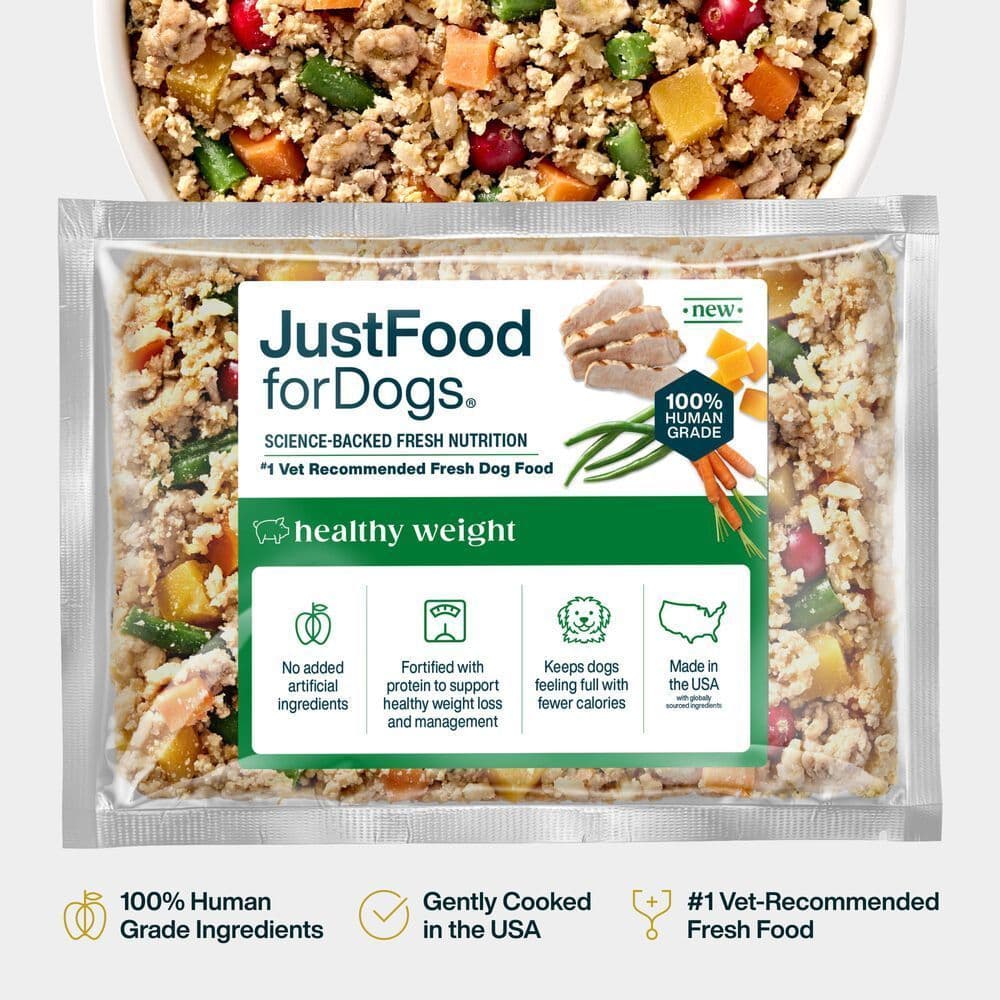
Match the recipe to your senior dog’s most pressing need, as this guide walks through.
- Explore the everyday Healthy Weight formula
- Fresh Frozen meals with portion guidance
- Compare the recipe with your vet’s feeding plan
Veterinary Metabolic Support is a separate diet.
Webvet may earn a commission when you click through to JustFoodForDogs, at no extra cost to you.
Lean Body Condition: Lighter Recipes
Extra pounds are the enemy of aging joints, and I would rather see an owner trim a senior's waistline through smart food choices than through hungry-dog portion cuts alone.

The Healthy Weight recipe is the natural pick here. It is formulated to deliver a satisfying volume of food at a lower calorie density, so a dieting senior can eat a full bowl while total calories quietly come down, which makes it a sensible everyday choice for dogs that need to watch their weight.
For seniors who have developed sensitivities to common proteins, the Venison & Squash recipe offers a novel protein alternative in the same fresh frozen format.
Touchy Digestion: Sensitive Stomach and Gentle Options
Some older guts simply become less forgiving. For those dogs, the Sensitive Stomach recipe is the gentle option in the lineup: a limited-ingredient formula the brand positions for dogs with delicate systems, and a practical everyday choice for wobbly-tummy weeks.
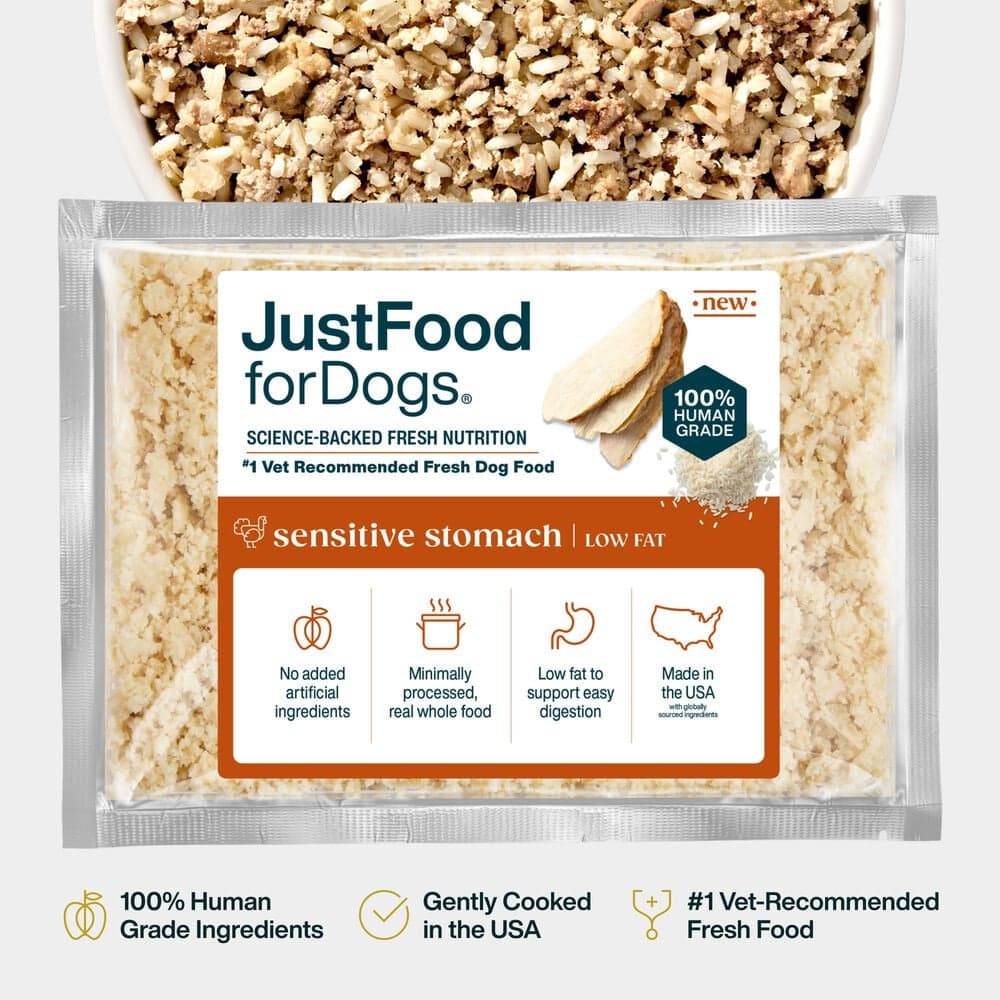
Match the recipe to your senior dog’s most pressing need, as this guide walks through.
- Turkey with white and brown rice
- Gently cooked Fresh Frozen meals
- View the full recipe and feeding guidance
A fresh-food option to discuss with your veterinarian.
Webvet may earn a commission when you click through to JustFoodForDogs, at no extra cost to you.

A practical word: recurring digestive upset in a senior dog deserves a diagnosis before a diet. Gentle food helps support comfortable digestion, but it should follow a vet conversation, not replace one.
Diagnosed Conditions: The Vet Support Line
When a senior dog has an actual diagnosis, the everyday recipes step aside. JustFoodForDogs maintains a dedicated Vet Support line of fresh, whole-food formulas designed to be fed under veterinary direction. These are vet recommended diets for senior dogs with kidney disease (Renal Support Low Protein), liver disease (Hepatic Support Low Fat), weight and metabolic concerns (Metabolic Support), and recovery or high-calorie needs (Critical Care Support), with shelf-stable Pantry Fresh versions of the renal and hepatic formulas as well. If your dog has a diagnosed condition, bring these up with your veterinarian rather than self-selecting; the right therapeutic diet depends on bloodwork, staging, and the individual dog.
JustFoodForDogs Recipes by Senior Need
| Senior Need | JFFD Recipe | Why It Fits |
|---|---|---|
| Joint comfort and mobility | Joint & Skin Support (Fresh Frozen) | Formulated with glucosamine (500 mg/kg) and omega-3s (EPA and DHA) to help support joint health; Forbes Vetted's "Best for Joint Health" pick |
| Lean body condition | Healthy Weight (Fresh Frozen) | Lightest everyday recipe, formulated for a satisfying volume with fewer calories, with naturally occurring omega-3s |
| Protein sensitivities | Venison & Squash (Fresh Frozen) | Novel protein option for seniors who no longer tolerate common proteins |
| Touchy digestion | Sensitive Stomach | Limited-ingredient recipe the brand positions for dogs with delicate systems |
| Dull coat and skin | Joint & Skin Support (Fresh Frozen) | The same omega-3 fatty acids help support skin and coat health |
| Diagnosed kidney, liver, or metabolic conditions | Vet Support line (Renal, Hepatic, Metabolic, Critical Care) | Vet recommended diets for senior dogs with diagnosed conditions, fed under veterinary guidance |
Palatability: The Underrated Senior Superpower
If I could hand every owner of a thin, picky old dog one tool, it would not be a supplement. It would be a food the dog actually wants to eat.
Appetite is where gently cooked fresh food earns its keep with seniors. Cooking releases aroma, and aroma is the doorway to a dulled sense of smell. Fresh recipes are also soft by nature, which matters enormously to a dog with worn teeth or a tender mouth that has started dropping kibble. And at roughly 70 percent or more moisture, depending on the recipe, fresh food delivers meaningful hydration with every meal, a quiet bonus for older dogs who do not drink as much as they should.
Two tricks from my practice years for fading appetites: warm the food slightly (body temperature, never hot) to amplify the aroma, and feed smaller meals more often rather than two large ones. A senior who walks away from a heaped bowl will often happily finish a modest one. For a fuller picture of how fresh diets work and what to look for, Petful's fresh dog food guide is a sensible companion read.
If meals need an extra nudge, JustFoodForDogs also makes toppers and treats that fit the senior theme, including a JustFresh Boost meal topper for hip and joint support and single-ingredient venison treats. Treats should stay under 10% of daily calories, seniors included.
Transitioning an Older Dog to a New Food
Older digestive systems renovate slowly, so the move to any new food should be unhurried. My standard senior schedule stretches the usual week-long transition closer to ten days:
- Days 1 to 3: 25% new food, 75% current food
- Days 4 to 6: 50/50
- Days 7 to 9: 75% new, 25% current
- Day 10 onward: 100% new food
Watch the stool, the appetite, and the energy. A soft stool for a day is no emergency; vomiting, refusal to eat, or lethargy means pause and call your vet.
This is also the moment to recheck portions. JustFoodForDogs' feeding calculator gives a starting point, but your dog's waistline gives the verdict: you should feel ribs easily under a light fat cover and see a waist from above. Recheck body condition monthly; senior weight drifts in both directions, and both directions matter.
Frequently Asked Questions
What is the healthiest food for senior dogs?
There is no single healthiest food, because senior dogs' needs vary. Look for high-quality, highly digestible protein to help support lean muscle, controlled calories to maintain a healthy weight, joint-supportive nutrients such as glucosamine and omega-3 fatty acids, good moisture content, and a soft texture that suits older teeth. AAHA's senior care guidelines recommend individualized nutritional assessment, so the best answer for your dog comes from a body condition check and a conversation with your veterinarian.
Is JustFoodForDogs recommended by vets?
JustFoodForDogs formulates its recipes with veterinary input, makes its fresh frozen recipes from human-grade whole foods cooked gently in open kitchens, and offers a dedicated Vet Support line designed to be fed under veterinary direction. Independently, Forbes Vetted's veterinary-reviewed rankings of the best senior dog food named the JustFoodForDogs Joint & Skin Support recipe "Best for Joint Health." Your own veterinarian, who knows your dog's history, remains the right person to confirm a specific recipe fits.
What not to feed a senior dog?
Avoid foods that work against an aging body: high-calorie table scraps and fatty trimmings that drive weight gain, hard or oversized chews that challenge worn teeth, and anything toxic to dogs at any age, including chocolate, grapes and raisins, onions, garlic, xylitol, and alcohol. Be cautious with very high-sodium extras, and do not add supplements on top of a complete diet without veterinary advice, since doubling up on certain nutrients can do more harm than good.
When is a dog considered senior?
It depends on size. Small breeds are generally considered senior around 10 to 12 years, medium breeds around 8 to 10, large breeds around 7 to 8, and giant breeds as early as 6. These are guideposts rather than rules; the individual dog's body condition, mobility, and lab work tell you more than the calendar does.
Is fresh food good for older dogs?
Gently cooked fresh food suits many seniors well. It is soft on aging teeth, aromatic enough to tempt a dulled sense of smell, high in moisture for dogs that drink less than they should, and made with highly digestible protein that helps support lean muscle. Seniors with diagnosed conditions such as kidney or liver disease need vet recommended diets for senior dogs with those conditions, chosen with a veterinarian, rather than a standard fresh recipe.
The Bottom Line
Feeding an old friend well is one of the most concrete ways we get to say thank you for a decade of devotion. JustFoodForDogs for senior dogs is less about one magic formula and more about a well-matched one: Joint & Skin Support for the creaky mover, Healthy Weight for the senior who needs to stay trim, Sensitive Stomach for the delicate stomach, and the Vet Support line, under your veterinarian's guidance, when a diagnosis enters the picture. Start with your dog's most pressing need, transition slowly over a week or two, and let your dog's own response (energy, coat, appetite, and how they feel day to day) guide the final call.
Veterinarian · BVMS MRCVS
Dr. Pippa Elliott, BVMS, MRCVS, is a veterinarian with nearly 30 years of experience in companion animal practice. Dr. Elliott earned her Bachelor of Veterinary Medicine and Surgery from the University of Glasgow. She was also designated a Member of the Royal College of Veterinary Surgeons. Married with 2 grown-up kids, Dr. Elliott has a naughty Puggle named Poggle, 3 cats and a bearded dragon.
Related reading

Low Calorie Dog Treats: Calories and Portion Guide

Minimally Processed Dog Food: What It Means and Why It Matters

Best Soft Dog Food for Senior Dogs: Gentle, Nutrient-Dense Options
