Dog Dementia: Signs, Stages, Treatment, and When to Say Goodbye
Dog dementia, called canine cognitive dysfunction by vets, changes how a senior dog thinks, sleeps, and behaves. Learn the early signs, the stages, treatment options, and how to decide when to say goodbye.

BVMS MRCVS
Medically reviewed by Dr. Pippa Elliott, BVMS MRCVS · Last reviewed

This article contains affiliate links. Webvet may earn a commission when you buy through them, at no extra cost to you.
Dog dementia, known to vets as canine cognitive dysfunction, is a gradual decline in memory, learning, awareness and emotional balance in senior dogs. It is common, it is often missed, and there is real help for it.
This guide walks through the signs of dog dementia, how it moves from a mild stage to a severe stage, which treatments have evidence behind them, and how to judge quality of life when the hardest decision comes. If your dog's behavior has changed, book a vet visit first: several treatable illnesses look like dementia.
What is dog dementia?
Yes, dog dementia is a real condition. The Merck Veterinary Manual describes it as pathological change in memory, learning, perception, awareness and emotions on top of normal aging. Vets call it canine cognitive dysfunction syndrome (CCD or CDS); owners often say doggie dementia or senile dementia in old dogs.
- 1Dog dementia is what canine cognitive dysfunction is called at home: a brain aging disease of senior dogs, not normal slowing down.
- 2Watch for the DISHAA signs: disorientation, social interaction changes, sleep-wake changes, house soiling, activity changes and anxiety.
- 3Look-alike illnesses such as pain, arthritis and vision loss must be ruled out by a vet.
- 4Enrichment, diet, selegiline and a steady routine can ease signs and support quality of life.
When does dog dementia start? The Cornell Riney Canine Health Center says dogs may begin to develop it around nine years of age or older. Dementia in young dogs or puppies is not the typical picture, and sudden confusion in a younger dog points to another cause.
What causes dog dementia is not fully settled, but age is the clearest driver. In the Dog Aging Project analysis of 15,019 dogs, the odds of CCD rose 52% with each extra year of age. Dogs that were not active had 6.47 times higher odds than very active dogs of the same age, health and breed type.
That activity finding is an association from owner surveys, not proof that exercise prevents dementia, but it fits the wider case for keeping older dogs moving and mentally engaged.
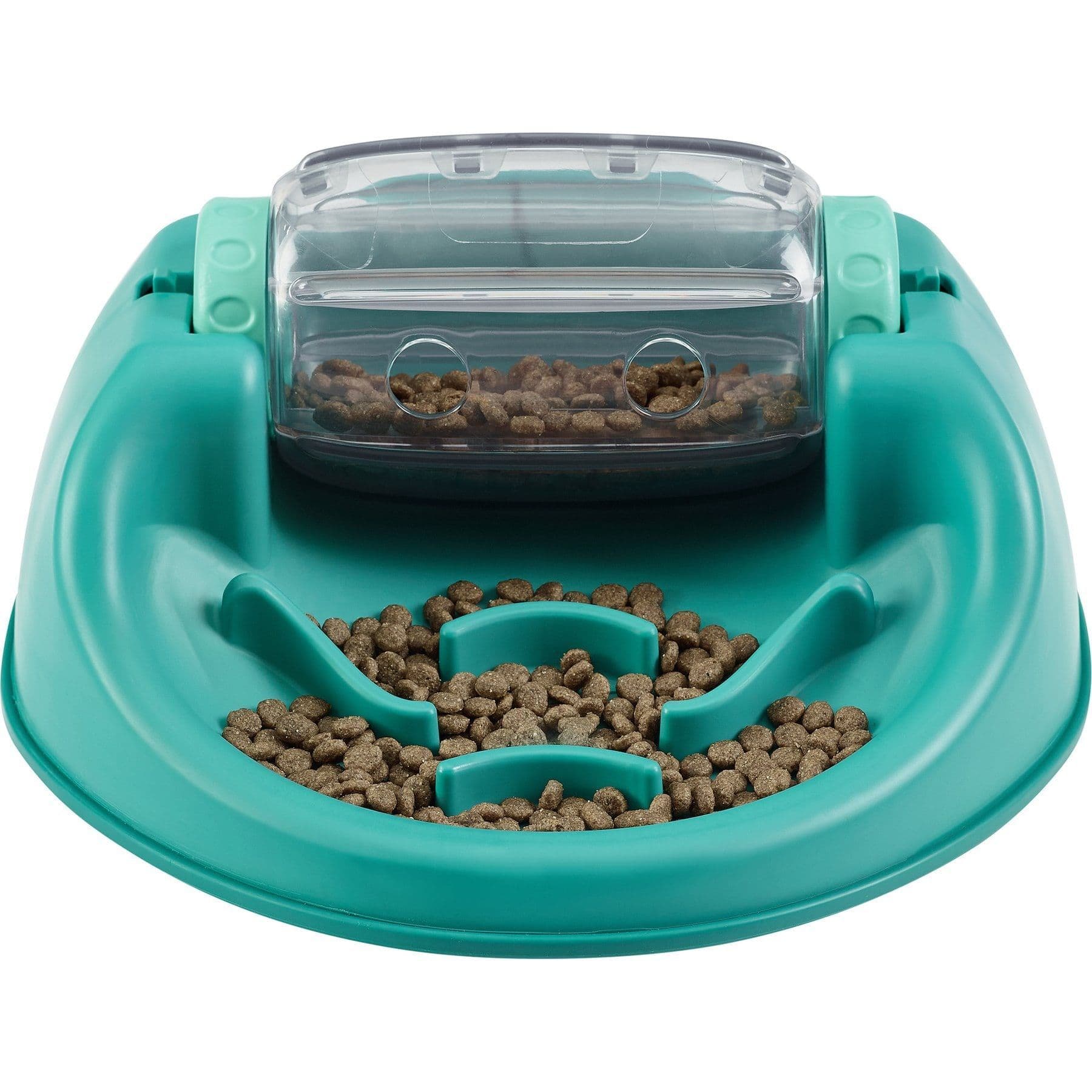
A slow-feeding puzzle turns mealtime into daily brain work for a senior dog.
Webvet may earn a commission when you click through to Chewy, at no extra cost to you.
How common is dog dementia? Figures vary with age and method:
- The AAHA 2023 Senior Care Guidelines estimate about 14 to 22.5% of dogs older than 8 have age-related cognitive impairment.
- In Salvin et al. 2010, owner questionnaires suggested 14.2% of dogs aged 8 and up had signs, yet only 1.9% had a vet diagnosis.
- In Neilson et al. 2001, 28% of dogs aged 11 to 12 and 68% of dogs aged 15 to 16 showed impairment in at least one behavior category.
What about dog breeds prone to dementia? None of our veterinary sources names a breed at higher risk, whether French bulldogs, English bulldogs, Labradors, Cairn terriers, boxers, Dobermans or pugs. Dementia appears in dogs naturally as they age, across breeds. For broader aging changes, see our guide to senior dog health and our explainer on canine cognition.
Signs and symptoms of dog dementia

The early signs of dementia in dogs are easy to blame on old age. AAHA names the most common senior dog dementia symptoms as sleeping by day and restlessness at night, less interaction, disorientation at home, and anxiety.
What are the symptoms of dementia in dogs?
Vets group dementia symptoms under DISHAA, from the AAHA 2023 guidelines: Disorientation, altered social Interactions, Sleep-wake changes, loss of House training, altered Activity, and Anxiety. A dog with changes in several of these, and no other illness to explain them, may have canine cognitive dysfunction. Any new behavior change in a senior dog deserves a vet check.
Here is what each DISHAA sign can look like at home:
- Disorientation: getting lost in familiar rooms, staring at a wall, walking in circles, or getting stuck behind furniture.
- Social interactions: less greeting, less interest in family, or new irritability such as growling when disturbed.
- Sleep-wake cycle: sleeping more by day, restlessness, pacing or barking at night.
- House training: peeing or pooping in the house after years of reliability.
- Activity: less purposeful play, or aimless wandering and repetitive behavior.
- Anxiety: whining, clinginess, or new fear in situations that never bothered the dog before.
These are the visible symptoms owners usually notice first. The first signs of dog dementia are often subtle, which is one reason the Salvin study found so few dogs with signs had a diagnosis.

Washable pee pads protect floors while a senior dog with house-training lapses is assessed.
Webvet may earn a commission when you click through to Chewy, at no extra cost to you.
Some signs owners search for are not part of DISHAA. Shaking or trembling, weak back legs, panting, licking, drinking much more or less water, eating poop, loss of appetite or always seeming hungry, sudden aggression or biting, and incontinence can all come from pain, arthritis or systemic illness, which Cornell lists as look-alikes.
Those signs can sit alongside dementia, but they need their own workup. If tremor is the main change, our guide to an old dog trembling covers the common causes.
Dog dementia at night: sundowning and how to help

Night is often the hardest part. AAHA lists daytime sleeping with nighttime restlessness among the most common signs, and Cornell describes sundowning in dogs: signs and irritability that worsen at night, plus night walking. At night a dog with dementia may pace, pant, cry, whine or bark for long stretches.
How to calm a dog with dementia at night?
Rebuild the day-night rhythm. Merck advises interacting with your dog during the day and giving a consistent place and time for sleep. Cornell adds nightlights so the dog can see and is less likely to get stuck, and for some dogs an extra walk just before bedtime helps longer, deeper sleep.
Practical steps that follow from that advice:
- Keep the dog awake and engaged with short walks and games in the daytime.
- Use the same bed, room and bedtime every night.
- Add a nightlight along the route to water and the door.
- Offer a final calm walk and toilet break right before bed.
- Ask your vet whether pain is disturbing sleep, since panting and pacing can also reflect discomfort.
Cornell notes melatonin helps some dogs with night roaming, though few studies confirm it, so talk to your vet first. VCA warns that human melatonin products can contain xylitol, which is toxic to dogs. Our melatonin for dogs guide covers the basics, and dog anxiety at night covers other causes of nighttime distress.
Can dementia cause a dog to bark?
Yes. Barking at night fits the sleep-wake and anxiety parts of DISHAA, and constant barking can come from confusion or anxiety rather than a trigger outside. Treat the underlying restlessness with routine, enrichment and vet-guided treatment instead of punishment, which only adds anxiety.
For barking that is not tied to dementia, our guide on how to stop dog barking explains training approaches that work for healthy dogs.
 $65 · no membership
Have a health question about your dog?
A licensed vet can assess your dog over video and prescribe online when it's appropriate.
 Talk to a vet
- Licensed vets
- All 50 states
- same-day Rx
Webvet may earn a commission if you book.
Stages of dog dementia and how fast it progresses
The table below walks through the stage-by-stage dementia signs paired with helpful steps you can take at each one. Vets describe dog dementia stages as mild, moderate and severe. Cornell, citing the Landsberg DISHAA questionnaire, scores each category 0 to 3: totals of 4 to 15 are mild, 16 to 33 moderate, and over 33 severe. The Canine Dementia Scale (CADES) uses a similar mild, moderate and severe framework.
| Stage | DISHAA score (Cornell) | What owners may see | What helps |
|---|---|---|---|
| Mild stage | 4 to 15 | Occasional confusion, some night waking, less greeting | Vet workup, enrichment, routine, discuss diet |
| Moderate stage | 16 to 33 | Regular night restlessness, house soiling, getting stuck | Add vet-guided medication, nightlights, safe zones |
| Severe stage | Over 33 | Constant confusion, anxiety, broken sleep, frequent accidents | Comfort care, quality-of-life scoring, end-of-life planning |
How fast does dog dementia progress? Cornell calls it slowly progressive, but the dog dementia stages timeline can move faster than many owners expect. In Madari et al. 2015, 24% of dogs in the mild stage had moved to moderate after 6 months and 50% after 12 months.
Of normally aging dogs, 42% became mild at 6 months and 71.45% at 12 months.
Early intervention with diet, enrichment and medication can help slow progression, according to Cornell, which is why catching the mild stage matters. In the moderate stage, a safe zone that blocks stairs and gaps keeps a wandering dog from getting stuck or falling.
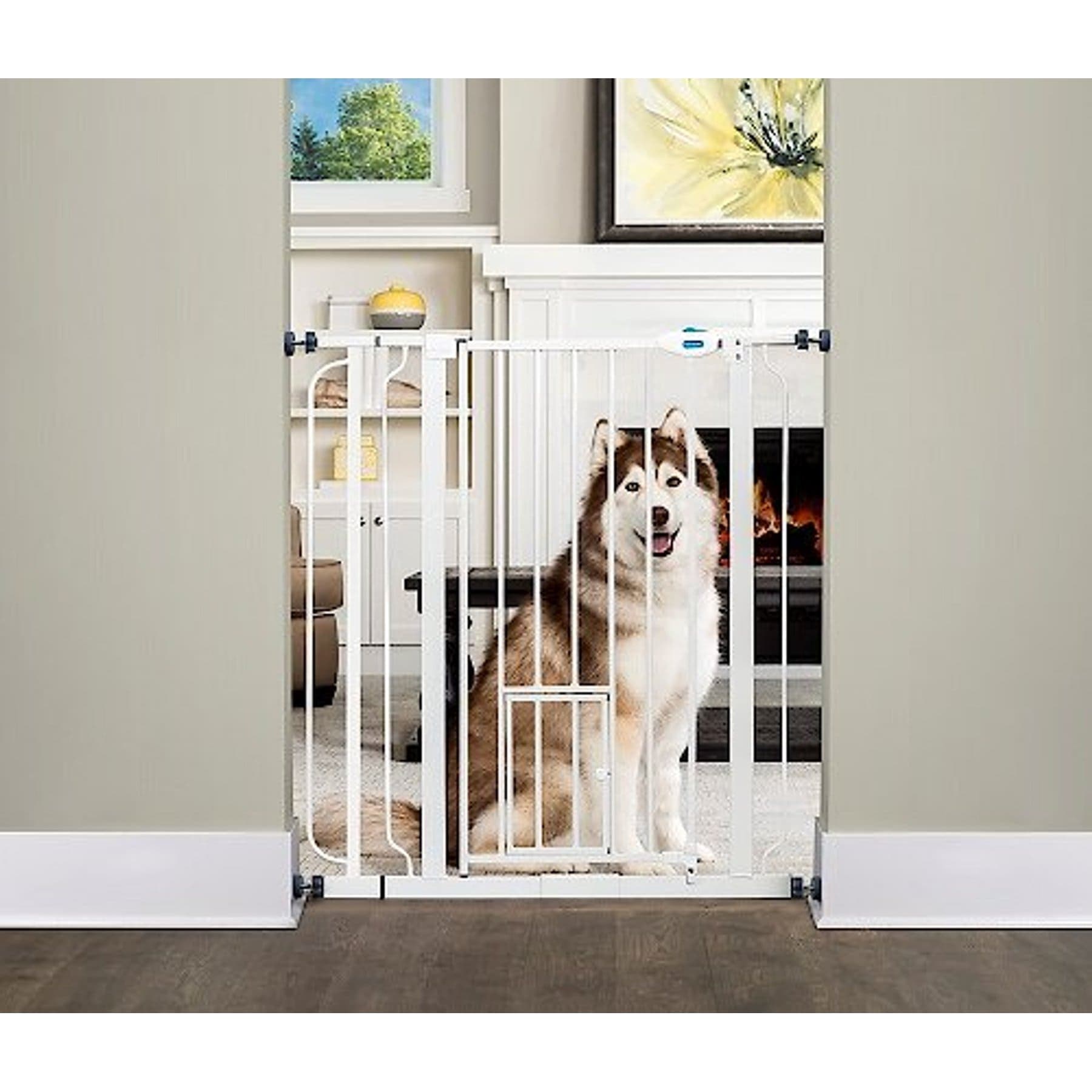
A tall walk-through gate keeps a wandering senior dog away from stairs and hazards.
Webvet may earn a commission when you click through to Chewy, at no extra cost to you.
What is the final stage of dog dementia?
The final stage is severe dementia: a DISHAA total over 33, meaning most categories score high at once. End stage dementia in dogs usually means constant disorientation, broken sleep, frequent accidents and anxiety that routine no longer settles. Cornell notes severely affected dogs often respond poorly to therapies, so the focus shifts to comfort and quality of life.
How vets diagnose dog dementia
There is no single dog dementia test. AAHA calls it a diagnosis of exclusion: your vet takes a history, does physical and neurological exams, and runs blood work and urinalysis to make sure no other disease explains the signs. The Anipryl label says the same.
Conditions vets work to rule out include:
- Pain and arthritis
- Seizure disorders
- Systemic illness such as liver disease
- Vision or hearing loss
- Brain tumors, central nervous system infection or inflammation, and altered brain blood flow
- Vestibular syndrome, a sudden-onset balance problem Cornell says is often confused with dementia
Dementia vs brain tumor in dogs is one reason vets may recommend brain MRI, which AAHA advises to rule out structural disease. A sudden change should also prompt a check for stroke in dogs. Can dog dementia cause seizures? Our sources treat seizure disorders as a separate condition to rule out, not as a dementia sign.
A blind dog with dementia, or a dog that is deaf and blind, is harder to assess, because vision and hearing loss alone can cause disorientation. Signs of dementia in blind dogs are best judged by changes in sleep, house training and social behavior.
Want a dog dementia checklist or quiz to use at home? Two owner tools exist:
- CADES canine dementia scale: scores dogs from 0 to 95 points and sorts them into normal aging or mild, moderate or severe impairment.
- DISHAA questionnaire: the six categories above, each scored 0 to 3, work as a home checklist.
- Their limit: the University of Illinois cautions that these owner-reported tools are subjective, so a diagnosis can be missed or delayed. Bring your answers to the vet rather than treating them as a diagnosis.
A 2025 review in Veterinary Sciences lists a thyroid panel in the workup; no source we found names Cushing's disease as a dementia mimic, so ask your vet which hormone tests fit your dog.
Dog dementia treatment and medication
Dog dementia cannot be cured, but treating dog dementia can ease signs. Merck says treatment should focus first on environmental enrichment, physical and mental stimulation, which has been shown to slow decline and improve signs. That is the most reliable natural treatment for dog dementia, and it works best alongside diet and medication.
Selegiline (brand name Anipryl) is the main dog dementia drug. The FDA approved it to control clinical signs of canine cognitive dysfunction syndrome effective December 10, 1998, per the Federal Register. The label says it is thought to work partly by increasing dopamine in the brain.
What the approval trial showed, per the FDA Freedom of Information Summary:
- 199 client-owned dogs aged 7 to 20 entered a 4-week placebo-controlled phase, then 8 weeks of open-label treatment.
- Owners assessed change, so results are subjective.
- Sleep pattern, housetraining and activity improved significantly; orientation, responsiveness and greeting did not reach significance.
- The effect may last as little as 8 weeks in about 50% of cases, and response varied by dog.
Cornell says some owners see improvement on selegiline within three weeks, but many dogs take six weeks. Many owners also report it helps sundowning and night walking, though the trials did not measure that. Alongside treatment, a supportive bed in one consistent sleeping spot backs up Merck's advice on a fixed place for sleep.

A thick orthopedic bed in one fixed spot gives a confused senior dog a dependable place to rest.
Webvet may earn a commission when you click through to Chewy, at no extra cost to you.
Among non-drug options with trial data, a 2-month study of SAMe (Novifit) in 36 dogs over 8 reduced the aggregate mental impairment score by more than half in 41.2 percent of treated dogs versus 15.8 percent on placebo (Reme et al., Veterinary Therapeutics 2008); it is a small, manufacturer-linked trial, covered further in the supplements section below. What about other dog dementia meds? The veterinary sources we reviewed do not establish gabapentin, trazodone, Zylkene, a ThunderShirt or CBD as treatments for dog dementia. For what those drugs are used for, see our guides to trazodone for dogs and gabapentin for dogs and cats, and ask before adding anything to selegiline.
Diet and supplements for dogs with dementia
Diet has better evidence than most supplements. The best dog food for dementia, per the research, is enriched with antioxidants, fatty acids or medium-chain triglycerides (MCT):
- MCT diets: in Pan et al. 2018, 87 dogs with CDS signs on a 6.5% MCT diet improved in all six sign categories after 90 days. The control group also improved in four of six, the study was funded by Nestle Purina, and owners scored outcomes.
- Aged beagle studies: a 5.5% MCT diet improved cognitive test scores over 8 months (Pan 2010), and antioxidant food plus enrichment slowed decline best (Milgram 2005).
- Prescription diets: Cornell names Hill's B/D, Purina Pro Plan NeuroCare and Royal Canin Mature Consult.
AAHA adds that these diets worked best combined with environmental enrichment, and that research on other supplements and nutraceuticals is limited.
For dog dementia supplements, the evidence is thinner:
- SAMe: in Reme 2008, 41.2% of 36 dogs on SAMe (Novifit) improved by more than half versus 15.8% on placebo, a small trial.
- Omega-3 fatty acids: a 2025 GeroScience systematic review found cognitive benefit in aging pets, especially at higher doses.
- Senilife and Aktivait: Cornell names them; we found no published trial to review.
- Ginkgo biloba: none of our sources supports it for dog dementia.
The best supplement for dog dementia is the one your vet chooses for your dog, combined with diet and enrichment. Food obsession, a dog with dementia not eating, or a dog that won't eat are not DISHAA signs, so report appetite changes to your vet to rule out illness.
Caring for a dog with dementia at home
How to help a dog with dementia starts with three things. Good dog dementia care rests on enrichment, routine and safety. Merck puts enrichment first, and the Milgram beagle work found mental stimulation slowed decline. Interactive toys for dogs with dementia, such as puzzle feeders and snuffle games, give the brain daily work without tiring old joints.

A simple dementia dog toy like the Outward Hound Nina Ottosson Spin N' Eat Dog Food Puzzle Feeder, Green turns a meal into problem solving. Keep the challenge easy enough that your dog succeeds, and set it in the same spot each time.
What to do with a dog with dementia day to day:
- Keep meals, walks and bedtime at the same times.
- Block stairs, pools and gaps where a confused dog could fall or get stuck.
- Leave furniture in place so the layout stays familiar.
- Use short training refreshers and gentle play to support changes in interaction.
- Approach calmly and speak before touching a dog that startles.
How to calm a dog with dementia during the day follows the same pattern: predictable routine, a quiet resting place and enough activity to tire the mind. Can you prevent dog dementia? No source shows that, but the Dog Aging Project linked activity with lower odds, and Milgram found enrichment slowed decline.
Coping with a dog with dementia is hard. If your senior dog with dementia is driving you crazy with night barking or accidents, that is a normal reaction and a sign to ask your vet how to deal with dog dementia signs that are getting worse, not a failure of care.
Life expectancy and when to say goodbye
How long will a dog with dementia live?
Cornell describes CDS as a slowly progressive disease, and says early intervention with diet, enrichment, and medication can help slow the progression and improve quality of life. Progression has been measured: in a study using the CADES scale, 42 percent of normally aging dogs had converted to mild impairment at 6 months and 71 percent at 12 months, while 24 percent of mild cases progressed to moderate at 6 months and 50 percent at 12 months (Madari et al. 2015). Dog dementia life expectancy varies widely. Fast et al. 2013 followed 94 dogs over 8 and found CCD did not shorten survival; dogs supported by their vet and owner had a good chance of a full lifespan. Illinois notes families often euthanize severely affected dogs within 2 years of signs, so the prognosis depends on stage.
Dementia in dogs prognosis by stage:
- Mild to moderate: dogs may live a full lifespan, per Illinois.
- Severe: Cornell says severely affected dogs, or those with other medical problems, often have a worse prognosis and may not respond well to therapies.
Are dogs with dementia happy, and is a dog with dementia suffering? Lap of Love, a veterinary hospice provider, says dementia is not typically physically painful but can cause deep anxiety, fear and confusion.
Deciding dog dementia euthanasia timing is the hardest call. Signs that a senior dog with dementia may be ready to be put to sleep, drawn from Lap of Love and AAHA:
- Constant anxiety or fear that treatment no longer eases
- Sleep so disrupted that neither dog nor family rests
- Confusion that leaves the dog distressed most of the day
- Worsening scores on a quality-of-life scale
The DoveLewis canine quality-of-life scale, adapted from Dr. Alice Villalobos, scores seven categories; under 5 in a category needs intervention, and if none is possible, euthanasia should be considered. For practical planning, see our guides to dog euthanasia cost and in-home pet euthanasia.
Dog dementia questions
Frequently Asked Questions
Can a dog with dementia be left alone during the day?
Many dogs in the mild stage can be left alone for short periods. Set up a safe space with water, a bed and no stairs or gaps where your dog could get stuck. If anxiety or accidents rise when your dog is alone, ask your vet about shorter absences or a sitter.
Do dogs with dementia still recognize their owners?
Our sources do not measure whether dogs with dementia recognize family, but reduced social interaction is one of the DISHAA signs, so greetings may fade and some dogs seem distant or irritable. Gentle routines, calm speech and short play sessions help keep the bond.
Can dog dementia come on suddenly?
Dementia is slowly progressive, so a sudden change in behavior can point to other medical causes such as vestibular syndrome, pain, stroke or a brain tumor. Sudden onset signs need a prompt vet visit, even in a dog already diagnosed with dementia.
Is it safe to board or travel with a dog with dementia?
Boarding kennels are hard on a dog with dementia because the familiar routine disappears. Boarding and traveling with a dog with dementia can increase confusion because the setting changes. If you must, bring the dog's bed and food, keep a familiar routine for meals and walks, and ask your vet about a sitter at home as an alternative.
Can surgery or anesthesia make dog dementia worse?
General anesthesia itself has not been shown in the sources to cause dementia, but the recovery period can unsettle an already confused dog. Our sources did not study dog dementia after surgery, so there is no evidence-based answer. Tell your vet about the diagnosis before anesthesia, ask about medication interactions with selegiline, and plan a quiet recovery period with a strict routine.
How should I groom a dog with dementia?
Grooming a dog with dementia goes better with short grooming sessions, calm handling and breaks. Use a familiar groomer or groom at home where the setting is known, and avoid long appointments that build anxiety.
$65 · no membershipHave a health question about your dog?
A licensed vet can assess your dog over video and prescribe online when it's appropriate.
Talk to a vet- Licensed vets
- All 50 states
- same-day Rx
Webvet may earn a commission if you book.
Veterinarian · BVMS MRCVS
Dr. Pippa Elliott, BVMS, MRCVS, is a veterinarian with nearly 30 years of experience in companion animal practice. Dr. Elliott earned her Bachelor of Veterinary Medicine and Surgery from the University of Glasgow. She was also designated a Member of the Royal College of Veterinary Surgeons. Married with 2 grown-up kids, Dr. Elliott has a naughty Puggle named Poggle, 3 cats and a bearded dragon.
Related reading

In Home Pet Euthanasia: Cost, What Happens, and How to Choose a Provider

Dog Cold Symptoms: Treatment and How to Tell It From Kennel Cough

Cat Cold: Symptoms, How Long It Lasts, and When to See a Vet
