Curled Up Cat: Why Cats Sleep in a Ball (Crescent Position)
See a curled up cat sleeping in a tight ball and wonder why? Learn what the crescent position means, the warmth and safety instincts behind it, and when a tighter curl signals your cat is unwell.

This article contains affiliate links. Webvet may earn a commission when you buy through them, at no extra cost to you.
If you have ever watched a curled up cat wind itself into a tight ball, nose tucked under its tail, and wondered what that perfect little crescent means, you are asking a question with a genuinely fascinating answer. A cat curled into a ball is not just being cute. That shape is the product of instincts thousands of years old, blending the drive to stay warm, the need to protect the softest parts of the body, and a deep sense of feeling safe enough to sleep. This vet-informed guide explains exactly what the crescent position is, the five main reasons cats sleep this way, how it compares to other feline sleeping positions, and the one situation where a tighter-than-usual curl is worth a closer look.
- 1The curled up ball, also called the crescent, donut, or croissant position, is one of the most common and natural ways cats sleep.
- 2Cats curl into a ball mainly to conserve body heat, protect their vulnerable belly and vital organs, and feel safe and secure while asleep.
- 3The tightness of the curl often tracks temperature: cats ball up more in the cold and sprawl out flat when it is warm.
- 4A sudden, unusually tight, hunched curl paired with hiding, appetite loss, or other changes can be a sign your cat feels unwell and should see a vet.
- 5You can support the behavior with a warm, safe resting spot and a bolster or donut-style bed that cradles the natural curl.
Why Do Cats Curl Up in a Ball to Sleep?
The short answer: cats curl up in a ball because it keeps them warm, protects their most vulnerable body parts, and helps them feel secure enough to fall into deep sleep. All three motives trace back to the same source, the small wild ancestors modern cats descend from, who had to conserve heat, guard against predators, and rest without letting their guard fully down. A curled up cat on your couch is running the same ancient software, just in a much safer living room.

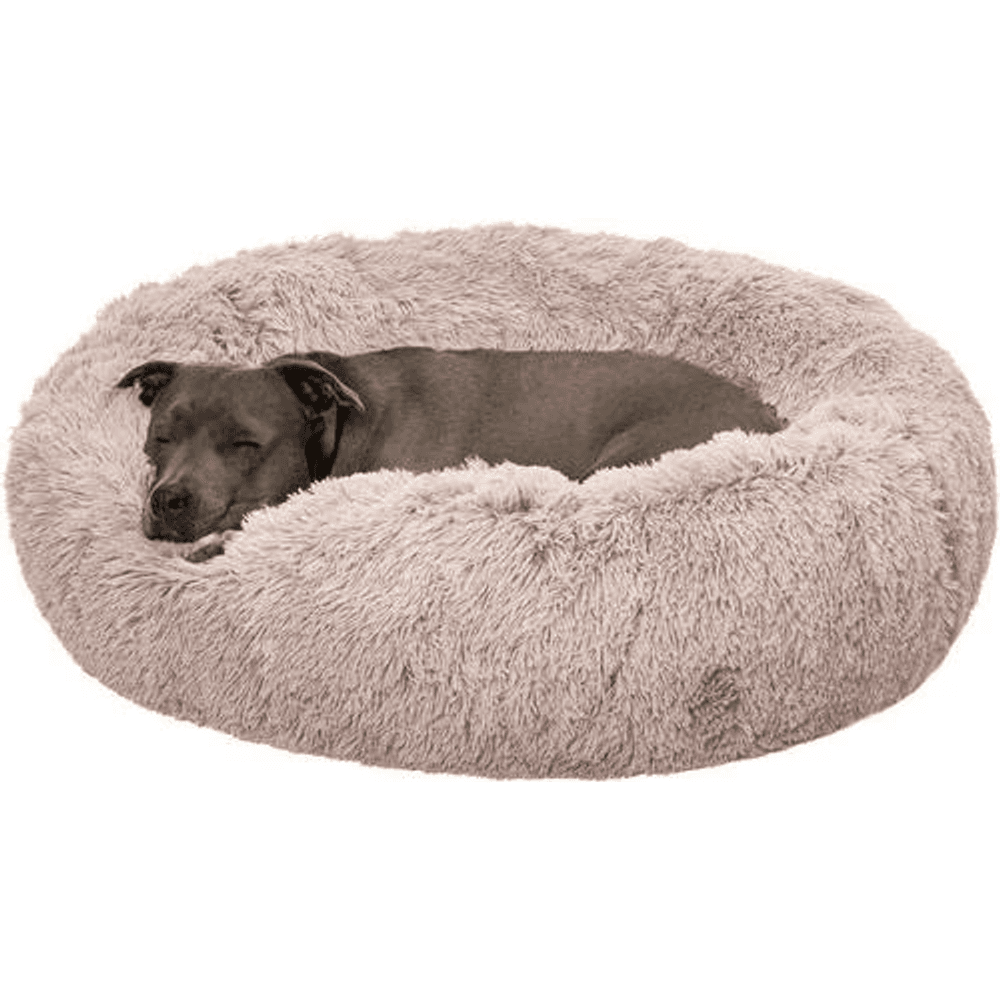
A plush, long-fur donut bolster bed with a raised rim that gives a recovering pet a secure, cushioned place to curl up during the crucial 10 to 14 days after surgery.
Webvet may earn a commission when you click through to Chewy, at no extra cost to you.
Because cats spend so much of their lives asleep, the position they choose says a lot. Adult cats sleep roughly 12 to 16 hours a day, and kittens and seniors even more, so you have plenty of chances to watch how they rest. If you want the full picture of feline sleep, our guide to how much cats sleep breaks down what is normal at every life stage. Here, we are zooming in on that one iconic pose: the ball.

What the Crescent Position Actually Is
The curled up ball goes by many affectionate names. Cat lovers call it the crescent, the donut, the croissant, the cinnamon roll, and sometimes the shrimp, depending on how tightly the cat tucks. Whatever you call it, the shape is the same: the cat folds its legs beneath its body, curves its spine into a C, and often wraps its tail around itself, sometimes draping it right over the nose.
That tail-over-nose detail is not random. Tucking the nose and paws into the warm center of the curl shields the least insulated, most heat-losing parts of the body. The tighter the crescent, the more the cat is prioritizing warmth and protection.

The looseness of the curl is a clue too. A loose, lazy half-curl usually means a relaxed, comfortable cat, while a very tight, compact ball points to a cat that is either cold, cautious, or both.

Reason 1: Conserving Body Heat
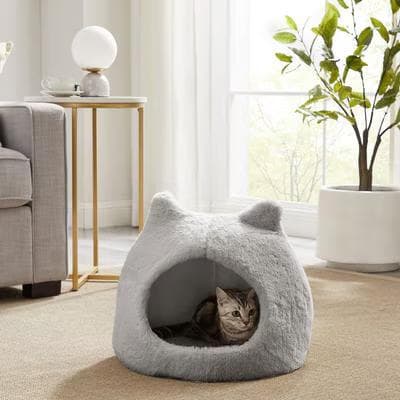
Covered, igloo-style cat bed in soft plush with a water-resistant bottom, giving cats a cozy enclosed spot to curl up. Grey.
Webvet may earn a commission when you click through to Chewy, at no extra cost to you.
The single biggest reason cats curl into a ball is temperature control. Curling minimizes the body's exposed surface area, and less exposed surface means less heat radiating away into the air. By tucking the head, paws, and belly inward, a cat turns itself into a compact, heat-retaining sphere.

This matters more for cats than many owners realize. A cat's comfortable temperature range sits higher than ours, so a room that feels pleasant to you can feel a touch chilly to your cat. Their wild ancestors evolved in environments where conserving warmth during sleep was a survival skill, and today's house cats inherited the same instinct. It is why you so often find a curled up cat gravitating to the warmest spots in the home: a sunbeam, a radiator, a lap, or a freshly laundered pile of clothes.

Reason 2: Protecting Vital Organs
The second reason is protection. A cat's belly is its most vulnerable area, with vital organs sitting just beneath a thin layer of skin and muscle, unshielded by the ribcage. When a cat curls into a ball, it draws that soft underbelly inward and wraps its limbs and tail around it, effectively armoring the most fragile part of its body.

In the wild, sleep is a dangerous time. A resting animal is an easy target, and a predator's first instinct is to go for the belly. Curling up is a defensive posture baked into feline instinct: it guards the organs while still letting the cat spring up and bolt if something startles it awake. Even a pampered indoor cat with no predators to fear still curls this way, because instinct does not switch off just because the environment is safe.
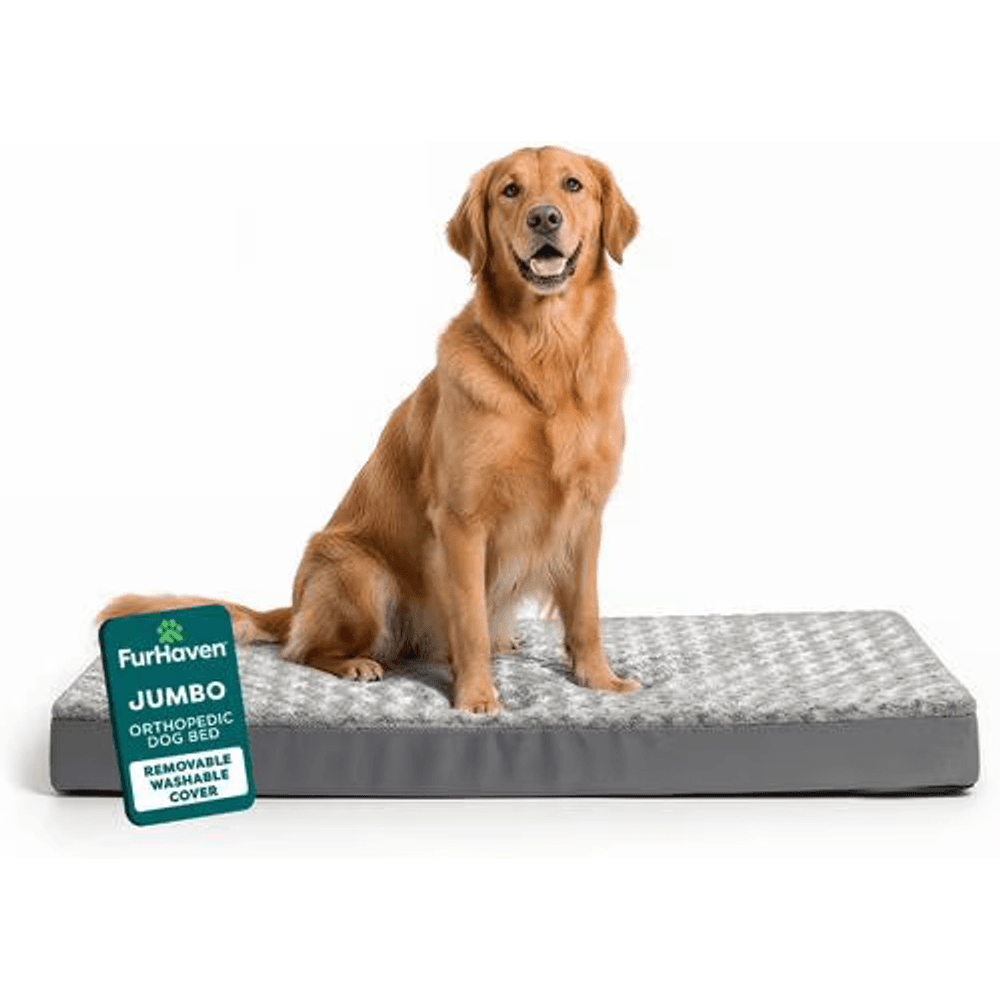
A plush orthopedic foam mattress that cushions aging joints and pressure points, giving a stiff or trembling senior dog warm, supportive rest.
Webvet may earn a commission when you click through to Chewy, at no extra cost to you.
Reason 3: Feeling Safe and Secure
Closely tied to organ protection is a broader sense of security. The curled position is self-soothing. Wrapped into a tight, enclosed shape, a cat feels contained and protected, a little like how a swaddle comforts a baby. The pose lowers the cat's sense of exposure, which is exactly what it needs to relax deeply.
This is also why cats often seek out enclosed, tucked-away places to curl up, like a covered bed, a cardboard box, a closet shelf, or the crook of your arm. Choosing to curl up on or near you is a related sign of trust and comfort, which we explore in our piece on why your cat sleeps on you. A cat that curls up against a person has decided that person is a safe, warm place to be, which is one of the higher compliments a cat can pay.
Reason 4: Comfort and Deeper Sleep
For many cats, the curl is simply the coziest way to sleep, and comfort itself is a valid reason. A cat that feels warm, supported, and unexposed can slip more easily into the deep, restorative stages of sleep, including the REM phase where dreaming happens.
If you have ever watched a curled up cat twitch its whiskers, flick its paws, or make tiny chirping sounds, you have likely caught it mid-dream. That deep sleep is a sign your cat feels secure enough to fully let go, and it is a good thing. Curious what is going through that little dreaming head? We dig into it in what cats dream about. The curl and deep sleep tend to go together precisely because the position removes the low-level vigilance that keeps a cat in lighter dozing.
Reason 5: Season and Environment

360-degree Wi-Fi pet camera so you can watch your cat's resting breathing rate and behavior from your phone and catch worrying changes early.
Webvet may earn a commission when you click through to Chewy, at no extra cost to you.
Because warmth is such a driver of the curl, the position is highly sensitive to season and temperature. In cold weather, cats curl tighter and more often, packing themselves into the smallest possible ball to trap every bit of heat. In hot weather, the same cat will do the opposite: sprawl out flat on its side or back, stretch its legs, and expose its belly to shed heat and cool down.
So if your cat balls up all winter and turns into a floppy, spread-out puddle in summer, nothing is wrong. That shift is a healthy, normal response to temperature. It is also a handy owner cue: a cat curling tightly in a warm room may be telling you it feels chilly, unwell, or simply wants a cozier, draft-free spot to sleep.
How the Crescent Compares to Other Cat Sleeping Positions
The ball is just one entry in a whole vocabulary of feline sleeping positions, and each one carries its own meaning. Our full guide to cat sleeping positions maps them all, but here is how the crescent stacks up against the most common alternatives you will see around the house.
| Position | What it looks like | What it usually means |
|---|---|---|
| Crescent / ball / donut | Curled tight, nose and paws tucked in, tail wrapped around | Conserving warmth, protecting the belly, feeling safe |
| Loaf | Upright with all paws and tail tucked neatly under the chest | Relaxed but semi-alert, ready to get up quickly |
| Side sleeper | Lying stretched out on one side, legs extended | Warm, comfortable, and fairly relaxed |
| Belly up | On the back, belly exposed, paws in the air | Complete trust and a very safe, cool environment |
| Superman | Flat on the belly, all four legs splayed out | Deep relaxation, often to cool off on a warm surface |
The two closest cousins of the crescent are the loaf position, where a cat sits upright with everything tucked under like a fresh loaf of bread, and the fully exposed belly-up back sleeper. Notice the pattern: the more a cat exposes its belly, the safer and warmer it feels. The crescent sits at the guarded end of that spectrum, while the belly-up sprawl sits at the wide-open, deeply trusting end.
When a Tighter-Than-Usual Curl Is a Health Signal
Curling into a ball is almost always normal, healthy cat behavior. But there is one important exception every owner should know. When a cat feels unwell or is in pain, it may curl up in a tighter, more hunched, more withdrawn way than usual, and it may do so far more of the time. The key is the change from your cat's personal baseline, not the curl itself.
Cats instinctively hide pain and illness, a leftover survival strategy from a time when showing weakness invited predators. A sick cat will often tuck itself into a compact ball in a quiet, out-of-the-way corner, both to guard a sore belly and to hide. On its own, a cozy curl means nothing. Paired with other changes, it deserves attention.
For a deeper look at the postures that can hint at a problem, see our guide to cat sleeping positions when sick. And if the bigger change you are noticing is simply that your cat is sleeping far more than it used to, our partners at Petful explain why a cat may be sleeping so much and when that extra sleep is worth investigating. When in doubt, a quick vet check is always the safe call.
How to Support Your Cat's Natural Curl
Since curling up is such a healthy, instinct-driven behavior, the kindest thing you can do is make it easier and more comfortable for your cat to do it well. This is true at every age, from kittens who curl by instinct to seniors who simply want a warm, supportive spot. A few small choices go a long way.
- Offer a bolster or donut bed. Round beds with raised, cushioned walls cradle the crescent shape and give the head and back something to rest against, which most curlers love.
- Keep it warm. Place beds away from drafts, in sunny patches or near (not on) a heat source, and add a soft blanket in colder months so your cat is not curling just to fight the chill.
- Provide a safe, enclosed option. A covered cave bed, a cozy box, or an elevated perch gives security-seeking cats the tucked-away feeling that makes the curl even more restful.
- Respect the sleep. A curled, deeply sleeping cat is doing important restorative work. Let it be, and it will wake on its own terms.
Give your cat a warm, safe, comfortable place and it will happily curl into its crescent for hours. And if you want to decode what it means when your cat chooses to curl up right next to you, our guide to cat sleeping positions with their owner unpacks the bond behind the behavior.
Frequently Asked Questions
What scent calms cats?
Several scents are known to help cats feel calm and settled, which can encourage relaxed, curled-up sleep. The best studied are synthetic feline facial pheromones, sold as plug-in diffusers and sprays, which mimic the reassuring scent cats leave when they rub their cheeks on safe objects. Many cats also find the herb valerian, silver vine, and catnip pleasantly soothing after the initial burst of excitement passes. Some mild botanical scents like lavender and chamomile are often described as calming, but essential oils can be toxic to cats, so never apply oils to your cat or diffuse them in a way your cat cannot escape. When in doubt, a vet-recommended pheromone product is the safest calming scent to try.
Do cats hear when you talk to them?
Yes, cats hear you clearly when you talk to them, and their hearing is far sharper than ours, spanning a much wider range of high frequencies. Research shows cats can recognize their owner's voice and even distinguish it from a stranger's, and many respond to their own name. A curled-up cat that flicks an ear toward you while its eyes stay closed is a perfect example: it is tracking your voice while it rests. Talking to your cat in a soft, gentle tone can be reassuring and is a genuine part of bonding, even if your cat answers only with a slow blink or a twitch of the tail.
Do cats sleep with their favorite person at night?
Many cats do choose to sleep with their favorite person at night, and when they do, it is a meaningful sign of trust and attachment. Sleeping is a vulnerable time, so a cat that curls up on or beside you at night has decided you are a safe, warm, and reassuring presence. That said, not every cat is a night cuddler, and plenty of deeply bonded cats prefer to sleep nearby but separately, or to shift spots as the temperature changes through the night. Whether your cat sleeps pressed against you or on its own perch across the room, neither choice measures how much it loves you. Warmth, security, and simple habit all shape where a cat lands at bedtime.
What annoys cats the most?
Cats are most annoyed by things that clash with their need for control, cleanliness, and predictability. Common irritants include a dirty litter box, loud or sudden noises, being petted for too long or in the wrong spot, unwanted handling such as being picked up or hugged when they would rather not be, strong smells like citrus and heavy cleaning products, and changes to their routine or territory. Being woken or disturbed while curled up in deep sleep is another one, since interrupted rest leaves a cat cranky just as it does a person. Respecting a sleeping cat, keeping the litter box spotless, and letting your cat set the pace of affection go a long way toward a relaxed, unbothered pet.
What does it mean when a cat sleeps curled up in a ball?
When a cat sleeps curled up in a ball, also called the crescent or donut position, it is doing three things at once: conserving body heat by shrinking its exposed surface area, protecting its vulnerable belly and vital organs by tucking them inward, and settling into a secure, self-soothing shape that lets it relax and sleep deeply. It is one of the most common and completely normal ways cats sleep, rooted in the survival instincts of their wild ancestors. A relaxed curl is nothing to worry about. Only worry if the curl becomes suddenly tighter, more hidden, and more constant alongside other signs of illness.
Why does my cat curl up in a ball tighter in winter?
Your cat curls up tighter in winter because the ball shape is its most effective way to trap body heat. The colder it is, the smaller a cat makes itself, tucking its nose, paws, and belly into the warm center to minimize heat loss. This is why the same cat that balls up in a tight crescent all winter will often sprawl out flat on its side or back in summer to shed heat. The seasonal shift is normal and healthy. If your cat is curling very tightly in a room that already feels warm to you, though, it may be feeling chilly, sitting in a draft, or occasionally feeling unwell, so it is worth offering a cozier spot and keeping an eye on any other changes.

Editor
The Webvet Editorial Team is the in-house group of pet-care editors and writers behind Webvet, operated by Smart Pet Collective. The team researches, writes, and maintains Webvet's pet health, behavior, and medication content. Every article follows a defined editorial process: research from reputable veterinary and scientific sources, careful drafting, mandatory review of medical content by a credentialed veterinarian, and dated publication. Health and medication articles are medically reviewed by a licensed veterinary professional before they go live and are kept current over time.


