Why Does My Cat Sleep on Me? 7 Reasons, Explained by Vets
When your cat curls up on your chest or settles between your legs at night, it usually means warmth, safety, and trust. Here is what each sleeping spot signals, when a sudden change is worth watching, and how to gently reclaim your space.

BVMS MRCVS

This article contains affiliate links. Webvet may earn a commission when you buy through them, at no extra cost to you.
If you are wondering why does my cat sleep on me, the short answer is trust. Cats sleep on you because you offer warmth, safety, and a strong scent bond, and your steady heartbeat and breathing soothe them the way their mother once did. It is almost always a compliment, not a problem.
A sleeping cat is a vulnerable cat. Choosing to rest on you, rather than in any of the cozy spots around your home, is a deliberate vote of confidence. For the overwhelming majority of cats this is healthy, normal, and a sign of a close relationship.
Below we cover the seven real reasons cats do it, what each sleeping spot means, how to spot the rare cases worth a closer look, whether it is safe, and how to gently reclaim your bed if you want to.
- 1Cats sleep on you for warmth, security, scent bonding, and the calming rhythm of your heartbeat. It is overwhelmingly a sign of trust and affection.
- 2Where your cat sleeps (chest, legs, head, or beside you) reflects comfort and security, not ranking or dominance.
- 3The behavior worth watching is a sudden change: a previously independent cat that becomes clingy or seeks heat constantly, especially alongside appetite, litter box, energy, or hiding changes, deserves a vet check, because cats often seek closeness when they feel unwell or are in pain.
Where your cat chooses to sleep is one signal among many. For the full picture of what your cat is telling you, see our vet-reviewed guide to cat body language.
Quick answer: why your cat sleeps on you

Cats are both predators and prey, which makes sleep a genuinely defenseless state for them. In the wild they seek warm, hidden, secure spots to rest.
In your home, you are often the warmest, safest, most familiar spot available. You smell like home, you give off heat, and your slow breathing and heartbeat are deeply reassuring. Put simply, your cat sleeps on you because being near you feels good and feels safe.
It is worth saying plainly: this is one of the strongest signs of affection a cat can offer. Cats do not curl up to sleep on people they distrust. If you have been wondering whether your cat actually likes you, sleeping on you is one of the clearest signs your cat is bonded to you.
The behavior itself is normal. We will cover the rare exceptions worth watching later in this guide, but start from reassurance, not worry.
7 reasons your cat chooses to sleep on you

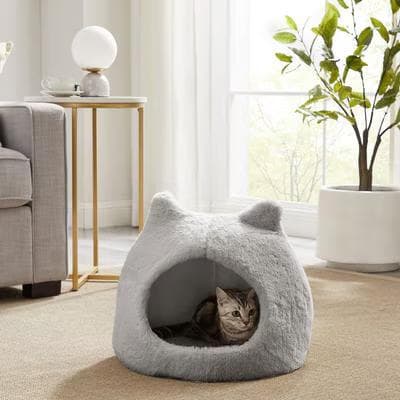
Covered, igloo-style cat bed in soft plush with a water-resistant bottom, giving cats a cozy enclosed spot to curl up. Grey.
Webvet may earn a commission when you click through to Chewy, at no extra cost to you.
Most cuddling comes down to a handful of overlapping drivers. Usually more than one is at play at the same time.
- 1You are the warmest, steadiest heat source in the house.
- 2Sleeping on you feels safe while your cat is at its most vulnerable.
- 3Your scent, your heartbeat, and a bedtime routine all pull your cat toward you.
- 4Choosing you over every other spot is a sign of genuine attachment to a favorite person.
1. You are the warmest spot in the house
Cats run warmer than we do, with a normal body temperature of roughly 100.5 to 102.5 degrees Fahrenheit, and they are drawn to heat. They descend from the African wildcat, an arid, desert-adapted ancestor, and they prefer external warmth so they do not have to expend energy staying warm.
You are a living radiator that holds a steady temperature all night, which is hard for any heat-seeking cat to resist. This is the same instinct that sends cats to sunny windowsills, laptops, and laundry fresh from the dryer.
2. Safety and security while they are vulnerable
Sleep is the most defenseless thing a small predator-prey animal can do. By sleeping on you, your cat is effectively posting a guard.
Your presence, movement, and alertness mean your cat can switch off more completely than it could alone. Choosing you as a safe base is a meaningful sign that your cat trusts you to keep watch.
3. Scent marking and claiming you as theirs
Cats have scent glands on their cheeks, chins, paws, and flanks, and they use them to mark the things and people that belong to their world. When your cat sleeps pressed against you, it is mingling its scent with yours and marking you as familiar, safe territory.
Because a cat's powerful sense of smell anchors so much of how it understands the world, a person who smells like home is a person worth sleeping on. This is also why a freshly showered owner, or a partner home from a trip, sometimes gets extra head bonks and cuddling.
4. The comfort of your heartbeat and breathing
The slow, rhythmic sound of your heartbeat and breathing echoes the comfort of nursing against their mother and littermates as kittens. That rhythm is calming and sleep-inducing, which is part of why your chest is such a popular perch.
It connects to a bigger idea: cats genuinely seem to relate to us a little like a parent, carrying kittenish comfort behaviors into their bond with us as adults.
5. Affection and a deliberate attachment
Cats have countless soft, warm, safe places to sleep. Choosing you over all of them is a deliberate act of attachment.
Research on cat behavior suggests that cats form genuine bonds with their caregivers, similar in some ways to the secure attachments seen between children and parents. Sleeping on you is one of the most honest expressions of that bond.
6. Routine and a bedtime ritual
Cats are deeply habitual and read your daily cues closely. Many learn that when you settle into bed or onto the couch, it is wind-down time, and they fold their own routine into yours.
Many cats also time closeness to mealtimes, which is why some appear and settle on you in the morning, nudging you toward the first feeding of the day. If your cat appears the moment you lie down, it has simply built a ritual around the most predictable warm body in the house.
7. You are their favorite person
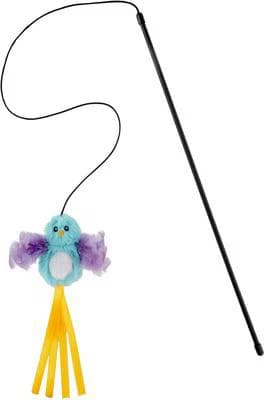
Teaser wand with a feathered bird charm and catnip to trigger your cat's chase-and-pounce instinct.
Webvet may earn a commission when you click through to Chewy, at no extra cost to you.
Cats do form preferred-human attachments, often to the person who feeds them, plays with them, or simply feels calmest and most predictable. Where your cat chooses to sleep is one of the clearest tells of who that person is.
It is the same instinct behind why kittens shadow and attach to a favorite person, carried into adulthood as a sleeping preference.
What it means by where your cat sleeps on you
The exact spot your cat picks usually reflects a blend of warmth, scent, and how secure that position feels.
| Where your cat sleeps | What it usually means |
|---|---|
| On your chest | Drawn to your heartbeat, breathing, and the warmth of your core. Often the most bonded, comfort-seeking spot. |
| On your neck or shoulder | Seeking your warmth and concentrated scent in a snug, elevated spot close to your face. A very trusting, affectionate position. |
| Between your legs or against your back | Seeking a warm, enclosed, den-like pocket that feels protected and secure on more than one side. |
| On your head or pillow | Your head and pillow stay relatively still all night, radiate heat, and carry a concentrated dose of your scent. |
| At your feet or beside you (not on you) | Still trust and companionship, just from a more independent cat that values a little personal space. |
If your cat twitches, paddles its paws, or makes small noises while sleeping on you, that is usually normal sleep activity rather than distress. You can read more about what cats are doing while they sleep, including those dream-like movements, in our deeper dive on feline sleep.
Is it normal, or should you be concerned?
This is the part most articles skip, and it is the one that matters most. The behavior itself is almost always normal. What deserves attention is a change in the pattern.
Normal. A cat that has always been cuddly, sleeps on you calmly, settles and relaxes, and is otherwise eating, drinking, playing, and using the litter box as usual. This is just a bonded cat being a cat, and there is nothing to fix.
Worth a closer look. A sudden, marked increase in clinginess, or a previously independent cat that starts sleeping on you out of nowhere.
Cats are masters at hiding illness, so they often seek extra warmth and closeness when they feel unwell, are in pain, are cold from weight loss, or are stressed by a change at home such as a move, a new pet, or a new baby.
The key is to look at the whole picture, not the cuddling in isolation. New clinginess paired with other red flags is the combination to act on:
- Hiding more and then suddenly clinging
- Changes in appetite or thirst
- Litter box changes
- A hunched or tucked posture
- Low energy or constant heat-seeking
Because cats mask discomfort so well, it helps to know how to tell if a cat is in pain so you can read the subtler signs alongside the change in sleeping habits.
Life stage matters too. Kittens and senior cats naturally tend to seek more contact and warmth, so a kitten sleeping on you or an older cat wanting more closeness is often perfectly normal.

Soft and crunchy cat treats in chicken, liver, and beef flavors. Under 2 calories per treat, in a 16-oz value tub.
Webvet may earn a commission when you click through to Chewy, at no extra cost to you.
The signal to act on is age plus a change: a senior cat that abruptly shifts its behavior, seems disoriented, or pairs new clinginess with any sign of illness should be seen by a vet rather than written off as simply old.
Why your cat sleeps on you and not your partner
If your cat picks you over your husband, wife, or partner, it usually comes down to who feels safest and most predictable. Cats gravitate toward the person who feeds them most often, who is calmest, and who sleeps most still through the night.
A restless sleeper who shifts and rolls is a less appealing mattress than someone who stays put.
Scent familiarity, body temperature, and breathing rhythm all factor in as well. Some people simply run warmer or breathe in a way a particular cat finds soothing. None of this is a snub of the other person, and preferences can shift over time as routines change.
If you are the non-chosen partner and want to build the bond, try a short, scannable routine:
- Take over feeding or treat time.
- Offer slow blinks and wait for your cat to slow-blink back (a mutual feline gesture of trust, the closest thing to saying I love you in cat).
- Run regular wand-toy play sessions.
- Let your cat approach you rather than reaching for it.
Cats reward patience and predictability far more than persistence.
Is it safe to let your cat sleep on you?
For most healthy adults, letting your cat sleep on you is perfectly safe and can be genuinely calming for both of you. Co-sleeping does not spoil your cat, undermine your authority, or make it dominant. Those are myths. That said, a few practical and health considerations are worth knowing.
Co-sleeping with your cat: the trade-offs
Pros
- Comfort and stress relief for both of you, and a stronger sense of bond and security.
- Warmth on cold nights and a soothing, calming routine at bedtime.
- A clear, reassuring sign that your cat trusts you and feels safe in your home.
Cons
- Disrupted sleep from a cat that shifts, grooms, or wants to play in the early hours.
- A heavy cat resting on your chest can feel restrictive, especially if you have breathing issues.
- Hygiene and allergy considerations: dander, litter tracked onto bedding, and the small parasite risk if prevention lapses.
To keep co-sleeping safe and pleasant, keep your cat on consistent veterinarian-recommended flea, tick, and intestinal parasite prevention, stay on top of litter box hygiene, and wash your bedding regularly, especially if you have allergies or asthma.

Lickable cat treats with real chicken, made to support comfort and tranquility. 12 single-serve 0.5-oz tubes.
Webvet may earn a commission when you click through to Chewy, at no extra cost to you.
If allergies are a real problem, keeping the cat off the pillow or out of the bedroom may be the better call.
How to gently get your cat to sleep in its own bed

If your sleep is suffering, you can redirect your cat to its own spot without rejecting it. The goal is to make the alternative more appealing than you are, and to be consistent and kind about it.
- Make the alternative irresistible. Offer a warm, soft, enclosed bed placed near you or in a favorite sunny or elevated spot. Many cats prefer a covered or high perch where they feel hidden and secure.
- Use warmth cues to transfer the appeal. A pet-safe, thermostat-controlled heated bed, or an item of clothing that carries your scent, can make the new spot feel as comforting as you do. Warmth and your smell are most of what your cat is chasing.
- Tire your cat out before bed. A solid evening play session followed by a meal taps into the natural hunt-eat-groom-sleep cycle and encourages your cat to settle on its own. Our guide to redirecting your cat for quieter nights walks through building a bedtime routine that helps everyone sleep.
- Be consistent and never punish. Calmly move your cat to the new bed and reward it for settling there. Punishment or shutting your cat out abruptly tends to create anxiety and can backfire, so redirect rather than scold. Do not physically restrain or repeatedly pick up a cat that resists, since that can cause stress-related aggression and undermine trust. Let the redirection be voluntary.
Finally, set realistic expectations. Many cats will still want you at least some of the time, and that is okay. The aim is a balance you can both live with, not to sever a bond your cat clearly values.
Frequently Asked Questions
Do cats sleep on their favorite person?
Yes. Cats commonly bond most strongly with one person, usually whoever feeds them, plays with them, or simply feels calmest and most predictable, and where a cat chooses to sleep is one of the clearest tells of who that favorite person is. It is a sign of trust and attachment, and the preference can shift over time as routines change.
Which cat breeds are the most clingy or affectionate?
Some breeds are known for being especially people-oriented and lap-loving, including the Ragdoll, Sphynx, Siamese, Maine Coon, Burmese, and Scottish Fold. These cats often seek contact, follow their person around, and are more likely to sleep on you. That said, personality varies hugely within any breed, and plenty of mixed-breed cats are just as devoted, so a strong bond comes down to the individual cat far more than its pedigree.
What is the 3-3-3 rule for cats?
The 3-3-3 rule is a popular shelter and rescue guide for helping a newly adopted cat settle in: about 3 days to decompress and feel less overwhelmed, about 3 weeks to start learning your routine and showing more personality, and about 3 months to feel fully at home and securely bonded. It is a general expectation rather than a strict or scientifically validated timeline, and shy or rescued cats may need longer before they trust you enough to sleep on you.
How can I tell if my cat has imprinted on me?
Signs of a strongly bonded cat include seeking you out, following you between rooms, sleeping on or near you, slow-blinking at you, head-butting and rubbing against you, kneading, purring in your presence, and bringing you toys. Choosing to sleep on you is one of the most telling of these, because cats only let their guard down around someone they trust.
Why does my cat sleep on me and not my husband or partner?
Cats pick the person who feels safest and most predictable, often the main feeder or the calmest, stillest sleeper. Scent familiarity, body temperature, and breathing rhythm all play a role, and a restless sleeper is simply a less appealing spot. It is not a rejection of your partner, and the bond can shift as feeding, play, and sleeping routines change.
Why does my cat sleep on my clothes or under the bed instead of on me?
A cat sleeping on your worn clothes is usually doing the same thing it does when it sleeps on you: surrounding itself with your reassuring scent. Sleeping under the bed or in another enclosed, hidden spot is about feeling safe and secure rather than rejecting you, and many cats simply rotate between you and a few private dens depending on the temperature, the time of day, and how social they feel. If a normally confident cat suddenly starts hiding under the bed much more, though, watch for other signs of stress or illness and consider a vet check.
Is there a spiritual meaning to a cat sleeping on you?
Some people believe a cat sleeping on you carries a spiritual meaning, such as offering comfort, protection, or absorbing your stress. Those ideas are matters of personal belief rather than science. The well-supported explanation is behavioral: your cat is drawn to your warmth, your scent, the calming rhythm of your heartbeat, and the safety of being near someone it trusts. Whatever meaning you attach to it, choosing to sleep on you is a genuine sign of comfort and bonding.
Why is my cat suddenly sleeping on top of me all of a sudden?
A sudden change matters more than lifelong cuddling. Benign triggers include cold weather, a change in routine, a new pet or baby, or sensing that you are stressed or unwell. But because cats hide illness well, new clinginess can also signal that your cat is in pain, feels unwell, or is losing weight and seeking heat. If the change comes with appetite, thirst, litter box, energy, or hiding changes, have your cat checked by a vet to rule out a medical cause.
Is it safe to let my cat sleep on me every night?
For most healthy adults it is perfectly safe and can be calming for both of you. Keep your cat on veterinarian-recommended flea, tick, and parasite prevention, maintain litter box hygiene, and wash bedding regularly, especially if you have allergies or asthma. Newborns and very young infants should never share a sleep surface with a cat, and people who are pregnant or immunocompromised should be cautious and check with their doctor.
How do I get my cat to sleep in its own bed instead of on me?
Make the alternative more appealing: a warm, soft, enclosed or elevated bed near you, ideally with a pet-safe, thermostat-controlled heat source or an item that carries your scent. Tire your cat out with evening play and a meal before bed so it settles on its own, then calmly redirect it to the new spot and reward it for staying. Be consistent and never punish or forcibly restrain it, and expect that many cats will still want you part of the time.
Why does my cat sleep on my chest specifically?
Your chest combines three things cats love: the warmth of your core, and the slow rhythm of your heartbeat and breathing, which echoes the comfort of nursing against their mother as kittens. It is also a stable, central spot rich with your scent. For many cats the chest is the most bonded, comfort-seeking place to sleep, so it is usually a strong sign of trust.

Editor
The Webvet Editorial Team is the in-house group of pet-care editors and writers behind Webvet, operated by Smart Pet Collective. The team researches, writes, and maintains Webvet's pet health, behavior, and medication content. Every article follows a defined editorial process: research from reputable veterinary and scientific sources, careful drafting, mandatory review of medical content by a credentialed veterinarian, and dated publication. Health and medication articles are medically reviewed by a licensed veterinary professional before they go live and are kept current over time.
Veterinarian · BVMS MRCVS
Dr. Pippa Elliott, BVMS, MRCVS, is a veterinarian with nearly 30 years of experience in companion animal practice. Dr. Elliott earned her Bachelor of Veterinary Medicine and Surgery from the University of Glasgow. She was also designated a Member of the Royal College of Veterinary Surgeons. Married with 2 grown-up kids, Dr. Elliott has a naughty Puggle named Poggle, 3 cats and a bearded dragon.


