Cat Sleeping Positions and What They Mean (With Chart)
From the loaf to the belly-up sprawl, your cat's sleeping positions reveal how safe, warm, and bonded they feel. This guide decodes every pose, with a chart and the sleep changes that signal a sick cat.

This article contains affiliate links. Webvet may earn a commission when you buy through them, at no extra cost to you.
Cat sleeping positions are one of the clearest windows into how your cat feels, because a cat only sleeps deeply where it feels safe, warm, and unbothered. A cat that sprawls belly-up in the middle of the floor is telling you something very different from one that curls into a tight ball wedged under the bed. This vet-informed guide decodes the most common cat sleeping positions, gives you an at-a-glance chart, explains why cats shape-shift through so many poses, and, importantly, shows which sleep changes can hint that a cat is feeling unwell.
- 1Most cat sleeping positions are about temperature and security: curled and tucked poses conserve warmth and protect vital organs, while sprawled and belly-up poses signal a cat that feels safe and warm.
- 2The belly-up position is the ultimate trust display, because the belly is a cat's most vulnerable area and exposing it means your cat feels no threat.
- 3The loaf, the curl, side-sprawl, sploot, and paws-over-eyes are all normal, healthy poses; the meaning comes from the whole picture, not the pose alone.
- 4Where a cat sleeps, on you, near you, or hidden away, reflects bonding and confidence more than affection alone.
- 5A sudden shift to a hunched, tense loaf, hiding far more than usual, sleeping near the water bowl or litter box, or a big change in how much a cat sleeps can signal illness and is worth a vet call.
How Much Do Cats Actually Sleep?

Before you can read a sleeping position, it helps to know just how much of a cat's life is spent asleep. Adult cats sleep roughly 12 to 16 hours a day, and kittens and senior cats often sleep even more. If it feels like your cat is always dozing, you are not imagining it. Our full guide to how much cats sleep breaks down the numbers by age, but the short version is that sleeping most of the day is completely normal feline behavior.
Cats are also polyphasic sleepers, meaning they sleep in many short bouts rather than one long stretch. Much of that time is light dozing, a state cats can snap out of instantly, and only a portion is deep, restorative sleep. On top of that, cats are crepuscular, most active at dawn and dusk, which is why your cat may nap through the middle of the day and then race around at sunrise. All of this shapes the positions you see: a cat in a light doze often keeps a more guarded, ready-to-move pose, while deep sleep is when the fully relaxed sprawls appear.
Why Cats Sleep in So Many Different Positions

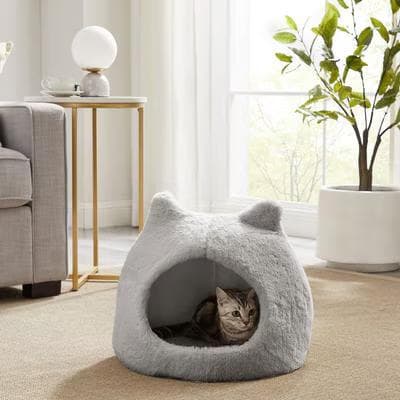
Covered, igloo-style cat bed in soft plush with a water-resistant bottom, giving cats a cozy enclosed spot to curl up. Grey.
Webvet may earn a commission when you click through to Chewy, at no extra cost to you.
Cats cycle through a surprising range of sleeping poses, and three main drivers explain almost all of them: temperature, security, and comfort. Understanding these makes every position easier to read.
- Temperature: curled and tucked poses trap body heat and are common when a cat is cool, while stretched-out and belly-exposed poses shed heat and appear when a cat is warm.
- Security: as both predators and prey, cats instinctively protect their vital organs. A guarded pose keeps the belly hidden and the cat ready to spring, while an exposed pose means the cat feels no threat.
- Comfort and joints: surface, softness, and any joint stiffness influence the pose, which is why older or arthritic cats may favor certain positions and avoid others.
Keep these three drivers in mind as you read the positions below. A single pose rarely has one fixed meaning; it is the combination of the position, the setting, and your cat's overall demeanor that tells the real story.
Cat Sleeping Positions Chart
Here is an at-a-glance chart of the most common cat sleeping positions, what each one looks like, and what it usually means. Use it as a quick reference, then read the detailed sections for the full picture.
| Position | What it looks like | What it usually means |
|---|---|---|
| The curl (crescent) | Curled in a tight ball, tail over nose | Conserving warmth and feeling cozy; a common resting default |
| The loaf | Sitting with all paws tucked under the body | Relaxed but ready; content and mildly alert |
| Side sprawl | Lying on the side, legs extended | Comfortable and fairly secure; deeper sleep |
| Belly up | On the back, belly and paws exposed | Maximum trust and relaxation; feels completely safe |
| Superman / sploot | Flat on belly, legs stretched out | Playful, warm, and relaxed, often on a cool surface |
| Paws over eyes | A paw draped across the face | Blocking light and settling in for deep sleep |
| Perched / monorail | Balanced upright on a narrow edge | Light dozing while keeping a high, watchful vantage |
| Hidden (box, under bed) | Tucked into an enclosed or dark spot | Seeking security and warmth; usually normal denning |
The Curl / Crescent (Curled Up in a Ball)

The classic curl, or crescent, is a cat wound into a tight ball with the tail often wrapped over the nose. It is one of the most common poses and mostly comes down to warmth: curling minimizes the surface area exposed to cool air and traps body heat. It also tucks the belly and throat away, so it doubles as a lightly protective position. For a deeper look at this specific pose, see our guide to the cat curled up in a ball position.
A curled cat is usually a comfortable, cozy cat. On its own, curling is not a worry sign. It only becomes worth a second look if a cat that normally sprawls suddenly curls up tightly all the time and seems reluctant to move, which can occasionally point to feeling cold or unwell rather than simply cozy.
The Loaf (and the Half-Loaf)

The loaf, where a cat sits with all four paws and its tail tucked neatly under the body so it resembles a loaf of bread, is a beloved feline classic. A relaxed loaf usually means a cat that is content and comfortable but still mildly alert and ready to get up if something interesting happens. The half-loaf, with the head starting to droop or one paw poking out, is the transition into deeper rest. Our detailed cat loaf position guide explains the variations.
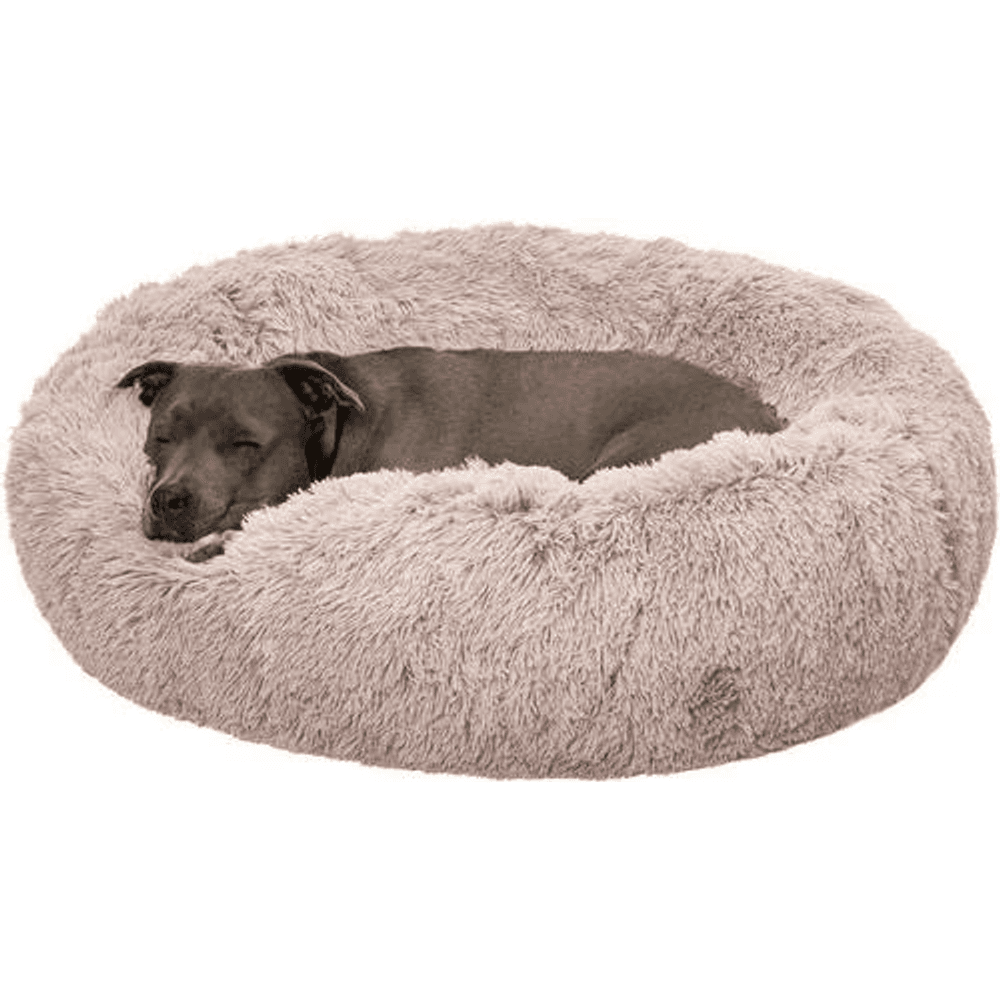
A plush, long-fur donut bolster bed with a raised rim that gives a recovering pet a secure, cushioned place to curl up during the crucial 10 to 14 days after surgery.
Webvet may earn a commission when you click through to Chewy, at no extra cost to you.
There is one nuance worth knowing. Because the loaf also tucks the paws under, cats sometimes adopt it when they are cold or, occasionally, when they are guarding a sore paw or hiding discomfort. A relaxed, soft-faced loaf is normal and healthy. A tense loaf with hunched shoulders, squinted eyes, and a rigid look is different, and we cover that later in the section on sleep positions that may signal a sick cat.
On Their Side / Side Sprawl

When a cat sleeps on its side with its legs extended, it has let its guard down. The side sprawl leaves the belly partly exposed and makes it slower to spring up, so cats only adopt it when they feel secure in their surroundings. It is also a position that sheds heat, so you will see it more on warm days or in sunny spots. Side sleeping is often associated with deeper, more restful sleep than the upright loaf.
A cat that regularly sleeps sprawled on its side in the open is a confident, relaxed cat that trusts its home. This is a healthy, happy pose with no downside to worry about.
Belly Up (On Their Back)

Sleeping belly-up, flat on the back with the soft underside and paws exposed, is the ultimate trust position. The belly is a cat's most vulnerable area, protecting vital organs with little more than skin, so a cat that sleeps this way is announcing that it feels completely safe and free of threats. Our guide to the cat sleeping on its back position digs into exactly why this pose is such a strong signal of security.
The Superman / Sploot

The Superman, or sploot, is a cat lying flat on its belly with the back legs stretched straight out behind and the front legs reaching forward, as if in mid-flight. It is most common in kittens and playful, limber cats, and it often shows up on cool surfaces like tile or wood, because pressing the belly against a cool floor helps a warm cat shed heat. It reads as relaxed, comfortable, and a little goofy.
The sploot is generally a happy, healthy pose. The only caveat is joint comfort: cats that comfortably splay their legs are showing off good flexibility. If an older cat suddenly stops splooting and seems stiff getting up, that may be a sign of arthritis worth mentioning to your vet, not a problem with the pose itself.
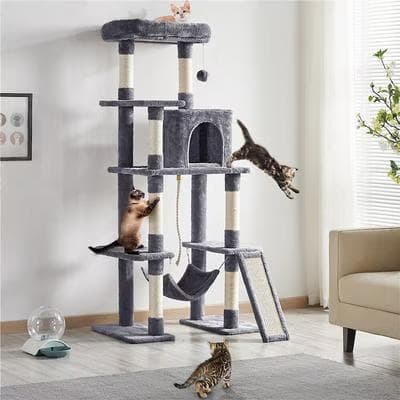
63-inch multi-level cat tree with plush perches, a condo, a hammock, sisal scratching posts, and a dangling toy. Dark gray.
Webvet may earn a commission when you click through to Chewy, at no extra cost to you.
The Contortionist / Pretzel Positions
Sometimes cats fall asleep twisted into poses that look physically impossible, with the head tucked back toward the hind legs or the body folded into a pretzel. Cats are extraordinarily flexible, with a spine and shoulders built for squeezing and stretching, so these contortions are comfortable for them even when they look uncomfortable to us. A cat that flops into a pretzel is deeply relaxed and secure enough to abandon any guarded posture.
These quirky positions are normal and nothing to worry about. As always, it is a change from your cat's usual behavior, not the oddness of a single pose, that would be worth watching.
Paws Over the Eyes (The Visor)
When a cat drapes a paw across its face while sleeping, it is usually doing exactly what it looks like: blocking out light to sleep more soundly. The paw-over-eyes visor tends to appear during deep, settled sleep, often in a bright room, and it can also be a subtle do-not-disturb signal. It is one of the most endearing poses and a sign of a cat that has committed to a serious nap.
This position is perfectly normal and healthy. There is no hidden meaning to worry about beyond a cat that wants a darker, quieter sleep.
Eyes Open or Half-Open While Sleeping
It can be unnerving to catch your cat apparently asleep with its eyes half-open, sometimes with the whitish third eyelid partly across the eye. In light sleep this is usually normal. Cats spend much of their sleep in a shallow doze from which they can wake instantly, and during that state the eyes may not fully close. A cat resting with half-open, glassy eyes is often just lightly napping while staying ready to react.
When it is worth attention: if the third eyelid stays visible while your cat is awake and alert, that can be a sign of illness or pain and is worth a vet check. During light sleep, though, a partly visible third eyelid is generally harmless.
Sitting Upright / The Monorail (Perched on Furniture)
Some cats doze while perched upright on a narrow ledge, the back of a sofa, or a windowsill, balanced in what owners affectionately call the monorail. Sleeping up high and in a ready position is a nod to a cat's instinct to keep a watchful vantage point. From a height, a cat can survey its territory and spot anything approaching, so this pose combines rest with a sense of control over the environment.
Perched dozing is normal and often just reflects a cat's love of high places and sunny ledges. It is only worth noting if a cat that used to sleep comfortably on the floor suddenly insists on being up high and hidden, which, combined with other changes, can reflect stress.
The Faceplant / Face-Down

360-degree Wi-Fi pet camera so you can watch your cat's resting breathing rate and behavior from your phone and catch worrying changes early.
Webvet may earn a commission when you click through to Chewy, at no extra cost to you.
The faceplant, where a cat sleeps with its face pressed straight down into a blanket, cushion, or its own paws, looks comical but is simply a very relaxed cat. Pressing the face down blocks light and muffles sound, similar to the paws-over-eyes visor, and it often means a cat has drifted into deep sleep. Kittens and cats that feel utterly safe are especially prone to the dramatic faceplant.
This is a normal, healthy sign of a comfortable cat in deep sleep. As long as your cat is breathing easily and rouses normally, a faceplant is nothing but adorable.
Sleeping On You: Chest, Head, Feet, and the Little Spoon
When a cat chooses to sleep on you, whether curled on your chest, tucked against your head, draped over your feet, or nestled between your legs, it is combining warmth, comfort, and trust. You are warm, you smell familiar and safe, and sleeping on you means your cat wants to be near its favorite source of security. Different spots have slightly different flavors: sleeping on your chest or head keeps a cat close to your scent and heartbeat, while sleeping at your feet offers closeness with a quicker escape route. Our full guide to why your cat sleeps on you covers each variation in detail.
Some cats even sleep pressed along your side like a little spoon, which is about as clear a bonding signal as a cat can give. All of these on-you positions are healthy signs of attachment. The only practical note is that a cat sleeping on your chest or face at night can disturb your own sleep, so it is fine to gently relocate a cat to a cozy spot nearby if you need to.
Where Your Cat Sleeps On Your Bed and What It Means
If your cat sleeps on your bed but not on you, the spot it chooses still carries meaning. A cat that sleeps up near your pillow or head is seeking closeness and your reassuring scent, and often has a strong bond with you. A cat that settles at the foot of the bed wants to be near you while keeping a little independence and an easy exit, which is common for cats that are affectionate but also value their space.
A cat that sleeps between two people is often bonded to both, or is simply claiming the warmest, most central spot. None of these placements is better or worse; they reflect a mix of your cat's temperament, its bond with you, and where it feels most comfortable. Take any bed-sharing as a general vote of confidence in you.
Sleeping With Other Cats or a Dog (The Kitty Pile)
When cats sleep curled up together in a kitty pile, or snuggle up to a friendly dog, it is a strong sign of trust and social bonding between them. Cats do not sleep touching animals they feel threatened by, so a shared sleeping spot means they see each other as safe companions. Piling also shares warmth, an echo of how kittens sleep together in a litter for heat and comfort.
Not all cats pile, and that is fine too. Many perfectly bonded cats prefer to sleep apart, especially in warm weather or in homes with plenty of space. A lack of cuddling does not mean your cats dislike each other; it simply reflects individual preference and temperature. If cats that used to sleep together suddenly stop and seem tense around each other, though, that can signal a brewing conflict worth addressing.
Hidden Sleepers: In a Box, Under the Blanket, Under the Bed
Many cats love to sleep tucked into enclosed spaces: a cardboard box, a closet, under a blanket, or beneath the bed. This denning instinct is completely natural. An enclosed space feels secure, holds warmth, and offers a hidden vantage point, which taps into a cat's deep preference for cozy, defensible resting spots. A cat curled up in a box is usually a content, comfortable cat enjoying a snug den.
The nuance is how much and how suddenly. Occasional hiding to sleep is normal. But a cat that abruptly starts hiding far more than usual, retreats to isolated spots it never used before, and withdraws from the household can be telling you it feels unwell or stressed. In cats, increased hiding is a classic way of masking illness, so a sudden change deserves attention.
Sleeping Positions That May Signal a Sick Cat
Cats are experts at hiding illness, and sometimes the first clue is a change in how and where they sleep. The pose itself is rarely the whole story; it is the shift from your cat's normal that matters. Our dedicated guide to cat sleeping positions when sick goes deeper, but here are the patterns most worth knowing.
- The tense, hunched loaf: a loaf with hunched shoulders, squinted or half-closed eyes, and a rigid, guarded look, rather than a soft relaxed loaf, can signal pain or nausea.
- Sleeping by the water bowl: a cat that starts resting near its water can be drinking excessively, which is associated with conditions like kidney disease, diabetes, and hyperthyroidism.
- Sleeping near or in the litter box: lingering by the litter box can point to urinary problems or constipation, both of which warrant a prompt vet visit.
- A big change in how much or where: sleeping much more than usual, being unusually hard to rouse, or hiding away far more than normal are all reasons to look closer.
- Head pressing: pressing the head firmly against a wall or hard surface is not a sleeping position at all and is a serious neurological red flag that needs emergency care.
Do Male and Female Cats Sleep Differently?
Owners often wonder whether a cat's sex changes how it sleeps, but there is no strong, reliable difference in sleeping positions between male and female cats. Far more important than sex are individual personality, age, health, and how safe a cat feels at home. A bold, confident cat of either sex is more likely to sprawl belly-up in the open, while a shyer cat may prefer curled, hidden spots.
Age and health shape sleep far more than sex does. Kittens and seniors sleep more, arthritic cats avoid certain poses, and any cat feeling unwell may change where and how it rests. So if you are trying to read your cat's positions, focus on your individual cat's normal rather than expecting male and female cats to behave differently.
What Cat Sleeping Positions Tell You About Trust and Bonding
Taken together, sleeping positions form a rough trust scale. Guarded poses, such as an upright loaf, sleeping perched and ready, or hiding, keep a cat protected and prepared to move. Exposed poses, such as the side sprawl, the belly-up flop, and sleeping pressed against you, mean a cat has dropped its guard because it feels safe. Neither end is bad, but a cat that grows more relaxed and exposed over time is usually a cat that is settling in and trusting you more.
Where your cat sleeps relative to you is part of that picture. Choosing to sleep on you or right beside you is a meaningful bonding signal, and we explore those spot-by-spot meanings in our guide to cat sleeping positions with owner meaning. Body language while awake completes the story, and our friends at Petful have a helpful primer on
how to pet a cat so you can build even more of that trust during waking hours. The more a cat learns that its resting spots are respected and never disturbed, the more relaxed its sleeping positions tend to become.
When to Call the Vet About Your Cat's Sleep
The vast majority of sleeping positions are normal and simply reflect warmth, comfort, and how safe your cat feels. Because cats hide illness so well, though, a clear change in sleep is one of the more useful early clues you have. Focus on changes from your cat's baseline rather than any single pose.
Book a vet visit if your cat suddenly sleeps a lot more or a lot less, hides far more than usual, adopts a tense hunched posture at rest, starts sleeping by the water bowl or litter box, or is unusually difficult to wake. Seek emergency care right away for labored or open-mouth breathing while resting, collapse, or head pressing. A cat that is simply sprawling, splooting, loafing, and dozing the day away in its usual spots, on the other hand, is very likely a happy, healthy cat.
Frequently Asked Questions
Where your cat sleeps on your bed and what does it mean?
Where your cat sleeps on your bed reflects a mix of bonding and how it likes to balance closeness with independence. A cat that sleeps up near your pillow or head is seeking your scent and reassurance and usually has a strong bond with you. A cat at the foot of the bed wants to be near you while keeping an easy escape route, which suits affectionate but independent cats. A cat that settles between two people is often bonded to both or simply claiming the warmest, most central spot. None of these placements is better than another; they reflect your cat's temperament, its bond with you, and where it feels most comfortable and warm.
What annoys a cat the most?
Cats are most annoyed by things that threaten their sense of safety and control. Common irritants include being disturbed or grabbed while sleeping, unwanted belly rubs, loud or chaotic environments, strong smells, a dirty litter box, sudden changes to their routine or territory, and being petted for too long or in the wrong spot. Many cats also dislike being stared at directly, close confinement, and forced handling. Respecting a sleeping cat's chosen resting spot and reading its body language for signs it wants space goes a long way toward keeping a cat relaxed and content.
Can cats hear you speak?
Yes. Cats have excellent hearing and can absolutely hear you speak, including while they are lightly dozing. Their hearing range is broader than ours, especially at high frequencies, and they can pinpoint the source of a sound very accurately. Research suggests cats can recognize their owner's voice and even their own name, though they often choose not to respond. This is one reason a sleeping cat may flick an ear or half-open its eyes when you talk: it is monitoring its surroundings even at rest, which fits the light, ready sleep cats spend much of their day in.
Do cats get sad when you leave?
Cats can and do form strong attachments to their people, and some experience real distress when left alone, a pattern known as separation-related behavior. Signs can include excessive vocalizing, house soiling, over-grooming, reduced appetite, or clingy behavior around departures and returns. It varies a lot by individual: some cats are quite independent, while others are noticeably bonded and affected by absences. Keeping a predictable routine, providing enrichment and safe cozy resting spots, and easing the transition can help. If a cat seems seriously distressed when alone, a veterinarian or veterinary behaviorist can help rule out medical causes and build a plan.
What is the 3-3-3 rule of cats?
The 3-3-3 rule is a rough guideline for helping a newly adopted cat settle in. It suggests giving the cat about 3 days to decompress and feel safe, often hiding and sleeping in guarded spots at first, about 3 weeks to start learning the routine and showing more of its personality, and about 3 months to feel fully at home and truly bonded. It is a helpful reminder to be patient and let a new cat adjust at its own pace. You will often see it in the sleeping positions: a new cat that starts out hidden and curled tight and gradually shifts to sprawling in the open is a cat that is learning to trust its new home.
What do cats do right before they pass away?
As cats near the end of life, common signs include sleeping far more than usual and being hard to rouse, hiding away in quiet secluded spots, a marked drop in appetite and thirst, weakness and reluctance to move, weight loss, poor grooming, and changes in breathing. Some cats become withdrawn while others seek more closeness. These changes overlap with signs of treatable illness, so they are never something to assume or wait out. If your cat is showing these signs, contact your veterinarian promptly to assess what is happening, address any pain, and discuss compassionate options. A vet is the right person to guide you through this.
What is the one meat to never feed a cat?
There is no single meat that is universally toxic to cats, but the meat most often flagged to avoid is raw or undercooked pork, and raw meat in general, because of the risk of parasites and bacteria like Salmonella. Beyond that, avoid feeding cats cured or heavily processed meats such as bacon, ham, sausage, and deli meats, which are very high in salt, fat, and preservatives. Cooked bones should never be given, as they can splinter. Cats are obligate carnivores and thrive on a complete, balanced cat food, so treat any meat as an occasional plain, cooked, boneless extra rather than a staple, and check with your vet about a suitable diet.
How do we say "hi" in cat language?
The friendliest way to say hi in cat language is the slow blink. Look at your cat, then slowly close and reopen your eyes in a relaxed way. Cats use this soft, slow blink to signal that they feel calm and non-threatening, and many will slow-blink back. You can also greet a cat by offering a finger or hand at its nose height and letting it approach and sniff, rather than reaching over its head. Speaking in a soft, higher-pitched voice and letting the cat set the pace helps too. Avoid direct hard staring, which cats read as a challenge. A slow blink from across the room is a gentle hello a sleepy, relaxed cat will appreciate.

Editor
The Webvet Editorial Team is the in-house group of pet-care editors and writers behind Webvet, operated by Smart Pet Collective. The team researches, writes, and maintains Webvet's pet health, behavior, and medication content. Every article follows a defined editorial process: research from reputable veterinary and scientific sources, careful drafting, mandatory review of medical content by a credentialed veterinarian, and dated publication. Health and medication articles are medically reviewed by a licensed veterinary professional before they go live and are kept current over time.


