How Much Do Cats Sleep? Hours by Age and Red Flags
Cats sleep 12 to 16 hours a day, with kittens and seniors sleeping even more. See the age-by-age sleep chart, why cats sleep so much, and when it signals a health problem.

BVMS MRCVS
Medically reviewed by Dr. Pippa Elliott, BVMS MRCVS · Last reviewed

This article contains affiliate links. Webvet may earn a commission when you buy through them, at no extra cost to you.
If you have ever wondered how much do cats sleep, the short answer is a lot. A healthy adult cat sleeps roughly 12 to 16 hours a day, and kittens and senior cats often sleep even more. That may look lazy, but it is normal biology for a small predator. This vet-reviewed guide breaks down sleep by age, explains why cats rest so much, and shows you the red flags that mean it is time to call your vet.
- 1Adult cats (1 to 10 years) sleep about 12 to 16 hours a day; kittens and seniors sleep even more.
- 2Newborn kittens sleep up to 20 to 22 hours a day, and cats over 10 years often sleep 16 to 20 hours.
- 3Cats are crepuscular, most active at dawn and dusk, so daytime sleep is completely normal.
- 4About three-quarters of a cat's sleep is light dozing, not deep sleep, which is why they wake instantly.
- 5A sudden, lasting change in how much your cat sleeps, up or down, is the real red flag to act on.
Quick answer: how much do cats sleep?
Most healthy adult cats sleep 12 to 16 hours a day. That is roughly twice as much as a person. Sleep needs shift with age: newborn kittens rest almost around the clock, while older cats slow down and rest more again. What matters most for health is not the exact number but whether your cat's pattern is steady for that individual.
Cats also do not sleep in one long block the way we do. They take many short naps across the day and night, and most of that time is light sleep they can snap out of in a second. So a cat that appears to sleep all day is usually resting on and off, not deeply unconscious for 16 straight hours.
How many hours a day do cats sleep by age (chart)
Sleep needs change a lot across a cat's life. Use this age-by-age chart as a normal-range guide, then compare it to your own cat's habits.
| Life stage | Age | Typical sleep per day | What is normal |
|---|---|---|---|
| Newborn kitten | 0 to 6 weeks | 20 to 22 hours | Sleeps almost constantly; wakes mainly to nurse. Sleep drives rapid growth. |
| Kitten | 6 weeks to 6 months | 16 to 20 hours | Intense play bursts followed by long crash naps as energy is rebuilt. |
| Adult cat | 1 to 10 years | 12 to 16 hours | Settled routine; naps clustered around midday, active at dawn and dusk. |
| Senior cat | 10+ years | 16 to 20 hours | More rest as metabolism and mobility slow; still should be alert when awake. |

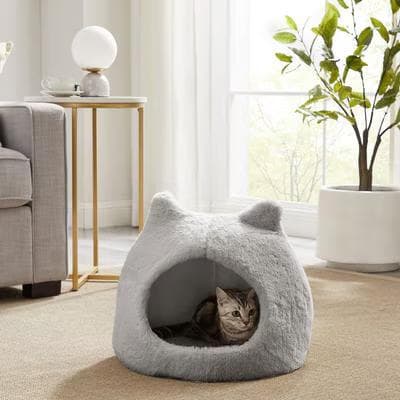
Covered, igloo-style cat bed in soft plush with a water-resistant bottom, giving cats a cozy enclosed spot to curl up. Grey.
Webvet may earn a commission when you click through to Chewy, at no extra cost to you.
Newborn kittens and young kittens: up to 22 hours
Newborn kittens sleep almost all day, often 20 to 22 hours. Their bodies release growth hormone during sleep, so all that rest literally builds muscle, bone, and brain. As kittens grow past a few weeks old, they trade some sleep for wild play, then crash hard afterward. If you want the full early-life picture, our how much do dogs sleep guide shows the same growth-driven pattern in puppies for comparison.
Adult cats (1 to 10 years): 12 to 16 hours
Adult cats settle into a predictable rhythm. Expect roughly 12 to 16 hours spread across many naps, with the deepest daytime lulls around midday when it is warm. Indoor cats with little to do may drift toward the higher end simply from boredom, which is normal but worth enriching with play and climbing space.
Senior cats (10+ years): 16 to 20 hours

Senior cats sleep more again, often 16 to 20 hours. A slower metabolism, less muscle, and stiffer joints all mean they conserve energy. That extra rest is usually normal aging. The caution is that some diseases common in older cats also cause more sleep, so a sudden jump in an older cat deserves a closer look (more on that below).
Why do cats sleep so much? The predator biology
Cats sleep so much because they are built as small, ambush hunters. Even a pampered house cat carries the wiring of an animal that has to hunt for every meal, and that wiring shapes the whole sleep pattern.
Hunting takes explosive energy
A wild cat's hunt is short, intense, and expensive: stalk, sprint, pounce, kill. Those bursts burn a lot of fuel fast. Long stretches of rest between hunts are how cats bank energy for the next chase. Your cat does not need to hunt for dinner, but the instinct to conserve energy between activity spikes is still hardwired in.
Cats are crepuscular, not nocturnal

A common myth is that cats are nocturnal. They are actually crepuscular, meaning they are naturally most active at dawn and dusk. That is when their prey moves and when their low-light vision gives them an edge. This is why your cat may nap through the middle of the day, then get a burst of zoomies at 5 a.m. or in the evening. The daytime sleep you see is the flip side of that dawn-and-dusk activity clock.
Weather, boredom, and age also play a role
Several everyday factors nudge sleep up or down:
- Weather: cold, grey, or rainy days tend to make cats sleep more, just like us.
- Boredom: an under-stimulated indoor cat may sleep out of sheer lack of anything better to do.
- Age: very young and very old cats both rest more than cats in their prime.
- Diet and meal timing: a full, well-fed cat naturally settles into rest after eating.
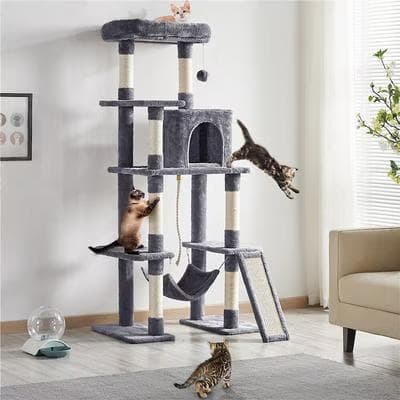
63-inch multi-level cat tree with plush perches, a condo, a hammock, sisal scratching posts, and a dangling toy. Dark gray.
Webvet may earn a commission when you click through to Chewy, at no extra cost to you.
 $65 · no membership
Have a health question about your cat?
A licensed vet can assess your cat over video and prescribe online when it's appropriate.
 Talk to a vet
- Licensed vets
- All 50 states
- same-day Rx
Webvet may earn a commission if you book.
Are cats really asleep? Light sleep vs deep sleep
Not all cat sleep is the deep, dead-to-the-world kind. Cats cycle between light dozing and short spells of deep sleep, and understanding the difference explains a lot of their odd behavior.
The cat nap explained (about 75% light sleep)

Roughly three-quarters of a cat's sleep is light sleep. In this dozing state the cat's muscles stay slightly tense, the ears keep swiveling toward sounds, and the eyes may crack open. This is the classic cat nap: rest that can flip to full alertness in an instant if a can opener runs or a bird lands nearby. Only about a quarter of sleep is true deep sleep, and it comes in short 5 to 15 minute stretches.
This pattern is called polyphasic sleep: rather than one long block, a cat strings together dozens of short cycles a day, each lasting only minutes to an hour. It is an efficient design for an animal that must stay ready to hunt or flee. The trade-off is that no single nap is very long, which is why your cat seems to be both asleep and instantly available all day.
What your cat's sleeping position tells you
How a cat holds its body while resting hints at how deeply it is sleeping and how safe it feels. None of these positions is a health problem on its own, but a sudden change in a long-standing habit can be a useful clue.
- The loaf: paws tucked under the body, upright and ready. This is light rest, not deep sleep, and the cat can be up and moving in a heartbeat.
- Curled in a ball: the classic cozy pose that conserves body heat and protects the belly. Common in cooler rooms and during deeper sleep.
- Belly up: exposing the belly is a sign of deep trust and comfort, since it is the most vulnerable position a cat can take.
- Hunched and hiding: a cat that suddenly sleeps tucked away in odd, hard-to-reach spots may be feeling unwell, stressed, or in pain, and is worth watching.
Do cats dream?
Almost certainly, yes. During deep sleep cats enter REM (rapid eye movement) sleep, the same brain stage tied to dreaming in people. This is when you may see whiskers twitch, paws paddle, or a tail flick. Those little movements are usually a sign your cat is dreaming, and they are perfectly normal. Full-body violent thrashing or a cat that cannot be roused is different and worth a vet call.
How much do cats sleep at night vs during the day?
Cats spread their sleep across 24 hours rather than saving it all for the night. Because they are crepuscular, they often bank a lot of daytime sleep, then wake for activity around dawn and dusk. Many house cats do learn to sleep more at night alongside their people, but it is not their default setting.
Why your cat wakes you at dawn
That 5 a.m. wake-up call is your cat's crepuscular clock firing on schedule. Dawn is prime hunting time, so a rested cat is ready to play, patrol, and be fed. If your cat also cries or paces at night, it may just be under-exercised, though in senior cats new nighttime restlessness can point to a health issue.
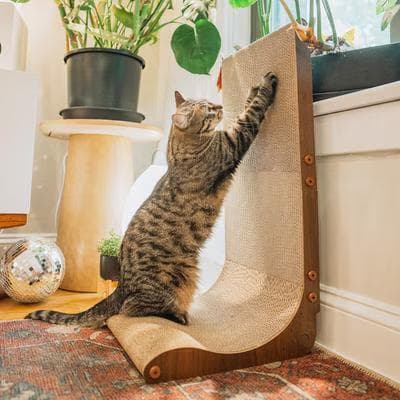
Curved cardboard wall scratcher with a wood frame that protects walls and gives cats a satisfying vertical scratch surface.
Webvet may earn a commission when you click through to Chewy, at no extra cost to you.
How to shift your cat toward nighttime sleep
- Schedule a vigorous play session in the evening to mimic a hunt and burn energy.
- Feed the largest meal right after that play session, so the cat hunts, eats, then grooms and sleeps.
- Add daytime enrichment (puzzle feeders, window perches, toys) so the cat naps less out of boredom.
- Do not reward early-morning wake-ups with food or attention, which only trains the behavior.
Do kittens sleep through the night?
Not reliably at first. A young kitten packs its 16 to 20 hours of sleep into short bursts around the clock, so it will often wake, play, and cry at 3 a.m. no matter how tired you are. Most kittens gradually shift more of their sleep to nighttime by around 6 months as they grow and learn the household rhythm.
You can speed that along with a firm evening play-and-feed routine, plenty of daytime activity, and by not turning midnight yowls into playtime. In a multi-cat home, a second cat can actually help by giving each other a playmate during those dawn energy spikes, so neither one has to wake you for entertainment.
Do cats sleep more than dogs, or in the wild?
On average, yes, cats sleep a bit more than dogs. Most dogs sleep around 12 to 14 hours a day, while adult cats land in the 12 to 16 hour range and can drift higher. You can see the canine side of this in our how much do dogs sleep guide and in the broader look at dog energy levels by age.
Wild and feral cats sleep in the same broad range, but their pattern is more scattered and hunting-driven. Without a bowl of food waiting, they rest whenever they are not hunting, patrolling territory, or staying safe from larger predators. The house cat on your couch runs the same software with far fewer demands, which is part of why a well-fed indoor cat can lean toward the higher end of the sleep range.
Normal vs. concerning: when cat sleep is a red flag
A lot of sleep is normal. What matters is a change from your cat's own baseline. Learn what is typical for your cat so you can spot when something is off.
Sleeping more than usual (lethargy warning signs)
There is an important difference between sleepiness and lethargy. A sleepy cat rests but perks up normally for food, play, or a favorite person. A lethargic cat stays dull and flat even when awake. Treat these as warning signs:
- No interest in food, treats, toys, or greeting you.
- Hiding in unusual spots or withdrawing from the household.
- Sleeping through meals or missing the litter box.
- Extra sleep paired with vomiting, weight loss, or changes in thirst.

A plush orthopedic foam mattress that cushions aging joints and pressure points, giving a stiff or trembling senior dog warm, supportive rest.
Webvet may earn a commission when you click through to Chewy, at no extra cost to you.
Sleeping less, restlessness, or waking at night
Too little sleep matters too. A cat that suddenly cannot settle, paces, vocalizes at night, or seems agitated may be in pain or dealing with a medical issue such as an overactive thyroid or high blood pressure. New night yowling in an older cat is a classic reason to book a vet visit.
Sudden changes in a senior cat
In cats over 10, any sudden shift in sleep, either much more or much less, deserves attention. Senior cats naturally rest more, but they also develop conditions that alter sleep. Do not write off a big change as just old age without a checkup.
Health conditions linked to changes in cat sleep
Several common feline illnesses show up first as a change in sleep or energy. Knowing them helps you describe what you are seeing to your vet.
| Condition | How it can affect sleep |
|---|---|
| Hyperthyroidism | Often causes restlessness, less sleep, night yowling, weight loss, and increased appetite in older cats. |
| Diabetes | Can cause more sleep and low energy alongside increased thirst, urination, and appetite changes. |
| Kidney disease | Common in seniors; leads to lethargy, more sleep, poor appetite, and increased drinking. |
| Arthritis or pain | Discomfort makes cats rest more, move less, and sleep in new low-effort spots. |
| Infection or fever | Illness commonly triggers extra sleep and withdrawal as the body fights it. |
| Cognitive decline (senior) | Alters the sleep-wake cycle, causing daytime sleep and nighttime confusion or vocalizing. |
| Anemia | A low red blood cell count starves tissues of oxygen, leaving the cat weak, tired, and sleeping more than usual. |
| Stress or anxiety | Can push sleep either way: some cats hide and rest more, others become restless and unsettled after a move, new pet, or routine change. |
This list is a starting point, not a diagnosis. Only your vet can confirm what is behind a change in your cat's sleep, usually with an exam and bloodwork.
When to call your vet

Book a vet visit when the change is sudden, lasts more than a day or two, or comes with other symptoms. Specifically, call your vet if your cat:
- Sleeps far more than usual and seems dull or lethargic when awake.
- Stops eating, drinking, or using the litter box normally.
- Becomes restless, paces, or yowls at night, especially if senior.
- Shows extra sleep with vomiting, weight loss, or breathing changes.
When in doubt, call. It is always better to have a professional rule out a problem early than to wait and hope. Keeping a simple note of your cat's normal sleep habits makes these calls much easier.
How to help your cat sleep on a healthier schedule
You cannot rewrite a cat's crepuscular nature, but you can shape it so your cat rests well and bothers you less at night. Focus on activity, routine, and comfort.
Habits that help vs. habits that hurt cat sleep
Pros
- A consistent evening play-then-feed routine to satisfy the hunt-eat-sleep cycle
- Daytime enrichment like puzzle feeders, perches, and rotating toys
- A warm, quiet, draft-free sleeping spot the cat can call its own
- Regular vet checkups to catch health issues that change sleep early
Cons
- Rewarding 5 a.m. wake-ups with food or attention, which trains the behavior
- Leaving an indoor cat under-stimulated all day, driving boredom sleep
- Ignoring a sudden lasting change in sleep as just laziness or old age
- Frequent disruptions to a cat's chosen resting place and routine
Small, consistent changes work better than big ones. Give it a week or two of steady routine before judging whether it is helping, and loop in your vet if sleep problems persist.
Frequently asked questions
Do cats sleep for 70% of their lives?
Roughly, yes. If an adult cat sleeps about 15 hours out of 24, that is a little over 60% of the day, and kittens and seniors who sleep 18 to 22 hours push the lifetime average toward and even past 70%. So the popular claim that cats spend around two-thirds to 70% of their lives asleep is a fair estimate, mostly driven by the very high sleep needs at the start and end of life.
What is the 3-3-3 rule with cats?
The 3-3-3 rule is a rough guide for helping a newly adopted cat adjust to a new home. It suggests giving the cat about 3 days to decompress and hide, about 3 weeks to start learning the routine and feeling more comfortable, and about 3 months to fully settle in and feel at home. During those first days a stressed new cat may sleep or hide more than usual, which is normal adjustment, not necessarily a health problem. Set up a small, quiet safe room with food, water, a litter box, and a hiding spot so the cat can rest without feeling exposed. If the cat still will not eat or comes out after several days, or seems sick rather than just shy, that is a reason to call your vet rather than wait out the timeline.
How do you say "I love you" in cat language?
The most reliable way to say "I love you" in cat language is the slow blink. When your cat looks at you and slowly closes and opens its eyes, it is signaling trust and affection, and you can return it by slowly blinking back. Cats also show love by choosing to sleep near or on you, since resting beside someone means they feel completely safe. So a cat that naps on your lap is quietly telling you it loves and trusts you.
Is it normal for cats to sleep all day?
Yes, it is usually normal. Cats are crepuscular, so they naturally do most of their sleeping during the day and wake for activity at dawn and dusk. An adult cat sleeping 12 to 16 hours across the day is healthy, and kittens and seniors sleep even more. Remember that most of that daytime sleep is light dozing, so a cat that looks asleep all day is really resting on and off, not unconscious for hours. What is not normal is a sudden change from your cat's usual pattern, or extra sleep combined with dullness, appetite loss, hiding, or other symptoms. In that case, contact your vet.
What smell do cats absolutely hate?
Most cats strongly dislike citrus (orange, lemon, and lime), along with strong smells like vinegar, menthol, and many essential oils. A cat's sense of smell is far more sensitive than ours, so these scents can be overwhelming. A word of caution: many essential oils are actually toxic to cats, so never use them as a deterrent near your cat or its sleeping area. If a strong smell in your home suddenly changes where or how much your cat sleeps, remove it and check that it is not something harmful.
The bottom line: a cat that sleeps 12 to 16 hours a day (more as a kitten or senior) is behaving exactly as nature intended. Learn your own cat's normal, and let any sudden, lasting change be your cue to call the vet. For related reading, see our guides on senior dog health and calculating dog and cat years to better understand how age reshapes your pet's daily rhythm.
$65 · no membershipHave a health question about your cat?
A licensed vet can assess your cat over video and prescribe online when it's appropriate.
Talk to a vet- Licensed vets
- All 50 states
- same-day Rx
Webvet may earn a commission if you book.

Editor
The Webvet Editorial Team is the in-house group of pet-care editors and writers behind Webvet, operated by Smart Pet Collective. The team researches, writes, and maintains Webvet's pet health, behavior, and medication content. Every article follows a defined editorial process: research from reputable veterinary and scientific sources, careful drafting, mandatory review of medical content by a credentialed veterinarian, and dated publication. Health and medication articles are medically reviewed by a licensed veterinary professional before they go live and are kept current over time.
Veterinarian · BVMS MRCVS
Dr. Pippa Elliott, BVMS, MRCVS, is a veterinarian with nearly 30 years of experience in companion animal practice. Dr. Elliott earned her Bachelor of Veterinary Medicine and Surgery from the University of Glasgow. She was also designated a Member of the Royal College of Veterinary Surgeons. Married with 2 grown-up kids, Dr. Elliott has a naughty Puggle named Poggle, 3 cats and a bearded dragon.


