Dog Years to Human Years and Cat Age Chart
Use size-based dog age charts and a cat age chart to estimate an animal's human-age equivalent, understand why the 7-year rule fails, and plan care by life stage.

BVMS MRCVS
Medically reviewed by Dr. Pippa Elliott, BVMS MRCVS · Last reviewed

This article contains affiliate links. Webvet may earn a commission when you buy through them, at no extra cost to you.
Converting dog years to human years is not as simple as multiplying by seven. Dogs mature much faster than people during their first two years, then age at different rates according to body size, breed, genetics, health, and lifestyle. Cats also age quickly early in life, but their later conversion follows a different pattern from dogs.
The American Animal Hospital Association provides the clinical life-stage framework and age chart used for the estimates below. Its guidance recognizes rapid early development and the later effect of adult dog size rather than treating every year as equal. These values help explain whether a pet is broadly young, mature, senior, or geriatric, but they are not a biological clock, a lifespan prediction, or a substitute for an individual veterinary examination.
This combined dog and cat comparison pairs a size-adjusted dog chart with a cat-specific chart. Separate tables preserve the important species and size differences that a single multiplier would hide. Dogs and cats age fastest early in life, which is why both charts move rapidly through their first two chronological years.
Dog Years to Human Years: The Quick Answer
Is 1 year 7 years in dog years? No. The first year is about fifteen human years because canine development is fastest early in life. This is nonlinear aging: the second dog year does not add another fifteen, and later estimates diverge by adult size. Use 15 as a broad first-year comparison, then use the size-adjusted chart rather than multiplying every chronological year by seven.
A one-year-old dog is roughly comparable to a 15-year-old human, not a seven-year-old child. A two-year-old dog is approximately 24 in human-age terms. After that, the estimate changes with adult body size. Small dogs generally accumulate human-age equivalents more slowly than giant dogs.
For example, the chart estimates that a 10-year-old dog is approximately:
- 56 human years at 20 pounds or less
- 60 human years at 21 to 50 pounds
- 66 human years at 51 to 90 pounds
- 78 human years at more than 90 pounds
These numbers help communicate how quickly preventive needs can change. They do not mean a dog thinks, behaves, or experiences the world exactly like a person of the matching age.
- 1The one-dog-year-equals-seven-human-years rule is inaccurate.
- 2Dogs reach the equivalent of young adulthood during their first two chronological years.
- 3Adult size has a large effect on later dog-age estimates.
- 4Cats use a separate chart: about 15 human years at age one, 24 at age two, then roughly four years for each later cat year.
- 5Age conversions are planning aids, not diagnoses or predictions of remaining life.
- 6A dog's first year covers roughly fifteen human years of development, and size becomes the bigger factor later in life.
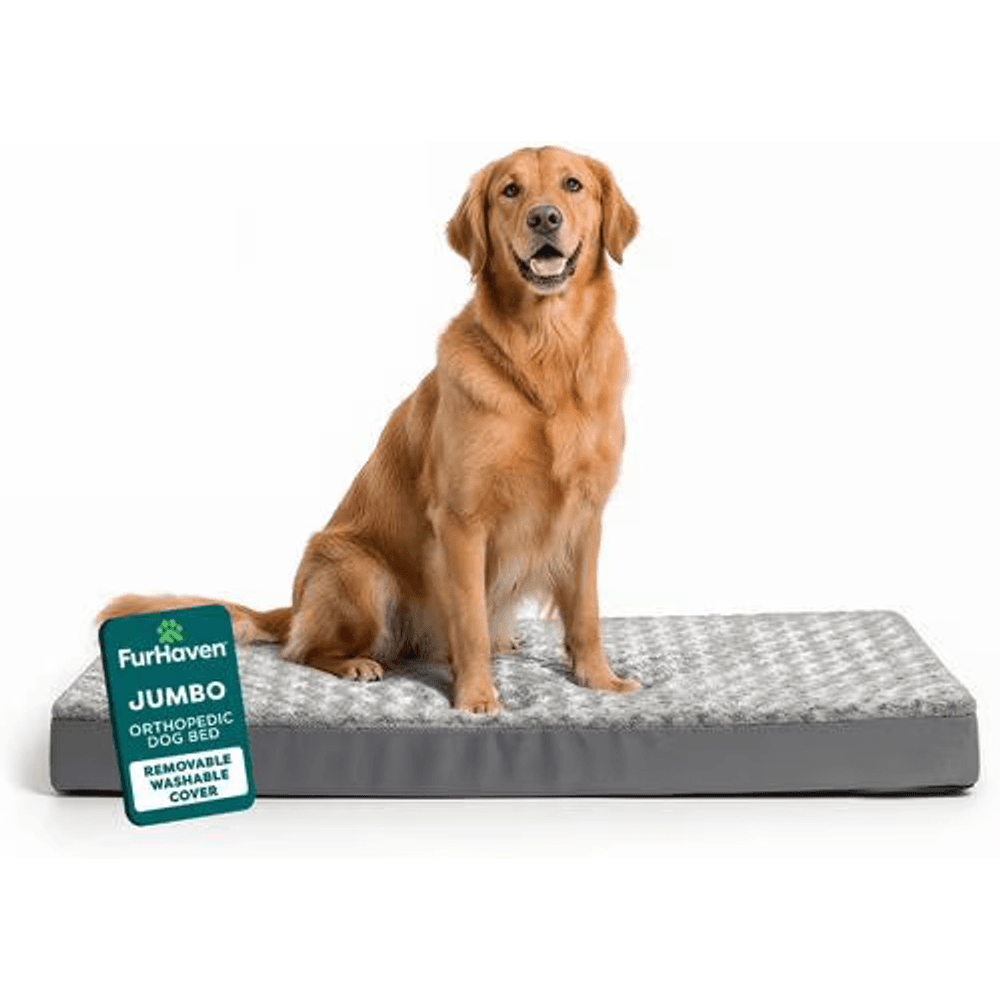
A plush orthopedic foam mattress that cushions aging joints and pressure points, giving a stiff or trembling senior dog warm, supportive rest.
Webvet may earn a commission when you click through to Chewy, at no extra cost to you.
Older pets often appreciate a warm, easy-to-enter resting area. A low-profile orthopedic pet bed may provide a cushioned surface, although bedding does not diagnose or treat joint disease.
How to Calculate Dog Age
Use the dog's chronological age and current adult weight range rather than a single multiplication rule.

- Confirm chronological age. Use the birth or adoption record when available. If age is unknown, a veterinarian can estimate a range by evaluating teeth, eyes, body condition, muscle mass, coat, and overall development. The estimate becomes less precise in adult animals.
- Choose the adult-size column. Use 20 pounds or less, 21 to 50 pounds, 51 to 90 pounds, or more than 90 pounds. For a growing puppy, use the expected healthy adult weight based on breed information and veterinary guidance.
- Find the chronological age row. Read across to the appropriate size column in the dog chart.
- Treat the result as an estimate. A human-age equivalent explains life stage in familiar terms, but it does not determine health status.
- Plan care from the actual pet. Body condition, dental status, mobility, behavior, laboratory findings, medical history, and breed-associated risks are more actionable than the converted number.
Why the seven-year rule fails
If every dog year equaled seven human years, a one-year-old dog would resemble a seven-year-old child. In reality, most one-year-old dogs are sexually mature and much closer to young adulthood. The simple rule also implies that all dogs age at the same rate, even though a 12-pound dog and a 120-pound dog have very different aging patterns.
The seven-year shortcut may have survived because it is memorable, not because it tracks canine biology. Modern veterinary life-stage models acknowledge rapid early development and the widening effect of body size later in life.
The multiply-by-seven rule is inaccurate because it misses both of those changes.
Dog Years to Human Years Chart by Size
The following estimates come from the AAHA canine and feline age chart. Weight ranges refer to adult body weight. A dash means the source chart does not provide an estimate for that age and size.
- Choose the size column carefully. Use expected healthy adult weight, not an overweight dog's current scale reading. For a growing puppy, breed information and veterinary growth assessment can help estimate the adult range. If a mixed-breed dog falls close to a boundary, check both adjacent columns and treat the resulting span as a reasonable estimate rather than selecting the more favorable number.
- Treat the result as a range, not a diagnosis. The dog chart is separated by size because adult weight changes the later conversion. It does not claim that every dog in one column ages identically. Breed-associated risks, body condition, activity, medical history, and preventive care still matter. When age itself is uncertain, a veterinary assessment of teeth, eyes, muscle, and development may provide a range, but accuracy decreases once a dog is fully mature.
- Translate the estimate into care questions. Use the converted number to identify questions for the next visit. It may prompt a discussion about screening, dental care, mobility, nutrition, or behavior. It cannot calculate remaining years or prove that a new symptom is normal.

The number-one veterinarian-recommended joint supplement brand. Glucosamine, chondroitin, and MSM support cartilage and cushion the joints, easing the stiffness and hind-end weakness that can leave an older or arthritic dog trembling.
Webvet may earn a commission when you click through to Chewy, at no extra cost to you.
| Dog size chart: dog age | Approximate equivalent, 20 lb or less | 21-50 lb | 51-90 lb | More than 90 lb |
|---|---|---|---|---|
| 1 year | 15 | 15 | 15 | 15 |
| 2 years | 24 | 24 | 24 | 24 |
| 3 years | 28 | 28 | 30 | 32 |
| 4 years | 32 | 33 | 35 | 37 |
| 5 years | 36 | 37 | 40 | 42 |
| 6 years | 40 | 42 | 45 | 49 |
| 7 years | 44 | 47 | 50 | 56 |
| 8 years | 48 | 51 | 55 | 64 |
| 9 years | 52 | 56 | 61 | 71 |
| 10 years | 56 | 60 | 66 | 78 |
| 11 years | 60 | 65 | 72 | 86 |
| 12 years | 64 | 69 | 77 | 93 |
| 13 years | 68 | 74 | 82 | 101 |
| 14 years | 72 | 78 | 88 | 108 |
| 15 years | 76 | 83 | 93 | 115 |
| 16 years | 80 | 87 | 99 | 123 |
| 17 years | 84 | 92 | 104 | - |
| 18 years | 88 | 96 | 109 | - |
| 19 years | 92 | 101 | 115 | - |
| 20 years | 96 | 105 | 120 | - |
The converted ages are approximate. Do not use a table to decide that a symptom is normal for age or that an apparently young dog can skip preventive care. Review the AAHA canine life-stage guidelines with your veterinarian's recommendations for the individual dog.
How old is a 12 year old dog in dog life? A 12-year-old dog is still 12 chronological years old, but the chart gives different human-age equivalents by size: 64 for a dog at 20 pounds or less, 69 for 21 to 50 pounds, 77 for 51 to 90 pounds, and 93 for more than 90 pounds. Use that estimate to prompt a senior-care discussion, not to assume how the dog feels.
For readers searching 5 dog years to human years, the same row shows approximately 36 human years for a dog at 20 pounds or less, 37 for 21 to 50 pounds, 40 for 51 to 90 pounds, and 42 for more than 90 pounds. The values separate early development from the later effect of adult size more accurately than multiplying five by seven.
 $65 · no membership
Have a health question about your pet?
A licensed vet can assess your pet over video and prescribe online when it's appropriate.
 Talk to a vet
- Licensed vets
- All 50 states
- same-day Rx

Webvet may earn a commission if you book.
Cat Years to Human Years Chart
Cat years are not the same as dog years. Cats also mature rapidly at first: the AAHA chart places a one-year-old cat at about 15 human years and a two-year-old cat at about 24. After age two, each additional chronological year adds roughly four human-age equivalents.


Crunchy dental treats with a texture that helps fight tartar. Oven roasted chicken flavor, veterinarian recommended.
Webvet may earn a commission when you click through to Chewy, at no extra cost to you.
For an adult cat that can chew treats safely, Greenies Feline Oven Roasted Chicken dental treats may be one optional home-care layer. Dental treats do not replace tooth brushing, veterinary oral examinations, or professional cleaning, and they may not fit cats with chewing difficulty, dental pain, food restrictions, or therapeutic diets.
| cat age | Approximate human age and cat life stage | |
|---|---|---|
| 6 months | 10 | Kitten |
| 1 year | 15 | Junior |
| 2 years | 24 | Prime |
| 3 years | 28 | Prime |
| 4 years | 32 | Prime |
| 5 years | 36 | Prime |
| 6 years | 40 | Mature |
| 7 years | 44 | Mature |
| 8 years | 48 | Mature |
| 9 years | 52 | Mature |
| 10 years | 56 | Senior |
| 11 years | 60 | Senior |
| 12 years | 64 | Senior |
| 13 years | 68 | Senior |
| 14 years | 72 | Senior |
| 15 years | 76 | Geriatric |
| 16 years | 80 | Geriatric |
| 17 years | 84 | Geriatric |
| 18 years | 88 | Geriatric |
| 19 years | 92 | Geriatric |
| 20 years | 96 | Geriatric |
| 21 years | 100 | Geriatric |
The AAHA/AAFP feline life-stage guidelines organize care around changing needs rather than treating the converted age as a test result. Cats often conceal discomfort, so decreased jumping, less grooming, litter-box changes, hiding, or irritability can be important even when appetite remains normal.
For an older cat, place food, water, resting areas, scratching surfaces, and a low-entry litter box where they are easy to reach. Learn what is typical in senior cat mobility and ask a veterinarian about persistent changes. Our article on arthritis relief for cats also explains home adjustments and veterinary options.
Why Dog Size Changes the Answer
Dogs develop rapidly at every size, which is why the chart gives the same estimates for ages one and two. Later, larger dogs generally move through life stages more quickly. The difference becomes obvious by age seven: the chart estimates 44 human years for a dog at 20 pounds or less and 56 for a dog over 90 pounds.

Why size is only one part of aging
Body size is only one layer. Breed-associated genetics, body condition, nutrition, exercise, environment, preventive care, and disease all affect healthy aging. Two dogs of the same age and weight can have very different stamina, muscle mass, dental health, and medical needs.
Size also changes when the senior stage may begin. A giant-breed dog may need senior-focused screening while a small dog of the same chronological age is still considered mature adult. The label is a prompt to look more carefully, not a reason to lower expectations. Many older dogs remain active and eager to learn when pain, weight, sensory changes, and medical conditions are addressed.
How are 12 human years in dog years? The reverse question has no exact answer because dogs do not age at a constant rate. On this chart, one chronological dog year is already about 15 human years, so a 12-human-year equivalent falls before the first birthday. If the intended question is about a 12-year-old dog, use the size-specific values in the chart rather than reversing a multiplier.
Plan Care by Life Stage, Not Just the Number
An age conversion becomes useful when it prompts concrete life stage care rather than curiosity alone. The plan should reflect species, breed, size, health history, medications, lifestyle, and current function. A preventive exam can turn a chart estimate into individualized decisions about body condition, teeth, mobility, laboratory screening, cognition, and comfort. The converted age supplies context, while examination findings determine what the dog or cat actually needs next.
Oral health remains important at every age. An Oxyfresh dental water additive may be one optional layer for a dog or cat that tolerates it, but it does not replace tooth brushing, veterinary dental examinations, or professional cleaning when indicated.
This life-stage care checklist is a starting point to personalize with the veterinary team.

Webvet may earn a commission when you click through to Chewy, at no extra cost to you.
For dry paw pads or a dry nose without an open wound, a small amount of Bag Balm pet moisturizermay be a simple comfort aid when used as directed. It does not treat infection, allergy, pain, bleeding, or another underlying condition; stop use if licking or irritation develops, and contact a veterinarian for persistent or worsening skin changes.
Watch the dog's current function:
- Does the dog rise, walk, climb stairs, and lie down comfortably?
- Has interest in play or walks changed?
- Is there new stiffness, slipping, trembling, or reluctance to jump?
- Have sleep, appetite, thirst, urination, or social behavior changed?
- Is the dog gaining or losing weight without an intended plan?
Our guide to dog energy levels by age can help distinguish broad developmental changes from signs worth discussing with a veterinarian. New limitations should not be dismissed simply because a conversion chart calls the dog old.
If your veterinarian says a joint supplement fits the dog's complete health plan, Nutramax Cosequin chewable tablets for dogs are one option to discuss. Supplements can interact with health conditions or medications and do not replace diagnosis, weight management, prescribed treatment, or appropriate activity.
Young pets
- Establish a vaccine and parasite-prevention plan.
- Discuss spay or neuter timing for the individual animal.
- Build positive handling, grooming, carrier, and veterinary-visit habits.
- Feed a complete and balanced growth diet in appropriate portions.
- Protect developing joints while still providing safe exercise and socialization.
- Microchip the pet and keep registration details current.
Mature adults
- Maintain a healthy body condition and muscle mass.
- Continue dental assessment and home care.
- Track trends in weight, appetite, thirst, activity, and behavior.
- Provide species-appropriate exercise, training, play, and environmental enrichment.
- Ask when baseline blood pressure, urine, or laboratory screening makes sense.
Senior pets
- Make footing, beds, litter boxes, and favorite locations easier to access.
- Discuss new stiffness, reduced jumping, altered sleep, or exercise intolerance early.
- Review every medication and supplement with the veterinary team.
- Monitor dental disease, vision, hearing, cognition, and continence.
- Ask whether visit or screening frequency should increase.
Is 14 very old for a dog? Fourteen is senior or geriatric for most dogs, but size changes what the number implies. The chart estimates about 72 human years for a dog at 20 pounds or less and 108 for a dog over 90 pounds. The useful response is not to accept decline as inevitable. Review mobility, weight, dental health, senses, medications, and screening needs with the veterinary team.
Our senior dog health guide covers common changes that deserve attention. A supportive bed, ramps, nonslip runners, and shorter well-tolerated activities may improve daily comfort, but environmental changes should accompany veterinary evaluation when function declines.
Seek veterinary care promptly for trouble breathing, collapse, repeated vomiting, inability to urinate, severe weakness, sudden paralysis, uncontrolled bleeding, or other urgent changes. Do not wait for a routine senior visit because a chart makes the pet's age seem expected.

Why Age Formulas Are Only Estimates
Researchers have explored epigenetic aging in addition to calendar years. A study of DNA methylation in 104 Labrador retrievers proposed the equation human age = 16 × ln(dog age) + 31, where ln is the natural logarithm (Cell Systems study).
That formula is scientifically interesting, but it is not a universal dog-age calculator. The sample focused on one breed, and the equation models similarities in molecular aging patterns rather than the complete lived experience or health of every dog. It also produces results that differ from size-based clinical charts. That limitation matters whenever the equation is applied to dogs of other breeds and sizes.
the Labrador-derived equation can illuminate one aspect of epigenetic aging without becoming a universal clock for every dog. There is no need to choose one calculator as the only true answer. A size-based chart is convenient for owner education, while a molecular model helps researchers compare biological patterns. Neither method predicts remaining life or replaces an individual veterinary assessment.
What age do most dogs pass away? There is no single age that applies to most dogs because longevity varies with adult size, breed, genetics, body condition, preventive care, environment, and disease. Larger dogs generally have shorter lifespans than smaller dogs, but neither the chart nor the Labrador equation predicts an individual's remaining time. The practical response is to use life-stage screening and quality-of-life observations rather than waiting for a converted age to define prognosis.
Frequently Asked Questions
Is 1 year 7 years in dog years?
Is 1 year 7 years in dog years? No. A one-year-old dog is approximately 15 in human-age terms because dogs develop much faster than humans early in life. A reliable estimate therefore rejects a constant seven-times multiplier and considers size in later years. The practical next step is to choose the dog's adult-weight column and discuss preventive needs for the actual life stage.
How old is a 12 year old dog in dog life?
How old is a 12 year old dog in dog life? The dog is 12 chronological years old. The approximate human-age equivalent is 64 at 20 pounds or less, 69 at 21 to 50 pounds, 77 at 51 to 90 pounds, and 93 above 90 pounds. That equivalent is only an estimate. The practical next step is a senior-focused veterinary review of mobility, teeth, weight, and screening.
How are 12 human years in dog years?
How are 12 human years in dog years? Reverse conversion is imprecise because dogs age nonlinearly. A 12-human-year equivalent falls before a dog's first birthday on this chart, since one dog year is already about 15 human years. That reverse figure should not be used to date a puppy exactly. The practical next step is to use veterinary records or a veterinarian's age-range estimate when birth date is unknown.
How do you calculate dog age?
How do you calculate dog age? Start with chronological age, select the expected healthy adult-weight column, and read the chart's approximate equivalent. Treat that result as a communication aid rather than a biological diagnosis. The practical next step is to combine the estimate with examination findings, body condition, dental health, mobility, behavior, breed risks, medications, and the veterinarian's screening recommendations.
Is 14 very old for a dog?
Is 14 very old for a dog? Fourteen is senior or geriatric for most dogs, but the meaning differs by size and health. The chart estimates 72 human years at 20 pounds or less and 108 above 90 pounds. Do not dismiss stiffness or confusion as age alone. The practical next step is a veterinary review of mobility, cognition, senses, teeth, weight, and medications.
What age do most dogs pass away?
What age do most dogs pass away? No single age applies to most dogs because lifespan varies with size, breed, genetics, body condition, preventive care, disease, and environment. Larger dogs generally live shorter lives, and the pattern holds that larger dogs generally have shorter lifespans but avoids predicting one animal's remaining time. The practical next step is to monitor comfort and function and discuss individualized prognosis with the veterinary team.
Are cat years the same as dog years?
Are cat years the same as dog years? No. Both species age quickly during the first two years, but species differences matter later: dog estimates diverge by adult size, while the cat table adds roughly four human-age equivalents per year after age two. Use separate charts and translate each result into species-appropriate life stage care rather than applying one dog years rule to both animals.
The Bottom Line
Skip the seven-year rule. Use the appropriate dog size column or the separate cat chart to get a rough human-age comparison, then turn that context into useful action. Preventive visits, healthy body condition, dental care, mobility support, enrichment, and early attention to change are more valuable than finding a perfectly exact converted age.
$65 · no membershipHave a health question about your pet?
A licensed vet can assess your pet over video and prescribe online when it's appropriate.
Talk to a vet- Licensed vets
- All 50 states
- same-day Rx
Webvet may earn a commission if you book.

Editor
Paul Pan writes clear, research-backed pet health and lifestyle content designed to help pet parents make smart, confident choices.
Veterinarian · BVMS MRCVS
Dr. Pippa Elliott, BVMS, MRCVS, is a veterinarian with nearly 30 years of experience in companion animal practice. Dr. Elliott earned her Bachelor of Veterinary Medicine and Surgery from the University of Glasgow. She was also designated a Member of the Royal College of Veterinary Surgeons. Married with 2 grown-up kids, Dr. Elliott has a naughty Puggle named Poggle, 3 cats and a bearded dragon.


