Weaning Kittens: Timeline, How to Do It, and What to Feed
Weaning kittens means moving them from milk to solid food, starting at about four weeks and ending by about eight weeks. Here is the week-by-week schedule, how to make the first gruel, how to wean bottle-fed kittens, and when to worry.

BVMS MRCVS

This article contains affiliate links. Webvet may earn a commission when you buy through them, at no extra cost to you.
Weaning kittens is the gradual move from mother's milk or formula to solid food, and most references start it at about four weeks of age. Veterinary sources put the full range between three and eight weeks, so the exact start depends on the kitten and the source.
During weaning kittens learn to lap a soft gruel from a dish, then move to moistened food, then to solid food with no added liquid. Kittens are typically fully weaned off their mother's milk at about eight weeks, according to VCA Animal Hospitals.
This guide covers the timeline, a week-by-week schedule, the first foods, feeding frequency, orphaned bottle-fed kittens, and the warning signs that a kitten is falling behind.
- 1The age weaning starts plus the age it finishes: most references start at about four weeks, and kittens are typically fully weaned off their mother's milk at about eight weeks.
- 2The week-by-week schedule moves from a thick gruel at 3 to 4.5 weeks, to moistened dry food at 4.5 to 6 weeks, to solid food without added liquid at 6 to 8 weeks.
- 3The first food is a gruel of kitten milk replacer or water mixed with smooth canned kitten food, served in a shallow saucer.
- 4Cow's milk causes stomach upset and diarrhea in some kittens and should not be used.
- 5A kitten that fails to gain weight may have a problem that needs veterinary care.
When to Wean Kittens
Weaning kittens starts at about four weeks in most references and finishes at about eight weeks. VCA Animal Hospitals says weaning should begin at three to four weeks, and the ASPCA says it normally begins around four weeks. The first food is kitten milk replacer mixed with wet kitten food into a gruel.
The Merck Veterinary Manual places the cat weaning period later, at 5 to 8 weeks. Weaning is therefore a range: most kittens start at about four weeks, eat solid food by 6 to 8 weeks, and are fully weaned at about eight weeks.
What does weaned mean for cats? A weaned cat is a kitten that eats solid food on its own and no longer depends on milk from the queen or a bottle. Weaning kittens from mom is a gradual process, not a single day.
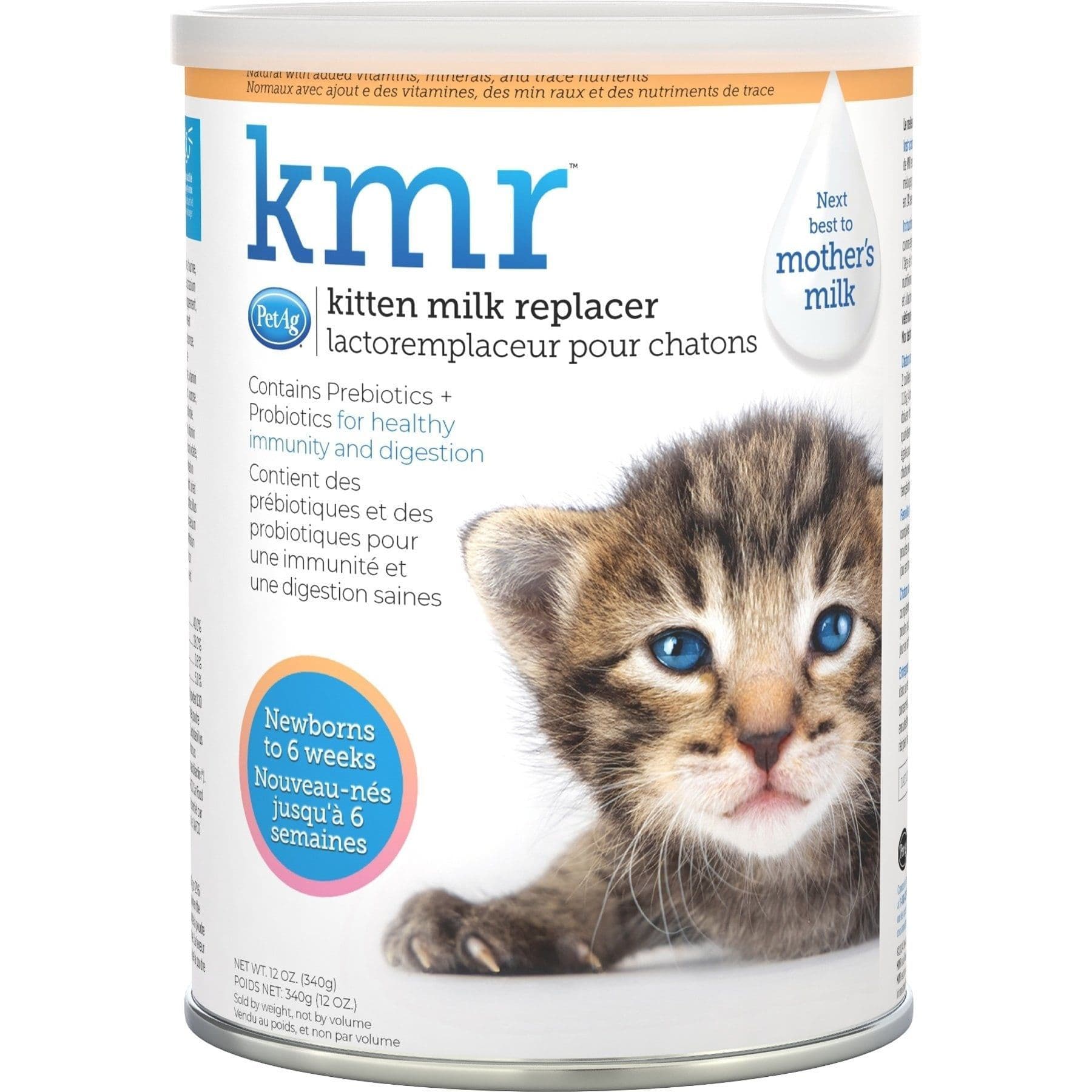
PetAg KMR Kitten Milk Replacer Powder, a powdered formula you mix with warm water.
Webvet may earn a commission when you click through to Chewy, at no extra cost to you.
- Kittens with a mother usually show interest in solid food around four weeks, according to Maddie's Fund.
- Orphaned kittens should start around three weeks, because milk replacers tend to cause digestive problems and are not as nutritionally complete as the queen's milk.
What is the best age to wean kittens?
The best age to start weaning kittens is about four weeks for kittens with a mother and about three weeks for orphans. VCA gives three to four weeks as the start and says kittens begin eating solid food at about 3.5 to 4.5 weeks. Weaning 4 week old kittens is therefore normal timing, and weaning kittens at 8 weeks is usually the finish line rather than the start.
Will a mother cat naturally wean her kittens?
Yes. Merck describes weaning in cats as occurring at 5 to 8 weeks as part of normal social behavior, so kittens will wean themselves from the queen over time. You can still offer gruel from about four weeks to make the move to solid food easier.
Can kittens be weaned at 6 weeks? Six weeks sits inside the normal window for eating solids, but Maddie's Fund says kittens are usually completely weaned at 6 to 8 weeks, and VCA puts full weaning at about eight weeks. To wean kittens at 6 weeks completely is early for most litters.
If a kitten doesn't want to wean yet:
- Keep offering gruel rather than forcing it.
- Do not rush; Maddie's Fund notes that adjusting to solid food can stress a kitten's digestive system.
- Remember that a kitten that won't wean from mom yet is usually just still early in the cat weaning period.
Weaning Kittens Week by Week
The weaning process for kittens moves through three food stages over about four to five weeks. Each stage thickens the food and reduces the liquid, following guidance from Maddie's Fund and VCA. The kitten weaning schedule below is a guide, not a deadline, because kittens progress at different speeds.
What is the weaning process for kittens in practice? Kittens first lap a thick gruel, then eat moistened dry food with a mushy texture, then eat canned or dry food with no water or milk replacer added. VCA says the amount of milk replacer or supplemental moisture should be decreased daily until kittens eat food with little to no moisture, usually by four to six weeks.
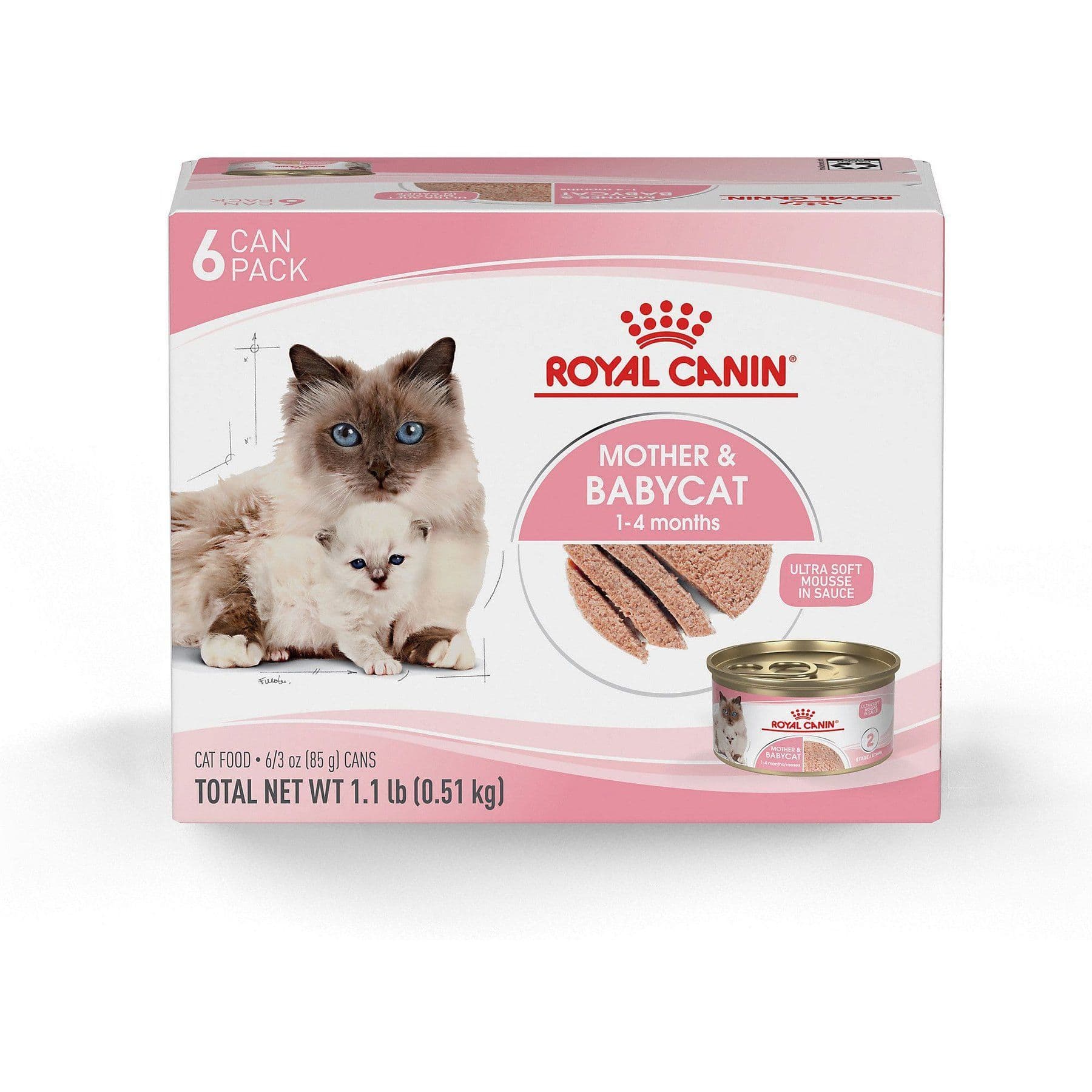
Royal Canin Mother & Babycat Ultra Soft Mousse, a wet food with an ultra soft mousse texture.
Webvet may earn a commission when you click through to Chewy, at no extra cost to you.
Below is a week-by-week weaning table with the food, the feeding frequency, and the milestone for each week. The table draws on VCA, Maddie's Fund, Merck, and the ASPCA, and shows gruel giving way to solid food as milk replacer is reduced.
| Week | What to offer | How often | Milestone |
|---|---|---|---|
| Up to 3 to 4 weeks | Kitten milk replacer only for orphans; mother's milk for nursing kittens | Bottle feeding every 4 to 6 hours after the first week | Orphans need help to urinate and defecate until 3 to 4 weeks |
| About 3 weeks (orphans) | First gruel of milk replacer and smooth canned kitten food | Small meals several times a day alongside bottle feeds | Weaning starts earlier for orphans |
| 3 to 4.5 weeks | Thick gruel, about two parts canned food to one part milk replacer or water | Every 4 to 6 hours at 2 to 4 weeks | Kittens begin to lap, usually within one to three days; water in a shallow bowl |
| 4.5 to 6 weeks | Dry kitten food moistened to a mushy consistency | Small meals several times a day | Liquid reduced daily; kittens begin using a litter box |
| 6 to 8 weeks | Canned or dry kitten food with no milk replacer or water added | 3 to 4 small meals a day | Usually completely weaned and eating solid food alone |
| About 8 weeks | Solid kitten food | 3 to 4 small meals a day | Fully weaned off the mother's milk |
Where the table says small meals several times a day, no exact meal count is set for that week. The firm figures are every four to six hours for kittens two to four weeks old (VCA) and three to four small meals a day for growing kittens (VCA).
How to Start Weaning Kittens
Start weaning kittens by offering a soft gruel in a flat saucer and letting them learn to lap it. VCA says to make gruel by mixing milk replacer with a small amount of kitten food and placing the mixture in a flat saucer.
Here is how to introduce gruel from a shallow dish, step by step:
- Mix smooth canned kitten food with milk replacer or water. Maddie's Fund suggests about two parts canned food to one part liquid, at the consistency of oatmeal.
- Spread it in a shallow saucer, a flat dish, or on a cookie sheet, which Maddie's Fund recommends until the kitten understands what solid food is.
- Gently dip each kitten's nose into the mixture two or three times a day until it begins to lap. VCA says this usually takes one to three days.
- For a reluctant kitten, use your finger to place a little gruel on the lips or tongue, a tip from Maddie's Fund.
- Keep the gruel thick. A Maddie's Fund orphan-care presentation suggests a ratio of 1 part water to 3 parts canned food so the food is not too watery.

The same steps work when you are helping a litter that is still nursing from its mother. The kittens keep nursing between gruel meals, and the share of milk falls as they eat more solid food.
Cats wean their kittens on their own as a normal stage of social behavior at 5 to 8 weeks, according to Merck. The same age range is a reasonable guide for feral litters, but weigh them and ask a vet or rescue.
If kittens don't want to wean onto gruel yet, slow down rather than push. Maddie's Fund warns that adjusting to solid food can stress a kitten's digestive system. A kitten not weaning on day two is common, since VCA says lapping usually takes one to three days to start.
- When the mother cat is not weaning kittens herself, start the gruel routine beside her.
- Weaning kittens from a feral mother, or weaning feral kittens found with her, follows the same steps of shallow dish, thick gruel, and patience.
- Kittens not weaning after several days of gentle tries should be weighed and checked by a vet.
What to Feed Weaning Kittens
Feed weaning kittens a gruel made from smooth canned kitten food mixed with kitten milk replacer or water, then move to moistened and finally solid kitten food. The ASPCA describes the first food as a high-quality dry or canned kitten food mixed with kitten milk replacer.
Knowing which foods to use plus which to avoid matters as much as timing. Maddie's Fund says canned food should be smooth and without chunks so it mixes easily with water or milk replacer into a gruel, so a smooth wet kitten food works best.

Foods to use when weaning kittens to solid food:
- Smooth canned or wet kitten food for the first gruel.
- Kitten milk replacer (KMR) or water to thin the gruel.
- Dry kitten food moistened to a mushy texture from about 4.5 weeks.
- Crushed dry kitten food or Royal Canin Babycat, which a Maddie's Fund orphan-care presentation names as good dry options.
Foods to avoid:
- Cow's milk, which the ASPCA says causes stomach upset and diarrhea in some kittens.
- Goat's milk, which VCA says is far too low in protein and fat for kittens.
- Temporary "2nd step" weaning milk products, which Maddie's Fund advises against to prevent digestive upset.
The kitten milk to use is a commercial kitten milk replacer, not cow's or goat's milk. Maddie's Fund adds that milk replacer is best kept out of gruel except for kittens who were bottle fed and whose stomachs are already used to it. For other kittens, water works as the liquid.
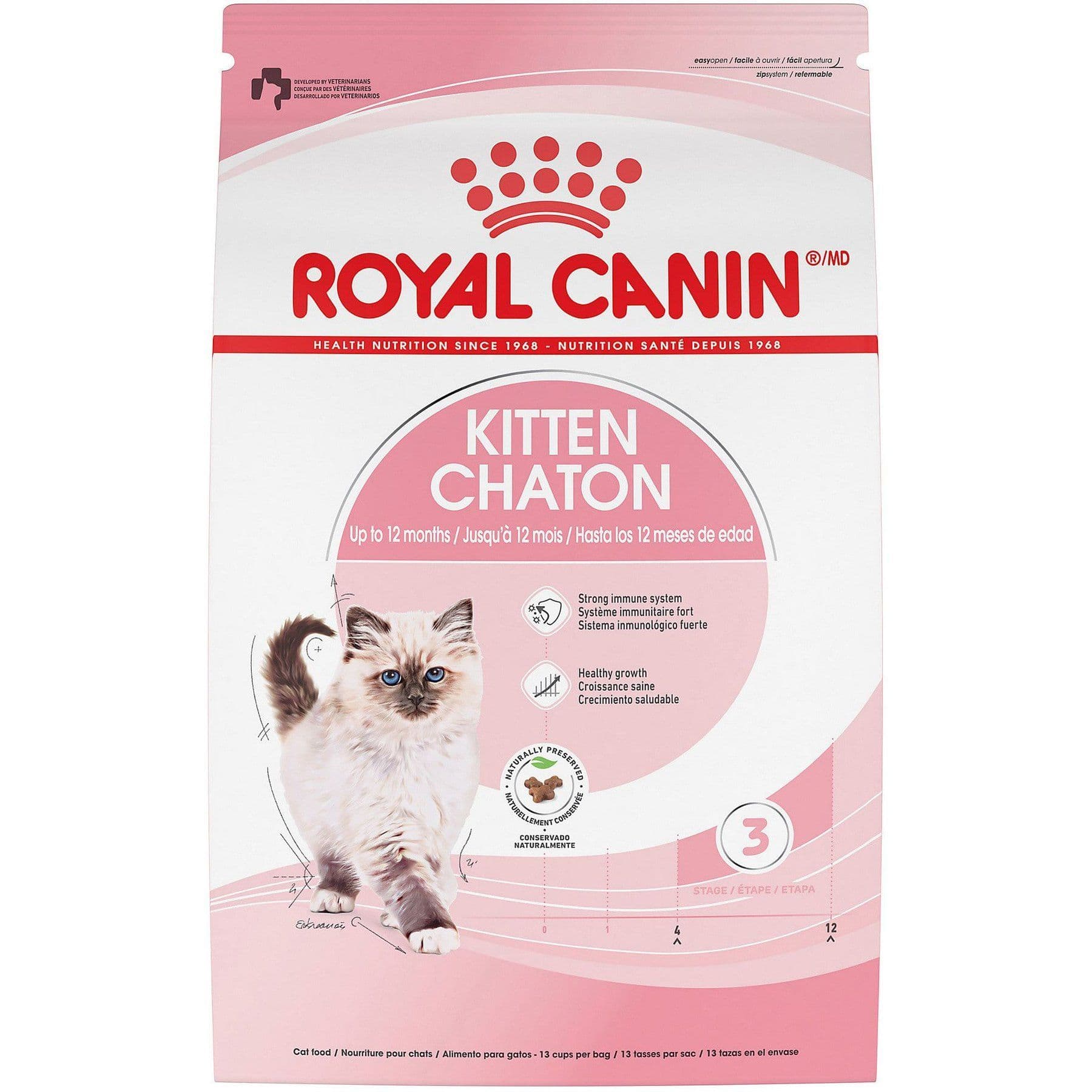
Royal Canin Kitten dry cat food, formulated for kittens between 4 months and 1 year.
Webvet may earn a commission when you click through to Chewy, at no extra cost to you.
Royal Canin describes its Mother & Babycat Ultra Soft Mousse in Sauce as made for the gestating and lactating queen and her kittens, with an ultra soft mousse texture to help the transition to solid food. That makes it one wet food option for the gruel stage.
Weaning kittens to dry food comes later, in two steps described by Maddie's Fund:
- At 4.5 to 6 weeks, kittens are ready for dry food moistened to a mushy consistency.
- At 6 to 8 weeks, they eat canned and/or dry food with no water or milk replacer added, which completes the move to dry food.
What to feed kittens after weaning is a complete kitten food. Note that Royal Canin formulates its Kitten dry food for the second stage of kittenhood, between 4 months and 1 year, so it is a food for after weaning rather than a first weaning food. For an unweaned kitten, the right food is mother's milk or kitten milk replacer until weaning begins.
How Often to Feed Weaning Kittens
Feed weaning kittens every four to six hours at two to four weeks, then move to three to four small meals a day as they eat solid food. Both figures come from VCA.
How often to feed at each week, using the sourced figures:
- Two to four weeks: feedings every four to six hours (VCA).
- Bottle-fed kittens after the first week: every 4 to 6 hours until weaning (VCA).
- During the move to gruel and moistened food: small meals several times a day, with no fixed meal count.
- Growing kittens eating solid food: the daily portion divided into 3 to 4 small meals (VCA).
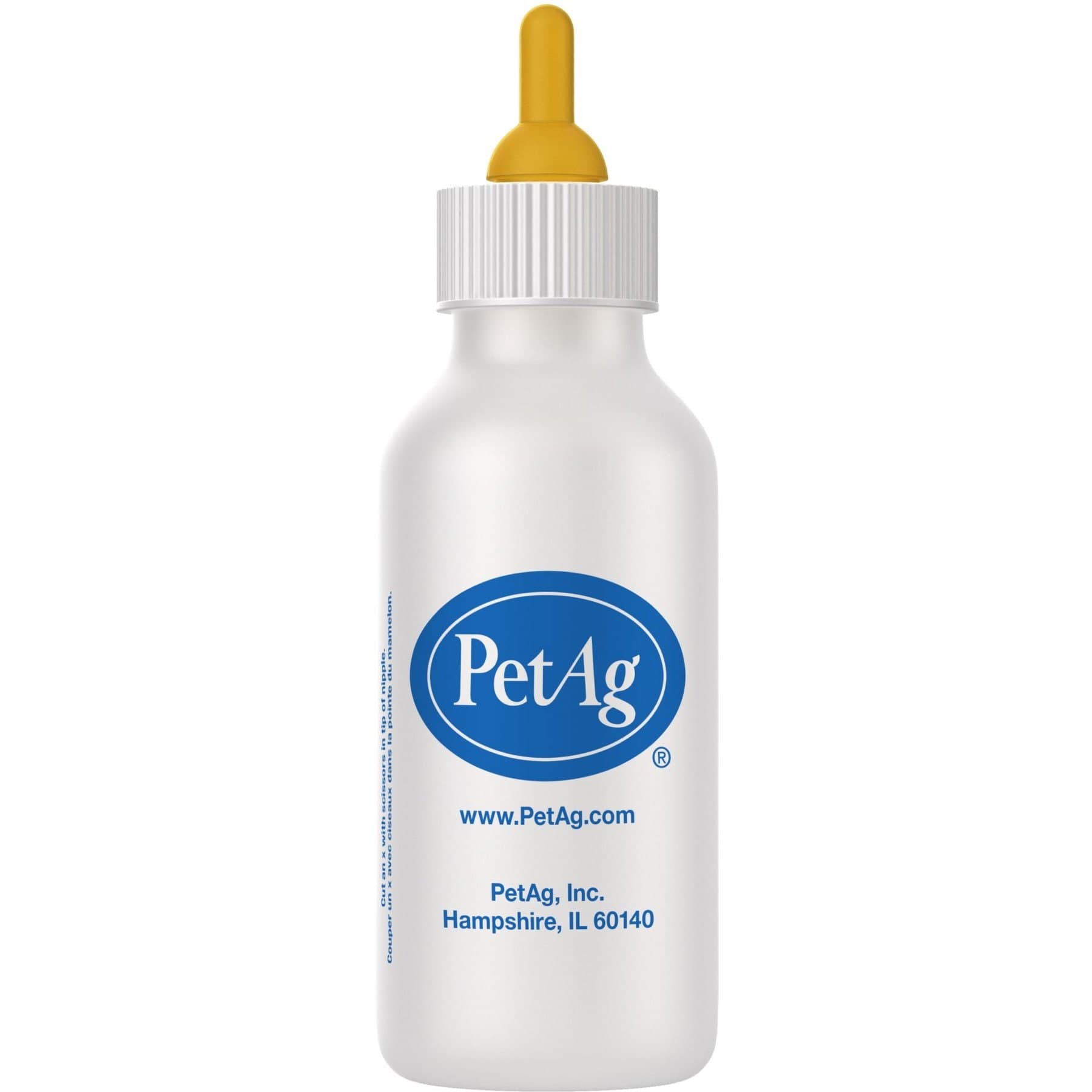
PetAg Small Animal Nursing Kit, a bottle-feeding kit with a 2-oz bottle.
Webvet may earn a commission when you click through to Chewy, at no extra cost to you.
The ASPCA adds that kittens can be fed free-choice, meaning food is left available rather than served at set times. Feeding frequency also depends on how much each kitten is eating, which is why weighing matters more than the clock.
There is no set amount per meal. The practical check is growth: VCA advises weighing kittens routinely, daily to weekly, to make sure they are growing normally. A kitten that eats eagerly and gains steadily is getting enough.
Weaning Bottle-Fed Kittens
Weaning bottle-fed kittens starts at about three to four weeks and should happen slowly over several weeks. VCA says kitten milk replacer should be the sole source of nutrition until 3 to 4 weeks of age, when weaning may begin, and Maddie's Fund advises starting orphans around three weeks.
Weaning orphaned bottle-fed kittens differs from weaning a litter with a queen in three ways. The kitten has no mother to copy, its stomach is used to formula, and milk replacers tend to cause diarrhea and constipation, according to Maddie's Fund. That is why orphans should reach solid kitten food as soon as they can manage it.
How to wean a kitten off the bottle:
- Start the gruel with the same milk replacer the kitten already drinks, since Maddie's Fund says replacer in gruel suits bottle-fed kittens whose stomachs are used to it.
- Keep bottle feeds going during the transition so the kitten gets the calories it needs for growth, as the Maddie's Fund orphan-care presentation advises.
- Reduce the number of bottle feedings only once the kitten is eating solid food reliably well and tolerating it.
- Spread the move from formula to solid food over several weeks.
PetAg KMR Kitten Milk Replacer Powder is one kitten milk replacer option for this stage. PetAg says to mix 1 part powder into 2 parts warm water and states KMR can be fed as a complete diet for kittens up to 6 weeks old.

For orphans the rule is simple: start at about three weeks, overlap bottle and gruel, then cut bottles as solid food takes over. Weaning hand-reared kittens this way keeps calories steady while the gut adjusts.
If a bottle-fed kitten resists weaning, offer the gruel right before a bottle feed when it is hungry, and use a finger dab of gruel on the lips, as Maddie's Fund suggests. Keep the bottle in the routine until solids are reliable.
Orphans also need help in the bathroom. Maddie's Fund notes that orphaned kittens under 3 to 4 weeks need assistance to urinate and defecate because they are reflex eliminators.
Water, Litter, and Other Milestones
Water, litter training, plus other milestones arrive alongside solid food. Maddie's Fund says to start offering fresh water in a shallow bowl once kittens accept gruel, because water intake must rise as milk intake falls so kittens stay hydrated. The ASPCA adds that fresh water should be available at all times.
Litter skills appear during the same weeks. Merck says kittens begin to eliminate voluntarily and use a litter box or container with a sand-like substrate during the socialization period. For box setup, see this guide to non clumping litter for kittens.

Other milestones during weaning:
- The socialization window runs from 2 weeks to 7 weeks of age, according to Merck.
- Early weaning leads to earlier onset of play and predation, Merck notes, so play becomes part of the weaning weeks. Safe kitten toys help.
- Kittens usually need human contact before they are 10 to 12 weeks old, according to the Merck Veterinary Manual's cat owner pages.
- Teeth change in these weeks too; this guide explains why kittens lose their teeth.
At what age do kittens stop needing their mother?
Kittens stop needing their mother's milk at about eight weeks, when VCA says they are typically fully weaned. Their social needs run alongside: Merck places the socialization window at 2 to 7 weeks and says kittens usually need human contact before 10 to 12 weeks. Weaned is not the same as fully grown, as the guide to when cats stop growing shows.
Signs a Kitten Is Not Weaning Well
The main sign a kitten is not weaning well is that it is not gaining weight. VCA advises weighing kittens routinely, daily to weekly, and says failure to gain weight may indicate a problem that needs veterinary care.
What normal growth looks like:
- About 100 g per week, with a minimum of 7 g per day (VCA).
- 50 to 100 g per week for kittens (Merck).
- 5 to 10 percent of body weight per day for neonates (Merck).
The kitten that is not gaining weight needs a closer look, not just more patience. A Maddie's Fund critical-care presentation describes fading kitten syndrome as the scenario where a kitten is not gaining weight and is very, very weak compared with its littermates.
Warning signs to watch for during weaning:
- Weight that stays flat or drops between weigh-ins.
- Weakness compared with littermates.
- A kitten that feels cold; VCA says kittens will not eat well if they are hypothermic.
- Diarrhea, which the Maddie's Fund orphan-care presentation says warrants a vet exam.
What happens if you wean a kitten too early? Merck notes that early weaning of kittens leads to earlier onset of play and predation, which is the clearest known effect on a cat weaned too early. Other effects of early weaning are less clearly defined, so if you suspect a problem, ask your vet.
Rescuing unweaned kittens found alone starts with warmth and kitten milk replacer, because Maddie's Fund calls hypothermia a big problem in very young kittens and Merck says it harms immunity, nursing, and digestion. Letting each kitten set the pace avoids weaning too early.
When to Call the Vet
Call your vet when a weaning kitten stops gaining weight, becomes weak, feels cold, or has diarrhea. VCA says failure to gain weight may indicate a problem and the need for veterinary care.
Knowing when the vet is needed matters, because several weaning problems need professional care rather than more time at home:
- Failure to gain weight, which VCA says may need veterinary care.
- A weak kitten that is not gaining weight, the fading kitten picture described by Maddie's Fund.
- Diarrhea in an orphan, which Maddie's Fund says warrants an exam to treat infectious problems.
- Low blood sugar, which Merck defines clinically as blood glucose below 30 to 40 mg/dL and which can be treated with dextrose solution.
- A queen with milk fever; VCA says her kittens should then be weaned as soon as possible.
Weaning also overlaps with early health care. Plan the first visits using the kitten vaccine schedule, learn how to tell if a kitten has worms, and ask about head shaking or dark ear debris, covered in the guide to ear mites in kittens. If the queen is still pregnant, the guide to cat pregnancy week by week explains what comes before weaning.
Weaning Kittens FAQs
Frequently Asked Questions
When do kittens start eating food and drinking water?
Kittens start eating food and drinking water at about four weeks. VCA says kittens begin eating solid food at about 3.5 to 4.5 weeks; offer gruel and fresh water in a shallow dish.
How do I get a kitten off the bottle?
Offer a thick gruel made with the kitten's usual milk replacer, and use your finger to place a little on its lips if it is reluctant. Keep bottle feeds going and reduce them only once the kitten eats solid food reliably.
How often should I feed 4 week old kittens?
VCA says kittens two to four weeks old need feedings every four to six hours. As they eat more solid food, growing kittens do best on 3 to 4 small meals a day.
Can kittens have cow's milk?
No. The ASPCA says cow's milk causes stomach upset and diarrhea in some kittens; use a kitten milk replacer instead.
What is fading kitten syndrome?
Fading kitten syndrome describes a kitten that is not gaining weight and is very weak compared with its littermates. Keep the kitten warm, since chilled kittens do not eat well, and contact your vet.
Can kittens be weaned at 6 weeks?
Kittens can eat solid food at 6 weeks, but most are not fully weaned until 6 to 8 weeks, and VCA says kittens are typically fully weaned at about eight weeks.
What if the mother cat is not weaning her kittens?
Start the process yourself by offering gruel at separate meals two or three times a day while the kittens keep nursing. Merck places natural weaning at 5 to 8 weeks, so a queen still nursing at five weeks is normal.

Editor
The Webvet Editorial Team is the in-house group of pet-care editors and writers behind Webvet, operated by Smart Pet Collective. The team researches, writes, and maintains Webvet's pet health, behavior, and medication content. Every article follows a defined editorial process: research from reputable veterinary and scientific sources, careful drafting, mandatory review of medical content by a credentialed veterinarian, and dated publication. Health and medication articles are medically reviewed by a licensed veterinary professional before they go live and are kept current over time.
Veterinarian · BVMS MRCVS
Dr. Pippa Elliott, BVMS, MRCVS, is a veterinarian with nearly 30 years of experience in companion animal practice. Dr. Elliott earned her Bachelor of Veterinary Medicine and Surgery from the University of Glasgow. She was also designated a Member of the Royal College of Veterinary Surgeons. Married with 2 grown-up kids, Dr. Elliott has a naughty Puggle named Poggle, 3 cats and a bearded dragon.


