When Do Cats Stop Growing? Kitten-to-Adult Timeline
Most cats approach adult size around their first birthday, though larger breeds and individual kittens may keep developing longer. Learn the growth stages, what changes after six months, and which signs deserve veterinary review.

BVMS MRCVS
Medically reviewed by Dr. Pippa Elliott, BVMS MRCVS · Last reviewed

This article contains affiliate links. Webvet may earn a commission when you buy through them, at no extra cost to you.
When do cats stop growing? Most domestic cats approach adult size around 12 months, although many continue filling out until 12 to 18 months. Large, slow-maturing breeds such as Maine Coons may keep developing for two years or longer.
There is no single day when every part of growth ends. Skeletal length, body weight or fat, and adult muscle develop on overlapping schedules. Genetics, breed, sex, early health, nutrition, and neutering all influence the individual trend.
 Sponsored
Have a health question about your cat?
Talk to a licensed vet at Dutch over video or message, including nights and weekends.
Use code Pets60
Plans start at $12/month · covers up to 5 pets
- Licensed vets in most states
- Rx for 150+ conditions
- 4.7 on Trustpilot
When do cats stop growing?
Most domestic cats approach adult size around 12 months and may continue filling out until 12 to 18 months. Maine Coons may keep developing for two years or longer. Use the age as a milestone, not a deadline, and follow repeated weight and body-condition measurements.
When do cats stop growing? Most domestic cats approach adult size around 12 months, but normal variation extends into roughly 12 to 18 months. How long do cats grow? Larger breeds may take two years or longer to fill out. These ages describe a range, not a deadline, because skeletal length, body weight or fat, and adult muscle development do not end on one day.
Domestic-cat timing questions
Readers asking "what age do cats stop growing?" or "when do house cats stop growing?" need the same range-based answer. The search wording may also be "when domestic cats stop growing," "when domestic short hair cats stop growing," "when cats stop growing physically," or "when do cats stop growing UK." Geography does not change feline biology. Breed, health, genetics, and the individual's repeated growth trend matter more than the wording of the query.
A house cat or domestic shorthair follows the same broad framework. Kittens become fully grown over months, and an 8-month-old or 10-month-old cat may still have physical development ahead. The AAHA and AAFP feline life-stage guidelines define the kitten stage as birth through one year, but that boundary does not mean every growth plate closes at exactly 12 months.
A programmable feeder can help keep measured meals consistent during kitten growth.

Webvet may earn a commission when you click through to Chewy, at no extra cost to you.
At what age is a cat fully grown?
Most cats are near full skeletal size around 12 months. A practical range is 12 to 18 months for continued filling out, with larger breeds taking longer. Fully grown should be defined carefully:
- Skeletal size means the cat's major bone length and height are nearing maturity.
- Body weight includes lean tissue and fat, so it can increase after height growth slows.
- Muscle development can continue as an adolescent becomes an adult.
- Behavioral maturity follows its own timeline and is not proof that physical growth has stopped.
An adult cat who gains weight is not necessarily still getting taller. Extra calories can increase body fat after skeletal maturity. That is why body condition score and muscle condition matter alongside the scale.
A growth plate is an area near the end of an immature bone where lengthening occurs. Growth-plate closure contributes to skeletal maturity, but weight and body condition can still change, and adult muscle development continues after most length growth has slowed. A cat can therefore be close to adult height while still filling out, and later weight gain may reflect muscle or fat rather than continued bone length.
For a broader age framework, WebVet explains how cat years and life stages are calculated. Calendar age is useful, but repeated measurements show what the individual cat is doing.
Kitten growth stages from birth to adulthood
Cat growth stages move fastest early in life, then gradually slow. A VCA Animal Hospitals guide to feeding growing kittens notes that growth slows around 30 weeks, when many kittens have reached roughly 80 percent of adult size. When are kittens fully grown? Many are near adult size around 12 months, but the individual range and breed still matter.

| Approximate age | Skeletal length | Weight and muscle trend | Nutrition and monitoring |
|---|---|---|---|
| Birth to 8 weeks | Extremely rapid development | Frequent gains are expected; small setbacks can matter | Veterinary neonatal care, appropriate milk or weaning plan, parasite control, and close weights |
| 2 to 4 months | Rapid length and limb growth | Steady gain with a lean kitten shape | Complete and balanced kitten food, vaccines, fecal checks, and regular weigh-ins |
| 4 to 6 months | Strong growth continues but begins to slow | Muscle and coordination increase | Measure portions, monitor stool and appetite, discuss spay or neuter timing |
| 6 to 9 months | Many kittens approach much of their adult frame | Rate of gain slows; body condition becomes increasingly important | Keep feeding for growth unless the veterinarian advises otherwise |
| 9 to 12 months | Many domestic cats near adult height and length | Filling out can continue | Discuss the individual adult-food transition and preventive-care plan |
| 12 to 18 months | Typical cats may complete remaining physical development | Muscle and body composition still change | Prevent excess calorie intake and maintain healthy body condition |
| 18 months and beyond | Most domestic cats are skeletally mature | Large breeds may still develop; any cat can gain or lose fat | Use breed, health, and veterinary assessment rather than age alone |
The table describes typical trends, not required targets. A cat growth chart is most valuable when it plots the same kitten over time. A single weight cannot show whether the kitten is following, crossing, or flattening its personal curve.
This timeline separates skeletal length, body weight or fat, and muscle filling-out instead of treating growth as one endpoint. It also separates skeletal length versus weight gain instead of treating every change on the scale as getting taller. Pairing the monthly weight trend with body condition and a consistent photo reference for body condition gives the veterinarian more context than any single measurement or photograph.
How much do cats grow after 6 months?
Growth after six months varies. Many kittens are already well along toward adult size, but they can still become longer, taller, heavier, and more muscular. The change usually occurs more slowly than during early kittenhood. A six-month-old kitten size should therefore be interpreted against breed, sex, prior weights, body condition, and health.
A microchip feeder or raised slow feeder can support portion control in multi-pet or fast-eating households.
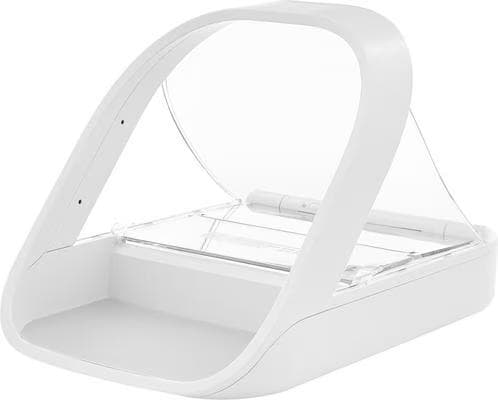
Webvet may earn a commission when you click through to Chewy, at no extra cost to you.
Put simply, growth slows after about six months even though length, muscle, and body weight can continue changing. The amount that remains depends on the kitten rather than a universal percentage. A six-month milestone is useful for comparing the new trend with earlier rapid growth, but it cannot declare skeletal maturity, predict final weight, or replace the individual kitten's repeated measurements and veterinary assessment.
Are cats fully grown at 6 months? Usually not. Many have more skeletal, weight, and muscle development ahead, even though the fastest early-kitten growth has passed.

Avoid estimating percentage growth from a photograph. Camera distance, posture, fur, and perspective can make one kitten look larger or smaller. A scale, body-condition assessment, and a consistent measurement schedule provide better evidence.
Build a monthly growth tracker
Record the following on the same day each month, or more often if the veterinarian recommends it:
- body weight on the same reliable scale
- body condition score if the veterinary team has taught you how to assess it
- appetite and measured daily food
- stool quality, vomiting, and digestive changes
- activity, play, and mobility
- medication, illness, or diet changes
- a side and overhead photograph taken from a consistent distance for context only
Peer-reviewed work available through the University of Liverpool repository developed growth standards from repeated weight data in healthy domestic shorthair kittens. The important idea for owners is the trend: unusual slowing or rapid crossing of a curve deserves interpretation by a veterinarian.
A practical monthly measurement log uses weight trend and body condition rather than visual size alone. Record measurements consistently, then review appetite, stool, diet, illness, and medications alongside the numbers. The log cannot diagnose a problem, but it can show whether a kitten is following, flattening, or rapidly crossing its own curve and give the veterinary team a clearer history.
How to interpret the trend without overreacting
A smooth line is not required. Growth can occur in spurts, and one measurement can be affected by meal timing, hydration, stool, scale placement, or movement. Confirm an unexpected number on the same scale before drawing a conclusion, then compare it with the previous several measurements.
Look at direction and context:
- A kitten who gains steadily, eats well, plays normally, and maintains a healthy body condition may simply have a smaller genetic frame.
- A flat weight over one short interval can be less concerning than a repeated plateau across several checks.
- Weight loss is different from slow gain and deserves prompt attention in a growing kitten.
- Rapid gain with disappearing waist definition may represent excess body fat rather than healthy skeletal growth.
- A growth change paired with diarrhea, vomiting, low appetite, weakness, or a swollen abdomen carries more medical concern than size alone.
Do not compare a mixed-breed kitten directly with a breed chart and assume the difference is disease. Breed charts describe populations and may be based on different feeding, sex, neuter status, or sampling methods. Use them for context, then let the veterinarian interpret the individual's curve.

Webvet may earn a commission when you click through to Chewy, at no extra cost to you.
Body condition score adds information that weight cannot. Two cats can weigh the same while having different frames and different proportions of muscle and fat. Muscle condition also matters, especially during illness or recovery. Ask the veterinary team to demonstrate both assessments so home notes use the same definitions.
When the trend changes, review the record before changing food. More calories will not correct parasites, malabsorption, congenital disease, or another medical cause. A measured history helps the veterinarian decide whether the next step is nutrition adjustment, fecal testing, laboratory work, or simple continued monitoring.
SponsoredVet care that's always there
Unlimited video calls and messaging with licensed vets for less than a typical vet visit. One membership covers up to five pets.
Use code Pets60
Plans start at $12/month · covers up to 5 pets
- Licensed vets in most states
- Rx for 150+ conditions
- 4.7 on Trustpilot
Why some cats keep growing longer
Adult size and maturation reflect many genes and environmental influences. Littermates can finish at different weights. A kitten's parents provide useful context when known, but they do not guarantee an exact result.
Sex, genetics, breed, early health, and nutrition all influence growth patterns. A breed and health range framework shows why a single one-year deadline can mislead owners: a healthy slow-maturing large-breed kitten, a small-framed domestic cat, and a kitten recovering from parasites may have different trajectories. Larger breeds such as Maine Coons may continue filling out for two years or longer. The individual trend and body condition matter more than comparison with one universal number.
Breed and frame
Large-framed breeds usually take longer to finish developing. Breed-aware examples include:
- Maine Coons: Larger breeds such as Maine Coons may continue filling out for two years or longer.
- Ragdolls, Siberians, and Norwegian Forest Cats: These substantial breeds may mature later than an average domestic shorthair.
- Bengals, Savannahs, Persians, Siamese cats, Sphynx cats, and British Shorthairs: A full-grown cat can fall anywhere within the breed's healthy range.
Breed growth stages and how big a cat becomes depend on family line, sex, health, and nutrition, so a label or chart cannot supply one guaranteed age or size for an individual.

Searches such as when do Maine Coon cats stop growing, when do Ragdoll cats stop growing, or Siberian cat growth chart need breed-aware ranges. They do not justify declaring that every cat of that breed grows until one precise birthday. Family line, health, sex, nutrition, and individual frame still matter.
Coat labels such as tabby or tuxedo are patterns, not growth-determining breeds. A domestic shorthair with a particular color pattern generally follows its individual genetic frame rather than a special pattern-specific timeline.
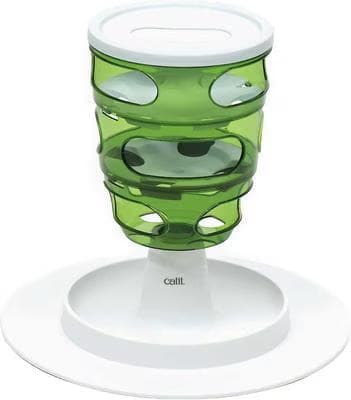
Webvet may earn a commission when you click through to Chewy, at no extra cost to you.
Sex and genetics
Male cats are often larger on average than female cats within the same population, but the ranges overlap. Sexual dimorphism describes a population tendency, not a rule for a particular kitten. A female can be larger than a male, and neither size alone identifies a health problem.
Genetics affect frame, growth rate, coat, muscle, and adult weight. Unknown-parentage kittens are especially difficult to predict. A veterinarian can assess whether a kitten's trend is proportionate even when the future number remains uncertain.
Sexual dimorphism is the term for average physical differences between sexes. Male cats may be larger on average than female cats, but genetics, breed, early health, and nutrition can matter as much or more for an individual. The ranges overlap, so sex should refine an estimate rather than set a separate deadline or prove that a smaller kitten has a growth disorder.
Early health
Several health factors can alter a growth trajectory:
- parasites or chronic digestive disease
- congenital conditions
- poor nutrition
- infection or another illness
Catch-up growth may occur after treatment, but owners should not try to force it with extra calories. The veterinarian must decide whether the kitten is lean, underweight, small-framed, ill, or simply younger than first estimated.
Do sex and neutering change when cats stop growing?
Neutering does not abruptly switch off growth. The relationship among reproductive hormones, growth plates, appetite, energy expenditure, and body composition is more complex than the claim that a cat stops growing after neutering.

Do cats stop growing after neutering?
No. A kitten can continue normal skeletal and muscular development after spay or neuter. Timing may affect aspects of growth-plate closure, but it does not provide a simple way to predict final height. The more immediate household issue is often calorie balance.
After neutering, appetite and energy needs may change. Neutering does not abruptly stop growth, and body condition still needs monitoring. If portions remain too high, body fat can be mistaken for filling out. A programmable feeder can support portion timing, but it does not replace gram weighing, regular weigh-ins, or body-condition scoring.
The related question does neutering a cat stunt their growth? also has no simple yes answer. Neutering does not abruptly stop growth, and changes in growth-plate timing do not mean that every neutered kitten will be shorter, taller, or unhealthy. Monitor development and calorie needs with the veterinarian.
Male and female growth ranges
Queries asking when male cats stop growing or when female cats stop growing have the same broad answer: many are near adult size by 12 months, some continue through 12 to 18 months, and breed and individual factors matter. Sex can influence average frame without creating a separate universal cutoff.
A full-grown male cat may be larger than a full-grown female from the same population, but their healthy ranges overlap. Neither sex creates a separate fixed age when growth must end.
Ask the veterinarian to identify the target body condition for the individual cat. The ribs should be assessable under a light fat covering, and a waist should be visible from above in many healthy cats, but coat and body type can make home assessment tricky.
How nutrition supports normal kitten growth
Kittens need a complete and balanced kitten diet formulated for growth. That means the food supplies energy and essential nutrients in appropriate proportions. More food is not automatically better, and supplements can unbalance an otherwise complete diet. The adult-food transition should be individualized with a veterinarian because age, breed, body condition, neuter status, and health can change when and how calorie density should be adjusted.

The phrase best food for cat growth should not lead to a universal ranked product. The right choice depends on life stage, health, body condition, feeding format, and veterinary guidance. Look for a nutritional adequacy statement for growth or all life stages, then feed a measured amount adjusted to the kitten's trend.
Optimal growth is not maximal growth
Rapid extra weight gain can increase fat without improving bone length or healthy muscle. An overfed kitten may be large on the scale but above ideal body condition. A smaller kitten following a steady personal curve may be developing normally.
Good monitoring includes:
- measured portions instead of an endlessly topped-up bowl when appropriate
- treats kept to a small share of total calories
- clean water and consistent access to food
- gradual diet changes
- repeated weight and body-condition checks
- veterinary review before adding vitamins, minerals, or calorie supplements
When to switch from kitten to adult food
Many cats transition around 9 to 12 months, but larger breeds or cats with medical needs may require a different schedule. VCA guidance on switching kitten to adult food emphasizes individualized timing. Change gradually unless the veterinarian directs a different plan.
Do not switch early only because the kitten was neutered or looks tall. Do not continue high-calorie growth feeding indefinitely because a large breed might mature later. The veterinary team can balance development with prevention of excess fat gain.
When slow growth needs a veterinarian
Small does not always mean stunted, and a low number on the scale is not a diagnosis. The concern is a poor trajectory, a decline, disproportionate body condition, or growth change with other symptoms.

Veterinary evaluation may include:
- confirming age, current weight, and prior trend
- body and muscle condition assessment
- mouth, heart, lungs, abdomen, joints, and neurologic examination
- fecal testing for intestinal parasites
- blood or urine testing when indicated
- diet, calorie, and feeding-method review
- tests for infectious, congenital, hormonal, or digestive disease when signs support them
Persistent diarrhea, vomiting, or gas can interfere with comfort and nutrient intake. If flatulence is part of the pattern, see when kitten gas needs attention and report the full set of symptoms rather than treating gas alone.
Stunted growth is a description, not a cause
Cat with stunted growth is a search phrase, not a final diagnosis. Poor development can follow inadequate intake, parasites, chronic illness, congenital disease, or other causes. Some naturally petite cats are healthy. Testing and the longitudinal record separate these possibilities.
If you are asking why did my cat stop growing, first distinguish a normal plateau near adult size from poor weight gain or weight loss. A cat with stunted growth cannot be identified from size alone. Age estimate, repeated weights, body and muscle condition, diet, stool, appetite, and examination findings guide the veterinary workup.
Bring food labels, measured daily amounts, medication names, parasite-prevention history, stool information, and prior records to the appointment. A written growth curve reduces guesswork.
Frequently Asked Questions
Can you tell how big a cat will get?
You cannot tell exactly how big a cat will get from one feature or formula. You can estimate a range from breed, sex, parent size, age, frame, and repeated growth measurements, but you cannot guarantee an exact adult weight or height. Paw size, one photograph, and one scale reading are unreliable predictors. A veterinarian can judge whether the kitten's trajectory and body condition are appropriate.
Breed, sex, and parent size can narrow the estimate, but they cannot guarantee an exact adult size. The most useful prediction is a range that is updated as the kitten's own growth curve develops.
When do male cats stop growing?
Many male cats are near adult size by 12 months and may continue filling out through roughly 12 to 18 months. Large, slow-maturing breeds can take longer. Males are often larger on average than females in the same population, but the ranges overlap. Sex affects average frame, not a universal cutoff. Breed, genetics, early health, nutrition, neutering, and the kitten's repeated growth trend matter more than one birthday.
When do Maine Coon cats stop growing?
Maine Coons may keep developing for two years or longer, especially as their frame and muscle fill out. That does not mean every Maine Coon grows until one exact birthday or should keep gaining weight. Family line, sex, health, nutrition, and neuter status affect the individual. Track the cat's individual growth curve and body condition with a veterinarian rather than using one breed chart as a required target.
Does neutering a cat stunt growth?
Neutering does not abruptly stop growth or guarantee that a cat will be shorter, taller, or unhealthy. Hormones can influence growth-plate timing, appetite, energy use, and body composition, but the effect is not one simple prediction for every kitten. Continue an age-appropriate complete diet and monitor calorie needs and body condition with the veterinarian because excess fat after neutering can be mistaken for healthy filling out.
How much do cats grow after 6 months?
Growth usually slows after six months, but many kittens still become longer, taller, heavier, and more muscular. The amount depends on breed, sex, genetics, prior growth, nutrition, and health, so there is no universal percentage left to grow. Use repeated weights, body and muscle condition, and a consistent monthly record. A plateau with poor appetite, diarrhea, vomiting, weakness, or weight loss needs veterinary assessment.

Editor
The Webvet Editorial Team is the in-house group of pet-care editors and writers behind Webvet, operated by Smart Pet Collective. The team researches, writes, and maintains Webvet's pet health, behavior, and medication content. Every article follows a defined editorial process: research from reputable veterinary and scientific sources, careful drafting, mandatory review of medical content by a credentialed veterinarian, and dated publication. Health and medication articles are medically reviewed by a licensed veterinary professional before they go live and are kept current over time.
Veterinarian · BVMS MRCVS
Dr. Pippa Elliott, BVMS, MRCVS, is a veterinarian with nearly 30 years of experience in companion animal practice. Dr. Elliott earned her Bachelor of Veterinary Medicine and Surgery from the University of Glasgow. She was also designated a Member of the Royal College of Veterinary Surgeons. Married with 2 grown-up kids, Dr. Elliott has a naughty Puggle named Poggle, 3 cats and a bearded dragon.
Related reading

Mastitis in Dogs: Symptoms, Causes, Treatment, and Home Care

Cat Pregnancy Week by Week: Signs, Timeline, and What to Expect

Cat in Heat: Signs, How Long It Lasts, and How Often It Happens
