Ofloxacin Eye Drops for Dogs: Uses, Dosing, Side Effects, and Safety
Ofloxacin eye drops are a prescription antibiotic vets use for bacterial eye infections and some corneal ulcers in dogs. This guide covers how they are given, side effects, warning signs, and how they compare with other drops.

BVMS MRCVS
Medically reviewed by Dr. Pippa Elliott, BVMS MRCVS · Last reviewed

Drug facts
Ofloxacin Ophthalmic Solution 0.3% (Ocuflox)· ofloxacin
Ofloxacin 0.3% eye drops are a prescription fluoroquinolone antibiotic made for people that vets prescribe extra-label for bacterial conjunctivitis and infected corneal ulcers in dogs. The vet sets the drops, frequency, and course length and confirms healing at a recheck.
 Sponsored
Is Ofloxacin Ophthalmic Solution 0.3% (Ocuflox) right for your dog?
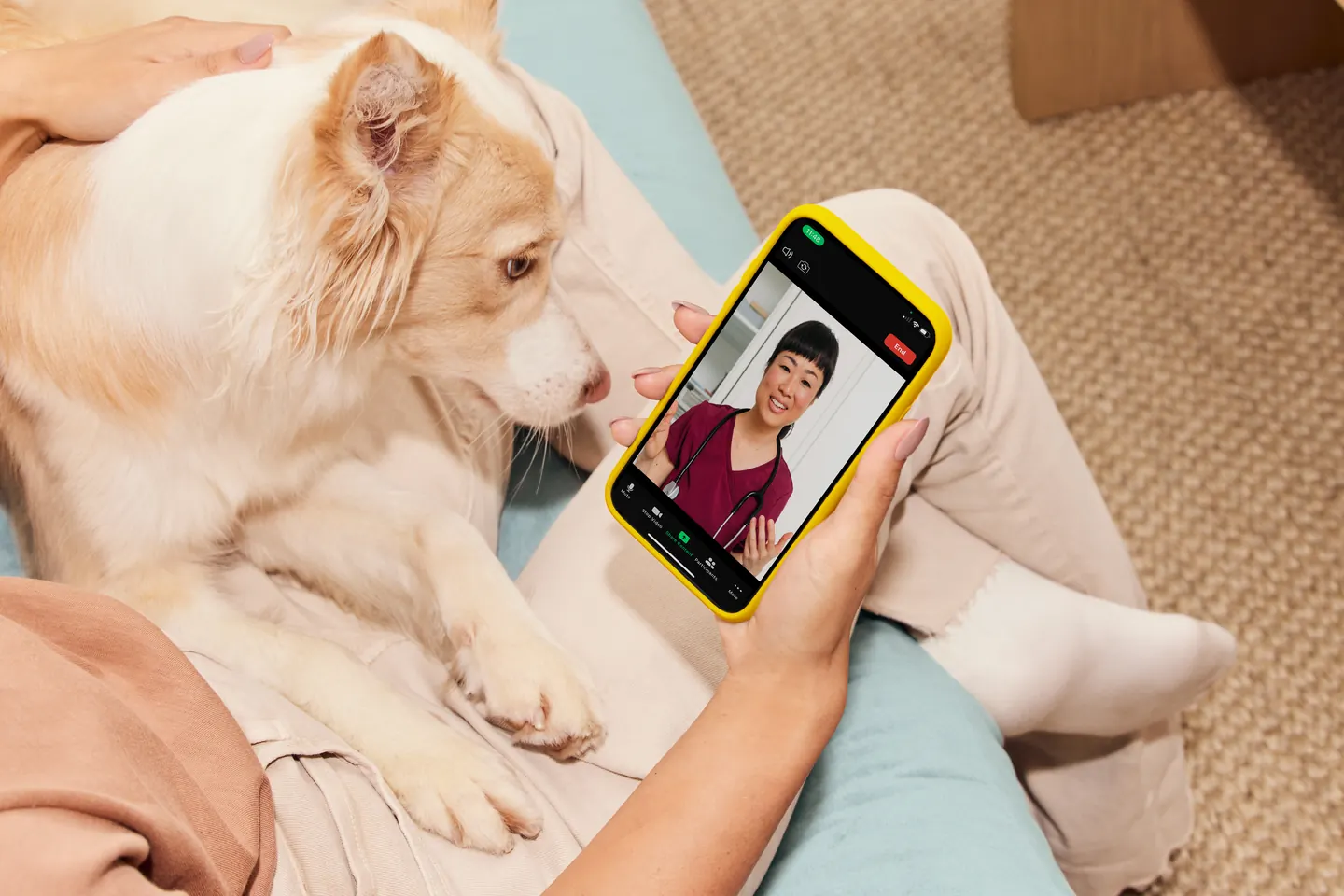
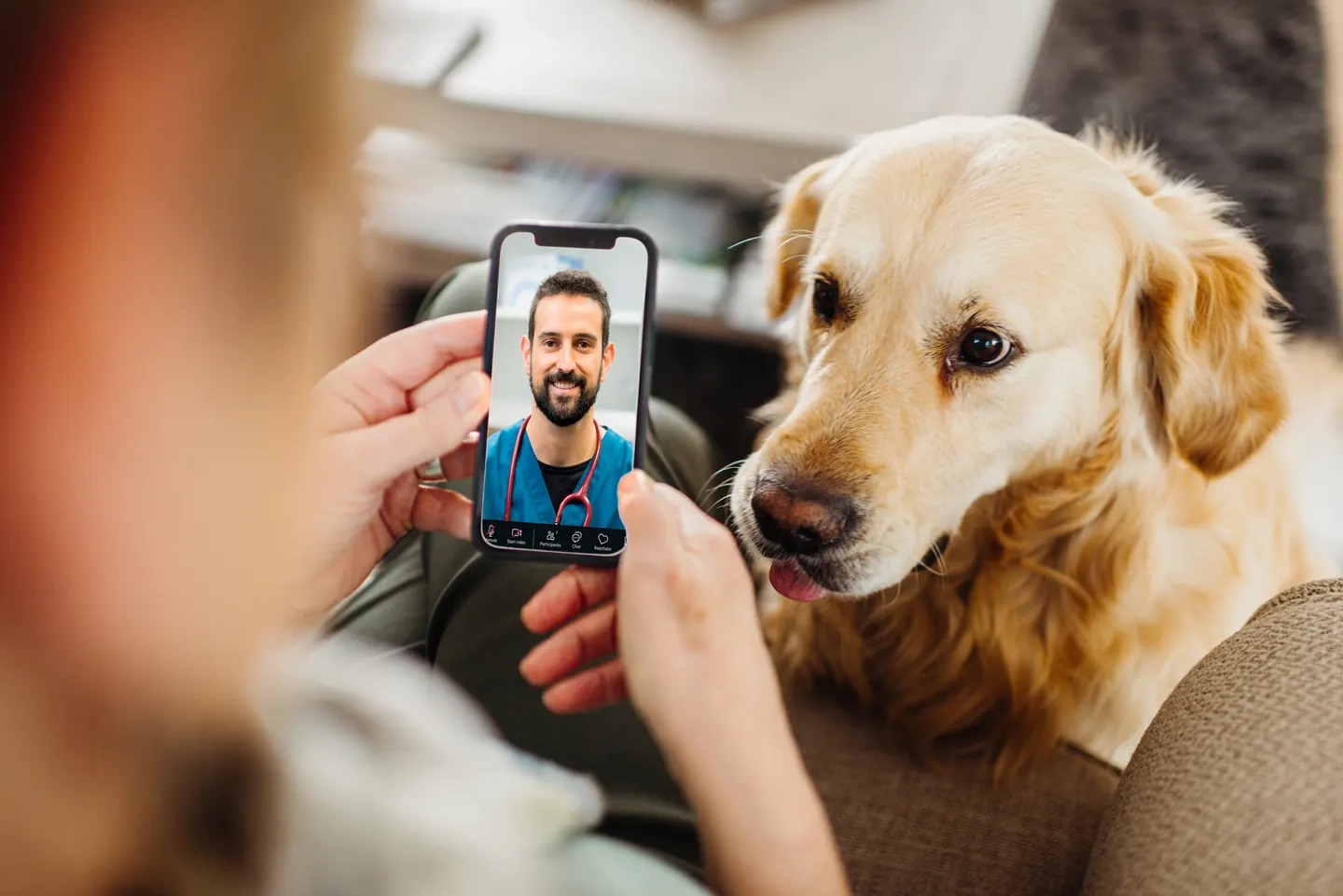
A licensed vet at Dutch can assess your dog over video and prescribe treatment when it's appropriate, delivered to your door.
Use code Pets60
Plans start at $12/month · covers up to 5 pets
- Licensed vets in most states
- Rx for 150+ conditions
- 4.7 on Trustpilot
Ofloxacin eye drops for dogs are a prescription fluoroquinolone antibiotic for bacterial eye infections, sold as a 0.3% ophthalmic solution under the brand name Ocuflox and as a generic. Vets prescribe them extra-label for bacterial conjunctivitis and some infected corneal ulcers.
A dog needs an exam before starting these drops, because the vet stains the eye to look for an ulcer and then sets how often drops go in and for how long. A painful, cloudy, or worsening eye is a same-day vet visit, not a reason to add more drops.
What ofloxacin eye drops are for dogs, what they treat, and whether you need a vet
Ofloxacin is a human drug. DailyMed lists the 0.3% ophthalmic solution as a human prescription drug, and VCA Animal Hospitals describes its use in dogs as extra-label, a common practice in veterinary medicine when owners follow the vet's directions carefully.
Under the FDA's AMDUCA rules, a veterinarian may prescribe an approved human drug for a dog only within a valid veterinarian-client-patient relationship. In practice, the vet examines the dog before any drops are given at home.
The generic solution comes in dropper bottles marked Rx Only, according to the label. Chewy lists the generic 0.3% solution as a prescription sterile eye solution for bacterial conjunctivitis and corneal ulcers, and Chewy Pharmacy fills it only with a veterinarian's prescription.
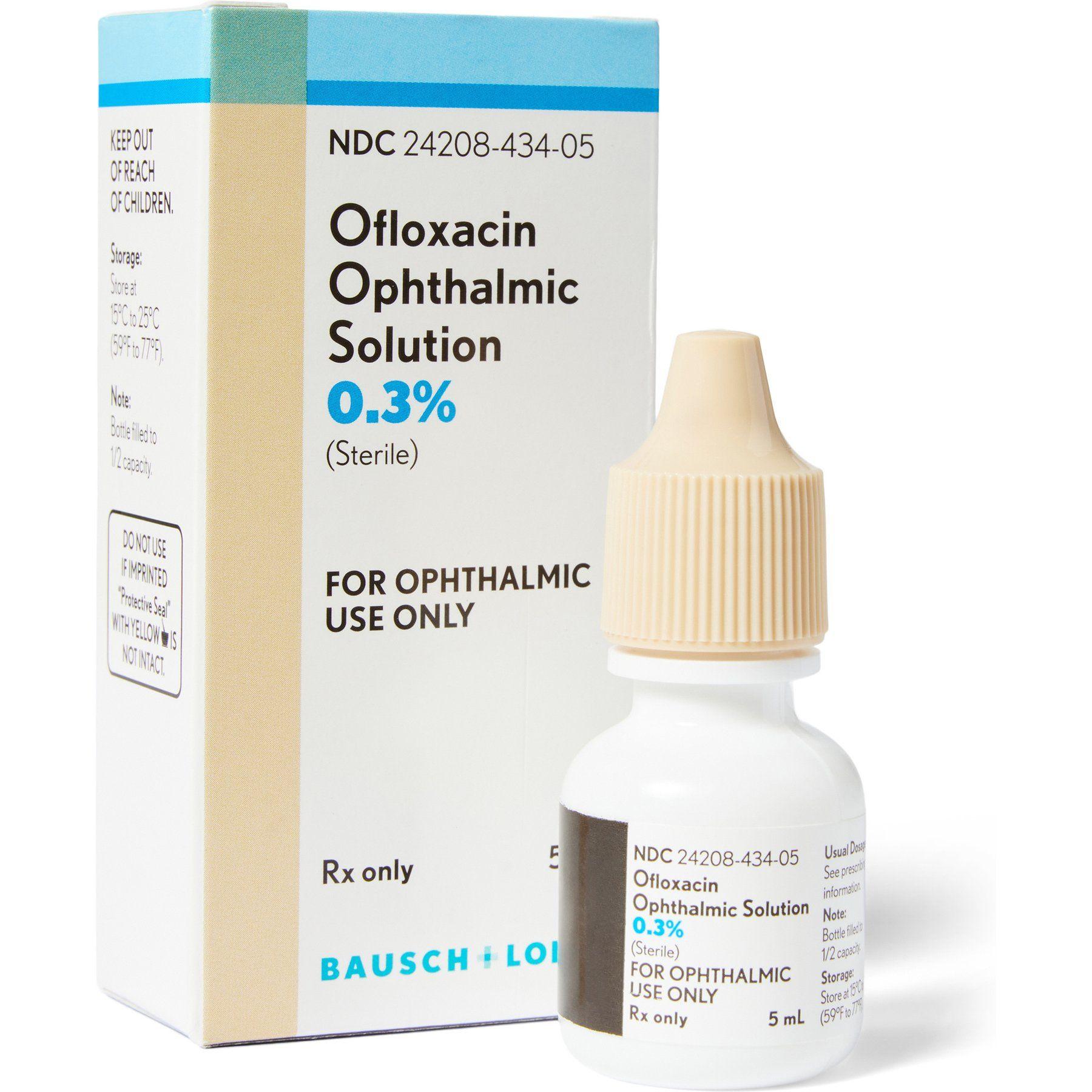
Generic 0.3% ofloxacin eye solution in a 5-mL dropper bottle for bacterial eye infections, filled with a vet prescription.
Webvet may earn a commission when you click through to Chewy, at no extra cost to you.
- 1Ofloxacin eye drops treat bacterial conjunctivitis and infected corneal ulcers in dogs, used extra-label.
- 2Your vet decides how often drops are given; VCA advises every four to six hours for a corneal ulcer.
- 3No published dog course length exists, so the vet sets it and confirms healing at a recheck.
- 4Stinging and redness are the usual side effects; more pain after a dose means stop and call the vet.
- 5A cloudy, painful, or worsening eye needs the vet the same day.
What does ofloxacin do for dogs?
Ofloxacin kills susceptible bacteria by blocking DNA gyrase, an enzyme bacteria need to copy and repair their DNA, according to the label. It is active against a broad range of gram-positive and gram-negative bacteria, so it suits the mixed infections that inflame the eye surface.
The Merck Veterinary Manual notes that fluoroquinolones penetrate the eye well and that ofloxacin covers Pseudomonas aeruginosa, a common cause of melting corneal ulcers. VCA adds that this short-acting drug stops working within 24 hours, which is why doses come several times a day.
Not every sore eye is bacterial, and Merck notes that antibiotics may not cure conjunctivitis when another factor, such as an eyelid conformation defect, is behind it. WebVet's guide to dog eye infection explains the common causes a vet rules out first.
Ofloxacin eye drops dosage for dogs: drops, frequency, and treatment length
| Condition | Frequency the source gives | Course length and recheck point | Source |
|---|---|---|---|
| Bacterial conjunctivitis (human label) | Days 1 and 2: one to two drops every two to four hours; days 3 through 7: one to two drops four times daily | Human schedule only; your vet sets the dog's course and recheck | DailyMed human label |
| Bacterial corneal ulcer (human label) | Days 1 and 2: one to two drops every 30 minutes while awake plus at about four and six hours after retiring; days 3 through 7 to 9: hourly while awake; then four times daily to completion | Human schedule only; your vet sets the dog's course and recheck | DailyMed human label |
| Corneal ulcer in dogs (VCA) | Antibiotic applied every four to six hours | Recheck after two to three days; fluorescein test repeated every one to seven days | VCA Animal Hospitals |
| Superficial ulcer (Merck Veterinary Manual) | Topical broad-spectrum antimicrobial every 4-8 hours | Superficial ulcers generally heal within three to five days (VCA) | Merck Veterinary Manual |
| Deep or complicated ulcer (Merck Veterinary Manual) | May need treatment every 2 hours initially | Close vet rechecks; a melting ulcer over half the cornea merits specialist surgery | Merck Veterinary Manual |
| Melting ulcer (WSAVA 2007, VIN) | Fluoroquinolone eye drops every two hours with fusidic acid four times daily | Same-day care; perforation is possible within 24 hours | WSAVA proceedings on VIN |
Ofloxacin 0.3% eye drops hold 3 mg of ofloxacin per mL, and the dose is counted in drops. The label gives no weight chart, so no dosing chart by body size exists. Your vet writes the drops per dose, the doses per day, and how many days to continue.
The generic is supplied in 5 mL and 10 mL bottles, and your vet picks the size that covers the prescribed course. Ofloxacin 10-mL Ophthalmic Solution 0.3% is the larger option, listed on Chewy as a prescription sterile eye solution and filled only with a veterinarian's prescription.
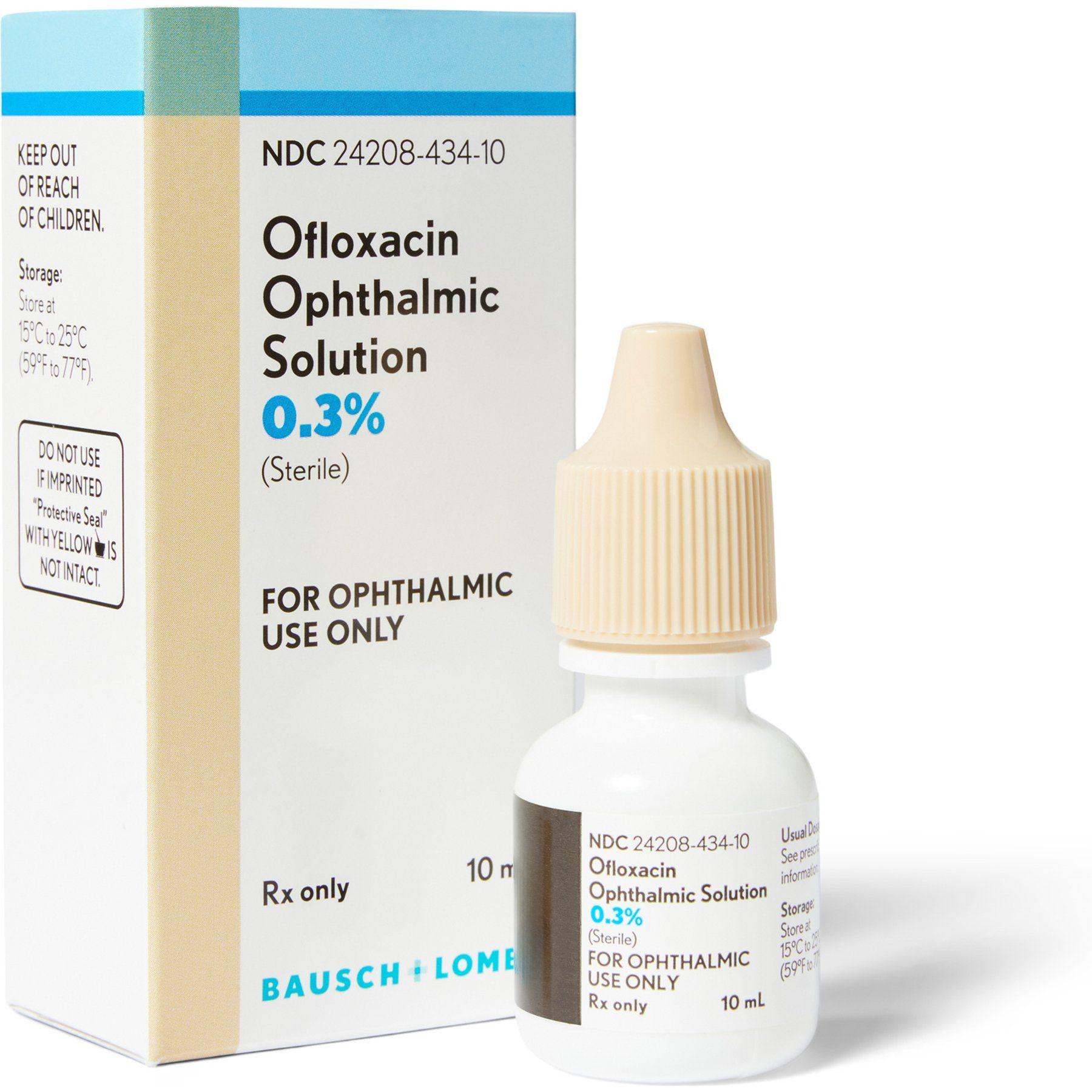
A 10-mL bottle of generic 0.3% ofloxacin eye solution for bacterial conjunctivitis and corneal ulcers, filled with a vet prescription.
Webvet may earn a commission when you click through to Chewy, at no extra cost to you.
Published frequencies differ. VCA's page on corneal ulcers in dogs advises antibiotic drops every four to six hours because they work only briefly. The Merck Veterinary Manual chapter on the cornea lists every 4-8 hours for superficial ulcers and every 2 hours at first for deep or complicated ones.
A separate Merck chapter cautions that fluoroquinolone use more often than every 6 hours on a corneal ulcer can damage the cells on the corneal surface. That tension is the reason only your vet should set or change the frequency, and why deep ulcers get closer monitoring.

How long do dogs stay on ofloxacin eye drops?
How long to use ofloxacin eye drops depends on healing, and dogs have no standard course length in days. VCA advises a recheck after two to three days of treatment for an ulcer, and says superficial ulcers generally heal within three to five days.
Follow the directions on your dog's prescription label exactly. Give the number of drops your vet prescribed, at the times prescribed, for the full time prescribed, even once the eye looks better. Never change the dose, add extra drops, or stop early without talking to your vet.
What vets use ofloxacin eye drops for in dogs
Merck says fluoroquinolones as a group are used on the eye for infectious conjunctivitis and corneal ulcers, and the human label lists the same two conditions. In dogs, that translates to a short list of uses:
- Bacterial conjunctivitis: the Merck Veterinary Manual chapter on the conjunctiva says pus-like discharge signals a bacterial component that calls for a topical antibiotic. Read more about dog conjunctivitis (pink eye).
- Infected corneal ulcers: a plan for an ulcer usually starts after the vet confirms it with fluorescein stain. WebVet's corneal ulcer in dogs guide covers the condition.
- Melting ulcers and Pseudomonas infections: the vet may pair ofloxacin with other drops and dose it more often at first.

In a study of 198 canine stromal corneal ulcer samples collected from 2018 to 2021, published on PubMed Central, neopolybac combined with ofloxacin or amikacin covered 99% of the bacteria isolated. The authors recommended starting that way and adjusting once culture results return.
A veterinary ophthalmology formulary from Complete Animal Eye Care states that ofloxacin should not be used as a preventive antibiotic, so vets reserve it for real infection or real infection risk.
Ear use calls for a separate product. Ofloxacin otic solution 0.3% is made for ears, and its DailyMed otic label says it is not for use in the eyes. Merck lists fluoroquinolones among ear treatments for Pseudomonas, but the vet must confirm the eardrum is intact first.
What are antibiotic eye drops used for?
Antibiotic eye drops treat bacterial infections on the eye surface, mainly bacterial conjunctivitis and infected or at-risk corneal ulcers, according to VCA and Merck. They do not fix an underlying cause such as an eyelid problem, and VCA warns that reusing leftover drops from an earlier bout may not help or may be harmful.
Ofloxacin eye drop side effects in dogs
VCA lists irritation, stinging, swelling, redness of the eye, and sensitivity to light as possible side effects. The label written for people names brief burning or discomfort as the most common reaction. Most of these stay in and around the eye:
- Stinging or burning right after a drop
- Redness, lid swelling, squinting, or extra tearing
- Sensitivity to light
- Harmless crystals or crusting in the treated eye, which VCA says should clear within a few days
- Gagging or drooling, because some drops taste bitter as they drain to the mouth through the tear ducts, per VCA's guide to applying eye drops to dogs
Crusting along the lids is easiest to manage at dose time. VCA advises gently cleaning debris from the eye with warm water and a washcloth before drops, and sterile pre-soaked pads such as Miracle Care Sterile Eye Wash Pads serve the same cleaning purpose. Pads clean; they do not treat infection.
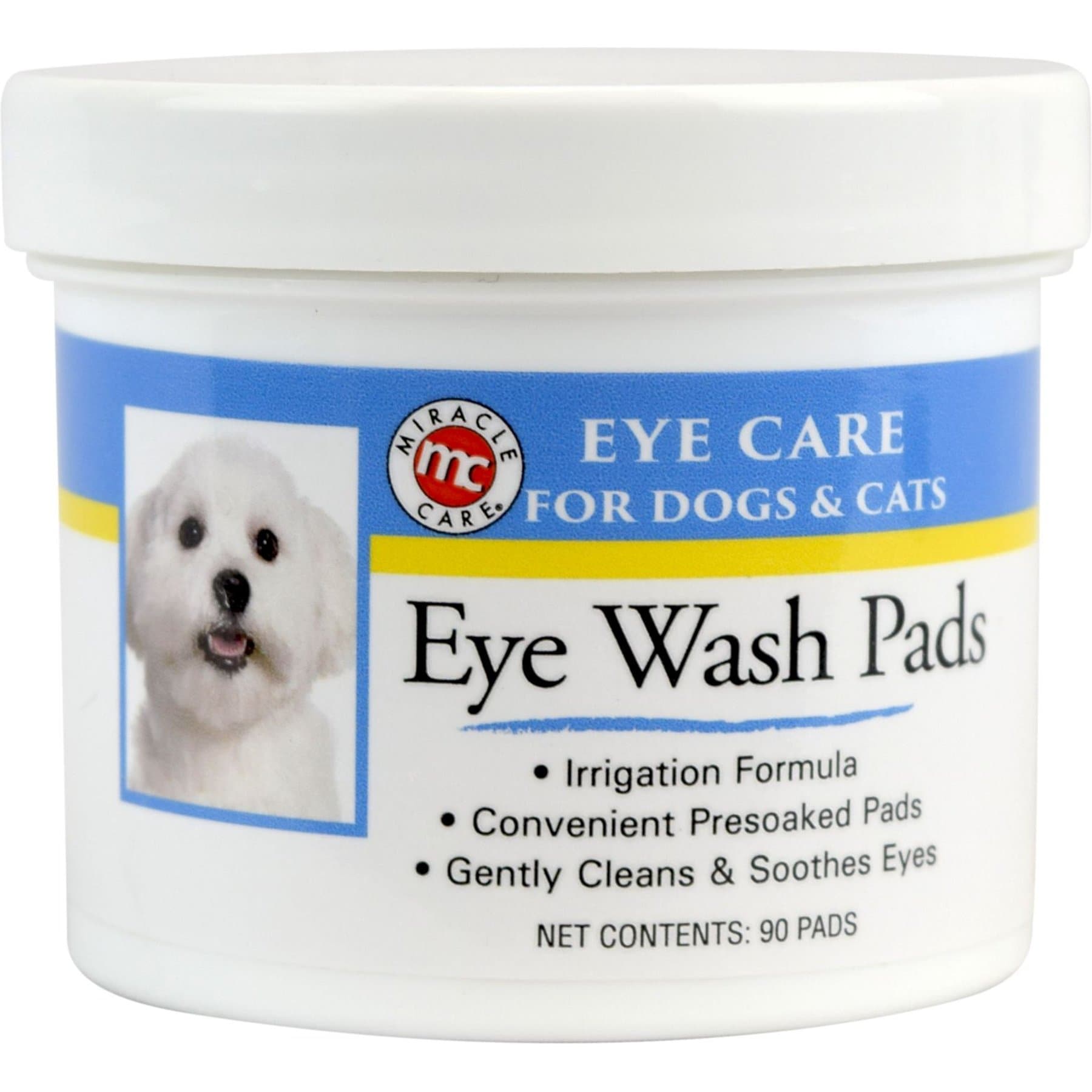
Pre-soaked sterile eye wash pads for wiping debris from around a dog's eyes before each dose.
Webvet may earn a commission when you click through to Chewy, at no extra cost to you.
Is ofloxacin ophthalmic solution safe?
For most dogs it is, when a vet prescribes it and checks progress. The label reports that blood levels after ten days of eye drops were more than 1000 times lower than after standard oral doses, and that eye drops in young animals have not shown the joint damage oral quinolones can cause.
The main long-term risk is overgrowth. The label warns that prolonged use can let fungi or resistant bacteria take hold, which is one more reason to stop when the vet says the eye has healed.
Allergic reactions are rare. VCA says irregular breathing, rash, fever, or puffiness and swelling around the face need an immediate call to your vet, and notes that a sensitivity can appear after several uneventful doses.
 Sponsored
Vet care that's always there
Unlimited video calls and messaging with licensed vets for less than a typical vet visit. One membership covers up to five pets.
Use code Pets60
Plans start at $12/month · covers up to 5 pets
- Licensed vets in most states
- Rx for 150+ conditions
- 4.7 on Trustpilot
Eye signs that need a vet today, not more drops

Watch for these changes once treatment starts:
- Cloudiness or haze on the eye surface, which Merck lists with pain as a sign of ulceration
- More squinting, rubbing, or tearing than before the drops began
- An eye that looks redder or more inflamed after a dose, which VCA says warrants a call to the vet
- A soft or changing look to the eye surface, which can mean the cornea is melting
- Green or yellow dog eye discharge that keeps building up
- Facial swelling or irregular breathing
Some ulcers simply heal slowly. The WSAVA paper defines superficial ulcers that take more than two weeks to heal as indolent, and those need a different plan rather than more antibiotic. Merck adds that a melting ulcer covering more than half the cornea merits surgery by a specialist.
How to put eye drops in a dog's eye and finish the course
Dogs with a corneal ulcer must wear an E-collar so they cannot rub the eye, according to VCA. WebVet's dog cone guide compares styles, and a soft adjustable cone such as the Kuoser Soft Cone recovery collar is one option to ask about during a course of drops.
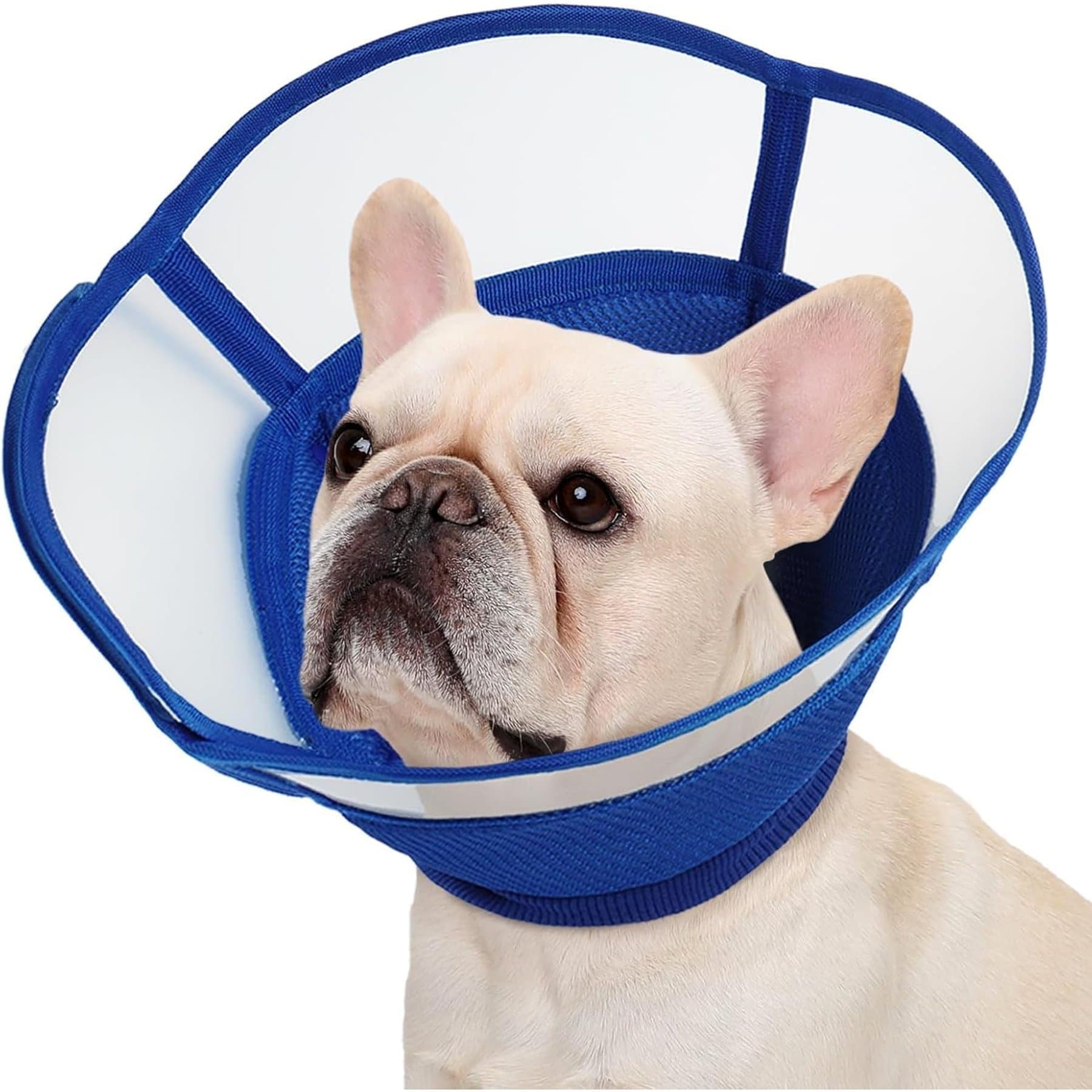
An adjustable soft cone with a clear upper layer that helps keep a healing dog from scratching or licking.
Webvet may earn a commission when you click through to Chewy, at no extra cost to you.
Start each dose with clean hands and a clean eye. VCA advises gently wiping debris away with warm water and a washcloth, and WebVet's guide on how to clean dog eyes covers technique. A rinse such as Miracle Care Sterile Eye Wash for Dogs & Cats removes debris but does not treat infection.
Keep the bottle in its original container at room temperature, protected from light and moisture, and do not freeze it, per VCA. Then follow these steps for each dose:
- Wash your hands and have treats ready.
- Wipe away any discharge with warm water and a clean cloth.
- Tilt your dog's head up and hold the bottle close to the eye without touching its surface.
- Aim the prescribed number of drops at the center of the eye and let your dog blink to spread them.
- Keep the dropper tip from touching the eye or any other surface to prevent contamination.
- Reward with praise, a gentle massage, or a treat.
- Wait 5 to 10 minutes before giving any second eye medication.

Inflatable collars such as the WZ PET Waterproof Dog & Cat Inflatable Recovery Cone E-Collar are another style; ask your vet which design keeps paws away from the eye. Pre-soaked Miracle Care Sterile Eye Wash Pads for Dogs & Cats, 90 count can stand in for the washcloth when wiping debris.
Keep giving drops for the entire time prescribed, even if the eye looks normal, VCA advises. Your vet may schedule a follow-up visit after the course to confirm the infection has cleared.
Dogs that should not get ofloxacin and drops to avoid using alongside it
VCA says to avoid ofloxacin in animals allergic to any ingredient and to use caution in dogs with myasthenia gravis. The label also rules it out after an allergy to other quinolones. Tell your vet before treatment if any of these apply:
- A past reaction to ofloxacin or another quinolone antibiotic
- Myasthenia gravis
- Steroid eye drops already in the cupboard: VCA says corticosteroids must not go into an ulcerated eye too soon, and the WSAVA paper warns they may encourage corneal melting
VCA reports no known drug interactions for the eye drops, though you should still share every medicine and supplement your dog takes. With more than one eye medication, VCA advises waiting 5 to 10 minutes between them and giving drops before ointments.
Ofloxacin vs tobramycin and other antibiotic eye drops for dogs
Ofloxacin and tobramycin are both antibiotic eye drops, but they belong to different drug families. Merck explains that aminoglycosides such as tobramycin kill mainly aerobic gram-negative bacteria, cover staphylococci but not streptococci, and cross an intact cornea poorly. Ofloxacin, a second-generation fluoroquinolone, adds activity against beta-hemolytic streptococci and penetrates the eye well.
- Pseudomonas: Merck says ofloxacin covers Pseudomonas, and that tobramycin and amikacin treat resistant Pseudomonas.
- Cross-resistance: the label says bacteria resistant to other fluoroquinolones often resist ofloxacin too, but generally not aminoglycosides, so one family can back up the other.
- Cautions: VCA's tobramycin page advises caution in dogs with kidney disease or glaucoma; ofloxacin's main caution is myasthenia gravis.
- Resistance in dogs: the canine ulcer study reported total resistance of 23% for ofloxacin, 32% for tobramycin, and 21% for gentamicin.
- Triple antibiotic drops: Merck says combinations of bacitracin or gramicidin, neomycin, and polymyxin B are used because both gram-positive and gram-negative bacteria can worsen an ulcer.
- Gentamicin: Merck notes that high concentrations are toxic to the corneal surface and that very frequent dosing can slow ulcer healing.
In a human corneal ulcer trial on the label, ofloxacin succeeded in 82% of patients, compared with 80% for fortified tobramycin plus cefazolin, with a median of 11 versus 10 days to success. No head-to-head trial in dogs compares ofloxacin with tobramycin, so that human result and the canine resistance figures above are the closest evidence.
Neither drug is better for every dog; the vet chooses based on the likely bacteria, ideally guided by culture. WebVet's guide to tobramycin eye drops for dogs covers that drug in detail.
Ofloxacin eye drops cost, prescription status, and where to fill them

Ofloxacin eye drops need a veterinarian's prescription: the label is marked Rx Only, and federal rules allow extra-label use only after the vet has examined the dog. Once it is prescribed, your vet's clinic can dispense a bottle, or a licensed pharmacy can fill the written prescription.
The Heartland Vet Supply pharmacy listing shows the 0.3% solution uses benzalkonium chloride 0.005% as its preservative. VCA says to avoid ofloxacin in animals allergic to any component, so mention any past reaction to an eye product when the vet writes the prescription.
How much do ofloxacin eye drops cost?
Ofloxacin (Generic) Ophthalmic Solution 0.3%, 5-mL was listed at $10.99 on Chewy when we checked in November 2026, and Ofloxacin 10-mL Ophthalmic Solution 0.3% was listed at $18.99.
Chewy Pharmacy fills both only with a vet's prescription, and Chewy says it sources prescription medications from FDA-registered manufacturers and wholesale distributors.
Heartland Vet Supply, another licensed pet pharmacy, listed the 5 mL bottle at $11.95 and the 10 mL bottle at $21.95 in November 2026. The exam, fluorescein stain, and rechecks are billed separately by each clinic, and no published price exists for those visits.
Ofloxacin eye drops for dogs questions
Frequently Asked Questions
Can I buy ofloxacin eye drops for my dog over the counter?
No. Ofloxacin eye drops are a prescription-only drug, and using them in a dog is legal only after a veterinarian has examined your pet and written the prescription.
Drugstore eye drops are not a stand-in for an exam, and the vet also needs to rule out an ulcer or another cause that changes the treatment plan.
What is the brand name of ofloxacin eye drops?
Ocuflox is the brand name. The generic, sold simply as ofloxacin ophthalmic solution 0.3%, contains the same 3 mg of ofloxacin per mL, and a pharmacy may dispense either name for the same prescription. The generic is supplied in 5 mL and 10 mL dropper bottles.
Where can I fill a prescription for ofloxacin eye drops for my dog?
Your vet's clinic can dispense it directly, or your vet can send the prescription to a licensed pharmacy, including online pet pharmacies such as Chewy Pharmacy. Any pharmacy will need that prescription before it ships the bottle, so ask the clinic which option is faster if treatment needs to start today.
What eye drops can a vet use instead of ofloxacin?
Ciprofloxacin is another fluoroquinolone used on the eye, though bacteria that resist one fluoroquinolone often resist others. An aminoglycoside such as tobramycin or gentamicin, or a triple antibiotic combination, is a common alternative when the vet wants a different drug family.
How many days should a dog use ofloxacin eye drops?
There is no fixed number of days for dogs. Your vet bases the course on how the eye responds, and an ulcer is usually seen again for a recheck two to three days in. Shallow ulcers often close within days, while slow-healing ones take weeks.
Can ofloxacin eye drops be used in a dog's ear?
Use them only where your vet directs. The ear product carries its own label warning that it is not for the eyes. Ofloxacin for ears comes as a separate otic solution, and the vet must confirm the eardrum is intact before any ear drops go in, so an ear problem needs its own exam.
Can ofloxacin eye drops treat a corneal ulcer in a dog?
Yes, when the corneal ulcer is infected or at risk of infection. The vet first confirms the ulcer with fluorescein stain, which turns green where the cornea is damaged, then sets the drop schedule. Deep or melting ulcers may need extra drops or surgery.
Is ofloxacin or tobramycin better for a dog eye infection?
Neither wins for every dog. Ofloxacin reaches deeper into the eye and covers streptococci, while tobramycin is strong against gram-negative bacteria such as resistant Pseudomonas. The vet picks based on the bacteria involved, sometimes after a culture.
The two families can back each other up, because resistance to one rarely carries over to the other.
What if I miss a dose of my dog's ofloxacin eye drops?
Give the missed dose as soon as you remember, then go back to the usual schedule. If the next dose is almost due, skip the missed dose and give the next dose on time. Never give two doses at once, VCA advises.
Veterinarian · BVMS MRCVS
Dr. Pippa Elliott, BVMS, MRCVS, is a veterinarian with nearly 30 years of experience in companion animal practice. Dr. Elliott earned her Bachelor of Veterinary Medicine and Surgery from the University of Glasgow. She was also designated a Member of the Royal College of Veterinary Surgeons. Married with 2 grown-up kids, Dr. Elliott has a naughty Puggle named Poggle, 3 cats and a bearded dragon.
Related reading

Potassium Bromide for Dogs: Epilepsy Dosage, Side Effects, and Blood Monitoring

Zonisamide for Dogs: Seizure Dosage, Side Effects, and Monitoring

Diphenoxylate for Dogs (Lomotil): Dosage, Safety, and Why Vets Use Caution
