Cat Proof Christmas Tree: Vet-Reviewed Safety Steps, Deterrents, and Cat-Safe Tree Options
Cats climb Christmas trees because they are tall, textured, and full of swinging toys. Here is how to cat proof a Christmas tree so it stays upright and the cat stays safe: anchoring, tree choice, deterrents, decoration rules, and the gear to buy.

BVMS MRCVS
Medically reviewed by Dr. Pippa Elliott, BVMS MRCVS · Last reviewed

This article contains affiliate links. Webvet may earn a commission when you buy through them, at no extra cost to you.
A cat proof Christmas tree is not a special product. It is an ordinary tree set up so a curious cat cannot climb it, topple it, chew its cords, or drink its water. The trick is to work with your cat's climbing instinct instead of fighting it.
The steps below come from veterinary and poison-control guidance, including the Cornell Feline Health Center, the ASPCA, and the National Capital Poison Center. They cover the order to set things up, the gear that fits each step, which deterrents are safe, and which tree accidents are true emergencies.
Why cats climb Christmas trees and what actually goes wrong
The short answer: anchor the tree, place it away from launch points, add a barrier at the base, deter with textures and sprays, decorate high, and redirect your cat to its own climbing spot. Then deal with the two hidden hazards: tinsel, which can lodge in the intestines, and tree water, which can carry bacteria.
- 1Know why height, texture, and swinging objects attract cats: a decorated tree is a climbing frame and a toy box in one.
- 2Start by anchoring the tree to a wall or ceiling and weighting the base so a climb cannot turn into a fall.
- 3Move furniture away, ring the base with a barrier, and keep cords and breakable ornaments up high.
- 4Leave tinsel off and cover the tree water, because both cause real medical problems.
- 5Swallowed string or tinsel, repeated vomiting, or sudden lethargy means a call to your vet right away.
The vet-reviewed guidance from PetMD puts the appeal plainly: a Christmas tree is something tall to climb that is full of hiding spots. CatVets adds that climbing trees to survey the room or hide from something scary is normal cat behavior, and that vertical space matters indoors.
Texture and movement add to the pull. Bark and branches give claws something to grip, and swinging ornaments look a lot like the toys cats chase. PetMD also notes that cats are athletic jumpers that like to hop from one piece of furniture to the next, so a tree beside the sofa is an open invitation.
How to stop a cat from attacking the Christmas tree?
Remove the reward and offer a better one. Make the tree hard to reach with an anchor, a base barrier, and no furniture to launch from, then put an approved climbing outlet in the same room. PetMD notes that a cat tree nearby can be tempting enough to pull attention away from the Christmas tree.
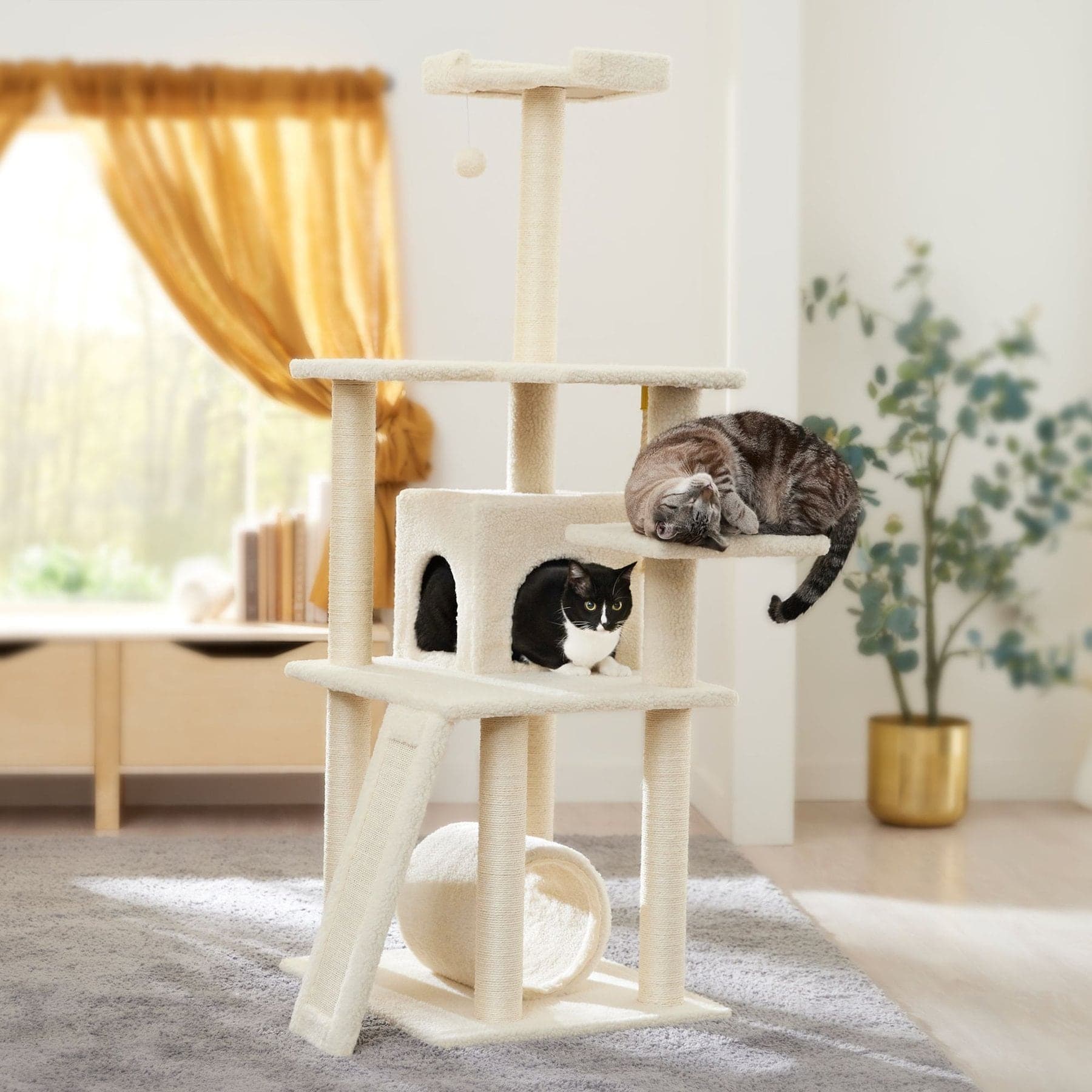
A tall cat tree in the same room competes with the Christmas tree for the high perch cats are really after.
Webvet may earn a commission when you click through to Chewy, at no extra cost to you.
Expect it to take repetition. No primary source gives a figure for how long deterrents take to change tree behavior, so keep the full setup in place for the whole season rather than taking it down after one quiet week.
Most tree trouble is a nuisance: a knocked-off ornament, a bent branch, a startled cat. A few problems are more serious, and they are worth knowing before the tree goes up:
- Tip-overs: the Cornell Feline Health Center warns that unless the tree is anchored, a climbing cat can bring it down with devastating results.
- Tinsel: Cornell says tinsel can work its way into the digestive tract, lodge in the intestines, and behave like a piano wire that perforates them.
- Cords and bulbs: Cornell lists chewing on small bulbs, wires, and electrical cords among holiday hazards, and the ASPCA notes a wire can deliver a potentially lethal shock.
- Tree water: the National Capital Poison Center says stand water can contain bacteria and cause stomach upset and diarrhea, even when its ingredients are not poisonous.
- Breakables and needles: the ASPCA says ornament shards can damage the mouth and digestive tract, and the National Capital Poison Center lists tree needles among things pets can choke on.
How to cat proof a Christmas tree step by step
The best way to cat proof a Christmas tree is in order. A barrier around a tree that can still tip is wasted effort, and ornaments hung before the anchor is set will come down with the first climb. Work through the steps before a single decoration goes on.
Anchoring comes first. Cornell suggests tying the top of the tree to a cup hook in the ceiling with wire or string, and the ASPCA says to secure the tree tightly so there is no chance it can tip. A heavy, wide stand at the cat proof Christmas tree base does the rest.

Next, build a guard around the base. A foil skirt, a solid tree collar, or a freestanding gate keeps the cat farther from the trunk, stand, and water. A gate is a speed bump for a jumper, not a wall.
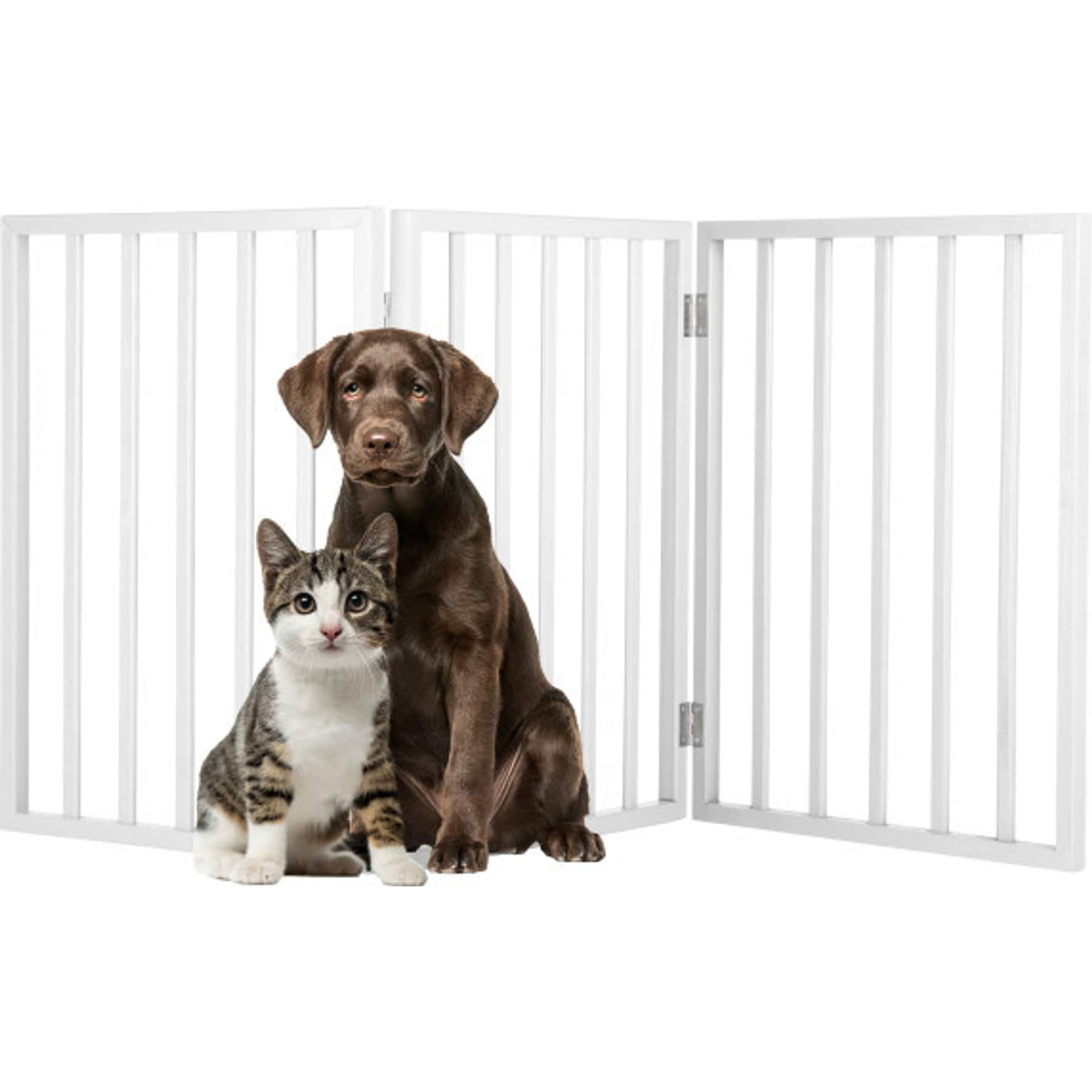
A freestanding three-panel gate set across the front of a corner tree keeps paws farther from the trunk, stand, and water.
Webvet may earn a commission when you click through to Chewy, at no extra cost to you.
Here is the full sequence, with the gear that fits each step:
- Anchor. Tie the tree to a ceiling cup hook or a wall hook with wire or strong string, and set it in a heavy, stable stand. Gear: cup hook, wire or string, weighted stand.
- Place. Move the tree away from sofas, shelves, and tables so your cat loses its launching point, as PetMD advises. A corner limits the approach to one side. Gear: none, just rearranged furniture.
- Barrier. Ring the base with sheets of aluminum foil taped together, a PetMD suggestion, or use a tree collar or a Pet Adobe Freestanding Dog & Cat Gate, White, 3 Panel as a Christmas tree guard to stop cats reaching the trunk. Gear: foil and tape, collar, or panel gate.
- Deter. Add textures cats dislike, such as double-sided tape on nearby surfaces, or a motion-activated spray. Smells are less dependable than textures. Gear: double-sided tape, motion- or heat-activated spray, and a scratch deterrent spray used only on surfaces the cat cannot lick.
- Decorate high. Tie cords up or run them through a heavy plastic cord protector, as Cornell recommends, skip tinsel, keep only cat-friendly ornaments low, and cover the water, per the ASPCA. Gear: cord protector, shatterproof ornaments, a covered stand or tight skirt.
- Redirect. Put a cat tree or scratching post close by. The ASPCA advises placing approved alternatives right next to the spots you are deterring. Gear: cat tree, cardboard cat house, scratching post.
How do you keep cats away from a Christmas tree?
Keep cats away from a Christmas tree with distance and dullness. Distance comes from moving launch furniture and ringing the base with a barrier. Dullness comes from removing anything that dangles at cat height. The National Capital Poison Center advises keeping trees and decorations high up or blocked off.
How to cat proof a tree?
The same rules work for any indoor tree, from a tabletop pine to a large potted plant. Secure it so it cannot tip, clear the furniture beside it, and protect the soil or water at the base. Check any living plant against our list of plants toxic to cats so a nibble does not become a poisoning.
How to make a cat proof Christmas tree?
No cat-proof Christmas tree for sale solves the problem on its own, whether you shop on Amazon, at Argos, or elsewhere. The DIY cat-proof Christmas tree ideas that hold up share the same principles: a tabletop tree, a foil skirt, a tree collar, or the playpen cage from every funny cat-proof Christmas tree meme.
The upside-down tree hung from the ceiling, another popular DIY idea, removes the climbable trunk but still needs a secure anchor point. A Hello Kitty Christmas tree or any other themed tree follows the same rules. The theme changes nothing; height, anchoring, and what hangs low change everything.
The best Christmas tree for cats: real vs artificial, size, and shape
The best Christmas tree when you have cats is usually the smallest one you will enjoy. PetMD suggests a small tree that sits on a table, because it is not big enough for a cat to jump onto or climb around in. A small cat proof Christmas tree also has less weight to fall.
Shape helps too. A half Christmas tree, the flat-backed kind that sits against a wall, is easier to anchor and offers one approach instead of four. A cat proof half Christmas tree still needs a base barrier and high decorations, but it removes the back side as a climbing route.
Then there is the cat Christmas tree: a cat tree or cat Christmas tree tower styled to look festive, like the Meowpy and Feastivitree designs shoppers search for. These are built for the cat to use, so they work alongside your tree as a redirect, not as a replacement for the anchoring and barrier steps.
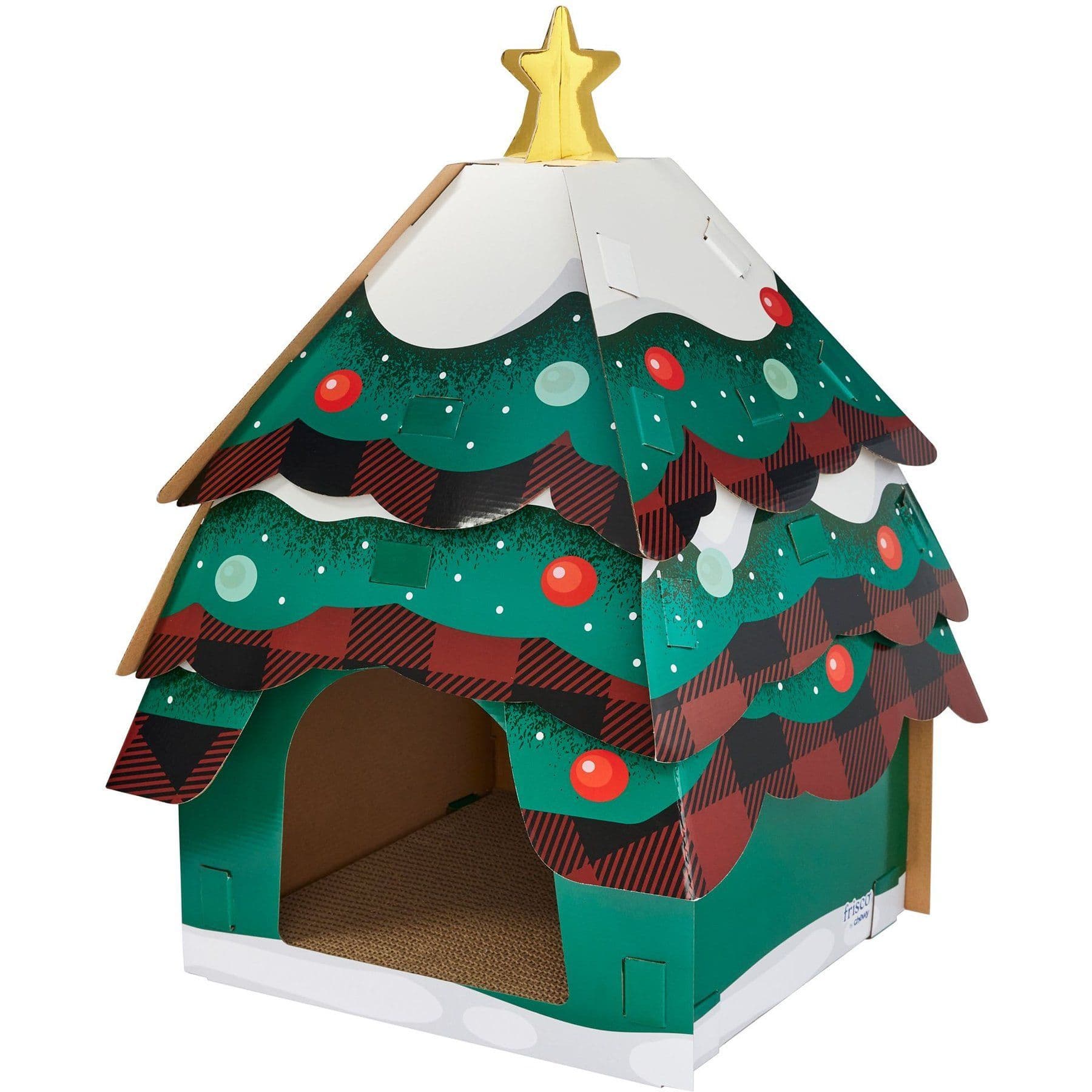
Frisco's cardboard Christmas tree cat house gives your cat its own tree to sit in, a few feet from yours.
Webvet may earn a commission when you click through to Chewy, at no extra cost to you.
Real versus artificial comes down to one sourced difference. A real tree needs stand water, which Cornell says to keep your cat away from; an artificial tree does not. Needles matter on both, and no primary source compares injury rates. To cat proof an artificial Christmas tree or keep cats away from a fake Christmas tree:
- Anchor it exactly as you would a real tree, because artificial branches are just as climbable.
- Pick a wide, heavy base and make sure the trunk sections seat firmly.
- Keep the built-in wiring and plug cords of a prelit tree tied up or inside a heavy plastic cord protector.
- Treat shed artificial needles like real ones, since the choking warning makes no distinction.
If you choose a live tree, use plain water. Cornell's Dr. Perry advises water with no chemicals added, so skip the tree water preservative. Whether a live tree is itself safe to nibble varies by plant; the answer to which Christmas trees are non-toxic lives in our guide to Christmas plants toxic to pets.
Cat deterrents for Christmas trees: sprays, scents, and barriers that work
Deterrents make the tree zone unpleasant to touch or approach, and they work best in layers. Textures are the most dependable layer. PetMD notes that many cats hate the look, sound, and feel of aluminum foil, which is why a taped foil skirt around the base is such a common fix.

What can I spray on my Christmas tree to stop my cat climbing?
Spray the area around the tree, not the tree itself. PetMD points to bitter tastes and motion-activated sprays as deterrents cats dislike. Commercial scratch deterrent sprays are another option, but many rely on essential oils, so they belong on the outer edge of the skirt or nearby gift boxes rather than on branches your cat might lick.
Nature's Miracle Advanced Platinum Cat Scratch Deterrent is a typical example. Its label lists sodium lauryl sulfate plus rosemary, cinnamon, citronella, and cornmint oils, carries a harmful-if-swallowed caution, and calls it safe for pets when used as directed. Given VCA's warning about cinnamon oil, keep it strictly where your cat cannot lick it.
The directions call for three sprays per square foot, reapplied daily or as needed, and never directly on pets. Used on the outer edge of a foil skirt or the sides of gift boxes around the base, never on mats your cat walks across, it adds a smell layer on top of the texture layer.
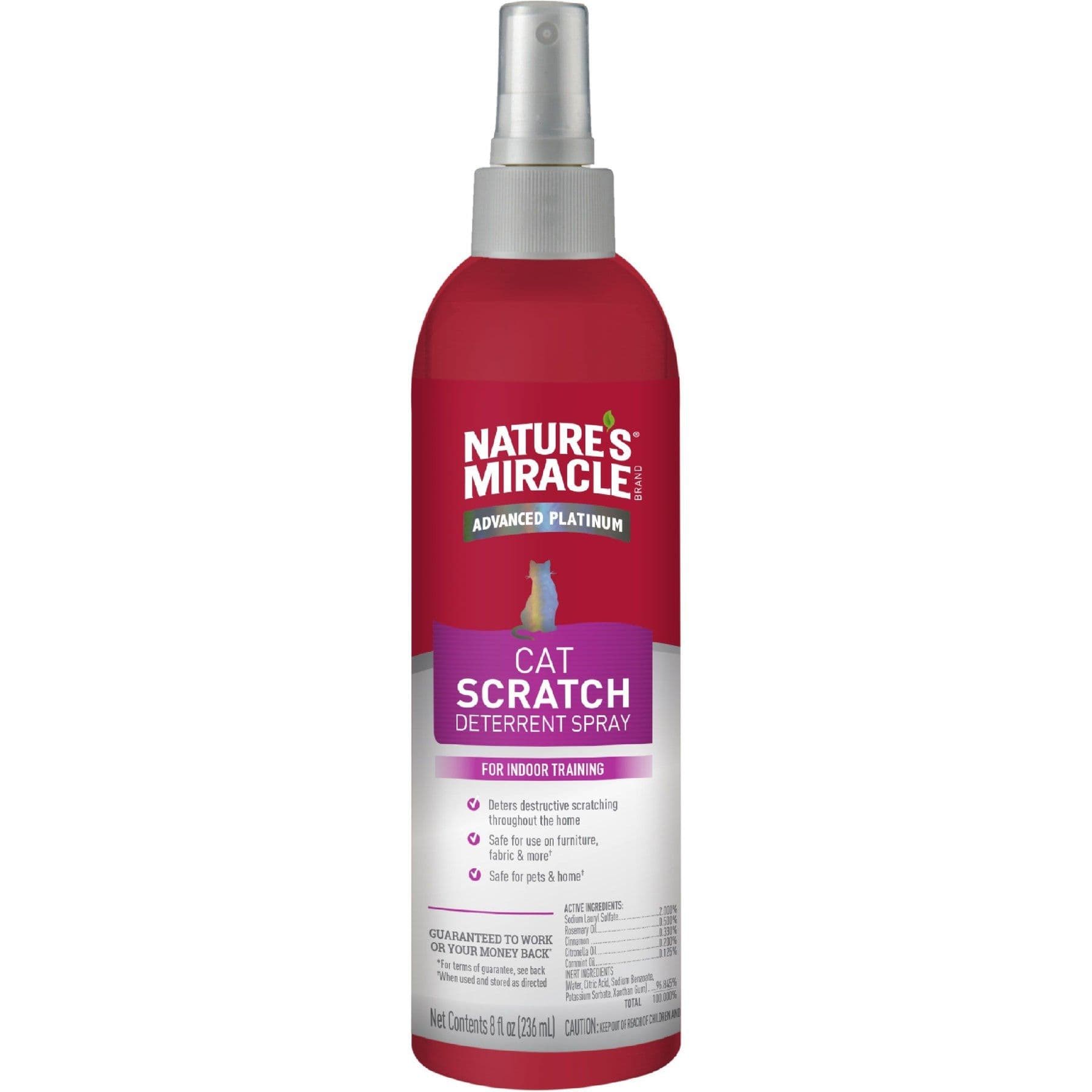
A scratch deterrent spray for the skirt edge and gift boxes around the tree, kept off the branches your cat could lick.
Webvet may earn a commission when you click through to Chewy, at no extra cost to you.
Options with support from vet and welfare sources:
- Aluminum foil around the base, which many cats dislike on sight, sound, and touch, per PetMD.
- Double-sided sticky tape on nearby surfaces, listed by both the ASPCA and Humane World for Animals, though their advice is written for scratching rather than trees.
- A motion- or heat-activated spray, which PetMD suggests to warn a cat away from the tree.
- Physical barriers such as a gate or collar, which do not depend on your cat's preferences at all.
Options to skip or handle with care:
- Essential oils sprayed on branches. VCA Animal Hospitals says many essential oils, including cinnamon and citrus oils, are poisonous to cats through both ingestion and skin exposure.
- Homemade citrus or cinnamon mixes, for the same reason, since a cat brushing past wet branches carries the oil on its coat.
- Scent on its own. No primary source shows that any smell keeps cats off a tree.
What smell do cats absolutely hate?
Online lists of the smells cats hate most are not backed by veterinary sources. Citrus is the usual suggestion, but VCA names citrus and cinnamon oils among those poisonous to cats, so skip essential-oil experiments. The vet-reviewed PetMD guidance leans on taste and texture instead: cats dislike bitter flavors and aluminum foil.
What scent deters cats from Christmas trees?
No scent has been shown to keep cats off a Christmas tree by itself. Commercial deterrents blend scents such as rosemary, citronella, and cornmint with other ingredients, so treat them as one layer beside foil, tape, or a barrier. Keep any scented product off the branches and away from your cat's fur.
Whatever you choose, pair it with a yes. The ASPCA's advice for scratching problems is to put approved alternatives right next to the spots you are deterring. The same logic applies here: block the trunk, then give your cat its own tree to climb or hide in a few feet away.
If the rearranged room seems to unsettle your cat, a pheromone diffuser offers calmer support. Feliway Classic mimics the natural F3 feline pheromone, and Feliway says each diffuser lasts up to 30 days across about 700 square feet. It is not a tree deterrent; see our cat pheromone diffusers guide.
Cat-safe Christmas tree decorations: lights, tinsel, ornaments, and the tree water
Cat-proof Christmas tree decorations follow one rule: nothing long, nothing breakable, and nothing tempting within reach. Cornell's Dr. Perry advises putting only cat-friendly ornaments at the bottom of the tree, since many ornaments are glass or ceramic and shatter easily. Shatterproof ornaments up high and soft ones below is the safer layout.

For a cat proof Christmas tree with lights, the cords matter more than the bulbs. Cornell suggests tying cords up or running them through a heavy plastic cord protector. If your cat chewed Christmas tree lights, call your vet even if your cat seems fine, because the ASPCA warns of potentially lethal shock.
Cat proof Christmas tree lights and decorations, piece by piece:
- Lights: keep the plug end and any extension cord tied up or covered, so the only wiring within reach is protected.
- Ornaments: cat-friendly ones at the bottom, glass and ceramic up high. Cat-proof Christmas tree ornaments are simply ones that will not shatter into shards.
- Tinsel and ribbon: leave tinsel off, and avoid long ribbon ties on gifts under the tree, as Cornell advises.
- Tree skirt: a cat proof Christmas tree skirt hides and blocks the stand. A layer of foil beneath a fabric skirt adds a deterrent.
- Tree stand: a cat proof Christmas tree stand is a covered one. The ASPCA says tree water should be covered or inaccessible, so choose stands with a lid or tuck the skirt tight over the reservoir.
Decorations are not only on the tree. If holiday bouquets share the room, read are lilies toxic to cats before you arrange flowers anywhere your cat can reach.
Give your cat its own Christmas tree: cat trees, cardboard trees, and climbing outlets
The most reliable way to compete with a Christmas tree is to offer a better one. VCA notes that cat trees give cats a place to climb and scratch, and CatVets says cats prefer familiar spaces with hiding and perching options. A tall perch in the same room answers the same climbing instinct.

Stability is non-negotiable. The ASPCA says cats want a sturdy post that will not shift or collapse, and VCA advises anchoring a tall cat tree to the wall. A Cat Tree, 62-Inch, Cream - Frisco is the kind of tall perch that needs that wall anchor. Our cat trees and scratching posts guide compares more options.
Is there a cat tree that can be used as a Christmas tree?
Sort of. Cardboard cat houses shaped like Christmas trees, such as the Frisco Holiday Christmas Tree Cardboard Cat House, give a cat its own seasonal hideout, and some cat trees are styled as cat Christmas trees. Neither replaces the anchoring and barrier steps; PetMD frames a nearby cat tree as a diversion.
If you dress up a cat tree for the season, apply the same rules as the big tree: no tinsel, no string, nothing breakable, and nothing small enough to swallow.
When a Christmas tree accident needs a vet
Most tree mishaps are nuisances. The ones that need a vet involve something swallowed, a chewed cord, or a cat that suddenly seems unwell. VCA lists vomiting, refusal to eat, dehydration, and lethargy as the most common signs of a linear foreign body, meaning a long, thin object such as tinsel, string, or yarn.
If you see a strand trailing from your cat's mouth, do not pull it. The Merck Veterinary Manual says a visible linear foreign body must never be pulled, because these obstructions carry a higher risk of intestinal perforation. VCA notes strands often anchor at the base of the tongue, and removal requires surgery.
For an essential-oil spray your cat licked or got on its coat, call your vet or ASPCA Animal Poison Control. VCA says both ingestion and skin exposure can be toxic, and no source publishes a safe dose for cats.
| Hazard | What you see | How urgent | What to do |
|---|---|---|---|
| Swallowed tinsel, ribbon, or string (linear foreign body) | Vomiting, not eating, dehydration, lethargy, or a strand under the tongue | Emergency | Call your vet now and never pull a visible strand |
| Chewed light cord or wire | Cat caught chewing, or a bitten or damaged cord | Emergency | Call your vet now, since the shock can be lethal |
| Chewed or swallowed needles | Coughing, gagging, or choking | Emergency if choking | Get to a vet immediately |
| Essential-oil deterrent licked or on the coat | Exposure seen or suspected | Call now | Call your vet or ASPCA Animal Poison Control |
| Broken glass or ceramic ornament | Cat near shards or chewing pieces | Urgent | Call your vet, since shards can damage the mouth and gut |
| Tree tipped over during a climb | Cat trapped, limping, or hiding after the fall | Urgent | Have your vet check for injury, then anchor the tree |
| Drank tree water | Stomach upset or diarrhea | Monitor | Call your vet if signs continue, and cover the water |
| Climbing or batting ornaments, nothing swallowed | Nuisance only | Not urgent | Re-anchor, add a barrier, move ornaments higher |
Merck lists anorexia, vomiting, diarrhea, lethargy, and shock among the signs of a blocked gut, so any of these after tree time is worth a call. Our emergency vet cost guide explains what drives the bill, and you can poison proof your cat home for the rest of the season.
Cat proof Christmas tree questions
Frequently Asked Questions
Is a real or artificial Christmas tree safer for cats?
An artificial tree removes one sourced hazard: there is no tree water to drink, and the National Capital Poison Center notes stand water can carry bacteria. Both kinds can be climbed and toppled, and both shed needles. No study compares injury rates, so the setup matters more than the tree type.
Can I put a Christmas tree up with a kitten in the house?
Yes, with a smaller tree and a supervised setup. PetMD's table-top tree advice suits kittens well, since a small tree is too little to climb around in. No source gives a kitten-specific rule, so keep your kitten supervised near the tree and close the room when you go out.
Is tinsel dangerous for cats?
Yes. Tinsel is a linear foreign body, and the ASPCA says swallowed tinsel can cause severe vomiting, a blocked digestive tract, and dehydration, and can require surgery. Leaving tinsel off the tree entirely is the only reliable prevention.
Should I let my cat sit under the Christmas tree?
It can be fine if the space underneath is safe: covered water, no low ornaments that can break, no long ribbon on gifts, and cords tied up or protected. Cornell advises only cat-friendly ornaments at the bottom. If your cat starts chewing or batting things down there, add a barrier and move it along.

Editor
The Webvet Editorial Team is the in-house group of pet-care editors and writers behind Webvet, operated by Smart Pet Collective. The team researches, writes, and maintains Webvet's pet health, behavior, and medication content. Every article follows a defined editorial process: research from reputable veterinary and scientific sources, careful drafting, mandatory review of medical content by a credentialed veterinarian, and dated publication. Health and medication articles are medically reviewed by a licensed veterinary professional before they go live and are kept current over time.
Veterinarian · BVMS MRCVS
Dr. Pippa Elliott, BVMS, MRCVS, is a veterinarian with nearly 30 years of experience in companion animal practice. Dr. Elliott earned her Bachelor of Veterinary Medicine and Surgery from the University of Glasgow. She was also designated a Member of the Royal College of Veterinary Surgeons. Married with 2 grown-up kids, Dr. Elliott has a naughty Puggle named Poggle, 3 cats and a bearded dragon.
Related reading

Dog Ate Grapes or Raisins? Signs of Poisoning and What to Do

Onion Toxicity in Dogs: Garlic, Chives, Leeks, and What to Do

Are Essential Oils Safe for Dogs? Toxic Oils and Safe Use
