When to Neuter a Dog: The Best Age by Size and Breed, and When to Spay
The best age to neuter or spay a dog depends on expected adult size, breed, and sex, and vets now weigh joint and cancer research against behavior and unwanted litters. How size and breed change timing, what to know for females, and when not to wait.

BVMS MRCVS
Medically reviewed by Dr. Pippa Elliott, BVMS MRCVS · Last reviewed

This article contains affiliate links. Webvet may earn a commission when you buy through them, at no extra cost to you.
When to neuter a dog: the vet answer by size, breed, and sex
There is no single best age for when to neuter a dog. Vets now set the timing by expected adult size, breed, and sex: the AAHA Canine Life Stage Guidelines suggest small dogs are neutered by 5 to 6 months, while larger males wait until growth is complete.
For females, the vet weighs timing around the first heat. Breed studies from the UC Davis School of Veterinary Medicine add separate guidance for 40 dog varieties, and the researchers say owners keep the final decision. The final call on timing belongs to you and your dog's vet, made for this dog.
- 1Small dogs expected to weigh under 45 lb as adults: AAHA suggests spaying or neutering by 5 to 6 months of age.
- 2Why timing changes by size: larger dogs showed more joint disorders after early neutering, so AAHA advises waiting until growth stops in males over 45 lb.
- 3Breed-specific research from UC Davis gives separate ages for many breeds, and most breeds showed no added risk from early neutering.
- 4Females: spaying before the first heat lowers mammary tumor risk, which vets weigh against joint and incontinence risk in bigger dogs.
- 5Next step: ask your vet to set a target age for this dog at the puppy visits.
When should you get your boy dog neutered?
For a male expected to weigh under 45 lb as an adult, AAHA lists castration at 6 months. For a male expected to reach 45 lb or more, AAHA advises waiting until growth stops, usually between 9 and 15 months, and notes there may be a benefit to orthopedic health in postponing even longer.
Breed changes that answer. The UC Davis team suggests waiting beyond a year for male golden retrievers and beyond 2 years for male German shepherds, while small breeds such as the Chihuahua showed no added joint or cancer risk at any age.

Planning when to neuter a puppy starts early. The earlier 2012 edition of the AAHA guidelines tells vets to discuss the dog's reproductive future at the initial puppy visit, so the first vaccine appointments are the right time to raise it.
The best age to neuter a dog is then adjusted for the household. AAHA notes that medical advice may need balancing against practical factors, such as future access to veterinary care, financial incentives from adoption groups, or the chance to combine the surgery with another procedure under one anesthetic.
Female puppies add one more planning point. If your vet suggests letting a larger female reach her first heat before she is spayed, you will need a way to manage the bleeding and keep her away from intact males for the length of that heat.

Disposable heat diapers for a female whose vet has advised waiting until after her first heat to spay.
Webvet may earn a commission when you click through to Chewy, at no extra cost to you.
The same size-first logic does not carry over to cats, which have their own timing guidance; see when to neuter a cat for the feline answer.

 Sponsored
Have a health question about your dog?
Talk to a licensed vet at Dutch over video or message, including nights and weekends.
Use code Pets60
Plans start at $12/month · covers up to 5 pets
- Licensed vets in most states
- Rx for 150+ conditions
- 4.7 on Trustpilot
Why timing matters: growth, joints, cancer risk, and behavior in the research
Timing matters because gonadectomy, the surgical removal of the testicles or ovaries, takes away the sex hormones a growing dog would otherwise produce. UC Davis explains that joint disorders and cancers are of particular interest because neutering removes male and female sex hormones.
The joint concern centers on the growth plates. In their 35-breed study, the UC Davis researchers describe the joint risk as related to disturbance of the closure of the long-bone growth plates by gonadal hormone secretion. The joint disorders they tracked were:
- Hip dysplasia
- Cranial cruciate ligament tear or rupture
- Elbow dysplasia
The same study tracked four cancers: lymphoma, mast cell tumor, hemangiosarcoma, and osteosarcoma. It reports that vulnerability to joint disorders associated with neutering is generally related to body size, which is why the advice for a toy breed and a giant breed can be a year or more apart.
The research also has limits. The 2019 AAHA guidelines state there is insufficient evidence to draw firm conclusions about the relationship between orthopedic disease and the timing of sterilization, and that much of the spay-neuter literature documents association but not cause and effect.
While a large puppy is still growing and the neuter date is on hold, diet is one of the growth topics vets review at each check-up, separate from the timing decision itself.

A large-breed puppy food to discuss with your vet during the growth months before a later neuter.
Webvet may earn a commission when you click through to Chewy, at no extra cost to you.
What are the benefits of neutering a dog?
Neutering brings real health and welfare benefits, and AAHA recommends that all dogs not intended for deliberate breeding be spayed or castrated. The guidelines list these benefits:
- Longer average life: AAHA states sterilized dogs of both sexes have greater average lifespans than intact dogs.
- Lower mammary tumor risk: spaying before the first heat minimizes the risk, which rises with each heat up to 2.5 years of age.
- Pyometra prevention: the 2012 AAHA guidelines say spaying nearly eliminates the risk of pyometra.
- No unwanted litters: shelters and rescue groups promote early surgery before adoption to reduce pet overpopulation.
- Fewer hormone-driven behaviors: some sex-associated unwanted behaviors may be prevented with spaying or neutering, per AAHA.
What is the downside of neutering a male dog?
The main downsides are a higher risk of some joint disorders and cancers, plus weight gain. AAHA reports sterilized dogs are at higher risk than intact dogs for anal gland carcinoma, prostate cancer, osteosarcoma, hemangiosarcoma, transitional cell carcinoma, and mast cell tumors, with risk varying by tumor and breed.
Weight is the everyday downside. Most, but not all, studies find a higher obesity risk after sterilization, and AAHA notes the risk is greatest in the 2 years following surgery, so portion sizes need reviewing after the procedure.
Are male dogs happier after neutering?
No study measures happiness directly, but neutering often reduces the hormone-driven behaviors that cause stress at home. A 1997 JAVMA study of 57 male dogs castrated after 2 years of age found urine marking, mounting, and roaming were the behaviors castration improved most.
Results are not guaranteed. A 2019 literature review in Animals notes it is difficult to predict which behavioral changes will occur in which individual dog, and several studies it covers found increased fearfulness in some desexed dogs.
Best age to neuter or spay by expected adult size
| Expected adult size and sex | What the research weighs | Questions to ask the vet |
|---|---|---|
| Small, under 22 lb, male | AAHA lists castration at 6 months. UC Davis mixed-breed research found no increased joint disorder risk under 20 kg, so owners can choose the age. | Can any retained baby teeth be handled under the same anesthetic? |
| Small, under 22 lb, female | AAHA suggests spaying before the expected first heat, at 5 to 6 months, since some small breeds have a first heat as early as 4 months. | Is she likely to come into heat before the planned date? |
| Medium, 22 to 42 lb, male or female | AAHA groups dogs under 45 lb with small breeds: by 5 to 6 months. UC Davis found no increased joint risk under 20 kg. | Does this dog's breed change the usual medium-size advice? |
| Standard and large, 43 to 86 lb, male | AAHA: wait until growth stops, about 9 to 15 months. UC Davis: delay to 12 months or beyond. | How will we know growth is complete? |
| Standard and large, 43 to 86 lb, female | AAHA: 5 to 15 months with clinical judgment. UC Davis: delay to 12 months or beyond. Mammary tumor risk rises with each heat. | What is the plan if she comes into heat first? |
| Giant, 87 lb and over | UC Davis suggests waiting until 2 years for males and 1 year for females. | How do we manage an intact dog until then? |
Size is the starting point because the joint risk follows body size. The UC Davis mixed-breed study sorted dogs into five weight categories and found dogs weighing 20 kg and above had significant increases in joint disorders with early neutering, while dogs under 20 kg showed no increased joint risk.
When to neuter a small breed dog is the simplest case. AAHA advises that dogs not intended for breeding and expected to be under 45 lb when full-grown should generally be sterilized by 5 to 6 months, which also allows retained baby teeth to be corrected during the same anesthetic.

For a medium breed dog, the two main sources overlap. A medium dog of 22 to 42 lb sits under AAHA's 45 lb line, and the UC Davis team advises that owners of small and medium mixed-breed dogs should decide on the appropriate age, since no added joint risk was found.
When to neuter a large breed dog is where the advice shifts. AAHA advises that males expected to exceed 45 lb be neutered when growth is complete, usually 9 to 15 months, while UC Davis suggests delaying to 12 months or beyond for standard and large mixed breeds and to 2 years for giant males.
Where the evidence disagrees, it helps to see the differences side by side:
- Large females: AAHA gives a wide 5 to 15 month window and calls for clinical discretion, while UC Davis suggests waiting to 12 months or beyond for standard and large mixed breeds.
- Small dogs: AAHA suggests surgery by 5 to 6 months, while UC Davis leaves the age to the owner because no added risk appeared.
- Mammary cancer versus joints: AAHA reports mammary tumor incidence of 8 percent after one heat and 26 percent after a second, a common disease it weighs against less common joint and cancer risks.
- Cancer by weight: the UC Davis mixed-breed study found no significant increase in cancers in any weight category, while some purebred results differ.
Large-breed puppies need a growth plan while they wait. Owners often ask the vet about a formula such as Eukanuba Puppy Large Breed Dry Dog Food, 14-lb bag, listed at $41.99 on Chewy when checked in November 2026.
Another option to raise is Purina ONE SmartBlend Large Breed Puppy Premium Dry Dog Food, 31.1-lb, listed at $49.98 on Chewy when checked in November 2026. Food choice supports growth; it is not a reason to change the neuter date.
 Sponsored
Vet care that's always there
Unlimited video calls and messaging with licensed vets for less than a typical vet visit. One membership covers up to five pets.
Use code Pets60
Plans start at $12/month · covers up to 5 pets
- Licensed vets in most states
- Rx for 150+ conditions
- 4.7 on Trustpilot
Breed-specific timing: golden retrievers, Labradors, German shepherds, and other studied breeds

Breed-specific research matters because, as AAHA puts it, findings on sterilization timing in one breed may not apply to all breeds. The UC Davis team, led by Professors Lynette and Benjamin Hart, has published guidelines covering 40 dog varieties, and in most cases the caregiver can choose the age without increasing the risks.
The golden retriever is the breed that started this research. For when to neuter a golden retriever, the UC Davis guideline for males is beyond a year of age. For females it suggests leaving the female intact or spaying at one year and remaining vigilant for the cancers. Golden owners who follow that guidance will live with an intact male for a year or more, and some intact males mark indoors during the wait.

A washable belly band for an intact male that marks indoors while the neuter is delayed on the vet's advice.
Webvet may earn a commission when you click through to Chewy, at no extra cost to you.
The golden retriever joint numbers from that study explain why the wait is advised:
- Intact dogs: 5 percent of males and 4 percent of females had one or more joint disorders.
- Males neutered before 6 months and at 6 to 11 months: risks of 25 percent and 11 percent.
- Females spayed in the same windows: risks of 18 percent and 11 percent.
AAHA adds that early-sterilized male golden retrievers had a greater risk of lymphoma than late-neutered or intact males, while late-sterilized females had a greater risk of hemangiosarcoma. Here are the other breed guidelines from the UC Davis 35-breed study:
- Labrador retriever: neutering males beyond 6 months and delaying spaying females until beyond a year. Joint disorders rose from 6 percent in intact males to 13 percent in males neutered before 6 months.
- German shepherd: delay neutering or spaying until over 2 years of age. Urinary incontinence reached up to 9 percent in females spayed from under 6 months through 1 year.
- Boston terrier: delay neutering males beyond a year; owners of females can decide the age.
- Shih Tzu: delay spaying females until 2 years of age.
- Chihuahua and Yorkshire terrier: no noticeable increase in joint disorders or cancers in either sex, so owners choose the age.
A 2024 follow-up study added five large breeds. It found neutering male mastiffs before 2 years significantly raised the risk of a joint disorder, mainly cranial cruciate ligament disease, and that male and female pointer breeds had more joint disorders and cancers.
Owners asking when to neuter a Dogo Argentino, or any breed outside those lists, will find no breed-specific guideline yet, because the breed is not among those the UC Davis team has published.
Vets then use the expected adult weight and the matching mixed-breed category, which for heavy dogs means the later standard, large, or giant advice.
When to spay a female dog: before or after the first heat
When to spay a dog comes down to one trade-off. Spaying before the first heat gives the strongest protection against mammary tumors, while waiting may lower joint, cancer, and incontinence risks in larger dogs.
Whichever date you and your vet settle on, plan the recovery as carefully as the timing. The dog spay recovery guide covers rest, wound checks, and stopping her from licking the incision in the days after surgery.
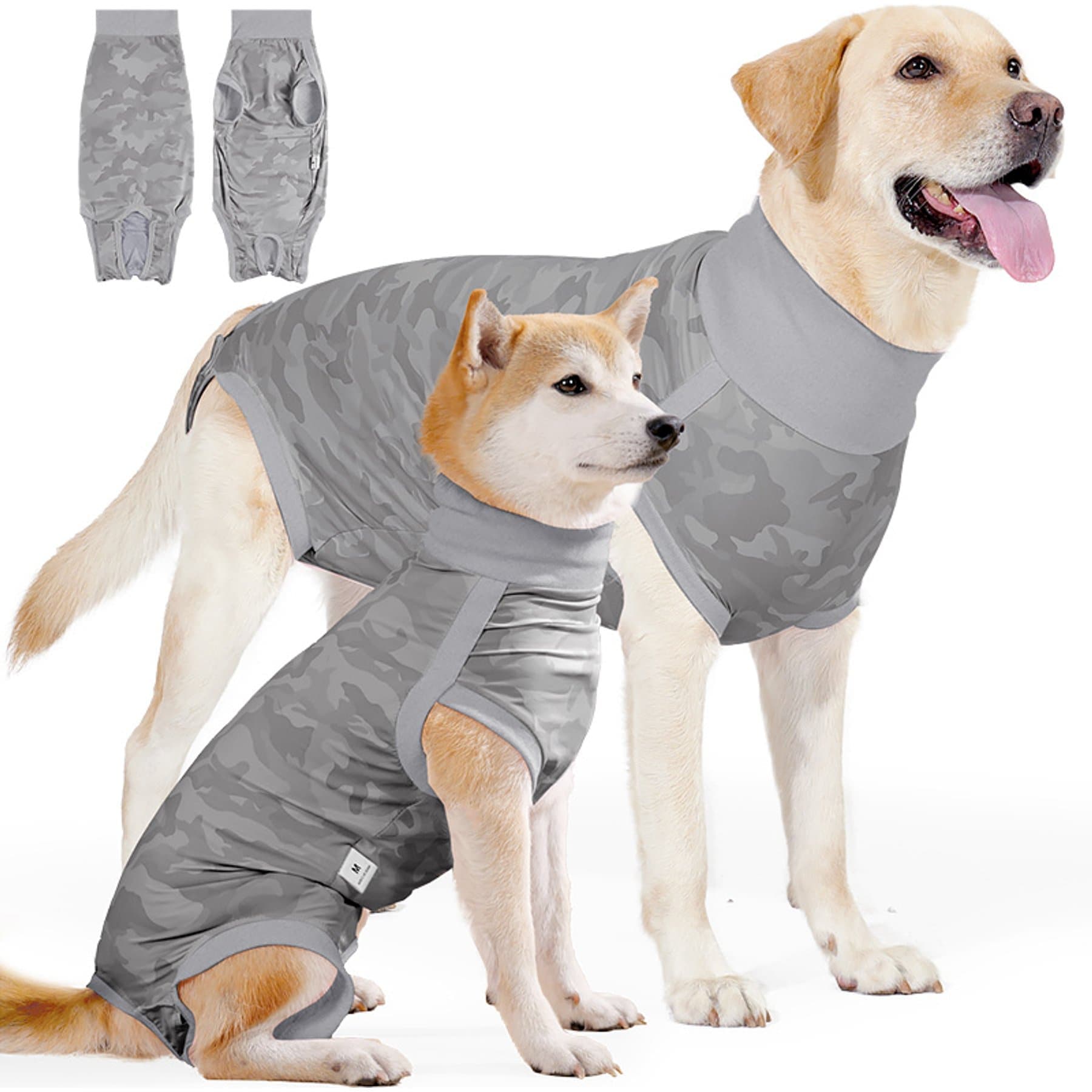
A soft recovery suit to have ready before surgery day, as a cone alternative to ask your vet about.
Webvet may earn a commission when you click through to Chewy, at no extra cost to you.
AAHA states that the risk of mammary cancer is minimized by spaying before the first estrus and increases with each heat up to 2.5 years of age.
For the best age to spay a female dog, AAHA's timing table lists:
- Small females under 45 lb: before the anticipated first heat, 5 to 6 months of age.
- Large females 45 lb and over: 5 to 15 months, using clinical discretion and owner education.
The first heat does not arrive on a fixed date. AAHA notes it varies from 4 months in some small breeds to 24 months in some large breeds, so spaying at 6 months may already fall after the first heat in some dogs. The dog heat cycle guide explains the stages and signs.
Incontinence is part of the female picture. AAHA reports that urethral sphincter mechanism incompetence is more common overall in spayed females, and some, but not all, studies suggest it develops more often in females spayed before the first heat. For a large breed female, the right age to spay is the least settled question.

If your vet advises waiting through a heat, plan for it in advance. Owners use disposable options such as Dr. Pol Female Dog Diapers for Heat Cycles, 50 count, Medium: 18 to 25-in waist, listed at $22.49 on Chewy when checked in November 2026.
Reusable diapers such as Rocket & Rex Reusable Leakproof Dog Diapers, Medium, 3 count, listed at $24.99 on Chewy when checked in November 2026, are the other route. The dog diapers for heat guide covers sizing.
Surgery timing around a heat has its own rules. Whether a spay can go ahead during a heat is covered in can a dog be spayed while in heat, and the uterine infection pyometra in dogs is one of the conditions spaying prevents.
Neutering too early, too late, or with a retained testicle: when to see the vet sooner
Neutering a dog too early is mainly a concern for larger dogs and certain breeds. The UC Davis studies grouped age at neutering as under 6 months, 6 to 11 months, 1 year, and 2 to 8 years, and the joint risks appeared mostly in the earliest windows in breeds and weight classes 20 kg and over.
Very early surgery still has a place. The 2012 AAHA guidelines note that shelter and rescue groups promote early spay and castration before adoption to reduce pet overpopulation, and that the AVMA has endorsed neutering of pediatric animals to reduce the number of unwanted dogs and cats.
When to neuter a dog with an undescended testicle follows its own timetable. The Cornell Riney Canine Health Center defines cryptorchidism as one or both testicles failing to descend into the scrotum, and says the diagnosis is confirmed at six months of age if they still have not descended.
Cornell's treatment for cryptorchidism is surgical removal of both testicles. If the retained testicle is in the abdomen, the surgery is performed through an abdominal incision, and because the condition is heritable, affected dogs should not be bred.
Is it too late to neuter my dog? For adult males the answer is usually no. The 1997 JAVMA study looked only at dogs over 2 years old at castration, and it found the dog's age and how long a behavior had lasted did not predict whether castration would help.
Other reasons to talk to the vet sooner rather than wait:
- A retained testicle: confirmed if both testicles are not down by six months, per Cornell.
- A male that roams: AAHA notes free-roaming dogs are at much greater risk of disease and injury.
- A home where an unwanted litter is likely: an intact male and female living together, or a female who cannot be kept apart during heat.
Waiting to neuter or not neutering: alternatives, marking, roaming, and planning recovery

Living with an intact dog while waiting takes daily management. AAHA stresses confinement and control for every dog, and for an intact dog that means:
- Walk on a leash and harness, and check fences and gates, since free-roaming dogs face far more injury and disease.
- Keep an intact male away from females in heat, and keep an intact female away from intact males during every heat.
- Supervise visits to dog parks and daycare, where an unplanned mating can happen quickly.
- Ask the vet to keep reviewing weight and behavior at each check-up while you wait.
An intact male that marks indoors can wear a washable wrap such as the CuteBone Belly Band Male Dog Wrap Washable Dog Diapers, Medium: 14 to 17-in waist, Cow/Lion/Dog, listed at $16.98 on Chewy when checked in November 2026, while house-training continues.
Have recovery gear ready before surgery day. Some owners pick a soft suit such as the Barpor Dog Recovery Suit, Gray, Medium, listed at $21.99 on Chewy when checked in November 2026, as a cone alternative.
Others prefer the Supet Inflatable Dog Recovery Cone Collar, Green, Medium, listed at $26.99 on Chewy when checked in November 2026. If an accidental mating happens during the wait, dogs mating explains what happens next.
What can I do instead of neutering my dog?
You can ask about gonad-sparing surgery, which sterilizes a dog while leaving hormone-producing organs in place. The Frontiers in Veterinary Science review describes these options, both accepted by the American Veterinary Medical Association:
- Vasectomy for males: sperm are absent from the ejaculate within 24 hours, but male behaviors and androgen-dependent diseases are not prevented.
- Ovary-sparing spay for females: the entire uterus is removed while the ovaries stay intact and functional, and these dogs are presumably at greater risk of mammary cancer than dogs spayed routinely.
The review adds that failure to remove the entire uterus predisposes to pyometra, so ask how often your clinic performs the procedure.
Is it okay to never neuter a dog?
Leaving a dog intact is a choice some owners make, but AAHA recommends that all dogs not intended for deliberate breeding be spayed or castrated. The UC Davis guideline for female golden retrievers does include leaving her intact as one option, alongside careful monitoring for cancer.
An intact dog needs lifelong reproductive checks. AAHA advises vets to evaluate the prostate, testes, and mammary glands of intact dogs and to discuss the hazards of roaming, so a never-neuter plan still means regular vet involvement.
Cost and aftercare belong in any plan. Price depends mostly on the dog's size and the type of clinic, with shelter and nonprofit clinics usually cheapest; dog spay and neuter cost breaks down typical ranges, and dog neuter recovery covers the days after a male's surgery.
When to neuter a dog questions
Frequently Asked Questions
Is it too late to neuter my dog?
Usually not. Adult and older dogs can be neutered, and adult males castrated after 2 years of age still showed less marking, mounting, and roaming. For an older dog, the extra step is screening before anesthesia: AAHA suggests combining routine blood tests with the tests recommended before an elective anesthetic procedure.
When should I neuter a golden retriever?
UC Davis suggests waiting beyond a year for males. For females, it suggests leaving her intact or spaying at one year while watching for cancer. Early neutering raised joint disorder rates sharply in this breed, so a golden retriever is a dog where the timing deserves a specific talk with the vet rather than a default date.
When should a large breed dog be neutered?
AAHA advises neutering large breed males expected to exceed 45 lb once growth is complete, usually 9 to 15 months, because of concerns about the growth plates and joint health. UC Davis research on mixed breeds suggests 12 months or beyond for large dogs and up to 2 years for giant males. Large females need an individual plan.
Can neutering a dog too early cause problems?
It can in some dogs. In larger breeds, surgery before growth is complete was linked to more joint disorders, such as cranial cruciate ligament tears, and in some breeds to more cancers or urinary incontinence. Small breeds in the UC Davis research showed no increased joint risk, so the concern depends on size and breed.
What is the best age to spay a female dog?
For small females, AAHA suggests 5 to 6 months, before the first heat, because that gives the greatest reduction in mammary tumor risk. For larger females the window widens to 5 to 15 months, and some breed guidelines suggest a year or more. Your vet will weigh the mammary benefit against joint and incontinence risks.
Veterinarian · BVMS MRCVS
Dr. Pippa Elliott, BVMS, MRCVS, is a veterinarian with nearly 30 years of experience in companion animal practice. Dr. Elliott earned her Bachelor of Veterinary Medicine and Surgery from the University of Glasgow. She was also designated a Member of the Royal College of Veterinary Surgeons. Married with 2 grown-up kids, Dr. Elliott has a naughty Puggle named Poggle, 3 cats and a bearded dragon.
Related reading

How to Tell if a Cat Is Pregnant: Early Signs and What to Do Next

How Often to Trim Dog Nails: A Vet's Schedule and What to Do if You Cut the Quick

Myasthenia Gravis in Dogs: Signs, Megaesophagus, Treatment, and Outlook
