Can a Dog Be Spayed While in Heat? Risks, Timing, and Cost
A dog can be spayed while in heat, but many vets prefer to wait because surgery during heat carries more bleeding risk. Why that is, how long vets usually wait, when spaying sooner is the right call, and how to manage heat at home.

BVMS MRCVS
Medically reviewed by Dr. Pippa Elliott, BVMS MRCVS · Last reviewed

This article contains affiliate links. Webvet may earn a commission when you buy through them, at no extra cost to you.
Can a dog be spayed while in heat? Yes. A vet can spay a female dog during heat when there is a reason to, but many vets prefer to wait until heat is over, because waiting lets her hormones settle for an easier surgery with less bleeding risk, according to Cornell's Riney Canine Health Center.
Your vet decides case by case. Waiting usually means a planned spay about two months after her cycle, a few weeks of managing heat at home, and a clear quote on cost. A possible pregnancy or a uterine infection called pyometra can make spaying sooner the right call instead.

 Sponsored
Have a health question about your dog?
Talk to a licensed vet at Dutch over video or message, including nights and weekends.
Use code Pets60
Plans start at $12/month · covers up to 5 pets
- Licensed vets in most states
- Rx for 150+ conditions
- 4.7 on Trustpilot
Can a dog be spayed while in heat? What vets weigh before saying yes
- 1A dog can be spayed in heat, but vets weigh the added surgical risk during heat, mainly bleeding, before booking.
- 2The usual plan is waiting until heat ends, then spaying about two months after the cycle.
- 3She can still get pregnant during the wait, so keep her away from intact male dogs.
- 4A possible pregnancy, signs of pyometra, or a heat that will not end can make spaying sooner the right call.
- 5Your vet makes the final timing decision for your dog.
Spaying is the everyday name for an ovariohysterectomy, the removal of the ovaries and uterus. VCA Animal Hospitals describes it as a major operation that requires general anesthesia. Heat, which vets call estrus, is driven by hormones from the ovaries, and those hormones are what change the picture on surgery day.
That is why the answer depends on the reason for surgery. When waiting is not a good option, the vet can still operate during heat; when nothing is urgent, the operation is usually booked for after her hormones have settled. VCA's advice is to talk to your veterinarian to determine the best time to spay your dog.

Before booking surgery for a dog in heat, vets usually weigh a short list of questions:
- Why now: is there a possible pregnancy, a sign of pyometra, or a heat that is not ending normally?
- Her age, size, and breed, which shape the separate question of spaying before or after a first heat.
- Bleeding risk in a dog whose heat hormones are high, and how that affects the surgery.
- Whether you can keep her away from intact males for the weeks of waiting, since VCA notes she can get pregnant at any point while she is in estrus.
- The clinic's fee and how soon it can book a planned spay.
A good plan covers the surgical risk of operating now, how long to wait, what to manage at home, and the urgent situations that change the answer.
If nothing urgent is going on, waiting means a few weeks of managing discharge and keeping her away from male dogs. Disposable heat-cycle diapers such as Dr. Pol Female Dog Diapers for Heat Cycles, 50 count, Large: 19 to 28-in waist, which have adjustable tabs and an absorbent interior, help keep discharge off floors and bedding, though a diaper is not birth control.
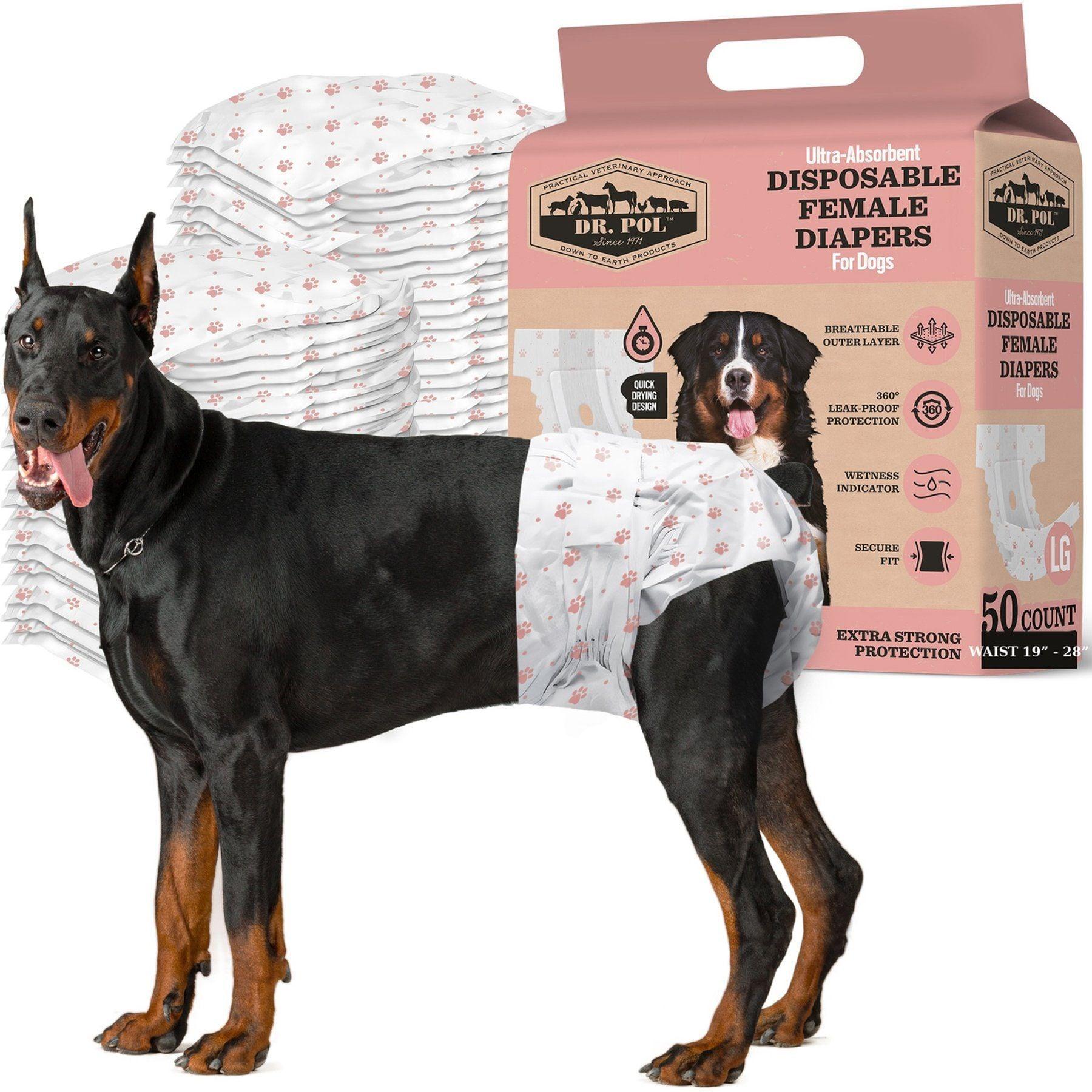
Disposable heat-cycle diapers with adjustable tabs for keeping discharge off floors while you wait to book the spay.
Webvet may earn a commission when you click through to Chewy, at no extra cost to you.
Why spaying during heat carries more risk: blood supply, surgery time, and cost
The main risks of spaying a dog in heat are bleeding during surgery and a harder operation. Cornell says waiting about two months allows for an easier surgery with less risk of bleeding, and the Ontario SPCA and Humane Society says the wait after heat is needed for the dog's safety, to minimize blood loss during surgery.
Bleeding is a recognized complication of any spay. In a Veterinary Record study of 142 spays performed by final-year students at the University of Liverpool, nine dogs had bleeding from the ovarian arteries during surgery and four had bleeding afterward.
The American College of Veterinary Surgeons (ACVS) sorts the complications of any spay into two groups:
- Serious complications such as hemorrhage and urinary obstruction, which are rare but can be life threatening.
- Milder problems such as bruising, swelling, and infection at the incision.
Are there side effects, including long-term ones, from spaying a dog in heat? Cornell and the Ontario SPCA describe the extra risk of heat as bleeding during the operation. The longer-term effects that ACVS and VCA list apply to spayed dogs in general, whatever stage of the cycle she was in.
The incision itself needs the same care whenever she is spayed. ACVS notes that an Elizabethan collar may be necessary to prevent licking of the surgical wound, so ask the clinic which kind of cone it recommends before surgery day. If your vet is happy with a fabric cone, the Barpor Protective Recovery Cone Dog Collar, Large is padded and made of waterproof fabric. A cone does not replace your vet's incision checks.
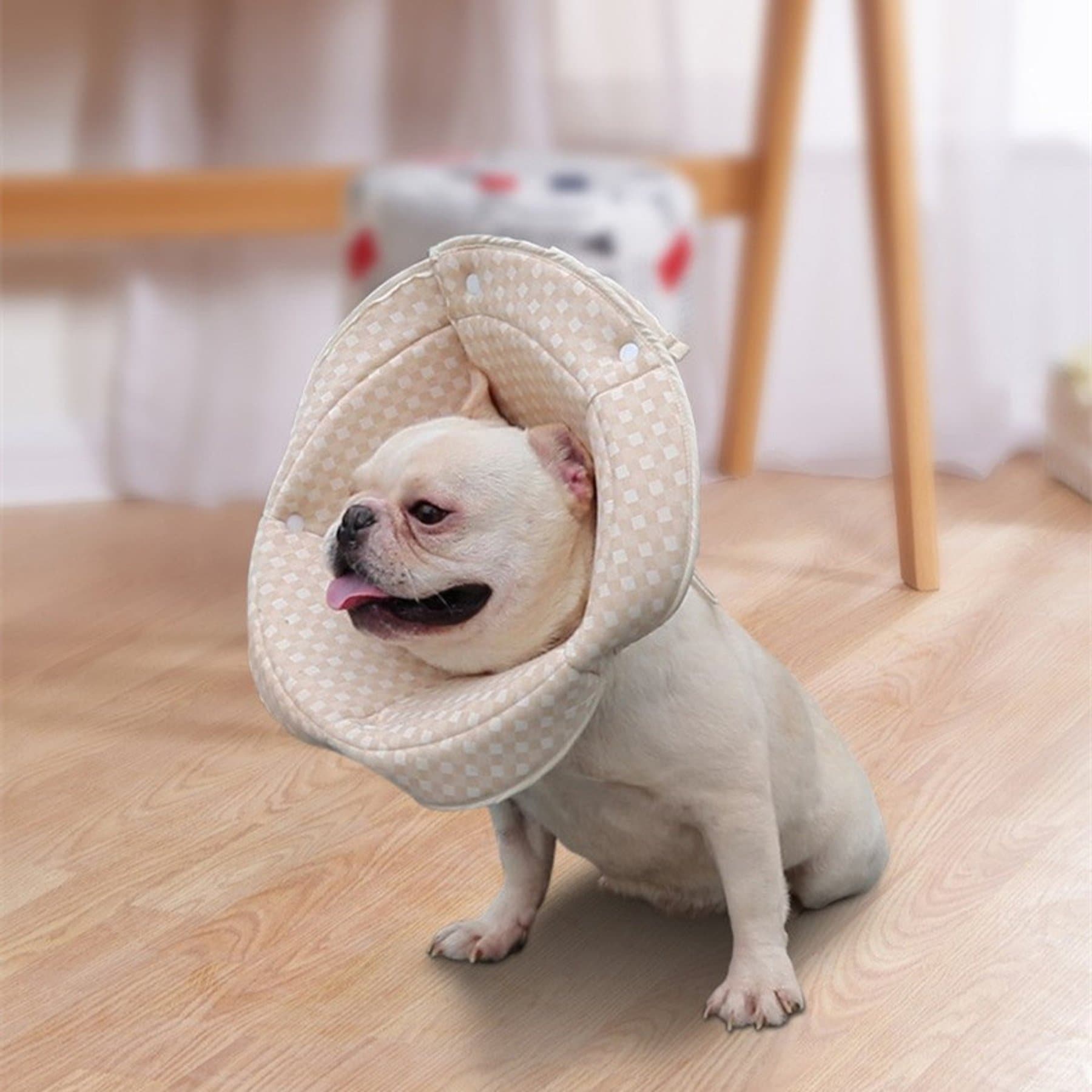
A padded, waterproof fabric cone to have ready before surgery day if your vet advises a cone for the incision.
Webvet may earn a commission when you click through to Chewy, at no extra cost to you.
Cost follows the surgery. Clinics set their own fees, so ask for a written estimate that says whether the price changes for a dog in heat, and compare it with the planned-spay price. Typical price ranges and what drives them are covered in the dog spay and neuter cost guide.
One cost comparison is clear-cut. Cornell's pyometra guidance states that having a dog spayed while young and healthy is safer and less costly than waiting for an emergency pyometra spay.
How long does spay surgery take?
In one small 2023 trial, the surgery itself averaged about 47 minutes. The randomized trial in Frontiers in Veterinary Science recorded a total surgery time of 47.40 minutes, plus or minus 9.9, for a standard spay in dogs that were not in heat; dogs in estrus were excluded.
Anesthesia, preparation, and waking up add to her time at the clinic. That trial did not include dogs in heat, so it gives no figure for surgery during heat; Cornell's guidance is simply that the operation is easier once heat hormones return to baseline.
What are the downsides of spaying a female dog?
The main downsides are the risks of anesthesia and surgery, possible urinary incontinence, and a slower metabolism. ACVS says incontinence after surgery may need lifelong medical treatment. VCA says spaying reduces her metabolism, though weight gain comes from overfeeding and too little activity.
Complication rates depend on the setting. In the Liverpool student-surgery study, the total complication rate was 20.6 per cent, including 12 cases of wound inflammation.
Timing adds one more downside for big dogs. VCA states that spaying large-breed dogs before bone growth is complete has been associated with a higher risk of cruciate ligament tears and certain cancers, so her expected adult size is part of planning when to spay.
 Sponsored
Vet care that's always there
Unlimited video calls and messaging with licensed vets for less than a typical vet visit. One membership covers up to five pets.
Use code Pets60
Plans start at $12/month · covers up to 5 pets
- Licensed vets in most states
- Rx for 150+ conditions
- 4.7 on Trustpilot
Waiting until heat is over: how long vets usually wait and how to manage the wait
| Timing choice | Surgical consideration | Cost effect | What to manage at home |
|---|---|---|---|
| Spay now, while she is in heat | Possible if needed; Cornell says waiting allows an easier surgery with less bleeding risk | Ask whether the quote changes for a dog in heat | Incision care and rest after surgery |
| Wait until heat is over | Cornell suggests about two months after the cycle; the Ontario SPCA says no earlier than eight weeks from the start of heat | Planned, routine booking | Discharge, diapers, and strict separation from intact males while she can still conceive |
| Spay before a first heat | No heat at surgery; best age depends on size and breed | Planned, routine booking | Recovery only, with no heat cycles to manage |
| Urgent spay for pyometra or another emergency | Done when the vet decides it cannot wait | Cornell: an emergency pyometra spay costs more than a planned spay | Hospital care, then recovery at home |
Vets commonly wait about two months after heat before booking the spay. Cornell advises waiting about two months after her cycle, while the Ontario SPCA counts from the start: no earlier than eight weeks from the beginning of her last heat. Ask your vet which date to use.
Knowing when heat ends makes that date easier to set. Cornell says bloody discharge usually lasts 14 to 21 days. VCA says the part of heat when she is receptive to males generally lasts 9 days but can range from 2 to 24 days, so do not treat day 9 as the end of pregnancy risk.
The dog heat cycle guide explains each stage of the cycle, and how long a dog is in heat covers the timing in more detail, including how to tell when heat is ending.

The wait is when accidental litters happen. The Ontario SPCA reminds owners that a female dog in heat will be receptive to male dogs, and advises keeping her leashed, choosing walks where other dogs are unlikely, and supervising yard time.
Whether she can conceive outside an obvious heat is answered in can a dog get pregnant when not in heat.
Ways to manage the wait at home:
- Keep her on a leash for every walk, and stay with her in the yard.
- Keep her apart from intact males, including dogs that live in the same home.
- Use diapers or washable sanitary pants for discharge, and change them regularly.
- Take diapers off if she chews them, since the Ontario SPCA warns that swallowing them can lead to complications.
- Write down the day her heat started so the clinic can book the spay from that date.
Disposable and washable diapers both handle discharge during the wait. A disposable pack such as Four Paws Wee-Wee Disposable Dog Diapers, Medium, 36 count, listed at $30.66 on Chewy when checked in November 2026, suits a medium-sized dog. Like any diaper, it does not prevent pregnancy.
Use the last weeks of the wait to get ready for surgery day: confirm the booking date against the day her heat started, ask the clinic about fasting before surgery, and plan who will be home with her for the first days of rest. Ask, too, whether the clinic wants her in a cone afterward or accepts a recovery suit. If your vet approves a suit, the Medipaw Recovery Protective Dog Suit, Large is a two-piece suit that slips on and fastens with Velcro to keep a dog from licking at a wound. Measure her before ordering; a suit does not replace your vet's incision checks.
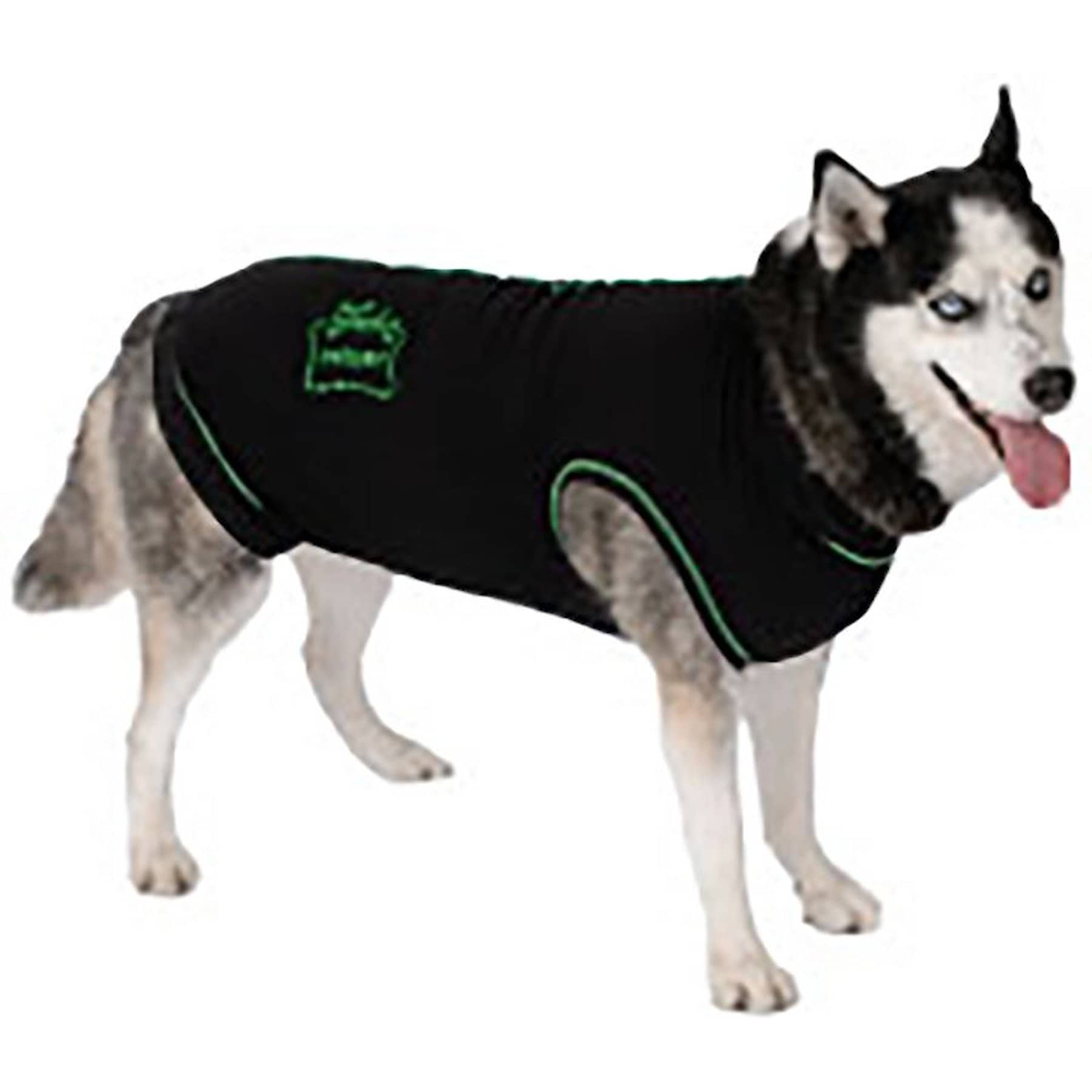
A two-piece Velcro suit that keeps a dog from licking a wound, if your vet approves a suit instead of a cone.
Webvet may earn a commission when you click through to Chewy, at no extra cost to you.
Spaying before or after the first heat: how vets frame the timing decision
Spaying a dog before her first heat and waiting until after it each have pros and cons, and veterinary guidance does not agree on one best age. Cornell says a first heat can start anywhere from 6 to 24 months of age, with smaller breeds averaging earlier than larger ones.
The case for spaying before the first heat rests on mammary tumors and pyometra. VCA states that spaying before the first heat cycle cuts breast cancer risk to under 0.5%. A 2015 review by Howe gives a relative risk of 26% when a dog is spayed after her second heat or after 2.5 years of age.
The benefits of spaying after the first heat center on joints in larger breeds. A UC Davis study by Hart and colleagues of 35 breeds found that vulnerability to neutering-related joint disorders is generally related to body size.

The sources differ on timing and on the mammary benefit. VCA says some larger breeds may benefit medically from delaying spay until after their first estrus cycle, while ACVS says most primary care vets recommend approximately six months. Hart and colleagues call the evidence linking neutering to lower mammary cancer risk weak.
Howe concludes there may not be a single absolute optimal age to spay all dogs. Size and breed guidance sits in when to neuter a dog.
Questions to take to your vet about first-heat timing:
- What adult size do you expect, and which breed risks apply to her?
- Would waiting for one heat change her joint or cancer risks?
- If we wait, how do we get through that first heat at home?
- How long after that heat would you book the spay?
If you and your vet decide to wait for a first heat, she needs the same care at home as during any heat: no contact with intact males and something to contain the discharge. For a larger dog, the Rocket & Rex Reusable Leakproof Dog Diapers, Large, 3 count close with snaps and use a reusable liner, so they can be washed between changes rather than thrown away. Like any diaper, they do not prevent pregnancy or replace your vet's advice on timing.
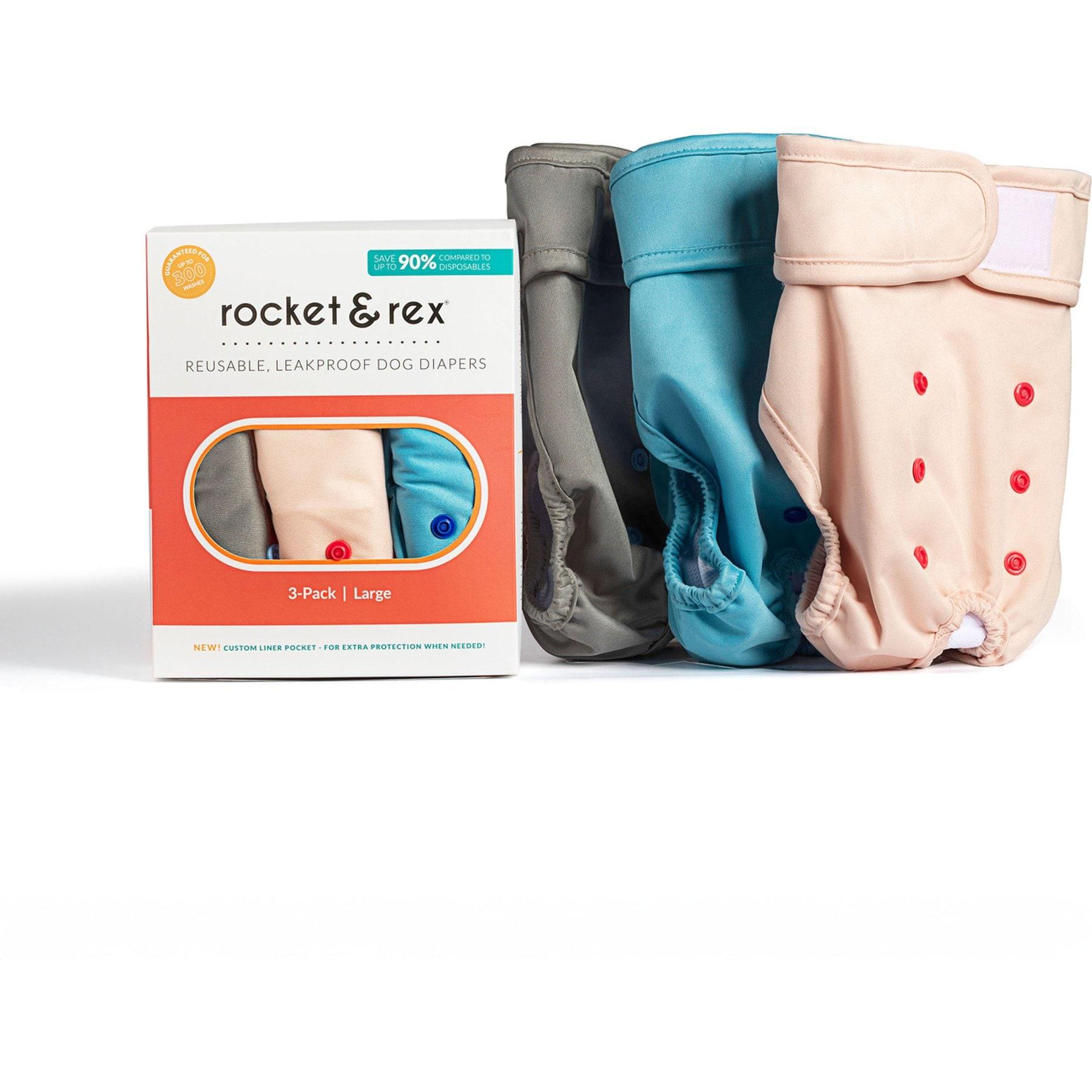
Washable, leakproof diapers with snaps for managing discharge through a first heat before a planned spay.
Webvet may earn a commission when you click through to Chewy, at no extra cost to you.
A spay shortly before heat is due is fine, as long as she is not yet in heat on surgery day. The hard part is predicting it. VCA says the earliest sign of estrus is swelling of the vulva, which is not always obvious, so tell the clinic about any swelling or discharge.
Is 2 years too late to spay a dog?
No. A spay at 2 still removes the uterus, and ACVS lists eliminating the chance of pyometra among the benefits of spaying. Howe notes that pyometra risk has been reported at 25% to 66% in unspayed dogs over 9 to 10 years old.
The mammary benefit is smaller by then, with Howe's 26% relative risk figure applying to dogs spayed after 2.5 years of age.
What are the benefits of spaying a dog?
The main benefits are no heat cycles, no unplanned litters, and no pyometra, which ACVS says spaying eliminates. ACVS also lists a vastly decreased chance of mammary cancer, and VCA notes that the behavior changes associated with heat are avoided.
Cornell adds that a planned spay in a young, healthy dog is safer and less costly than an emergency pyometra spay.
When a dog in heat should be spayed sooner: possible pregnancy, pyometra, and other urgent reasons
A dog in heat should be spayed sooner when waiting carries more risk than surgery. These situations can shift the balance, and each is a decision for your vet after an exam:
- Signs of pyometra, a uterine infection that can follow a heat.
- A heat that does not end: Merck Veterinary Manual says follicular cysts should be suspected in any dog showing heat signs for more than 40 days, and spaying is curative.
- Vaginal tissue overgrowth, which Merck says spaying cures in dogs that will not be bred.
- A possible pregnancy after an unplanned mating.
Pyometra timing overlaps the usual wait. Merck says it tends to occur 4 to 6 weeks after estrus and is reported mainly in dogs over 5 years old, while Cornell puts it at one to two months after the previous heat. Cornell calls it a serious and potentially life-threatening infection of the uterus.
Merck's professional guidance states that ovariohysterectomy is the recommended treatment for pyometra. Signs, testing, and treatment are covered in pyometra in dogs.
If she may have mated, call your vet promptly rather than waiting for heat to end. VCA notes that hormonal drugs are not typically recommended for dog birth control because of their risks, and leftover medicines should never be given. The options a vet can discuss, including spaying, are in dog abortion.
Heat signs after a spay: still bleeding, ovarian remnant, and when to call the vet
A spayed dog should not come back into heat, because the ovaries that drive the cycle are removed. When a spayed dog shows heat behavior or bleeding, the usual suspect is ovarian remnant syndrome. Cornell describes it as ovarian tissue inadvertently left in the body after the ovariohysterectomy.
Heat behavior in a spayed dog can look like an ordinary heat:
- Swelling of the vulva.
- Bloody vaginal discharge.
- Attracting male dogs, or playful behavior toward them.
- Heat signs that return on a cycle months or years after the spay.
Bleeding that starts years after a spay can have the same cause. Cornell explains that ovarian remnant syndrome causes no symptoms until the dog enters a heat cycle, and several years may pass between the spay and the first signs. Cornell also notes that adrenal disease (hyperadrenocorticism) can cause heat-like signs, so a vet exam sorts out the cause.
If she was spayed while in heat and is still bleeding, call the clinic that did the surgery, and call right away if the bleeding is heavy. Bleeding after surgery is a recognized complication, recorded in four of 142 dogs in the Liverpool study, and the vet will want to check the incision and the discharge.

Treatment for heat behavior in a spayed dog depends on the cause. Cornell says ovarian remnant syndrome is diagnosed by measuring blood levels of several hormones, and surgical removal is preferred while she is showing signs of estrus, because that is when the tissue is easiest to find.
Left in place, the fragment can develop into a tumor, and Merck confirms the treatment is surgery.
Do female dogs change after being spayed?
Her personality should not change. VCA states that spaying does not change personality, intelligence, playfulness, or affection, and that the behavior changes linked to heat are avoided. Her metabolism does slow, so meals may need adjusting.
How long does it take for a female dog's hormones to settle after being spayed?
There is no fixed timeline to watch for. The ovaries that make the heat hormones are removed at surgery, and Cornell's two-month figure describes hormones returning to baseline after a heat in a dog that has not been spayed.
Separately, Merck says false pregnancy is common in female dogs at the end of the heat cycle and usually ends on its own in 1 to 3 weeks.
Heat signs that return later point to ovarian remnant syndrome and need a vet visit.
Getting through heat and recovery at home: diapers, separation, cones, and suits
Home care comes down to two jobs: containing discharge and keeping males away while you wait, then protecting the incision after surgery. The first job lasts weeks; the second usually lasts about two.
After the spay, ACVS advises house rest with no running, jumping, or rough play for two weeks. VCA says most dogs can resume normal activity 5 to 10 days after surgery, with leash walks and no swimming, bathing, or running until then.
Pain medication is often prescribed for several days after surgery, ACVS notes, so her comfort is managed with what the vet sends home. She should rest in a quiet spot where she cannot jump onto furniture; sleeping arrangements and pain signs are covered in the dog spay recovery guide.

Some dogs tolerate a hard cone poorly. Softer options include an inflatable collar such as the Supet Inflatable Dog Recovery Cone Collar, Orange, Large, listed at $27.99 on Chewy when checked in November 2026.
A body suit is the other route. The Barpor Dog Recovery Suit, Gray, Medium, listed at $21.99 on Chewy when checked in November 2026, is a soft polyester suit with an adjustable Velcro closure. The cone alternatives guide compares the trade-offs.
Whichever you choose, fit matters. Measure her before ordering, check that she can eat, drink, and lie down comfortably, and keep the cone or suit on whenever she is unsupervised. A simple home routine covers both stages:
- During heat: leash on every walk, no contact with intact males, diapers changed regularly, start date written down.
- After surgery: house rest, short leash walks, no baths or swimming, and the incision covered or guarded.
- Every day: look at the incision and note any swelling, discharge, or opening, and report changes to your vet.
Spaying a dog in heat questions
Frequently Asked Questions
How long after heat can a dog be spayed?
Vets commonly wait about two months after heat before spaying. Cornell's guidance is to wait about two months after the cycle, while the Ontario SPCA books no earlier than eight weeks from the first day of heat. When you call, give the clinic the date her heat began.
Why is my dog still bleeding after being spayed in heat?
Any bleeding after a spay should be reported to the vet who did the surgery. Bleeding in the first days can come from the surgical site, which the vet will want to examine. Heat-like bleeding that appears weeks, months, or years later suggests ovarian tissue was left behind, which hormone blood tests can confirm.
Should a dog be spayed before her first heat?
It depends on breed and size. Spaying before the first heat gives the strongest mammary tumor protection in VCA's figures, while some larger breeds may benefit from waiting until after the first heat, according to VCA and the Hart study. Your vet weighs her breed and expected adult size.
Are there long-term side effects of spaying a dog in heat?
No separate long-term side effects are linked to spaying during heat; Cornell and the Ontario SPCA describe heat as a surgery-day concern, mainly extra bleeding risk. The long-term effects ACVS and VCA list, such as urinary incontinence and a slower metabolism, belong to spaying in general. A dog spayed during heat recovers from the same surgery as any other.
Can you spay a dog right before her heat starts?
Yes, if surgery happens before heat begins; the timing is the hard part. Cornell says most dogs cycle twice a year, on average every 5 to 11 months, so note when her last heat started and ask your vet to book the spay well before heat is next due.
Veterinarian · BVMS MRCVS
Dr. Pippa Elliott, BVMS, MRCVS, is a veterinarian with nearly 30 years of experience in companion animal practice. Dr. Elliott earned her Bachelor of Veterinary Medicine and Surgery from the University of Glasgow. She was also designated a Member of the Royal College of Veterinary Surgeons. Married with 2 grown-up kids, Dr. Elliott has a naughty Puggle named Poggle, 3 cats and a bearded dragon.
Related reading

How Old Can a Cat Get Pregnant? Earliest Age and Why It Matters

Can a Dog Get Pregnant When Not in Heat? How the Fertile Window Works

Dog Abortion: Options After an Accidental Mating and What Vets Advise
