Dog Abortion: Options After an Accidental Mating and What Vets Advise
After an accidental mating, the safe path runs through your vet: how timing changes the options, when spaying ends the pregnancy and prevents the next one, what vet-prescribed termination involves, and why home remedies put a dog at risk.

BVMS MRCVS
Medically reviewed by Dr. Pippa Elliott, BVMS MRCVS · Last reviewed

This article contains affiliate links. Webvet may earn a commission when you buy through them, at no extra cost to you.
Dog abortion: what your options are after an accidental mating
Dog abortion is possible, but only through a veterinarian. After an accidental mating, the options depend on how long ago it happened: confirming whether she is pregnant, a vet-prescribed medical pregnancy termination, or a spay that ends the pregnancy and prevents the next one. Home remedies and online pills are dangerous.
Call your vet within the first few days, while the date is fresh, because knowing the breeding date helps. Many cases of mismating never produce puppies: the Merck Veterinary Manual reports that sixty percent of misbred female dogs do not conceive, which is why vets usually confirm a pregnancy before any treatment.
- 1The options after an accidental mating are a spay, a vet-prescribed pregnancy termination, or continuing the pregnancy, and every one of them starts with your vet.
- 2Why timing changes the options: blood tests and ultrasound confirm pregnancy from roughly day 22 to 30, and the medical options work best in set windows.
- 3A spay ends the pregnancy and prevents future litters, and Veterinary Partner calls it probably the best option for a dog not meant for breeding.
- 4Home remedies, leftover medicines, and pills bought online can seriously harm a pregnant dog.

Pregnancy termination is established veterinary care, and your own practice is the place to start. Merck's reasons for ending a pregnancy include a dog too young or too old, a mating with an undesirable male, or an illness the pregnancy may worsen.
Are dog abortions legal? In the United States, no termination drug is approved for dogs, but vets can use them extralabel, and aglepristone is marketed only in a limited number of European countries. Rules and drug availability differ by country, so ask a licensed veterinarian what applies where you live.
Once your vet knows the mating date, the realistic options for a pregnant dog are:
- Confirm first, then decide. A blood test or ultrasound at about four weeks shows whether she is pregnant at all.
- Spay (ovariohysterectomy). Surgery removes the uterus and ovaries, ending the pregnancy and any future ones.
- Medical termination. Prescription hormones given under veterinary care end the pregnancy and leave her able to breed later.
- Continue the pregnancy. Some owners choose to let her have the litter, which means prenatal care, a safe birth, and finding homes for the puppies.
The first days after the mating
While you wait for the vet appointment, she is likely still in heat, and the discharge can last a while: VCA Animal Hospitals says bleeding lasts 1 to 3 weeks in most dogs and suggests diapers to reduce the mess. The Dr. Pol Female Dog Diapers for Heat Cycles, 50 count, Medium: 18 to 25-in waist are disposable, with adjustable tabs and a wetness indicator, and like any diaper they are not contraception.

Disposable heat diapers that catch discharge while she waits for her vet visit; a diaper is not contraception.
Webvet may earn a commission when you click through to Chewy, at no extra cost to you.
Female dogs accept a male during estrus, the receptive part of the dog heat cycle. Merck's breeding chapter puts estrus at 3 days to 3 weeks, with an average of 9 days, and notes that fresh canine semen can live in the vagina for 9+ days.
Separation from males still matters. Another mating, with the same male or a different one, can happen after the first, and brief contact is enough: the Merck Veterinary Manual states that the copulatory tie is not necessary for conception. For what a mating looks like, see dogs mating.
What to tell your vet when you call
The answers to a few questions shape every option, so have them ready:
- The date, or dates, the mating may have happened.
- Whether she is still bleeding or still attracting males.
- Her age, size, and any health problems.
- Whether you ever want to breed her.
- Anything she has been given since the mating, including supplements or leftover medicine.
The vet uses these answers to decide when to test and which options make sense for her. Until then, keep her indoors or on a leash and away from intact males for the rest of this heat.
If her heat still has days to run, washable diapers are a reusable alternative to disposables.
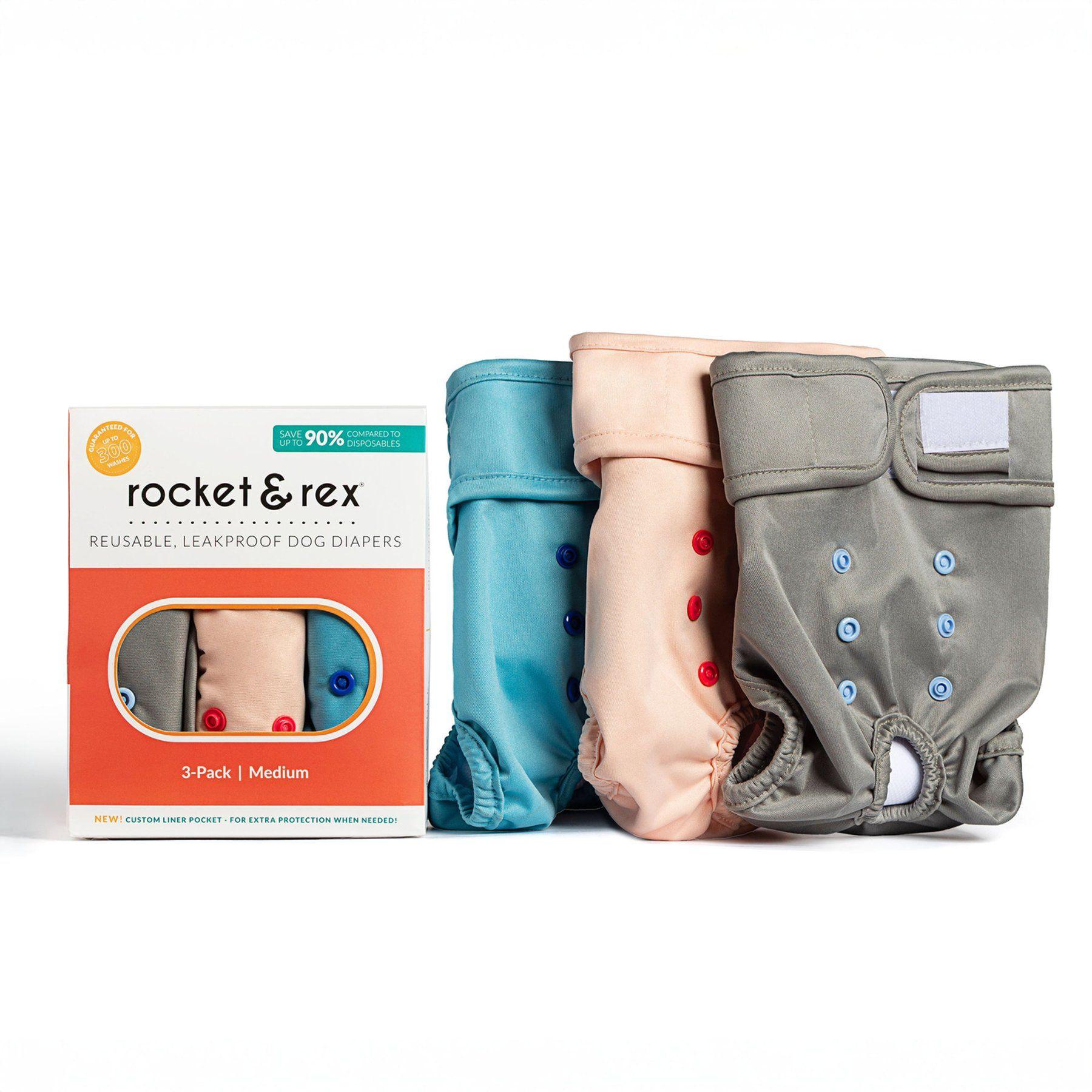
Washable, snap-fit heat diapers that catch discharge while she is kept apart from males; a diaper is not contraception.
Webvet may earn a commission when you click through to Chewy, at no extra cost to you.
Why timing matters: what changes with each week after the mating
The time since mating decides which options are open. Tests cannot confirm a pregnancy in the first three weeks, the medical options work best within set windows, and both surgery and medical termination become harder as the pregnancy advances.
| Time since mating | What the vet checks | Options still open | Effect on future litters |
|---|---|---|---|
| First days to about 3 weeks | Mating date, whether she is still in heat, her age and health | Keep her away from males, plan a test date, or schedule a spay | A spay ends future litters; waiting keeps them possible |
| About 22 to 35 days | Relaxin blood test (from 22 to 27 days) or ultrasound (best at 25 to 35 days) | Spay, vet-prescribed medical termination, or continuing the pregnancy | Medical termination keeps breeding possible; a spay ends it |
| About 30 to 40 days | Confirmed pregnancy and fetal viability on ultrasound | Medical termination is usually planned here, or a spay | Before 40 days, termination leaves no visible trace of the pregnancy |
| After 40 days | Stage of pregnancy, her size, surgical and bleeding risk | Spay or medical termination, with more tissue passed and higher surgical risk | Medical termination keeps breeding possible; a spay ends it |
| After 55 days | Expected due date, which falls 64 to 66 days after the LH peak | Ending the pregnancy is still possible, but puppies may be born alive | Pregnancy is near term |

In the first weeks there is nothing to confirm yet. Merck's pregnancy determination chapter says a relaxin blood test detects pregnancy after 22 to 27 days, and a pregnancy ultrasound is best performed at 25 to 35 days, with false negatives possible before day 21.
Veterinary Partner gives a slightly later figure, testing after approximately 30 days. Your vet will pick the date and dates the pregnancy from the tests rather than the mating, since semen can survive for days after a mating. A test or scan settles the question more reliably than the signs a dog is pregnant you might notice at home, and ultrasound also tells pregnancy apart from pyometra.
Waiting is not wasted time. Veterinary Partner explains that hormonal drugs strong enough to act right after mating carry an unacceptable rate of side effects, so there is no safe morning-after treatment. Merck adds that no termination protocol should start until pregnancy is confirmed.
Days 30 to 40: the usual window for medical termination
Merck explains that high prostaglandin doses are needed during the first 25 days of pregnancy, so treatment works best at around 30 to 40 days. Veterinary Partner gives the same window. Timing also changes what happens: if a pregnancy ends before 40 days of gestation, all evidence of it is gone.
For aglepristone, where it is available, Merck describes three stages. Before 24 days after ovulation, the embryos die before implanting; between days 25 and 35 they are reabsorbed; after day 35 the fetuses are expelled.
Later in pregnancy
A vet can still end a pregnancy late, but a late termination is harder on her. The later the termination, the more developed the fetal tissue and the more material she passes through the vulva. After 55 days, Merck warns, puppies may be born alive and have to be euthanized.
The method at that stage is your vet's call, and the earlier the plan starts, the more choices remain.

 Sponsored
Have a health question about your dog?
Talk to a licensed vet at Dutch over video or message, including nights and weekends.
Use code Pets60
Plans start at $12/month · covers up to 5 pets
- Licensed vets in most states
- Rx for 150+ conditions
- 4.7 on Trustpilot
Spaying a pregnant dog: ending the pregnancy and preventing the next one
Spaying a pregnant dog ends the pregnancy and every future one. The spay, or ovariohysterectomy, removes the uterus and ovaries; if the uterus is carrying developing young, they are removed with it, according to Veterinary Partner. Merck confirms that if future breeding is not wanted, the surgery can be performed at any time.
For a dog not meant for breeding, Veterinary Partner calls a spay probably the best option, because it ends this pregnancy and prevents future ones in one procedure. It also removes risks of staying intact: Merck lists ovarian, uterine, and mammary tumors, ovarian cysts, and pyometra.

The ASPCA adds that spaying prevents uterine infections and decreases the incidence of breast tumors, which are malignant in about 50 percent of dogs.
What is different about a spay during pregnancy
Veterinary Partner is clear that a spay during pregnancy carries more risk than a routine one. The differences owners notice:
- The blood vessels of the reproductive tract become huge and harder to tie off.
- The surgery takes longer, and there is usually an extra charge.
- She may stay an extra day in hospital or go home with a belly bandage.
- The scar is much longer than after a routine spay.
- The risk of heavy bleeding rises with her size and the stage of pregnancy.
Ideally, Veterinary Partner says, she should be out of heat but not in advanced pregnancy. Whether a dog can be spayed while in heat is worth raising directly, since every surgery carries some risk, as Merck notes.
Questions to ask before booking the spay
A short conversation before the surgery avoids surprises on the day. Useful questions for your vet:
- How far along is she likely to be, and how does that change the bleeding risk?
- Should the surgery wait until her heat has ended?
- Will she need an extra night in hospital or a belly bandage at home?
- What does the estimate include, and what could add to it?
- What should she eat, or not eat, before surgery?
On that last point, follow your clinic's instructions. The ASPCA's general advice is no food for an adult dog after midnight the night before surgery.
Recovery at home after the surgery
Keeping her tongue off the incision is the main job of the first two weeks. A spay during pregnancy leaves a much longer incision, so ask your vet first whether a suit or a cone suits her. Some owners prefer a body suit: the Medipaw Recovery Protective Dog Suit, Medium is a two-piece suit that velcros together to cover the wound, listed at $50.90 on Chewy when checked in November 2026.

A two-piece recovery suit that covers the spay incision as an alternative to a cone.
Webvet may earn a commission when you click through to Chewy, at no extra cost to you.
None of these replaces the vet's recheck of the incision, and each listing asks owners to measure for the right fit. The Supet Inflatable Dog Recovery Cone Collar, Green, Medium is a lightweight inflatable collar made for pets fresh out of surgery, including spays. The Barpor Dog Recovery Suit, Gray, Medium is a lower-cost soft polyester suit, listed at $21.99 on Chewy when checked in November 2026. The Barpor Protective Recovery Cone Dog Collar, Medium is a padded waterproof fabric cone, listed at $19.99 on Chewy when checked in November 2026.

A padded, waterproof fabric cone that keeps her from licking the spay incision while it heals.
Webvet may earn a commission when you click through to Chewy, at no extra cost to you.
Recovery follows the pattern of a routine dog spay recovery, with closer attention to a longer incision. The ASPCA's aftercare advice:
- Give her a quiet place to recover indoors, away from other animals.
- Stop running and jumping for up to two weeks, or as long as your vet recommends.
- Prevent licking with a well fitted Elizabethan collar.
- Skip baths for at least ten days.
- Check the incision every day and call your vet about redness, swelling, discharge, or an opening.
Some discomfort after surgery is expected, and the ASPCA notes that your vet can take measures to control pain, sometimes sending medication home with her. Give only what the clinic prescribes, since human pain relievers are among the most common pet poisonings.
 Sponsored
Vet care that's always there
Unlimited video calls and messaging with licensed vets for less than a typical vet visit. One membership covers up to five pets.
Use code Pets60
Plans start at $12/month · covers up to 5 pets
- Licensed vets in most states
- Rx for 150+ conditions
- 4.7 on Trustpilot
Vet-prescribed pregnancy termination: what the injections involve and their side effects
There is no over-the-counter dog abortion pill: a vet-prescribed termination uses prescription hormones, as injections or tablets, to end the pregnancy while leaving her able to breed later. Veterinary Partner describes it as the choice when future breeding matters. It is usually done about 30 to 40 days into the pregnancy, typically with 5 to 7 days in hospital.
Hospital care is generally needed because some of the drugs are injections and the vaginal discharge is unpleasant to manage at home. The drug choice and every dose belong to your vet. The main drug approaches in the Merck Veterinary Manual are:
- Prostaglandins. Prostaglandin F2alpha (dinoprost), or the synthetic cloprostenol, which Merck says is currently preferred because it targets the uterine muscle more specifically, with fewer body-wide side effects. Treatment can take up to 14 days.
- Prolactin inhibitors. Cabergoline or bromocriptine, often combined with a prostaglandin; Merck reports combination protocols end pregnancy reliably with minimal adverse effects.
- Misoprostol. A prostaglandin E drug that vets may add alongside prostaglandin F2alpha in dogs, which Merck says usually shortens treatment by 48 hours.
- Dexamethasone. A corticosteroid that Merck says can end pregnancy in dogs, though Veterinary Partner notes some experts consider it less reliable than the combination protocols, while others prefer it. The course is prescribed and supervised by the vet, uses high doses that make side effects common, and is an option for dogs but not cats.
- Aglepristone. An antiprogestin injection Merck calls a safe and effective abortifacient; it is not available in the United States and is marketed in a limited number of European countries.
No protocol is perfect. Merck notes that no medical pregnancy termination protocol is reported to be 100% effective, and none of these drugs are approved for this use in US dogs, though vets can use them extralabel.
Side effects of the shots and tablets
Side effects depend on the drug, and your vet will tell you what to monitor. What the sources describe:
- Prostaglandins: panting, trembling, nausea, and diarrhea, which Merck calls mild and transient at its stated dosage; a second Merck chapter adds abdominal pain, fast breathing, drooling, and vomiting.
- Prolactin inhibitors: fewer side effects than prostaglandins, though loss of appetite and vomiting may occur. Veterinary Partner says cabergoline causes less cramping and vomiting than bromocriptine.
- Dexamethasone: panting, increased thirst and urination, and immune suppression, per Merck. Veterinary Partner calls side effects common at these doses, sometimes including incontinence.
- Discharge: expect vaginal discharge and, in later terminations, passed tissue.
Checking that it worked
Merck advises confirming fetal loss by ultrasound. Veterinary Partner recommends some kind of pregnancy test afterward, whether a relaxin test, radiographs, a blood progesterone level, ultrasound, or a combination. Plan the recheck when you book the treatment.
Why home remedies and internet pills are dangerous, and when a pregnant dog needs a vet now

No method of ending a pregnancy at home is safe. Every option in the Merck Veterinary Manual is a surgery or a prescription drug given with veterinary monitoring. Herbal or natural remedies, including black cohosh, are not among them, and Merck states that postcoital douches are of no value in preventing pregnancy.
The dangers come from several directions:
- Hormones are risky even in the right hands. Merck warns that injectable estrogens carry great risk of pyometra and potentially fatal bone marrow suppression. Veterinary Partner reports the old estrogen mismating shot led to pyometra in dogs in up to 25% of cases in one study, and calls it too toxic to request.
- The margin for error is small. Merck says the therapeutic window for prostaglandins is narrow and doses must be calculated carefully.
- Human medicines poison pets. Over-the-counter medications were the top pet toxin in 2023, at 16.8% of exposures, according to the ASPCA.
- Nobody checks the result. A pill bought online comes without a scan to confirm she is pregnant, how far along she is, or whether it worked.
When a pregnant dog needs a vet now
Some situations cannot wait for a routine appointment. Call your vet the same day if:
- She has swallowed any medicine, herb, or supplement meant to end the pregnancy.
- After a spay, the incision is red, swollen, leaking, or open, or she is lethargic, off her food, vomiting, or has diarrhea, the warning signs the ASPCA lists.
- After a termination, she seems unwell, or the discharge or behavior differs from what your vet told you to expect.
What dog abortion costs, and what changes the price
There is no standard price, so the only reliable figure is a written estimate from your clinic. The cost depends on which option suits the stage of pregnancy, her size, and how long she stays in hospital, and there is no cheaper shortcut that is safe.
The main things that change the cost:
- A spay during pregnancy. Veterinary Partner says the surgery takes longer and usually carries an extra charge, sometimes with an extra hospital day.
- Hospital time for medical termination. Veterinary Partner says 5 to 7 days is typical, though its dexamethasone protocol runs 9 to 12 days under the vet's supervision without a hospital stay. Merck recommends hospital care during termination, so ask your vet which applies.
- The drugs chosen. The injection or pill cost varies: cabergoline costs substantially more than bromocriptine, and Merck lists cost and compounding as drawbacks of combination protocols.
- Tests before and after. A relaxin test or ultrasound to confirm the pregnancy, and a recheck to confirm it ended.
Spaying is usually the lower long-term cost. The ASPCA notes that a spay costs far less than having and caring for a litter. For routine spay prices, see dog spay and neuter costs.
Free or low-cost help is worth asking about. The ASPCA points owners to low-cost spay/neuter services and suggests contacting a local animal shelter or veterinarian. Ask any program whether it accepts a dog that may be pregnant.
Preventing another accidental mating

Spaying is the permanent fix, because a spayed female will not go into heat, as the ASPCA notes. It also ends any doubt about whether a dog can get pregnant when not in heat. If she stays intact, Merck puts the usual gap between heats at 4 to 13 months, with 7 months the average.
During every heat, these steps prevent another mating:
- Supervise her every time she goes outside until her bleeding ends, as VCA advises, because fences can be jumped or dug under.
- Keep intact males out of the house or in a separate, secured area for the whole heat.
- Walk her on a leash, never off lead, until the heat is over.
- Book the spay conversation with your vet before the next heat starts.
Dog diapers for heat keep discharge off floors but do not stop a mating. For washable covers, the Paw Inspired Dog Diaper Pad Liners for Covers & Washable Dog Diapers, 30 count add absorbency so the covers need washing less often.
Dog abortion questions
Frequently Asked Questions
Are dog abortions legal?
In the United States, it is legal when a licensed veterinarian carries it out or prescribes it. No termination drug is approved for this use in dogs there, but vets can use them extralabel. Drug availability differs by country: aglepristone, for example, is not sold in the US, so ask a veterinarian what applies where you live.
What are the side effects of a dog abortion shot?
Common side effects of the injections include panting, trembling, nausea, vomiting, drooling, and diarrhea, usually short-lived. That is why vets prefer to monitor her in hospital during treatment. Ask your vet what to watch for at home afterward, and call if she stops eating or seems weak.
How late can a dog pregnancy be ended?
A vet can end a pregnancy late, but later is harder on her. After 40 days more tissue is passed, a late spay carries higher bleeding risk, and after 55 days puppies may be born alive. Acting by about day 40 keeps the most choices open.
Is there an over-the-counter abortion pill for dogs?
No. Every drug that ends a dog's pregnancy is a prescription veterinary medicine that needs a vet to confirm the pregnancy, calculate the dose, and check the result. Pills sold online and human medicines can poison her.
Can a dog be spayed instead of having an abortion?
Yes. A spay during pregnancy removes the uterus with the developing puppies, so it ends the pregnancy and prevents future ones in a single surgery. It costs more and carries more risk than a routine spay, and the risk grows as pregnancy advances.
Veterinarian · BVMS MRCVS
Dr. Pippa Elliott, BVMS, MRCVS, is a veterinarian with nearly 30 years of experience in companion animal practice. Dr. Elliott earned her Bachelor of Veterinary Medicine and Surgery from the University of Glasgow. She was also designated a Member of the Royal College of Veterinary Surgeons. Married with 2 grown-up kids, Dr. Elliott has a naughty Puggle named Poggle, 3 cats and a bearded dragon.
Related reading

How Old Can a Cat Get Pregnant? Earliest Age and Why It Matters

Can a Dog Be Spayed While in Heat? Risks, Timing, and Cost

Can a Dog Get Pregnant When Not in Heat? How the Fertile Window Works
