How Many Puppies in a Litter? Average Size by Breed and Dog Size
Litter size depends mostly on the size and breed of the mother dog, plus her age and health. What the usual range is, how a vet can count the puppies before birth, when a whelping dog needs a vet, and how to prevent the next litter.

BVMS MRCVS
Medically reviewed by Dr. Pippa Elliott, BVMS MRCVS · Last reviewed

This article contains affiliate links. Webvet may earn a commission when you buy through them, at no extra cost to you.
How many puppies in a litter: the usual range and what decides it
The short answer to how many puppies in a litter is about five on average, with the mother dog's size and breed deciding most of it. A Norwegian study of 10,810 litters from 224 breeds found an overall mean litter size at birth of 5.4 puppies.
Smaller breeds sit below that average and bigger breeds above it: the same study found means of 3.5 puppies in miniature breeds and 7.1 in giant breeds. Her age and the method of mating also changed the count, while first versus later litters made no detectable difference to the number born.
- 1The usual litter range: breed averages run from about 2 puppies in some toy breeds to about 8 in some large breeds, and 5.4 across 224 breeds.
- 2Litter size by dog size: miniature breeds averaged 3.5 puppies and giant breeds 7.1 in the Norwegian data.
- 3Age, health, and a flat-faced breed type can all lower the count.
- 4A late-pregnancy X-ray taken by your vet is the most reliable way to count the puppies before whelping.
- 5Spaying once the puppies are weaned prevents the next litter.
Individual litters vary widely, even within one breed: in 915 Entlebucher Mountain dog litters, the mean litter size at birth was 5.49 with a standard deviation of 2.13 puppies.

Knowing roughly how many puppies are coming helps you set up the nest before whelping starts: a quiet, contained space where the mother can lie down and keep the litter together. A molded one-piece box such as the Shirley K's Whelping Dog Box, Gray is listed at $63.99 on Chewy when checked in November 2026. A whelping box does not replace your vet's guidance on the pregnancy and birth.

A one-piece molded whelping box that gives the mother a contained, easy-to-clean nest for her litter.
Webvet may earn a commission when you click through to Chewy, at no extra cost to you.
Litter size by breed and dog size: toy, small, medium, large, and giant dogs
| Dog size (breed median weight) | Breed average litter size, Danish Kennel Club 2022–2023 | What changes the count | When a vet count matters most |
|---|---|---|---|
| Toy (under about 4 kg) | Smooth-haired Chihuahua 2.0, long-haired Chihuahua 2.5, Pomeranian 2.3, Maltese 2.9, Yorkshire terrier 3.6 | Fewer puppies can mean bigger puppies and a harder delivery; flat-faced breeds average smaller litters | High: Chihuahuas are on the higher-risk list for difficult births, so a count late in pregnancy helps you know when she is finished |
| Small (about 4–10 kg) | Miniature Dachshund 3.8–3.9, Cavalier King Charles spaniel 4.1, Jack Russell terrier 4.0, Shih Tzu 4.6, standard Dachshund 4.9–5.6 | Flat-faced breeds such as the Shih Tzu sit lower; short legs make no difference | High for flat-faced breeds such as Pugs and Boston terriers; routine for others |
| Medium (about 10–25 kg) | French Bulldog 4.4, Pembroke corgi 4.5, Beagle 5.2, Border collie 5.9, English springer spaniel 6.3, Cardigan corgi 6.6 | Flat-faced breeds average about 25% fewer puppies than their weight predicts | High for Bulldogs; routine for others |
| Large (about 25–50 kg) | German Shepherd (short-haired) 5.7, Labrador Retriever 6.7, Rottweiler 7.0, Golden Retriever 7.2, Dalmatian 7.7, Dobermann 8.0 | Litter size falls more with age in large breeds; large litters can overstretch the uterus | High: a vet count tells you how many to wait for during a long whelping |
| Giant (over 50 kg) | St. Bernard 3.5–5.0, Newfoundland 5.2, Mastiff 5.3, Leonberger 6.6, Great Dane 6.8 | Very large breeds have smaller litters than their weight alone predicts | High: with big litters, a vet count is the clearest sign that whelping is complete |
Bigger dogs usually have bigger litters: in a 2026 study of Danish Kennel Club records covering 115 breeds from August 2022 to July 2023, body weight strongly predicted litter size, though the smallest and largest breeds had fewer puppies than their weight suggested.
More puppies means more bedding to change, so a bigger dog expecting a bigger litter needs more washable layers to rotate through the nest. Paw Inspired Round Whelping Washable Dog Pee Pads, 2 count, 36-in have a leakproof border and non-slip backing, are machine washable, and can be used on their own or inside a bed. Bedding does not replace your vet's guidance on whelping.
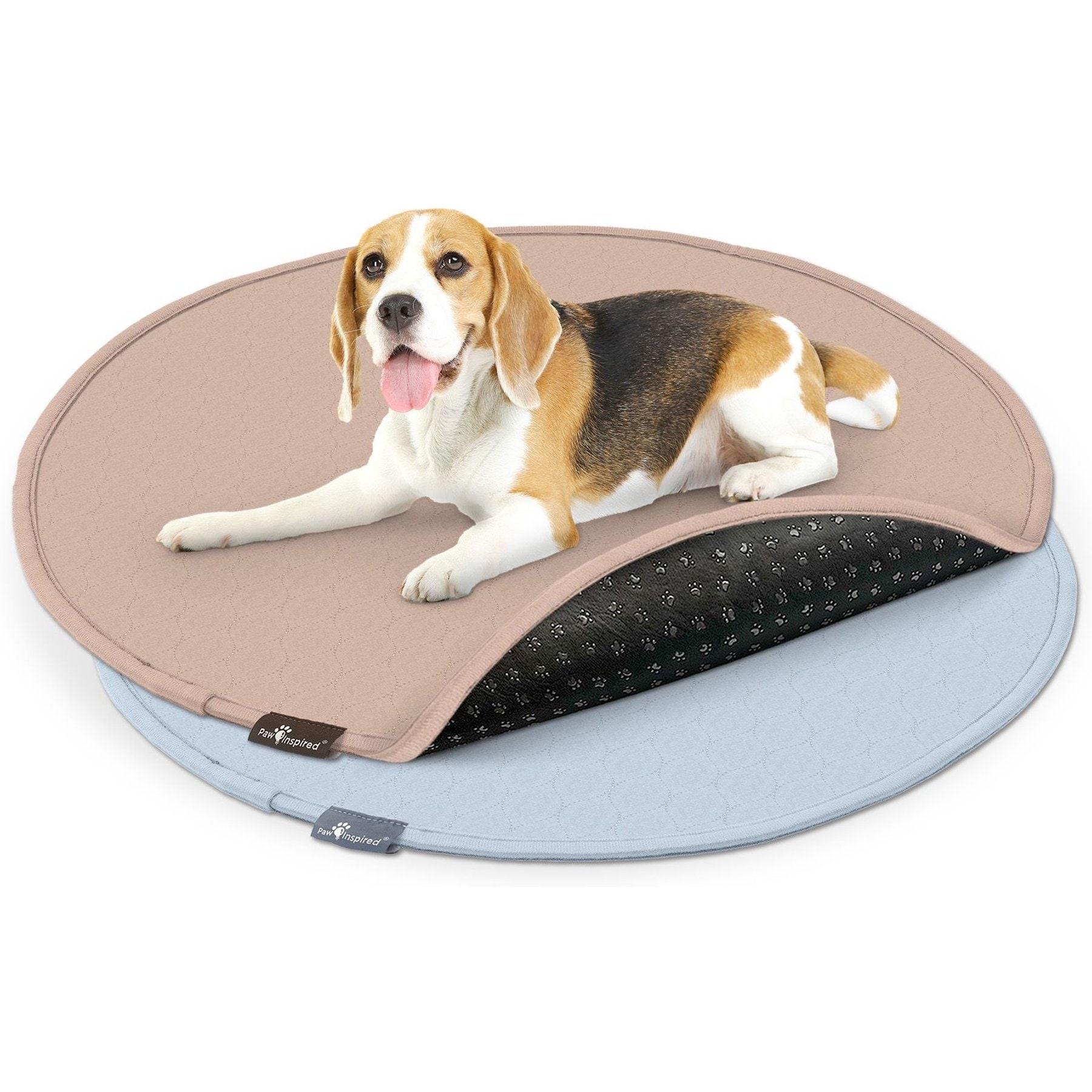
Washable round pads with a leakproof border for lining the nest and keeping a litter's bedding dry.
Webvet may earn a commission when you click through to Chewy, at no extra cost to you.
Among toy and small dog breeds, smooth-haired Chihuahua litters averaged 2.0 puppies and long-haired Chihuahua litters 2.5, Yorkshire terrier litters 3.6, and Shih Tzu litters 4.6. Miniature Dachshund litters averaged 3.8 to 3.9 puppies.
Head shape matters too. Flat-faced (brachycephalic) breeds had litters about 25% smaller than expected for their weight, while short legs, as in Dachshunds and corgis, made no difference. Pug litters averaged 3.7 puppies, Boston terrier litters 4.0, and French Bulldog and English bulldog litters 4.4; Pembroke corgi litters averaged 4.5.

Golden Retriever litters averaged 7.2 puppies across 312 litters and Labrador Retriever litters 6.7 across 629. Dalmatian litters averaged 7.7, Rottweiler 7.0, and short-haired German Shepherd 5.7. These are breed averages, so one dog's litter can land well either side.
Great Dane litters averaged 6.8 puppies, Newfoundland 5.2, and Mastiff 5.3. The researchers suggest uterine space may limit litter size in giant breeds.
Poodle litters averaged 2.5 puppies for toys, 3.1 for miniatures, and 7.5 for standards; Siberian Husky litters averaged 5.2 and Shiba Inu litters 3.0. For a breed the Danish records do not cover, her weight is the best rough guide, because weight predicted litter size across breeds. A vet count late in pregnancy gives the number for her.
What dogs have big litters?
Large breeds have the biggest litters on average: giant breeds averaged 7.1 puppies against 3.5 in miniature breeds in the Norwegian study. In the Danish records, top breed averages included the German wire-haired pointing dog at 8.1 and the Dobermann at 8.0. The largest litters are outliers, not the expected count.

 Sponsored
Have a health question about your dog?
Talk to a licensed vet at Dutch over video or message, including nights and weekends.
Use code Pets60
Plans start at $12/month · covers up to 5 pets
- Licensed vets in most states
- Rx for 150+ conditions
- 4.7 on Trustpilot
What makes a litter bigger or smaller: age, first or later litter, and health
Age matters most after size. In the Norwegian study, the expected number of puppies dropped with age, more steeply in older dogs of large breeds. In the Entlebucher study, an older mother and more inbreeding both lowered litter size.
Whether a litter is her first or a later one is less clear. The Norwegian study found no effect of previous litters, while a 2015 study of 140 litters found litter size associated with parity (the number of earlier litters). With the two studies split, a later litter cannot be counted on to be bigger.
First litters do carry more risk for the puppies. A study of the same Norwegian litters found the highest perinatal death risk in first litters, and stillbirth risk was three times as high when a first litter came after age six.
- Male and female puppies: the Entlebucher litters showed no deviation from an equal split of males and females at birth.
- Litters per year: most dogs have two heats per year, says Cornell University's Riney Canine Health Center.
- Over her lifetime: there is no fixed total; it depends on her heats, her matings, and litter sizes that shrink with age.
What is the best age for a dog to breed?
There is no single best age; it is a vet's call for the individual dog. The Merck Veterinary Manual puts puberty at 10 to 12 months (range 6 to 24 months), later in large breeds. Litter size falls with age, and late first litters carry higher stillbirth risk.
How a vet can tell how many puppies a dog will have
A vet X-ray late in pregnancy is the most reliable way to tell how many puppies a dog will have. Dog pregnancy usually lasts about 63 days, says VCA Animal Hospitals; the puppies' skeletons only show on an X-ray in the last third, which is covered in the stages of dog pregnancy. See how long dogs are pregnant and the signs a dog is pregnant.
The methods vets use:
- Ultrasound: best performed at 25–35 days, per Merck's pregnancy diagnosis guidance. In a study of 76 dogs, it predicted the exact litter size in 65% of cases and was within one puppy in 89.5%.
- Abdominal radiograph (X-ray): skeletons show from about day 42–45. Merck calls late gestational radiography (after 55 days) the best method to determine litter size, and not harmful to the puppies.
- Feeling the abdomen: gives only a rough estimate.

Your vet may ask you to log her rectal temperature in the last week: about 80% of dogs show a drop of 2–3°F, typically to around 97–98°F, before whelping, says Colorado State University's veterinary hospital. The Vet Worthy Digital Thermometer for Dogs reads from 90 to 108 degrees Fahrenheit.
Colorado State also notes that knowing the count lets owners seek veterinary advice more rapidly and reduce puppy deaths. If she has delivered fewer puppies than the X-ray showed, whelping is not finished.
The late-pregnancy visit is also the time to ask whether to keep feeding supplies at home, since puppy losses in the Norwegian study were more likely in larger litters. If your vet advises having a milk replacer on hand, PetAg Esbilac Puppy Milk Replacer Powder for Puppies, 12-oz can is labeled for puppies needing supplemental feedings up to 6 weeks of age. It does not replace your vet's advice on when a puppy needs extra feeds.
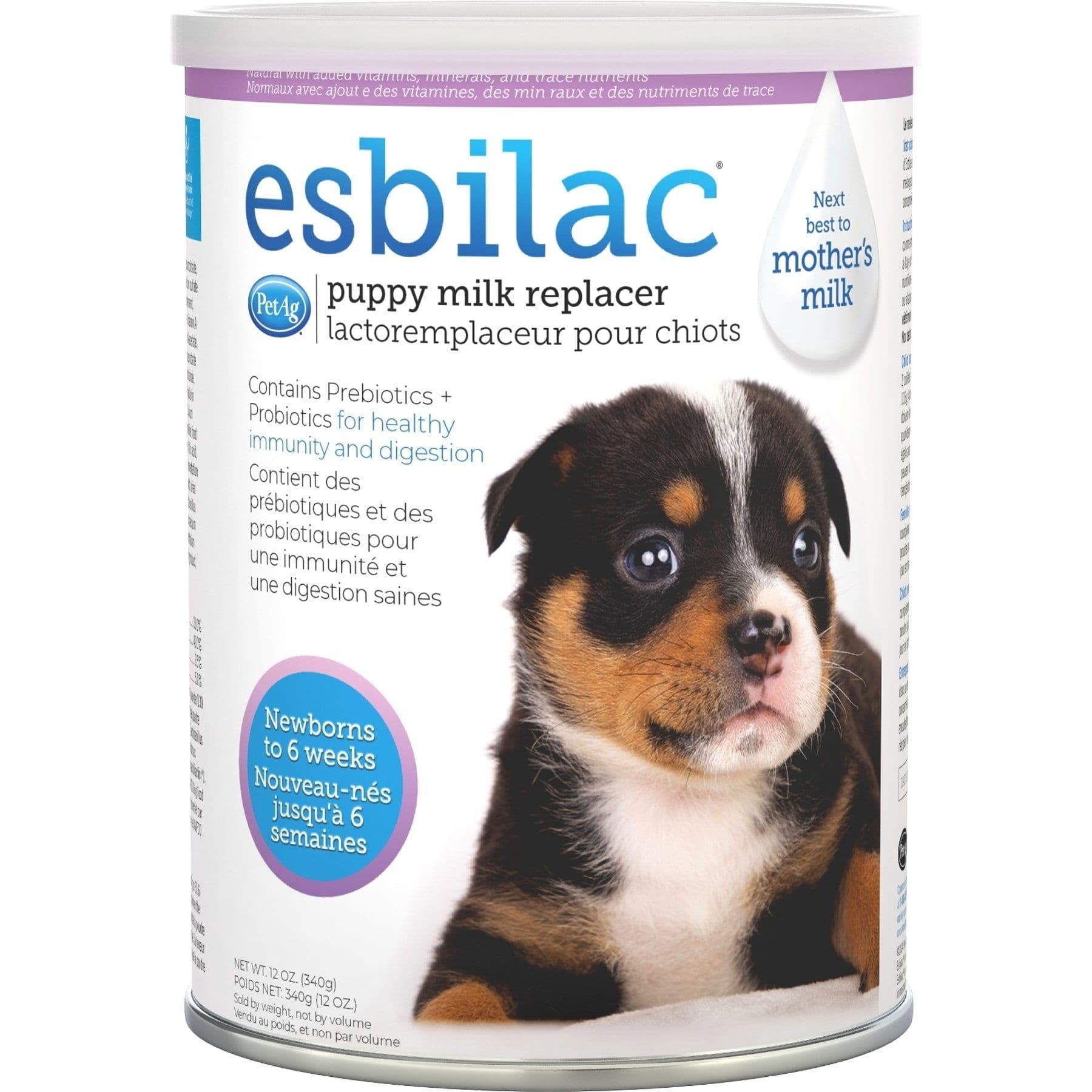
A powdered puppy milk replacer for supplemental feeds when the vet advises them for a newborn puppy.
Webvet may earn a commission when you click through to Chewy, at no extra cost to you.
The same final week is the time to finish setting up the nest, because a litter soils bedding fast once the puppies start moving around.
 Sponsored
Vet care that's always there
Unlimited video calls and messaging with licensed vets for less than a typical vet visit. One membership covers up to five pets.
Use code Pets60
Plans start at $12/month · covers up to 5 pets
- Licensed vets in most states
- Rx for 150+ conditions
- 4.7 on Trustpilot
When a pregnant or whelping dog needs a vet
A whelping dog needs a vet when labor stalls, runs too long, or she or a puppy shows signs of trouble. Normal labor often has 30–60 minute gaps between puppies, the Merck Veterinary Manual says. Learn the signs a dog is in labor ahead of time. Dystocia, a difficult birth, affects about 5% of pregnancies but is far more common in some flat-faced and achondroplastic breeds.
Merck and Colorado State also list:
- No whelping within 24–36 hours after her temperature drops.
- Pregnancy lasting more than 70 days from a known breeding date.
- Dark green or foul-smelling discharge before the first puppy, or heavy bleeding during whelping.
- Whelping lasting more than 24 hours in total, or a mother that seems ill or is not nursing her puppies.
Higher-risk breeds include Bulldogs, Pugs, Boston terriers, and Chihuahuas, per the Merck Veterinary Manual's dystocia guidance. Large litters can overstretch the uterus and weaken contractions.
Caring for a new litter: the mother dog, newborn puppies, and puppies that do not survive
Most newborn care comes from the mother. When your vet decides a puppy needs extra feeds, such as an orphaned or rejected puppy, a puppy milk replacer fills the gap, given only as the vet directs. If your vet advises bottle feeds, the Vet Worthy Nursing Kit for Dogs, 4-fl oz bottle includes a bottle, a bottle brush, and five different nipples. A bottle kit does not replace your vet's feeding plan.
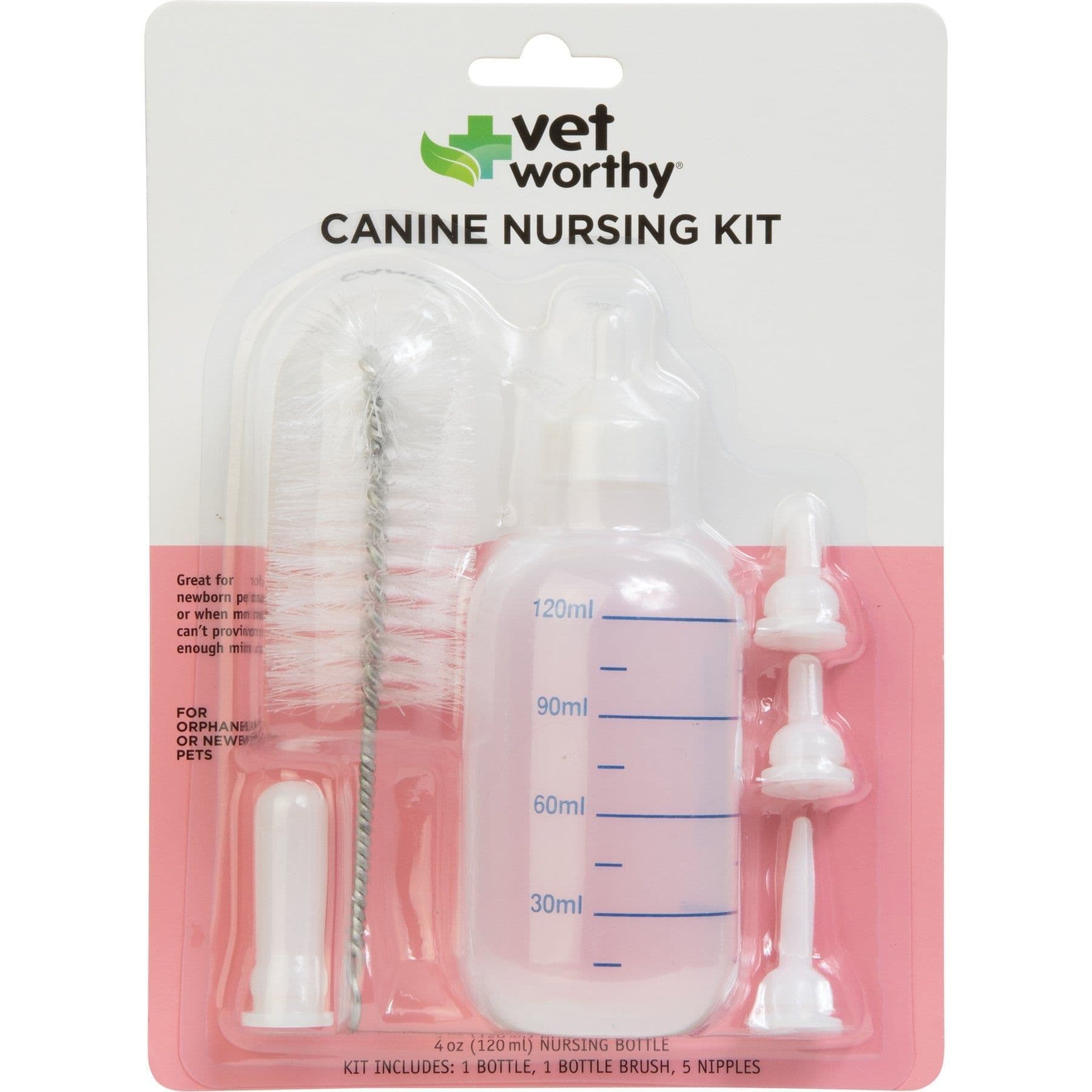
A small bottle kit with five nipple shapes, for puppies the vet advises you to bottle feed.
Webvet may earn a commission when you click through to Chewy, at no extra cost to you.
Nothing replaces the first milk, though. The Merck Veterinary Manual's neonatal guidance says puppies must take in colostrum promptly after birth for passive immunity, and gut absorption of those antibodies generally ceases by 24 hours.
How often should puppies be fed?
Newborn puppies should nurse frequently; VCA's puppy-raising guidance says they eat or sleep 90% of the time in the first two weeks. Bottle-fed puppies under two weeks need feeding every three to four hours, and every six to eight hours from two to four weeks. Weaning begins at three to four weeks.
Weighing shows whether every puppy is getting enough. The Brecknell MS15 Digital Pet Scale is one option for daily weigh-ins; check that its smallest increment suits your puppies' size, and let your vet judge any puppy that is not gaining.
What the weights should show:
- Merck advises recording weights daily for the first 2 weeks, then every 3 days until 1 month old.
- VCA says puppies should gain 5–10% of their body weight daily.
- Merck treats any weight loss, or failure to gain 10% a day after the first 24 hours, as a potential problem.
Warmth matters as much as food. VCA advises keeping the newborn puppies' box and surroundings at 85°F to 90°F at first, lowering it gradually to 72°F by the end of the fourth week. Merck notes that chilling harms immunity, nursing, and digestion, so a cold puppy may stop feeding.
Signs a newborn is on track:
- Quiet and sleeping when not nursing, as Merck describes healthy newborns.
- A rectal temperature of 95° to 99°F in the first week, per Merck.
- Birth weight roughly doubled in about one week, per VCA.
- Eyes opening within seven to fourteen days of birth, per VCA.
The mother needs watching too. Merck advises monitoring her temperature, discharge, and milk, and describes normal discharge (lochia) as dark red to black, odorless, and heavy for the first few days. Placentas usually pass within 24 hours, and she does not need to eat them.
VCA advises against calcium supplements or dairy for pregnant and nursing dogs, because excess calcium can raise the risk of eclampsia.

Most puppies survive, but some die even with good care. In the Norwegian study, 8% of puppies died before eight days of age: 4.3% were stillborn and 3.7% died in the first week.
Losses were more likely in larger litters, with older mothers, and in first litters. Early deaths doubled in litters with a stillborn puppy, and more than 90% of the variation lay at the level of the individual litter. Most of the difference in losses came from the individual litter rather than the breed.
Merck lists these common causes of illness in newborns:
- A mother in poor condition before birth.
- Dystocia.
- Poor nursing or missed colostrum.
- Injury, infection, or birth defects.
Call your vet promptly if you see any of these, and right away for a mother with signs of eclampsia:
- A puppy that cries a lot, will not suckle, or is not gaining weight; VCA advises having the mother and the whole litter examined if crying is excessive.
- A puppy whose eyes have not opened by 14 days.
- A mother that is restless, panting, or having muscle spasms while nursing, which can be eclampsia, a true emergency most common when puppies are one to four weeks old, per VCA.
- A mammary gland that is swollen, red or purple, painful, or producing blood or pus, which can be mastitis; Merck notes mastitis can be associated with sepsis.
- Abnormal discharge, fever, or lethargy in the mother, which Merck links to metritis, a uterine infection.
Preventing another litter: spaying after the puppies are weaned
Spaying once the puppies are weaned and the mother has recovered is the surest way to prevent the next litter.
Weaning, VCA says, should begin at three to four weeks, with most puppies eating food with little or no added moisture by four to six weeks. Gradual weaning protects the mother: VCA's mastitis guidance notes many cases follow sudden weaning, when milk builds up in the glands.
Cornell says spaying prevents pyometra, a common uterine infection, and reduces the risk of mammary cancers. VCA also lists eliminating the risk of unplanned pregnancies. VCA's spay planning guidance adds that pyometra is often fatal without surgery.

Timing is a decision to make with your vet. Cornell suggests waiting about two months after a heat cycle so hormones return to baseline, which makes surgery easier with less bleeding risk. VCA notes a spay is major abdominal surgery under general anesthesia, though most dogs go home the same day.
Questions worth asking at the post-litter check:
- How soon after weaning can she be safely spayed, given her milk supply and body condition?
- Does her size or breed change the timing or the surgical risk? VCA notes spaying is linked to obesity, urinary incontinence, and, in some breeds, joint disease.
- What will it cost? Typical fees are covered in dog spay and neuter cost.
- How should she be kept away from intact males until the spay?
- Should her mammary glands or body condition be checked before surgery is booked?
Until the surgery, keep her apart from intact males. Merck puts the usual interval between heats at 4 to 13 months, with 7 months the average. Read about how dogs mate and whether a dog can get pregnant when not in heat.
After surgery, VCA advises a cone-shaped e-collar to stop licking at the incision and keeping the incision dry; stitches usually come out around 10 days. If your vet agrees, a body suit such as the Medipaw Recovery Protective Dog Suit, Medium is an alternative to a cone.
The dog spay recovery timeline walks through the first two weeks, including activity limits and incision checks.
How many puppies in a litter questions
Frequently Asked Questions
How many puppies can a dog have in her lifetime?
There is no fixed lifetime number. It depends on how many heats she has, how often she is mated, and her litter size, which shrinks with age. The American Kennel Club does not register litters from a mother under 8 months or over 12 years of age at mating unless extra proof is supplied.
A spay ends further litters, and the timing is worth settling with your vet once the current puppies are weaned.
Do dogs have fewer puppies in their first litter?
Not reliably. The large Norwegian study found no effect of a first versus a later litter on the number of puppies born, though one smaller study did find a link.
Her age matters more: older mothers tend to have fewer puppies in both the Norwegian and Entlebucher data, and a first litter after age six carried a much higher stillbirth risk. A vet can talk through what to expect for her age and breed.
What is the largest litter of puppies ever recorded?
The record is 24 puppies, born on 29 November 2004 to Tia, a Neapolitan Mastiff in Cambridgeshire, UK, according to Guinness World Records.
A giant breed can carry a big litter, but that count is far above the 7.1 average the Norwegian study found for giant breeds, and in the Danish records no breed averaged more than 8.1.
How many puppies usually survive in a litter?
Most do. In the Norwegian data, the average litter shrank from 5.4 puppies at birth to 4.97 at eight days and 4.92 at eight weeks, and only 1% of puppies died between eight days and eight weeks.
Have a vet check any puppy that is weak, cold, or not gaining weight; Merck notes infections in newborns can cause rapid decline if not treated promptly, so fast help gives a puppy the best chance to survive.
How many puppies can a small dog have?
A small breed dog usually has a small litter: miniature breeds averaged 3.5 puppies in the Norwegian study, and Pomeranian litters averaged 2.3 in the Danish records. Smaller litters are not always easier, because VCA notes fewer puppies are sometimes bigger, which can make delivery harder.
Merck adds that eclampsia is most common in dogs under 20 kg, and Chihuahuas are on its list of breeds at higher risk of a difficult birth, so small mothers need close watching.
Veterinarian · BVMS MRCVS
Dr. Pippa Elliott, BVMS, MRCVS, is a veterinarian with nearly 30 years of experience in companion animal practice. Dr. Elliott earned her Bachelor of Veterinary Medicine and Surgery from the University of Glasgow. She was also designated a Member of the Royal College of Veterinary Surgeons. Married with 2 grown-up kids, Dr. Elliott has a naughty Puggle named Poggle, 3 cats and a bearded dragon.
Related reading

How Old Can a Cat Get Pregnant? Earliest Age and Why It Matters

Can a Dog Be Spayed While in Heat? Risks, Timing, and Cost

Can a Dog Get Pregnant When Not in Heat? How the Fertile Window Works
