Dogs Mating: How It Works, the Tie, and What Owners Should Do
When dogs mate they often stay tied together for a while, and pulling them apart can injure both dogs. What the tie is, why to stay calm and wait, what to do after an unplanned mating, and how to prevent the next one.

BVMS MRCVS
Medically reviewed by Dr. Pippa Elliott, BVMS MRCVS · Last reviewed

This article contains affiliate links. Webvet may earn a commission when you buy through them, at no extra cost to you.
Dogs mating: what happens, how long it takes, and what owners should do
When dogs mate, the sequence is short and predictable: the male mounts the female, and the two often stay joined in a copulatory tie for several minutes up to about an hour. The tie is normal. It ends on its own, and the dogs should be left to separate naturally.
If you find dogs mating, never pull them apart, because forced separation can injure both dogs. Keep them quiet and still until they part. If the mating was unplanned, call your vet about the female's options soon afterward so the next steps can be planned.
- 1What happens when dogs mate: the male mounts, then the pair often turn rear to rear and stay joined.
- 2Why dogs get stuck together: a swollen part of the penis, the bulbus glandis, locks the pair in a tie.
- 3The tie usually lasts minutes and ends by itself; never pull the dogs apart.
- 4After an unplanned mating, call your vet about the female's options.
So how do dogs mate? According to the American Kennel Club, the male mounts the female from the rear and clasps her midsection with his front legs. Rapid pelvic thrusts follow until penetration and ejaculation.
The thrusting phase is brief. What surprises most owners is what comes next: the dogs stay locked together, often turning until they stand rear to rear. That tie is the part that alarms owners most, and it is the part that needs the calmest response.
How long does the whole thing take? Mounting and thrusting are over quickly; most of the time is the tie. The American Kennel Club puts the tie at 10 to 30 minutes, and University of Illinois teaching notes put it at five minutes to an hour, so allow for that whole range before you worry.

Mating almost always happens because a female is in heat. Her cycle runs through proestrus, when she attracts males but refuses them, and estrus, when she accepts them. The dog heat cycle guide explains the stages, and dog in heat symptoms covers the swelling, discharge, and behavior changes that tell you it has started.
Owners of a female in heat want a clean house and no accidental litter. A disposable diaper such as Dr. Pol Female Dog Diapers for Heat Cycles, 50 count, Medium: 18 to 25-in waist helps with the first, but a diaper does not prevent mating. Only keeping her away from intact males does that.
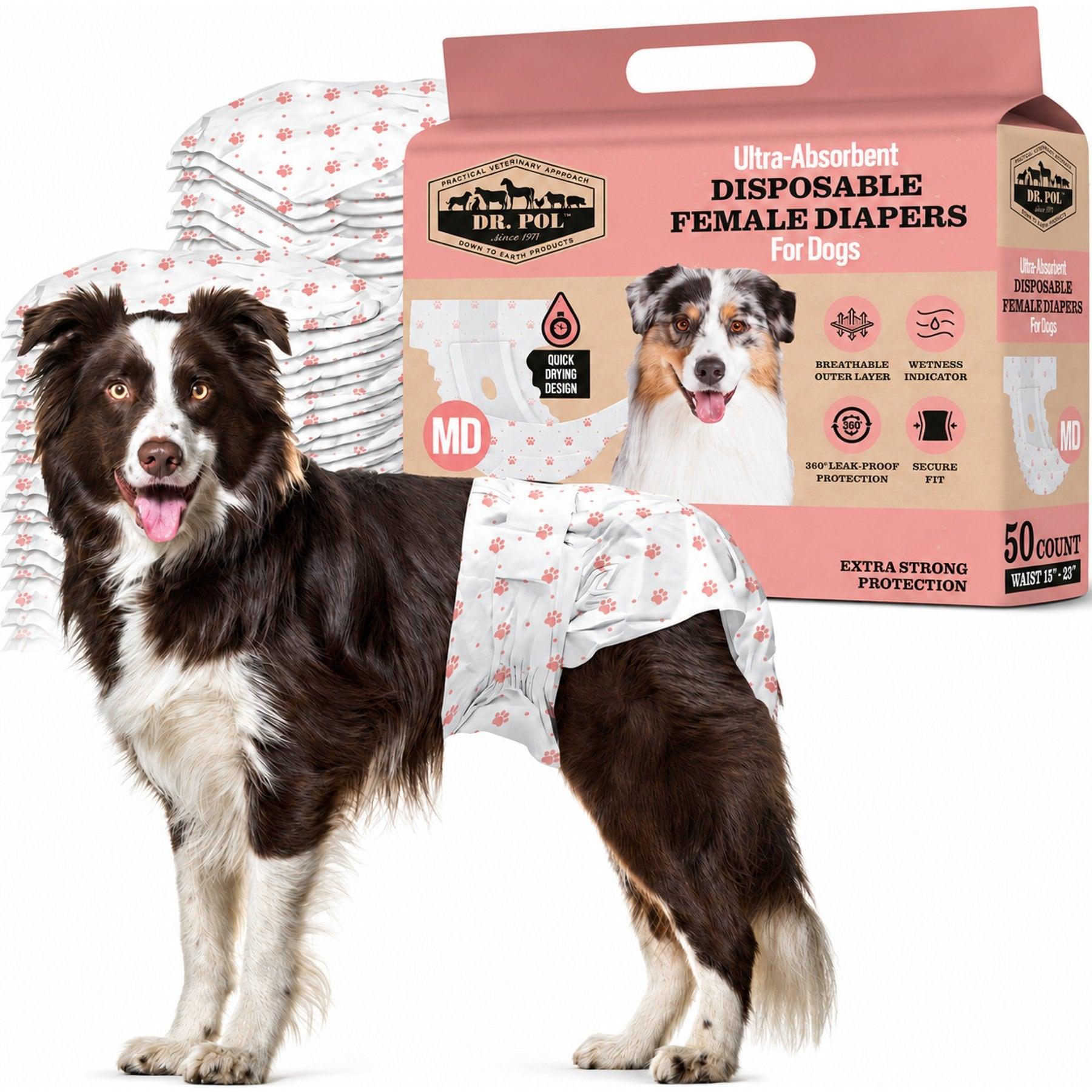
Disposable diapers that keep a female in heat clean indoors; they do not prevent mating, so keep her away from males.
Webvet may earn a commission when you click through to Chewy, at no extra cost to you.
An intact female can come into heat in any month. The Merck Veterinary Manual describes domestic dogs as nonseasonal breeders with, on average, 2 heat cycles per year, so the risk of an accidental mating keeps coming back until she is spayed.
If you walk in on two dogs tied together, this is the whole plan:
- Stay quiet and keep your voice low.
- Keep both dogs still, and move other pets and children away.
- Never pull, push, or drag the dogs apart.
- Wait for the tie to release on its own.
- Afterward, check both dogs over, and call your vet about the female if the mating was not planned.
Calm matters because a frightened dog may try to bolt, sit, or spin, and any of those pulls against the tie. A quiet room and a steady hand on each collar protect both dogs far better than any attempt to hurry the separation.
Once the dogs part, look at the male. His penis should go back into its sheath. If it stays out, the Merck Veterinary Manual for dog owners treats this as paraphimosis, a medical emergency that is easily treated when caught early.
The long-term answer to accidental matings is spaying and neutering. Spaying removes the chance of pregnancy for good, and neutering a male means he cannot sire a litter. Afterward, the incision needs protecting from licking while it heals, and some owners prefer a body suit to a cone for that.
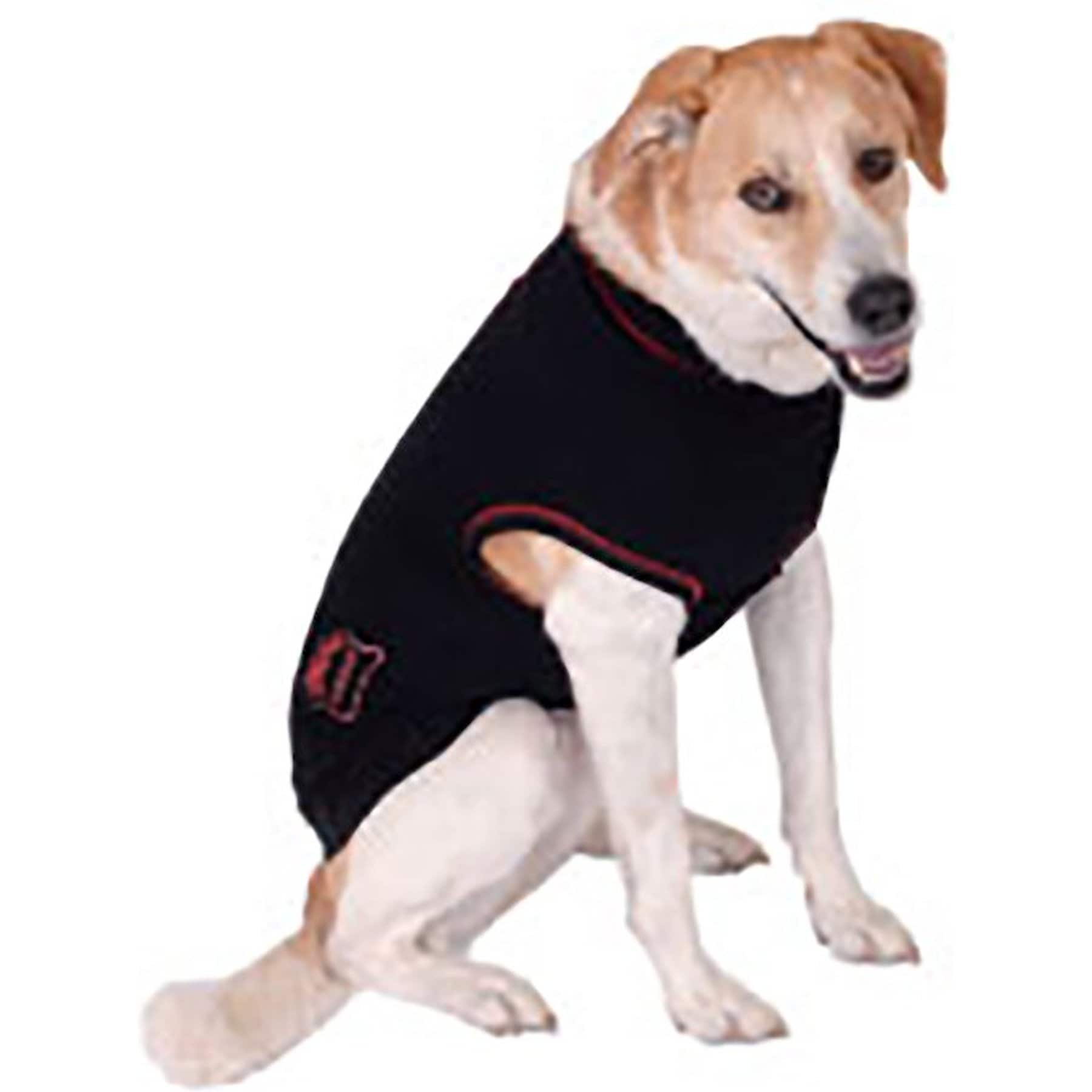
A two-piece recovery suit your vet may approve to keep a dog from licking a spay incision while it heals.
Webvet may earn a commission when you click through to Chewy, at no extra cost to you.
The copulatory tie: why mating dogs get stuck together
The copulatory tie is why dogs get stuck together after mating. The University of Illinois reproduction notes explain that the bulbus glandis, an area at the base of the penis, swells once inside the vagina. That swelling forms a lock that keeps the pair joined during and after ejaculation.
The lock is not a malfunction. It is how dog mating normally works, and the American Kennel Club also attributes the tie to the swollen bulbus glandis.
How long do dogs stay stuck together? Usually somewhere between five minutes and an hour, and the tie is most of the time a mating takes. Two veterinary references give slightly different ranges:
- The American Kennel Club says the dogs will not separate for 10 to 30 minutes after the thrusting stops.
- The University of Illinois notes say the tie usually lasts anywhere from five minutes to an hour, after which the dogs separate naturally.
During the tie the male may move around until the dogs are standing back to back, facing away from each other. The AKC describes this rear-to-rear position as part of the tie, so it is not a sign that anything has gone wrong.
A tie can feel like a long time, but neither reference describes a tie lasting for hours. A tie that runs far beyond an hour, or one where either dog seems in real distress, is a reason to phone your vet for advice rather than to intervene.
A tie is not required for pregnancy. The Merck Veterinary Manual states that the copulatory lock is not necessary for conception and is not an indicator of a successful mating. A mating without a tie can still produce puppies, so a short or missed tie is no reassurance. The tie at a glance:
- Name: the copulatory tie, also called the lock.
- Cause: swelling of the bulbus glandis inside the female.
- Position: often rear to rear once the male turns.
- Ending: natural, once the swelling goes down.
- Pregnancy: possible with or without a tie.
Illinois and Merck frame the tie's role a little differently. The University of Illinois notes say the prolonged contact it allows increases the chance of successful fertilization, while Merck stresses that it is not needed for conception. Either way, any unplanned mating, tied or not, is worth a call to your vet.

 Sponsored
Have a health question about your dog?
Talk to a licensed vet at Dutch over video or message, including nights and weekends.
Use code Pets60
Plans start at $12/month · covers up to 5 pets
- Licensed vets in most states
- Rx for 150+ conditions
- 4.7 on Trustpilot
Why you should never pull mating dogs apart, and how to keep them calm
| Situation | What to do now | When to call the vet |
|---|---|---|
| Dogs are in a tie, calm | Stay quiet, keep both still, never pull them apart, wait | After they separate, if the mating was unplanned |
| Dogs are in a tie, one is pulling or crying | Steady the dogs gently by the collar, never pull, keep the area calm | If the distress continues or a dog is hurt after separating |
| The tie has lasted well over an hour | Keep both dogs still and calm, never pull | Phone now for advice |
| Male's penis has not gone back after the tie | Keep him quiet and stop him licking | Right away, this can be an emergency |
| A small female tied with a much larger male | Keep both dogs still, never pull | After separating, to plan pregnancy checks |
| Unplanned mating is over | Separate the dogs for the rest of her heat | Soon afterward, to review options |
There is no safe way to separate two mating dogs by force. The American Kennel Club warns that trying to separate dogs during the tie can injure either or both animals, and that they will part naturally after some time.
The University of Illinois notes go further: major damage can be done to the reproductive tracts when people physically separate the dogs too early. The swelling that creates the lock has to go down before the male can withdraw, and pulling against it is what causes that damage.

So how do you untie mating dogs? You wait. What you can control is the setting, which keeps both dogs calmer while the tie releases:
- Stay with the dogs and speak quietly; do not shout or clap.
- Hold the female's collar lightly so she does not bolt or sit down suddenly.
- Keep the male standing steady, without pulling him away.
- Clear the space of other dogs, children, and anything that might startle them.
- Note the time the tie started so you can tell your vet how long it lasted.
Once the dogs separate on their own, let them settle. After separating, check both for bleeding, swelling, or limping, and keep them apart for the rest of the female's heat if you want to avoid a repeat mating.
If you are a dog walker, sitter, or daycare worker, tell both owners as soon as the dogs have parted. The female's owner will need to speak to their vet, and the time the tie started is useful information.
If the tie drags on far past an hour, keep holding both dogs steady and phone a vet for advice from where you are. The answer is still to wait, not to pull.
 Sponsored
Vet care that's always there
Unlimited video calls and messaging with licensed vets for less than a typical vet visit. One membership covers up to five pets.
Use code Pets60
Plans start at $12/month · covers up to 5 pets
- Licensed vets in most states
- Rx for 150+ conditions
- 4.7 on Trustpilot
Dog mating behavior: how males find a female in heat and how she responds
A male's interest in mating is driven by the female's cycle. According to the Merck Veterinary Manual, during proestrus she attracts male dogs but is not yet receptive to breeding, although she may become more playful. A bloody vulvar discharge is present at this stage.
The University of Illinois notes add that in proestrus she may play and interact with males but will not allow mounting or mating. So males show interest days before she will accept them, and she turns them down.
Estrus is the receptive stage, from the first day she stands for mounting until she no longer accepts the male. The Merck Veterinary Manual gives it 3 days to 3 weeks, averaging 9 days. The mating ritual usually runs in these stages:
- Proestrus: males show interest, she flirts or plays, but she refuses to be mounted.
- Estrus: she stands still for the male and, as Merck describes, deflects her tail to the side, known as flagging.
- Mounting and thrusting: brief and fast.
- The tie: the pair stay joined, often turned back to back.
- Separation: the swelling subsides and the dogs part on their own.
An early mating is not a safe mating. Merck explains that fresh canine semen can live in the vagina for 9 or more days, which is why breedings can result in conception even when they happen before her fertile window. Every receptive day of her heat carries a pregnancy risk.
Because estrus can stretch on for weeks, manage a female through her whole heat. A washable option such as Rocket & Rex Reusable Leakproof Dog Diapers, Medium, 3 count keeps her cleaner indoors, but a diaper does not prevent mating. A closed door and a leash do.
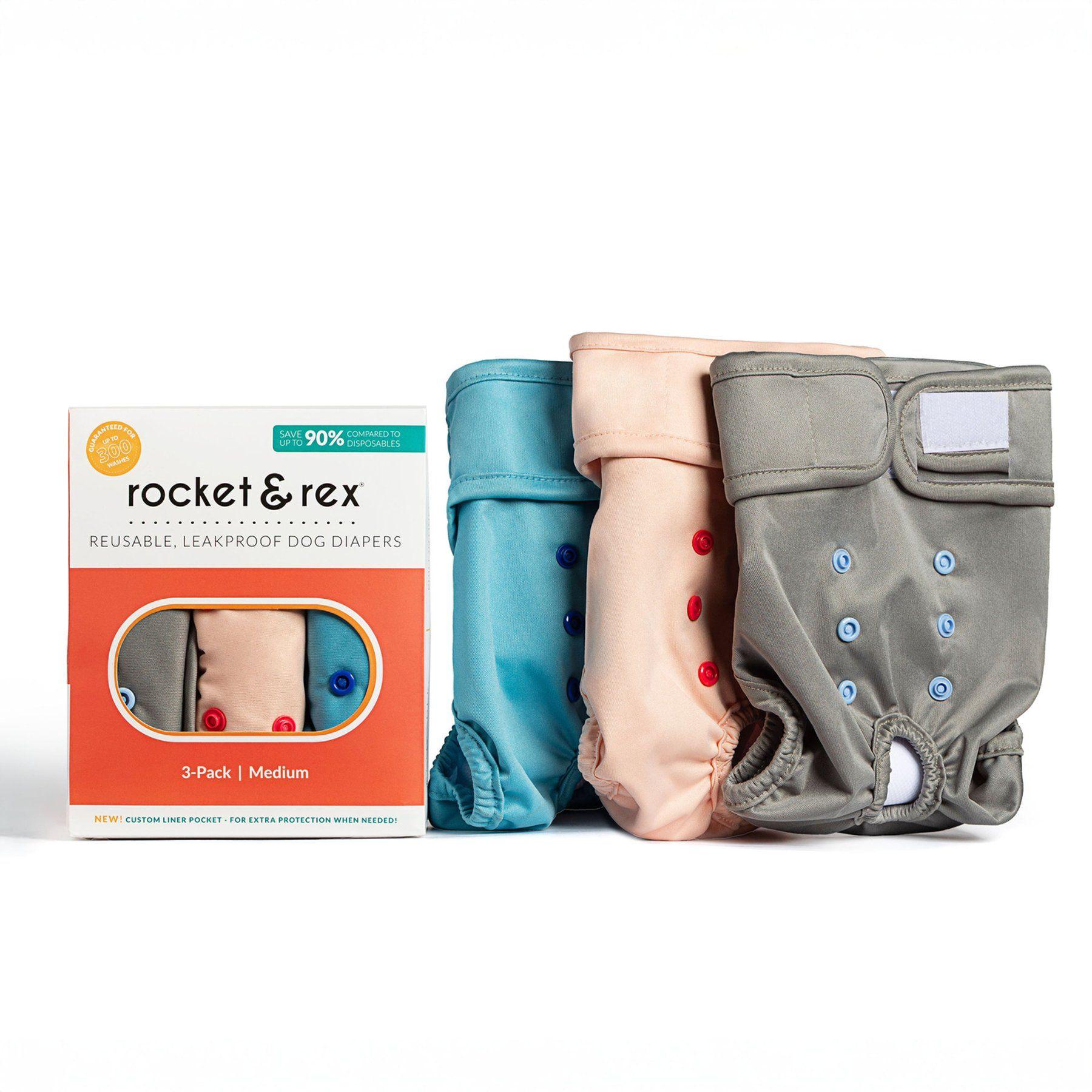
Washable diapers for heat hygiene through the cycle; a diaper does not prevent mating, so keep her away from males.
Webvet may earn a commission when you click through to Chewy, at no extra cost to you.
Mating sounds such as whining or yelping during the tie are not, on their own, a reason to separate the dogs. Veterinary references link injury to pulling, not to noise, so keep the setting quiet and let the tie finish.
At what age do dogs start mating? Most domestic dogs reach sexual maturity at 6 to 9 months, according to the Merck Veterinary Manual, though the timing varies:
- Sexual maturity in domestic dogs: 6 to 9 months of age, later for giant breeds.
- Female puberty: typically 10 to 12 months, with a range of 6 to 24 months; large breeds come into heat later than small ones.
There is no fixed mating season, and how long is a dog in heat explains how long each heat lasts.
Mounting is not only a mating habit, which is why two male dogs may mount each other. The Merck Veterinary Manual for dog owners explains that roaming, mounting, urine marking, and fighting are stimulated by sex hormones, particularly testosterone, and are often greatly reduced in males by neutering.
The professional edition of Merck reports that castration decreased roaming, mounting, and urine marking by 50% in 60% of dogs and by 90% in 25 to 40% of dogs. After a neuter, the Supet Inflatable Dog Recovery Cone Collar, Green, Medium keeps a dog from licking the incision; measure the neck first.
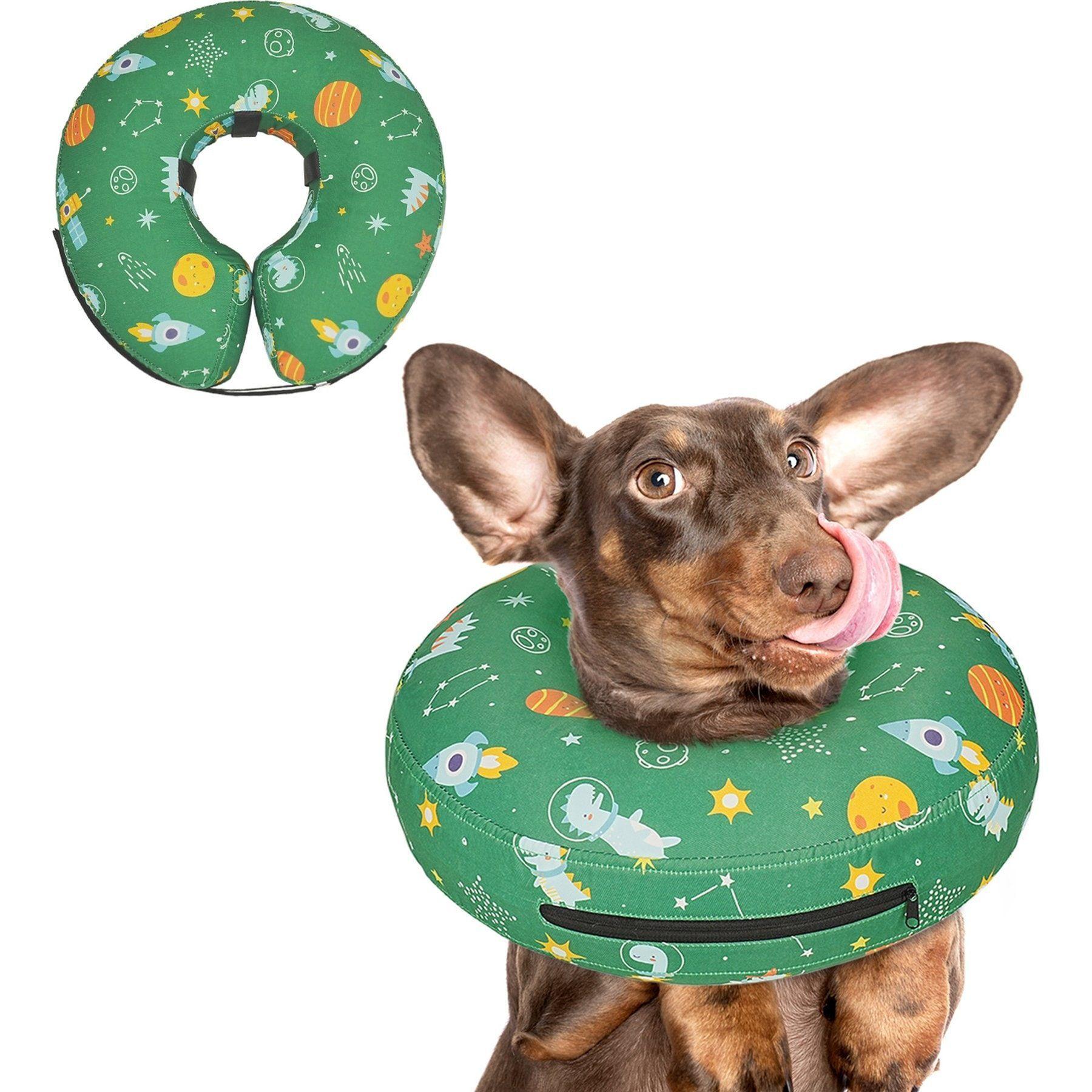
An inflatable recovery collar that keeps a dog from licking a spay or neuter incision; measure the neck before ordering.
Webvet may earn a commission when you click through to Chewy, at no extra cost to you.
After an unplanned mating: what to do next and how your vet can help
After an unplanned mating, call your vet promptly. The Merck Veterinary Manual notes that mismating is often reported soon after it is witnessed, which lets your vet plan when to check for pregnancy. Early contact is about planning, not panic.
There is real reason for calm. The Merck Veterinary Manual states that sixty percent of misbred female dogs do not conceive. That is why vets usually confirm a pregnancy before choosing any treatment.
Your vet will talk through options that the Merck Veterinary Manual describes:
- Confirming pregnancy first, by ultrasonography or a blood test called serum relaxin assay, because Merck advises against any termination protocol until pregnancy is confirmed.
- Spaying, since Merck states that pregnancy can be completely prevented or terminated by ovariohysterectomy.
- Medical termination, prescribed and supervised by the vet only after pregnancy is confirmed.
- Continuing the pregnancy with veterinary monitoring.
The dog abortion guide explains these veterinary options in more depth. Home remedies do not work and some are dangerous. Merck states that postcoital douches are of no value in preventing unwanted pregnancy, and that oral estrogens greatly increase the risk of pyometra, a serious uterine infection. Never give a dog leftover medicines.
Whether a mating was successful cannot be judged from what you saw: a long tie does not prove a successful mating, and a missed tie does not rule it out. Illinois notes it is not unusual for dogs to mate and tie several times, so if the pair had access to each other, assume they may have mated more than once.
Keep her separated from intact males for the rest of her heat. Merck notes that fresh sperm can last up to 7 to 9 days in the female's tract, so a second mating days later adds to the risk. For timing questions outside heat, see can a dog get pregnant when not in heat.

If she does turn out to be pregnant, the American Kennel Club notes that a vet can usually confirm it by abdominal palpation at 28 days, or by ultrasound or X-rays, and that gestation lasts approximately 63 days. The signs a dog is pregnant guide covers what to watch for at home.
Litter size varies widely. The University of Illinois notes explain that smaller breeds release fewer eggs and therefore have smaller litters than larger breeds; how many puppies in a litter gives the averages by size.
When mating needs a vet: size mismatches, injuries, and a tie that will not release
The risks veterinary references describe come mainly from forced separation, from problems with the male after the tie, and, later, from a pregnancy the female may struggle to deliver.
The most urgent problem after a mating is paraphimosis, when the male cannot retract his penis. The Merck Veterinary Manual for dog owners says it is seen most often after breeding and is a medical emergency, because the exposed penis quickly becomes swollen, dry, and painful. Caught early, it is easily treated.

Owners also worry when a large male mates with a much smaller female. Veterinary references do not set a size limit for the mating itself. The clearer risk with a size mismatch comes later, if the small female becomes pregnant.
The Merck Veterinary Manual lists a too-small birth canal and an oversized fetus among the causes of a difficult birth. If a little female may be carrying a much larger male's puppies, tell your vet about the size difference early so it can be part of the plan.
Call your vet if you see any of these after a mating:
- The tie lasts well beyond an hour, or a dog seems in severe pain during it.
- The male's penis stays out of the sheath after separation.
- Bleeding, swelling, or a wound on either dog's genitals.
- Bite wounds from a scuffle, for example when a female who is not yet receptive refuses a male.
- Ongoing whining, licking at the genitals, or reluctance to walk afterward.
- A small female who may be pregnant by a much larger male.
Whatever the size of the dogs, the same rules apply: never pull, keep both calm, and call the vet when something looks wrong.
How to prevent dogs mating: spaying, neutering, and managing a female in heat
Surgery is the only permanent way to prevent unwanted matings. The Merck Veterinary Manual names permanent sterilization by ovariohysterectomy or ovariectomy as the most common choice for preventing pregnancy in female dogs. Neutering a male removes his ability to sire a litter and often reduces roaming.
Timing is a decision to make with your vet. Merck states there is no consensus on the optimal age for spaying and that each dog should be considered individually. Spaying carries risks such as weight gain and urinary incontinence, while intact females face risks such as pyometra and mammary tumors. Questions worth asking your vet:
- What age makes sense for this dog's breed, size, and sex?
- Is an ovariectomy or an ovariohysterectomy recommended, and why?
- How should the female be managed through any heat before surgery?
- What does recovery look like, and how should the incision be protected?
The UC Davis study of 35 breeds, published by Hart and colleagues in Frontiers in Veterinary Science, found major breed differences in how neutering age relates to joint disorders and cancers. Small breeds showed no added joint risk, while risk in larger breeds tended to follow body size.
The when to neuter a dog guide walks through those breed and size differences, and dog spay neuter cost explains what the surgery usually involves.
Until surgery, managing a female in heat is the main defense. Practical steps until then:
- Keep her indoors or in a secure, supervised space for the whole heat, not just while she is bleeding.
- Walk her on a leash only, and skip dog parks and daycare until her heat is fully over.
- Never leave her alone in a yard; a fence with gaps will not reliably keep a male away from her.
- Keep any intact male in the same home away from her in a separate room or crate for her whole heat, even if the two dogs are littermates.
Being related does not stop two intact dogs from mating. The American Kennel Club notes that recessive mutant genes can surface in the puppies of two dogs carrying the same mutation, another reason to keep littermates apart.
Diapers help with hygiene during heat. A washable pair such as MISOKO Fantasy Reusable & Washable Female Dog Diapers, Multicolor, 3 count, Medium can be used with Paw Inspired Dog Diaper Pad Liners for Covers & Washable Dog Diapers, 30 count, which the maker says reduce washing.
For disposables, Four Paws Wee-Wee Disposable Dog Diapers, Medium, 36 count are another option. The dog diapers for heat guide compares fit and sizing. Whatever type you choose, a diaper does not prevent mating.

After surgery, the incision needs protecting. Merck describes an Elizabethan collar as a large funnel-shaped collar that prevents a dog from licking itself. A body suit such as the Medipaw Recovery Protective Dog Suit, Medium is an alternative some vets approve after a spay.
Dogs mating questions
Frequently Asked Questions
How long do dogs stay stuck together after mating?
The tie usually lasts minutes rather than hours. The American Kennel Club gives 10 to 30 minutes, while University of Illinois teaching notes give five minutes to an hour. Keep both dogs calm and still until the swelling goes down and they separate on their own.
Why do dogs get stuck together when mating?
The bulbus glandis, a section at the base of the male's penis, swells once inside the female and holds the pair together. This tie keeps contact going during and after ejaculation. It is a normal part of canine reproduction and releases once the swelling subsides.
How do you separate dogs that are stuck mating?
You do not. Never pull tied dogs apart, because forced separation risks injury to the reproductive tracts of both dogs. Hold collars lightly, keep the area quiet, and wait. If the tie lasts far beyond an hour or a dog is in severe distress, phone your vet.
How do I stop my dogs from mating?
Spay or neuter is the only permanent fix. Until then, separate intact dogs completely for the whole of the female's heat, using closed doors, crates, and leashed walks. Diapers keep things clean, but they do not stop a determined male.
Is it dangerous for a large dog to mate with a small dog?
The mating itself is not given a size limit in veterinary sources, but a big size difference matters if the female conceives. Merck lists a too-small birth canal and oversized puppies as causes of difficult birth, so tell your vet about the size gap promptly.
Can dogs mate through a fence?
A fence only prevents mating if it keeps the dogs fully apart. Gaps, low sections, and dug-out spots let a determined male reach a female in heat. Supervise every trip outside during her heat, and do not rely on a shared fence line to keep dogs apart.
Is mating painful for dogs?
A normal mating left to finish on its own is not described as harmful in veterinary references. The pain and injury they warn about come from pulling dogs apart and from problems such as paraphimosis afterward. If a dog cries out repeatedly, keeps licking, or seems sore, see your vet.
How can you tell if dogs mated successfully?
You cannot tell from the mating. Merck states the tie is not an indicator of a successful mating, and pregnancy can follow without one. A vet can confirm pregnancy with ultrasound or a relaxin blood test, and the AKC notes palpation is usually possible at 28 days.
Veterinarian · BVMS MRCVS
Dr. Pippa Elliott, BVMS, MRCVS, is a veterinarian with nearly 30 years of experience in companion animal practice. Dr. Elliott earned her Bachelor of Veterinary Medicine and Surgery from the University of Glasgow. She was also designated a Member of the Royal College of Veterinary Surgeons. Married with 2 grown-up kids, Dr. Elliott has a naughty Puggle named Poggle, 3 cats and a bearded dragon.
Related reading

How Old Can a Cat Get Pregnant? Earliest Age and Why It Matters

Can a Dog Be Spayed While in Heat? Risks, Timing, and Cost

Can a Dog Get Pregnant When Not in Heat? How the Fertile Window Works
