Neosporin for Dogs: Is It Safe, and What to Use Instead
A thin layer of plain Neosporin on a small, shallow scrape is usually fine for a dog that cannot lick it off, but it never goes in eyes, ears, or deep wounds. When it is OK, what to do if your dog eats it, and the pet-labeled options vets prefer.

BVMS MRCVS
Medically reviewed by Dr. Pippa Elliott, BVMS MRCVS · Last reviewed

This article contains affiliate links. Webvet may earn a commission when you buy through them, at no extra cost to you.
Neosporin for dogs: is it safe, and when a vet says yes, maybe, or no
Neosporin for dogs is acceptable in one narrow case: a thin layer of plain Neosporin on a small, shallow scrape, on a dog that cannot lick it off. It never goes in the eyes or ears, or on a bite, puncture, deep cut, or infected wound, and the pain-relief versions are best avoided.
So yes, you can put Neosporin on a dog's minor scrape, but a dog that will lick the spot, an eye or ear problem, and a bite or puncture should never get it. Even then, it is rarely the best first choice: a pet-labeled wound spray is the safer default, because a dog will lick.
- 1When a thin layer is acceptable: a small, shallow, clean scrape on a dog that cannot reach it to lick.
- 2Why licking defeats the ointment: the dog wipes it off, swallows the greasy base, and slows healing.
- 3Never use it in eyes or ears, or on bites, punctures, deep cuts, or oozing, infected skin.
- 4Skip pain-relief formulas; plain Neosporin is the only version to consider.
- 5A pet-labeled wound spray plus a cone is the safer default for most minor wounds.
For an everyday scrape, a spray labeled for pets avoids the greasy base a dog would otherwise lick. The Vetericyn Plus Antimicrobial Wound Care Spray for Dogs, Cats, Horses, Birds & Small Pets, 8-fl oz bottle is labeled for cleaning and moisturizing cuts, abrasions, and sores, and was listed at $23.99 on Chewy when checked in November 2026.
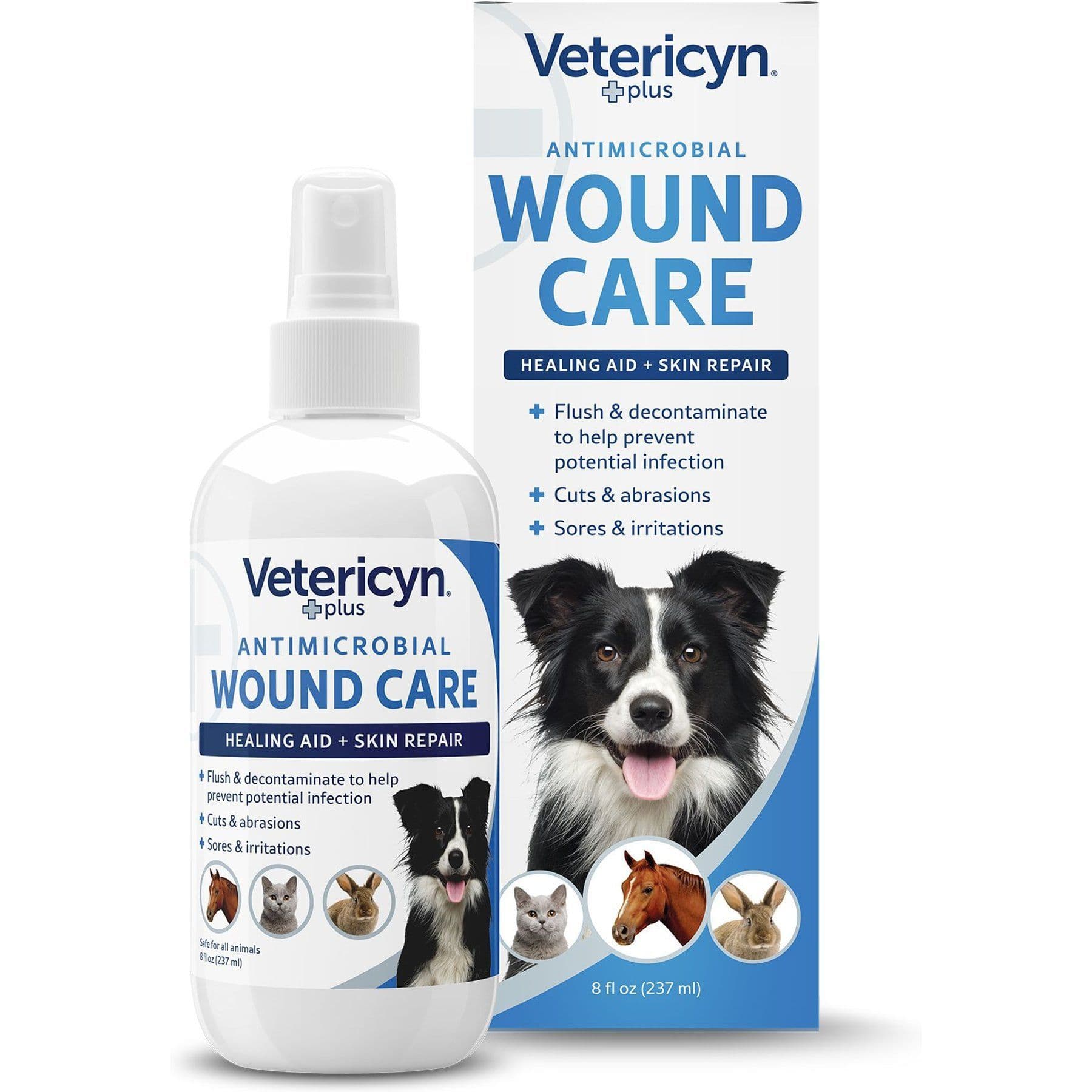
A pet-labeled wound spray for cleaning a minor scrape, used in place of a human ointment a dog would lick.
Webvet may earn a commission when you click through to Chewy, at no extra cost to you.
Is Neosporin safe for dogs, then? Veterinary guidance is split, and both sides are worth knowing. VCA Animal Hospitals says a topical antibiotic may be recommended for minor injuries, but only products your vet recommends. VCA's open-wound care advice says not to apply ointments or creams to a wound at all unless your vet directs it.
The common ground is simple. There is no Neosporin for dogs: it is a human first-aid product labeled for external use. So is Neosporin good for dogs or bad for dogs? Neither by default: it depends on the wound and on whether your dog can leave it alone.
Does Neosporin work on dogs? Its label says it helps prevent infection in minor cuts, scrapes, and burns, written for people. It does not treat an infection that has already set in, and it cannot work if it ends up on your dog's tongue instead of the wound.
What human medications are safe for dogs?
None is safe by default. Pet Poison Helpline reports that nearly 50% of its calls involve human medications, and it tells owners never to give a pet medication without first consulting a veterinarian. Pain relievers such as ibuprofen can cause stomach and intestinal ulcers and kidney failure in dogs. Plain Neosporin on skin is lower risk, but still your vet's call.


 Sponsored
Need a prescription or refill for your dog?
A licensed vet at Dutch can assess your dog over video and prescribe treatment when it's appropriate, delivered to your door.
Use code Pets60
Plans start at $12/month · covers up to 5 pets
- Licensed vets in most states
- Rx for 150+ conditions
- 4.7 on Trustpilot
What is in Neosporin, and how it compares with Polysporin and bacitracin for dogs
Neosporin is a triple antibiotic ointment: three antibiotics in a greasy, petroleum-based ointment. Knowing what each tube holds explains why vets treat the brands a little differently.
An antibiotic ointment is not the only skin product vets reach for, either. The Merck Veterinary Manual notes that chlorhexidine at 2 to 4% kills bacteria, which is why it turns up in sprays and shampoos for irritated or infected dog skin. The Davis Chlorhexidine Dog & Cat Spray, 16-fl oz bundle uses 4% chlorhexidine gluconate and was listed at $21.16 on Chewy when checked in November 2026. It is made for irritated skin that is not broken, used as your vet directs; an open scrape is still rinsed with saline or plain water.
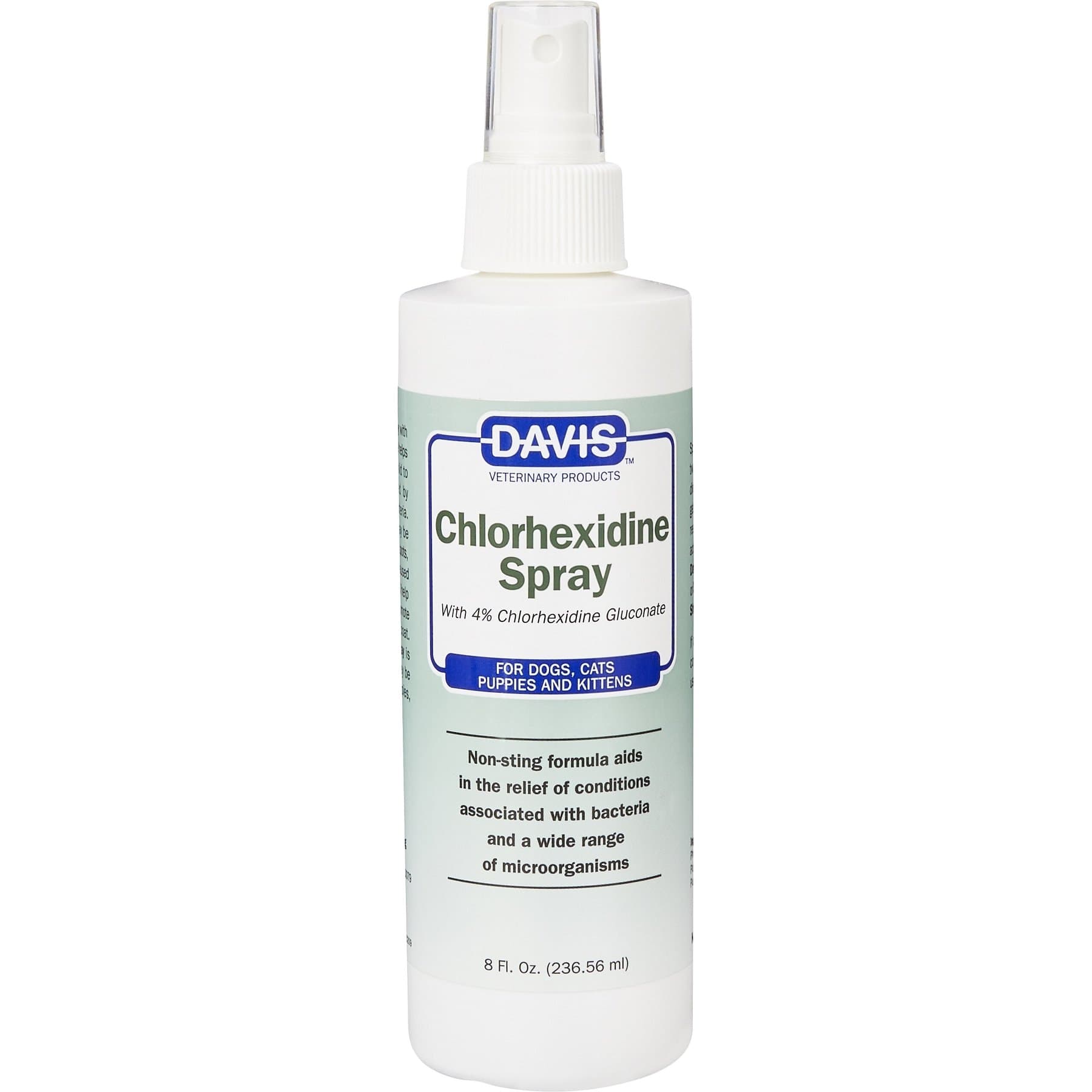
A 4% chlorhexidine skin spray for dogs, used on minor skin irritation as your vet directs, never in eyes or ears.
Webvet may earn a commission when you click through to Chewy, at no extra cost to you.
What are the ingredients in Neosporin?
Neosporin Original contains three antibiotics in each gram, according to its DailyMed drug label:
- Bacitracin zinc, 400 units
- Neomycin sulfate, 3.5 mg
- Polymyxin B sulfate, 5,000 units
The base is petrolatum (petroleum jelly) with cottonseed oil, olive oil, cocoa butter, sodium pyruvate, and vitamin E. That petroleum base is the part a dog swallows when it licks.
How do the common tubes compare for a dog?
- Neosporin: bacitracin, neomycin, and polymyxin B in a petroleum base, all labeled for people.
- Polysporin: the Polysporin label lists bacitracin zinc and polymyxin B, with petrolatum as the only inactive ingredient and no neomycin.
- Bacitracin ointment: a single antibiotic, the simplest of the three.
- Mupirocin: the DailyMed mupirocin label is marked Rx Only, so mupirocin versus Neosporin is a choice your vet makes for a specific skin infection.
For a dog's skin scrape, Neosporin or bacitracin matters less than licking does; neomycin matters most near the ears.
 Sponsored
Vet care that's always there
Unlimited video calls and messaging with licensed vets for less than a typical vet visit. One membership covers up to five pets.
Use code Pets60
Plans start at $12/month · covers up to 5 pets
- Licensed vets in most states
- Rx for 150+ conditions
- 4.7 on Trustpilot
How to use Neosporin on a minor dog scrape or paw cut, and how to stop licking
Can you put Neosporin on a dog wound? Only on the right kind: small, shallow, with clean edges, and not a bite or a puncture. If the wound passes that test, the steps below keep the ointment on the wound and out of your dog.
- Rinse the scrape. VCA's wound care dos and don'ts says to clean with saline solution or water only, and to skip soap, rubbing alcohol, hydrogen peroxide, and tea tree oil, which can delay healing.
- Pat the area dry with clean gauze.
- Apply a thin layer. The human label calls for a small amount, about the size of a fingertip; your vet decides how often for your dog.
- Keep your dog from licking the spot, using a cone, a suit, or a covered paw.
- Check the spot daily, and stop and call your vet if a rash appears or the scrape is not improving within a week.
Why does licking matter so much? VCA explains that licking can seriously delay healing and result in infection or injury, and that a dog's mouth is very germy. A dog that licks off the ointment also swallows its petroleum base, so the wound gets nothing and the stomach gets the grease.

Paws need extra care
Neosporin on a dog's paw is the hardest case. Dogs lick paws, walk on them, and pick up dirt in any ointment left on the pad. On a small, shallow paw scrape, a thin layer is safe only if the paw is covered or the dog wears a cone; a deep or bleeding paw pad cut needs a vet.
To cover a treated paw for a short time, the PawFlex MediMitt Disposable Dog Bandage, 4 count, Medium uses a non-adherent pad in an open design, listed at $19.90 on Chewy when checked in November 2026. VCA's bandage guidance applies to any paw cover:
- Check it at least twice daily to make sure it is clean, dry, and neither too tight nor too loose.
- Never let it get wet; change a damp cover right away.
- Do not let your dog lick or chew at it.
Sprays, creams, powders, and over-the-counter versions
Neosporin ointment is sold over the counter for people. A Neosporin cream, spray, or powder is no safer for a dog than the ointment, and the same rules apply:
- Read the Drug Facts panel and choose a plain antibiotic product only.
- Skip any version that lists a pain reliever.
- Use a thin layer on a small scrape, never a large area; the label itself says not to use it over large areas of the body.
- Choose the format your dog is least likely to lick, which usually means a light pet spray rather than a greasy ointment or cream.
Cones stop licking best
VCA calls an Elizabethan collar often the best way to prevent licking, and its collar guidance notes that licking can seriously delay healing. This dog cone guide covers types and sizing in more detail.
Soft or hard? VCA's page on surgical collars says many dogs tolerate soft collars better than firm plastic ones, but some dogs can maneuver around soft material and still reach the spot. A fit check that works for any style:
- You can fit two fingers comfortably between the collar and your dog's neck.
- The edge of the cone reaches slightly beyond the tip of the muzzle.
- Your dog is supervised for the first few hours, and never outdoors alone while wearing it.
- The collar can usually stay on while your dog eats and drinks.
An inflatable collar is another soft option for some dogs. The Supet Inflatable Dog Recovery Cone Collar, Green, Medium was listed at $26.99 on Chewy when checked in November 2026; measure your dog's neck before choosing a size.
Stitches and surgical incisions
An incision is not a home-first-aid wound. VCA's open-wound advice is to put no ointment or cream on a wound unless your vet directs it, and that matters most on stitches. Keep the incision clean and dry, use the cone or suit your vet sends home, and call the clinic about redness, swelling, gaps, or discharge.
When to stop using it
The Neosporin label tells people to stop and ask a doctor if they need it for more than one week, or if a rash or other allergic reaction develops. The same two limits make sense for a dog: a scrape that still needs ointment after a week, or skin that turns red and bumpy, is a reason to call your vet.
Stop sooner if your dog will not leave the area alone despite a cone. Every lick removes the ointment, so a wound that keeps getting licked is better served by a pet spray and a firmer barrier than by more Neosporin.
A stocked kit makes all of this easier the next time. The Kurgo Pet First Aid Kit is a 50-piece pet first-aid kit, listed at $32.99 on Chewy when checked in November 2026, so basic supplies are on hand without raiding the family medicine cabinet.
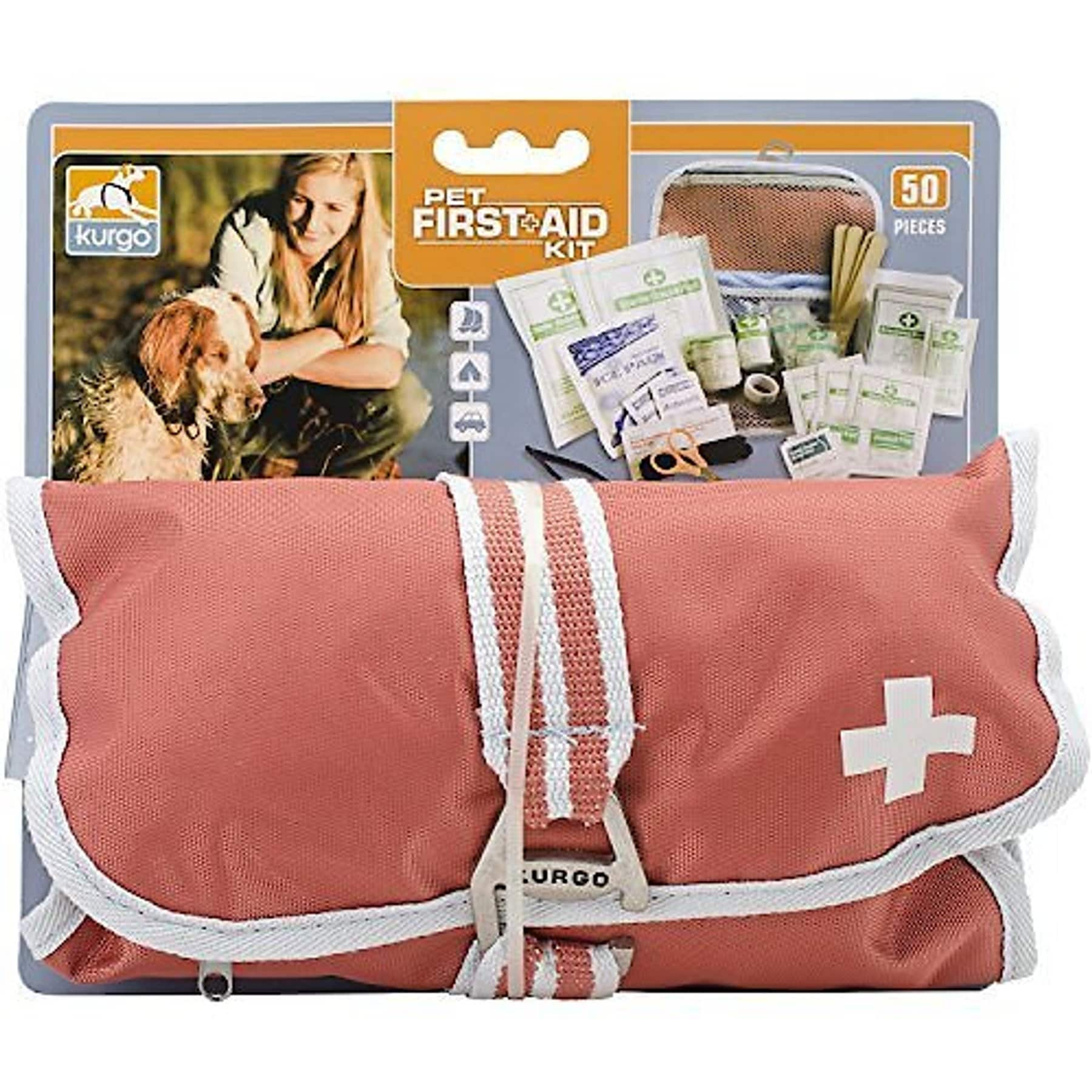
A 50-piece pet first-aid kit so a minor scrape can be rinsed, dried, and covered with supplies made for pets.
Webvet may earn a commission when you click through to Chewy, at no extra cost to you.
Where never to use Neosporin on a dog: eyes, ears, deep wounds, and pain-relief formulas
Never put Neosporin in a dog's eyes or ears, on a bite, puncture, or deep cut, or on a hot spot, and skip the pain-relief versions. Match the wound you are seeing to a Neosporin verdict, a better option, and the point where your dog needs a vet.
| Wound type | Neosporin verdict | Better option | See a vet when |
|---|---|---|---|
| Small, shallow scrape | Thin layer is acceptable if your dog cannot reach it | Pet-labeled wound spray, then a cone | It oozes colored discharge or is not better in a week |
| Paw pad scrape or cut | Only if the paw is covered; licking removes it | Rinse, pet spray, short-term paw cover | The cut is deep, bleeding, or your dog is limping |
| Hot spot (red, oozing skin) | Not a fix; licking keeps it going | Vet clipping and chlorhexidine cleaning | Always, usually the same day |
| Bite or puncture | No | Vet exam and cleaning | Right away, even if marks look small |
| Deep or gaping cut | No | Pressure to stop bleeding, then vet | Right away |
| Eye problem | Never; the label says not in the eyes | Vet eye exam and eye medication | Right away |
| Ear problem | Never | Vet ear exam before any drops | Before anything goes in the ear |
| Surgical incision | No, unless your vet says so | Cone or recovery suit | Redness, swelling, gaps, or discharge |
| Dog that licks everything | No; licking removes it | Pet spray plus cone or suit | Licking keeps returning to one spot |
It all comes down to wound type and licking. Plain Neosporin is a narrow tool for a small scrape on a dog that leaves it alone. For the dog that licks everything, the answer is a barrier rather than more ointment: an inflatable recovery cone keeps the spot out of reach while a pet spray handles the cleaning.
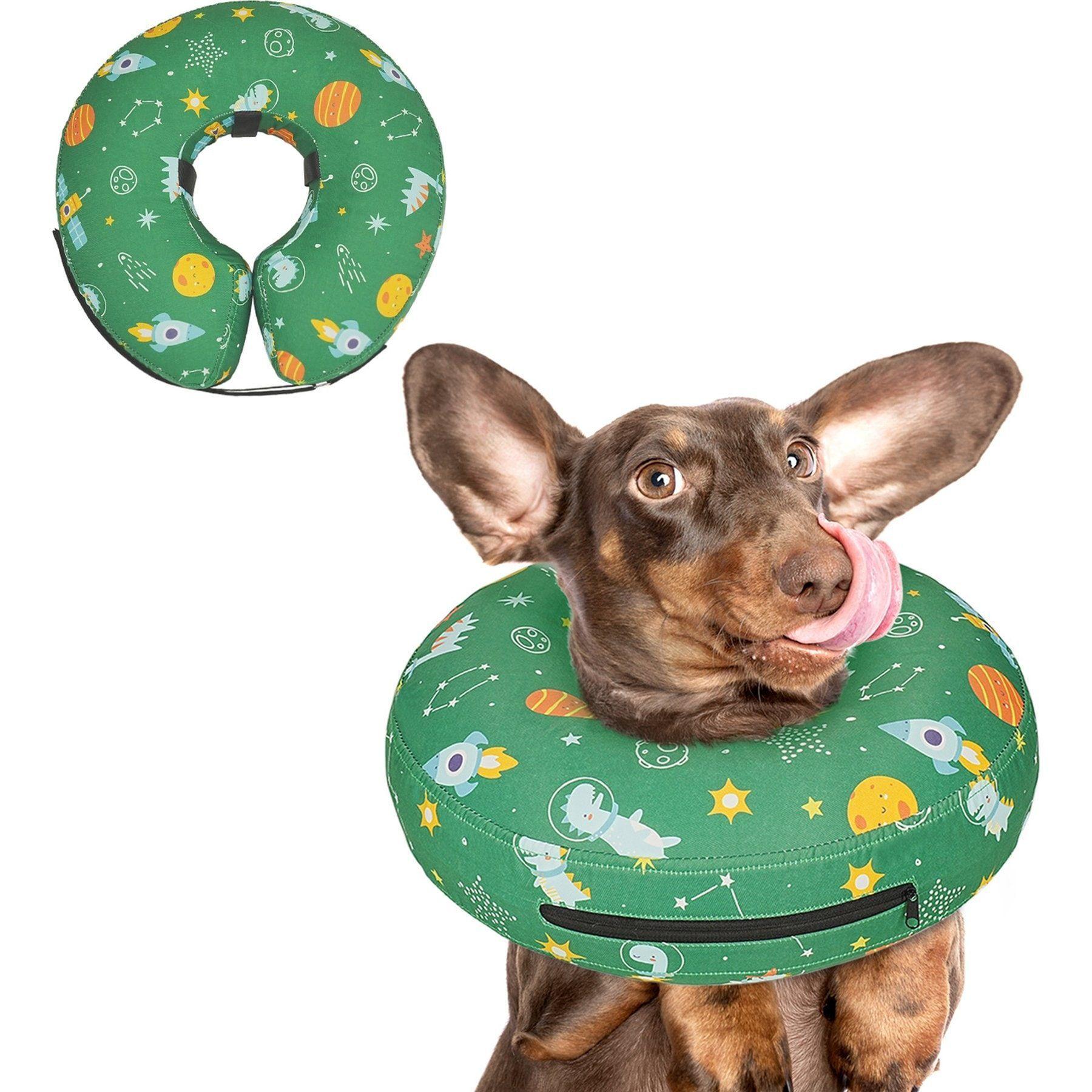
An inflatable recovery collar that keeps a dog from licking ointment off a treated scrape; measure the neck first.
Webvet may earn a commission when you click through to Chewy, at no extra cost to you.
Skin rashes and itch. A rash is not a scrape, and an antibiotic will not calm itchy skin. Oozing red patches may be hot spots, and itch questions belong with hydrocortisone cream for dogs and your vet. Which Neosporin is okay for dogs, then? Only plain Neosporin, and only on a small skin scrape.
Eyes. The Neosporin label says do not use it in the eyes, and that applies to dogs too. A squinting, red, or weeping eye may be a corneal ulcer, which VCA describes as very painful and diagnosed with a fluorescein stain. Eye drops or an ophthalmic ointment for a dog's eye infection come from your vet after that exam, never from the skin tube.
Ears. Neomycin belongs to the aminoglycoside antibiotics, and the Merck Veterinary Manual lists neomycin among those with the greatest potential to damage hearing. Merck's ear disease chapter says the eardrum must be checked before any ear treatment, because that risk rises when it is not intact. An ear infection needs the vet's exam, not Neosporin in the ear.

Deep wounds, bites, and burns. Even for people, the label says to ask a doctor before using it on deep or puncture wounds, animal bites, or serious burns. Those wounds need cleaning that an ointment cannot do.
Pain-relief formulas. Neosporin with pain relief adds a numbing drug. A DailyMed label for a store-brand plus-pain-relief ointment lists pramoxine as an external analgesic. Whether the numbing ingredient is pramoxine or lidocaine, it is one more drug for a dog to lick, and the evidence on dog safety is thin, so plain is the only Neosporin worth considering.
Dog licked or ate Neosporin: what to do and when to call poison control
Neosporin is not very toxic to dogs in small amounts: a dog that licks off a thin layer is unlikely to have more than a mild upset stomach, based on how its ingredients behave in the gut. It is still not safe for dogs to ingest, and a dog that chews into a whole tube needs a call.
Why is a small lick low risk? The Merck Veterinary Manual notes that aminoglycoside antibiotics such as neomycin are poorly absorbed, usually under 10%, from a healthy gut. The bigger issue is the base: the ASPCA says petroleum jelly is a laxative and any ingestion can cause stomach upset.
Larger amounts are a different matter. ASPCA notes that larger ingestions cause more severe stomach upset, and that a dog that vomits petroleum jelly can inhale it and develop aspiration pneumonia. Pet Poison Helpline adds that toxic amounts of antibiotics can cause mild to severe signs, from stomach upset to organ problems.
If your dog ate the tube or licked a lot of Neosporin, work through these steps:
- Take the tube away and check how much is missing, and whether the cap or pieces of the tube are gone too.
- Find the product name and active ingredients on the packaging, especially any pain reliever.
- Call your vet, an emergency clinic, the ASPCA Animal Poison Control Center, or Pet Poison Helpline, and have your dog's weight ready.
- Watch for vomiting, diarrhea, or coughing after vomiting, and report any of these.
The label for people says the same thing in its own words: if swallowed, contact a Poison Control Center right away.
When a dog wound needs a vet instead of an ointment
Bites, punctures, deep or bleeding cuts, and any eye or ear injury need a vet, not an ointment. Go to your vet or an emergency clinic for any of these:
- Any bite. VCA says all bite wounds are considered contaminated or infected, and that a bite can crush tissue under skin that looks unbroken.
- Puncture wounds, which VCA notes can force bacteria deep into the tissues.
- A deep, gaping, or bleeding cut. The Merck Veterinary Manual says the first steps are pressure to stop bleeding and basic bandaging, then the vet.
- Any eye or ear injury.
- Discharge that stays bloody, green, or yellow for several consecutive days, which VCA flags as a reason to call.
- A rash or swelling after an ointment goes on.
- Licking that keeps returning to one spot.
Merck adds that bite wounds can hide serious injuries even when the surface marks look minor, which is why any bite should be examined. A small mark can sit over much larger damage.
Healing speed depends on the wound, and keeping it clean and unlicked is what lets it heal on schedule. The guide to dog wound healing stages shows what normal progress looks like from day to day.

What can I use to heal sores on my dog?
It depends on what caused the sore, so a vet visit comes first. A red, oozing patch that appeared quickly may be a hot spot, which VCA treats with clipping and chlorhexidine cleaning. A sore from constant licking may be a lick granuloma. VCA warns that human medications are often toxic to dogs.
A thick, firm sore on a lower leg that a dog licks over and over is the classic picture of acral lick dermatitis, which VCA describes as starting when a dog obsessively licks at an area. An ointment adds more to lick and does not address why the dog is licking.
What to use instead of Neosporin on dogs: pet wound sprays, gels, cones, and suits
The better plan for most minor wounds is a pet-labeled product plus a way to stop licking. Most of the job is cleaning and protecting the wound, which is where pet products do better than a human antibiotic ointment for dogs.
What can I use on my dog instead of Neosporin?
Use a pet-labeled wound spray and a barrier against licking. A spray such as the Vetericyn Plus Antimicrobial Wound Care Spray for Dogs, Cats, Horses, Birds & Small Pets, 8-fl oz bottle is labeled for cuts, abrasions, and sores on pets. Pair it with a cone or recovery suit so the wound is left alone to heal.

For a wound on the body that a cone cannot protect well, a recovery suit covers the area instead. The Medipaw Recovery Protective Dog Suit, Medium is a 2-piece suit that fastens with Velcro, listed at $50.90 on Chewy when checked in November 2026. This guide to cone alternatives after spay or neuter compares suits and soft collars.
What human wound ointment is safe for dogs?
No human wound ointment is safe for dogs by default. VCA notes a topical antibiotic may be recommended for minor injuries, so if you want an antibiotic ointment for your dog, plain triple antibiotic ointment in a thin layer on a small scrape is the one to ask your vet about, for a dog that cannot lick it.
If you want a gel made for dogs instead, the Vetericyn Plus Antimicrobial Dressing Gel for Dogs, 3-fl oz bottle is labeled steroid-free, listed at $18.99 on Chewy when checked in November 2026.
Can I put Vaseline on my dog's wound?
No, Vaseline is not a good wound treatment for dogs. It adds nothing to clean the wound, VCA advises against putting ointments on a wound unless your vet directs it, and the ASPCA notes that petroleum jelly is a laxative that can upset the stomach once a dog licks it off. A pet wound spray is the better pick.
What about a natural alternative to Neosporin for dogs, or homemade Neosporin? VCA advises against herbal preparations and tea tree oil on wounds unless your vet directs them, because many of these can delay healing. Saline or plain water, a pet-labeled spray, and a cone cover the same ground more safely.
Which antiseptic is best for a dog wound depends on the wound, and for first aid VCA keeps it to saline or water. This dog wound care guide walks through cleaning a wound step by step and when a vet-chosen antiseptic comes in.
Neosporin for dogs questions
Frequently Asked Questions
What happens if my dog licks Neosporin?
Usually nothing serious. A lick of a thin layer may cause a mild stomach upset, such as soft stool, because the base is petroleum jelly. The bigger problem is that the lick undoes the treatment and puts germs from the mouth onto the wound. If your dog ate a lot, call your vet or a poison line.
Can I put Neosporin on my dog's paw?
Yes, but only on a small, shallow scrape, and only if your dog cannot lick it off. Use a cone or a paw cover that you check twice a day. A paw pad that is cut deeply, bleeding, or making your dog limp needs a vet rather than an ointment.
Is Neosporin with pain relief safe for dogs?
It is best avoided. Pain relief versions add a numbing drug such as pramoxine, which is one more ingredient for a dog to lick and swallow, with little dog-specific safety data. If your vet agrees an ointment is reasonable, use plain Neosporin only.
Can I put Neosporin in my dog's ear?
No. Ear problems need a vet exam first, because neomycin can harm hearing if the eardrum is damaged, and only a vet can check the eardrum. Head shaking, odor, or discharge from the ear point to an ear infection that needs ear medication chosen by your vet.
Is Polysporin better than Neosporin for dogs?
Not by much for a skin scrape. Polysporin leaves out neomycin, so it has two antibiotics instead of three, but both share the same petroleum base and both are labeled for people. Licking matters more than the brand, and neither belongs in an ear or eye.
Veterinarian · BVMS MRCVS
Dr. Pippa Elliott, BVMS, MRCVS, is a veterinarian with nearly 30 years of experience in companion animal practice. Dr. Elliott earned her Bachelor of Veterinary Medicine and Surgery from the University of Glasgow. She was also designated a Member of the Royal College of Veterinary Surgeons. Married with 2 grown-up kids, Dr. Elliott has a naughty Puggle named Poggle, 3 cats and a bearded dragon.


