Hydrocortisone Cream for Dogs: Is It Safe, and When to Skip It
A pet-labeled hydrocortisone cream or spray can calm a small itchy patch for a few days if the dog cannot lick it off, but it does not fix the cause and is wrong for infected skin, open wounds, ears, and eyes. When it helps and what to use instead.

BVMS MRCVS
Medically reviewed by Dr. Pippa Elliott, BVMS MRCVS · Last reviewed

This article contains affiliate links. Webvet may earn a commission when you buy through them, at no extra cost to you.
Hydrocortisone cream for dogs: is it safe, and when a vet says use it or skip it
Hydrocortisone cream for dogs is generally safe for brief use on a small itchy patch of intact skin, ideally a pet-labeled cream or spray and ideally after your vet has looked at the spot. The dog must not be able to lick it off. It calms itch and redness for a while, but it does not treat the cause of the itching.
Skip hydrocortisone cream for dogs entirely on infected, oozing, or open skin, inside the ear canal, and near the eyes. Never use it on a pregnant dog or within two weeks of allergy testing, according to VCA Animal Hospitals, and never reach for a human cream that also contains a pain reliever or other active ingredient. Itch that spreads or keeps returning needs a vet.
- 1Hydrocortisone is a low-potency topical corticosteroid that can calm a small, itchy patch of intact skin for a short course.
- 2Know when a pet-labeled cream helps: a single bite or a small allergic patch on a dog that cannot lick the spot.
- 3On human cream versus pet-labeled sprays: pet-labeled products carry animal directions, and any human product needs your vet's okay first.
- 4Skip it on infected hot spots, open wounds, inside ears, and near eyes.
- 5Itch that spreads, oozes, or keeps coming back needs a vet diagnosis, not more cream.

VCA Animal Hospitals describes topical hydrocortisone as "a low potency, topical steroid used to treat inflammatory conditions or itchiness." Low potency is the reason vets are comfortable with it for small, short jobs. The Merck Veterinary Manual says topical steroids are best suited to acute flares and localized lesions, which is another way of saying small and short.
So can dogs use hydrocortisone cream? Yes, on the right problem. Is it good for dogs with any itch? No. It is a symptom tool, and Pet Poison Helpline puts it plainly: the cream gives temporary relief and does not address the underlying cause.
When the spot is small, dry, and clearly itchy, and the dog can be kept off it, a pet-labeled cream is a reasonable first step for a few days.
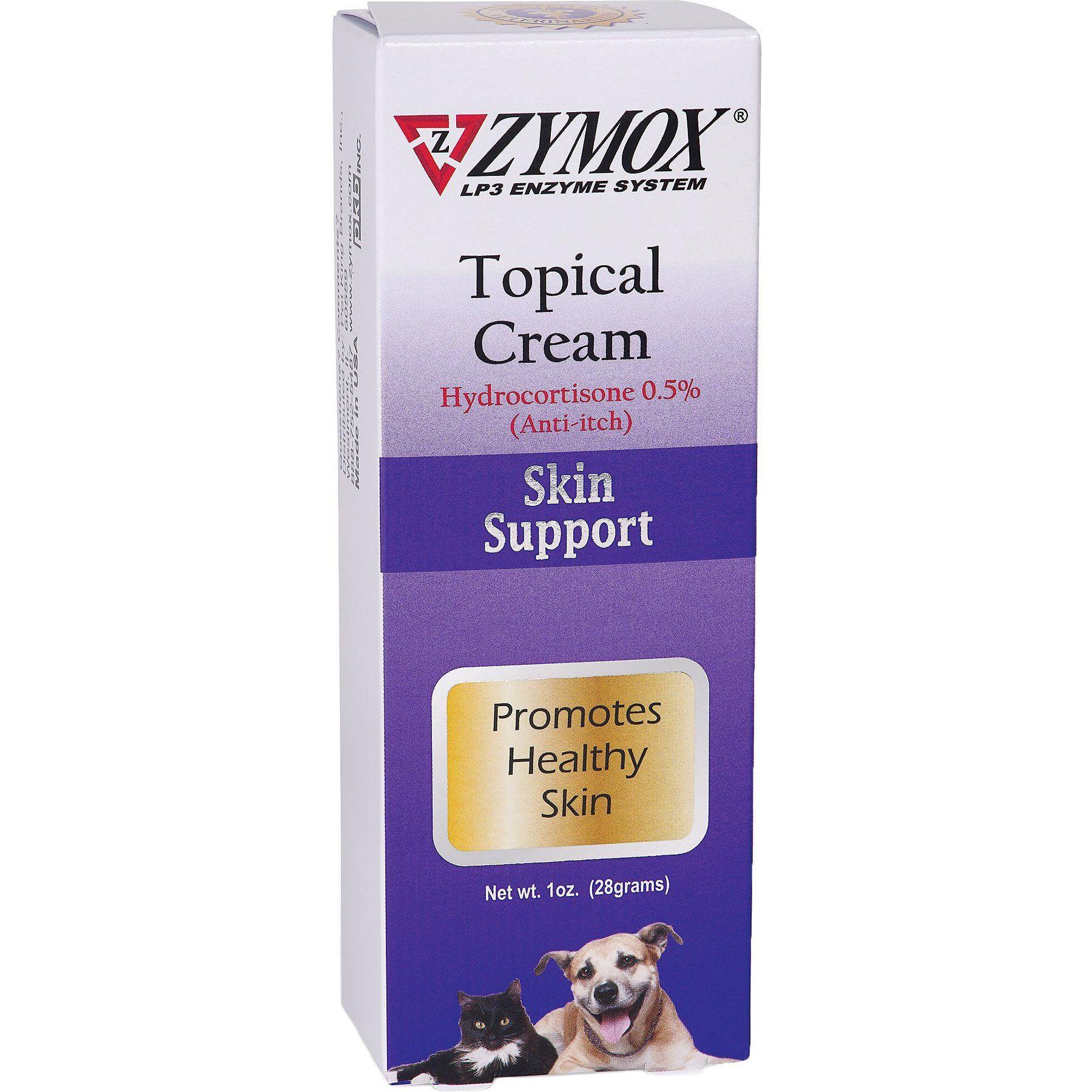
A pet-labeled 0.5% hydrocortisone cream for a small, itchy patch of intact skin on a dog that cannot lick it.
Webvet may earn a commission when you click through to Chewy, at no extra cost to you.
The side effects of hydrocortisone cream on dogs are usually minor when it stays on a small area for a few days. The bigger practical risks are licking, which means swallowing the cream, and using it on skin that is actually infected. VCA lists these side effects:
- a skin reaction where it is applied
- fragile skin, small skin bumps, and blackheads with long-term use
- hormone suppression, which is rare

 Sponsored
Need a prescription or refill for your dog?
A licensed vet at Dutch can assess your dog over video and prescribe treatment when it's appropriate, delivered to your door.
Use code Pets60
Plans start at $12/month · covers up to 5 pets
- Licensed vets in most states
- Rx for 150+ conditions
- 4.7 on Trustpilot
Human hydrocortisone cream vs pet-labeled hydrocortisone creams and sprays
A pet-labeled hydrocortisone cream or spray is the safer first choice because it carries directions for dogs; an over-the-counter 1% human cream is the same steroid but needs your vet's okay first. A DailyMed hydrocortisone cream label states that each gram of the 1% cream provides 10 mg of hydrocortisone, that it is for external use only, and that contact with the eyes should be avoided. Pet-labeled products come in more forms, and some use a lower strength.

VCA notes that topical hydrocortisone comes as a cream, ointment, lotion, spray, shampoo, wipe, gel, foam, or solution. The active ingredient is the same; the form changes how easily it reaches the skin. On a hairy dog, a spray gets through the fur without heavy rubbing, while a cream or ointment suits a short-haired or bare patch.
The Zymox Topical Cream with Hydrocortisone 0.5% for Dogs & Cats, 1-fl oz bottle is a pet-labeled cream, listed at $15.99 on Chewy when checked in November 2026. Its catalog listing describes an enzymatic topical cream with 0.5% hydrocortisone for dogs and cats, half the strength of a typical 1% OTC human cream.
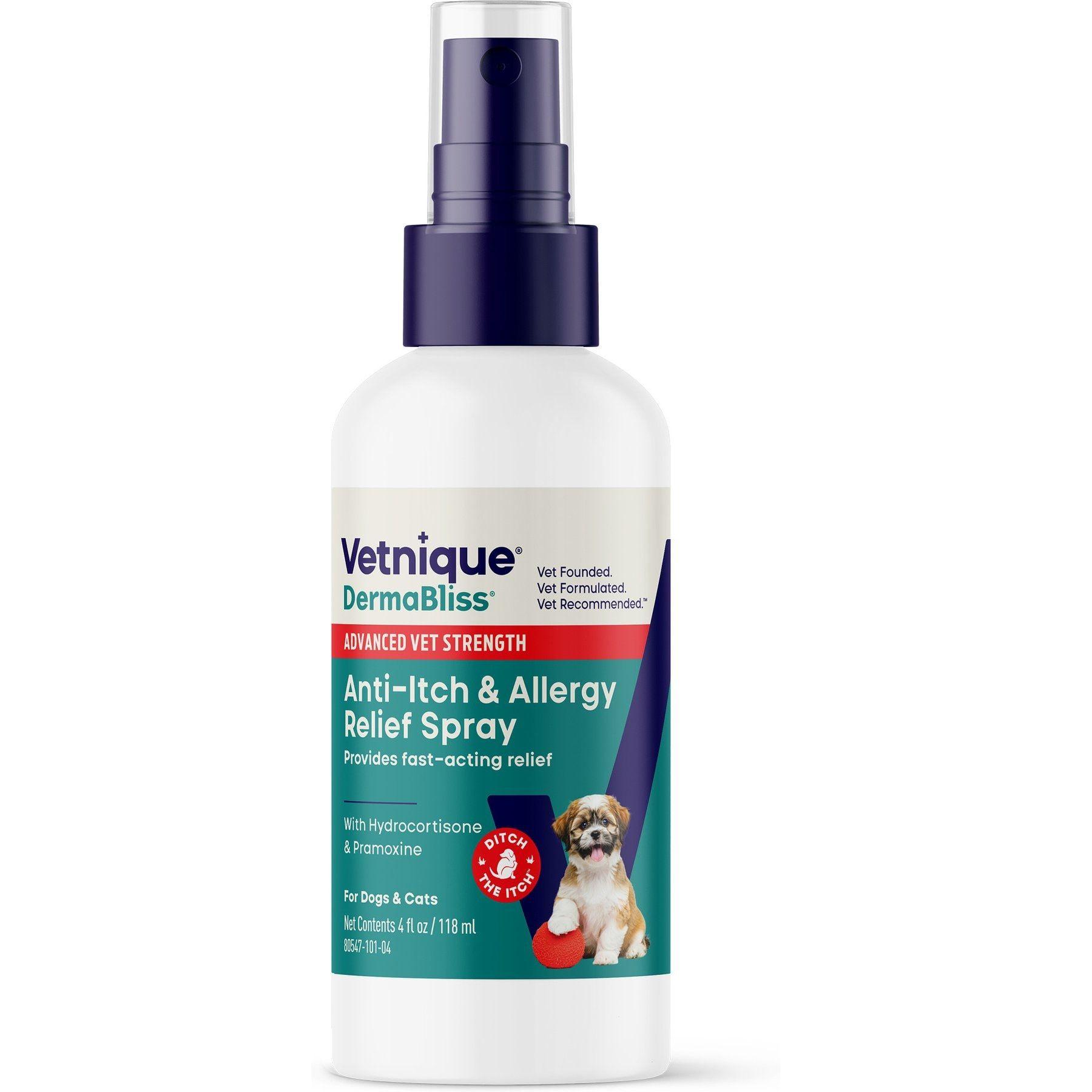
A fragrance-free, pet-labeled hydrocortisone spray made with oat extract for a small itchy area under fur.
Webvet may earn a commission when you click through to Chewy, at no extra cost to you.
Why start with a pet-labeled product? The Merck Veterinary Manual notes that over-the-counter topical corticosteroids are "often in combination with other active ingredients." On any label, check for:
- hydrocortisone as the only steroid
- no added pain reliever; the ASPCA warns that compounded creams can hold potent NSAIDs such as diclofenac and flurbiprofen
- no added numbing agent or antibiotic unless your vet chose that combination; Merck says products with extra ingredients such as pramoxine or lidocaine must be considered separately
- directions written for dogs, so you are not guessing from a human leaflet
Lotions and ointments follow the same rules as cream: a thin layer, a small area, a short course, and no licking. If a product pairs hydrocortisone with an antibiotic or a numbing agent, ask your vet whether that combination suits the spot, since each added ingredient is one more thing a licking dog swallows.
Can I use regular hydrocortisone cream on my dog?
Only if your vet says so for that spot. A plain 1% human hydrocortisone cream with no other active ingredients is the same low-potency steroid, but VCA advises consulting your veterinarian before using any human medication on a dog. Human tubes often combine other actives, and the label directions were not written for an animal that licks.
What human anti-itch cream can I use on my dog?
None without your vet's okay first. If your vet approves one, it is usually a plain hydrocortisone cream with no other active ingredients, used thinly on a small patch. Avoid human creams with added pain relievers such as diclofenac, numbing agents, or antibiotics, because the extra ingredient is what a licking dog swallows.
What is the best hydrocortisone cream for dogs?
The best hydrocortisone cream for dogs is a pet-labeled one with hydrocortisone as its only steroid, used on the right problem. No primary source ranks brands. Zymox makes a 0.5% cream for small patches, and the Vetnique Labs Dermabliss Anti-Itch & Allergy Relief Hydrocortisone Fragrance-Free Dog & Cat Skin Spray, 4-fl oz bottle is a fragrance-free spray made with oat extract.
The Dermabliss spray is listed at $22.99 on Chewy when checked in November 2026. A spray suits a dog with fur over the patch. When your vet prefers to avoid a steroid, a pramoxine spray such as Davis Pramoxine Anti-Itch Dog & Cat Spray, 8-fl oz bottle is a non-steroid alternative; Davis lists colloidal oatmeal among its ingredients.
 Sponsored
Vet care that's always there
Unlimited video calls and messaging with licensed vets for less than a typical vet visit. One membership covers up to five pets.
Use code Pets60
Plans start at $12/month · covers up to 5 pets
- Licensed vets in most states
- Rx for 150+ conditions
- 4.7 on Trustpilot
How to use hydrocortisone on an itchy patch or rash: small areas, short courses, and no licking
Hydrocortisone works best on a defined spot: a bug bite, a small allergic patch, or a dry rash that is red but not broken or weeping. It is not meant for a dog that is itchy all over. For widespread itchy skin, a vet visit comes before any cream.
Good candidates for a short course, matching Merck's localized-lesion advice:
- a single itchy insect bite on the belly or leg
- a small, flat, red allergic patch with no broken skin
- a patch your vet has already examined and approved for home treatment
Poor candidates include anything bleeding, weeping, crusted, smelly, or spreading, plus itch across large areas of the body.

When your vet has agreed it suits the spot, these steps build on VCA guidance:
- Check the skin is intact, with no pus, crusts, or open wound under the fur.
- Clean and dry the area gently.
- Wear gloves or wash your hands after applying, as VCA advises.
- Apply a thin layer only to the itchy patch, never across large areas of skin.
- Keep it away from the eyes.
- Prevent licking or chewing for at least 20 to 30 minutes, per VCA.
- Stop if the skin gets redder or more irritated; the DailyMed label says topical steroids should be discontinued if irritation develops.
How long is a short course? Hydrocortisone should start working within 1 to 2 hours, according to VCA. For prescription topical steroids in allergic dogs, the Merck Veterinary Manual table describes short-term use of 7 to 14 days. Your vet sets the length for your dog.
If a rash has not clearly improved after a few days, or new spots appear, the cream is covering a problem rather than solving it. That is the point to stop and book an exam.
Some dogs should skip a steroid entirely. VCA says topical hydrocortisone should not be used in pregnant dogs or within two weeks of skin or blood allergy testing, which matters if your vet is planning allergy tests. Pramoxine is not a workaround before testing: VCA recommends a two-week withdrawal before intradermal allergy testing for it as well, so ask your vet what is safe in that window. For other dogs whose vet prefers to avoid a steroid, a non-steroid pramoxine spray is an option for a small itchy spot.
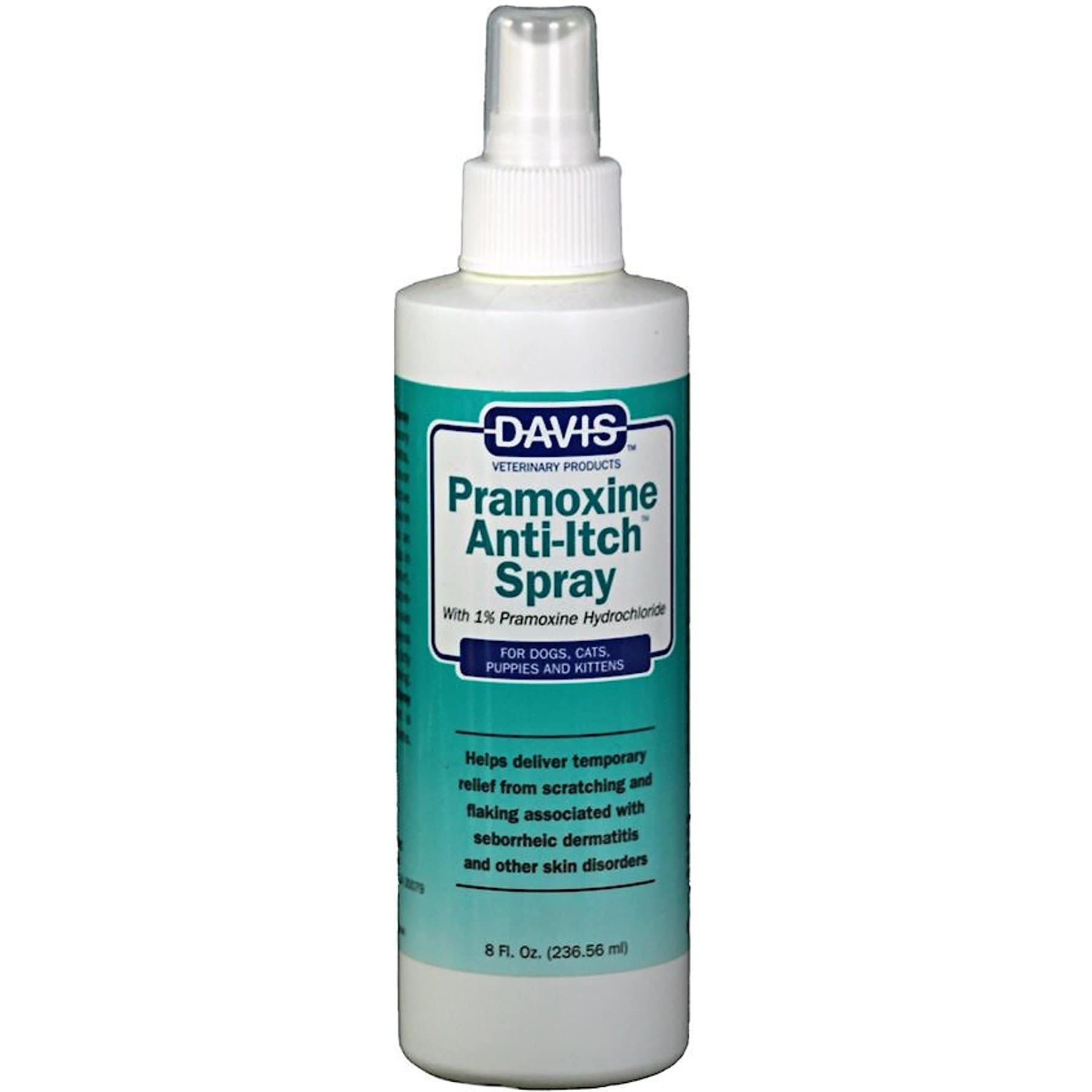
A non-steroid pramoxine anti-itch spray for a small itchy spot when your vet prefers to avoid a steroid.
Webvet may earn a commission when you click through to Chewy, at no extra cost to you.
Stopping the dog from licking is the step most owners skip. VCA describes an Elizabethan collar as a way "to prevent an animal from licking or chewing at a surgery site, wound, or dressing," and lists soft fabric cones, donut-shaped collars, and recovery suits as alternatives. Supervise closely for the first few hours while the dog adjusts.
A few practical points help the cone do its job:
- Keep it on while the product dries and for as long as your vet advises; VCA notes some dogs with chronic skin problems need a collar long-term.
- If it comes off, supervise the dog until it is back on, especially at meals.
- For a spot on the body, VCA's hot spot guidance also mentions covering the area with a sock or bandage to stop self-trauma.
- Ask your vet which style fits your dog if a hard cone is not tolerated.
Where hydrocortisone does not belong: infected hot spots, open wounds, ears, and eyes
| Skin problem | Hydrocortisone verdict | Better first step | See a vet when |
|---|---|---|---|
| Single bug bite | Reasonable for a few days if the dog cannot lick it | Clean it and keep the dog off it | Swelling spreads or the dog seems unwell |
| Small allergic patch | Reasonable short course on intact skin | Pet-labeled cream or spray, cone if needed | It spreads or returns after stopping |
| Raw, moist hot spot | Skip; the skin is open and often has infection | Cone and a vet visit for clipping and cleaning | Same day, since hot spots grow fast |
| Pimply or crusty rash | Skip; pustules and crusts suggest infection | Vet exam and skin cytology | Before any cream goes on |
| Itchy paws | Hard to use; dogs lick paws constantly | Vet check for allergy or infection | Licking, redness, or smell lasts days |
| Itchy or smelly ear | Skip; no cream or drops in the canal | Vet ear exam to check the eardrum | Head shaking, discharge, or odor |
| Open sore or wound | Skip; open skin can pick up infection | Gentle cleaning and a vet check | Deep, bleeding, or not healing |
| Itch near the anus or tail base | Skip without a diagnosis | Flea check and vet exam | Scooting, licking, or swelling |
A moist hot spot is the classic place owners reach for hydrocortisone, and the wrong one. VCA describes hot spots, also called pyotraumatic dermatitis, as red, inflamed lesions that "can dramatically increase in size in a very short period." VCA's first-aid advice starts with stopping the self-trauma, clipping the hair, and disinfecting the skin, and vets may then add topical or oral treatment.
Stopping that self-trauma usually means a cone. A soft cone such as the Kuoser Soft Cone Adjustable Recovery Dog Elizabethan Collar/E-Collar, Blue, Medium has a soft cotton inner layer and a clear, waterproof upper layer that does not block vision. It is listed at $18.89 on Chewy when checked in November 2026; measure your dog first.

A soft, adjustable cone that keeps a dog from licking a treated spot while the product dries.
Webvet may earn a commission when you click through to Chewy, at no extra cost to you.
A non-steroid product such as Vetericyn Plus Antimicrobial Hot Spot Spray for Dogs, Cats & Small Pets, 8-fl oz bottle, listed at $23.99 on Chewy when checked in November 2026, is a hot spot spray to ask your vet about. WebVet explains causes and care in what hot spots on dogs are and how they are treated.
Other places hydrocortisone does not belong:
- Open wounds and scrapes. They need cleaning and, if deep, a vet, not a steroid. Antibiotic ointments raise their own questions, covered in Neosporin for dogs.
- Ears. No hydrocortisone cream or human hydrocortisone ear drops in the canal. VCA Animal Hospitals says a dog must be examined to ensure the eardrum is intact, because with a ruptured eardrum certain medications can cause hearing loss. VCA also reports allergies are involved in as many as 43% of ear infection cases.
- Paws. Dogs lick paws constantly, so most of the cream is swallowed, and itchy paws are a common sign of allergy.
- Around the anus. Itch at the tail base and anus can point to fleas or anal gland trouble, which a cream will not fix, and the spot is easy to lick.
- Eyes. VCA says to avoid contact with the eyes, and the human label says the same.
Dog licked or ate hydrocortisone cream: what to do and when to call poison control
What if my dog licks off hydrocortisone cream?
A dog that licks off a thin layer of plain hydrocortisone cream usually has mild or no signs. Pet Poison Helpline notes dogs swallow the cream when they lick or groom the treated area. Wipe off what is left, keep the dog off the spot, and watch for stomach upset over the next day.
Is hydrocortisone cream toxic to dogs?
Plain hydrocortisone cream has low toxicity for dogs, but sources frame the risk differently. The Merck Veterinary Manual says signs after a steroid cream is eaten can generally be managed at home. Pet Poison Helpline says signs range from mild to severe depending on the amount and the ingredients.
Watch for these signs, which Pet Poison Helpline lists after a dog swallows cortisone cream:
- panting or pacing
- increased hunger or thirst
- vomiting or diarrhea
- belly pain
- black, tarry stool
Merck advises giving free access to water and more chances to urinate, because steroids can increase thirst and urination. Black, tarry stool, repeated vomiting, or a dog that seems unwell are reasons to call your vet or an emergency clinic straight away.
When you call the ASPCA Animal Poison Control Center or Pet Poison Helpline, have the tube in hand. The other ingredients matter as much as the hydrocortisone, and the label tells the team what they are dealing with. VCA also advises calling your veterinary office immediately with any suspected overdose or adverse reaction.
When itchy skin needs a vet diagnosis instead of a cream

Itchy skin needs a vet instead of a cream when it spreads, oozes, smells, involves the ears, or returns as soon as a short course stops. "Itching is a sign, not a diagnosis or specific disease," says the Merck Veterinary Manual. Most itching in dogs comes from parasites, infections, or allergies, and Merck adds that successful treatment depends on identifying the underlying cause. WebVet walks through those causes in why your dog is so itchy.
Skin that needs a diagnosis rather than a cream usually shows one of these patterns:
- pimples with pus, circular crusts, flaky patches, or a musty smell, which can mean pyoderma, a bacterial skin infection
- itch on the paws, face, ears, armpits, or belly, the areas Merck lists as most often affected by atopic dermatitis
- itch and crusty bumps on the lower back, tail base, and thighs, the classic pattern of flea allergy in Merck's description
- head shaking, ear scratching, discharge, or odor from the ears
- a raw spot that grows fast, or any patch that bleeds or oozes
- itch that comes back as soon as a short course of cream stops
Pyoderma is a good example of why a steroid alone is the wrong tool. VCA Animal Hospitals says pyoderma is often secondary to allergic dermatitis and is typically treated with antibiotics for at least three to four weeks. A cream can quiet the redness while the infection continues underneath.
Atopic dermatitis is a lifelong condition that Merck says needs ongoing management, and secondary Staphylococcus and Malassezia skin and ear infections are common in these dogs. Learn the patterns in dog skin allergies and flea allergy dermatitis in dogs, where flea control is the treatment that matters most.
Non-steroid itch relief for dogs: pramoxine sprays, cones, medicated baths, and skin support

Non-steroid itch relief is the right choice for dogs that should not have a steroid, and a useful partner for those that can. The main options:
- Pramoxine sprays. VCA Animal Hospitals calls pramoxine a topical anesthetic that reduces pain and itching temporarily. Keep the dog from licking for at least 30 minutes and avoid the eyes.
- Cones and recovery suits. They stop the lick-itch cycle that keeps a patch inflamed.
- Medicated baths. For allergic dogs, Merck recommends weekly to biweekly baths, and antimicrobial shampoos can reduce secondary infections.
- Omega-3 skin support. VCA says omega-3s EPA and DHA help regulate inflammation and itch in the skin, and work best when causes like fleas are controlled.
A soap-free medicated shampoo such as Virbac ALLERMYL Piroctone Olamine Medicated Dog Shampoo, 8-fl oz bottle, listed at $31.21 on Chewy when checked in November 2026, is made for allergic skin. More options are compared in dog shampoo for itchy skin.
For longer-term support once your vet knows the cause, a fish oil such as Grizzly Omega Health Omega-3's Dog Supplement, 16-fl oz bottle supplies EPA and DHA from wild Alaskan pollock and salmon oil. It is listed at $26.99 on Chewy when checked in November 2026. Merck says fatty acids help as add-on therapy and can take up to 2 months to work, so they are not an itch cure.
For mild dermatitis at home, gentle bathing, flea control, and keeping the dog off the itchy spot are the usual steps; WebVet covers them in home remedies for dog itchy skin. VCA advises asking your vet about omega-3 amounts, since many dog foods already include them.
What is the fastest acting dog itch relief?
For a small spot, topical products act fastest. VCA says hydrocortisone should begin working within 1 to 2 hours, and pramoxine takes effect shortly after application. For widespread itch, prescription drugs from your vet act quickest: Merck describes oclacitinib as a fast-acting anti-itch drug and lokivetmab as having a quick onset.
What is the best OTC itch cream for dogs?
There is no single best OTC itch cream for dogs, because the right product depends on the skin problem. A pet-labeled hydrocortisone cream suits a small inflamed patch, while a pramoxine spray suits dogs that should avoid steroids. Antihistamine creams and pills are not a reliable swap: Merck says current research does not support antihistamines for itch relief in dogs.
Hydrocortisone cream for dogs questions
Frequently Asked Questions
Is hydrocortisone spray better than cream for dogs?
A spray is often easier on a furry dog because it reaches the skin without rubbing and can be kept to a small area. Cream suits a short-haired or bare patch. Either way, the dog must not lick the spot for at least 20 to 30 minutes, so a cone may still be needed.
Can I put hydrocortisone cream on my dog's paws?
Paws are a poor place for it. Dogs lick their paws constantly, so most of the cream gets swallowed instead of working. Itchy paws are also one of the most common signs of allergy, which needs a diagnosis rather than repeated cream.
Can hydrocortisone cream be used in a dog's ear?
No. Nothing should go into the ear canal until a vet has checked the eardrum, because some medications can damage hearing if it is ruptured. Head shaking and discharge usually mean an ear infection, which needs the right prescription drops.
Does hydrocortisone cream help a dog rash?
It can calm a small, dry rash for a few days, but it does not treat the cause. A rash with pimples, crusts, or a smell may be a bacterial infection, and a rash that spreads or keeps returning needs a vet to find what is behind it.
What are the side effects of hydrocortisone cream on dogs?
Short courses on small areas rarely cause problems. With long-term use, VCA lists fragile skin, small bumps, and blackheads, and Merck lists skin thinning (cutaneous atrophy) for topical steroids such as triamcinolone. Licking adds stomach upset, thirst, and increased urination from swallowed cream.
Veterinarian · BVMS MRCVS
Dr. Pippa Elliott, BVMS, MRCVS, is a veterinarian with nearly 30 years of experience in companion animal practice. Dr. Elliott earned her Bachelor of Veterinary Medicine and Surgery from the University of Glasgow. She was also designated a Member of the Royal College of Veterinary Surgeons. Married with 2 grown-up kids, Dr. Elliott has a naughty Puggle named Poggle, 3 cats and a bearded dragon.


