Miralax for Cats: Dosage, Safety, and How It Helps Constipation
Miralax (polyethylene glycol 3350) is a laxative many vets use for constipated cats, at a dose set for the cat and mixed into wet food. How it works, how it compares with lactulose and fiber, side effects, and why a straining cat may be blocked.

BVMS MRCVS
Medically reviewed by Dr. Pippa Elliott, BVMS MRCVS · Last reviewed

This article contains affiliate links. Webvet may earn a commission when you buy through them, at no extra cost to you.
Miralax for cats is generally safe when a veterinarian sets the dose. Miralax is polyethylene glycol 3350, an osmotic laxative that holds water in stool, and vets commonly use it for constipated cats, mixed into wet food at an amount matched to the cat. It should only be started after a vet has confirmed the problem is constipation.
Never give Miralax to a cat straining in the litter box with little or no urine (a possible urinary blockage, an emergency, especially in males), a cat with a suspected intestinal blockage, or a cat that is vomiting, not eating, dehydrated, or has kidney disease, until a vet has examined it.
 Sponsored
Need a prescription or refill for your cat?
A licensed vet at Dutch can assess your cat over video and prescribe treatment when it's appropriate, delivered to your door.
Use code Pets60
Plans start at $12/month · covers up to 5 pets
- Licensed vets in most states
- Rx for 150+ conditions
- 4.7 on Trustpilot
Miralax for cats: is it safe, and when a vet would use it
Yes, Miralax is safe for most constipated cats when a vet has checked the cat and chosen the dose. The active ingredient, polyethylene glycol 3350 (PEG 3350), is described by VCA Animal Hospitals as a laxative that keeps water in the colon to soften stools. VCA also notes that its use in cats is off label, meaning it is a human product a vet directs for a pet.
The product sold in pharmacies is a human over-the-counter drug. Its federal label on DailyMed lists its purpose as an osmotic laxative, and every dosing direction on the box is written for people. Giving cats Miralax at a human-style amount is not how vets use it.
- 1Miralax (polyethylene glycol 3350) is an osmotic laxative many vets use for constipated cats, mixed into wet food at a dose the vet sets.
- 2When a vet suggests Miralax, it is usually for mild to moderate constipation in a cat that is eating, drinking, and passing some urine.
- 3How it softens stool: it holds water inside the colon so the stool stays softer and passes more easily.
- 4A cat straining with little or no urine may have a urinary blockage, which is an emergency and not a laxative problem.
- 5Cats that are vomiting, not eating, dehydrated, or have kidney disease need a vet check before Miralax is started.
When a vet suggests Miralax
Miralax is a common choice for constipated cats. VCA's constipation guide lists PEG 3350 among the laxatives commonly prescribed for constipated cats. Vets tend to reach for it in these situations:
- A cat with hard, dry, infrequent stool that is otherwise bright and eating
- A cat with repeat constipation that needs a daily stool softener the cat will accept in food
- A cat recovering after a vet has cleared an impaction, to keep stool soft afterward
- A cat whose constipation is linked to slow gut movement, alongside diet changes
For mild, hair-related hard stools, a vet may suggest a lubricant gel before or alongside Miralax. The Cat Lax Cat Supplement, 2-oz tube is a petroleum-based gel that coats swallowed hair so it passes more easily, and it adds vitamin E and cod liver oil.
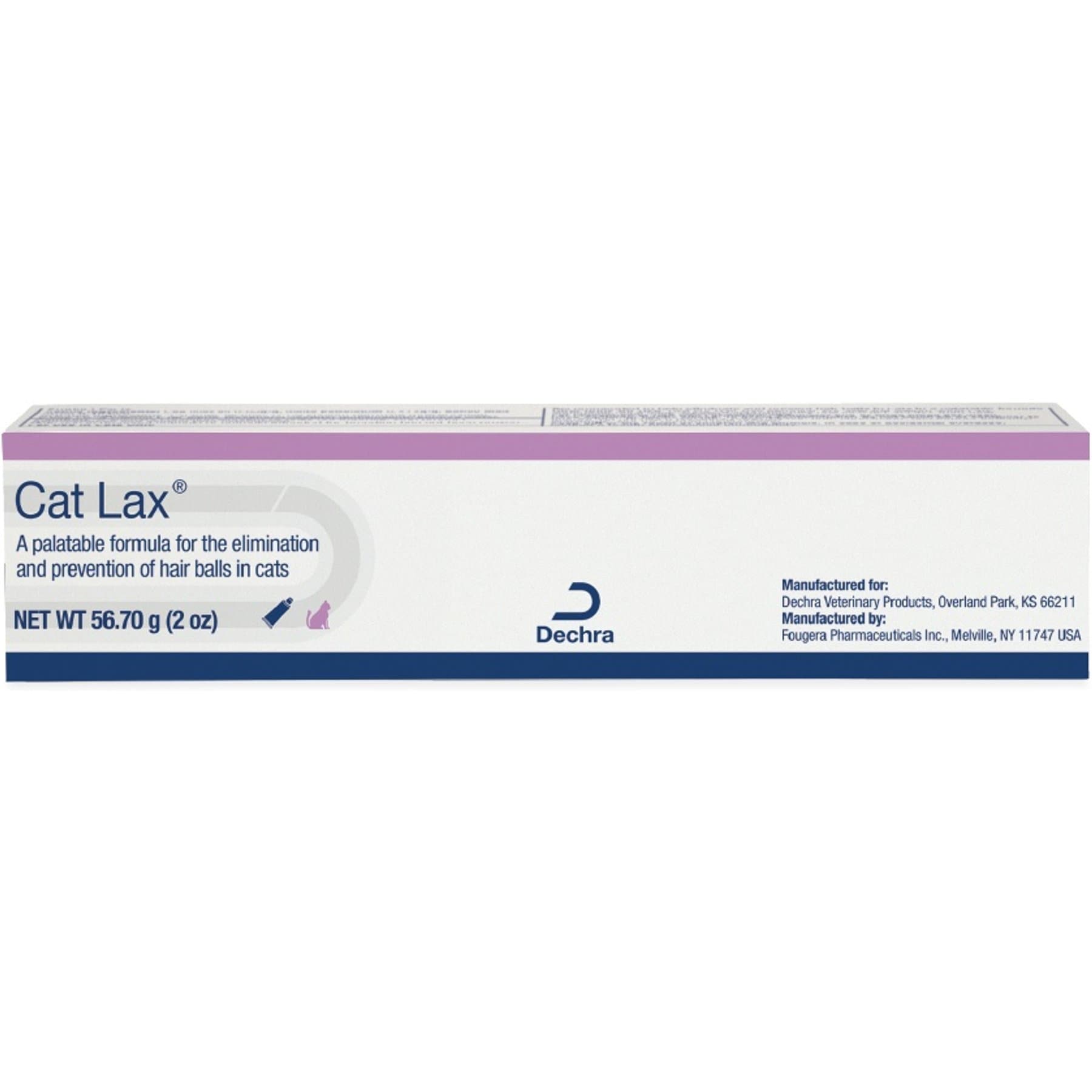
A cat-labeled lubricant gel your vet may suggest for mild, hair-related hard stools.
Webvet may earn a commission when you click through to Chewy, at no extra cost to you.
Who should not get Miralax without a vet exam
The safety question turns on what is causing the straining. VCA says PEG 3350 should not be used in pets with an intestinal blockage or obstruction. Straining also looks similar for two very different problems: VCA notes that constipated cats may go in and out of the box frequently, similar to cats with urinary disorders.

- A cat straining in the litter box with little or no urine, especially a male cat
- A cat that is vomiting, will not eat, or seems lethargic
- A cat with kidney disease or signs of dehydration
- A cat already on other laxatives, diuretics, or opioid pain medicines
- A kitten, a very small cat, or a cat with megacolon
The Merck Veterinary Manual notes that some constipated cats are quite ill, with lethargy, depression, loss of appetite, and vomiting. Those cats need an exam and often fluids, not a powder at home.
Not sure the problem is constipation at all, or wondering which gentle steps can help a cat pass stool? WebVet's guide to constipation in cats: causes, symptoms, and relief options covers the signs to watch for and the home relief steps vets suggest.
How Miralax works in a constipated cat, and how it compares with lactulose and fiber
Miralax is an osmotic laxative. VCA explains that PEG 3350 keeps water in the colon to soften stools and increase the frequency of stool production. The colon normally pulls water out of stool, so a cat whose stool sits too long ends up with dry, hard feces. Holding water in place reverses that.
Lubricant gels work differently: a petroleum-based gel such as Cat Lax coats stool and swallowed hair rather than drawing in water. Merck describes white petroleum as a lubricant laxative whose effects are moderate and useful only in mild constipation, so a gel like this suits hair-related hard stools rather than a cat that has not passed stool for days.
Miralax vs lactulose for cats
Lactulose and Miralax both hold water in the bowel. Merck states that lactulose osmotically retains water in the bowel to soften fecal material, which is the same basic idea as PEG 3350. The differences that matter to an owner are practical:
- Taste: VCA says cats generally do not like the taste of lactulose, while PEG 3350 is a powder that mixes into food.
- Access: Lactulose solution carries a human prescription label on DailyMed, so a vet must prescribe it; Miralax is sold over the counter.
- Timing: VCA says lactulose should take effect within 1 to 2 days.
- Evidence in cats: A Journal of Feline Medicine and Surgery study found all six healthy cats ate food containing a PEG 3350 solution with electrolytes for 4 weeks without changes in weight or food intake.
Neither is better for every cat. Whether a cat gets lactulose or Miralax is a choice the vet makes based on palatability, how well the cat accepts the dose, and the cat's other conditions. Giving lactulose and Miralax together is a vet decision too: VCA lists other laxatives among the drugs to use with caution alongside PEG 3350.
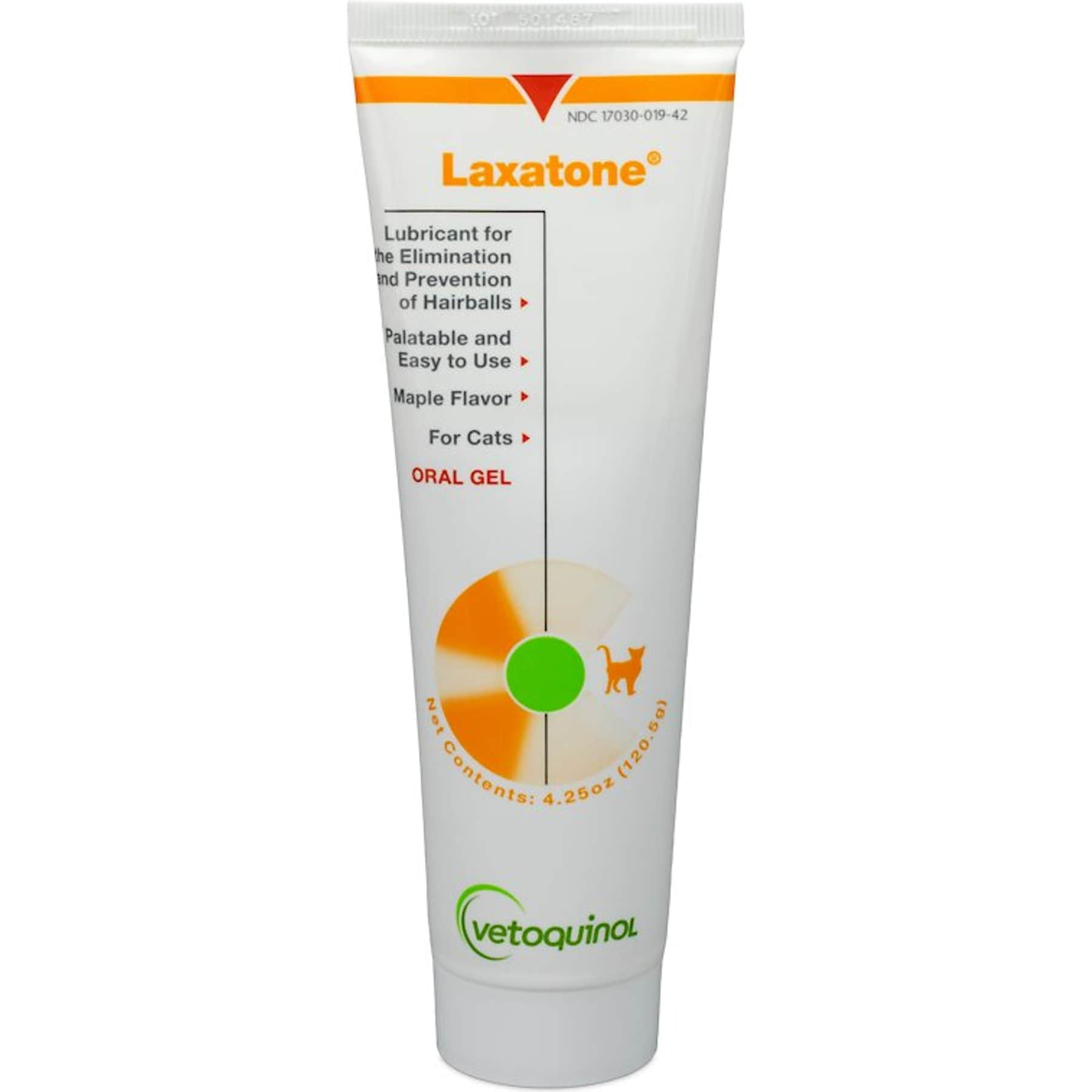
A maple-flavored hairball lubricant gel for cats whose hard stools are tied to swallowed hair.
Webvet may earn a commission when you click through to Chewy, at no extra cost to you.
For a cat whose hard stools come with hairballs, the Vetoquinol Laxatone Gel Hairball Control Supplement for Cats, 4.25-oz tube is a maple-flavored oral lubricant gel. It is listed at $16.99 on Chewy when checked in November 2026. WebVet's guide to cat hairballs covers grooming and diet steps that cut down on swallowed hair.
Miralax vs Metamucil or Benefiber for cats
Human fiber powders such as Metamucil or Benefiber add fiber rather than holding water by osmosis. Merck states that dietary fiber is preferable because it is well tolerated, more effective, and more physiological than other laxatives. Psyllium is one of the fiber sources the Cornell Feline Health Center names for cats.
That does not make a human fiber product a safe swap without advice. Cornell warns that too much soluble fiber can produce overly liquid stools, and fiber added to a dehydrated cat's diet can make stool bulkier without making it softer. Your vet can tell you whether Miralax or Metamucil, or both, fits your cat.
Cisapride and Miralax for cats
Cisapride is a different kind of drug. Merck says it stimulates colonic propulsive motility in cats, so it helps the colon push stool along while a laxative keeps the stool soft. Vets sometimes pair the two in cats with repeat constipation. Merck also notes that cisapride must be compounded in the US, so it always comes through a vet.
What's a safe laxative for a cat?
The safest laxative for a cat is the one a vet chooses after ruling out a blockage. VCA lists PEG 3350 among the laxatives commonly prescribed for constipated cats, and lactulose and fiber are other standard options. Avoid oral mineral oil: Merck warns it carries a risk of aspiration pneumonia and limits it to rectal use by a vet.
SponsoredVet care that's always there
Unlimited video calls and messaging with licensed vets for less than a typical vet visit. One membership covers up to five pets.
Use code Pets60
Plans start at $12/month · covers up to 5 pets
- Licensed vets in most states
- Rx for 150+ conditions
- 4.7 on Trustpilot
How a vet decides a Miralax dose for a cat, and how to mix it into food
The right amount of Miralax depends on the cat's stool, not a fixed number. The Merck Veterinary Manual lists polyethylene glycol 3350 at 1/8–1/4 teaspoonful by mouth or in food every 12 hours, adjusted to achieve soft stool consistency. That is a general small-animal laxative entry, and the vet decides whether and how it applies to your cat.
The same rule applies to who must never get it: a cat straining with little or no urine, a cat with a suspected intestinal blockage, or a cat that is vomiting, not eating, or dehydrated should not be dosed at home. The vet examines first, then sets the amount and the schedule.
Why there is no Miralax dosage chart by weight
No veterinary reference gives a Miralax dose by body weight for cats. In the feline PEG 3350 study, the authors found that effective doses varied widely between cats, so individualized dosing is important.
In practice, that means the vet starts low and adjusts the dose by stool consistency over the following days. The goal is a soft, formed stool, not diarrhea. A chart by pound would push some cats into loose stool and leave others still constipated.
The human packet is a poor guide. The MiraLAX label on DailyMed puts 17 g of polyethylene glycol 3350 in one packet, dissolved in 4 to 8 ounces of beverage for a person. That amount is built for an adult human, which is why a vet sets a far smaller cat-specific amount instead.

Miralax powder, liquid, and PEG 3350 products
VCA says PEG 3350 is given by mouth as a powder or a liquid. Vets usually choose Miralax powder for cats because it stirs into wet food, and cats in the feline study ate it readily. If a vet prescribes a liquid form, VCA advises measuring the liquid form carefully, and your vet can show you how to give it by syringe if a cat will not eat it in food.
Check the label before you buy. When a vet recommends Miralax (PEG 3350) for cats, choose a plain polyethylene glycol 3350 product with nothing added. Some PEG 3350 solutions contain added electrolytes, and VCA notes that with those products fluid and electrolyte status must be monitored, so they are used only when a vet specifically asks for them.
How to mix Miralax for cats into wet food
Mixing powder into wet food is the method most vets describe. VCA says PEG 3350 may be mixed with food but the pet must swallow the entire dose. These steps help a cat get all of it:
- Measure the exact amount your vet gave you with a proper measuring spoon, not a kitchen teaspoon.
- Stir it into a small portion of wet food the cat reliably finishes, rather than a full bowl.
- Make sure the cat finishes that small portion, then offer the rest of the meal.
- Give doses at the times your vet set, often with the morning and evening meals.
- Keep a simple log of each dose and each stool so the vet can adjust the amount.
Water matters as much as the powder. VCA says a pet on PEG 3350 should always have access to plenty of clean drinking water, because the drug works by holding water in the colon. Wet food adds moisture too. WebVet's guide on how much water a cat should drink explains how to tell whether intake is on track.
Many cats drink more from moving water. The PawPerfect Cat & Dog Water Fountain, White has three water flow modes and a filter with a cotton layer, activated carbon, and an ion exchange resin. It is listed at $29.99 on Chewy when checked in November 2026. WebVet compares more options in its roundup of the best cat water fountains.
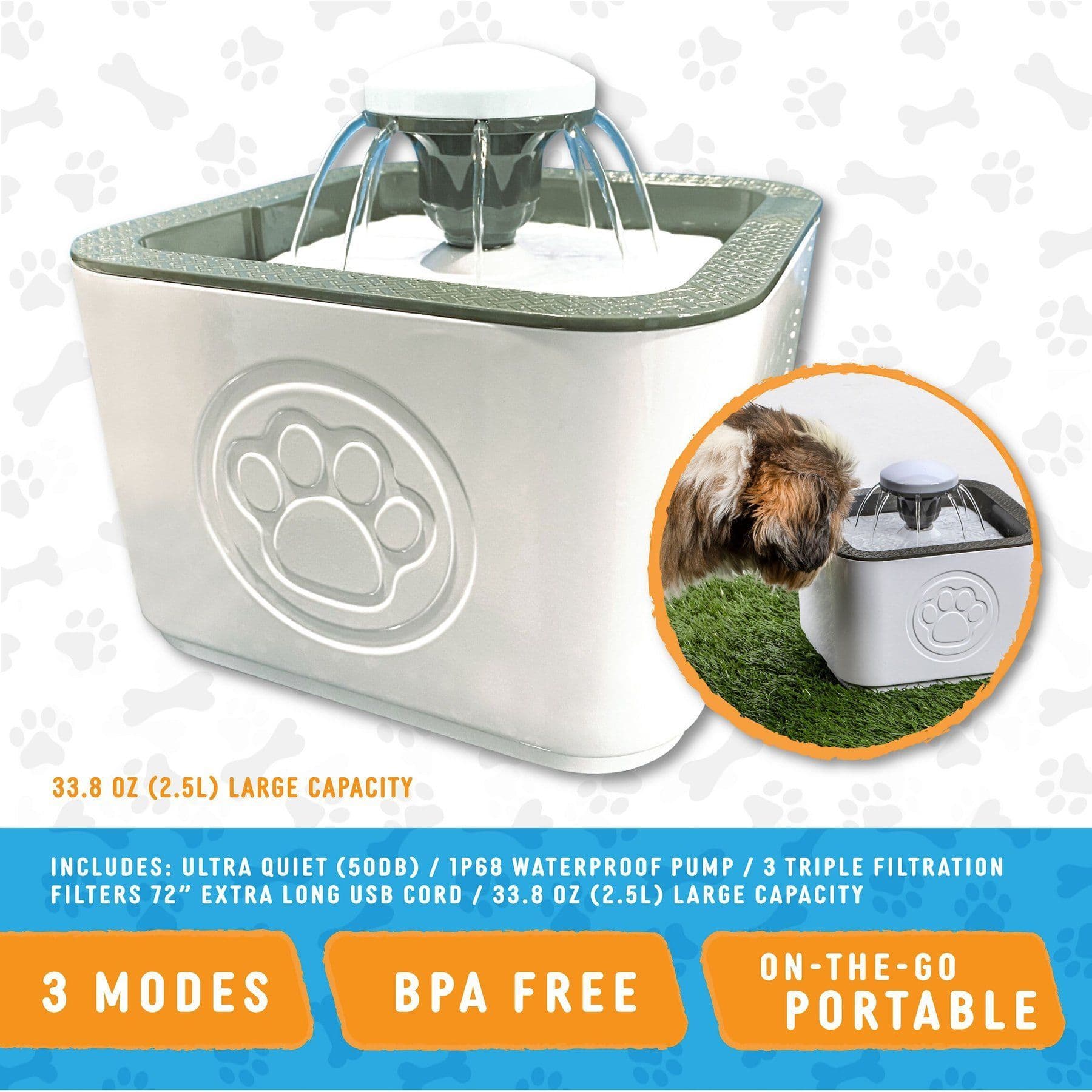
A running-water fountain with three flow modes to help a cat drink more while on a stool-softening plan.
Webvet may earn a commission when you click through to Chewy, at no extra cost to you.
How long Miralax takes to work in cats, side effects, and long-term use
Timing varies from cat to cat. VCA says PEG 3350 can take effect 1 hour after administration, and that this short-acting medication should stop working within 24 hours. In a hard, dry colon, the first soft stool often takes longer, because the drug has to hold water in stool that is already packed.
If there is no stool after the time frame your vet gave you, call the clinic rather than raising the dose on your own. A cat that is still straining without passing anything may have an impaction that needs hands-on treatment.
Miralax for cats side effects and signs of too much
VCA lists vomiting, diarrhea, nausea, flatulence, and abdominal cramping as possible side effects of PEG 3350. Diarrhea is the main sign of too much, since the drug draws water into stool. Watch for these signs of too much:
- Watery or very loose stool, or stool outside the litter box
- Vomiting after meals that contain the powder
- A cat that stops eating or seems quiet and withdrawn
- Repeated trips to the box with only liquid stool
A cat that already has loose stool should not get Miralax: the laxative should be paused and the vet called. Can Miralax kill a cat? The larger danger is not the powder itself but giving it to a cat that is actually blocked, or letting diarrhea dehydrate a cat. Merck warns that laxatives can make dehydration worse.
The feline study, which used a PEG 3350 solution with added electrolytes, also checked blood salts. Sodium did not change in any cat, and three cats developed mild high potassium that the authors judged not clinically or statistically significant. Those were healthy cats, so a vet may still check bloodwork in an older cat or one with other illness.
How long is it safe to give a cat Miralax?
There is no fixed limit; the vet sets the length of treatment. The feline PEG 3350 study concluded it is a safe and palatable oral laxative for long-term use in cats, but it involved six healthy cats over 4 weeks, and it used a PEG 3350 solution with added electrolytes rather than Miralax itself. The authors say further studies are needed in cats with chronic constipation. The human label's 7-day limit applies to people, not to vet-directed use.
Miralax for cats long term and every day
Some cats take Miralax every day for months. Merck states that continued or long-term use of laxatives should be discouraged unless necessary to avoid recurrent constipation. So daily use is reasonable for a cat whose constipation keeps coming back, with regular rechecks, but not as a habit for a cat that had one hard stool.
When constipation keeps returning, vets often look at diet first, because Merck calls diet the most important local factor affecting colonic function. The Royal Canin Veterinary Diet Gastrointestinal Fiber Response Thin Slices in Gravy Wet Cat Food, 3-oz can, case of 24 is a psyllium-enhanced veterinary diet with omega-3 fatty acids, made to support healthy transit and stool quality. It needs a vet's authorization, which Chewy asks for at checkout.
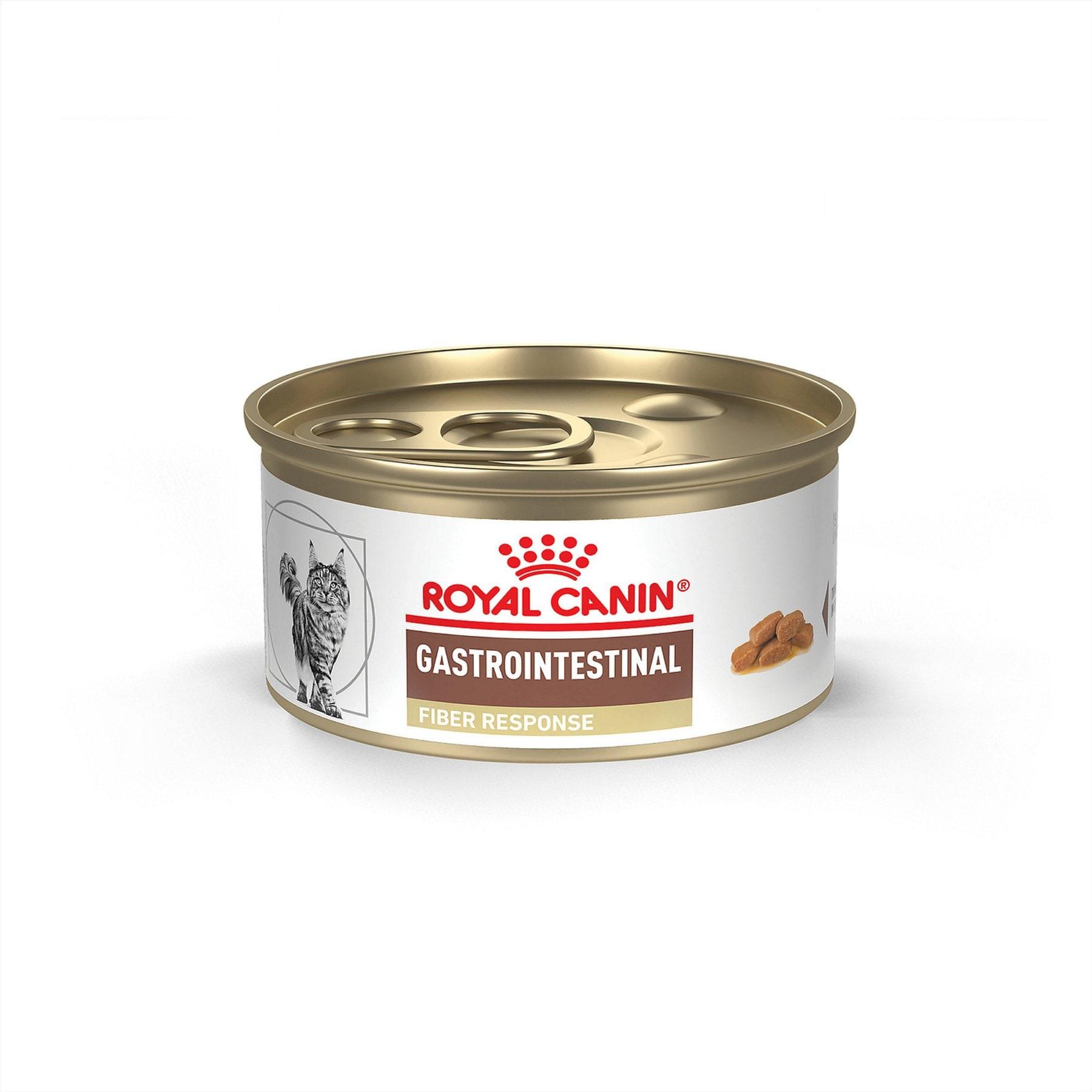
A psyllium-enhanced veterinary wet diet for repeat constipation; Chewy asks for your vet's authorization.
Webvet may earn a commission when you click through to Chewy, at no extra cost to you.
That wet diet is listed at $69.36 on Chewy when checked in November 2026. A vet may use a fiber diet like this alongside a lower Miralax dose, or in place of it, depending on how the cat responds over several weeks.
Blockage, overdose, or a straining cat: when to call the vet or poison control
| What you see in the litter box | Likely problem | What to do |
|---|---|---|
| Straining, frequent trips, little or no urine, especially a male cat | Possible urethral obstruction (blocked bladder) | Emergency: go to your vet or an emergency clinic now; do not give Miralax |
| Straining with no stool, cat still eating, drinking, and passing urine | Possible constipation | Call your vet the same day and ask whether a laxative fits |
| No stool for 48 to 72 hours since the last bowel movement | Constipation that needs a vet | Book a vet visit; do not wait for it to pass on its own |
| Straining with vomiting, not eating, lethargy, or a painful belly | Severe constipation, obstipation, or a blockage | Same-day vet visit or emergency clinic |
| Watery or very loose stool after starting Miralax | Dose may be too high | Pause the next dose and call your vet |
| Cat got into a large amount of Miralax or another human laxative | Possible overdose | Call your vet, ASPCA Animal Poison Control, or Pet Poison Helpline |
Straining in the litter box is the sign owners most often misread. The Cornell Feline Health Center says a cat with a urethral obstruction may strain to urinate, make frequent attempts to urinate, and produce little, if any, urine. Cornell calls this a true medical emergency.
A blocked bladder look-alike
Cornell states that male and neutered male cats are at greater risk for obstruction than females. A blocked male cat squats, strains, and may cry, which can look exactly like constipation from across the room. The difference is in the litter: look for wet clumps. No new urine clumps, or only tiny ones, means going to a vet or emergency clinic now.
Cornell adds that a blocked cat will pass little or no urine and will become increasingly distressed. A laxative in the food does nothing for a blocked urethra, and every hour spent waiting for it to work is time the cat does not have.
Constipation itself can also become urgent. Merck describes obstipation as intractable constipation in which the cat cannot evacuate the mass of dry, hard feces. That cat needs hands-on care, not more laxative at home. VCA advises calling your vet if a cat fails to produce a bowel movement within 48 to 72 hours of the previous one.

How to unconstipate a cat quickly?
The quickest safe way to unconstipate a cat is a vet visit. VCA says treatment can include enemas, manual removal, and medications, with intravenous fluids for dehydration. Never use a human enema at home: Merck warns that phosphate-containing enemas must be avoided in cats because of severe electrolyte imbalances.
Overdose or a cat that got into the medicine cabinet
VCA advises calling your veterinary office immediately if you suspect an overdose or an adverse reaction. If your cat swallowed a large amount of Miralax, a different laxative, or a human enema product, these services can help:
- ASPCA Animal Poison Control Center: (888) 426-4435, available 24/7, 365 days a year; a consultation fee may apply.
- Pet Poison Helpline: (855) 764-7661, available 24/7; an incident fee applies.
- Your own vet, or the nearest emergency veterinary clinic if your vet is closed.
Have the product package in hand when you call, so the team can see the exact ingredients and amount. These details help whoever answers:
- The product name and whether it is plain PEG 3350 or a version with added electrolytes or other ingredients
- Roughly how much is missing from the container or packet
- When the cat got into it, and whether it has vomited or had diarrhea since
- Your cat's weight, age, and any conditions such as kidney disease
- Any medicines the cat already takes
Miralax for cats with kidney disease, megacolon, or repeat constipation
Kidney disease and megacolon both change how a vet uses Miralax. They are also two of the most common reasons an older cat ends up on a long-term stool softener in the first place.

Miralax for cats with kidney disease
Is Miralax safe for cats with kidney disease? It can be used, but only with the vet managing hydration. Merck notes that constipation can follow a lack of sufficient water intake, as in cats with chronic kidney disease. Kidney cats with dehydration are the group where a laxative needs the most care.
Merck states that laxatives should be avoided in dehydrated animals because they can make dehydration worse. The Cornell Feline Health Center adds that dehydration can speed up damage to the kidneys. Even the human MiraLAX label warns against use with kidney disease except under a doctor's supervision.
For a kidney cat, the vet usually fixes hydration before or alongside any laxative. Cornell's hydration steps for cats with kidney disease include:
- Feeding wet forms of the therapeutic kidney diet
- Keeping multiple clean water sources available
- Fluids given under the skin when food and water are not enough
Cornell notes that many owners can learn to give those fluids at home every 1 to 3 days with guidance from their veterinarian. WebVet's guide to kidney disease in cats explains staging and home care.
Before Miralax is added for a kidney cat, these questions are worth raising with the vet:
- Is my cat dehydrated right now, and should fluids come first?
- Would a wet form of the kidney diet help soften stool on its own?
- What stool change should prompt me to lower or pause the dose?
- Does my cat need bloodwork to check electrolytes while on a daily laxative?
- Do any of my cat's current medicines interact with PEG 3350?
Miralax for cats with megacolon
Merck describes megacolon as hypomotility and dilation of the large intestine, and notes that some cats with chronic constipation or obstipation have it. VCA's megacolon guide says cases without an identifiable cause are termed idiopathic megacolon, with signs including absent bowel movements, straining, weight loss, lethargy, vomiting, and poor appetite.
The veterinary references give no separate dose for cats with megacolon. Vets adjust the amount by stool consistency, as with any cat, and often combine a laxative with a fiber diet and a drug like cisapride. Merck cautions that cats with long-standing obstipation and megacolon are not likely to improve with cisapride.
VCA describes medical management as the first step for megacolon, which can include:
- Intravenous fluids to correct dehydration
- Enemas, sometimes under sedation, to clear an impaction
- Laxatives and stool softeners, adjusted so the cat passes stool regularly
- Drugs that stimulate the colon wall
- A prescription high-fiber diet for long-term care
Cornell's feline team notes that cats with advanced megacolon simply stop responding to medical therapy. At that stage, Cornell describes subtotal colectomy, removal of most of the colon, as the treatment of choice, and says the overwhelming majority of cats respond quite favorably. Cornell adds that most cats begin to form stool of an acceptable quality within several weeks of the procedure.
VCA reports a similar picture: most cats do reasonably well after this procedure, with few permanent side effects. Surgery is kept for cats that no longer respond to the medical plan, so a cat caught early usually stays on a stool softener, a fiber diet, and good hydration, with the vet tracking whether stools stay soft.
Repeat constipation in older cats
Repeat constipation usually needs a plan rather than a single fix. For a cat on a long-term veterinary fiber diet, the Royal Canin Veterinary Diet Gastrointestinal Fiber Cat Food, 8.8-lb is the dry, psyllium-enhanced form of the same diet, also requiring a vet's authorization. WebVet's guide to senior cat digestive problems and how to help covers related changes in older cats.
Helping a constipated cat besides Miralax: water, fiber, hairball control, and vet diets
Miralax treats the stool; the plan around it treats the cause. Merck notes that mild constipation can often be treated by avoiding dietary indiscretion and ensuring access to water, and that high-fiber diets are recommended to prevent recurrence. VCA adds that high-fiber diets, lubricating laxatives, stool softeners, or probiotics may prevent constipation from coming back.

These steps help alongside a vet-set Miralax plan:
- More water: wet food, extra bowls in different rooms, and running water all raise intake.
- Fiber: Cornell names canned pumpkin and psyllium as fiber sources, added in amounts your vet suggests.
- Hairball control: VCA lists hairballs, especially in long-haired cats, as a cause of constipation, so regular brushing matters.
- A clean box: VCA advises keeping a clean litter box available to encourage frequent defecation.
- Vet diets: a prescription fiber diet when constipation keeps returning.
For a fiber topper, the Diggin' Your Dog Firm Up! Pumpkin Dog & Cat Supplement, 4-oz bag combines pumpkin, apple fiber, and cranberry and is labeled to support regularity in dogs and cats. Ask your vet how much to add, since Cornell warns that too much soluble fiber can loosen stool.
Some vets add a probiotic for gut support. The Vetnique Labs Glandex Feline Daily Prebiotic & Probiotic Digestive Aid Powder Supplement for Cats, 4-oz jar is a powder with five billion CFUs from five probiotic strains plus prebiotics including sweet potato. It supports digestion but is not a laxative and does not replace one.
Keeping a stool log your vet can use
A written record is often the most useful thing an owner brings to a recheck, because the vet adjusts Miralax by stool consistency. Note these each day:
- The time and amount of each Miralax dose
- Each stool: hard, soft and formed, or loose
- Any straining, and whether urine clumps are normal in size and number
- Appetite, vomiting, and water intake
- Any change in food, fiber, or supplements
Two or three weeks of notes show the vet whether the dose, the diet, or the water plan needs to change. They also make it easier to spot a new problem, such as fewer urine clumps, early.
Dogs get constipated too, and the dosing logic differs. WebVet covers that separately in Miralax for dogs.
Miralax for cats questions
Frequently Asked Questions
Can I give my cat Miralax every day?
Yes, if your veterinarian has set a daily dose. Many cats with repeat constipation take it long term. Merck discourages long-term laxative use unless it is needed to prevent constipation from returning, so daily use should come with rechecks and a diet and water plan, and the dose should be reviewed if stools turn loose.
Daily use without a vet is a different matter. A cat that needs a laxative every day has a reason for it, such as dehydration, kidney disease, or megacolon, and that cause needs a diagnosis rather than an open-ended supply of powder.
Is Miralax or lactulose better for cats?
Neither suits every cat. Both hold water in stool, but lactulose needs a prescription, and VCA notes that cats generally dislike its taste. Miralax is a powder that mixes into food and is available over the counter. Your vet chooses between them based on what your cat accepts and its other health conditions. Some cats do better on one after struggling with the other, so switching is a normal part of finding the right plan.
How long does Miralax take to work in cats?
VCA says PEG 3350 can start working within about an hour, but a cat with dry, packed stool may take a day or more to pass a soft stool. For people, the label says it generally produces a bowel movement in 1 to 3 days. If no stool comes within the time your vet gave, call the clinic. VCA advises a vet call once 48 to 72 hours pass without a bowel movement, and a cat that is straining and producing no urine needs emergency care at once.
Is Miralax safe for cats with kidney disease?
It can be, with care. Kidney cats are prone to dehydration, and Merck warns that laxatives can make dehydration worse, which Cornell says can speed up kidney damage. A vet usually corrects hydration first, often with wet food and fluids, then sets a cautious dose and watches the cat closely. Loose stool in a kidney cat is a reason to call the vet promptly, since fluid lost in diarrhea is fluid the kidneys need.
Can Miralax help a cat with megacolon?
It can help in earlier stages. Vets often combine a laxative with a fiber diet and a drug that stimulates the colon. Cornell notes that cats with advanced megacolon stop responding to medical therapy, and surgery to remove most of the colon then becomes the usual option your vet will discuss. Most cats that have that surgery form acceptable stool again within several weeks.
Veterinarian · BVMS MRCVS
Dr. Pippa Elliott, BVMS, MRCVS, is a veterinarian with nearly 30 years of experience in companion animal practice. Dr. Elliott earned her Bachelor of Veterinary Medicine and Surgery from the University of Glasgow. She was also designated a Member of the Royal College of Veterinary Surgeons. Married with 2 grown-up kids, Dr. Elliott has a naughty Puggle named Poggle, 3 cats and a bearded dragon.


