Miralax for Dogs: Is It Safe, Dosage, and Constipation Alternatives
Miralax (polyethylene glycol 3350) is a laxative some vets use for constipated dogs, at a dose set for the dog's size. How it works, how fast, side effects, the blockage signs that rule it out, and the fiber, water, and diet steps that come first.

BVMS MRCVS
Medically reviewed by Dr. Pippa Elliott, BVMS MRCVS · Last reviewed

This article contains affiliate links. Webvet may earn a commission when you buy through them, at no extra cost to you.
Miralax for dogs can be safe when a veterinarian chooses it and sets the dose, so you can give your dog Miralax for constipation once your vet approves it. Its active ingredient, polyethylene glycol 3350, is an osmotic laxative that vets commonly prescribe for constipated dogs, given as a small measured amount of powder mixed into food. The amount comes from your vet, not the human package.
Never give Miralax to a dog that might have a blockage: a dog that chewed a bone or toy, is vomiting, has a tight or painful belly, or strains with nothing passing needs a vet the same day. Puppies, seniors, dehydrated dogs, and dogs with kidney disease need a vet before any laxative.
For an otherwise well adult dog with mild hard stool, water and fiber usually come first.

 Sponsored
Need a prescription or refill for your dog?
A licensed vet at Dutch can assess your dog over video and prescribe treatment when it's appropriate, delivered to your door.
Use code Pets60
Plans start at $12/month · covers up to 5 pets
- Licensed vets in most states
- Rx for 150+ conditions
- 4.7 on Trustpilot
Miralax for dogs: is it safe, and when a vet would use it
- 1Miralax is polyethylene glycol 3350, an osmotic laxative that some vets use for dogs with simple constipation.
- 2Knowing how it pulls water into stool explains both why it works and why a dehydrated dog should not get it.
- 3When a vet suggests Miralax, the vet sets a small dose for the dog's size, mixed into food, and adjusts it to soft stool.
- 4Vomiting, a painful belly, a chewed bone or toy, or straining with nothing passing means a possible blockage and a vet visit today.
- 5Water and fiber usually come first for a mild case in a healthy adult dog.
Vets do use it, under their own direction. VCA Animal Hospitals lists polyethylene glycol 3350 among the laxatives commonly prescribed for constipated dogs, and the Merck Veterinary Manual describes its use as generally free of adverse effects.
The catch is that this is off-label use. VCA's drug sheet notes that its use in dogs is off label, which means the human box was not written for dogs: its dose does not carry over to a dog, and your vet's directions replace the label.
Is MiraLAX safe to use on dogs?
Yes, for the right dog at a vet-set dose. Plain polyethylene glycol 3350 is generally well tolerated, according to Merck. It is not safe for a dog with an intestinal blockage or obstruction, which VCA lists as a reason not to use it, and laxatives should be avoided in a dehydrated dog because they can make dehydration worse.

Vets tend to think about Miralax for a dog whose constipation is mild, recent, and has an obvious cause. Common situations include:
- A dog that has eaten something poorly digestible, such as plant matter, and now passes hard, dry stool
- A dog whose constipation keeps coming back once the cause has been checked
- A dog on a medicine known to slow the gut, where the vet wants a softer stool
- A dog that has already had water and fiber changes without enough improvement
Before any laxative, a vet wants to rule out a reason the stool cannot move. That is why the first questions are about bones, toys, vomiting, and appetite, not about which powder to buy.
Merck's dog owner guide also warns that laxatives made for people can be very dangerous for animals, which is the reason the dose has to come from a vet.
For many otherwise healthy adult dogs with mild hard stool, the gentler step is fiber or pumpkin first, plus more water. A single-ingredient pumpkin powder such as StrellaLab Pumpkin High Fiber Powder Stool Consistency & Softener Supplement for Dogs, 8.1-oz jar is a dog-labeled way to add fiber to meals while you watch how the stool changes.
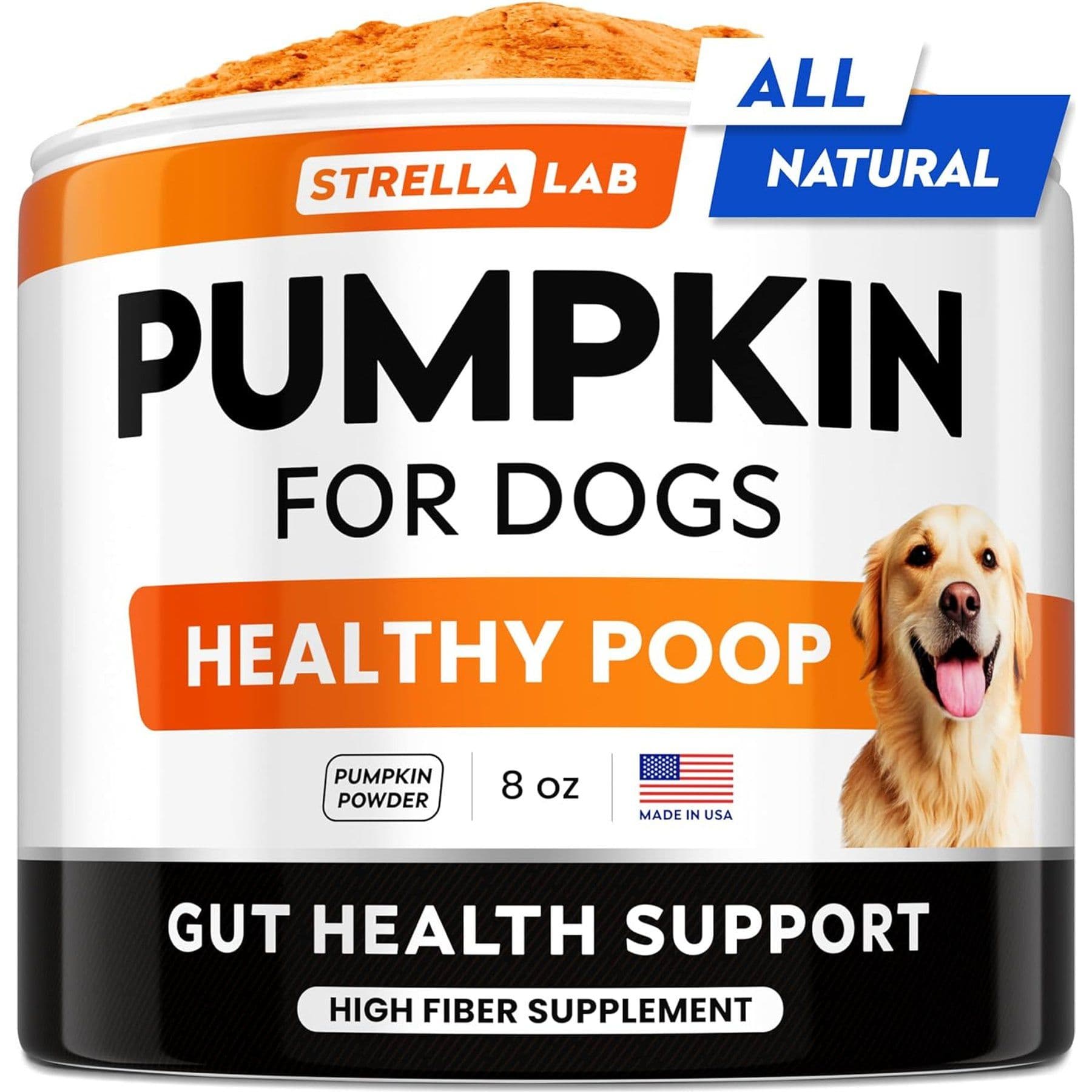
A dog-labeled pumpkin fiber powder to add to meals as a gentle first step for occasional hard stool.
Webvet may earn a commission when you click through to Chewy, at no extra cost to you.
If you share your home with a cat as well, the cat version of this question has different answers and different risks, covered in Miralax for cats.
How Miralax works in a constipated dog, and how it compares with lactulose and fiber
Miralax works by osmosis. Merck explains that hyperosmotic laxatives are poorly absorbed from the gut and draw fluid into the intestine. Polyethylene glycol 3350 stays in the colon and holds water there, which VCA describes as keeping water in the colon to soften stools and make them more frequent.
That is how it pulls water into stool, and it explains the main risk. The water has to come from somewhere, so a dog that is not drinking well, or is already dehydrated, is a poor candidate. It also means Miralax softens stool that can move; it cannot push stool past an object that is stuck.
Three types of product come up when owners compare options:
- Osmotic laxatives: polyethylene glycol 3350 (Miralax) and lactulose both draw water into the bowel.
- Bulk-forming fiber: psyllium, the active ingredient in Metamucil, absorbs water and adds bulk. Merck lists psyllium, methylcellulose, and prunes as bulk laxatives.
- Stimulant laxatives: Merck notes these stimulate gut movement and can cause excessive fluid and electrolyte loss, so they are a vet-only decision.
Choosing between lactulose and Miralax is mostly a question of access and purpose. Lactulose is a synthetic sugar fermented in the large intestine, per Merck, and the human lactulose solution on DailyMed is labeled Rx Only. Your vet has to prescribe it. Miralax is sold over the counter, but a dog still needs a vet to set the amount.
VCA's lactulose sheet adds these points for owners comparing the two:
- Lactulose should take effect within 1 to 2 days.
- Common side effects are diarrhea, bloating, gas, and abdominal cramps.
- It is given by mouth as a liquid syrup or as crystal granules.
- It is also used to reduce blood ammonia in liver disease, so a dog may already be on it for another reason.
- Like PEG 3350, it is not used in a pet with an intestinal blockage or obstruction.
Choosing between Miralax and Metamucil is really a choice between an osmotic laxative and fiber. Fiber is the more natural starting point: Merck states that dietary fiber is preferable to other laxatives because it is well tolerated, more effective, and more physiological. A dog-labeled psyllium product avoids the flavors and sugar in human fiber drinks.
Bern Dog Brand Fiber for Dogs Digestive, Diarrhea, Constipation & Anal Gland Dog Supplement, 12-oz jar is one option. Its catalog listing describes two organic ingredients, with psyllium seed husk powder as the first, and it is listed at $33.95 on Chewy when checked in November 2026.
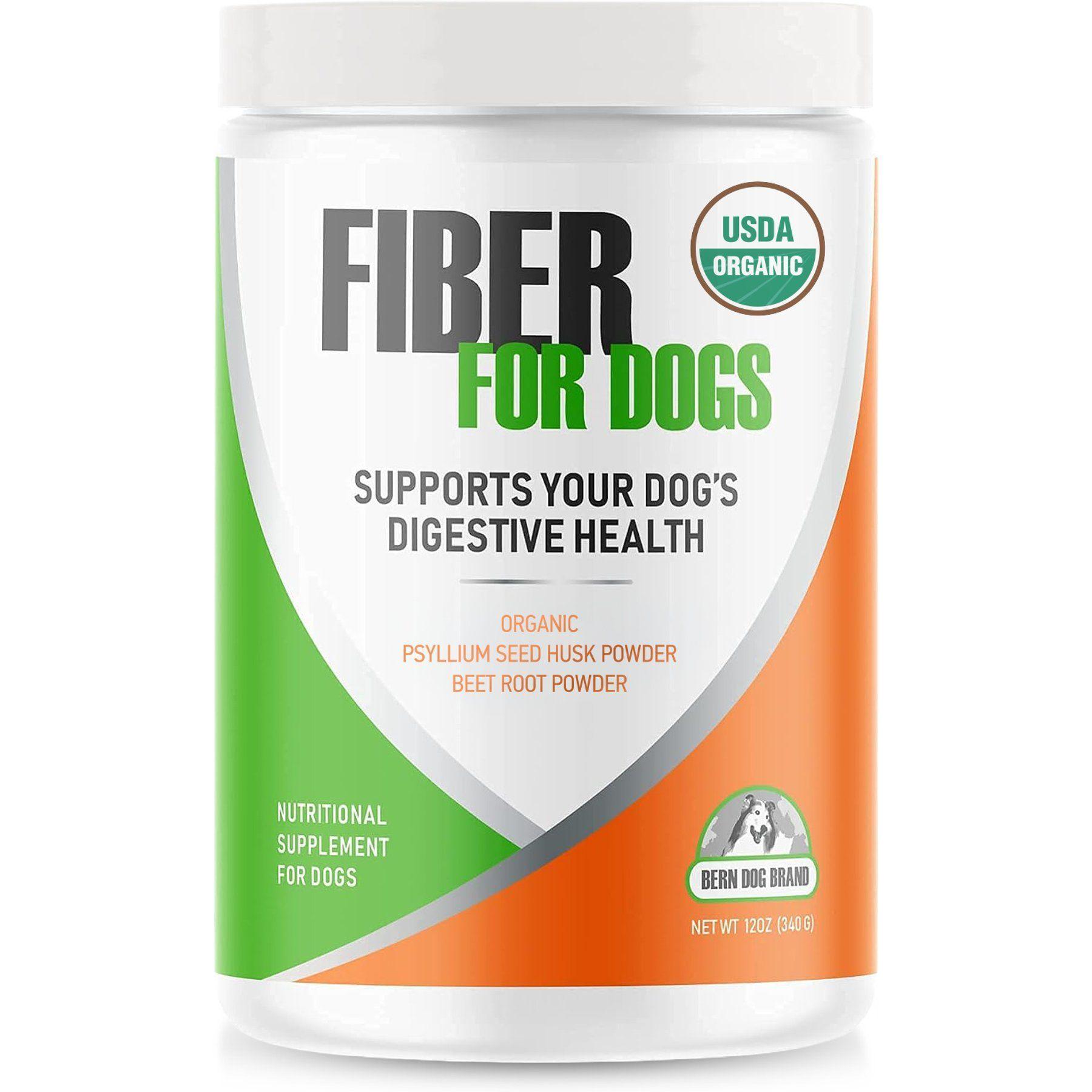
A dog-labeled psyllium fiber supplement for dogs with recurring hard stool, for owners weighing fiber against a laxative.
Webvet may earn a commission when you click through to Chewy, at no extra cost to you.
What is the best laxative for a dog?
There is no single best laxative for every dog; the right choice depends on why the dog is constipated. Merck calls dietary fiber the preferable option for most cases, and VCA lists polyethylene glycol 3350 among the laxatives vets commonly prescribe. Lactulose is a prescription option. Stimulant laxatives and enemas are for a vet to decide.
How a vet decides a Miralax dose for a dog, and how to give it
The dose is your vet's decision, set after examining the dog. Body size matters because a teaspoon of powder is a very different amount for a 10-pound dog than for a 90-pound dog, and because the right starting point depends on how hard the stool is and why.
The Merck Veterinary Manual gives a general range for small animals of 1/8 to 1/4 teaspoon of polyethylene glycol 3350, by mouth or in food, every 12 hours, adjusted to achieve soft stool. That is a starting framework for vets. It is not a home dosing instruction.

Owners often look for a Miralax dosage chart by weight or a per-pound calculator. The veterinary references used here do not publish one for dogs, and a chart copied from a website is not the same as your vet's plan. What a vet weighs before choosing the dose:
- The dog's weight and size
- How long the dog has been constipated and how hard the stool is
- Whether the dog is drinking normally and is well hydrated
- Kidney disease, other illness, pregnancy, or nursing
- Other medicines, especially diuretics, opioids, or other laxatives
- What stool the vet is aiming for, since Merck's guidance adjusts the dose to soft stool
The human Miralax dose is not a dog dose. The MiraLAX Drug Facts label lists 17 g of polyethylene glycol 3350 per adult dose, dissolved in 4 to 8 ounces of a drink. Never scale that capful down by guesswork for a dog.
How much MiraLAX for a 20 lb dog?
There is no fixed amount for a 20 lb dog; your vet chooses it. Merck's general small-animal range is 1/8 to 1/4 teaspoon every 12 hours, adjusted to soft stool, without a weight split. A vet decides where a 20 lb dog starts. Dogs with possible blockage, dehydration, or kidney disease should not get it at all without an exam.
How do I give MiraLax to my dog?
Mix the measured dose your vet gave you into a portion of the dog's food and make sure every bit is eaten. Merck notes that the powder can be added to regular food, and VCA says it may be mixed with food as long as the pet swallows the entire dose.
A few practical steps help the dose go in cleanly:
- Use a measuring spoon, not a kitchen spoon, and level it off.
- Stir the powder into a small amount of wet food first, then offer the rest of the meal.
- Keep fresh water available at all times, which VCA stresses while a pet is on this medicine.
- If you miss a dose, give it when you remember unless the next one is close. VCA says never to give two doses at once or extra doses.
- Write down each dose and each bowel movement so your vet can adjust the plan.
Call your vet if your dog refuses the food with the powder in it. Hiding the dose in a treat the dog does not finish means the dose is uncertain, and an uncertain dose makes it harder for the vet to adjust.
 Sponsored
Vet care that's always there
Unlimited video calls and messaging with licensed vets for less than a typical vet visit. One membership covers up to five pets.
Use code Pets60
Plans start at $12/month · covers up to 5 pets
- Licensed vets in most states
- Rx for 150+ conditions
- 4.7 on Trustpilot
How fast Miralax works in dogs, side effects, and how long to use it
Miralax acts fairly quickly. VCA's drug sheet says the medicine can take effect 1 hour after it is given and should stop working within 24 hours. In practice, a softer stool may take longer to appear, since the colon has to collect water and move the stool along.
How quickly does MiraLAX work on dogs?
It can begin working within about an hour, according to VCA, and a single dose wears off within 24 hours. In people, the human label says it generally produces a bowel movement in 1 to 3 days. If your dog has not passed stool within the time your vet gave you, call the clinic rather than giving more.
The side effects of Miralax in dogs are usually digestive. VCA lists these:
- Vomiting
- Diarrhea
- Nausea
- Flatulence (gas)
- Abdominal cramping
VCA advises contacting your vet if any of these persist, worsen, or are severe. Signs of too much look like those side effects turned up: watery diarrhea, gas, cramping, and vomiting. Merck notes overdoses of osmotic laxatives can cause fluid loss and dehydration, so water intake has to be kept up.
Product type matters too. Plain polyethylene glycol 3350 is not the same as bowel-prep versions that add electrolytes. VCA warns that PEG 3350 with electrolytes can cause fluid and electrolyte imbalances, and it lists other medicines that call for caution alongside PEG 3350:
- Diuretics
- Extended-release oral medications
- Opioids
- Other laxatives
- Tricyclic antidepressants
If you are unsure whether loose stool has tipped into fluid loss, dehydration in dogs covers the signs to check.
Easy access to water is part of using any osmotic laxative well. A large-capacity fountain such as the HOLAPAW Dog Water Fountain, Black, 8-l keeps a steady supply of fresh water out between refills, listed at $37.99 on Chewy when checked in November 2026.
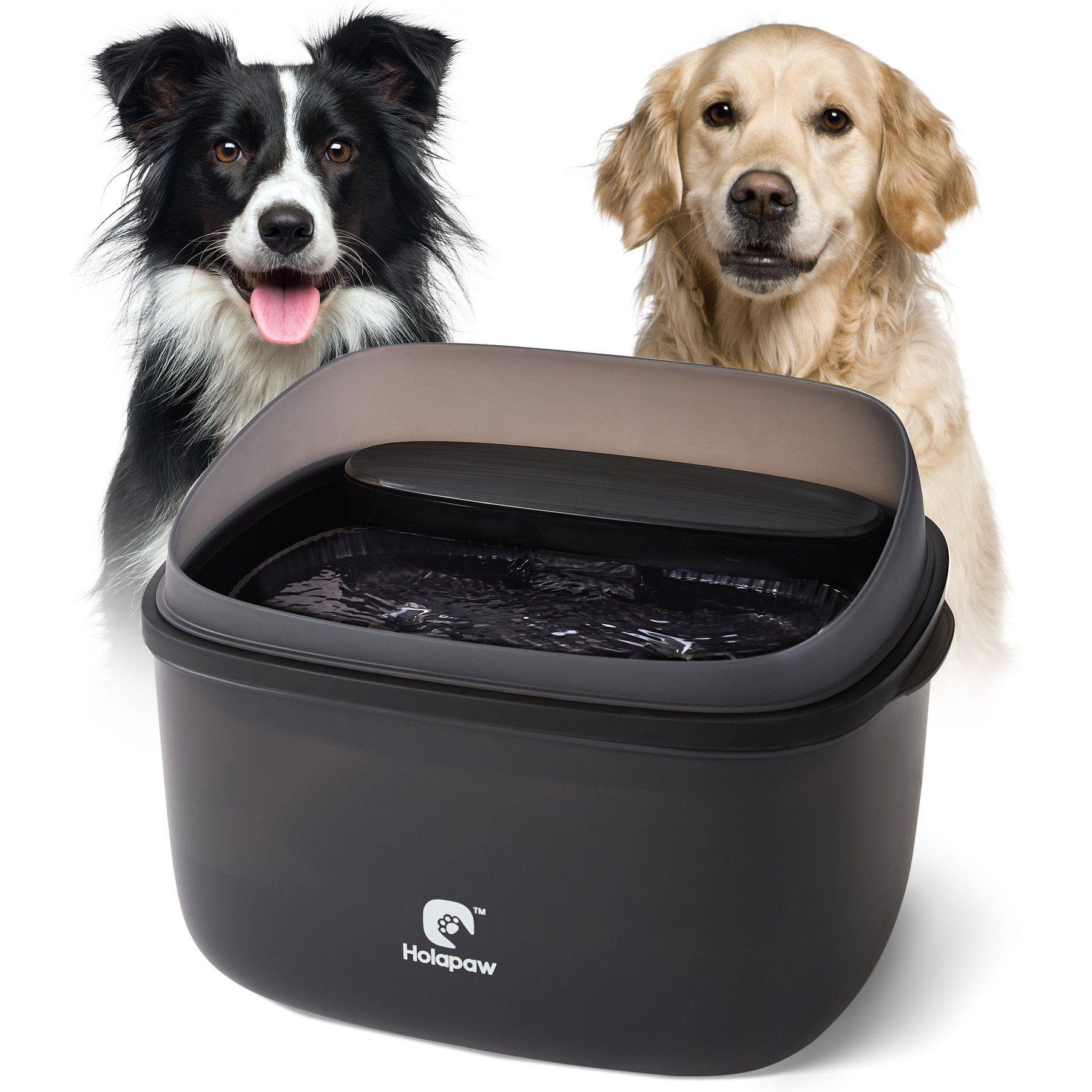
A large-capacity dog water fountain that keeps fresh water available for a dog prone to hard stool.
Webvet may earn a commission when you click through to Chewy, at no extra cost to you.
How long a dog can stay on Miralax is the vet's call. Merck states that continued or long-term use of laxatives should be discouraged unless it is needed to prevent recurrent constipation. For most dogs that means a short course while the cause is found and fixed.
Your vet will also want to know how the stool looks over time. VCA recommends watching bowel movements on PEG 3350 and talking with the vet about adjusting the dose to reach the stool frequency and consistency the vet is aiming for. A simple daily log makes that conversation easy:
- Time and dose of each Miralax serving
- Number of bowel movements and whether the stool is hard, formed, soft, or watery
- Any vomiting, gas, or signs of belly discomfort
- Appetite and roughly how much your dog is drinking
- Any new medicine, supplement, or treat
Some dogs do need ongoing help. VCA notes that some dogs require lifelong treatment and that a vet may recommend a therapeutic diet, supplements, or medication. A veterinary fiber diet is one route a vet may choose for a dog whose constipation keeps coming back once other causes are ruled out.
Royal Canin Veterinary Diet Fiber Response Dry Dog Food, 17.6-lb bag is one such veterinary diet. Chewy asks for your veterinarian's authorization before it ships, and it is listed at $104.99 on Chewy when checked in November 2026.
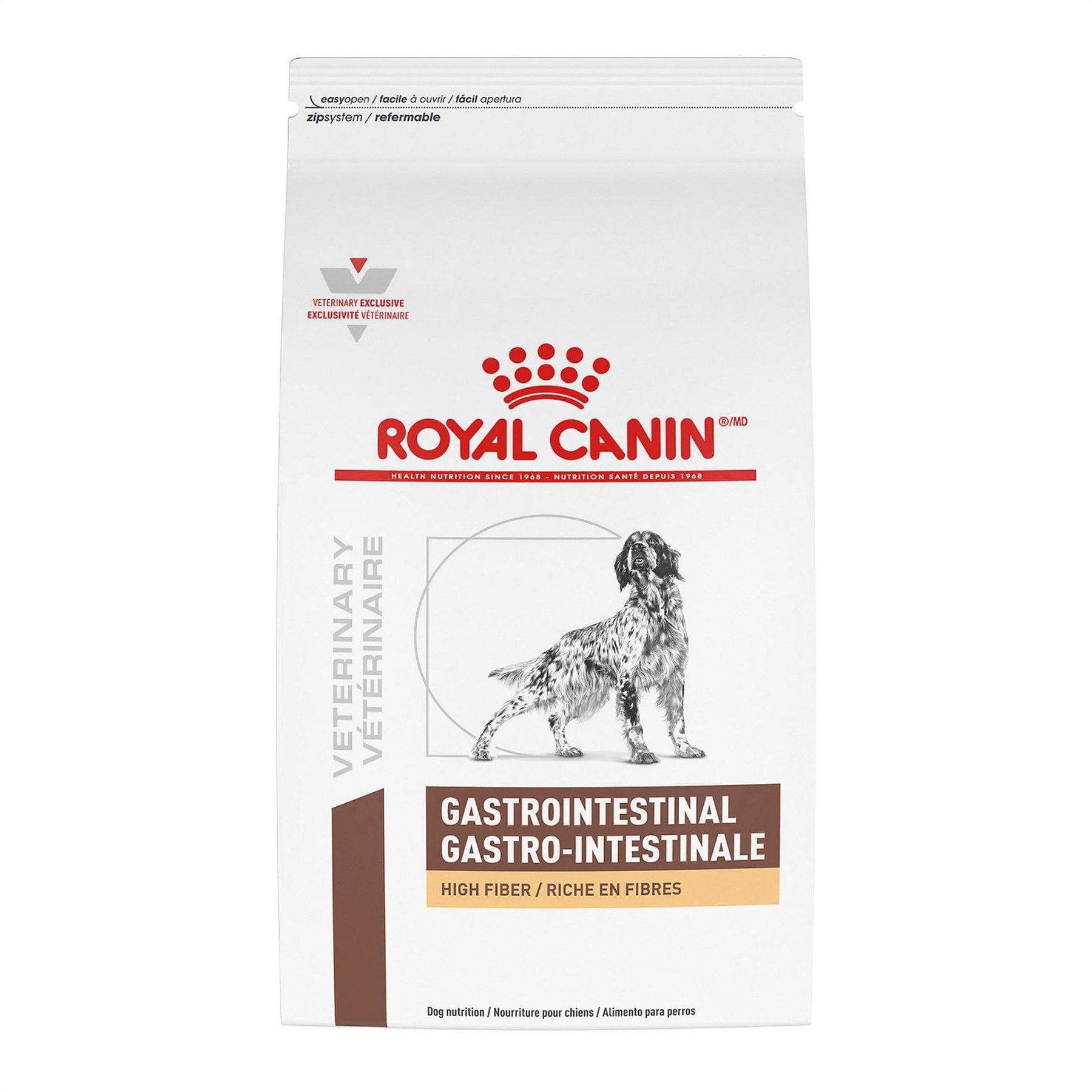
A veterinary high-fiber dry diet for dogs with recurring constipation; it needs your veterinarian's authorization on Chewy.
Webvet may earn a commission when you click through to Chewy, at no extra cost to you.
A prescription diet is a long-term plan, not a quick fix, and the vet decides when it replaces or joins a laxative. The aim is a routine that keeps stool soft enough without daily medication wherever possible.
Constipation or blockage: when a straining dog needs a vet or poison control today
| What you see | Likely problem | Next step |
|---|---|---|
| Hard, dry stool passed with some effort; dog eating, drinking, playful | Simple constipation | Water and fiber; call your vet if no stool in 48 to 72 hours |
| Straining with only a little liquid or mucus coming out | Constipation that can look like diarrhea | Call your vet before giving any laxative |
| Straining with nothing passing, plus vomiting or a tight, painful belly | Possible blockage | Vet or emergency clinic the same day |
| Known chewed bone, toy, sock, or other swallowed object, then poor appetite or vomiting | Possible intestinal obstruction | Vet the same day; no laxative |
| Lethargy, refusing food, repeated vomiting | Possible blockage or other serious illness | Emergency vet now |
| Dog got into a laxative or medicine supply | Possible overdose | Your vet or a poison control line now |
| Scooting, licking the rear, painful straining | Possible anal sac or rectal problem | Vet visit; no laxative needed first |
The most important decision is not which laxative to use but whether the dog has simple constipation at all. Most dogs pass feces at least once a day, according to VCA, and VCA advises calling your veterinarian if a dog fails to produce a bowel movement within 48 to 72 hours.
How do I tell if my dog is constipated or has a blockage?
Constipation usually means hard, dry stool in a dog that is otherwise eating and acting normally. A blockage usually brings vomiting, loss of appetite, and lethargy, according to Merck, and a dog may be unable to stop vomiting. A swallowed bone or toy plus those signs needs a vet the same day; Merck notes surgery is usually needed.

A swallowed bone or toy changes everything. VCA lists bones and other indigestible material, plus foreign bodies and intestinal obstruction, among the causes of constipation. Merck's dog owner guide notes that young, large-breed dogs are more likely to have an obstruction from eating a foreign object.
The hidden dangers of bones for dogs explains the risks bones carry for a dog's gut.
When you call the clinic about a straining dog, these details help the team decide how fast to see you:
- When your dog last passed a normal stool
- Whether anything has come out while straining, and what it looked like
- Any vomiting, and how many times
- Whether your dog is eating and drinking
- Any bone, toy, sock, or other object that may have been chewed or swallowed
- Any medicine or laxative already given, with the amount
A laxative cannot clear an object. Softening stool behind a blockage does nothing for the obstruction and costs time, which is why VCA lists intestinal blockage as a reason not to use PEG 3350 at all.
Severe, long-standing constipation is its own concern. VCA describes obstipation as a severe form of constipation that is often associated with a serious, permanent, or irreversible medical condition. A dog that has gone days without stool needs an exam, not a stronger home dose.
Can a dog still poop if constipated?
Yes, often in small amounts. A constipated dog may pass a few hard pieces, or only a little liquid stool, mucus, or blood from straining, which VCA notes can be mistaken for diarrhea. Treating that liquid as diarrhea, or giving a laxative for it, can miss the real problem, so a vet check comes first.
Poison control is a separate step for a different problem: a dog that has eaten from a bottle of laxative powder, or any human medicine, without your knowledge. The organisations that handle these calls state it this way:
- The ASPCA Animal Poison Control Center says that if you think your pet may have ingested a potentially poisonous substance, call (888) 426-4435. A consultation fee may apply.
- Pet Poison Helpline is available 24/7 at (855) 764-7661, with a $99 USD per incident fee.
- VCA advises calling your veterinary office immediately if you suspect an overdose or an adverse reaction, and following their directions to an emergency facility if they are closed.
Have the product package, your dog's weight, and the time of the exposure ready when you call.
Dogs that need a vet before any laxative: puppies, seniors, and dogs with other conditions
Some dogs should see a vet before they get Miralax, fiber supplements, or any home remedy. In these dogs, the straining may have another cause, or the laxative itself carries more risk:
- Puppies and young dogs: Merck notes young, large-breed dogs are more likely to have an obstruction from eating a foreign object, so a blockage has to be ruled out first.
- Dehydrated dogs: Merck says laxatives should be avoided in dehydrated animals because they can make dehydration worse.
- Dogs with kidney disease: even the human MiraLAX label tells people with kidney disease not to use it without a doctor's advice and supervision.
- Older intact male dogs: VCA lists prostate disease in intact males as a cause, and Merck notes perineal hernia occurs most often in unneutered 6- to 8-year-old males, with constipation and straining.
- Pregnant or nursing dogs: VCA advises caution with PEG products that contain electrolytes in pregnant or lactating pets.
- Dogs on other medicines: VCA names antihistamines, diuretics, narcotic pain relievers, and sucralfate as drugs that can cause constipation.

Seniors deserve a closer look because straining in an older dog is not always about stool. Merck's guide to rectal and anal problems in dogs lists perineal hernia, perianal fistula, rectal polyps, and rectal tumors, all with straining or painful defecation among the signs. None of these improves with a laxative.
The anal sacs are another cause of straining that can look like constipation. Merck describes scooting, licking or biting at the rear, and painful defecation with straining. If that sounds familiar, dog anal glands covers what a vet checks.
Dogs with constipation that keeps returning also need a workup. Merck describes megacolon as a condition in which the large intestine becomes dilated and moves poorly, and VCA notes it can follow long-term constipation. According to VCA, the vet's workup for a constipated dog usually includes:
- A physical exam and a medical history
- Feeling the belly for a firm, distended colon
- A rectal exam to rule out narrowing or other problems
- Abdominal X-rays to see how much stool is retained and look for a cause
- Blood tests and a urine test to check for dehydration, infection, or other conditions
That workup is what separates a dog that just needs more water and fiber from one that needs a specific treatment.
Constipation help for dogs besides Miralax: fiber, pumpkin, water, and vet diets
For a healthy adult dog with mild, recent constipation and no warning signs, the first steps are simple. Merck says mild constipation can often be managed by avoiding dietary indiscretion, ensuring access to water, and using high-fiber diets. VCA adds that in all cases owners should encourage water consumption and limit access to bones.

Is there a natural alternative to MiraLAX?
Yes. Fiber is the main natural alternative, and Merck calls dietary fiber preferable to other laxatives. Psyllium can be added to food at 1 to 4 teaspoons per meal depending on size, with small dogs needing less, per Merck. Plenty of water matters just as much. Pumpkin powders are another way to add fiber, though Merck's guidance names psyllium specifically.
Fiber works only with water. Psyllium absorbs water to add bulk, and the human Metamucil label warns that taking it without enough fluid can make it swell and block the throat. For dogs, that means mixing fiber into wet food or adding water to the meal, and keeping the water bowl full.
Pumpkin powders are a simple way to add fiber to meals. Fiber and digestive-support options on Chewy include:
- Bark&Spark Pumpkin Powdered Fiber & Stool Softener Diarrhea & Constipation Supplement for Dogs, 8.1-oz bag, made from dehydrated pumpkin, listed at $19.76 on Chewy when checked in November 2026.
- StrellaLab Pumpkin, a single-ingredient dried pumpkin powder, listed at $16.99 on Chewy when checked in November 2026.
- Vetnique Labs Glandex Daily Prebiotic & Probiotic Digestive Aid Powder Supplement for Dogs, 4.25-oz jar, a prebiotic and probiotic powder for everyday digestive support, not a laxative, listed at $29.99 on Chewy when checked in November 2026.
For dogs whose vet has checked the anal glands and found them, rather than hard stool, behind the straining, the Vetnique Labs Glandex Anal Gland Support Supplement Powder with Beef Liver Flavor for Dogs, 5.5-oz bottle combines pumpkin, probiotics, and fiber, listed at $42.99 on Chewy when checked in November 2026. Glandex vs pumpkin compares the two approaches in detail.
Water is the other half of the plan. How much water should a dog drink gives a daily target to check against, and the best dog water fountains compares ways to keep fresh water in front of a dog that drinks too little.
For a mild case in a healthy adult dog, a gentle plan that fits Merck's and VCA's guidance looks like this:
- Check for warning signs first: vomiting, a painful belly, a chewed bone or toy, or straining with nothing passing all mean a vet visit, not a home plan.
- Keep fresh water available at all times and encourage drinking.
- Remove bones and other poorly digestible chews from the dog's reach.
- Add fiber to meals in the amount your vet suggests, mixed into wet food or with added water.
- Keep walks and activity steady, since VCA lists inadequate exercise as a cause.
- Call your vet if there is no stool within 48 to 72 hours, or sooner if anything changes.
A vet diet is the step after that. VCA notes that either a low- or high-fiber diet may be needed depending on the cause, so the type of diet is a decision for the vet after an exam rather than a guess. Merck's dog owner guide says mild constipation can often be treated by switching to a high-fiber diet.
How to unconstipate a dog quickly?
There is no safe quick home fix; the fastest safe route is a same-day vet visit.
A vet can rule out a blockage, give a laxative at the right dose, and, in severe cases, remove retained stool with enemas or manual extraction under general anesthesia, per Merck. Never give a human enema or laxative without your vet's direction; Merck warns that laxatives made for people can be very dangerous for animals.
Recheck progress daily while you try the gentle steps. If the dog still has not passed stool within 48 to 72 hours, or develops vomiting, a painful belly, or straining with nothing passing, the plan moves to the vet.
Miralax for dogs questions
Frequently Asked Questions
Is Miralax or Metamucil better for dogs?
They work differently. Metamucil is psyllium fiber, which adds bulk and needs plenty of water; its label warns it can swell and choke without enough fluid. Miralax pulls water into the colon. Vets usually start with fiber for mild cases, and a dog-labeled psyllium product avoids the sugar and flavorings in human fiber drinks.
Is lactulose or Miralax better for a constipated dog?
Neither is better in every dog. Lactulose is a prescription drug, so a vet must prescribe it, and Merck describes its use for chronic constipation in cats with megacolon. Miralax is over the counter but still needs a vet-set dose for a dog. Your vet picks based on the cause and the dog's other conditions.
What are the side effects of Miralax in dogs?
The common ones are vomiting, diarrhea, nausea, gas, and cramping, per VCA. Too much can lead to watery diarrhea and dehydration because the medicine pulls fluid into the bowel. Stop and call your vet if diarrhea persists, your dog seems weak, or the side effects get worse.
Can I mix Miralax powder into my dog's food?
Yes. Mixing the powder into food is the usual way to give it, and the dog must eat the whole portion so the full dose goes in. Use the amount your vet sets, stir it into a small amount of wet food, and keep fresh water out the whole time your dog is on it.
Can dogs take Miralax for constipation?
Yes, when a vet confirms it is simple constipation and sets the dose. It is not for a dog that may have swallowed a bone or toy, is vomiting, or is dehydrated. Call your vet first, and use water and fiber while you wait if your dog is otherwise well.
Veterinarian · BVMS MRCVS
Dr. Pippa Elliott, BVMS, MRCVS, is a veterinarian with nearly 30 years of experience in companion animal practice. Dr. Elliott earned her Bachelor of Veterinary Medicine and Surgery from the University of Glasgow. She was also designated a Member of the Royal College of Veterinary Surgeons. Married with 2 grown-up kids, Dr. Elliott has a naughty Puggle named Poggle, 3 cats and a bearded dragon.


