Lactoferrin Dog Chews: Do They Work for Plaque and Gum Health?
Lactoferrin dog chews promise healthier gums and fresher breath. We weigh the lab, human, and pet research, review the My Doggies chews, and compare them with VOHC-accepted options.

BVMS MRCVS
Medically reviewed by Dr. Pippa Elliott, BVMS MRCVS · Last reviewed

This article contains affiliate links. Webvet may earn a commission when you buy through them, at no extra cost to you.
Lactoferrin dog chews promise fresher breath, less plaque, and healthier gums from a milk protein your dog chews once a day. The idea sounds gentle and science-based, and the My Doggies brand has pushed it hard with big percentage claims and a "#1 vet recommended" banner.
The short answer: lactoferrin dog chews have laboratory support and a little human data behind the ingredient, but no published trial shows a lactoferrin chew reduces plaque, tartar, or gingivitis in dogs. Daily brushing and a chew with a VOHC seal remain the options with real dental evidence.
This is an independent WebVet editorial analysis. No product was obtained or tested, no payment or product was received from the brand, and comparison-product links may be affiliate links. Everything below comes from the label, the brand's own pages, and the published research. This is an expert analysis of the 30-count bag (10.5 oz, 10 g per treat, label guaranteed minimum 5.0 mg lactoferrin per treat); the chew was not obtained or tested by WebVet.
What lactoferrin is and why it is in dog chews
Lactoferrin is an iron-binding protein found naturally in saliva and in the fluid around the gums. Researchers describe it as part of the body's innate immune defense, which is why it shows up in oral-care products for people and, more recently, in lactoferrin dental chews for dogs (Dashper et al., Antimicrobial Agents and Chemotherapy).
The lactoferrin in pet products is bovine lactoferrin, purified from cow's milk. My Doggies says its lactoferrin is "pharmaceutical-grade" and sourced from Australian grass-fed dairy. The certificate on its product page is for a raw lactoferrin powder from an ingredient supplier, not a test of the finished chew.
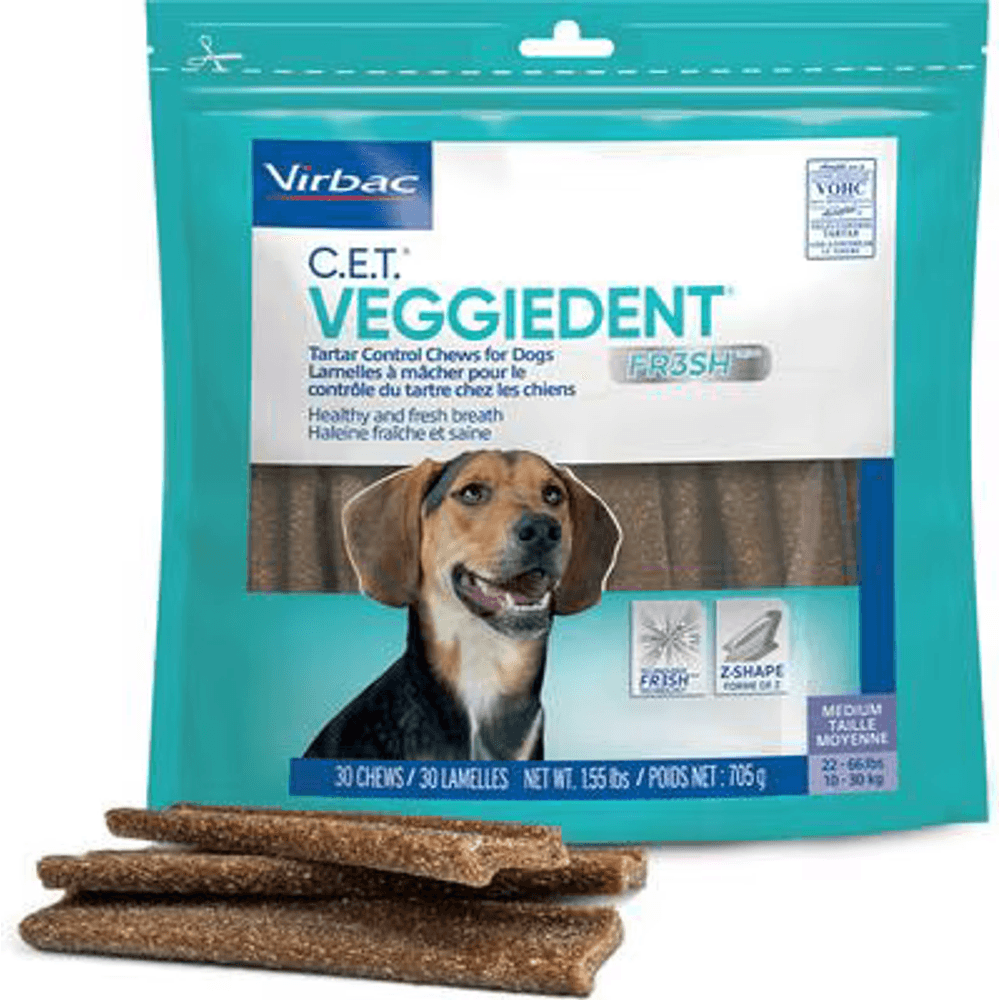
A VOHC-accepted chew with a plaque and tartar claim, for owners who want a dental chew with reviewed evidence.
Webvet may earn a commission when you click through to Chewy, at no extra cost to you.
So what about lactoferrin as a dog supplement? Makers sell it as a lactoferrin chewable, a powder, or a treat, and the pitch for your pet's mouth is always the same: the protein may make it harder for plaque bacteria to form a sticky film on teeth.
- 1Lactoferrin basics: a milk-derived, iron-binding protein also found naturally in saliva.
- 2Research evidence limits: lab and some human studies, but no dog trial of a lactoferrin chew for plaque or gums.
- 3The My Doggies chew lists lactoferrin last, at a label minimum of 5 mg per treat.
- 4For proven results, brush daily and choose a VOHC-accepted chew.
Why put it in a chew rather than a toothpaste? Chews are easy to give and dogs like them. But a chew is also a processed treat, and the brand does not publish how its manufacturing affects the protein. A review of lactoferrin chemistry notes that heat damage has to be measured under the conditions of each specific product (Steijns and van Hooijdonk, British Journal of Nutrition).
The brand also claims lactoferrin is "nearly identical across all mammals." The published comparison is less tidy: bovine and human lactoferrin share 69 percent of their amino acid sequence, and no canine figure was found. Close relatives, yes. Identical, no.
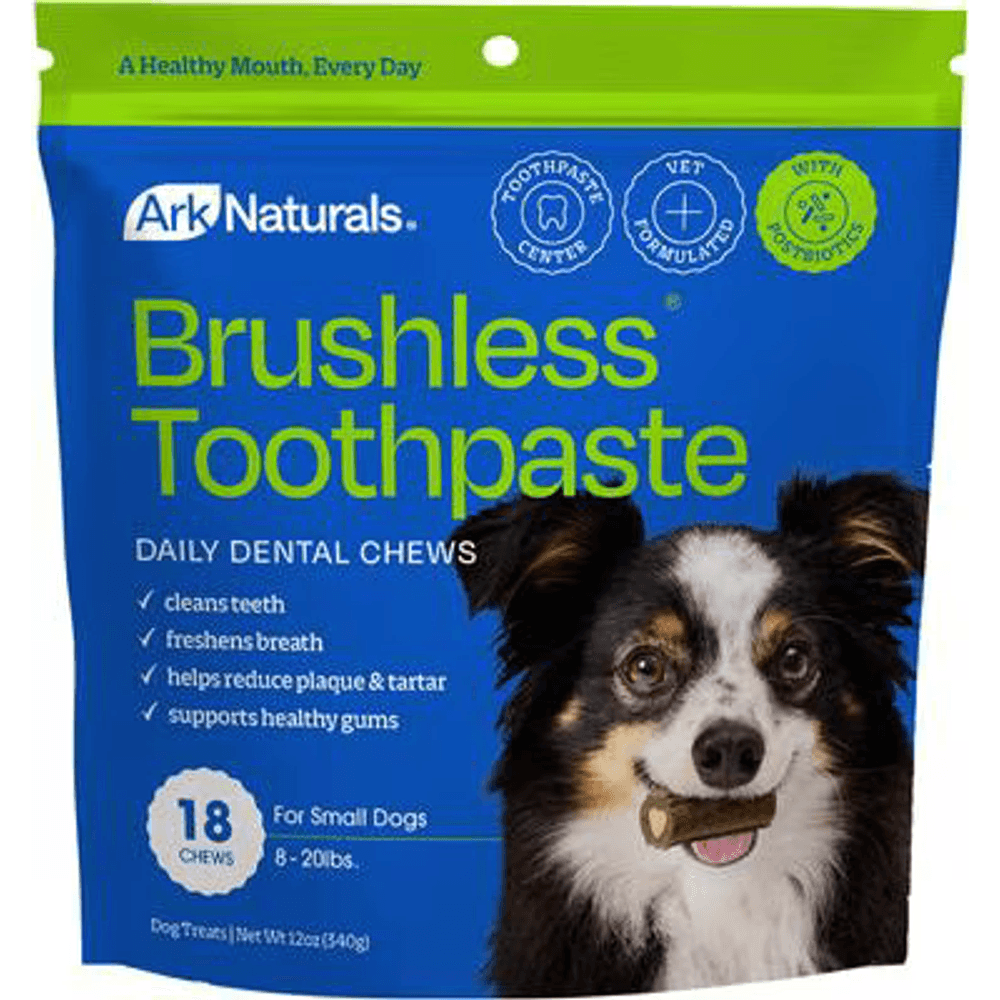
A brushless toothpaste dental treat for small dogs, for owners who want a chew-style cleaning helper.
Webvet may earn a commission when you click through to Chewy, at no extra cost to you.
Does lactoferrin help dogs' teeth? What the research shows
Here is the plain verdict on lactoferrin dog chews: the research evidence shows the ingredient can disrupt plaque bacteria in a dish, gives mixed results in people, and has never been tested as a chew in dogs. That gap matters, because claims about lactoferrin for dogs' teeth, breath, and dental health all rest on studies of other species or of test tubes.
| Evidence rung | What was studied | What it found | How far it reaches for a dog chew |
|---|---|---|---|
| Laboratory studies | Purified lactoferrin vs. gum bacteria in a dish | Less biofilm formation | Shows a mechanism only |
| Human trials | Lactoferrin plus lactoperoxidase tablets for 12 weeks | One null result, one benefit at 60 mg a day | Different species, dose, and form |
| Pet studies (cats) | Lactoferrin on the oral lining or as a spray for stomatitis | Some improvement in small groups | Different disease and delivery |
| Dog studies | Lactoferrin chews for plaque, tartar, or gingivitis | None found | No direct evidence |

It helps to climb the evidence ladder one rung at a time, from laboratory studies up to pet studies, and see how far each rung actually reaches.
Laboratory studies
Two laboratory studies tested lactoferrin against Porphyromonas gingivalis, a key bacterium in gum disease. In one, bovine lactoferrin cut biofilm formation by more than 80 percent (Dashper et al.). In another, lactoferrin blocked biofilm formation by two gum-disease bacteria at low concentrations (Wakabayashi et al., Antimicrobial Agents and Chemotherapy).
Both studies used purified protein at set concentrations, with no saliva, no mouth, and no chew. The first study also found the effect was not direct bacterial killing. The lead author of the second worked for a dairy company, Morinaga Milk Industry.
Human trials
People get mixed results. In a 12-week trial of 72 adults with chronic periodontitis, tablets of bovine lactoferrin plus another milk enzyme (lactoperoxidase) did no better than control tablets on clinical or bacterial measures (Shimizu et al., International Journal of Dentistry).
A second 12-week trial in healthy adults found the high dose, 60 mg a day of lactoferrin plus lactoperoxidase, reduced gum inflammation scores compared with placebo. The low dose was 20 mg a day (Nakano et al., Journal of Periodontal Research). Its authors worked for Morinaga Milk Industry.
Pet studies
The pet studies are in cats, not dogs, and concern stomatitis, a painful mouth inflammation, rather than plaque. Seven cats with stubborn stomatitis improved when lactoferrin was applied directly to the oral lining at 40 mg per kg daily for 14 days, and the abstract describes no placebo group (Sato et al., American Journal of Veterinary Research).
A small trial of 13 cats found a lactoferrin oral spray added to the anti-inflammatory drug piroxicam improved clinical signs, though the difference in lesion severity fell just short of statistical significance (Hung et al., The Veterinary Journal). For dogs, PubMed searches found no trial of dietary or chew lactoferrin for plaque, tartar, or gingivitis.
The dose gap is worth seeing.
- At the label minimum of 5 mg per treat, one chew gives a 10 kg dog about 0.5 mg per kg.
- The cat study used 40 mg per kg, applied straight to the mouth.
- These numbers are not equivalent, but they show how far the chew sits from any studied use.
So, does lactoferrin help dogs' teeth? Nobody has shown it does in dogs. Do lactoferrin dog chews work for breath? No published dog data addresses breath at all. The best lactoferrin for dogs' teeth, on current evidence, is not a lactoferrin product but a toothbrush.
My Doggies lactoferrin dental chews: ingredients, claims, and cost
My Doggies sells the chew on mydoggies.com as "Vet-Formulated Dental Chews With Lactoferrin (Mother's Milk)." The bag calls them Doggies dental treats with lactoferrin, chicken flavor, 30 count, 10.5 oz. Each treat weighs 10 g. The bag says "Manufactured for My Doggies Inc." in Montrose, California, so the actual maker and country of manufacture are not disclosed.
The Doggies brand back-of-bag label, shown as a mockup image on the product page, lists these ingredients in order:
- Wheat gluten, wheat flour, and chicken as the first three ingredients
- Glycerin, powdered cellulose, gelatin, brewers dried yeast, chicken fat, and lecithin
- A vitamin and chelated mineral premix
- Citric acid, dicalcium phosphate, potassium sorbate, and natural smoke flavor
- Bovine lactoferrin, listed last
The label guarantees a minimum of 500 mg of lactoferrin per kg, which is 5 mg per treat and about 0.05 percent of the chew by weight. A footnote on the bag says lactoferrin is not recognized as an essential nutrient by AAFCO. No finished-chew lab test of lactoferrin content is published.
Marketing claims vs. the label
The Doggies lactoferrin product page makes claims the label and research do not back up:
- "#1 VET RECOMMENDED DENTAL CHEWS," with no veterinarian, survey, or study named
- That Doggies is the "ONLY" vet-formulated dental chew with lactoferrin, while an Amazon search shows other lactoferrin dog chews for sale
- That a lactoferrin coating binds to teeth and blocks plaque bacteria, with no citation
- "99% Protection from oral bacteria reaching heart valves" and "94% Reduced risk of kidney disease," with no source
- That many dogs stretch professional cleanings to every 2–3 years
The page footer says the statements have not been evaluated by the FDA and that the product is not intended to diagnose, treat, cure, or prevent any disease. The page mentions no study, no clinical trial, and no VOHC status.
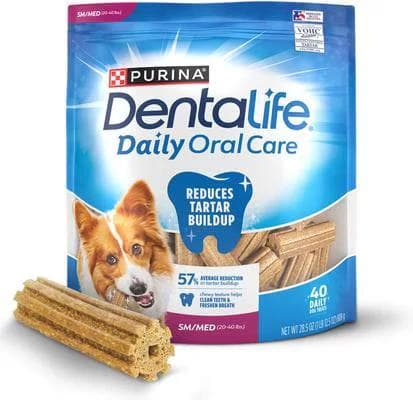
A VOHC-accepted daily dental treat with a tartar claim, for owners comparing cost and evidence per treat.
Webvet may earn a commission when you click through to Chewy, at no extra cost to you.
What the Doggies chews cost
Prices on the official site, checked October 5, 2026:
- Buy 1: $43.96 (shown against a $69.00 compare-at price)
- Buy 2: $74.74
- Buy 4: $139.96
The page does not say how many bags each option contains. If Buy 1 is one 30-count bag, the cost per treat is about $1.47. A third-party Amazon listing sells a "Doggies labs" version for $39.99, or $1.33 per count. Feeding directions run from 1 treat daily for dogs under 25 lbs to 3 treats daily for dogs over 75 lbs, so an extra-large dog would finish a bag in 10 days.
The brand does offer a 60-day refund policy, which lowers the risk of trying the Doggies dog chews. A refund does not answer whether the chew does anything for teeth, though.
What lactoferrin dog chews reviews can and cannot tell you
Search for My Doggies reviews and you will find a 4.8-star rating on the brand's own site. The header claims "5000+ Reviews," while the reviews section below says "Based on 1458 reviews." That mismatch is worth noticing before you trust either figure.

On Amazon, the Doggies dental treats listing found under the brand name "Doggies labs" is sold by a third party, first appeared on August 31, 2026, and had 2.7 stars from 7 ratings. The brand itself warns buyers to purchase only from its official website because counterfeit versions exist.
What can lactoferrin dental chews reviews tell you? Mostly practical details worth weighing:
- Whether dogs liked the taste
- Whether the chew upset a dog's stomach
- How shipping, cost, and refunds went
What reviews of dog dental chews with lactoferrin cannot tell you is whether plaque or tartar actually dropped. Owners rarely see below the gumline, and breath changes day to day. One testimonial on the brand page says a dog's heart murmur disappeared after six weeks; a single owner's story cannot show that a treat caused anything.
When you read lactoferrin for dogs' teeth reviews, look for these signals:
- Whether the reviewer had a veterinary dental exam before and after
- Whether the dog was also being brushed or using another dental product
- Complaints about stomach upset, itching, or gulping large pieces
- Whether the listing matches the official product, since knockoffs exist
The fairest reading of the Doggies dog chews reviews and complaints is this: they describe how dogs and owners experienced the product, not whether it delivered the dental results on the box.
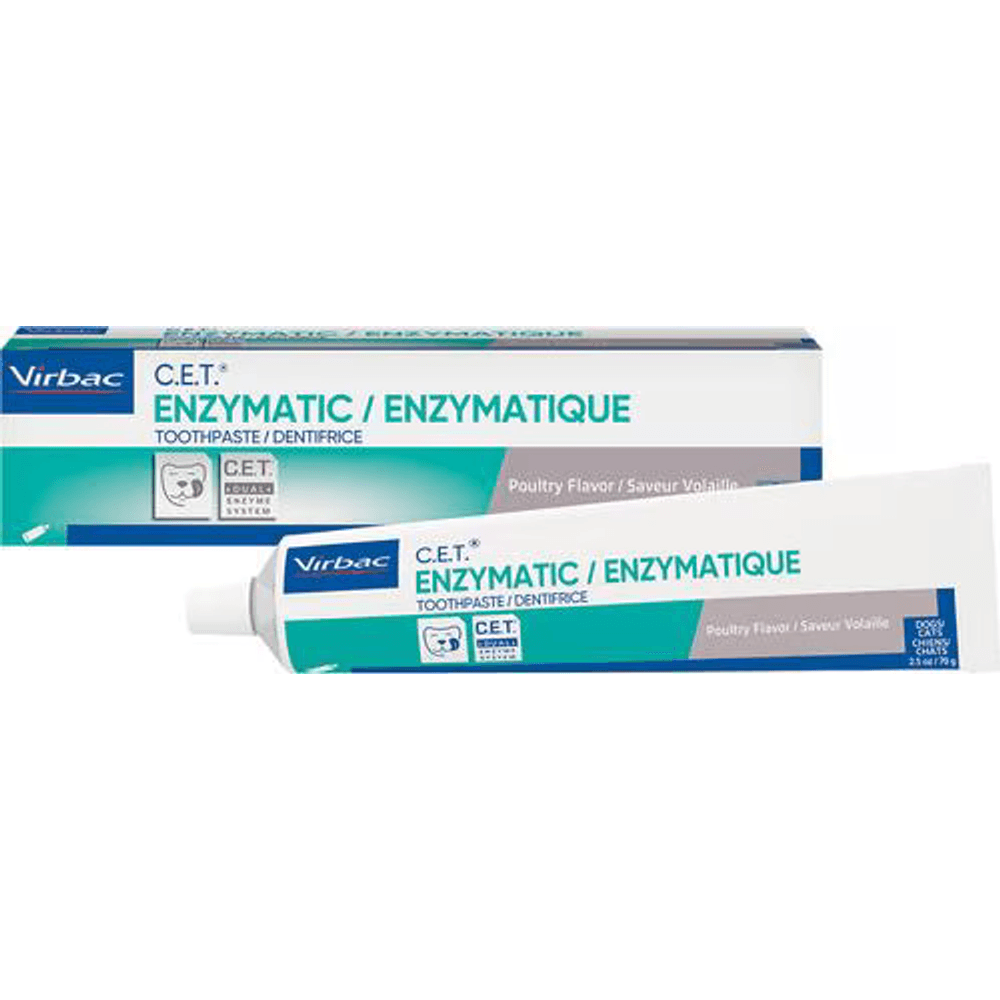
An enzymatic poultry-flavored toothpaste for daily brushing, the home dental care with the strongest evidence.
Webvet may earn a commission when you click through to Chewy, at no extra cost to you.
If the reviews leave you unsure, a toothbrush settles the question more reliably than any treat. Brushing has the veterinary backing that lactoferrin treats lack.
 $65 · no membership
Have a health question about your dog?
A licensed vet can assess your dog over video and prescribe online when it's appropriate.
 Talk to a vet
- Licensed vets
- All 50 states
- same-day Rx
Webvet may earn a commission if you book.
Are lactoferrin chews safe for dogs?
Is lactoferrin safe for dogs? Nothing in the sources reviewed here points to a specific safety problem with the small amount of lactoferrin in these chews. The bigger safety questions come from the rest of the treat: its allergens, its calories, and how your dog eats it.
A review of food allergies in dogs lists beef, dairy products, chicken, and wheat as the most likely triggers (Mueller, Olivry, and Prélaud, BMC Veterinary Research). The review does not address purified lactoferrin specifically, but a dog with a known food allergy should not get this chew without the vet's approval.
Calories add up quickly. At 1 to 3 treats a day, the chew supplies 29.5 to 88.5 kcal daily. AAHA advises that treats make up no more than 10 percent of a pet's daily calories (AAHA weight management guidelines). The bag itself says it is for intermittent or supplemental feeding only.
The label also warns owners to make sure the treat is chewed properly, because gulping any item can be harmful or even fatal. Veterinary dental guidance agrees that dogs should be supervised with chews, since swallowed large pieces can cause digestive problems.
Is lactoferrin good for dogs overall?
Lactoferrin benefits for dogs are mostly theoretical so far. Lactoferrin is not an essential nutrient for dogs, and dental benefits have not been shown in dogs. The brand says the chew is safe for puppies over 12 weeks old. Call your vet promptly if you notice:
- Vomiting, diarrhea, or itchy skin after starting the chew
- Gagging, coughing, or repeated swallowing after a treat
- Bleeding gums, loose teeth, or bad breath that persists despite home care
Lactoferrin chews vs. VOHC-accepted dental chews
The Veterinary Oral Health Council (VOHC) does not test products itself. It reviews companies' clinical data and awards a Seal of Acceptance when a product meets its standards for plaque or tartar control (VOHC). The 2019 AAHA dental guidelines say only VOHC-accepted products have met preset standards for that job.
On the VOHC accepted products list checked October 5, 2026, neither Doggies nor any lactoferrin product appears. Accepted dog chews include:
- Canine Greenies (plaque and tartar)
- OraVet Dental Hygiene Chews for Dogs (tartar)
- C.E.T. VeggieDent Fr3sh Chews for Dogs (plaque and tartar)
- Purina DentaLife Daily Oral Care Dog Treats (tartar)
- Pedigree Dentastix Advanced (plaque and tartar)
- Milk-Bone Brushing Chews and Blue Buffalo Dental Chews (tartar)
So what are the best lactoferrin chews for dogs? There is no evidence-based way to rank lactoferrin dog treats against each other, because none has dental data in dogs. If you still want a dog dental treat with lactoferrin, think of lactoferrin treats as a snack and pair them with a chew that has a seal.
For a dog that needs real plaque control, a chew like Virbac C.E.T. VeggieDent Fr3sh Dental Chews for Medium Dogs (30 ct) carries a VOHC seal for plaque and tartar that lactoferrin treats do not. Our guide to vet recommended dog dental chews covers sizes and choices for different dogs.
If your dog will not chew at all, dog dental water additives are another route, though the evidence varies by product. Our Pethis dental water review walks through one popular option in the same detail as this article.
A home dental routine that keeps tartar down
No chew replaces the basics. AVDC guidance calls brushing the single most effective way to maintain a dog's oral health between professional dental exams. AAHA adds two details owners often miss: brushing must be daily to help, and it removes plaque, not hardened calculus.

What keeps tartar off dog's teeth?
Daily brushing is what keeps tartar off dog's teeth, because it removes soft plaque before it hardens into tartar. A VOHC-accepted chew can add tartar control on top of brushing. Once tartar has formed, brushing will not lift it, so your veterinarian will need to assess your dog's mouth and advise on a professional cleaning.
A practical routine looks like this:
- Brush once a day with a dog toothpaste; our step-by-step guide shows how to brush dogs teeth
- Add one VOHC-accepted chew sized for your dog, and supervise while it is eaten
- Count chews and treats within the 10 percent daily calorie limit
- Book a veterinary dental exam, and go sooner if breath, gums, or eating change
Skipping this routine has costs. Plaque left in place leads to gingivitis and then periodontal disease in dogs, which our guide covers in detail. Professional cleanings are not cheap either; our breakdown of dog teeth cleaning cost shows what to expect.
Choosing any treat for a dog in a dental routine still comes down to calories and ingredients. For lower-calorie options, see our guide to healthy dog treats.
Lactoferrin dog chew questions
Frequently Asked Questions
Do dogs need lactoferrin?
No dietary requirement exists. Lactoferrin occurs naturally in saliva, and dietary lactoferrin is not recognized as an essential nutrient in the AAFCO dog food nutrient profiles, as the Doggies label itself notes. A complete and balanced diet covers your dog's nutritional needs without a lactoferrin supplement.
What is the healthiest thing for a dog to chew?
A chew that is safe for the teeth and has dental evidence, such as a VOHC-accepted chew. Chew hardness matters: AAHA's dental guidelines say there is not a strong rationale for hard treats such as antlers or bones that could damage teeth. You may hear of a thumbnail test for judging hardness, but the veterinary sources reviewed here do not define one, so ask your vet which chews suit your dog.
What ingredients to stay away from in dog treats?
Watch for xylitol in treats and dental products. The FDA warns that xylitol can trigger a rapid insulin release in dogs that drops blood sugar within 10 to 60 minutes (FDA). Also limit high calorie treats, keeping all treats under 10 percent of daily calories, and avoid known allergens if your dog has a food allergy.
$65 · no membershipHave a health question about your dog?
A licensed vet can assess your dog over video and prescribe online when it's appropriate.
Talk to a vet- Licensed vets
- All 50 states
- same-day Rx
Webvet may earn a commission if you book.
Veterinarian · BVMS MRCVS
Dr. Pippa Elliott, BVMS, MRCVS, is a veterinarian with nearly 30 years of experience in companion animal practice. Dr. Elliott earned her Bachelor of Veterinary Medicine and Surgery from the University of Glasgow. She was also designated a Member of the Royal College of Veterinary Surgeons. Married with 2 grown-up kids, Dr. Elliott has a naughty Puggle named Poggle, 3 cats and a bearded dragon.
Related reading

In Home Pet Euthanasia: Cost, What Happens, and How to Choose a Provider

Dog Dementia: Signs, Stages, Treatment, and When to Say Goodbye

Dog Cold Symptoms: Treatment and How to Tell It From Kennel Cough
