Periodontal Disease in Dogs: Signs, Causes & Proactive Support
Learn how periodontal disease develops, which dental signs need a vet visit, and where brushing and proactive everyday dental support fit before symptoms appear.
Medically reviewed by Dr. Athena Gaffud, DVM · Last reviewed

This article contains affiliate links. Webvet may earn a commission when you buy through them, at no extra cost to you.
Periodontal disease in dogs affects the gums and other tissues that hold the teeth in place. It can begin with inflammation along the gumline and progress to damage beneath it, where an owner cannot see the full problem. Persistent bad breath, bleeding gums, visible tartar or a loose tooth should prompt a veterinary visit.
A daily dental routine has a different job: supporting oral hygiene before signs appear. Understanding that distinction helps you make a useful choice today, whether your dog needs an examination or you are building a consistent toothbrushing habit.
Sponsored content: WebVet maintains editorial control over this article, which is sponsored by PetLabCo.®. WebVet may earn a commission from purchases made through its affiliate links.
Key Takeaways
- 1Visible tartar, bleeding gums, unusual bad breath or loose teeth mean a vet visit.
- 2Start daily toothbrushing and a consistent dental routine before signs appear.
- 3Dog dental supplement products can provide proactive support alongside brushing, but they do not prevent or treat periodontal disease.
What is periodontal disease in dogs?
Periodontal disease involves the tissues that support the teeth, including the gums, periodontal ligament and surrounding bone. Bacterial plaque is important in its development. Plaque is a film that accumulates on tooth surfaces; when it mineralizes, it becomes calculus, commonly called tartar. The immune response to plaque can contribute to inflammation and tissue damage.
Two terms help explain the difference:
- Gingivitis means inflammation of the gums without loss of the tooth’s supporting attachment.
- Periodontitis involves destruction of supporting tissues, including attachment and bone loss.
Gingivitis and periodontitis in dogs are related, but they are not interchangeable diagnoses. Gingivitis can improve with appropriate professional care and plaque control. Established loss of tooth support is a more serious problem and is not ordinarily reversed by home care. Not every inflamed gum inevitably progresses in the same way.
The AAHA dental-care guidelines explain this relationship between plaque, inflammation and supporting tissues. A veterinary assessment matters because the amount of tartar you can see does not reveal everything happening underneath the gums. A cleaner-looking crown alone cannot establish that the tooth is healthy.
Signs that mean your dog needs a veterinary visit
Signs of periodontal disease in dogs overlap with other mouth problems. An owner can notice changes, but cannot identify the cause or assign a disease stage from those changes alone. Contact your veterinarian about:
- Bad breath that is persistent, unusually strong or different from your dog’s normal breath.
- Red, swollen or bleeding gums.
- Visible yellow or brown tartar, particularly around the gumline.
- Loose or broken teeth, or a tooth that appears discolored.
- Dropping food, chewing differently, reduced appetite or new reluctance to chew.
- Drooling, pawing at the mouth or swelling around the face or mouth.
Some dogs continue eating despite oral discomfort. That is why finishing dinner should not override bleeding, a loose tooth or a concerning change in chewing. Conversely, breath odor by itself does not confirm periodontal disease. WebVet’s guide to dog bad breath causes explains the broader reasons a veterinarian may investigate.
Tell the clinic what changed and when you first noticed it. If your dog has marked swelling, significant bleeding, obvious pain, cannot eat or seems generally unwell, explain that when you call so the team can advise how quickly to attend. Dogs in discomfort may bite when their mouths are handled; a forced inspection is unnecessary.
Which path applies today?
| What you notice | The useful next step | Where an everyday routine fits |
|---|---|---|
| Signs already present: unusual breath, bleeding, tartar, pain or loose teeth | Arrange veterinary assessment and follow the individual care plan | Ask the veterinarian when and how home care should resume |
| No signs noticed and comfortable eating and handling | Keep regular dental checks and build daily toothbrushing | Consider suitable proactive support alongside that routine |
How the stages of periodontal disease differ
Veterinary periodontal staging, or canine periodontal grading, describes the condition of an individual tooth and its supporting tissues. It is not a scale based on how brown a dog’s teeth look. Different teeth in the same mouth can have different stages, and important disease may be hidden below the gumline.
The American Veterinary Dental College’s terminology distinguishes:
- PD0: Clinically normal tissues.
- PD1: Gingivitis without attachment loss.
- PD2: Early periodontitis, with less than 25% attachment loss.
- PD3: Moderate periodontitis, with 25–50% attachment loss.
- PD4: Advanced periodontitis, with more than 50% attachment loss.
Those percentages refer to loss of attachment, not the percentage of the tooth covered with tartar. Your veterinarian assesses the mouth using examination, periodontal probing and dental radiographs, generally with the patient anesthetized for accurate assessment. A photograph cannot provide the same information.
Why stage 1 gingivitis deserves attention
The phrase “stage 1 periodontitis” can create confusion. In this veterinary staging system, stage 1 is gingivitis, with no attachment loss. It deserves attention because the gums are already inflamed, even though the destructive changes of later stages have not been established. Ask your veterinarian what professional care and home routine fit that finding; do not use “early” as a reason to ignore it.
Stage 3 or stage 4 periodontal disease needs an individual tooth-by-tooth assessment. Severe or advanced disease cannot be graded accurately at home, and a mild-looking area is not proof that deeper structures are unaffected. The stage helps the veterinary team explain options and prognosis rather than giving an owner a home-treatment recipe.
Why periodontal disease develops
Bacterial plaque and the body’s inflammatory response are central to periodontal disease. Tartar can provide a rough surface where plaque accumulates, but tartar is not the whole disease process. The supporting tissues, the local environment around a tooth and the individual dog all matter.
Factors your veterinarian may consider include:
- Small body size and crowded or misaligned teeth that complicate cleaning.
- Age and the dog’s history of plaque accumulation and dental care.
- Retained teeth or other local areas that trap debris.
- Individual chewing patterns, oral anatomy and general health.
- Whether a daily home routine is practical and comfortable for this dog.
Cornell’s periodontal-disease guide notes the importance of smaller breeds and increasing age. Periodontal disease in senior or older dogs is therefore worth discussing proactively, but it is not limited to seniors. A young adult dog can also need dental assessment.
The causes are not a reason to blame yourself or assume the outcome is fixed by breed. They help explain why one dog may need a different professional schedule or home-care approach from another. The PetLabCo.® guide to periodontal disease in dogs provides additional owner-oriented background on the condition.
 $65 · no membership
Have a health question about your dog?
A licensed vet can assess your dog over video and prescribe online when it's appropriate.
 Talk to a vet
- Licensed vets
- All 50 states
- same-day Rx
Webvet may earn a commission if you book.
What happens at the veterinary dental assessment?
If you are searching for treatment for periodontal disease in dogs, the next step is an examination rather than choosing a product. Your veterinarian considers the signs, medical history and condition of individual teeth. A conscious mouth check can identify concerns, but it cannot reveal every problem below the gumline or replace a thorough dental assessment.
Depending on the findings, the veterinary plan may involve professional cleaning, dental radiographs, periodontal care or extraction of teeth that cannot be maintained comfortably. Professional cleaning removes deposits above and below the gumline, with polishing afterward. Treatment for stage 3 or stage 4 disease can therefore differ between teeth and between dogs. This is a clinical decision, not something to choose from a home grading chart.
Useful questions for the appointment include:
- Which teeth are affected, and what do the radiographs and probing show?
- What is needed to address discomfort and the diseased teeth?
- How will anesthesia and monitoring be tailored to my dog?
- When should home care restart, and are any chewing activities restricted?
- What follow-up examination or dental schedule do you recommend?
Anesthesia allows a more complete examination and care while the patient remains still, but it is not risk-free. Discuss your dog’s individual assessment and monitoring with the veterinary team. WebVet’s dog teeth cleaning cost guide covers the separate budgeting questions; an estimate for your dog depends on the findings and proposed work.
Why home remedies cannot repair periodontal damage
No natural home remedy can replace veterinary treatment for periodontal disease in dogs. The limitation is anatomical: a rinse, powder or chew cannot rebuild lost periodontal attachment, repair damaged bone or determine which teeth need treatment. A veterinarian-directed brushing routine can help control plaque in a comfortable mouth, but home care and professional care have different roles.
Do not scrape hardened tartar from your dog’s teeth or use household disinfectants, vinegar or other improvised treatments on sore gums. Human oral-care products should not be substituted for a dog’s veterinary plan. Forceful brushing can also hurt inflamed tissue and make future handling harder, so ask for guidance when signs are present.
The distinction between reversal and management is important:
- Gingival inflammation may improve when the cause is addressed appropriately.
- Established periodontitis involves lost support; improvement in breath does not prove that support has returned.
- A mouth that looks cleaner may still need assessment beneath the gumline.
- Home care after treatment should follow the instructions for that individual dog.
There is no home cure for stage 4 periodontal disease. A senior dog’s age does not turn a home remedy into an equivalent alternative to veterinary assessment. If you are worried about the procedure, recovery or cost, raise those concerns directly so the team can explain options. Avoid letting a search for a natural fix postpone that conversation.
What periodontal disease means for quality of life
There is no reliable lifespan countdown for a dog with periodontal disease, often called gum disease. The diagnosis does not by itself predict that a dog will die soon. Its effect depends on the affected teeth, discomfort, severity, other health conditions and the care provided. Statements that a particular stage automatically means a set number of months or years are not a useful basis for decisions.
Untreated periodontal disease can mean ongoing oral discomfort, loss of tooth support and more difficult care needs. At the same time, noticing a dental problem does not by itself establish an irreversible decline in your dog’s overall quality of life. Your veterinarian can discuss the outlook after examining the actual mouth.
Focus on observations you can report:
- Comfortable eating and whether food is dropped or avoided.
- Willingness to play with familiar toys.
- Changes in mouth handling, sleep or normal behavior.
- Any recurrence of bleeding, swelling or unusual breath.
These observations support follow-up; they do not replace it. Periodontal disease has been studied in relation to other health problems, but that does not justify predicting heart or kidney failure from a dog’s breath or tartar. Discuss the whole dog with the veterinary team and follow the recommended dental plan.
Building a daily routine before signs appear
The best time to make dental care familiar is before your dog shows signs of disease. Begin with a veterinary discussion about the mouth’s current condition, then build a consistent routine around daily toothbrushing and appropriate checkups. Even a dog with no obvious signs benefits from regular assessment because visible surfaces do not show every problem.
For a comfortable mouth, use a dog-appropriate toothbrush and toothpaste and introduce handling gradually. WebVet’s guide to how to brush a dog’s teeth walks through the technique. Brushing removes plaque; it does not remove established calculus or eliminate the need for professional dental care.
If you arrived here wondering how to prevent periodontal disease, the practical conversation is about consistent plaque control and veterinary care. The PetLabCo.® products below provide proactive support within that routine. They do not prevent or treat disease, and they are not substitutes for brushing. When used consistently as directed, suitable products may support dental hygiene and gum health while helping freshen breath and maintain cleaner teeth.
Choosing a support format
- Check age, body weight, ingredients and any medical cautions.
- Choose a role that fits your dog and household; all four products are not required together.
- If signs appear, return to the veterinary pathway instead of adding products or increasing a serving.
ProBright® Advanced One: a premeasured food topper
ProBright® Advanced One offers individually sealed dental-powder sachets for a food-based routine. The convenience is a premeasured format in a weight-specific carton, which can make the correct daily portion easier to organize at home or when someone else feeds the dog.

Give the dental powder on food at mealtime, preferably wet food or moistened kibble, following the matching carton directions. It is not a powder to add to drinking water. For dogs under 4 pounds, the Extra Small directions call for half a packet; the other listed weight groups use one packet of the appropriate size. The sachet contents vary across sizes, so one packet does not mean one universal amount.
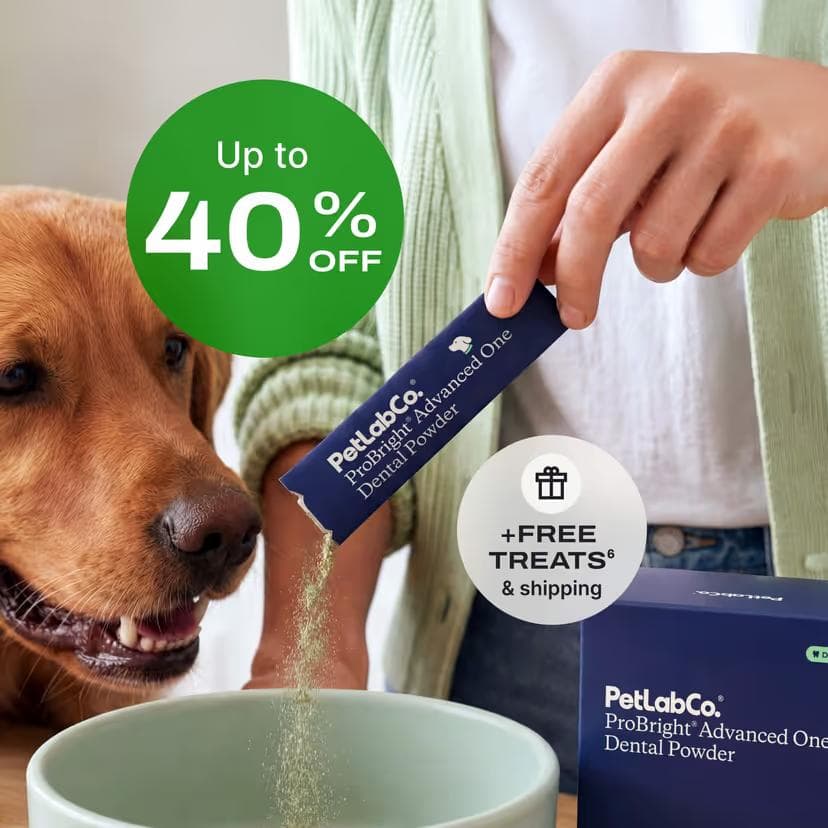
The same ProBright Advanced dental powder in single-serve daily packets. Tear open, pour over food, and target tartar buildup and bad breath with no scooping.
Webvet may earn a commission when you click through to PetLabCo.®, at no extra cost to you.
The label is for dogs 12 weeks and older and recommends a veterinary examination before use. It includes a hyperthyroid-disease caution, and safety in pregnant or breeding animals has not been established. Those details belong in the suitability check before adding the powder to a daily routine.
ProBright® Advanced: the multi-serve tub
ProBright® Advanced is the multi-serve tub option for owners who prefer measuring powder at mealtime. Choose the correct weight-specific tub and use its supplied scoop. This is an alternative format to the sachets, not a reason to give both powders together.
The tub and sachet serving weights differ. For example, the current Medium tub for dogs weighing 25–75 pounds supplies a 2-gram daily scoop, while the Medium Advanced One sachet contains 1.5 grams. Do not replace one packet with a guessed scoop or carry a scoop from a different product into the new tub.
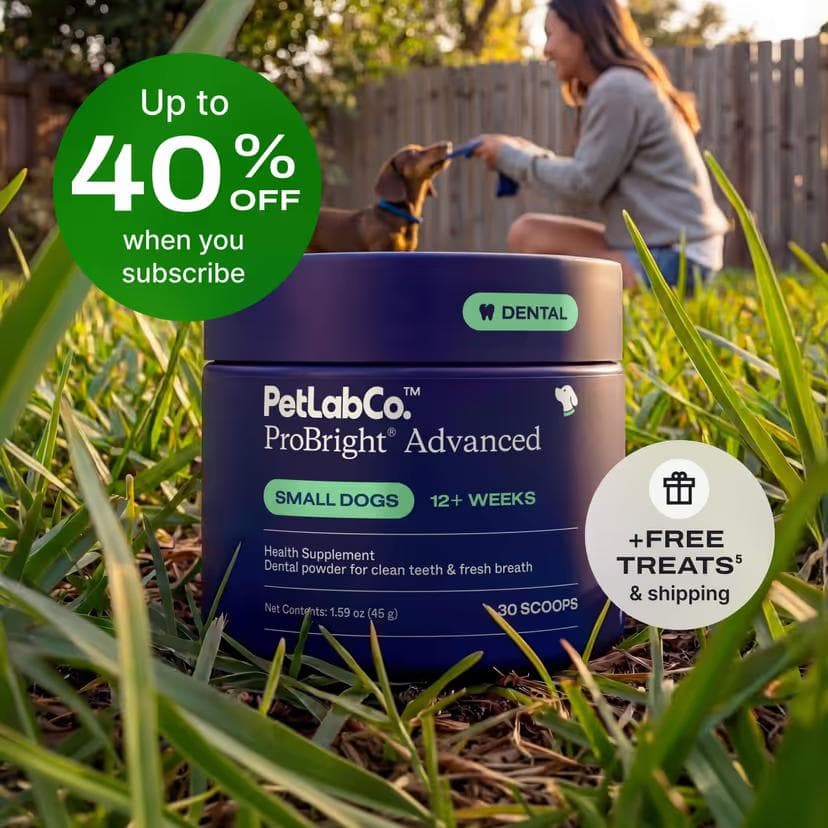
An at-home dental powder that targets tartar buildup and helps reduce bad breath in dogs. Sprinkle one scoop over food daily, 30 scoops per tub.
Webvet may earn a commission when you click through to PetLabCo.®, at no extra cost to you.
Like the sachets, the tub powder goes on food, preferably wet food or moistened kibble, and does not belong in the water bowl. Its label is for dogs 12 weeks and older, with the same need to consider hyperthyroid disease and the unestablished safety in pregnant or breeding animals. A simple practical choice is to keep the matching scoop inside or beside its own labeled tub.
Prebiotic Dental Sticks: supervised chewing
Prebiotic Dental Sticks provide an optional chewing format alongside daily brushing. Their ridged shape provides mechanical cleaning as your dog chews, helping support everyday plaque control. Choose this role for a dog who can comfortably chew and whose veterinarian has not advised a restriction. Related reading: Petful’s guide to removing plaque from dog teeth.

The current directions are half a stick daily for dogs under 25 pounds, one for 25–50 pounds, one and a half for 51–75 pounds, and two for dogs over 75 pounds. Check the package and ask the manufacturer or your veterinarian if your dog falls between the printed weight bands. The label is for dogs 12 weeks and older.
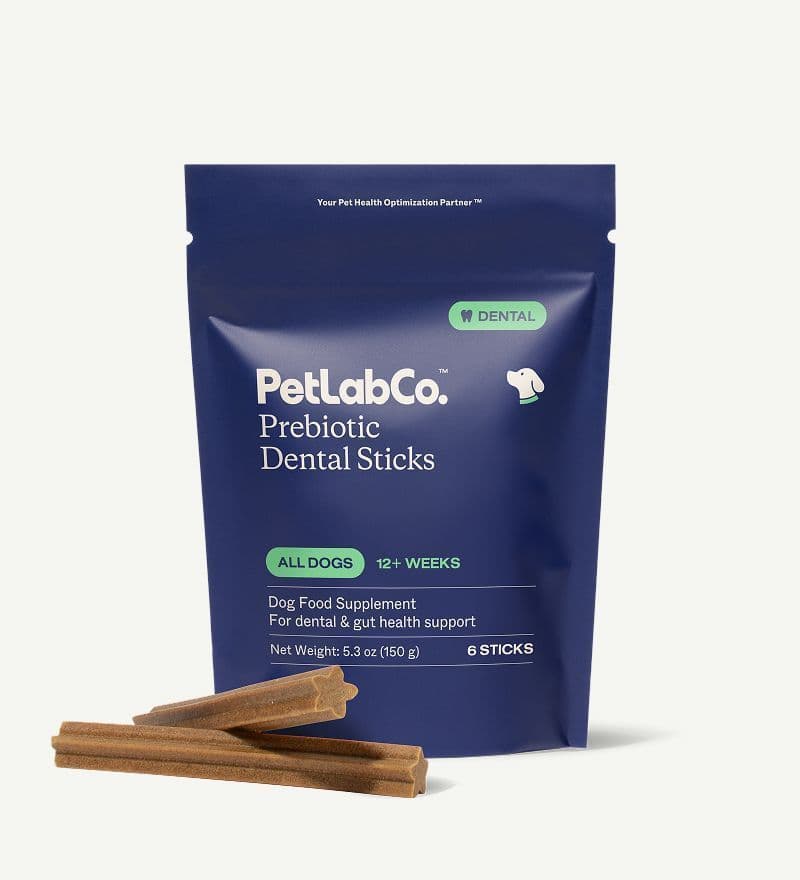
Ridged daily dental chews that use abrasive action to target plaque and tartar, with chicory root prebiotic for gut support and peppermint oil for fresher breath. For dogs 12 weeks and older.
Webvet may earn a commission when you click through to PetLabCo.®, at no extra cost to you.
Supervise chewing and provide fresh drinking water. These sticks are supplemental feeding, not a complete meal, and their ingredients include bovine gelatin and cultured skim milk. Account for that if your dog has a prescribed diet or food sensitivity. Bring the package to your veterinarian if you need help matching the ingredients or format to your dog’s existing routine.
Dental Formula: measure it into fresh water
Dental Formula is the water-additive option for proactive support between brushing sessions. It can suit a household that already refreshes and measures the dog’s water consistently. The water format has its own directions and should not be confused with the two food powders.

Shake well and mix one teaspoon, or 5 mL, with 8 ounces of fresh water once daily as directed. Measure the dilution; a full bottle is not one serving, and the liquid is not given as undiluted medicine. Keep fresh water available and pay attention to normal drinking when introducing any change to the bowl.
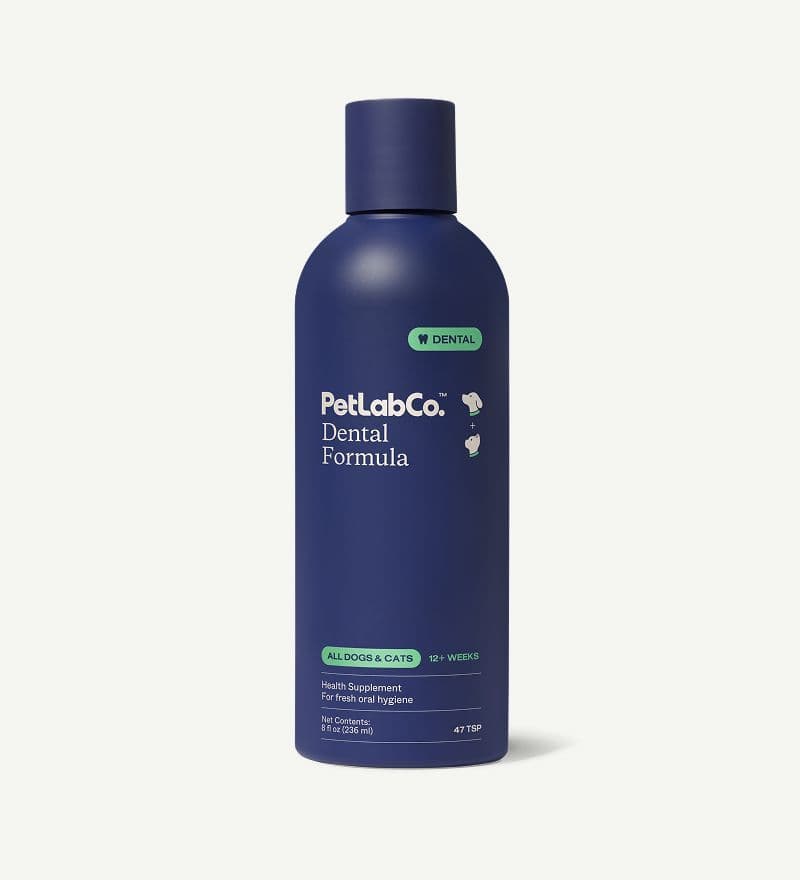
A tasteless, odorless add-to-water dental formula with stabilized chlorine dioxide that helps target tartar buildup and freshen breath. One teaspoon in 8 ounces of water daily, 47 servings per bottle.
Webvet may earn a commission when you click through to PetLabCo.®, at no extra cost to you.
The current label says not to use this formula in animals with chronic diarrhea and advises caution during pregnancy. Its product page does not establish the same 12-week minimum stated for the powders and sticks. Ask your veterinarian about the exact formula’s suitability for a puppy rather than borrowing another product’s age directions.
Make the routine easy to repeat
A sustainable routine is usually specific and simple. Decide who brushes, when the session happens, and which optional format fits the feeding or water schedule. Put the correct instructions where the person providing care can find them. That matters particularly in homes where several people share the job.

For two dogs of different sizes, keep their portions and product sizes separate. A useful handoff says “use this dog’s carton and these directions,” rather than “give a scoop of dental powder.” Record new products so the veterinary team can review the complete routine, including treats, supplements and any prescribed care.
Bring the plan to dental checkups and adjust it when your veterinarian recommends. Choose a routine your household can repeat consistently. The goal is a comfortable daily habit that supports hygiene, with a clear response to any new sign of discomfort or disease.
Frequently Asked Questions
What kills periodontal bacteria?
Professional cleaning physically removes bacterial plaque, including deposits below the gumline that home brushing cannot fully address. A dog’s mouth is not meant to be sterilized with a home disinfectant. The veterinary team decides what the affected teeth need; simply trying to kill bacteria does not repair lost support. Do not use household antiseptics or leftover antibiotics. Fresher breath is not evidence that periodontal disease has been treated.
Can gums grow back from periodontal disease?
Inflamed gums may look and feel healthier after appropriate care, but lost attachment is not the same as temporary swelling. Established periodontal damage is not normally reversed by a home routine or supplement. The outlook depends on the individual tooth and the supporting tissues your veterinarian assesses. Ask what improvement is realistic and what follow-up is needed instead of assuming the gumline will return to its earlier position.
Do gums tighten after tartar removal?
Gum appearance can change as inflammation improves after professional care, but that does not guarantee a loose tooth will become secure. Tartar removal is only one part of assessing the mouth; supporting bone and attachment also matter. Follow the veterinary team’s eating, chewing and home-care instructions, and attend the follow-up assessment. Report continued bleeding, discomfort or difficulty eating rather than assuming it is an expected stage of recovery.
About PetLabCo.® and this guide
PetLabCo.® offers several dental-care formats for different daily routines. This guide distinguishes their labeled uses from the diagnosis and treatment of periodontal disease, using the current product directions and veterinary dental guidance.
Clinical sources include AAHA’s periodontal staging guidance, its home-care recommendations, AVDC terminology and AVMA’s owner dental-care information.
PetLabCo.® products are not intended to diagnose, treat, cure or prevent any disease. Consult your veterinarian before starting any new supplement regimen. This guide provides general education and does not replace veterinary assessment.
$65 · no membershipHave a health question about your dog?
A licensed vet can assess your dog over video and prescribe online when it's appropriate.
Talk to a vet- Licensed vets
- All 50 states
- same-day Rx
Webvet may earn a commission if you book.

Veterinarian · DVM
Athena Gaffud, DVM, is a licensed veterinarian and writer based in the Cagayan Valley of the northern Philippines. She runs the website countryvetmom.com. Dr. Gaffud earned her Doctor of Veterinary Medicine degree from the University of the Philippines Los Baños in 2011, ranking in the top 10 and receiving the Best Undergraduate Thesis Award in Large Animals. With over a decade of experience, she has worked as a researcher, a practitioner for small and large animals, and in veterinary technical sales, marketing, and pet insurance. A published author, Dr. Gaffud promotes responsible pet ownership and combats misinformation on animal care through her platforms, including the DocAthena Facebook Page and DocAthena YouTube channel. She is a writer and editor for various pet-related websites such as Total Vet, Honest Paws, PangoVet, Dogster, Catster, My Best PH, Paw Origins, Bully Max, Not a Bully, Paws and Claws CBD, many others. She was also cited in different pet-related media articles such as The Dog People, USA Today, Newsweek, New York Post, Reader’s Digest, Smithsonian Magazine, Woman’s World, Dog Time, Patch, Kinship, Martha Stewart, and many others. Moreover, she is also a published fiction author on Kindle.


