High Fiber Dog Food: Which Dogs Benefit and How Much Fiber Is Enough
High fiber dog food can help some dogs with constipation, loose stool, weight and anal glands. Learn how much fiber is enough, how to read crude fiber on a label and how to add it safely.

BVMS MRCVS
Medically reviewed by Dr. Pippa Elliott, BVMS MRCVS · Last reviewed

This article contains affiliate links. Webvet may earn a commission when you buy through them, at no extra cost to you.
Sponsored by JustFoodForDogs. This article draws on published veterinary and nutrition sources. WebVet may earn a commission through links in this article.
High fiber dog food can help some dogs with stool quality, fullness and weight control, but more fiber is not automatically better. The right amount depends on why you are adding it, what your dog eats now, and whether a veterinarian has a specific target in mind.
This guide explains what the fiber number on a label actually means, which dogs tend to do well with more fiber and which do better with less, and how to add it without upsetting digestion. Whole-food recipes such as JustFoodForDogs Fish & Sweet Potato, built on sweet potatoes, green beans and broccoli, show how fiber can come from ordinary ingredients rather than an added powder.

 Sponsored
Have a health question about your dog?
Talk to a licensed vet at Dutch over video or message, including nights and weekends.
Use code Pets60
Plans start at $12/month · covers up to 5 pets
- Licensed vets in most states
- Rx for 150+ conditions
- 4.7 on Trustpilot
What Counts as High Fiber Dog Food?
A high fiber dog food is one whose fiber content sits well above a typical maintenance diet once you compare foods on the same dry matter basis, usually because it is meant to bulk stool, slow digestion or help a dog feel full. The crude fiber guarantee on the label is only a maximum for one lab measurement, so it understates the total dietary fiber the food actually contains.
- 1More fiber can help some dogs with constipation, certain types of diarrhea, weight loss and anal gland trouble, while puppies and underweight dogs usually need less.
- 2The crude fiber percentage on a label is a maximum that misses much of the soluble fiber, so compare foods on a dry matter basis.
- 3Increase fiber gradually over a week or more and keep water within reach.
- 4If your dog has a health condition, check with your veterinarian before changing the diet, and call right away for straining, vomiting or a swollen belly.
A bag may say high fiber without explaining what its fiber number means, and that number understates total fiber. Crude fiber captures only a variable portion of the insoluble fiber in a food and does not report total fiber (Today's Veterinary Practice); soluble and fermentable fibers, such as those in pumpkin, oats and psyllium, are largely missed. That is why two foods with the same crude fiber number can behave very differently in the gut, and why a high-fiber diet is better judged by its ingredients and its dry matter figures than by one number.
Which dog food is highest in fiber? Veterinary therapeutic diets formulated for weight management or diabetes often carry high amounts of insoluble fiber (Today's Veterinary Practice). Among everyday foods, kibble can look higher in fiber than a wet or canned food on the label simply because wet, canned and fresh foods hold far more water, so the biggest number on the bag is not always the most fiber on a dry matter basis.
Fiber-focused fresh recipes take a different approach from chasing the biggest number. JustFoodForDogs Metabolic + Weight Control is a Vet Support recipe that JustFoodForDogs describes as having a balanced fiber profile, formulated to support fullness, digestive wellness and healthy stool quality. JustFoodForDogs asks owners to check with their vet before ordering any Vet Support diet.
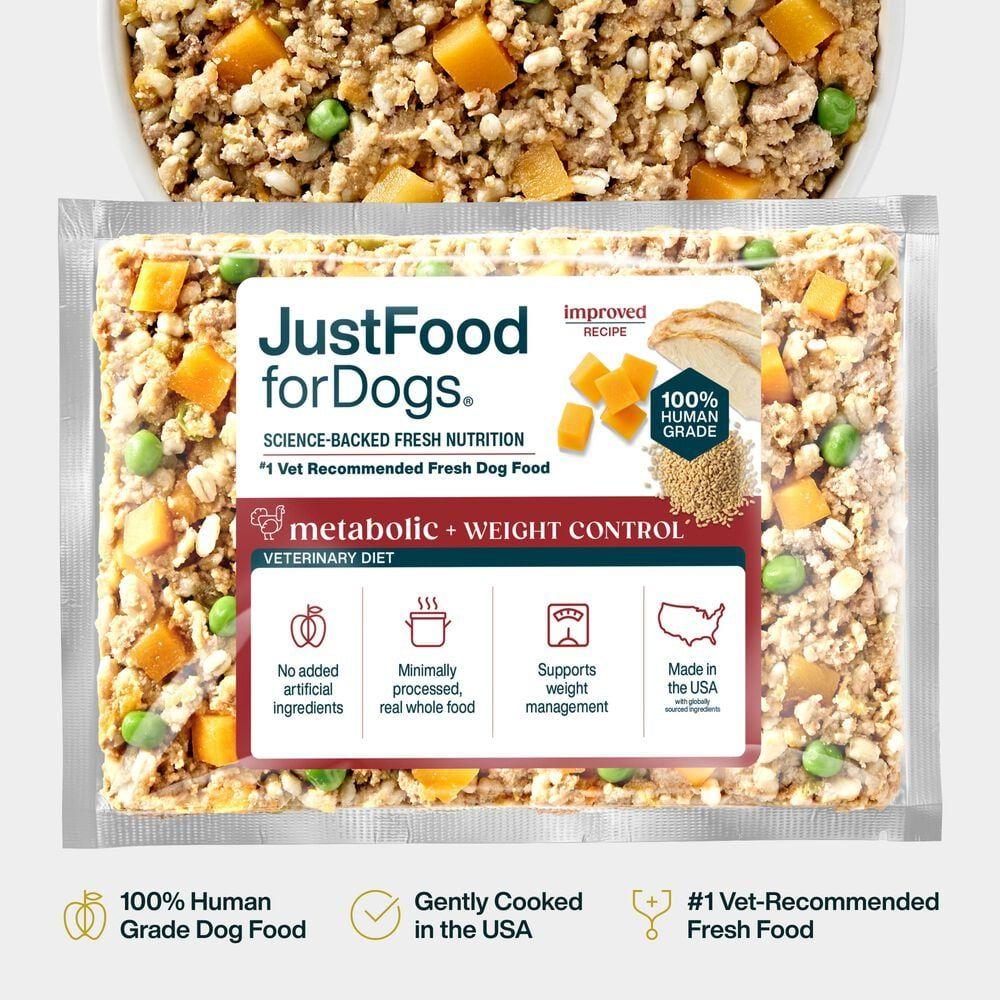
A fiber-focused fresh recipe from the JustFoodForDogs Vet Support line, with fiber from barley, butternut squash and peas. Review it with your veterinarian to see whether it fits your dog's weight or digestive plan.
Webvet may earn a commission when you click through to JustFoodForDogs, at no extra cost to you.
How Much Fiber Does a Dog Need?
There is no single fiber requirement for dogs. Pet food labels only have to guarantee a maximum crude fiber percentage, not a minimum (AAFCO), and healthy adult dogs do well on a wide range of fiber levels, so how much fiber dogs need comes down to the job you want fiber to do.
That is also why there is no standard number of grams of fiber a dog needs each day, and no universal fiber dose; veterinary guidance on standardized fiber doses is limited. A veterinarian treating constipation, weight loss or chronic diarrhea sets an individual target, often by choosing a specific diet, then adjusts it based on stool and body weight. For a healthy dog, the practical rule is simpler: change one thing at a time, increase fiber gradually, and give extra water.
To compare fiber content across kibble, canned and fresh foods, convert the label figures to a dry matter basis. The label crude fiber is stated "as fed", including water, so a fresh food with a high moisture percentage looks low in fiber next to kibble on the label. The worked example below shows how to read one real label, with a generic kibble added only to show the same arithmetic.
| As-fed to dry matter crude fiber conversion | Label crude fiber | Moisture percentage | Dry matter | Crude fiber, dry matter basis |
|---|---|---|---|---|
| JustFoodForDogs Metabolic + Weight Control (label maximums) | 3.0% max | 76% max | At least 24% | At most 12.5% |
| Generic dry kibble (assumed example values) | 4.0% | 10% | 90% | About 4.4% |
The formula is the same for any food: divide the label crude fiber by 100 minus the moisture percentage, then multiply by 100. For the Metabolic + Weight Control label, 3.0 divided by 24, times 100, gives 12.5. Because both label figures are maximums, that result is a ceiling, not a typical analysis or a measured value, and the illustration is a lesson in reading the fiber percentage on a label, not a ranking of foods. If your veterinarian recommends a crude fiber level, ask for it as a dry matter figure so you can compare foods fairly.
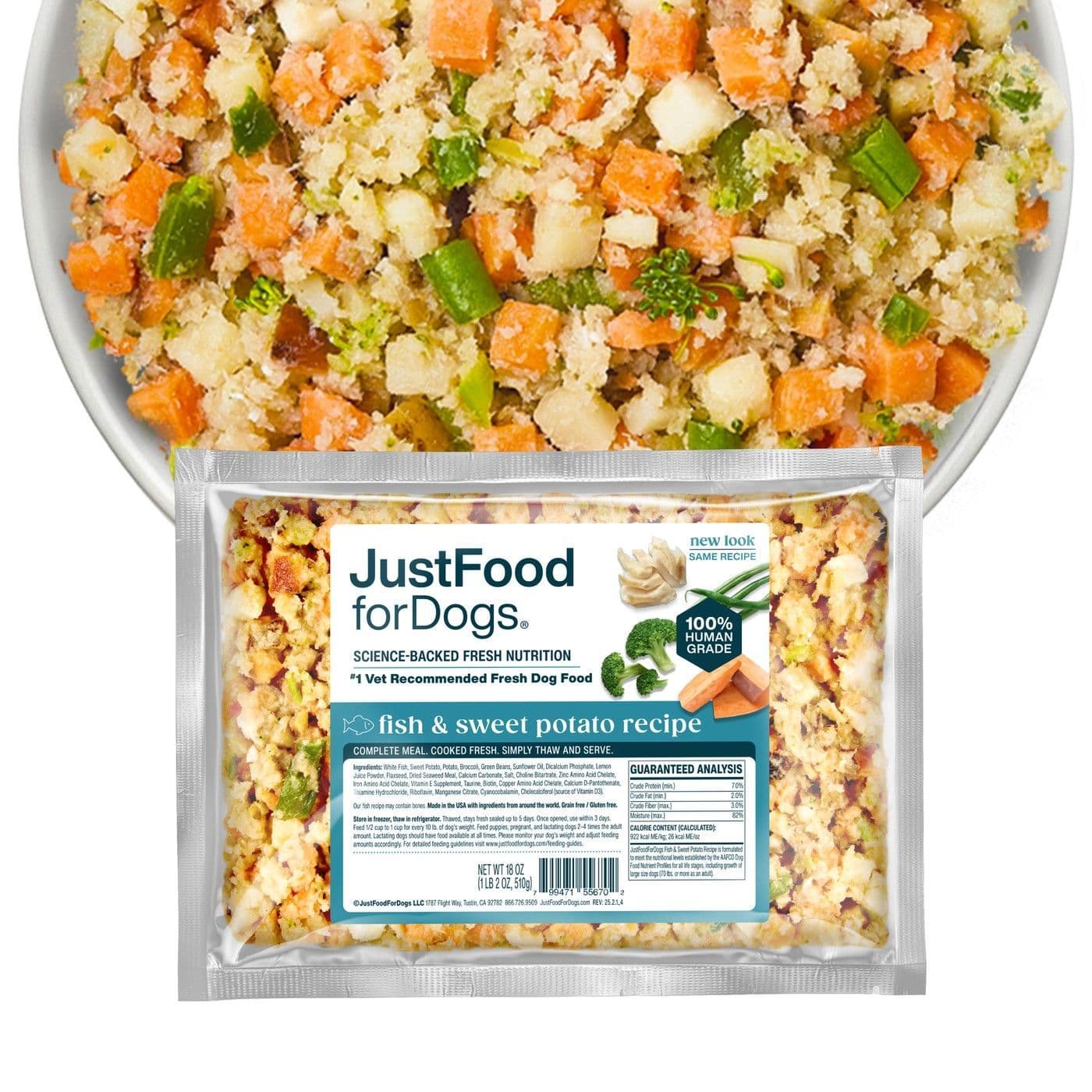
An everyday complete recipe built on wild-caught white fish, sweet potatoes, potatoes, green beans and broccoli, formulated to meet AAFCO nutrient profiles for all life stages.
Webvet may earn a commission when you click through to JustFoodForDogs, at no extra cost to you.
Soluble vs. Insoluble Fiber: What Each Type Does

Is fiber good for dogs? Yes, in sensible amounts. Dietary fiber for dogs helps move food through the gut, shapes stool, feeds beneficial gut bacteria and adds bulk without many calories. The benefits of fiber for dogs depend on which type is in the bowl, because the two main types do different jobs.
- Soluble fiber absorbs water and forms a gel. Soluble fibers such as pectins and gums absorb water best and are usually highly fermentable, so they can firm up loose stool and soften hard stool. Sources of soluble fiber for dogs include pumpkin, oats, apples, psyllium and beet pulp.
- Insoluble fiber adds bulk. Insoluble fibers such as cellulose increase fecal output and stimulate gut motility (Today's Veterinary Practice). Sources of insoluble fiber for dogs include cellulose, the skins of vegetables, green beans and many whole grains.
- Fermentable and prebiotic fiber feeds the bacteria in the large intestine, which turn it into short-chain fatty acids that nourish the colon lining. Prebiotic fiber in dog food often appears as chicory root (inulin), beet pulp or fructooligosaccharides.
Most plant-based fiber for dogs contains a mix of both types. Pea fiber, coconut fiber and cellulose are mostly insoluble and used for bulk, while chicory root fiber is highly fermentable. Probiotic supplements are sometimes paired with prebiotic fiber, though the two are different things: probiotics are live bacteria, and prebiotics are the fiber they eat.
For most dogs, the best fiber is a blend that comes from whole foods. In JustFoodForDogs Metabolic + Weight Control, for example, the fiber comes from barley, butternut squash and peas, whole foods that each carry a mix of fiber types. What matters most is not chasing one type but getting the right overall amount for your dog.
Fiber for Stool Quality, Diarrhea, and Constipation
Stool quality is the most common reason owners look for more fiber. Because soluble fiber holds water and insoluble fiber adds bulk, the same fiber can help in opposite situations, which is why the advice for helping a dog poop more regularly and the advice for firming up loose stool often overlap.
Can I give my dog fiber for diarrhea? Often yes, when the loose stool is mild and short-lived and the dog is otherwise bright. It tends to help most with large-bowel diarrhea, the frequent and urgent kind that can carry mucus or fresh blood. In a retrospective review of 37 dogs with chronic idiopathic large-bowel diarrhea, adding soluble psyllium fiber to a highly digestible diet under veterinary care produced a very good to excellent response in most of them (Journal of Veterinary Internal Medicine, 2000). Veterinarians call this pattern fiber-responsive diarrhea. Diarrhea with vomiting, blood, lethargy, or in a puppy is not a fiber question and needs a vet.
- Mild diarrhea: small amounts of soluble fiber, such as plain canned pumpkin or psyllium, are a common first step.
- Constipation: a mix of soluble and insoluble fiber plus more water helps soften and move stool. Pumpkin and cooked green beans are easy fiber-rich options.
- Chronic diarrhea, colitis or IBD: these dogs need a diagnosis first, because the right fiber level varies.
For dogs with colitis, read our sister site's guide to colitis in dogs, and for longer-term gut inflammation, Vetstreet's guide to inflammatory bowel disease in dogs explains how veterinarians approach diet. Many of these dogs do well on a highly digestible diet with a moderate, carefully chosen fiber level rather than the highest fiber dog food available.
If your real question is how to firm up runny dog poop after a bout of diarrhea, or why a dog is passing liquid stool, start with what causes diarrhea in dogs. That guide covers bland foods such as scrambled eggs, the fastest safe home steps and when watery stool needs a vet the same day.
Fiber for Weight, Blood Sugar, and Anal Glands

Fiber adds volume without many calories, slows the release of sugar from a meal and makes stool bulkier, so it has a role in weight loss, diabetes and anal gland health. In each case the details belong in a plan with your veterinarian.
- Weight loss: a lower-calorie, higher-fiber food can help a dog feel full on fewer calories, since high-fiber diets tend to have a lower caloric density. Veterinary weight-management diets often pair controlled calories and fat with added fiber. JustFoodForDogs Metabolic + Weight Control takes a different route: JustFoodForDogs describes it as a Vet Support recipe with a balanced fiber profile for dogs needing support with healthy weight management as determined by a veterinarian.
- Blood sugar: fiber can slow how quickly glucose enters the blood after a meal, and veterinary therapeutic diets formulated for canine diabetes often contain high amounts of insoluble fiber (Today's Veterinary Practice). For diabetes in dogs, whether to feed a higher-fiber, lower-carbohydrate diet is your veterinarian's call, because meals are timed with insulin and diet changes can shift insulin needs.
- Anal glands: the same source lists anal gland or sac disease among large-bowel problems where veterinarians may use a diet higher in insoluble fiber, since bulkier stool presses on the glands as it passes. If anal gland trouble is the reason you are adding fiber, read about dog anal gland problems, since infection or impaction needs a vet.
Whatever the goal, the everyday base diet matters as much as any added fiber. For a dog whose sensitive digestion shows up as soft stool, a gentle, low-fat, rice-based recipe with modest fiber can be a simpler starting point than stacking several fiber sources at once.
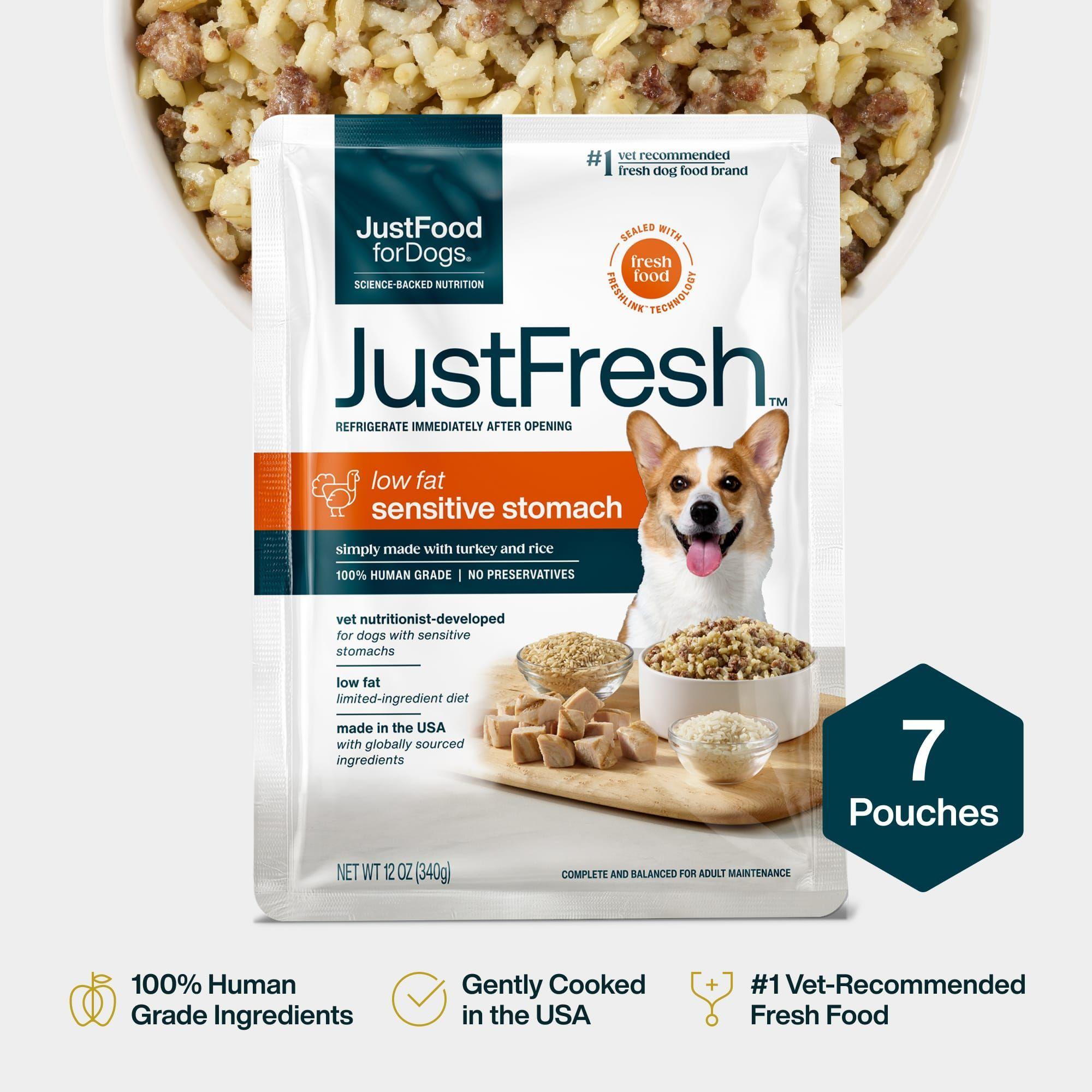
A shelf-stable recipe with turkey, turkey liver, and white and brown rice, which JustFoodForDogs describes as balanced fiber and easy digestion to promote healthy stool quality.
Webvet may earn a commission when you click through to JustFoodForDogs, at no extra cost to you.
Dogs with a history of pancreatitis need the fat level controlled first; fiber can be part of their plan, but the low-fat decision comes first. See WebVet's guide to vet-recommended diets for dogs with pancreatitis and Petful's guide to what dogs with pancreatitis can eat.
| Situation | Usual fiber direction | The vet step |
|---|---|---|
| Mild constipation | May need more fiber with more water, or sometimes less fiber, depending on the cause | See a vet if no stool within 48 to 72 hours, or for straining or pain |
| Large-bowel diarrhea (mucus, urgency) | May benefit from added fiber, soluble or insoluble as the vet advises | Vet check if it lasts more than two days or recurs |
| Weight loss and fullness | May benefit from more fiber in a calorie-controlled diet | Vet sets the calorie target and goal weight |
| Diabetes | Therapeutic diets often higher in insoluble fiber | Change food only with the vet, who may adjust insulin |
| Anal gland trouble | May benefit from more fiber to bulk stool | Vet exam for swelling, pain or scooting |
| Puppies and underweight dogs | May need less fiber, more energy density | Vet or growth plan sets the diet |
| Small-bowel disease or poor appetite | May need less fiber and a highly digestible food | Diagnosis first |
 Sponsored
Vet care that's always there
Unlimited video calls and messaging with licensed vets for less than a typical vet visit. One membership covers up to five pets.
Use code Pets60
Plans start at $12/month · covers up to 5 pets
- Licensed vets in most states
- Rx for 150+ conditions
- 4.7 on Trustpilot
How to Choose a High Fiber Dog Food
What is the best dog food for fiber? The best high fiber dog food is the one that matches your dog's reason for needing fiber, comes as a complete and balanced diet, and is something your dog will eat every day without fuss.
Dogs that do poorly with chicken, other poultry or other common proteins need fiber that fits around that limit, so read the protein list as closely as the fiber number. Butternut squash, sweet potatoes and Brussels sprouts are whole-vegetable fiber sources that work in a poultry-free recipe.
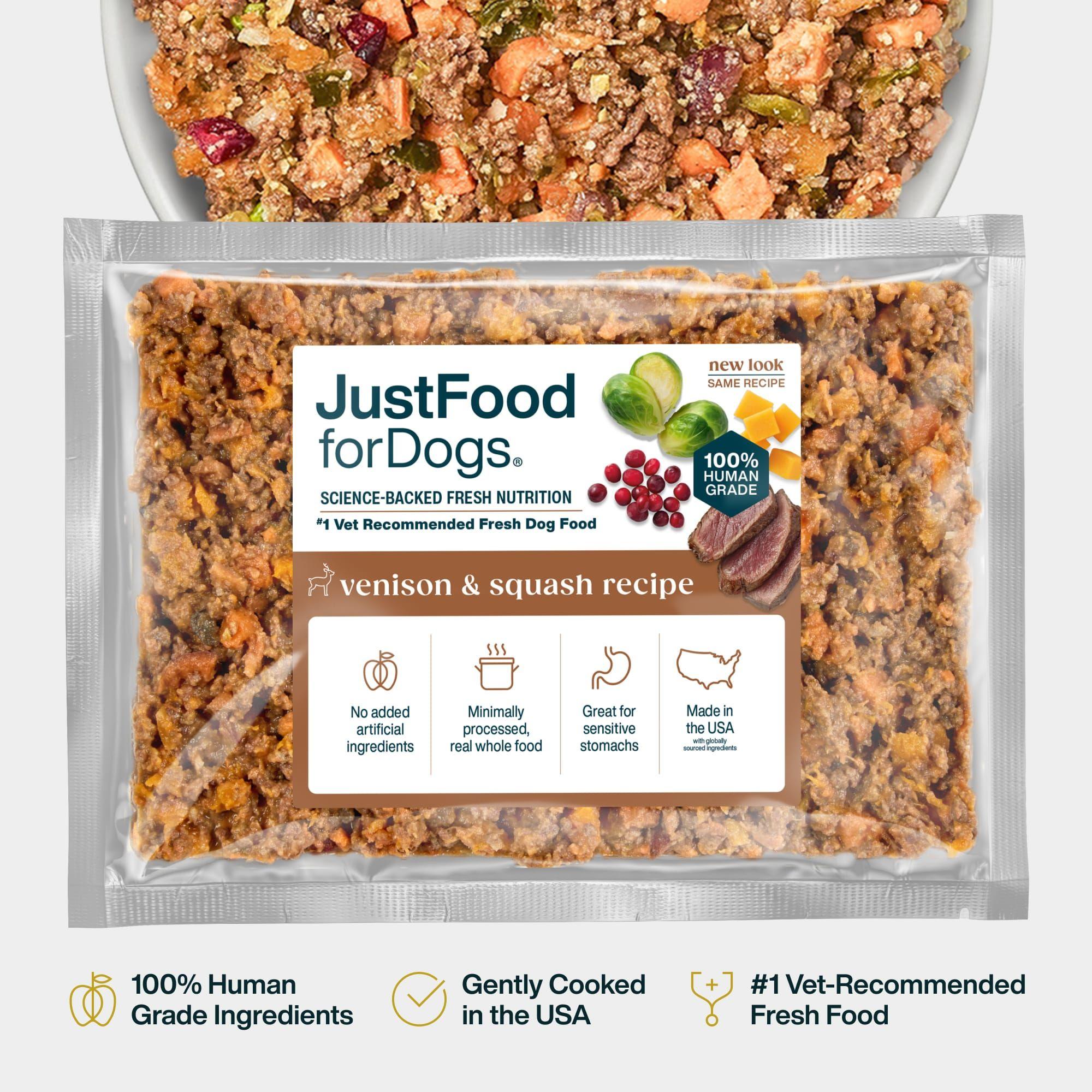
A fresh recipe made with venison, butternut squash, sweet potatoes and Brussels sprouts, which JustFoodForDogs lists for adult dogs that need to avoid beef, fish, lamb and poultry.
Webvet may earn a commission when you click through to JustFoodForDogs, at no extra cost to you.
Whatever brand you are considering, sort your options with these criteria:
- Complete and balanced: a good high-fiber food is still a full diet, with an AAFCO nutritional adequacy statement for your dog's life stage.
- Fiber sources you recognize: squash, peas, sweet potatoes, barley and brown rice, or named fibers such as beet pulp and psyllium.
- Format: dry, wet or canned, and fresh foods all work; compare them on a dry matter basis.
- Grain-free or with grain: grain-free recipes get their fiber from legumes and vegetables, while recipes with grain often use oats, barley or brown rice.
- Prescription or not: a high-fiber prescription diet is used under veterinary direction, while a non-prescription food with a little more fiber suits a healthy dog that needs extra bulk.
Labels such as organic, natural or limited ingredient say little about fiber, so judge quality by complete nutrition, clear fiber sources and a fiber level that suits your dog.
Dogs with sensitive stomachs often do better starting with a gentle, modest-fiber recipe and a short ingredient list. JustFoodForDogs JustFresh Sensitive Stomach pairs turkey and turkey liver with white and brown rice, and is formulated to meet AAFCO Dog Food Nutrient Profiles for canine adult maintenance.
Fiber-Rich Foods That Are Safe for Dogs
The best natural fiber comes from plain, cooked or unsalted foods offered in small amounts. These dog-friendly, fiber-rich foods work well as toppers or treats, and most are grain-free:
- Plain canned pumpkin: is pumpkin a good source of fiber for dogs? Yes. Plain pumpkin puree (not pie filling, which has sugar and spices) provides soluble and insoluble fiber and is mostly water, so it is gentle. See can dogs eat pumpkin for safe types.
- Green beans: plain cooked or canned green beans with no added salt are a good source of fiber for dogs and low in calories.
- Sweet potato, carrots and apples: plain cooked sweet potato, raw or cooked carrots, and apple slices without the core or seeds all add fiber.
- Oats and brown rice: plain cooked oats provide soluble fiber, and brown rice has more fiber than white rice.
- Broccoli and leafy greens: small amounts of cooked broccoli, kale or spinach add fiber.
Whole recipes can combine several of these. JustFoodForDogs Fish & Sweet Potato includes sweet potatoes, russet potatoes, green beans and broccoli in one complete meal. Vegetable fiber is one of the healthiest choices because it arrives with vitamins and water, unlike high-fiber breakfast cereals made for people, which often contain sugar.
Grass contains fiber but is not a reliable source and can carry pesticides or parasites. For a dog that needs a different protein, JustFoodForDogs Venison & Squash gets its fiber from butternut squash, sweet potatoes and Brussels sprouts.
How to Add Fiber to Your Dog's Diet

What can I add to my dog's diet for more fiber? The simplest options are a spoonful of plain canned pumpkin, a few cooked green beans or some cooked sweet potato mixed into the usual food.
- Pick one fiber source, so you can tell what helped.
- Start small: begin with a small spoonful and ask your veterinarian what amount suits your dog's size and health; published veterinary guidance gives no standard pumpkin dose.
- Increase slowly over a week or more, watching stool, gas and appetite.
- Count the calories: toppers and high-fiber treats should stay within about 10 percent of daily calories, and the amount of pumpkin needed for a real fiber effect can exceed that share (Today's Veterinary Practice).
- Change foods gradually: mix a new food with the old one over 7 to 10 days.
A homemade fiber broth is usually low-sodium broth with pumpkin or vegetables stirred in; leave out onion, garlic and salt, and count it as a treat. A homemade high-fiber diet needs to be complete and balanced, which most online recipes are not, so ask a board-certified veterinary nutritionist if you want to cook; high-fiber biscuits and other fiber-rich treats are fine as occasional extras. If you switch to a fresh food rather than adding toppers, WebVet's JustFoodForDogs feeding guide walks through portions and transition, and JustFoodForDogs offers an online feeding calculator for daily amounts.
Fiber Supplements vs. a Fiber-Focused Diet
A fiber supplement is useful when you need a quick, measurable dose of one type of fiber. A fiber-focused diet is better when your dog needs more fiber every day, because the fiber is already balanced with the rest of the nutrition.
What is the best fiber supplement for dogs? A common choice is plain psyllium husk, because it is soluble, it is the fiber used in the 37-dog review above, and it can help both loose and hard stool. Other options include:
- Pumpkin: powdered or canned pumpkin is a gentle choice.
- Acacia fiber: a soluble, fermentable powder that is usually well tolerated.
- Dextrin and liquid fiber products: soluble fibers sold for people, which may contain sweeteners.
- FiberCon (calcium polycarbophil): tablets used only with a dose from your veterinarian.
A safe fiber supplement contains no xylitol, which is toxic to dogs, and no added sweeteners or flavors. If diarrhea or constipation lasts more than a few days, let your veterinarian set the supplement and the dose.
A fiber-focused complete diet takes the guesswork out of daily dosing. JustFoodForDogs says it replaced the psyllium husk in its original metabolic recipe with barley, butternut squash and peas for a fiber profile from whole food ingredients, and JustFoodForDogs Metabolic + Weight Control is formulated to meet AAFCO Dog Food Nutrient Profiles for maintenance.
Can I sprinkle psyllium husk on dog food?
Yes, if it is plain unflavored psyllium and your veterinarian agrees on the amount. Psyllium should be mixed with water or into wet food rather than sprinkled dry, because it swells as it absorbs liquid. Start with a small amount and make sure your dog drinks well.
Signs of Too Much or Too Little Fiber
Is too much fiber bad for dogs? It can be. Large amounts of insoluble fiber can mildly reduce how well other nutrients are digested, and extra fecal bulk can mean more trips outside (Today's Veterinary Practice). Signs that a dog is getting too much fiber include:
- Large, frequent stools and more gas
- Loose stool, especially after a sudden increase
- Weight loss over time in a dog already eating little
Can too much fiber constipate a dog? It can when fiber goes up but water does not, because the extra bulk dries out and becomes hard to pass. Too much fiber can also cause diarrhea in dogs, especially fermentable fiber added quickly.
Symptoms of a lack of fiber are usually small, hard, dry stools, straining or irregular bowel movements. True fiber deficiency is uncommon on a complete diet, and constipation has many causes, so a veterinarian may recommend either a lower or a higher fiber diet depending on the cause (VCA Animal Hospitals).
High Fiber Food for Puppies, Seniors, and Different Sizes
A high-fiber diet is rarely a good idea for puppies, because they need energy-dense food to grow. JustFoodForDogs Fish & Sweet Potato is formulated to meet AAFCO Dog Nutrient Profiles for all life stages, including growth of large size dogs (70 lbs. or more as an adult), so a puppy gets gentle fiber within a complete diet.
More fiber can help senior dogs prone to constipation or weight gain, but a senior's food still needs enough protein and calories, and seniors who are losing weight usually need the opposite approach. Because fiber needs water to work, make sure an older dog keeps drinking well whenever fiber goes up.
Size changes how much fiber to add, not whether it works: small dogs need smaller topper amounts than large breeds, so ask your veterinarian for an amount.
Questions Readers Ask
Frequently Asked Questions
What is the quickest way to increase fiber on a dog's diet?
The quickest safe way is to add a small spoonful of plain canned pumpkin to meals, then increase gradually over several days if the stool needs it, within an amount your vet agrees. Going faster usually causes gas or loose stool, so keep water available and change only one thing at a time.
Is pumpkin or metamucil better for dogs?
Plain pumpkin is gentler and has fiber plus vitamins, so it is the usual first choice for mild stool changes. Plain psyllium fiber is more concentrated and works well for some large-bowel diarrhea, but many human products contain added sweeteners or flavors, so use only an unflavored version and ask your vet for the dose.
Can I give my dog a spoonful of pumpkin every day?
Many healthy dogs can have a small amount of plain canned pumpkin daily, but there is no standard veterinary dose, so ask your vet what amount suits your dog's size. Count it as part of the 10 percent treat allowance, and if your dog needs pumpkin every day to have normal stool, ask your vet why.
How quickly does psyllium husk work for diarrhea in dogs?
There is no well-established timeline, and the effective amount of plain psyllium husk varies widely between dogs, so start with your veterinarian's dose and judge the response within a few days. If loose stool has lasted more than two days in total, or your dog seems unwell, call your veterinarian.
How do you tell if a dog is constipated or has blockage?
A constipated dog strains but usually passes small, hard stool and otherwise acts normal. Repeated vomiting, a swollen painful belly, no stool at all, refusing food or lethargy point to a possible blockage, which is an emergency.
What are some homemade high-fiber dog foods?
Cooked green beans, plain pumpkin, cooked sweet potato, carrots and plain oats are easy homemade fiber add-ins. If you want to cook your dog's whole diet, ask a veterinary nutritionist for a balanced recipe, because homemade meals often miss key vitamins and minerals.
What foods act as a natural laxative for dogs?
Plain canned pumpkin, a little extra water or broth mixed into meals, and cooked green beans can help mild constipation. If your dog has not passed stool within 48 to 72 hours or is straining, see a vet instead of adding more.
What is the healthiest vegetable to give a dog?
Cooked green beans, carrots, pumpkin and sweet potato are among the healthiest vegetables for dogs because they are low in calories and easy to digest. Never feed onions and garlic, which damage red blood cells, and avoid seasoned or buttered vegetables.

Editor
The Webvet Editorial Team is the in-house group of pet-care editors and writers behind Webvet, operated by Smart Pet Collective. The team researches, writes, and maintains Webvet's pet health, behavior, and medication content. Every article follows a defined editorial process: research from reputable veterinary and scientific sources, careful drafting, mandatory review of medical content by a credentialed veterinarian, and dated publication. Health and medication articles are medically reviewed by a licensed veterinary professional before they go live and are kept current over time.
Veterinarian · BVMS MRCVS
Dr. Pippa Elliott, BVMS, MRCVS, is a veterinarian with nearly 30 years of experience in companion animal practice. Dr. Elliott earned her Bachelor of Veterinary Medicine and Surgery from the University of Glasgow. She was also designated a Member of the Royal College of Veterinary Surgeons. Married with 2 grown-up kids, Dr. Elliott has a naughty Puggle named Poggle, 3 cats and a bearded dragon.
Related reading

What to Feed a Pregnant Dog: Nutrition by Stage and While Nursing

Dog Cancer Diet: What to Feed, Keeping Appetite Up, and Working With Your Vet

What to Feed a Dog With Liver Problems or High Liver Enzymes
