Dog Cancer Diet: What to Feed, Keeping Appetite Up, and Working With Your Vet
A dog cancer diet should keep your dog eating a complete, calorie-dense food that holds weight through treatment. Learn what to feed, how to keep appetite up, and how to plan meals with your vet.

BVMS MRCVS
Medically reviewed by Dr. Pippa Elliott, BVMS MRCVS · Last reviewed

This article contains affiliate links. Webvet may earn a commission when you buy through them, at no extra cost to you.
Sponsored by JustFoodForDogs. This article draws on published veterinary and nutrition sources. WebVet may earn a commission through links in this article.
A dog cancer diet has one main job: keep your dog eating enough of a complete, balanced food to hold weight and muscle through treatment. No food treats or cures cancer, but good nutrition helps a dog cope with surgery, chemotherapy and the illness itself, and weight loss is one of the clearest warning signs that care needs adjusting.
For a dog whose appetite is still good, a complete fresh food such as JustFoodForDogs Chicken & Rice is a reasonable everyday base if your veterinarian agrees. For a dog eating less, the priority shifts to calorie density and palatability, and that plan is best made with your vet and veterinary oncologist.

 Sponsored
Have a health question about your dog?
Talk to a licensed vet at Dutch over video or message, including nights and weekends.
Use code Pets60
Plans start at $12/month · covers up to 5 pets
- Licensed vets in most states
- Rx for 150+ conditions
- 4.7 on Trustpilot
What a Dog Cancer Diet Needs to Do
- 1Keep weight on: steady body weight and muscle are the first goals of any diet for dogs with cancer.
- 2Feed a complete and balanced diet, because restrictive or unbalanced diets can cause deficiencies during treatment.
- 3Choose an energy-dense diet and highly palatable food when appetite drops, and plan changes with your vet and oncologist.
A healthy diet for a dog with cancer is complete and balanced, energy-dense enough to maintain weight, and appealing enough that the dog actually eats it. An energy-dense diet matters because many dogs with cancer eat less, so each bite needs to carry more calories. The plan should be made with your veterinarian, who can adjust it to the cancer type, the treatment and any other illness.
Diet is supportive care, not a cancer treatment. The Cornell Riney Canine Health Center advises feeding a quality, nutritionally balanced diet with enough calories, and notes that most dogs do not need a radical diet change after diagnosis. Any diet for dogs with cancer that promises to starve or cure a tumor is overselling what food can do.
When appetite starts to slip, calorie density becomes the practical lever. JustFoodForDogs describes its Critical Care Support recipe as a high-calorie, nutrient-dense diet that is "ideal for dogs with appetite issues," with 2,224 kcal ME per kilogram on its label. A veterinarian may recommend it for a dog with decreased appetite, and JFFD asks owners to check with their vet before ordering.
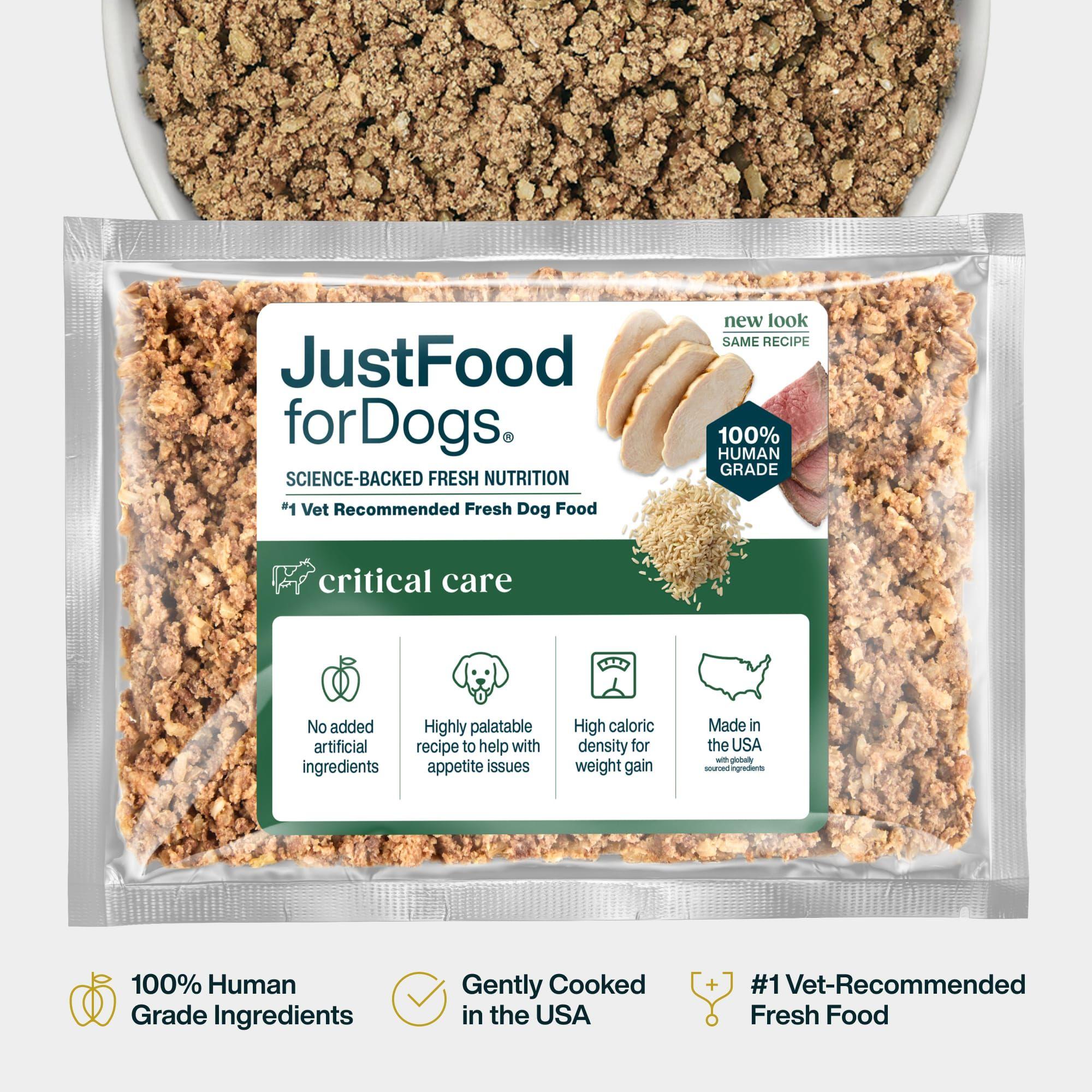
A high-calorie, highly palatable fresh recipe JustFoodForDogs designed for dogs with appetite issues. JFFD asks owners to check with their vet before ordering this veterinary support diet.
Webvet may earn a commission when you click through to JustFoodForDogs, at no extra cost to you.
What to Feed a Dog With Cancer
What to feed a dog with cancer depends on how well the dog is eating, the cancer type and the treatment plan, but the core pieces are the same:
- Complete and balanced nutrition: a food that meets AAFCO nutrient profiles for your dog's life stage, so nothing is missing over months of treatment.
- High-quality protein: to help preserve muscle, unless kidney or liver disease means your vet wants it moderated.
- Enough calories: set from your dog's body weight and body condition score, then adjusted as weight changes.
- Omega-3 fatty acids (EPA and DHA): often discussed by vets for dogs with cancer; ask about the right amount.
- Palatability: the best diet for a dog with cancer is the complete diet your dog will reliably eat.
There is no single best diet for dogs with cancer, and no commercial diet is approved to treat cancer. The right commercial diet for a dog with cancer is a complete one your dog likes and your vet approves, fed consistently. Avoid sudden food changes during cancer treatment, because a new food can cause stomach upset that is easily confused with chemotherapy side effects; if a change is needed, make it gradually.
For a dog still eating normally, an everyday complete fresh food is a sensible base. JustFoodForDogs Chicken & Rice is formulated to meet the nutritional levels established by the AAFCO Dog Nutrient Profiles for all life stages, and its gently cooked chicken, rice and vegetables are easy to portion. For a dog that is losing weight but still eats, a higher-calorie adult recipe such as JustFoodForDogs Turkey & Whole Wheat Macaroni, which JFFD lists for underweight dogs, may fit better.
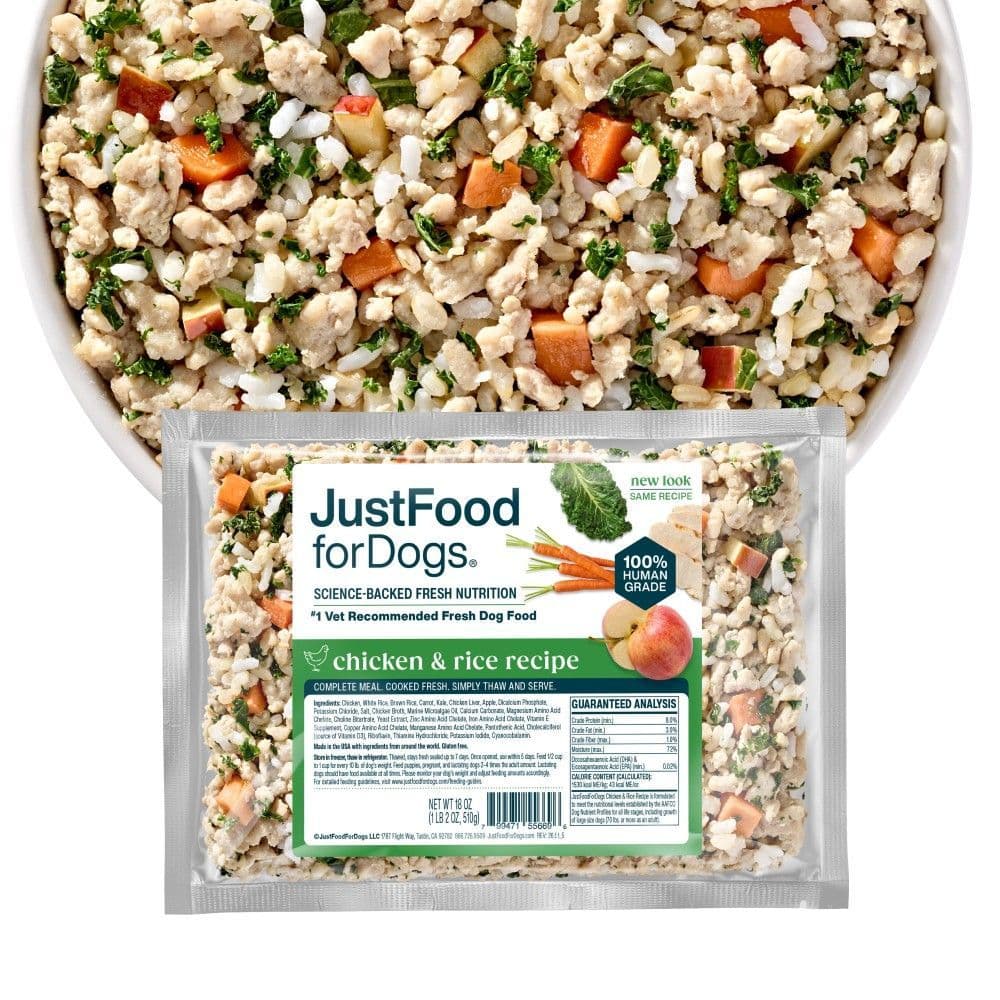
Gently cooked chicken, white and brown rice, carrots and kale in a complete Fresh Frozen recipe formulated for all life stages. A steady everyday base for a dog whose vet approves fresh food.
Webvet may earn a commission when you click through to JustFoodForDogs, at no extra cost to you.
Keeping Weight and Appetite Up
Keeping weight and appetite up in a dog with cancer is the part of feeding owners can influence most. Cancer cachexia in dogs is weight and muscle loss driven by the cancer's effect on metabolism, and it can happen even when a dog seems to eat reasonably. Weighing your dog weekly and checking body condition catches loss before it shows.

Appetite can fall because of nausea from chemotherapy, pain, the tumor itself or stress from vet visits. A dog with cancer that stops eating but keeps drinking may be nauseous, and WebVet's guide to a dog not eating but drinking water explains what that pattern can mean. Your vet can prescribe anti-nausea medication or an appetite stimulant, so mention any drop in intake early. A spoonful of a warm, aromatic food such as JustFoodForDogs JustFresh Home-Cooked Chicken on top of the usual meal can also help tempt a reluctant eater.
Practical ways to keep a dog eating:
- Warm food to about body temperature to release aroma.
- Offer small meals several times a day rather than one large one.
- Feed in a quiet place, away from where medications are given.
- Keep the same food most of the time so you can tell nausea from food dislike.
Some cancers do the opposite and raise appetite. What cancers cause increased appetite in dogs? Insulin-secreting tumors (insulinomas) cause low blood sugar and may increase hunger in some dogs, and adrenal tumors that overproduce cortisol often increase appetite and thirst. Prednisone, a common part of lymphoma treatment, also makes many dogs hungrier, so portions may need controlling rather than boosting.
Calorie density is simple arithmetic: a dog that eats half its usual volume needs a food with more calories per bite to hold weight. When intake stays low, a veterinarian may recommend JustFoodForDogs Critical Care Support, which JustFoodForDogs states is formulated to meet the nutritional levels established by the AAFCO Dog Food Nutrient Profiles for maintenance. WebVet's guide to high-calorie recovery feeding covers calorie-dense feeding in more detail, and the JustFoodForDogs feeding guide explains portioning once your vet sets a calorie target.
A weekly feeding check-in keeps everyone working from the same numbers. Record the items below and call the oncologist when a row reaches its trigger:
| Weekly feeding check-in | On track | Call the oncologist when |
|---|---|---|
| Body weight | Stable, within 2 to 3 percent of last week | Loss of 5 percent or more from the start of treatment |
| Body condition score | Ideal or steady on the 9-point scale | Ribs, spine or hip bones becoming easier to feel |
| Share of meals finished | Most meals eaten | Less than half of meals eaten for 2 or more days |
| Nausea or vomiting | None, or brief after treatment | Vomiting more than once in a day, or drooling and lip licking at meals |
| Stool | Formed | Diarrhea lasting more than a day, or any blood |

 Sponsored
Vet care that's always there
Unlimited video calls and messaging with licensed vets for less than a typical vet visit. One membership covers up to five pets.
Use code Pets60
Plans start at $12/month · covers up to 5 pets
- Licensed vets in most states
- Rx for 150+ conditions
- 4.7 on Trustpilot
Keto, Raw, and Other Anti-Cancer Diets
Several popular anti-cancer diets for dogs promise to starve tumors. Here is a short verdict on each, because most have limited evidence in dogs:
- Keto and low-carb diets: a ketogenic diet is based on the idea that tumor cells rely on glucose. Board-certified veterinary nutritionists writing in Today's Veterinary Practice report no clinical studies supporting ketogenic diets for veterinary cancer patients and call carbohydrate restriction for every cancer patient unsupported; there is no published clinical evidence in dogs. Very high-fat feeding can also trigger pancreatitis or stomach upset, and homemade ketogenic recipes are rarely complete.
- Raw diet: raw food can carry Salmonella and Listeria bacteria, which matters more when cancer or chemotherapy weakens the immune system. Veterinary oncologists generally advise against raw feeding during treatment, and Cornell's oncology guidance does not recommend it.
- Alkaline diet: food cannot meaningfully change the pH of a dog's blood or a tumor, so an alkaline diet has no sound basis for a dog with cancer.
- Vegan diet: a vegan diet can be complete for a dog only if carefully formulated, and there is no evidence it helps; it can make protein and calorie targets harder to reach.
- Grain-free diet: there is no evidence that grain-free food affects cancer in dogs, and grain-free feeding has raised separate heart-health questions.
- Holistic diet: a holistic approach to feeding may include useful ideas, such as fresh whole foods, but claims that it treats cancer are not supported.
A gently cooked food gives the fresh-food appeal many owners want while avoiding the raw-meat bacteria risk. JustFoodForDogs JustFresh pouches are cooked and shelf-stable until opened, which makes them easy to keep on hand for a dog on treatment, and JFFD describes them as complete meals that also work as a topper for picky eaters.
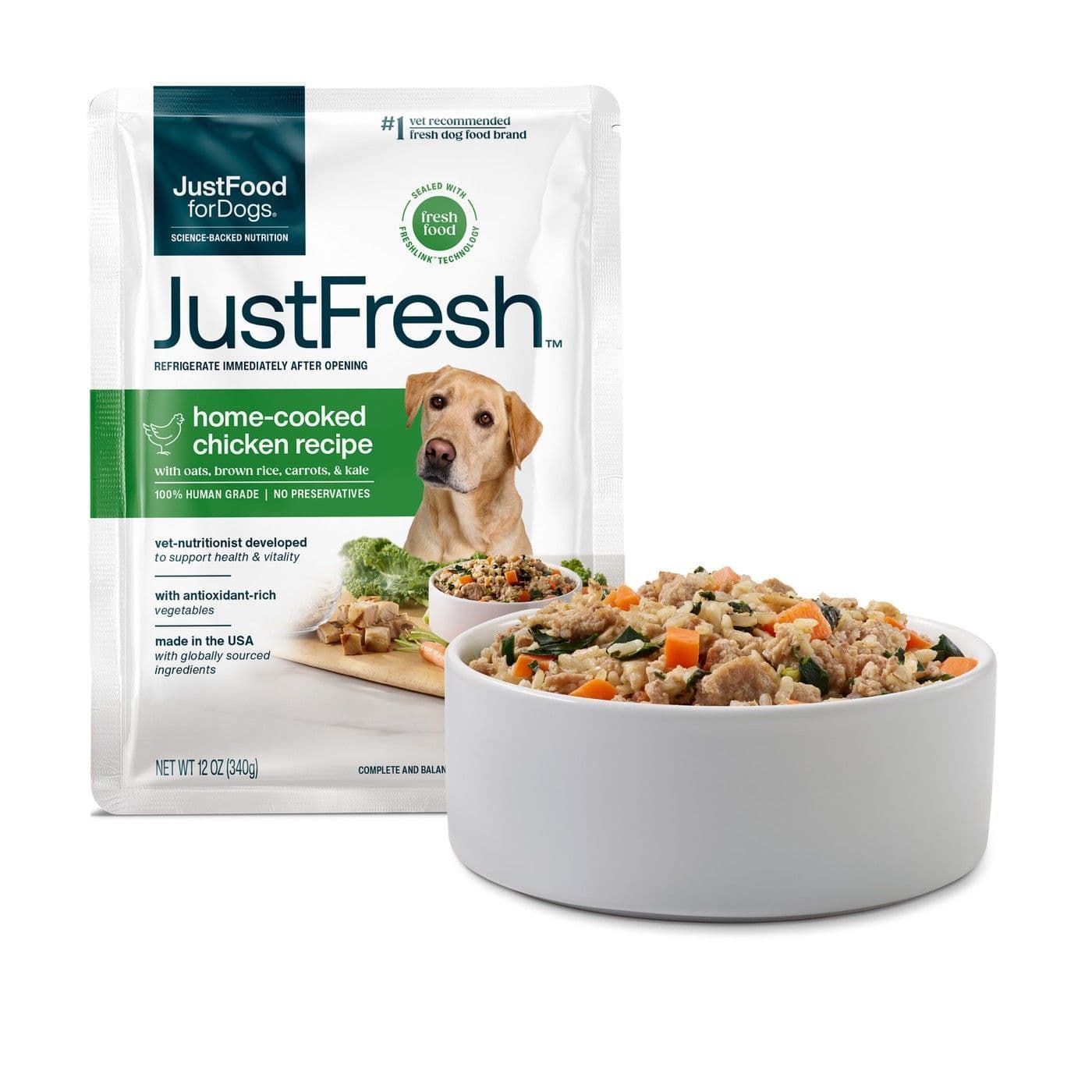
Gently cooked chicken, oats and brown rice in shelf-stable pouches, complete for adult dogs or used as a topper for a picky eater. Refrigerate after opening.
Webvet may earn a commission when you click through to JustFoodForDogs, at no extra cost to you.
Homemade Cancer Diets and Recipes
Homemade diets appeal to many owners of dogs with cancer, but a homemade recipe needs to come from a board-certified veterinary nutritionist. A UC Davis study of 200 home-prepared dog recipes found that most were missing essential nutrients, and many cancer diet recipes for dogs are built around one idea, such as low carbohydrates, rather than complete nutrition.

If you want to cook, do it with a recipe formulated for your dog:
- Ask your vet for a referral to a board-certified veterinary nutritionist, or use a custom diet service that works with your vet.
- Weigh every ingredient on a kitchen scale and follow the recipe exactly.
- Use the vitamin and mineral supplement the recipe specifies; vegetables and meat alone do not make a complete diet.
- Treat cottage cheese, eggs and similar extras as part of the recipe, not add-ons, so the diet stays balanced.
JustFoodForDogs runs a custom diet service with veterinarians, which can be an option for a dog whose cancer care calls for a tailored recipe. For a dog that is losing weight but whose vet is happy with a ready-made diet, an adult recipe that JFFD lists for underweight dogs is a simpler route than cooking from scratch, and a complete everyday recipe such as JustFoodForDogs Chicken & Rice suits a dog whose weight is holding steady.
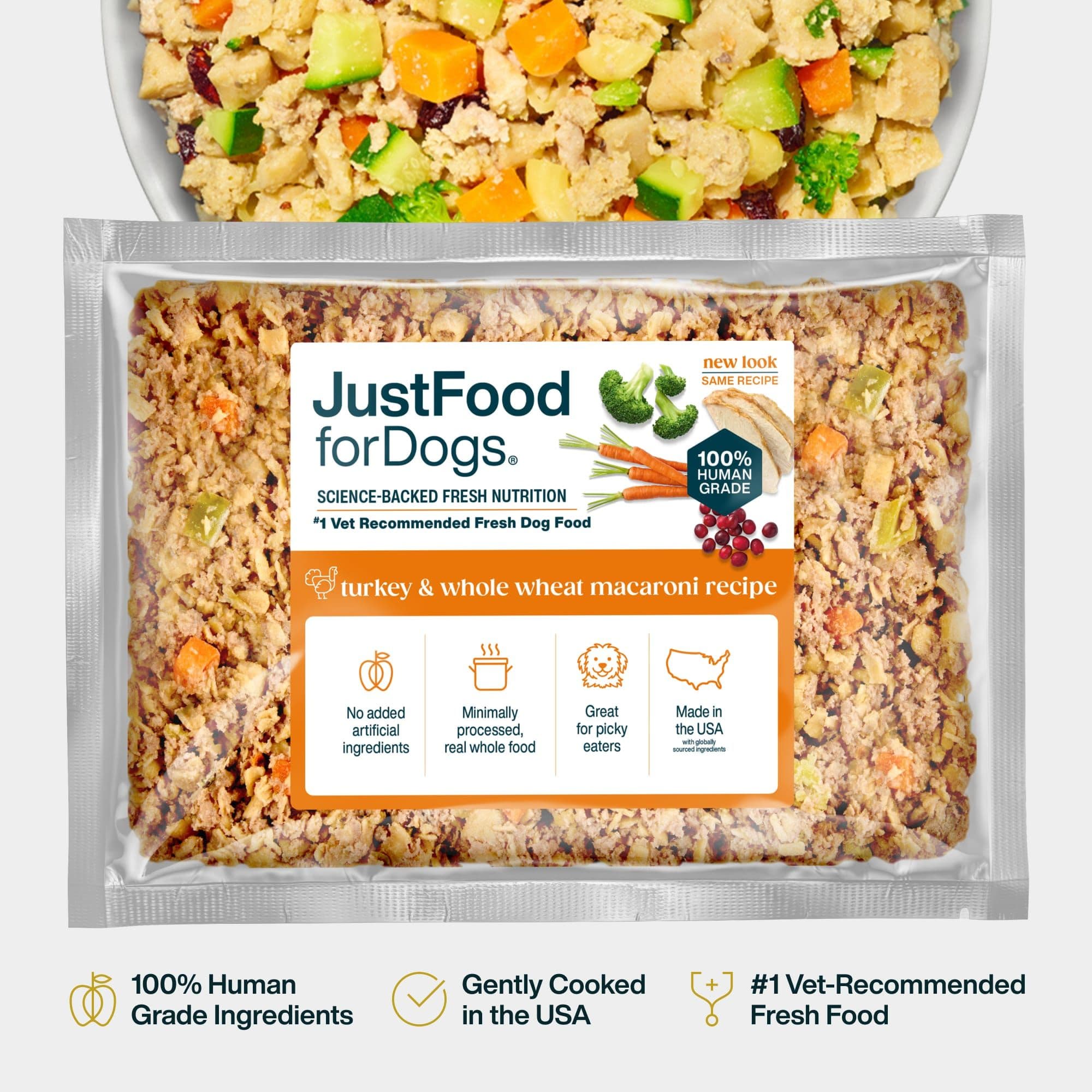
Turkey, whole wheat macaroni and vegetables in a Fresh Frozen adult recipe JustFoodForDogs lists for underweight and picky dogs. Feeding trials using AAFCO procedures support it for adult maintenance.
Webvet may earn a commission when you click through to JustFoodForDogs, at no extra cost to you.
Supplements and Foods to Avoid
Supplements for dogs with cancer should always be cleared with the oncologist, because some interact with chemotherapy or affect bleeding. The evidence is thin for most:
- Omega-3 fatty acids: fish oil supplements have more research behind them than most supplements, but the evidence in dogs is still limited and the dose should come from your vet.
- Mushrooms: medicinal mushroom extracts such as turkey tail have only limited evidence in dogs from small studies. No mushroom supplement has been proven to help dogs with cancer, and wild mushrooms can be toxic.
- Antioxidant supplements: high doses may interfere with some chemotherapy and radiation, so check before giving any.
What not to give a dog with cancer
What not to feed a dog with cancer is clearer than what to add:
- Raw meat and bones, because of infection risk and bone injuries.
- Unapproved supplements or herbal products the oncologist has not reviewed.
- Fatty table scraps, which can upset the stomach or trigger pancreatitis.
- Sudden food changes in the middle of treatment.
- Foods toxic to dogs, such as onions, garlic, grapes, raisins and xylitol.
Diet Adjustments by Cancer Type
The cancer type and any organ involvement can change the feeding plan. Diet adjustments matter most when the tumor involves the liver, kidneys, bladder or digestive tract, because those organs process nutrients, water and waste. These are the common adjustments vets make, always within a complete diet:
- Stomach and pancreatic cancer: a dog with stomach or pancreatic cancer usually does best on small, frequent, highly digestible meals, often lower in fat.
- Bladder and prostate cancer: feeding often focuses on water intake, so moist food helps, and medications such as piroxicam are given with food.
- Kidney tumors: when kidney function is affected, a vet may moderate protein and phosphorus and encourage water intake with moist meals.
- Lymphoma: feeding a dog with lymphoma centers on managing chemotherapy nausea and prednisone-driven hunger; for dogs with reduced appetite, a vet may suggest JustFoodForDogs Critical Care Support.
- Spleen cancer and hemangiosarcoma: feeding supports recovery after surgery to remove the spleen and after any blood loss.
- Mammary and thyroid cancer: feeding usually aims to keep the dog lean and its weight steady after treatment.
For a dog that has lost weight during treatment and is cleared to eat a regular adult food, JustFoodForDogs Turkey & Whole Wheat Macaroni is one recipe JFFD lists for underweight dogs.
Feeding a dog with liver cancer
For a dog with liver cancer, small, frequent meals of moderate high-quality protein are easier on a liver affected by liver tumors, and your vet may adjust protein, fat and copper based on blood tests. The best diet for a dog with liver cancer depends on how much working liver remains, so follow the oncologist's plan. WebVet's guide on what to feed a dog with liver problems explains liver-focused feeding in more depth.
Making meals comfortable for a dog with bone cancer
For a dog with bone cancer, feeding is mostly about comfort and weight. A raised food bowl can spare a dog from stooping on a painful leg, but ask your vet first, because raised bowls are linked with a higher bloat risk in the large, deep-chested breeds most prone to bone cancer. Set food and water close to the bed, and offer soft food if pain medication dulls appetite. Keeping a dog lean takes load off the remaining legs after amputation.
Diet and Cancer Risk: What the Evidence Shows
Many owners ask whether diet can lower a dog's cancer risk. No food or diet has been shown to prevent cancer in dogs. What the evidence does support is keeping dogs lean: a lifelong study of Labrador Retrievers found that dogs fed 25 percent less than their paired partners lived longer and generally showed signs of chronic disease later.
Other steps that may lower risk:
- Keep your dog at a healthy body condition throughout life.
- Avoid secondhand smoke and limit lawn chemical exposure.
- Protect light-skinned, thinly coated dogs from heavy sun.
- Discuss spay and neuter timing with your vet, since it affects the risk of some cancers.
- Keep up with routine exams so lumps and weight changes are checked early.
Be wary of labels such as "cancer-fighting" on foods, treats or supplements. No pet food is approved to treat cancer, and a claim like that is a reason to ask your vet for the evidence before buying. A complete diet that keeps your dog at a lean, healthy weight is the most useful thing food can do for long-term health.
Working With Your Vet and Oncologist
Working with the oncologist and veterinarian on the diet plan keeps feeding aligned with treatment. Bring your weekly records to each visit, and ask your vet to calculate your dog's resting energy requirement and a daily calorie target. Petful's guide to cancer in dogs covers diagnosis and treatment options, and Vetstreet explains how many calories a dog should eat in general terms.

Questions worth asking at the start of treatment:
- What weight and body condition score should we aim to hold?
- Which foods, treats and supplements should we avoid during chemotherapy?
- When should we call about appetite, vomiting or diarrhea?
- Is my dog's current food complete and balanced for its life stage?
- How should we handle meals on treatment days, when nausea is most likely?
- Would a referral to a board-certified veterinary nutritionist help?
Handling food, bowls, and waste during chemotherapy
Can you be near pets during chemo? Yes, dogs receiving chemotherapy can stay close to the family, but some drugs pass into urine, stool, vomit and saliva for a short time. Many veterinary oncologists advise owners to wear gloves when cleaning up waste for about 48 to 72 hours after each dose, wash bowls separately, and keep children and pregnant people from handling waste. Ask your oncologist for the guidance that matches your dog's drugs.
Feeding a dog in comfort care without cancer treatment
Can dogs live with cancer without treatment? Some do for weeks or months, depending on the cancer, and comfort care then focuses on quality of life. Feeding shifts toward whatever the dog enjoys and will eat, including favorite foods and warmed meals, while your vet manages pain and nausea so eating stays pleasant. Strict nutrient targets matter less at this stage than calories the dog willingly eats, so ask your vet which foods are fine to offer freely.
Questions Readers Ask
Frequently Asked Questions
Should I change my dog's food right after a cancer diagnosis?
Not suddenly. A stable diet during treatment makes it easier to tell food upset from chemotherapy side effects. If your vet recommends a new food, make a gradual transition over 10 days, mixing more of the new food in every few days.
How many calories does a dog with cancer need?
Your vet usually starts from the resting energy requirement, calculated as 70 multiplied by body weight in kilograms raised to the 0.75 power, then adjusts it for activity and body condition score. Weekly weighing shows whether the target is right.
Can a dog with cancer still have treats?
Yes. Keep the treat allowance to about 10 percent of daily calories so the complete diet still supplies most nutrients, and choose low-fat treats if your dog has a sensitive stomach or is on medications that upset it.
Is raw food safe for a dog on chemotherapy?
Veterinary oncologists generally advise against it. Raw meat can carry Salmonella and Listeria, and cancer and chemotherapy can weaken the immune system. Gently cooked food gives a fresh option while avoiding the raw-meat bacteria risk.
Do dogs with cancer need more protein?
Many do, because cancer and its treatment can cause muscle loss, and high-quality protein helps preserve muscle. Dogs with kidney or liver disease may need protein moderated, so your vet sets the level.
Can JustFoodForDogs make a custom diet for a dog with cancer?
JustFoodForDogs offers a custom diet service run with your veterinarian. You start by submitting the Custom Diet Questionnaire, the JFFD team then contacts your vet for medical records, and its clinical nutrition team decides whether your dog qualifies. JFFD says the process typically takes four to six weeks or longer from submission to the first delivery.
Veterinarian · BVMS MRCVS
Dr. Pippa Elliott, BVMS, MRCVS, is a veterinarian with nearly 30 years of experience in companion animal practice. Dr. Elliott earned her Bachelor of Veterinary Medicine and Surgery from the University of Glasgow. She was also designated a Member of the Royal College of Veterinary Surgeons. Married with 2 grown-up kids, Dr. Elliott has a naughty Puggle named Poggle, 3 cats and a bearded dragon.
Related reading

What to Feed a Dog With Liver Problems or High Liver Enzymes

How Old Can a Cat Get Pregnant? Earliest Age and Why It Matters

Can a Dog Be Spayed While in Heat? Risks, Timing, and Cost
