What to Feed a Dog With Liver Problems or High Liver Enzymes
Wondering what to feed a dog with liver problems or high liver enzymes? Learn the protein, copper, fat and sodium targets, foods to avoid, homemade options and vet hepatic diets.

BVMS MRCVS
Medically reviewed by Dr. Pippa Elliott, BVMS MRCVS · Last reviewed

This article contains affiliate links. Webvet may earn a commission when you buy through them, at no extra cost to you.
Sponsored by JustFoodForDogs. This article draws on published veterinary and nutrition sources. WebVet may earn a commission through links in this article.
If you are wondering what to feed a dog with liver problems, the short answer is a complete diet with moderate, high-quality protein, low copper, modest sodium and a fat level your veterinarian chooses, served as small frequent meals. The right details depend on the diagnosis, so the plan always starts with your vet.
This guide covers the nutrients that matter, foods that fit and foods to avoid, homemade versus complete diets, and when a veterinarian may recommend a hepatic diet such as JustFoodForDogs Hepatic Support Low Fat. If you are still sorting out whether your dog's signs point to the liver, start with our sister site's guide to symptoms of liver disease in dogs.

 Sponsored
Have a health question about your dog?
Talk to a licensed vet at Dutch over video or message, including nights and weekends.
Use code Pets60
Plans start at $12/month · covers up to 5 pets
- Licensed vets in most states
- Rx for 150+ conditions
- 4.7 on Trustpilot
What to feed a dog with liver problems
- 1Feed moderate, high-quality protein rather than cutting protein sharply, unless your vet finds hepatic encephalopathy or a liver shunt.
- 2Choose low copper foods, and avoid organ meats such as liver.
- 3Keep sodium modest and fat at the level your vet sets.
- 4Offer small frequent meals so your dog keeps eating and keeps muscle.
- 5Ask your veterinarian before any diet change, including a hepatic diet.
Yellow gums or eyes, repeated vomiting, confusion after meals or refusing food for a day need a veterinarian the same day.
A good diet for dogs with liver disease does three jobs: it supplies enough calories and protein to keep muscle, avoids nutrients the damaged liver handles poorly, such as excess copper, and tastes good enough that a dog with a poor appetite still eats. The Merck Veterinary Manual notes that a liver diagnosis alone does not mean protein should be restricted, that most dogs with liver disease need no fat restriction, and that liver diets should be fed frequently as small meals.
What to feed a dog with liver disease therefore looks like this in practice:
- Moderate high-quality protein from easily digested sources such as eggs, white fish and dairy, in the amount your vet sets
- Low copper, especially for breeds prone to copper storage disease
- Modest sodium, with stricter limits if your dog has fluid in the belly
- Fat at the vet's chosen level, since some dogs need less and many do not
- Added antioxidants, such as vitamin E, plus zinc and omega-3 fatty acids
- Small frequent meals spread through the day, instead of one large meal
What to give a dog with liver problems also depends on the cause. A dog with copper-associated hepatitis needs strict copper control, a dog with a liver shunt may need protein adjustments, and a dog with liver disease plus pancreatitis needs a lower-fat plan. Your veterinarian sets the final targets.
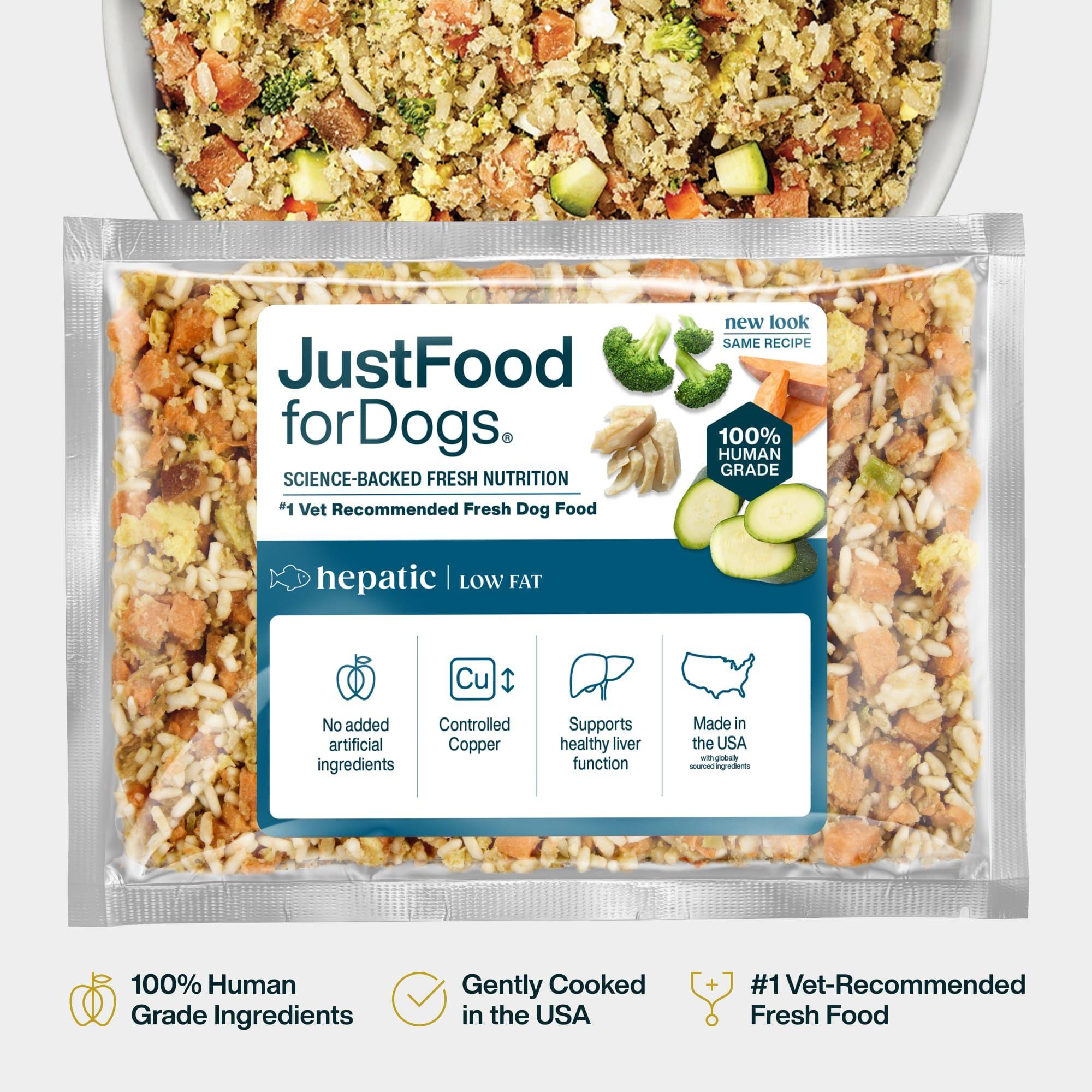
When your veterinarian recommends a hepatic diet, JustFoodForDogs Hepatic Support Low Fat is a fresh, vet-formulated option made with carefully controlled protein, calories, phosphorus and copper. It is intended for intermittent or supplemental feeding under vet supervision.
Webvet may earn a commission when you click through to JustFoodForDogs, at no extra cost to you.
Key nutrients in a liver-friendly diet
Each nutrient in a liver diet has a reason behind it. The table below puts protein, fat, copper and sodium targets in one comparison with a real label example, so you can see what a hepatic food looks like on paper.
| Nutrient | Usual liver diet target | Why it matters | Label example: Hepatic Support Low Fat |
|---|---|---|---|
| Protein | High-quality protein in a moderate amount | Keeps muscle, which helps the body handle ammonia | Crude protein 3.5% min, 6.0% max |
| Fat | Set by the vet; lower for pancreatitis or bile flow problems | A key energy source; too much can upset some dogs | Crude fat 1.0% min, 3.0% max |
| Copper | Copper restriction | Excess copper collects in a damaged liver | Copper 1.2 mg/kg min, 1.65 mg/kg max |
| Sodium | Modest; lower with fluid buildup | Salt worsens fluid retention | Not listed on the label |
| Omega-3s and antioxidants | Included | Support cell health | DHA 0.025% min, EPA 0.025% min |
These are label minimums and maximums on an as-fed basis for one food, and the food is mostly water (moisture 80% max), so the numbers are not directly comparable with dry food.
Protein quality matters more than protein quantity for most dogs. High-quality protein from eggs, fish and dairy is easy to digest and leaves less waste for the liver to process. Protein is restricted mainly when a dog shows signs of hepatic encephalopathy, such as confusion after meals, or has a liver shunt, and then only as far as the vet advises.
Copper restriction is the most specific liver nutrient rule. The ACVIM consensus statement on chronic hepatitis advises lifelong dietary copper restriction for dogs with copper-associated hepatitis. Organ meats, shellfish, nuts and some legumes are copper rich, which is why most homemade liver diets leave them out.
If copper control is part of your dog's plan, Hepatic Support Low Fat lists copper between 1.2 and 1.65 mg/kg on its label, with eggs and wild-caught cod for protein. It is intended for intermittent or supplemental feeding under vet supervision.
Webvet may earn a commission when you click through to JustFoodForDogs, at no extra cost to you.
Sodium should stay modest for any dog with liver disease, and the ACVIM consensus advises avoiding high-sodium foods, alongside any diuretic the vet prescribes, if fluid builds up in the abdomen. Zinc competes with copper for absorption and is often added to liver diets. Vitamin E and omega-3 fatty acids are antioxidants and fats commonly included for cell support, at doses the vet confirms.
Best foods for dogs with liver disease
What is the best food for a dog with liver problems? For most dogs it is a diet built around the targets above, either a veterinary hepatic diet or a complete recipe designed with a veterinary nutritionist. The best diet is one your dog eats reliably, because a dog that stops eating loses muscle quickly.
Foods that fit a balanced liver plan include:
- Eggs: yes, eggs are good for dogs with liver disease; they offer high-quality protein with little copper.
- White fish: cod and similar fish give lean, digestible protein.
- Chicken: lean, skinless chicken is generally fine for dogs with liver disease; skip chicken liver and fatty skin.
- Lamb: muscle meat can fit, but lamb is fattier than chicken, so it is not ideal for dogs that need low fat; lamb liver is very high in copper.
- Sweet potato and white rice: gentle, low-copper energy sources; sweet potato is good for dogs with liver disease in normal portions.
- Oatmeal: plain cooked oats are fine in moderation as a carbohydrate and fiber source.
- Carrots and green beans: carrots are a low-calorie vegetable option.
- Papaya: small pieces are safe, though no fruit has a proven liver benefit.
- Coconut oil: adding it on top of a balanced diet brings extra saturated fat with no proven liver benefit, so add it only if your vet agrees.

Wet, fresh or dry? Wet and fresh diets, such as JustFoodForDogs Hepatic Support Low Fat, offer more moisture and tend to be tastier for a dog with a poor appetite. For dogs with liver problems, the best dry option is usually a veterinary hepatic kibble, and a good dry option follows the same nutrient targets in a shelf-stable form. Many dogs do well on either; appetite, other conditions and your vet's advice decide.
Labels on everyday foods that promise liver health or liver support are marketing terms without a set standard. A food that suits a dog with liver disease is one whose copper, protein and fat levels match what your vet asks for. Fresh vet-formulated options list those values on the label, which makes the conversation with your vet easier.
 Sponsored
Vet care that's always there
Unlimited video calls and messaging with licensed vets for less than a typical vet visit. One membership covers up to five pets.
Use code Pets60
Plans start at $12/month · covers up to 5 pets
- Licensed vets in most states
- Rx for 150+ conditions
- 4.7 on Trustpilot
Foods to limit or avoid with liver problems
What not to feed a dog with liver problems comes down to copper, fat, salt and anything the liver must detoxify. Foods bad for a dog's liver include:
- Copper-rich organ meats, especially liver, plus shellfish, which add copper a damaged liver cannot clear
- High-fat table scraps, such as bacon, sausage, poultry skin and gravy, which can trigger stomach upset or pancreatitis
- Salty foods, such as deli meats, jerky, chips and cheese, which worsen fluid retention
- Xylitol, a sweetener in some gum, candy and peanut butter that can cause sudden liver failure; see our guide to xylitol and dogs
- Moldy food or grain, which can carry aflatoxin, a liver toxin
- Unapproved supplements and herbal products, which can stress the liver or interact with medication
Can raw dog food cause liver problems? Raw diets are not a direct cause of liver disease in most dogs, but they can carry Salmonella and Listeria and are often rich in organ meat. For a dog whose liver is already working hard, most veterinarians advise against raw feeding.

Grapes and raisins are mainly kidney toxins, not liver toxins, but they are dangerous for every dog and belong on the avoid list too. If your dog has both liver problems and pancreatitis, our guide to vet-recommended diets for dogs with pancreatitis explains the fat side of the plan.
It also helps to make the rules a household habit. A short list on the fridge of approved foods and treats keeps well-meaning family members and visitors from slipping a fatty scrap or a piece of liver to a dog whose diet has been set with care.
When your vet includes a fresh hepatic recipe in the plan, Hepatic Support Low Fat is built on eggs, cod, sweet potato and rice. It is intended for intermittent or supplemental feeding under vet supervision.
Webvet may earn a commission when you click through to JustFoodForDogs, at no extra cost to you.
What to feed a dog with high liver enzymes
High ALT and ALP on a blood test tell your vet that liver cells are stressed or bile flow is slowed, but they do not name the cause. The feeding question still comes first, even though the diagnosis may take days, because your dog needs to keep eating while tests are pending. Our sister guide to elevated liver enzymes in dogs explains the possible causes; here is what it means for the food bowl.
Before the diagnosis, while tests are pending:
- Keep feeding your dog's current complete diet, as long as it is not raw or homemade without a recipe
- Do not switch foods suddenly, which can cause stomach upset that muddies the picture
- Do not skip meals, unless your vet asks you to fast your dog before a blood test
- Stop fatty treats and table scraps
- Do not start liver supplements or natural remedies until your vet says so
- Remove any possible toxin, such as xylitol products or moldy food
After your vet sets a diet:
- Follow the diet the vet chooses for the cause, such as copper restriction for copper storage disease or lower fat for pancreatitis
- Switch gradually over about 10 days unless your vet advises otherwise
- Keep treats within the same nutrient rules
- Return for recheck bloodwork so the vet can see whether ALT and ALP are improving
For high liver enzymes, the best food is therefore not one product but the diet that fits the cause your vet finds.
Can a dog live with high liver enzymes? Yes. Mild increases are common in older dogs and often stay stable, and many dogs with liver disease live for months to years on the right plan. When the vet does recommend a hepatic diet, feeding it exactly as directed helps recheck results reflect the plan.
After your vet sets a diet for high liver enzymes, Hepatic Support Low Fat offers a fresh, whole-food option with controlled copper and low fat. It is intended for intermittent or supplemental feeding under vet supervision.
Webvet may earn a commission when you click through to JustFoodForDogs, at no extra cost to you.
Homemade vs. complete diets for dogs with liver disease
What homemade food can I give my dog to support their liver health? A homemade diet can work well, but only when the recipe is designed by a board-certified veterinary nutritionist for your dog. Home-cooked diets often fall short on minerals and vitamins, and liver diets are especially tricky because copper must stay low while zinc, choline and other nutrients stay adequate.
Homemade liver recipes need a veterinary nutritionist for three reasons:
- Most online recipes are not complete and balanced, so gaps build up over weeks of feeding
- Low-copper diets need a balancing supplement without copper, which ordinary multivitamins do not provide
- The protein level has to match your dog's diagnosis, which only your vet knows
Recipes found online often use egg, cottage cheese, rice and vegetables. Those ingredients can fit, but without a balancing supplement and set portions, homemade diets leave gaps over weeks and months, so use whole foods in a recipe a nutritionist has balanced.
Complete diets are simpler. Everyday commercial foods carry an AAFCO nutritional adequacy statement, while veterinary hepatic diets are formulated for a specific medical purpose and fed under a vet's direction. The WSAVA global nutrition guidelines suggest choosing foods from makers who employ qualified nutritionists and can share nutrient data.
Hepatic diets: prescription and fresh vet-formulated options
A hepatic diet is a veterinary food built around liver targets: controlled copper, high-quality protein in a moderate amount, added zinc and antioxidants, and modest sodium. Prescription liver diets from the major veterinary brands are usually dry or canned. The Merck Veterinary Manual notes that prescription liver diets are currently the only diets reliably restricted in copper.
Fresh vet-formulated options also exist. JustFoodForDogs Hepatic Support Low Fat is a veterinary-support diet that JFFD describes as "formulated to support healthy liver function with carefully controlled levels of protein, calories, phosphorus, and copper." It is made from sweet potatoes, white rice, eggs, wild-caught Alaska Pacific cod, broccoli and zucchini with omega-3-rich microalgae oil, and it is Fresh Frozen.

Its label states: "JustFoodForDogs Hepatic Support Low Fat is intended for intermittent or supplemental feeding under vet supervision." JFFD also asks owners to check with their vet before ordering, and Petful's JustFoodForDogs Hepatic Support review covers the recipe in more depth.
If you are weighing a non-prescription option, most everyday foods are not copper restricted, so even a high-quality regular food may not fit a copper-associated liver condition. For more on fresh options, see our sister site's overview of vet-recommended diets for dogs with liver disease.
Feeding a dog with liver and kidney disease together needs extra care because protein and phosphorus needs pull in different directions. The controlled phosphorus in JustFoodForDogs Hepatic Support Low Fat is one factor your vet can weigh when a dog has both conditions.
Treats for a dog with liver problems
Treats for dogs with liver problems follow the same rules as meals: low copper, low fat, low salt. WSAVA guidance keeps treats to no more than 10 percent of daily calories so they do not unbalance the diet. Good choices include:
- Small pieces of your dog's own hepatic food, such as a spoonful of Hepatic Support Low Fat
- Green beans, carrot slices and cucumber
- Apple slices without seeds, and blueberries
- Plain cooked egg white
Homemade treats for dogs with liver disease can be as simple as baked sweet potato slices or frozen cubes of plain canned pumpkin. Skip liver treats, jerky, cheese, rawhide made with flavorings and anything containing xylitol. If your dog is on a strict copper or protein plan, ask your vet which treats fit, since a handful of the wrong snack each day can undo a carefully balanced diet.
How to get a dog with liver disease to eat
Poor appetite is common with liver disease, and eating matters because fasting speeds muscle loss. Getting a dog with liver disease to eat often comes down to small changes:
- Offer small frequent meals instead of two large ones
- Warm the food slightly to boost its smell
- Hand-feed or offer food in a quiet spot
- Try a fresh, moist food your vet approves, which many dogs find more appealing than dry
- Ask your vet about anti-nausea medicine or an appetite stimulant

If your dog has liver failure and won't eat for a full day, call your veterinarian. A dog with liver disease that refuses food can get worse quickly, and the vet may need to give fluids, medication or, in some cases, a feeding tube.
Liver supplements and medicines: what your vet decides
Your veterinarian chooses any liver supplement or medicine to fit the diagnosis. Common examples include:
- SAMe, milk thistle and vitamin E, used as antioxidant liver supplements
- Zinc, which reduces copper absorption in copper storage disease
- Ursodiol, a liver medicine that improves bile flow
Liver support supplements vary in quality, and some liver protectants can interact with other drugs. Treatment for high liver enzymes, including very high readings and the role of liver supplements, is explained in our guide to elevated liver enzymes in dogs. Diet and supplements work together, so tell your vet about everything your dog takes, including the food, whether that is a home-prepared recipe or a hepatic diet such as Hepatic Support Low Fat.
Outlook for dogs with liver disease or high enzymes
The life expectancy of a dog with liver disease depends on the cause, how early it is found and how well the dog responds to treatment and diet, so following the feeding plan your vet sets, such as a hepatic diet like JustFoodForDogs Hepatic Support Low Fat, matters over the long term. A dog with high liver enzymes often has a normal life expectancy when the cause is mild or treatable. For stages, prognosis and end-stage decisions, see Petful's guide to liver failure in dogs, and for recovery after high enzymes, our elevated liver enzymes guide.
Questions readers ask about feeding a dog with liver problems
Frequently Asked Questions
What foods help repair the liver?
No food repairs the liver, but the right diet can help support liver function while the liver regrows healthy tissue after injury. High-quality protein, low copper, antioxidants and enough calories give the liver the best conditions, alongside any treatment your vet prescribes.
Is pumpkin good for dogs with liver disease?
Plain canned pumpkin is safe for most dogs with liver disease and adds fiber that can firm up stool. Offer a small spoonful with meals, and avoid pumpkin pie filling, which contains sugar and spices.
Can dogs eat liver?
Healthy dogs can eat small amounts of liver, but for dogs with liver problems liver is a copper-rich organ meat that can add copper a damaged liver struggles to clear. Ask your vet first, and expect most vets to say no.
What is the super food for the liver?
There is no single superfood for a dog's liver. A complete and balanced diet that matches your vet's targets does more than any one ingredient, though eggs, fish and omega-3 fatty acids are useful parts of it.
What to feed a dog with liver problems and diarrhea?
Offer bland low-fat meals, such as a vet-approved hepatic food or plain white fish with rice, in small portions, and keep water available. Call your vet if diarrhea lasts more than a day or two, contains blood, or comes with vomiting or weakness; our guide to the causes of diarrhea in dogs explains other possibilities.
What can I give my dog to improve liver function?
Start with a vet-directed hepatic diet and any medication your vet prescribes. Supplements such as SAMe or milk thistle may help support liver function in some dogs, but give them only after your vet confirms the product and dose.
Veterinarian · BVMS MRCVS
Dr. Pippa Elliott, BVMS, MRCVS, is a veterinarian with nearly 30 years of experience in companion animal practice. Dr. Elliott earned her Bachelor of Veterinary Medicine and Surgery from the University of Glasgow. She was also designated a Member of the Royal College of Veterinary Surgeons. Married with 2 grown-up kids, Dr. Elliott has a naughty Puggle named Poggle, 3 cats and a bearded dragon.
Related reading

How Old Can a Cat Get Pregnant? Earliest Age and Why It Matters

Can a Dog Be Spayed While in Heat? Risks, Timing, and Cost

Can a Dog Get Pregnant When Not in Heat? How the Fertile Window Works
