What to Feed a Pregnant Dog: Nutrition by Stage and While Nursing
What to feed a pregnant dog at each stage: her usual adult food for five weeks, a growth or all life stages food from week 6, smaller meals late in pregnancy and free choice feeding while she nurses.

BVMS MRCVS
Medically reviewed by Dr. Pippa Elliott, BVMS MRCVS · Last reviewed

This article contains affiliate links. Webvet may earn a commission when you buy through them, at no extra cost to you.
Sponsored by JustFoodForDogs. This article draws on published veterinary and nutrition sources. WebVet may earn a commission through links in this article.
What to feed a pregnant dog changes with the calendar. For the first five weeks of gestation, a healthy dog keeps eating her usual complete and balanced adult food in her usual amount. From about week 6, when the puppies grow fastest, she moves to a food labeled for growth or all life stages, and her portions rise. Once the litter arrives, a nursing dog needs more food than at any other point in her life.
Getting the food type right matters as much as the amount. A recipe that meets the AAFCO profile for growth and reproduction, such as JustFoodForDogs Fish & Sweet Potato, carries the extra protein, calcium and phosphorus that late pregnancy and nursing demand, while an adult maintenance recipe does not. The plan below covers each stage from breeding to weaning.

 Sponsored
Have a health question about your dog?
Talk to a licensed vet at Dutch over video or message, including nights and weekends.
Use code Pets60
Plans start at $12/month · covers up to 5 pets
- Licensed vets in most states
- Rx for 150+ conditions
- 4.7 on Trustpilot
What to Feed a Pregnant Dog
- 1Feed her usual complete adult food for the first five weeks, without extra portions.
- 2Move to growth food from week 6: a recipe labeled for growth or all life stages, introduced over several days.
- 3Expect calories to rise about 30 to 60 percent by the final weeks, served as smaller, more frequent meals.
- 4Give no calcium supplements during pregnancy unless a veterinarian directs them.
- 5While she nurses, offer food freely; at peak lactation she may need two to four times her usual calories.
What should I feed my pregnant dog? The best food to feed a pregnant dog is a complete and balanced diet whose AAFCO statement covers growth and reproduction. Complete and balanced pet foods in the United States carry one of three life-stage claims: adult maintenance, growth and reproduction, or all life stages, which meets both. Only the last two are built for gestation and lactation.
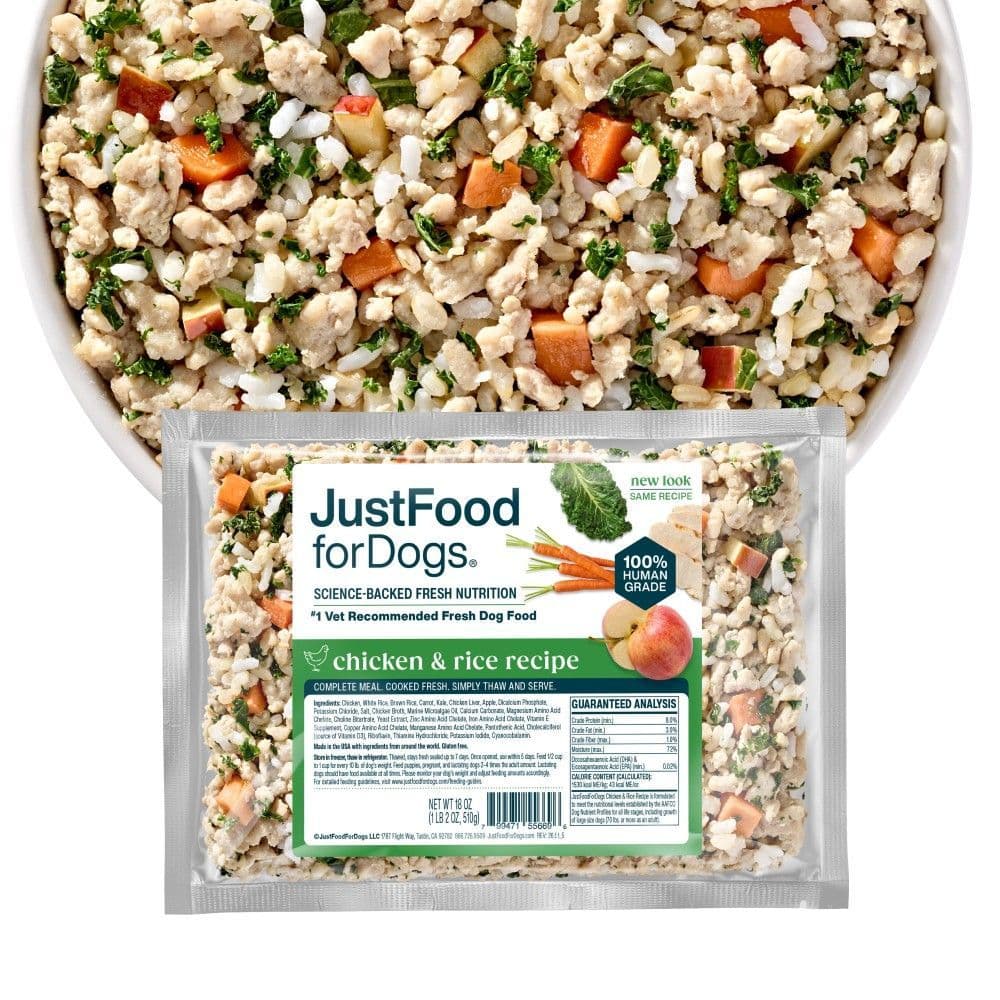
Chicken & Rice is one of two JustFoodForDogs recipes formulated to meet AAFCO profiles for all life stages, including growth of large size dogs, and JustFoodForDogs lists pregnant and lactating dogs among the dogs it suits. It is a fresh frozen option for the switch at week 6.
Webvet may earn a commission when you click through to JustFoodForDogs, at no extra cost to you.
That is why veterinarians often recommend a high-quality puppy food for a pregnant dog: puppy and all life stages foods share the growth and reproduction standard. Fresh, canned or dry food for pregnant dogs can all work, provided the label carries the right statement and the food is energy dense and highly digestible, so she can eat enough as her belly fills with puppies.
- Weeks 1 to 5: her normal adult maintenance food, in her normal amount.
- From week 6: a growth or all life stages food, mixed in gradually over five to seven days.
- Small dogs: the same plan, with closer attention to portion size, since a little extra weight is a big share of a small dog's body.
Healthy puppies therefore depend less on special ingredients than on the right life-stage label at the right time, steady weight gain and good body condition in the mother. Most healthy dogs should gain about 15 to 20 percent of their weight at breeding by the time they whelp. The Merck Veterinary Manual notes that the omega-3 fatty acids EPA and DHA are now on the list of essential fatty acids required during growth and reproduction.
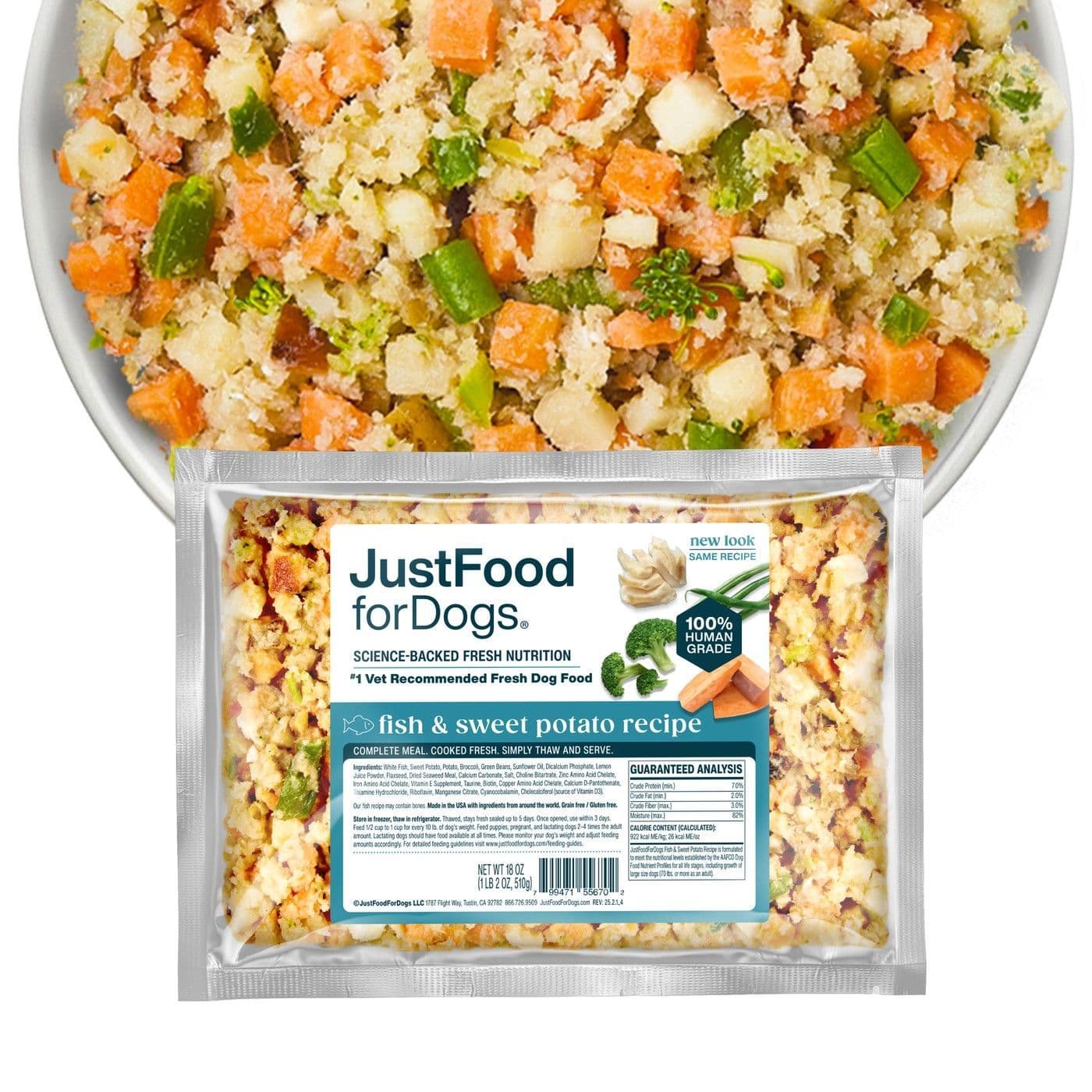
Fish & Sweet Potato is the second JustFoodForDogs recipe with an AAFCO all life stages statement that includes growth of large size dogs. Made with wild-caught white fish, it gives dogs that prefer fish a growth-ready option from week 6 onward.
Webvet may earn a commission when you click through to JustFoodForDogs, at no extra cost to you.
How Much to Feed a Pregnant Dog, Week by Week
Dog pregnancy lasts about 63 days, so the feeding plan follows roughly nine weeks of gestation and about eight weeks of nursing. During the first five weeks, the puppies are small and her calorie needs barely change. Her energy needs rise from week 6 and, according to VCA Animal Hospitals, can reach 30 to 60 percent above normal adult maintenance in late gestation, depending on litter size. WebVet's guide to dog pregnancy stages week by week shows what is happening to the puppies at each point, and how long dogs are pregnant covers the due date.
| Pregnant and nursing dog feeding by week | Food type | Calories versus her normal maintenance | Meals per day | Access |
|---|---|---|---|---|
| Weeks 1 to 5 of pregnancy | Usual complete adult food | About the same | 2 | Measured meals |
| Late pregnancy weeks 6 to 9 | Growth or all life stages food | Rising to about 30 to 60 percent more | 3 to 4 smaller meals | Measured meals, adjusted to body condition |
| Nursing weeks 1 to 2 | Growth or all life stages food | Rising quickly as milk production climbs | Free choice | Food and water always available |
| Peak lactation, weeks 3 to 5 | Growth or all life stages food | Up to 2 to 4 times, depending on litter size | Free choice | Food and water always available |
| Weaning, weeks 6 to 8 | Step back toward adult food | Falling back to normal by about 8 weeks | 2 to 3 | Portions reduced to dry up milk |
How many times does a pregnant dog need to eat? Two meals a day are fine in early pregnancy. In the final weeks of pregnancy, the growing uterus leaves less room for the stomach, so split her daily amount into three or four smaller meals rather than serving bigger ones. The week-by-week chart above is only a starting point: weigh her weekly and adjust portions so she gains steadily without getting fat. Calorie density helps in late gestation, because a food with more calories per ounce lets her meet her needs in less volume; JustFoodForDogs Chicken & Rice provides 43 kcal ME per ounce on its label.

 Sponsored
Vet care that's always there
Unlimited video calls and messaging with licensed vets for less than a typical vet visit. One membership covers up to five pets.
Use code Pets60
Plans start at $12/month · covers up to 5 pets
- Licensed vets in most states
- Rx for 150+ conditions
- 4.7 on Trustpilot
Foods and Supplements to Avoid During Pregnancy
The first thing to leave out is supplements. A complete and balanced growth or all life stages food already supplies the vitamins and minerals she and the puppies need, so she rarely needs a separate vitamin. Extra calcium is the most important item to avoid: VCA advises against calcium supplements or dairy for pregnant and nursing dogs, because excess calcium can suppress parathyroid hormone and raise the risk of eclampsia, which most often strikes when the puppies are one to four weeks old.
Raw food is not recommended during pregnancy. Raw meat, including raw chicken, can carry Salmonella, Listeria and other bacteria that can sicken the mother and spread to newborn puppies, whose immune systems are immature. Cooked, complete food removes that risk.
- Do not feed raw meat, raw eggs or raw bones.
- Avoid onions, garlic, grapes, raisins, chocolate, xylitol and macadamia nuts, which are toxic to dogs at any stage.
- Avoid formulas made only for large-breed puppies; VCA advises against them in pregnancy because their calcium and phosphorus balance is set for slow skeletal growth, not for fetal development and milk.
- Skip herbal and over-the-counter supplements unless a veterinarian approves them.
What vegetables are good for pregnant dogs? Plain cooked green beans, carrots and pumpkin are safe in small amounts as toppers, but they dilute calories, so keep them under about 10 percent of the daily total. A complete recipe that already includes vegetables, such as JustFoodForDogs Fish & Sweet Potato with its green beans and broccoli, makes extra toppers unnecessary.
Chicken & Rice already includes carrots, kale and apples alongside chicken and rice, so a pregnant dog gets vegetables within a recipe formulated for all life stages. JustFoodForDogs lists pregnant and lactating dogs among the dogs it suits.
Webvet may earn a commission when you click through to JustFoodForDogs, at no extra cost to you.
When a Pregnant Dog Will Not Eat
Some dogs eat less for a few days in early pregnancy. A dog that eats poorly for a day around week 3, or turns picky at about a month along while staying bright and drinking, usually needs only patience and smaller, tempting meals. Will a pregnant dog eat before giving birth? Not always: VCA notes that some dogs stop eating during the last day of pregnancy, and that a rectal temperature below 99°F in the last 24 hours usually signals labor is near. WebVet explains the other signs a dog is in labor, and Cornell's guide to difficult births in dogs lists the labor warning signs.
For a picky pregnant dog who is otherwise well, warm her food slightly, offer smaller portions more often, and try a soft, moist food with a strong aroma. If she turns away from her usual diet, the answer is still a complete food labeled for her stage; adding plain toppers in large amounts or switching foods repeatedly can upset her stomach further.
What to Feed a Nursing Dog
What food should I give my dog who just gave birth? Keep her on the same growth or all life stages food she ate in late pregnancy. Lactation is the most demanding stage of her life: her energy needs peak three to five weeks after whelping at two to four times what she needed before pregnancy, depending on how many puppies she is feeding.
For a nursing mother, Fish & Sweet Potato keeps her on an all life stages recipe from late pregnancy through weaning, and its high moisture adds to her fluid intake. JustFoodForDogs notes that nursing dogs should have food available at all times.
Webvet may earn a commission when you click through to JustFoodForDogs, at no extra cost to you.
A nursing dog needs that same food, offered freely. Free choice feeding during the first three to four weeks lets her eat on her own schedule, which VCA notes also lets puppies start sampling solid food at about three weeks. The exception is a dog nursing only one or two puppies, who may overproduce milk; ask your veterinarian about measured meals in that case.

Puppy food, a growth formula or an all life stages recipe such as JustFoodForDogs Chicken & Rice all suit a nursing mother, because each meets the growth and reproduction profile. Wet or fresh food adds water to her intake, which supports milk production. If she is losing condition, feed more of the same energy-dense food, offered more often; a lactating dog that keeps losing weight despite eating well needs a veterinary check.
Helping a Nursing Dog Make Enough Milk
What can I give my female dog to help her produce milk? Enough calories, enough water and calm. Milk supply depends mainly on how much she eats and drinks and how often the puppies nurse, so the best support is unlimited access to an energy-dense growth or all life stages food, such as JustFoodForDogs Chicken & Rice, and fresh water within reach of the whelping box.
- Keep food and water beside the whelping area so she does not have to leave the puppies to eat.
- Offer a moist food or add warm water to her meals to raise her fluid intake.
- Keep the room quiet and warm; stress can reduce milk let-down.
- Weigh the puppies daily: steady gains are the best sign that milk supply is adequate.
The most natural way to increase her milk is more of the same complete food; no single home remedy for milk production has good evidence behind it. Preparation starts before whelping, since the growth food from week 6 builds the body condition that supports early lactation. If puppies cry constantly, fail to gain or her mammary glands become hot, hard or painful, call your veterinarian, because mastitis and poor milk supply need treatment.
Weaning: Bringing Mom Back to Her Adult Food
Puppies usually start lapping soft food at three to four weeks, and WebVet's guide to when puppies can eat solid food walks through the transition, and Vetstreet's puppy feeding chart shows how much the weaned litter needs. As the puppies eat more solid food and nurse less, the mother's needs fall back toward normal by about eight weeks after whelping.

VCA describes a short step-down to help her milk dry up once the puppies are fully weaned:
- Day 1: withhold her food, but keep fresh water available.
- Day 2: separate the puppies from her and offer about one quarter of her normal pre-breeding portion.
- Next four to five days: increase her food gradually back to her full pre-breeding portion.
Keep the puppies from nursing during this step-down, since nursing keeps the milk coming. Once she is back to her pre-breeding weight and body condition, return her to an adult maintenance food, or keep her on an all life stages recipe at adult portions. A recipe like JustFoodForDogs Chicken & Rice can stay in the bowl for the weaned litter as well, since it is formulated for growth.
How JustFoodForDogs Recipes Fit Pregnancy and Nursing
Of the JustFoodForDogs everyday recipes, only two carry an AAFCO statement that covers reproduction. Each is "formulated to meet the nutritional levels established by the AAFCO Dog Nutrient Profiles for all life stages, including growth of large size dogs (70 lbs. or more as an adult)." Every other everyday JustFoodForDogs recipe is labeled for adult maintenance and is not designed for a pregnant or nursing dog.
- JustFoodForDogs Fish & Sweet Potato: wild-caught white fish with sweet potato, 26 kcal ME per ounce, a lighter option for dogs that prefer fish.
- JustFoodForDogs Chicken & Rice: chicken with white and brown rice, 43 kcal ME per ounce, the more calorie-dense choice for late gestation and peak lactation.
An all life stages statement meets the growth and reproduction profile, which covers gestation and lactation; that is different from a formula designed only for large-breed puppies. JustFoodForDogs product pages state that pregnant dogs may need two to four times the amount of food than normal and that nursing dogs should have food available at all times; veterinary sources place the two to four times peak during nursing rather than pregnancy, so increase portions gradually through late gestation. Both recipes also suit the weaned litter, and WebVet covers JustFoodForDogs puppy food for that next stage. Petful's pregnant dog care guide and Vetstreet's overview of pregnancy in dogs cover care beyond the food bowl.

Pregnant and Nursing Dog Feeding FAQ
Frequently Asked Questions
Can pregnant dogs eat scrambled eggs?
Yes, a fully cooked plain egg is a safe protein boost for most pregnant dogs. Scramble it without butter, oil, salt or onion, and keep it to a small topper portion so it does not crowd out her complete food. Never feed raw eggs during pregnancy.
Which dry food is best during pregnancy?
The best dry food is one labeled for growth or all life stages, ideally an energy dense food that is highly digestible. The same rule applies to fresh and canned options: the AAFCO statement matters more than the format.
What does a mother dog need after giving birth?
She needs fresh water nearby, a quiet and warm whelping area, and free choice feeding of a growth or all life stages food. Nursing dog feeding should stay free choice through at least the first three to four weeks, and generous until the puppies are weaned.
Should I give my pregnant dog calcium supplements?
No, not unless your veterinarian directs it. Calcium supplements during pregnancy can raise eclampsia risk after whelping, and a complete growth food already supplies the calcium she needs.
Can a pregnant dog eat puppy food?
Yes. Puppy food meets the growth and reproduction profile and is a good choice from week 6 and through late pregnancy and nursing. The exception is large breed puppy formulas, which veterinarians advise against because of their calcium and phosphorus balance.
How much weight should a pregnant dog gain?
Most healthy dogs gain about 15 to 20 percent of their weight at breeding by whelping. Weigh her weekly and track body condition; a dog that gains much more or much less should see her veterinarian.
Veterinarian · BVMS MRCVS
Dr. Pippa Elliott, BVMS, MRCVS, is a veterinarian with nearly 30 years of experience in companion animal practice. Dr. Elliott earned her Bachelor of Veterinary Medicine and Surgery from the University of Glasgow. She was also designated a Member of the Royal College of Veterinary Surgeons. Married with 2 grown-up kids, Dr. Elliott has a naughty Puggle named Poggle, 3 cats and a bearded dragon.
Related reading

Dog Cancer Diet: What to Feed, Keeping Appetite Up, and Working With Your Vet

What to Feed a Dog With Liver Problems or High Liver Enzymes

How Old Can a Cat Get Pregnant? Earliest Age and Why It Matters
