Cat Pooping Outside the Litter Box? 8 Vet-Backed Reasons
When a cat starts pooping outside the litter box, it is rarely spite. More often it is constipation, painful arthritis that makes climbing in hard, megacolon, or a box your cat has quietly come to dislike. A vet sorts the medical causes from the behavioral ones.

BVMS MRCVS
Medically reviewed by Dr. Pippa Elliott, BVMS MRCVS · Last reviewed

This article contains affiliate links. Webvet may earn a commission when you buy through them, at no extra cost to you.
A cat pooping outside the litter box is almost never about spite or revenge. In most cases it points to a medical problem (constipation, megacolon, arthritis pain, or a GI upset) or to a litter box your cat has quietly come to dislike.
A sudden change in a previously reliable cat is a medical red flag until your vet rules it out.
This guide is specifically about defecating (pooping) outside the box, not urinating. If your cat is leaving puddles instead of stool, if your cat is peeing rather than pooping outside the box the causes are different, so start with our urination guide.
One urgent exception cuts across both: a cat that strains repeatedly in or near the box and produces little or nothing may be straining to urinate, not to defecate, and a blocked urethra is a life-threatening emergency (more on that below).
Here, we focus on stool, what is normal versus concerning, and exactly when to call the clinic.
- 1Pooping outside the box is rarely behavioral spite. Rule out medical causes first, especially if it started suddenly.
- 2Constipation, megacolon, arthritis (painful to climb in), and litter box aversion are the most common true causes.
- 3If your cat poops outside but still pees IN the box, the box is usable, which can point toward stool-related pain rather than total box aversion. It does not rule out urinary disease.
- 4EMERGENCY: a cat (especially a male cat) straining repeatedly in the box and producing little or NOTHING may be trying to urinate, not defecate. A blocked urethra can kill a cat within a day or two. This is a same-day, often immediate, veterinary emergency.
- 5Also urgent: no stool at all for about 48 to 72 hours, nonstop straining, hard dry pellets with a painful, lethargic, or vomiting cat. Do not wait this out.
- 6See a vet promptly for diarrhea, blood, mucus, lethargy, or appetite loss. Never punish your cat, since punishment raises anxiety and makes the problem worse.
Pooping vs. Peeing Outside the Box: Why the Difference Matters

It is worth separating the two from the start, because they usually have different drivers.
- Peeing outside the box more often points to urinary disease (a urinary tract infection, cystitis, or feline lower urinary tract disease) or to urine marking.
- Pooping outside the box more often points to gastrointestinal issues, constipation, or pain getting into and out of the box.
This split can be a useful clue, but it is not a diagnosis. A cat that poops outside the box yet still pees inside it is telling you something helpful: the box is reachable and usable.
The issue may be tied to passing stool (constipation, anal gland discomfort, or GI pain) rather than a total aversion to the box.
Treat that as a hint that points your vet toward the right tests, not as proof that nothing urinary is going on. A cat can urinate in the box and still have serious disease, so do not let this pattern talk you out of an exam.
Searches for "poops outside but pees inside" have climbed sharply in recent years, and the answer is usually that stool-versus-urine distinction.
For everything pee-related, including marking, urinary disease, and the blocked-cat emergency above, see our companion guide on if your cat is peeing rather than pooping outside the box. The rest of this article stays focused on stool.
Medical Causes: Rule These Out First
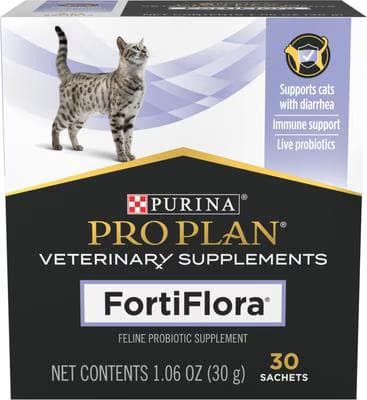
The #1 vet-recommended probiotic for cats. Daily powder sachets support healthy digestion and firmer stools, and can help cats coping with diarrhea or GI upset.
Webvet may earn a commission when you click through to Chewy, at no extra cost to you.
The single most important vet principle here is this: rule out medical causes before assuming the behavior is willful, especially when the change came on suddenly. Cats are stoic, and a reliable cat that abruptly starts going elsewhere is often telling you it hurts or feels urgent.
- 1Constipation: hard, dry, pellet-like stools that hurt to pass.
- 2Megacolon: chronic constipation that stretches and weakens the colon.
- 3Diarrhea and GI disease: urgency the cat cannot outrun to the box.
- 4Pain, mobility, and systemic illness: arthritis, diabetes, kidney disease, hyperthyroidism, or food allergy.
Constipation
Hard, dry, pellet-like stools are painful to pass. A constipated cat may strain in the box, feel discomfort, and start associating the box itself with that pain, so it goes elsewhere to try to find relief. Our guide to constipation in cats covers the causes, signs, and relief options in detail.
Constipation is not always a slow, manage-it-later problem. A cat that has passed no stool at all for about 48 to 72 hours, is straining repeatedly with nothing to show for it, or is also lethargic, off its food, vomiting, or clearly painful needs urgent, often same-day, veterinary care, not a routine appointment next week.
Severe cases (complete obstipation) can require hospitalization, intravenous fluids, and a vet manually clearing the colon under sedation. When in doubt about a cat producing nothing, call the clinic that day.
Megacolon
Megacolon is chronic, severe constipation that stretches and weakens the colon over time, so it can no longer move stool effectively. Signs include very large, infrequent stools, repeated straining, and accidents around the home.
This is a vet-managed condition that needs a proper workup, and a megacolon crisis with no stool production is an urgent visit, not a wait-and-see.
Diarrhea and GI disease
At the other extreme, urgency is the problem. With diarrhea from inflammatory bowel disease, intestinal parasites, or a dietary upset, a cat simply cannot make it to the box in time. The accident is not defiance, it is a body that gave little warning.
As a general rule, call your vet if diarrhea lasts more than a day or two, but get seen sooner, the same day, if a kitten, senior cat, or any cat shows diarrhea plus blood, vomiting, lethargy, or signs of dehydration. The young, the old, and the already-sick can crash fast.
Pain, mobility, and systemic illness
Pain and mobility problems deserve their own section (see arthritis below), because a box that hurts to enter is a leading hidden cause. Beyond the gut, several whole-body diseases can play a role by changing how much, how often, or how urgently a cat needs to go.
- Diabetes and kidney (renal) disease both drive greater thirst and urine volume and can leave a cat feeling unwell and off its usual routine, which can show up as accidents.
- Hyperthyroidism is best thought of as a contributor rather than a common direct cause: it can increase appetite and restlessness and sometimes loosen or speed up the stool.
- A food allergy or intolerance can do the same. The point is simply that systemic illness can be in the mix, which is why a thorough exam matters.
 $65 · no membership
Worried about your cat's vomiting or diarrhea?
A licensed vet can examine your cat over video and prescribe treatment online when it's appropriate.
 Talk to a vet
- Licensed vets
- All 50 states
- same-day Rx
Webvet may earn a commission if you book.
Arthritis and Joint Pain: When the Box Itself Hurts

Here is the mechanism most articles skip. An arthritic cat finds it genuinely painful to climb over a high box wall, lower into a squat, and hold its balance while it goes.
Faced with that, the cat does the rational thing: it relieves itself on the easier floor nearby, very often right next to the box.
Pooping right outside the box is a classic mobility tell, not an act of defiance.
This is extremely common in senior cats and badly underdiagnosed, because cats are experts at hiding pain.
Watch for subtle clues in how a cat walks:
- Reluctance to jump up or down
- Stiffness after rest
- Hesitation on stairs
- Reduced grooming, especially of the back end
That last one matters here, because a cat that can no longer twist to groom its hindquarters can develop matted, soiled fur back there, and matting or stool stuck to the coat makes eliminating uncomfortable enough to avoid the box.

A palatable tuna-flavored oral gel that gently lubricates the digestive tract to ease hairballs and mild constipation in cats.
Webvet may earn a commission when you click through to Chewy, at no extra cost to you.
Long-haired cats are especially prone. Gentle clipping of the hind end (by you or a groomer or vet) often helps. Connect those dots and the floor accidents start to make sense.
Practical fixes that often help fast

The fixes are practical and often dramatic.
- Offer a low-entry or cut-down litter box the cat can step into instead of climb into.
- If you cut down a storage tub yourself, sand or tape the edge so there is no sharp lip to scrape against.
- Place a box on every floor so the cat never has to navigate stairs to reach one.
- Choose a softer litter that is gentler underfoot.
Litter Box Aversion: What Your Cat Is Really Protesting

Box aversion means your cat has formed a negative association with the box and avoids it even when it looks perfectly clean to you. The cat is not protesting you, it is protesting the box, and there are several common reasons.
Cleanliness and odor
Cleanliness and odor come first. A cat's nose is far more sensitive than ours, so a box that smells clean to a person can still be off-putting to the cat. Scoop at least once daily, and do a full wash weekly with fragrance-free soap.
Litter type and texture
Litter type and texture matter just as much. Most cats prefer soft, fine, unscented clumping litter, and an abrupt switch to a new litter often triggers a protest. If you must change, mix the new in gradually over a week or two.
Surface preference
Surface preference is a related but distinct issue, and a recognized one. Some cats decide they simply like the feel of a particular surface under their feet and choose it regardless of where the box sits.
This is the cat that consistently goes on the bath mat, a soft rug, a pile of laundry, tile, or the potting soil in a houseplant.
If the accidents cluster on one type of texture rather than one room, suspect a substrate preference. Try these:
- Match the litter to what the cat seems to like (a finer, softer litter for a cat drawn to soft surfaces).
- Make the preferred surface unavailable or unappealing for a while.
- Put an inviting box right where the cat keeps choosing to go.
Box type and size
Box type and size are next. Covered or hooded boxes can feel trapping and hold in odor, and a box that is too small forces the cat to hang over the edge.
As a rule, a bigger, open, uncovered box wins. Aim for a box about one and a half times the length of your cat.
Location preference and aversion
Location preference and aversion come next, and they are separate from the surface question. Cats want a quiet, low-traffic spot with an escape route, away from food, water, and noisy appliances like the washer or furnace.
Dead-end corners where a cat could be cornered or ambushed get avoided, especially in busy or multi-pet homes. Sometimes a cat is not rejecting the box at all but the place it sits.
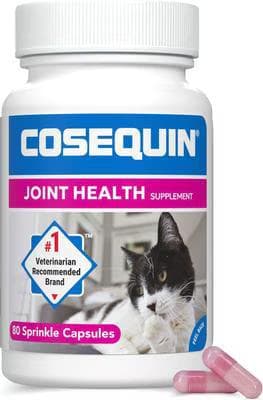
The #1 vet-recommended joint supplement brand. Glucosamine and chondroitin sprinkle capsules support cartilage and comfortable mobility in stiff or senior cats.
Webvet may earn a commission when you click through to Chewy, at no extra cost to you.
Number of boxes
The number of boxes is the rule people break most. The standard is one box per cat plus one extra, placed in separate spots. In multi-cat homes this is critical, since one cat guarding a single box can effectively lock another out.
The "same spot" pattern
Finally, the "same spot" pattern. Once a cat soils one location, residual scent draws it back to that exact place, so incomplete cleaning quietly perpetuates the habit. Breaking the cycle requires fully removing the odor, which we cover in the cleanup and action sections below.
Stress and Environmental Triggers
Cats are creatures of habit, and disruptions register as stress. That stress can surface as litter box accidents even in a cat that otherwise eats, plays, and acts completely normal.
Common triggers include:
- A new pet or baby
- A move or rearranged furniture
- A change in your schedule
- A single scary event while the cat was using the box (a loud noise or being startled) that created a lasting bad association with that spot
Multi-cat tension and resource guarding are frequent culprits. If one cat blocks access to the box, the solution is multiple boxes in separate locations plus separate food, water, and resting spots. Our guide to a one box per cat plus one extra setup and household harmony walks through how to defuse that competition.
Senior Cats: Cognitive Decline and Age-Related Causes
In older cats, two age-related drivers stack on top of the arthritis already covered above.
The first is feline cognitive dysfunction, the cat version of dementia. A geriatric cat can become disoriented, lose track of where the box is, or forget the habit of using it, and may also pace, vocalize at night, or seem confused.
Accidents from cognitive decline often appear alongside stiff, painful joints, so a senior cat may be dealing with both at once.
The second is simply that age raises the odds of the systemic diseases mentioned earlier, such as kidney disease, diabetes, and an overactive thyroid, all of which can change elimination. None of this is the cat being difficult.
The fix is to make the box impossible to miss and easy to reach (a low-entry box on every floor, well lit, never behind a closed door) and to have your vet screen for the medical and cognitive causes, since some are manageable once identified.
Normal vs. Concerning: How to Read the Situation
Use this quick triage to decide how worried to be. It is not a substitute for an exam, but it helps you judge urgency.
Reading the situation
Pros
- Lower concern: a single isolated accident after an obvious stressor
- Lower concern: the stool itself looks normal in color and consistency
- Lower concern: your cat is eating, drinking, and playing as usual
Cons
- Emergency: straining over and over with little or NO output, which may be a blocked urethra (especially in male cats), not constipation
- Higher concern: sudden onset in a previously reliable cat
- Higher concern: repeated accidents over days, or no stool at all for 48 to 72 hours
- Higher concern: abnormal stool (very hard dry pellets, diarrhea, blood, or mucus)
- Higher concern: crying in the box, hunching, or obvious straining
- Higher concern: lethargy, appetite loss, vomiting, or weight loss
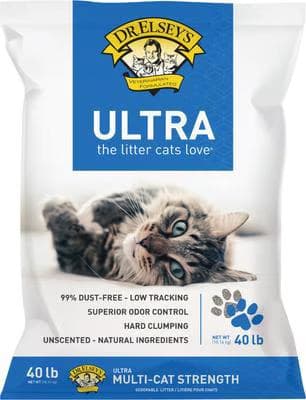
99% dust-free, low-tracking clumping clay litter with superior odor control and hard clumping. Unscented, natural ingredients, multi-cat strength.
Webvet may earn a commission when you click through to Chewy, at no extra cost to you.
| Stool sign | What it can suggest |
|---|---|
| Small, hard, dry pellets | Constipation or dehydration; can progress to megacolon |
| Loose or watery, more frequent | Diarrhea: diet, parasites, or GI disease |
| Blood (red streaks) or mucus | Inflammation or irritation in the colon; needs a vet |
| Straining with little or nothing produced | Could be severe constipation OR a urinary blockage (an emergency, especially in male cats): see a vet the same day |
| Normal brown, formed, regular | Reassuring; lean toward a litter box or stress cause |
What to Do: A Step-by-Step Plan
Work these steps in order. The first one is the one most owners save for last, and that is exactly backwards.
- Book a vet exam first to rule out or treat medical causes. This comes before any behavior fix, not after weeks of failed experiments. If your cat is straining and producing nothing, treat it as an emergency and go the same day.
- Keep a simple log: when each accident happens, where, what the stool looks like, and whether the cat still pees in the box. Patterns jump out fast and help your vet enormously.
- Optimize the litter box setup: scoop daily, use a large open box, switch to a soft unscented litter, pick a quiet location, and follow the one-per-cat-plus-one rule.
- Clean every accident spot thoroughly with an enzymatic cleaner, not a standard household cleaner. Only enzymatic products fully break down the scent that keeps drawing your cat back. A UV blacklight in a dark room helps you find every spot you missed. Avoid ammonia-based cleaners, since ammonia smells like urine and can pull cats back to the same place. Keep any cleaner pet-safe and fully dry and aired out before the cat returns to the area.
- For a true aversion, retrain rather than scold. Temporarily restrict access to the soiled room when you cannot supervise, make the soiled spot less appealing (move feeding, water, or play to that exact spot once it is clean), and meet the cat halfway by placing an extra box where it has been going, then gradually shifting it to a better location.
- If constipation is the driver, work the moisture angle with your vet. More water intake helps: wet or moisture-rich food, a pet water fountain, and broth-topped meals all raise hydration, and your vet may add a fiber source or stool softener. Do not start supplements or laxatives on your own.
- Reduce stress and reintroduce any changes gradually. Keep routines steady and consider pheromone support during transitions.
- For senior or arthritic cats, switch to a low-entry box and add a box on each floor so climbing is never the barrier.
When to See a Vet
Because a sudden change in litter box habits can be the first sign of illness, do not wait it out if you see any of the red flags below.
The reassuring part: most litter box problems are solvable once the cause is found, and many resolve completely after the underlying medical issue is treated. This content is vet-reviewed and is not a substitute for an exam, so partner with your veterinarian on a plan tailored to your cat.
Frequently Asked Questions
Why does my cat keep pooping outside the litter box even if it's clean?
A box that looks clean to you can still smell used to a cat's far more sensitive nose, so scoop daily and wash it weekly. But persistent accidents despite a clean box more often point to a medical cause (constipation, GI upset, or arthritis pain getting in) or to the litter, box type, surface preference, or location. Rule out health issues with your vet first, then optimize the setup.
Why is my cat pooping on the floor even with a clean litter box?
The same reasons apply. If your cat is otherwise reliable and the box is clean, look hard at pain and mobility (especially in older cats), constipation, and stress. A cat pooping right next to the box very often cannot comfortably climb in, which is a joint-pain clue, not bad behavior.
How do I stop my cat from pooping on the floor?
Start with a vet exam to treat any medical cause. Then provide a large, open, low-entry box with soft unscented litter in a quiet spot, follow the one-box-per-cat-plus-one rule, scoop daily, and clean every accident site with an enzymatic cleaner to remove the scent that lures your cat back. Reduce stress and never punish.
Should you punish your cat for pooping outside the litter box?
No. Punishment, including scolding or rubbing your cat's nose in it, does not work and backfires. Cats do not link the punishment to the accident, so it only increases anxiety and often worsens the problem. Focus on finding the cause and making the box appealing instead.
What smell do cats hate that can stop them pooping in the wrong place?
Cats tend to dislike citrus and strong vinegar smells, and some owners use a lightly citrus-scented or diluted-vinegar product to discourage a spot. Be careful here: do not apply essential oils or concentrated citrus oils anywhere your cat could lick, walk on, or breathe them in, because many essential oils are toxic to cats and strong scents can stress them. The safer and far more effective step is cleaning the soiled area with an enzymatic cleaner so the attracting odor is gone entirely. Avoid ammonia-based cleaners, since ammonia smells like urine and can draw cats back.
Is it normal for cats to poop outside the litter box?
A single accident after an obvious stressor, with normal stool and a normal-acting cat, is usually low concern. Repeated accidents, abnormal stool, straining, or any other symptoms are not normal and warrant a vet visit. A cat that strains and produces little or nothing should be seen the same day, since that can be a urinary emergency. Treat a sudden change in a previously reliable cat as a medical question until proven otherwise.
Why is my cat pooping outside the litter box but peeing inside it?
This pattern is a clue, not a diagnosis. If your cat still pees in the box, the box is reachable and usable, so the problem may be tied to passing stool: constipation, anal gland or GI discomfort, or pain while squatting. It points you toward a stool-specific cause worth a vet exam, but it does not rule out other disease, so still get your cat checked if accidents persist.
Why has my old cat suddenly started pooping outside the litter box?
In senior cats, arthritis is a leading hidden cause: climbing over high box walls and squatting hurts, so they go on the easier floor nearby. Cognitive decline (feline dementia) can leave an older cat disoriented or forgetful about the box, and age-related illnesses such as kidney disease or diabetes are also common. See your vet, and in the meantime switch to a low-entry box and place one on every floor so reaching it is effortless.
$65 · no membershipWorried about your cat's vomiting or diarrhea?
A licensed vet can examine your cat over video and prescribe treatment online when it's appropriate.
Talk to a vet- Licensed vets
- All 50 states
- same-day Rx
Webvet may earn a commission if you book.

Editor
The Webvet Editorial Team is the in-house group of pet-care editors and writers behind Webvet, operated by Smart Pet Collective. The team researches, writes, and maintains Webvet's pet health, behavior, and medication content. Every article follows a defined editorial process: research from reputable veterinary and scientific sources, careful drafting, mandatory review of medical content by a credentialed veterinarian, and dated publication. Health and medication articles are medically reviewed by a licensed veterinary professional before they go live and are kept current over time.
Veterinarian · BVMS MRCVS
Dr. Pippa Elliott, BVMS, MRCVS, is a veterinarian with nearly 30 years of experience in companion animal practice. Dr. Elliott earned her Bachelor of Veterinary Medicine and Surgery from the University of Glasgow. She was also designated a Member of the Royal College of Veterinary Surgeons. Married with 2 grown-up kids, Dr. Elliott has a naughty Puggle named Poggle, 3 cats and a bearded dragon.


