Why Does My Cat Knead Me? 6 Vet-Backed Reasons
Cat kneading (aka "making biscuits") usually means your cat feels safe, bonded, and content. Here is what each behavior means, when it is normal, and the rare signs worth a vet visit.

BVMS MRCVS

This article contains affiliate links. Webvet may earn a commission when you buy through them, at no extra cost to you.
Why does my cat knead me? In almost every case, your cat kneads you because it feels safe, bonded, and content. Kneading is a comforting instinct carried from kittenhood that signals affection, trust, scent-marking, and pure relaxation. It is a compliment, not a problem.
Kneading, popularly called "making biscuits," is the rhythmic push-pull of a cat's front paws against a soft surface, including your lap, belly, or chest. It is one of the clearest, friendliest signals in the feline vocabulary, and it fits into the bigger picture of decoding your cat's body language.
Below, we cover the six real reasons cats knead their people, what is normal versus concerning, and the rare moments when kneading is worth a quick word with your vet.
- 1Kneading on you is overwhelmingly a sign of comfort, trust, and affection rooted in kittenhood. Take it as a compliment.
- 2Claws coming out during kneading are usually involuntary relaxation, not aggression. Protect your lap with a blanket rather than stopping the behavior.
- 3Kneading does not detect pregnancy. It is surface comfort, not a diagnosis.
- 4Call your vet if kneading suddenly turns frantic or compulsive, your cat guards its paws or vocalizes in pain, or the change comes with appetite or litter-box shifts.
- 5One litter-box change is a true emergency: if your cat strains in the box, makes frequent unproductive trips, cries while trying to urinate, or passes little to no urine (most often a male cat), treat it as a possible urinary blockage and get same-day emergency care, because it can be fatal within a day or two.
What is kneading ("making biscuits")?

Kneading is the steady, alternating motion of a cat pressing its front paws into a soft surface, one paw and then the other, over and over. Many cats extend and retract their claws with each push.
The behavior often comes paired with loud purring, drooling, a slow blink, or a faraway, blissed-out look. Your cat is not thinking hard about it. The motion is automatic and deeply soothing.
The nickname "making biscuits" comes from how closely the paw motion mimics a baker kneading dough on a counter. Once you have seen it, the name sticks. Some cats are gentle and quiet about it; others lean their whole body into the rhythm.
Common variations in how cats knead
There is natural variation, too. None of these variations is abnormal:
- A few cats knead with all four paws rather than just the front two.
- Others suckle on a blanket, a soft toy, or even a corner of your shirt while they knead, holding it in the mouth like a nursing kitten.

Single-ingredient freeze-dried raw minnows: a high-protein, grain-free cat treat with nothing added.
Webvet may earn a commission when you click through to Chewy, at no extra cost to you.
The same simple motion just carries several overlapping motivations, which we will unpack next.
6 reasons your cat kneads you
Kneading is one behavior with many roots. Here are the six most likely reasons your cat makes biscuits on you, from the deepest instinct to the simplest contentment.
- 1A leftover nursing instinct from kittenhood.
- 2Affection, trust, and bonding with a person who feels safe.
- 3Scent-marking you as familiar, trusted territory.
- 4Building a comfortable "nest" before settling down.
- 5Self-soothing and relaxation.
- 6Asking for attention or food.
1. A leftover instinct from kittenhood

Nursing kittens knead their mother's belly to stimulate milk flow. The motion is one of the very first things a cat ever does, and it is wired to feelings of warmth, safety, and a full stomach.
Many cats carry that association into adulthood. When your grown cat kneads you, it is tapping the same comforting circuit it learned in its first weeks of life.
2. Affection, trust, and bonding
Cats reserve kneading for places and people they feel secure with. A cat that climbs onto your lap and starts making biscuits is telling you it trusts you. It is one of several signs your cat actually likes you, alongside slow blinks, head-butting, and sleeping near you.
If your cat picks you for kneading, take the compliment.
3. Scent-marking you as "theirs"
Cats have scent glands in the soft pads of their paws. As your cat pushes and flexes against you, it deposits a personal scent that other animals can detect.
In cat terms, kneading is a quiet way of claiming you as part of its trusted, familiar territory. It is marking, not dominance, and it is meant affectionately.
4. Building a comfortable "nest"
Wild cats pat down grass and leaves to shape a soft, safe resting spot before lying down. Your domestic cat keeps that habit, even though your lap needs no flattening.
When a cat kneads you and then circles and settles, it is running an ancient pre-sleep routine: prepare the bed, then rest. You are simply the warmest, comfiest nest in the house.
5. Self-soothing and relaxation
Kneading is a calming ritual. The repetitive motion, often paired with purring, appears to help cats wind down and feel content, much like a person fidgeting with a soft object to relax. A cat kneading on a blanket and purring on your chest is regulating its own mood.
This is also why an anxious cat may knead more during a stressful day. Mild stress-soothing kneading is normal as long as your cat still looks relaxed, not frantic.
6. Asking for attention or food
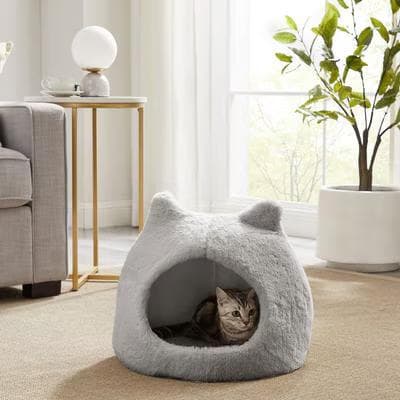
Covered, igloo-style cat bed in soft plush with a water-resistant bottom, giving cats a cozy enclosed spot to curl up. Grey.
Webvet may earn a commission when you click through to Chewy, at no extra cost to you.
Cats are quick learners. If kneading your lap once earned a smile, petting, or a treat, your cat may repeat it to get more of the same. Kneading that ramps up right before mealtime, or the moment you sit down, is often a polite request: more cuddles, please, or breakfast now.
Why does my cat knead me at night or in the morning?
Bedtime kneading
Bedtime kneading is usually the nest-building and settling-in instinct in action. Your cat climbs onto the bed, kneads a soft spot, circles, and curls up to sleep next to you. That cozy, pre-sleep kneading is completely normal and is a sign your cat feels safe enough to fully relax beside you.
Early-morning kneading
Early-morning kneading is a different story. Cats are crepuscular, meaning they are naturally most active around dawn and dusk.
A cat kneading and pacing on you at 4 or 5 a.m. is often awake, hungry, and ready for the day, and it has learned that working on you tends to get a human moving toward the food bowl.
Why does my cat knead me with claws, or knead and bite?
Claws during kneading
Claws during kneading are almost always involuntary. As your cat flexes its paws in deep relaxation, the claws extend and retract with the motion. It is not aggression and not a warning. Your cat is blissed out, not attacking, and likely has no idea those claws are digging into your leg.
Comfortable ways to handle clawed kneading
Pros
- Lay a thick, folded blanket or a dedicated lap pad between your cat and your skin
- Keep your cat's nails trimmed on a regular schedule
- Gently lift the paws onto the blanket instead of pushing your cat away
- Stay still and let the session wind down on its own
Cons
- Do not punish, yell at, or squirt your cat for kneading
- Do not shove the cat off your lap, which can feel like rejection
- Do not declaw; it is painful, harmful, and not a behavior fix
- Do not grab or pin the paws, which can trigger a startled scratch
Kneading and biting
Gentle, mouthy "love bites" during a kneading-and-cuddling session can also be normal affection.
But if the biting escalates, or pairs with a twitching, lashing tail, flattened ears, or rippling skin along the back, that is overstimulation, not love. The fix is to stop petting and give your cat space before it tips over the edge.
If your cat regularly kneading turns into biting when you pet her, learning those early warning signs will save you both some grief.
Does kneading your stomach mean you are pregnant?
And the popular question: if your cat kneads your stomach, does it mean you are pregnant? No. This is a charming myth with no science behind it.
Cats knead the stomach because it is a warm, soft, comfortable surface, the same reason they pick your lap or chest. Kneading is surface comfort, not a pregnancy test or a medical diagnosis.
Is kneading on you normal, and should you let your cat do it?
Yes, you should let your cat knead you. It is healthy, normal bonding behavior, and stopping it can feel like rejection to your cat.

Lickable cat treats with real chicken, made to support comfort and tranquility. 12 single-serve 0.5-oz tubes.
Webvet may earn a commission when you click through to Chewy, at no extra cost to you.
The only time to intervene is when the claws genuinely hurt, and even then the goal is to protect your lap, not to shut down the behavior. Slide a blanket underneath and let the biscuit-making continue.
- 1Let your cat knead. It is normal bonding, and stopping it can feel like rejection.
- 2Intervene only for painful claws, and then just protect your lap with a blanket.
- 3Kneading you and not your partner is about scent and comfort, not a snub.
- 4Long sessions and blanket-suckling are common and usually harmless.
Why does my cat knead me but not my partner?
Wondering why your cat kneads you but not your partner? Cats gravitate toward the person who feels safest and most familiar, which often comes down to scent, who feeds and handles them most, and where they feel most secure.
If your cat kneads you and not your husband, it is not a snub of anyone. You are simply your cat's comfort person right now, and those preferences can shift over time.
Long sessions and blanket-suckling
Long kneading sessions are fine, too. Duration alone is not a problem; some cats knead for a minute, others for ten. Kneading paired with suckling on a blanket or soft toy is also common and usually harmless.
It is often linked to early weaning, when a kitten was separated from its mother a little sooner than ideal, and most cats keep the habit as a lifelong comfort behavior with no need for concern.
When kneading might signal a problem (and when to see a vet)
The vast majority of kneading is completely benign. This section is for the rare exceptions, the small minority of cases where kneading is a clue that something is off. The key is the difference between a relaxed cat and a distressed one.
| Normal kneading | Worth a closer look |
|---|---|
| Calm, rhythmic, relaxed body | Frantic, compulsive, or hard to interrupt |
| Purring, drooling, or slow blinking | Vocalizing, crying, or tense and restless |
| Claws extend gently and involuntarily | Suddenly digging in hard or guarding the paws |
| A long-standing, familiar habit | A sudden change in a long-standing pattern |
| Eating, drinking, and toileting normally | Paired with overgrooming, pacing, or appetite or litter-box changes |
Watch most closely for pain
A pain flag is the one to watch most closely. A cat that suddenly digs in hard, cries out, hesitates, or guards its feet during kneading may be dealing with arthritis, a claw or nail-bed problem, or sore paw pads.
Because cats hide discomfort so well, a change in a comfort behavior can be an early hint. Brush up on the signs your cat is in pain, and if your cat is older or moving stiffly, these subtle clues about joint health are worth knowing.
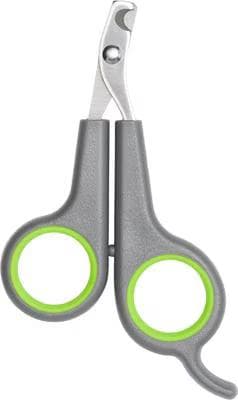
Compact scissor-style clippers sized for trimming the nails of cats and small dogs.
Webvet may earn a commission when you click through to Chewy, at no extra cost to you.
How to handle (or gently redirect) kneading

If the kneading itself is fine but the claws are the issue, a few do-no-harm habits make all the difference:
- Keep nails trimmed on a regular schedule, or ask your vet or groomer to do it.
- Keep a dedicated soft blanket or lap pad nearby and slide it under your cat when the kneading starts.
- Gently lift the paws onto the blanket rather than pushing your cat away.
- Reward calm settling with quiet praise or a gentle stroke so your cat learns that relaxing pays off.
The bottom line
So, why does your cat knead you? Overwhelmingly because it feels safe, comfortable, and bonded to you, an instinct rooted in kittenhood that says trust and affection. Take it as the compliment it is.
Watch for the one rare exception (kneading that turns frantic or painful), and the action is simple: protect your lap with a blanket, keep nails trimmed, watch for signs of distress, and book your vet if a long-standing pattern slowly changes.
Seek same-day or emergency care, though, if your cat is in obvious distress, stops eating, or shows urinary trouble such as straining or crying in the litter box. To keep reading the rest of what your cat is telling you, explore our full guide to decoding your cat's body language.
Frequently Asked Questions
Should I let my cat knead me?
Yes. Kneading is healthy bonding behavior and a sign your cat feels safe with you. Let your cat knead unless the claws hurt, and even then, protect your lap with a blanket rather than stopping the behavior. Stopping it can feel like rejection to your cat.
Why does my cat knead me and not anyone else?
Cats knead the person who feels safest and most familiar to them. That usually comes down to scent, who feeds and handles them most, and where they feel most secure. If your cat kneads you but not your partner, it is not a snub. You are simply your cat's comfort person, and preferences can shift over time.
Why does my cat knead me with its claws out?
Claws extending during kneading are almost always involuntary. Your cat is deeply relaxed, and the claws flex out and in with the motion. It is not aggression. Lay a thick blanket on your lap and keep nails trimmed so the kneading stays comfortable for you both.
Why does my cat knead my stomach, and does it mean I am pregnant?
No, kneading does not detect pregnancy. That is a myth. Cats knead the stomach simply because it is a warm, soft, comfortable surface, the same reason they choose your lap or chest. Kneading is surface comfort, not a diagnosis.
Why does my cat knead me every night or early in the morning?
Bedtime kneading is the nest-building and settling-in instinct, and it is normal. Early-morning kneading is usually a hungry, crepuscular cat that has learned working on you gets a human up to feed it. Fix it with a consistent feeding schedule, play before bed, and by not rewarding the pre-dawn wake-up.
Is it bad if my cat kneads and bites me at the same time?
Gentle love-bites during a cuddle are usually normal affection. But if biting escalates or comes with a lashing tail, flattened ears, or rippling skin, that is overstimulation. Stop petting and give your cat space before it reaches that point.
How can I get my cat to stop kneading me with claws?
Do not try to stop the kneading; protect your skin instead. Keep nails trimmed, place a thick blanket or lap pad between you and your cat, and gently lift the paws onto the blanket. Never punish or squirt your cat, which damages trust. To reduce frequency, redirect to a cozy bed right beside you.
How do I tell if a cat is imprinted on me?
A strongly bonded cat seeks you out, kneads and sleeps on you, follows you between rooms, slow-blinks, head-butts, and relaxes fully in your presence. Kneading is one of the clearest signals in that set. Together these behaviors show your cat sees you as its safe, trusted person.

Editor
The Webvet Editorial Team is the in-house group of pet-care editors and writers behind Webvet, operated by Smart Pet Collective. The team researches, writes, and maintains Webvet's pet health, behavior, and medication content. Every article follows a defined editorial process: research from reputable veterinary and scientific sources, careful drafting, mandatory review of medical content by a credentialed veterinarian, and dated publication. Health and medication articles are medically reviewed by a licensed veterinary professional before they go live and are kept current over time.
Veterinarian · BVMS MRCVS
Dr. Pippa Elliott, BVMS, MRCVS, is a veterinarian with nearly 30 years of experience in companion animal practice. Dr. Elliott earned her Bachelor of Veterinary Medicine and Surgery from the University of Glasgow. She was also designated a Member of the Royal College of Veterinary Surgeons. Married with 2 grown-up kids, Dr. Elliott has a naughty Puggle named Poggle, 3 cats and a bearded dragon.


