Why Does My Cat Bite Me When I Pet Her? A Vet Explains
Those sudden nips mid-cuddle usually mean your cat is overstimulated, not angry. Learn the warning signals cats give before they bite, how to pet without triggering a bite, and when a sudden change calls for a vet visit.

BVMS MRCVS

This article contains affiliate links. Webvet may earn a commission when you buy through them, at no extra cost to you.
Why does my cat bite me when I pet her? In most cases she is overstimulated, not angry. Repetitive stroking builds up sensory input until she hits her tolerance limit, and the bite is simply her way of saying "that's enough."
It is communication, not spite. With patience, most cats can learn to tolerate longer petting sessions.
- 1Most petting bites are petting-induced overstimulation: your cat enjoyed the contact, reached a sensory threshold, and bit to ask you to stop.
- 2Cats almost always warn you first. A flicking tail, rotating or flattened ears, rippling skin, dilated pupils, and a sudden stillness all say "stop now."
- 3Stick to the head, cheeks, and chin, keep sessions short, and let her start and end the contact. Never punish a bite, redirect to a toy instead.
- 4Stopping before her limit can gradually build her tolerance, though some cats stay low-threshold no matter what.
- 5A cat that suddenly starts biting when touched, or bites no matter where you pet her, may be in pain and should see a veterinarian.
Quick answer: why your cat bites you when you pet her
The short version: your cat likes being petted and also has a limit, and the bite is where those two things meet. This is called petting-induced overstimulation (sometimes petting-induced aggression), and it is the single most common reason a friendly cat nips a hand that was just stroking her.
A handful of other reasons can look similar. Your cat may be:
- Giving a love bite of affection.
- Redirecting play energy onto your moving hand.
- Asking for attention.
- Less often, telling you something hurts.
The good news is that cats are not subtle. They almost always flash a warning before they bite, and the rest of this article shows you exactly how to read those signals and prevent the bite before it lands.
Petting-induced overstimulation: the most common reason
Why stroking tips into "too much"
A cat's skin and coat are densely wired with nerve endings, especially along the back and near the tail. Slow, repetitive stroking feels good at first, but the input keeps stacking up.
Eventually it crosses an arousal threshold, and the pleasant sensation tips into "too much." The bite is essentially an off switch: a quick, unmistakable signal to make the stimulation stop.
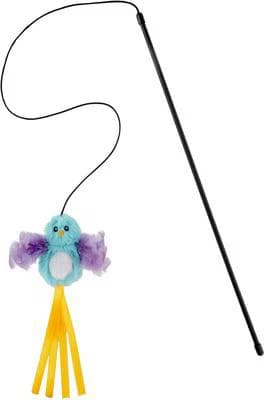
Teaser wand with a feathered bird charm and catnip to trigger your cat's chase-and-pounce instinct.
Webvet may earn a commission when you click through to Chewy, at no extra cost to you.
Every cat's threshold is different
That ceiling varies a lot from cat to cat. It is shaped by individual temperament, how much gentle handling she had as a kitten, and which part of her body you are touching.
One cat may tolerate a single slow stroke before she has had enough, while another will happily melt into a ten-minute cuddle. The label "petting aggression" makes it sound vicious, but a far more accurate word is overstimulated.
Warning signs your cat is about to bite

This is the part most owners miss, and the part that prevents almost every bite. Before she nips, your cat will tell you she is reaching her limit. Watch her whole body, not just her face. For the full guide to her signals, learn to read your cat's body language.
The signals to watch for
- Tail: lashing, thumping against the floor, or a fast twitch at the very tip.
- Ears: flattening, pinning back, or swiveling out to the sides into what is often called "airplane ears."
- Skin: a visible ripple or twitch running along her back or flank, as if a wave passed under the fur.
- Eyes: dilated pupils, a hard fixed stare, or quick darting glances toward your hand.
- Body: muscles tensing, a sudden freeze, shifting weight away from you, claws starting to come out, or a low growl.
Love bites vs. play bites vs. overstimulation vs. real bites
Not every bite means the same thing. Reading the intensity and the context tells you which of the four you are dealing with, and what to do about it.
| Type of bite | What it feels like | Body language | What it usually means |
|---|---|---|---|
| Love bite (grooming nip) | Very soft, no broken skin, often followed by licking | Relaxed body, slow blinks, purring | Affection and social grooming, not a complaint |
| Play bite | A grab-and-hold, often with a bunny-kick from the back legs | Crouched, pupils wide, focused on a moving target | Hunting instinct triggered by your moving hand |
| Overstimulation bite | A quick warning nip after a stretch of pleasant petting | Escalating tail flicks, twitching skin, flattening ears | She has hit her petting threshold and wants you to stop |
| Real or defensive bite | Hard and fast, may break skin and hold on | Full body tension, hissing, ears flat, often crouched or cornered | Fear, pain, or feeling trapped, not playful at all |
The bite-then-lick combination throws a lot of owners. A soft nip followed by a few licks is usually a grooming gesture and a sign of affection, the same thing cats do to each other. If you want to understand that grooming connection in more detail, here is why your cat licks you.
Play bites are different: they are driven by prey instinct, so the fix is to keep your hands out of the game and channel that energy into a toy. A true defensive bite is the one to take seriously, because it almost always traces back to fear or pain rather than play.
The purr-then-bite combo: why she bites then comes back for more
One of the most confusing patterns owners describe is a cat who purrs while she's being petted, nips, and then comes right back for more a moment later. It looks contradictory, but it fits everything above.
The purr says she's enjoying the contact, the bite says she just crossed her threshold, and coming back means the unpleasant feeling passed and she wants the good part again, not the part that tipped her over. She isn't being spiteful or playing games.
Where (and how) to pet your cat without getting bitten
A huge share of petting bites come down to location. Cats have clear preferences about where they like to be touched, and those preferences map neatly onto their scent glands.
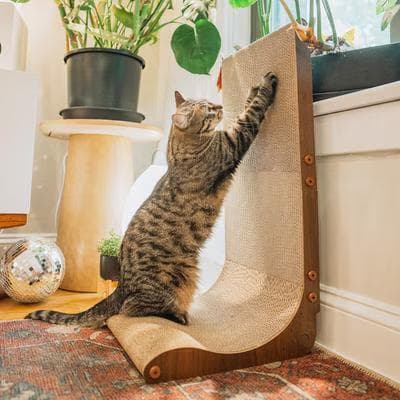
Curved cardboard wall scratcher with a wood frame that protects walls and gives cats a satisfying vertical scratch surface.
Webvet may earn a commission when you click through to Chewy, at no extra cost to you.
Where most cats like to be touched

- Usually welcome: the cheeks, under the chin, the base of the ears, and the top of the head. These are scent-gland zones, and rubbing them is how cats mark people and objects they consider safe.
- Often off-limits: the belly, the base of the tail, the legs, and the paws. Many cats find touch here either overstimulating or threatening.
The belly is the classic trap
When a cat rolls over and shows you her stomach, it is a sign of trust, not an invitation to rub it.
The belly protects vital organs, so touching it can trigger a reflexive defensive response: she grabs your hand with her front paws and rakes it with her back ones. That is instinct doing its job, not your cat turning on you.
How to pet in practice
Keep it simple and let her set the pace:
- Keep your strokes to the head and cheeks, and move in the same direction as the fur.
- Use slow, gentle motions and keep sessions on the short side.
- Pause every few seconds and read her response before continuing.
- Treat the head and cheeks as the safe zone, and the belly, tail base, and legs as no-go areas until you know her well.
- Most importantly, let her come to you and let her leave when she wants to.
Petting on her terms is petting that doesn't end in teeth.
How to stop your cat biting when you pet her
You cannot raise a cat's tolerance overnight, and some cats will always stay on the low-threshold end no matter how careful you are.
What you can do is read her better and stop most bites before they happen, and with many cats gradually extend how long they enjoy contact. The cornerstone is a simple habit called the petting consent test.
Stop early, before the threshold

The instinct is to keep going while she seems happy, but quitting just before she has had enough is exactly how you stretch her tolerance over time, at least with cats who have room to grow. End the session a beat sooner than you think you need to.
Redirect, never punish
If you feel a bite coming, freeze and quietly withdraw your hand rather than yanking it back, which can trigger a chase. Then offer a wand toy or a kicker toy to drain the energy.
Build good associations and keep play separate

Soft and crunchy cat treats in chicken, liver, and beef flavors. Under 2 calories per treat, in a 16-oz value tub.
Webvet may earn a commission when you click through to Chewy, at no extra cost to you.
- Reward calm, quiet petting with a small treat so she connects your hand with good things.
- Never use your fingers as a play toy, even with a kitten, because it teaches her that hands are fair game to bite.
- If she nips to demand attention, give her what she wants only when she asks calmly, not when she bites, so the bite stops working as a strategy.
When a sudden biting habit means pain or a medical problem
Here is the piece that breezy advice tends to skip. If a cat who used to love being petted suddenly starts biting when you touch her, or bites no matter where your hand lands, pain is high on the list of suspects.
A sore body part turns ordinary petting into something that hurts, and biting is how she tells you.
Common medical culprits
- Arthritis or joint pain, which makes the back, hips, and legs tender to the touch (and is far more common in cats than most owners realize).
- Dental disease, which can make handling near the head and face uncomfortable.
- Skin conditions, wounds, or a localized sore spot that flares when touched.
- Hyperthyroidism, which can leave a cat irritable, restless, and quicker to react.
- Feline hyperesthesia syndrome, a poorly understood condition sometimes linked to dramatic rolling and rippling skin along the back, which can come with frantic biting and grooming.
Behavioral vs. pain-driven biting
The pattern is what separates a medical problem from a behavioral one:
- Behavioral overstimulation builds gradually after pleasant petting and comes with the usual warning signs.
- A pain-driven bite tends to be sudden in onset, escalates over days or weeks, or makes her flinch the instant you touch one specific spot.
Watch too for hiding, jumping or grooming less than she used to, and changes in appetite or litter box habits. If any of that sounds familiar, run through the signs your cat is in pain and book a checkup.
When to see your veterinarian

Lickable cat treats with real chicken, made to support comfort and tranquility. 12 single-serve 0.5-oz tubes.
Webvet may earn a commission when you click through to Chewy, at no extra cost to you.
Why a cat bite that breaks skin needs prompt care
It is also worth knowing that a cat bite that breaks human skin is not trivial. Cats' fine, sharp teeth drive bacteria such as Pasteurella deep into tissue.
These wounds can become infected within hours, especially on the hand or over a joint or tendon where the infection can reach a tendon sheath or joint.
Standard medical advice is not to wait for swelling to appear: wash the wound right away with soap and running water, then contact your doctor or an urgent care clinic promptly for any cat bite that breaks the skin.
Rabies risk from an unknown cat
Rabies is rare but worth taking seriously when the cat is not your own.
If you are bitten by a stray, feral, or unknown cat, or by any cat whose vaccination status you can't confirm, tell your doctor and your local health department so they can assess the rabies risk and decide whether any treatment is needed.
That step matters most for bites from outdoor, free-roaming, or recently found cats.
At the visit, your vet will typically examine her for pain and run any tests needed to rule out a medical cause first. If she comes back healthy and the biting is truly behavioral, they can refer you to a veterinary behaviorist for a tailored plan.
If what you are dealing with goes beyond the odd petting nip, you may be looking at something else. When overstimulation or a startle spills over into a bigger outburst, read up on redirected aggression in cats.
Bites that target your ankles or feet as you walk past are usually a different thing again, ambush or predatory play aimed at movement rather than a reaction to petting. And if the attacks are unprovoked and tend to happen after dark, this explains why your cat attacks you at night.
Frequently asked questions
Why does my cat want me to pet her but then bites me?
Because she enjoys the contact and also has a limit to how much she can take. Repetitive stroking builds up until it crosses her tolerance threshold, and the bite is her signal to stop. She isn't tricking you, she simply wanted petting and reached her ceiling. Watch for tail flicks and flattening ears, and stop before she gets there.
Why does my cat bite me then come back for more petting?
She wants the contact and also has a ceiling on it, so the nip is her hitting that ceiling while she still likes you. Once the over-the-top feeling fades, she comes back for the part she enjoyed. If she purrs, bites, then returns, treat the comeback as a brand new short session: a few gentle strokes to the head, then pause and let her choose, rather than carrying on as if nothing happened.
How do I get my cat to stop biting when I pet her?
Use the consent test: a few strokes, then pause and let her choose whether to continue. Stick to the head and cheeks, keep sessions short, and stop before she reaches her limit. If a bite is coming, freeze, withdraw your hand, and redirect her to a toy. Never punish her, since that erodes trust and usually makes biting worse.
What is a red flag behavior in cats?
During petting, the red flags that a bite is coming are a lashing or twitching tail, ears flattening or rotating sideways, rippling skin along the back, dilated pupils, and a sudden tensing or freeze. More broadly, a sudden change in behavior, new aggression, hiding, or flinching when touched are red flags worth a vet visit.
Why does my cat bite me when I pet her belly?
The belly protects vital organs, so most cats instinctively defend it. A belly rub can trigger a reflex where she grabs your hand and kicks with her back legs. A cat showing her belly is signaling trust, not asking for a rub. Stick to the head and chin, and leave the stomach alone unless you know she truly enjoys it.
Why does my cat bite me then lick me?
A soft nip followed by licking is usually a grooming gesture and a sign of affection, the same thing cats do to one another. As long as the bite is gentle and doesn't break skin, it is a love bite rather than a complaint. If the bites are hard or escalating, treat it as overstimulation or a possible pain signal instead.
Is my cat biting me a sign she's in pain?
It can be, especially if the biting is new, getting worse, or happens the instant you touch one specific area. Pain from arthritis, dental disease, a sore spot, hyperthyroidism, or feline hyperesthesia can all turn petting into something that hurts. If you see flinching, hiding, less jumping or grooming, or appetite changes, have your vet check her.
How do I say hi to my cat in cat language?
Offer a slow blink. Cats greet people and other cats they trust with a soft, slow closing and opening of the eyes, often called a cat kiss. Catch her eye, relax your face, and blink slowly; many cats blink back. Pair it with a low, calm voice and an extended finger she can choose to sniff, and let her approach rather than reaching straight for her.
Which cat breeds are the most affectionate or clingy?
Breeds often described as especially affectionate or people-oriented include the Ragdoll, Siamese, Sphynx, Maine Coon, Burmese, and Scottish Fold. That said, breed is only a rough guide. An individual cat's temperament, early socialization, and bond with you matter far more than her breed, and plenty of mixed-breed cats are just as devoted.
What is the 3-3-3 rule for cats?
The 3-3-3 rule is a rough timeline for a newly adopted cat settling in: about 3 days to decompress and feel safe, 3 weeks to learn your routine and start relaxing, and 3 months to feel fully at home and bonded. It is a guideline, not a promise, and shy cats may take longer. Patience and a quiet space speed it up.
How can I tell if my cat is bonded with me?
Signs of a bond include slow blinking at you, head-butting and cheek rubbing, kneading, following you around, sleeping near you, and even gentle grooming nips. A cat who seeks out your company and relaxes in your presence trusts you. For more on the signals, here are the signs your cat actually likes you.

Editor
The Webvet Editorial Team is the in-house group of pet-care editors and writers behind Webvet, operated by Smart Pet Collective. The team researches, writes, and maintains Webvet's pet health, behavior, and medication content. Every article follows a defined editorial process: research from reputable veterinary and scientific sources, careful drafting, mandatory review of medical content by a credentialed veterinarian, and dated publication. Health and medication articles are medically reviewed by a licensed veterinary professional before they go live and are kept current over time.
Veterinarian · BVMS MRCVS
Dr. Pippa Elliott, BVMS, MRCVS, is a veterinarian with nearly 30 years of experience in companion animal practice. Dr. Elliott earned her Bachelor of Veterinary Medicine and Surgery from the University of Glasgow. She was also designated a Member of the Royal College of Veterinary Surgeons. Married with 2 grown-up kids, Dr. Elliott has a naughty Puggle named Poggle, 3 cats and a bearded dragon.


