Why Does My Cat Lick Me? 8 Reasons (and When to Worry)
If your cat licks you, it usually means affection, social bonding, and trust, though it can sometimes point to stress or a skin issue. Here are 8 reasons cats lick people, why some lick then bite, and when it is worth a vet visit.

BVMS MRCVS

This article contains affiliate links. Webvet may earn a commission when you buy through them, at no extra cost to you.
Why does my cat lick me? In most cases, your cat licks you as a sign of affection, social bonding, and trust. It is the same grooming behavior cats learn from their mother and use with cats they feel close to. A lick is usually a compliment that says you are family.

- 1Licking is most often affection and bonding (called allogrooming), the same way bonded cats groom each other.
- 2A cat's tongue feels like sandpaper because it is covered in tiny backward-facing barbs (papillae) built for grooming.
- 3Cats also lick to mark you with their scent, because you taste salty or interesting, to ask for attention, and to self-soothe.
- 4A lick-then-bite combo is usually a love nibble or a sign your cat is overstimulated and wants the petting to stop.
- 5Occasional licking is normal. A sudden spike, compulsive licking, or licking paired with hiding or appetite changes is worth a vet visit.
Occasional licking during a cuddle is completely normal and rarely anything to worry about. A sudden increase, licking your cat cannot seem to stop, or licking that comes with stress, hiding, or skin problems can be a different story. We will cover exactly when to pay attention below.
Why a cat's tongue feels like sandpaper

You have probably also noticed that a cat's tongue does not feel soft. It feels like wet sandpaper. That rough texture comes from hundreds of tiny backward-facing barbs called papillae, made of the same material as your cat's claws.
They act like a built-in comb that pulls loose fur, dirt, and debris out of the coat during grooming. That is why a few licks on bare skin can feel surprisingly scratchy.
Below we break down the 8 most common reasons cats lick people, the popular lick-then-bite combo, how to read the body language that goes with it, whether you should let your cat lick you at all, how to gently redirect the habit, and the signs that mean it is time to call your veterinarian.
8 reasons your cat licks you
Cats do not lick for a single reason. The same behavior can mean love, communication, comfort, or simply that your skin tastes good. Here are the eight explanations that cover almost every situation.
- 1Affection and social bonding (allogrooming) is the number one reason.
- 2Cats also lick to scent-mark you and claim you as part of the colony.
- 3Salt, food residue, and lotions can make your skin taste interesting.
- 4Licking can be learned attention-seeking, self-soothing, or a leftover mothering instinct.
1. Affection and social bonding
The biggest reason is love. Cats that live together and feel bonded groom one another in a behavior called allogrooming, usually focused on the head and neck where a cat cannot easily reach itself.
When your cat licks you, it is folding you into that inner circle and treating you like a trusted member of its group. It is one of the clearest signs of attachment a cat can offer.

Soft and crunchy cat treats in chicken, liver, and beef flavors. Under 2 calories per treat, in a 16-oz value tub.
Webvet may earn a commission when you click through to Chewy, at no extra cost to you.
2. Scent-marking and claiming you
Cats are deeply scent-driven. Licking and rubbing deposit your cat's personal scent onto you, blending it with your own so you smell like part of the colony.
To your cat, a familiar shared scent equals safety and belonging. This is the same instinct behind head-bumping and cheek-rubbing on your legs and furniture.
3. You taste interesting
Sometimes a lick is just about flavor. Salt and minerals from sweat, traces of food on your fingers, and the residue of lotions, sunscreen, or shampoo can all make your skin worth investigating.
This is why many owners notice more licking right after a workout or after a shower, when fresh sweat or product is sitting on the skin.
4. Attention-seeking and learned behavior
Cats are quick learners. If a lick has ever earned a pet, a laugh, a treat, or even just eye contact, your cat files that away. Licking can become a reliable way to get your attention, especially around mealtimes or when your cat wants to play. The behavior sticks because it works.
5. Comfort and self-soothing
Grooming is calming for cats. The repetitive motion can release soothing endorphins, so a cat may lick you (or itself) to settle down when it feels stressed, anxious, or bored.
A little of this is normal. Licking that becomes frantic or constant, however, can be a sign your cat is struggling to cope, which we flag in the concerning section below.
6. Mothering and nurturing instinct
A mother cat licks her kittens constantly to clean them, comfort them, and strengthen the bond. Some cats, particularly those weaned or separated from their mother very early, carry that nurturing instinct into adulthood and direct it at the humans they love.
If your cat treats you like a kitten to be groomed, take it as a compliment.
7. Returning the favor when you pet them
In a bonded pair, grooming is a two-way street. When you stroke your cat, you are essentially grooming it, and many cats respond by grooming you right back. A lick while you are petting is your cat keeping the exchange mutual and treating your hand the way it would treat a feline friend.
8. Habit and pure contentment
Finally, some licking is simply a happy ritual. A cat that is warm, safe, and relaxed in your lap may lick as part of a contentment routine, often alongside purring and kneading you at the same time. When licking comes bundled with those signals, you are looking at a cat that feels completely at ease.
Why does my cat lick me and then bite me?
The lick-then-bite combo is one of the most common (and most confusing) things cat owners ask about. The good news: in most cases it is not aggression. There are four typical explanations, and reading the situation tells you which one you are dealing with.
Gentle love bites and grooming nibbles
During mutual grooming, cats often alternate between licking and small, soft nibbles, the same way they groom a bonded companion. These love bites barely close on the skin, leave no mark, and usually come with a relaxed body and purring. This is affection, not a warning.
Overstimulation (petting-induced aggression)
Sometimes a session that starts as affectionate licking tips into too much. When touch becomes overstimulating, a cat may deliver a sharper bite to say enough. This is the same mechanism behind why your cat bites when you pet her.
It usually comes with warning signs like a twitching tail, rippling skin along the back, or ears that swivel back just before the bite.

Lickable cat treats with real chicken, made to support comfort and tranquility. 12 single-serve 0.5-oz tubes.
Webvet may earn a commission when you click through to Chewy, at no extra cost to you.
Play or an "I'm done" signal
A bite can also be an invitation to play or a polite request to stop. Cats communicate boundaries with their bodies, and a nip after some licking often simply means your cat has had enough contact for now, or would rather chase a toy than keep cuddling.
Licking after a bite as an apology
When the order is reversed and your cat bites and then licks, the lick can work as a self-soothing or appeasement gesture, a way of smoothing things over after a bite that came on a little strong. It is your cat's version of saying we are still good.
How to tell a love bite from a real bite
A love bite is soft, slow, and does not break skin, and your cat stays relaxed. A genuine bite is faster and firmer, the body tenses, and the warning signs above show up first.
Either way, the response is the same: do not punish, scold, or push your cat away hard. Simply go still, stop petting, and let your cat reset. Punishment only teaches your cat that hands are unpredictable.
What body language goes with licking
A lick never happens in isolation. To know what it means, read it alongside the rest of your cat's body language. The same lick can be pure love or a thinly veiled warning depending on what the eyes, ears, and tail are doing.
| Happy cat (lick is affection) | Mood is shifting (pause now) |
|---|---|
| Slow blinks and soft, half-closed eyes | Flattened or swiveling ears |
| Purring and gentle kneading | A twitching or lashing tail |
| A loose, relaxed body and an upright tail with a curled tip | Dilated pupils or skin rippling along the back |
| Settling in close and licking while you pet, a contentment loop | A low growl or sudden stillness |
Signs your cat is happy and the lick is affection

- Slow blinks and soft, half-closed eyes
- Purring and gentle kneading
- A loose, relaxed body and an upright tail with a curled tip
- Settling in close and licking while you pet, a contentment loop
Signs the mood is shifting and you should pause
- Flattened or swiveling ears
- A twitching or lashing tail
- Dilated pupils or skin rippling along the back
- A low growl or sudden stillness
Why does my cat lick me and not other people?
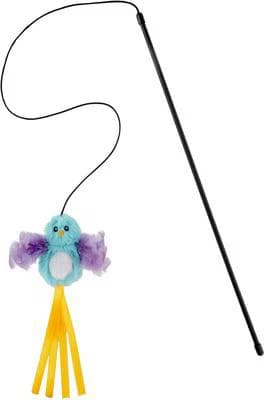
Teaser wand with a feathered bird charm and catnip to trigger your cat's chase-and-pounce instinct.
Webvet may earn a commission when you click through to Chewy, at no extra cost to you.
If your cat licks you but ignores your partner or houseguests, it is one of the most common questions owners search, often phrased as why does my cat lick me and not my husband. There are a few simple reasons.
- One primary bond. Cats tend to bond most strongly with one primary person, usually whoever feeds them, sleeps near them, and spends the most one-on-one time with them. That person becomes the safe center of the cat's world, and the grooming naturally flows their way.
- Scent and routine. You might smell like food, the litter scoop, the bed, or just be the human your cat associates with calm, predictable care.
- Lick-worthy skin. Some people's skin is simply more lick-worthy thanks to salt, lotions, or products that another person in the home does not use.
If your cat does not lick someone, it does not mean it dislikes them. Cats show affection in many different ways, from slow blinks to following you around, and there are plenty of other signs your cat actually likes you that have nothing to do with the tongue.
Is it normal, or should I be worried? Normal vs. concerning licking
This is the part most articles skip. The behavior itself is the same; what changes the meaning is the pattern, the intensity, and what else is going on. Here is how to tell ordinary affection from a possible red flag.
Normal licking vs. licking worth a closer look
Pros
- Occasional licking during cuddles, petting, or at bedtime
- Soft, relaxed body language with slow blinks, purring, or kneading
- Licking that starts and stops naturally and is easy to redirect
- A bit more licking after you exercise or shower (it is the salt)
Cons
- A sudden, dramatic increase with no obvious trigger
- Compulsive licking your cat cannot seem to stop
- Licking paired with overgrooming bald patches or sores on your cat itself
- New licking alongside hiding, appetite changes, or irritability
- 1Pattern, intensity, and context decide whether licking is normal or a red flag.
- 2Stress (a move, new baby, new pet, multi-cat tension) is a common driver of a sudden spike.
- 3Skin irritation, allergies, nausea, or pain can also show up as more licking.
Stress and anxiety
Stress and anxiety are common drivers of a sudden licking spike. A move, a new baby, a new pet, a schedule change, or boredom can all push a cat to over-groom for comfort.
In multi-cat homes, tension between cats is a frequent and overlooked trigger, so reducing stress in a multi-cat household can sometimes calm the behavior on its own.
Skin, allergies, nausea, or pain
Licking can also point to your cat's own health rather than affection. Skin irritation, allergies, nausea, or pain can all show up as increased licking.
Because cats hide discomfort so well, it helps to know the subtle signs a cat may be in pain, so you can connect the dots if licking arrives with other changes.
Should you let your cat lick you? Safety and hygiene
For most healthy adults, the occasional lick from a well-cared-for cat is low risk, and there is no need to panic over it. That said, a cat's mouth carries bacteria, and your skin can carry things that are dangerous for your cat to swallow, so a few sensible boundaries are worth keeping.
- Keep a cat's mouth away from broken skin. Never let a cat lick open cuts, wounds, broken skin, your eyes, or your mouth. Mouth bacteria such as Pasteurella can cause infection if they enter broken skin. Cat scratch disease (Bartonella) is mainly spread by scratches, bites, and infected flea dirt rather than by simple licking, but keeping a cat's mouth away from a fresh cut is still a sensible precaution.
- Avoid flea and tick spot-on products. Keep your cat away from any skin where you have applied a flea or tick spot-on product. Never put a dog flea-and-tick spot-on on a cat, and do not let a cat lick or groom a recently treated dog in the home: many dog products contain permethrin or other pyrethroids, which are severely and sometimes fatally toxic to cats and can trigger drooling, tremors, twitching, and seizures.
- Avoid medicated human creams. Do not let your cat lick skin treated with human medicated creams. Some are rapidly life-threatening to cats even in tiny amounts, especially 5-fluorouracil (Efudex) cancer cream and calcipotriene or calcipotriol (vitamin-D psoriasis creams). Topical NSAIDs such as diclofenac and hormone or estrogen creams are also dangerous. Wash and fully cover any treated area before contact with your cat.
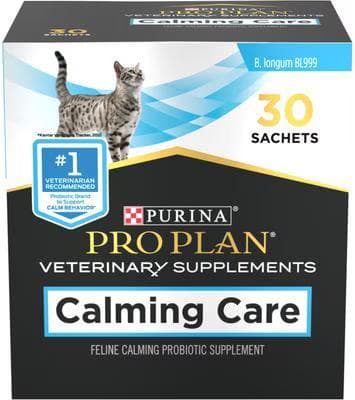
Probiotic supplement formulated to help cats maintain calm behavior, with the BL999 strain. 30 daily sachets.
Webvet may earn a commission when you click through to Chewy, at no extra cost to you.
- Wash up afterward. Wash the area afterward, especially before eating or touching your face, and keep your cat's parasite prevention up to date.
Some people should be more cautious. If you are pregnant, immunocompromised, undergoing chemotherapy, or caring for a newborn, it is best to limit licking and ask your own doctor for guidance on contact with pets. For everyone else, basic hygiene is usually all you need.
How to get your cat to stop licking you (gently)

If the licking is too much for you, you can absolutely redirect it, just never with punishment. Scolding, squirting, or scruffing damages trust and can make anxious licking worse. Try this instead.
- Calmly remove the reward. When licking starts, quietly stand up or move your hand away so the behavior stops earning attention. Do not make it a dramatic reaction, which can read as play.
- Offer an alternative. Redirect the urge to a lick mat, a grooming session with a soft brush, or a quick play session with a wand toy.
- Reduce the triggers. Rinse off strong lotions, sunscreen, or salty sweat before cuddling, and tackle boredom with daily play, climbing space, and a predictable routine.
- Reward the calm. When your cat relaxes near you without licking, offer praise or a treat so it learns there are other ways to connect with you.
And if you feel like you upset your cat? You cannot apologize with words, but you can in cat. Give your cat space, offer a slow blink from across the room, and rebuild trust with predictable, positive interactions and the occasional treat.
Cats forgive routine and patience far faster than they forgive being chased to make up.
Frequently asked questions
What does it actually mean when a cat licks you?
Most of the time it means affection and acceptance. Licking is grooming, and cats groom the companions they feel bonded to. By licking you, your cat is treating you like family, marking you with its scent, and showing trust. Less often, it signals stress, attention-seeking, or that your skin tastes salty.
Should you let your cat lick you?
For healthy adults, occasional licking is generally safe. Keep your cat away from open cuts, your eyes, and your mouth, and never let it lick skin treated with a flea or tick spot-on or a medicated human cream, since some are toxic or even fatal if swallowed. Wash the area afterward. People who are pregnant, immunocompromised, or caring for newborns should limit it and ask their doctor.
Are cats happy when they lick you?
Usually, yes. A lick paired with purring, slow blinks, kneading, and a relaxed body is a content, happy cat. The exception is frantic or compulsive licking, which can signal stress or anxiety rather than happiness, so always read the lick alongside the rest of your cat's body language.
Why does my cat lick me and then bite me?
Usually it is a love nibble that is part of grooming, or a sign of overstimulation. When petting becomes too much, a cat may lick and then bite to say enough. Watch for a twitching tail or flattened ears just before the bite, and pause petting when you see them. If a bite actually punctures the skin, wash it and call your doctor, as cat bites infect easily.
How do I say sorry to my cat?
Give your cat space and let it approach you on its own terms. Offer a slow blink, speak softly, and rebuild trust with treats, play, and a predictable routine. Avoid forcing contact. Cats respond to calm, consistent positive interactions far more than to any verbal apology.
How do you say "I love you" in cat?
The classic cat "I love you" is the slow blink: meet your cat's gaze, then slowly close and open your eyes. Cats also show love by grooming you, kneading, head-bumping, purring in your lap, and following you around the house. Returning a slow blink is a simple way to answer back.
What is the 3-3-3 rule of cats?
The 3-3-3 rule is a rough guide for a newly adopted cat: about 3 days to decompress and feel safe, 3 weeks to settle into a routine and start showing personality, and 3 months to feel fully at home and bonded. It is a reminder to be patient as a new cat adjusts.
Why does my cat lick me and not my husband?
Cats often bond most with one primary person, usually whoever feeds, sleeps near, and spends the most time with them, so grooming flows their way. Scent and routine play a role too, and some skin simply tastes more interesting. It does not mean your cat dislikes anyone else.

Editor
The Webvet Editorial Team is the in-house group of pet-care editors and writers behind Webvet, operated by Smart Pet Collective. The team researches, writes, and maintains Webvet's pet health, behavior, and medication content. Every article follows a defined editorial process: research from reputable veterinary and scientific sources, careful drafting, mandatory review of medical content by a credentialed veterinarian, and dated publication. Health and medication articles are medically reviewed by a licensed veterinary professional before they go live and are kept current over time.
Veterinarian · BVMS MRCVS
Dr. Pippa Elliott, BVMS, MRCVS, is a veterinarian with nearly 30 years of experience in companion animal practice. Dr. Elliott earned her Bachelor of Veterinary Medicine and Surgery from the University of Glasgow. She was also designated a Member of the Royal College of Veterinary Surgeons. Married with 2 grown-up kids, Dr. Elliott has a naughty Puggle named Poggle, 3 cats and a bearded dragon.


