What Does Catnip Do to Cats? A Vet Explains the High
A vet-explained guide to how catnip works, common responses, effect duration, nonresponders, safe use, kittens, forms, silver vine, and when to ask your veterinarian.

This article contains affiliate links. Webvet may earn a commission when you buy through them, at no extra cost to you.
Catnip contains nepetalactone, a plant chemical that activates scent pathways in responsive cats. What does catnip do to cats? It can prompt sniffing, licking, rubbing, rolling, playful bursts, vocalizing, or a quieter relaxed response. The effect is usually short, some cats do not respond, and eating too much plant material can cause vomiting or diarrhea.
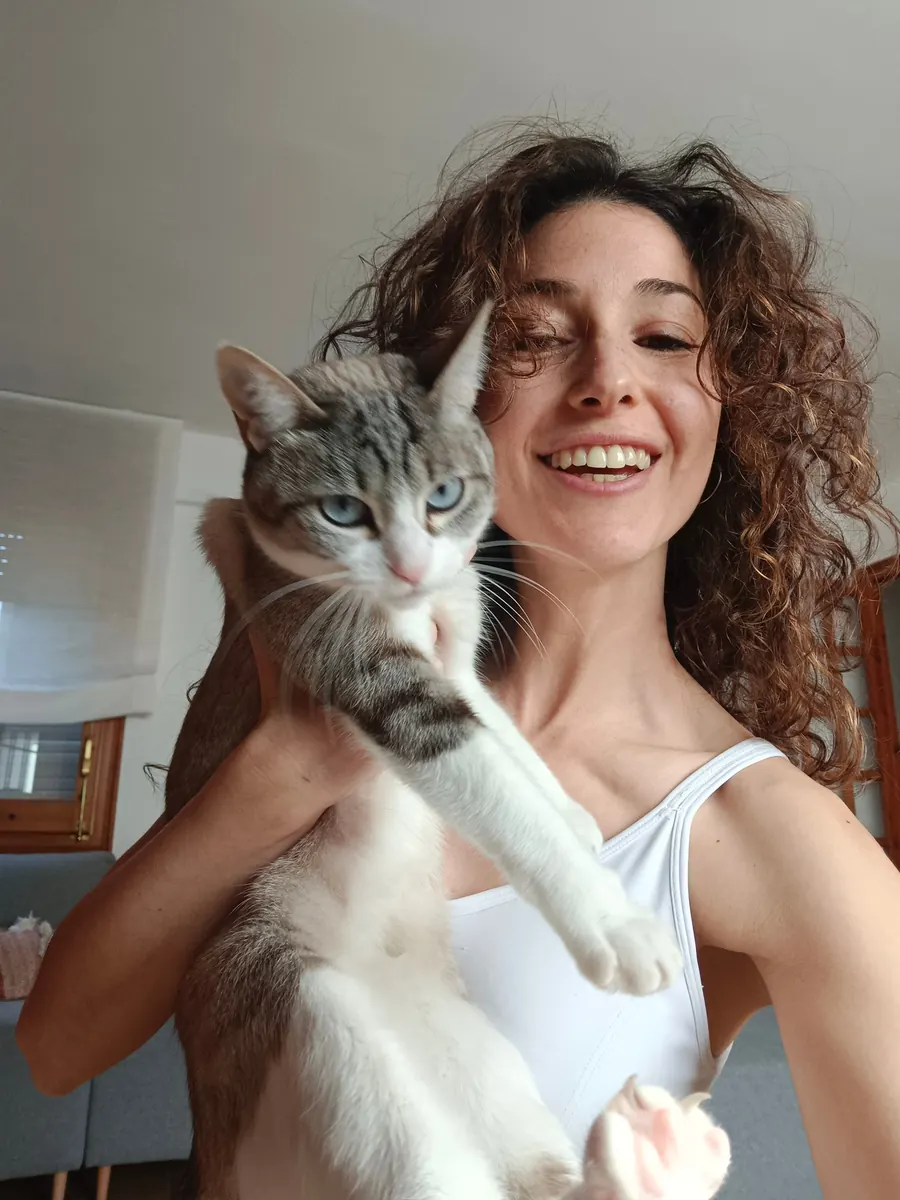
 Sponsored
Want a vet's help with your cat's anxiety or behavior?
Talk to a licensed vet at Dutch over video, often the same day. They can recommend treatment and prescribe it when it's appropriate.
Use code Pets60
Plans start at $12/month · covers up to 5 pets
- Licensed vets in most states
- Rx for 150+ conditions
- 4.7 on Trustpilot
What does catnip do to a cat?
Nepetalactone can trigger scent-linked behavior in responsive cats. The visible effect is usually short and variable, nonresponse is normal, and too much plant material can cause vomiting or diarrhea. Offer a small amount, observe the cat, and remove it if play becomes unsafe or the cat is distressed. Use it as optional enrichment, not treatment for a medical or behavior condition.
Catnip, or Nepeta cataria, is a member of the mint family. Its leaves and stems contain volatile compounds called iridoids. Nepetalactone is the best-known catnip iridoid.
The scent response follows a short biological chain:
- Odor molecules from catnip reach the olfactory epithelium in the nose.
- Research on catnip and silver vine suggests that plant iridoids engage the feline mu-opioid system and contribute to rubbing and rolling behavior.
- The result is a biological scent response, not proof that a cat experiences the same subjective high as a person using a drug.
Scientifically, what does catnip do to a cat's brain? The olfactory epithelium begins scent detection, and research implicates the mu-opioid system in the downstream response. The scent activates neural pathways associated with the characteristic behavior, but current research cannot translate that response into an exact subjective state. That is why what catnip actually does to cats is best described through observable behavior, not a claim about how the experience feels.
Nepetalactone and related plant iridoids are detected through smell. In a responsive cat, that scent can trigger sniffing, licking, rubbing, rolling, play, vocalizing, or quieter behavior. Nepeta cataria does not produce one mandatory reaction. The effect ranges from energetic activity to rest, and does catnip make cats sleepy? It can, especially after ingestion or an active period.
A catnip scratcher lounge is one way to offer catnip during a supervised activity.

Webvet may earn a commission when you click through to Chewy, at no extra cost to you.
How does catnip affect cats, and does catnip get cats high? It produces a short, scent-linked behavioral change in susceptible cats, which is why people use the word high. Catnip is not a drug for cats in the same sense as a human recreational substance, and the intensity of a response does not measure health or happiness. Eating plant material may increase the chance of vomiting or diarrhea.
- Observed response: A peer-reviewed study of catnip and silver vine iridoids documented rubbing and rolling after olfactory exposure and found that rubbing transferred plant compounds onto the fur.
- Evidence limit: The transferred compounds produced mosquito-repellent effects under experimental conditions. That finding may help explain rubbing, but it does not make catnip a household mosquito treatment.
What is in catnip that makes cats go crazy is mainly nepetalactone and related volatile iridoids, but "crazy" is not a useful welfare measure. The evidence separates a scent-triggered active response from quieter behavior after ingestion. Research can support those observable differences and individual variation, not mind-reading or an exact human equivalent.
Why doesn't my cat react to catnip? Nonresponse is common and can reflect inherited responsiveness, age, freshness, storage, exposure, and individual variation. When do cats start reacting to catnip? Young kittens may not show a mature response, and age is one factor rather than a guaranteed cutoff. Does catnip only work on cats? Related plant compounds affect several feline species, but this guide is limited to domestic-cat use. Does catnip chill cats out? Some cats become quiet, while others become active, and giving more does not make the response more predictable.

Common responses include:
- Intense sniffing or licking
- Chin, cheek, face, or body rubbing
- Rolling from side to side
- Pawing, pouncing, kicking, or running
- Vocalizing or appearing highly aroused
- Sitting quietly, becoming mellow, or losing interest
An active response can look dramatic while remaining loose and voluntary. Watch the complete body. A cat that chooses to rub and roll, pauses, and can walk away is different from a cat that becomes frantic, attacks another animal, guards the catnip, or cannot settle. WebVet's guide to cat body language can help distinguish relaxed engagement from overstimulation and distress.
Why do cats like catnip?
Responsive cats are attracted to the odor of particular plant iridoids. The behavior is not simply hunger or a desire to eat the leaves. Smell is central, and rubbing helps spread the compounds.
A catnip teaser wand or silvervine-and-catnip blend makes it easier to compare short, controlled play responses.
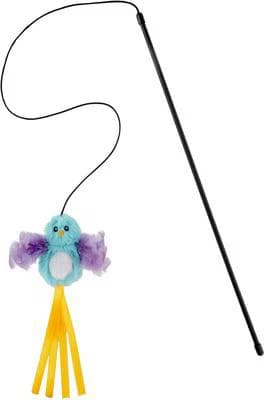
Teaser wand with a feathered bird charm and catnip to trigger your cat's chase-and-pounce instinct.
Webvet may earn a commission when you click through to Chewy, at no extra cost to you.
Preference varies. A cat may seek fresh leaves but ignore an old dried product, respond to silver vine but not catnip, or show a quiet response that an owner misses. A cat can also enjoy the smell on one occasion and walk away on another.
Is catnip a drug, and does it get cats high?
People use "high" to describe the obvious behavioral change, but the word can mislead. Catnip is a plant stimulus that acts through feline olfactory and neural pathways. It is not cannabis, and catnip response should not be equated with human marijuana or alcohol use.
The useful question is whether the cat remains safe and able to disengage. Do not blow smoke near a cat, give cannabis products, or assume a substance safe for a person is safe for a pet.
SponsoredVet care that's always there
Unlimited video calls and messaging with licensed vets for less than a typical vet visit. One membership covers up to five pets.
Use code Pets60
Plans start at $12/month · covers up to 5 pets
- Licensed vets in most states
- Rx for 150+ conditions
- 4.7 on Trustpilot
How long does catnip last, and why do some cats not respond?
How long does the catnip effect last? The visible response often lasts several minutes and then fades, but there is no universal stopwatch. Timing varies with the cat, plant material, freshness, amount, and environment. First scent contact may lead to a short active response, recovery, and temporarily reduced sensitivity before normal interest returns, so adding more immediately often does not intensify the response.
| Approximate phase | What you may see | What to do | Reason to stop or call |
|---|---|---|---|
| First scent contact | Sniffing, licking, facial rubbing | Let the cat choose whether to continue | Remove if the cat coughs, gags, or appears distressed |
| Short active response | Rolling, rubbing, running, pouncing, vocalizing | Supervise and keep the area free of hazards | Stop for aggression, frantic behavior, unsafe jumping, or conflict |
| Recovery | Activity slows, grooming or rest begins | Remove loose material and provide calm space | Call a veterinarian for collapse, breathing trouble, or severe abnormal behavior |
| Temporary reduced sensitivity | Cat ignores more catnip for a while | Do not keep adding product | Repeated exposure is unnecessary and may increase ingestion |
| Later return to baseline | Normal routine and behavior resume | Store catnip securely for another occasional session | Persistent vomiting, diarrhea, lethargy, or behavior change needs advice |
The table is a response timeline, not a stopwatch. First contact, the active response, recovery, and temporary reduced sensitivity describe a sequence rather than guaranteed minute marks. A two-minute response and a ten-minute response can both reflect normal variation. Follow the cat's behavior, remove the material when needed, and call a veterinarian for severe or persistent abnormal signs.
Why does catnip not affect my cat?

No response does not mean that something is wrong. An early inheritance study of the domestic-cat catnip response supports a genetic component, while a study of olfactory enrichment responses in 100 domestic cats found that not every cat responded and that some catnip nonresponders reacted to silver vine or other plant materials. Alongside age, freshness, storage, exposure, and individual variation, inherited responsiveness can change what an owner sees without diagnosing or predicting one cat.
Work through a simple decision path:
- Consider age and inherited variation. Young kittens may not show a mature response, and some adult cats are nonresponders.
- Check freshness and storage. Heat, light, air, and long storage can reduce volatile odor.
- Offer one small fresh sample on a safe surface at a calm time rather than pushing it toward the cat's face.
- If the cat remains indifferent, accept the nonresponse. It needs no treatment.
- If desired, consider a small supervised silver-vine trial, but do not guarantee it will work.
A study of leaf damage and iridoid release found that physical damage changes the amount and composition of volatiles released by catnip and silver vine. Crushing a small amount of dried leaf between the fingers may refresh the odor, but it will not turn every cat into a responder.
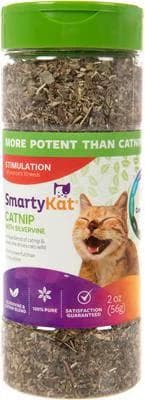
A silvervine and catnip blend that excites even cats who ignore plain catnip, great for redirecting energy into healthy play.
Webvet may earn a commission when you click through to Chewy, at no extra cost to you.
A separate study of catnip response variation found variation in intensity and behavior, including active and passive response types. Quiet interest can be a real response even when the cat never rolls dramatically.
Why doesn't my cat like catnip? Liking the scent and showing an obvious response are not the same. When an owner says, "My cat doesn't like catnip," or a cat doesn't like catnip enough to show a visible response, the decision path is the same: consider inherited variation and age, then freshness, storage, prior exposure, and the calmness of the trial. If the cat doesn't react to catnip after one fresh supervised test, accept normal nonresponse instead of increasing the amount.
Is catnip safe for cats?
Catnip is often used without a problem in small, supervised amounts. Safe use does not mean unlimited use. The ASPCA Animal Poison Control plant database lists catnip as capable of causing vomiting and diarrhea and notes that it may be stimulating or sedating.
The safety section names vomiting, diarrhea, overstimulation, distress, unsafe play, stop conditions, and reasons to call a veterinarian. Remove catnip if the cat cannot settle or becomes distressed or plays in a way that could cause injury. Call a veterinarian when gastrointestinal signs repeat or when collapse and breathing trouble and marked lethargy or abnormal behavior persists beyond the expected short response.
Safety depends on the response, not on calling the plant natural. Remove catnip and use clear stop conditions if you see:
- Vomiting or diarrhea.
- Overstimulation, distress, or conflict.
- Unsafe play or an inability to settle.
Call a veterinarian for:
- Repeated gastrointestinal signs.
- Collapse or breathing trouble.
- Marked lethargy or behavior that remains abnormal after the expected short response.
Can catnip make a cat sick? Yes. Vomiting and diarrhea are possible side effects of catnip on cats, especially after excessive ingestion. Other catnip side effects can include overstimulation, conflict, or unsafe play, so the response and recovery matter more than the label natural.
Are cats supposed to eat catnip? They may nibble it, but sniffing is enough for the classic response and a cat does not need to eat it. What happens when a cat eats catnip depends on amount and the individual: a small nibble may be followed by quieter behavior, while more plant material raises the risk of vomiting or diarrhea. Can cats get addicted to catnip, and is catnip addictive? Ordinary occasional exposure is not known to create chemical addiction, but repeated unrestricted access can reduce interest and encourage excessive eating. Remove it after the response and call a veterinarian for persistent signs.

Webvet may earn a commission when you click through to Chewy, at no extra cost to you.
There is no universal household dose that fits loose leaves, a fresh plant, spray, a stuffed toy, every potency, every age, and every health condition. Start with less than you think you need. The cat only has to smell enough to choose whether to respond.
Can cats overdose on catnip?
There is no well-established lethal household dose that owners should use as a target or threshold. Too much plant material can cause gastrointestinal upset, and a highly aroused cat can be injured during unsafe play. Treat "overdose" as a reason to focus on symptoms and exposure details rather than a number from the internet.
Tell the veterinarian what form was used, the approximate amount available, when exposure occurred, and what signs you see. Bring the package if one exists.
Is catnip safe for kittens?
How old do cats have to be for catnip? There is no universal cutoff. Young kittens may not show a mature response, and there is no benefit to forcing exposure. Keep loose plant material and sprays away from very young kittens who may chew, inhale particles, or become overwhelmed. Ask a veterinarian about a kitten with vomiting, diarrhea, breathing signs, unusual lethargy, or suspected ingestion of another plant or product.
Is there a downside to catnip?
Is there a downside to catnip? Potential downsides include vomiting, diarrhea, overstimulation, conflict between cats, unsafe running or jumping, guarding, and reduced interest with repeated exposure. A small supervised exposure can be enriching, but catnip can also distract from the real problem if an owner uses it for persistent anxiety or behavior change without addressing the cause. Remove it, let the cat settle, and seek veterinary advice for persistent or severe signs.
Offer separate sessions in a multi-cat home if competition develops. Remove the material after the response, and let the cat return to baseline.
Is catnip bad for cats or good for cats? Neither label fits every situation. Occasional small, supervised sessions are a better default than unrestricted daily access, which can add ingestion risk without adding enrichment. Store catnip securely, rotate other activities, and ask a veterinarian before using it routinely for a medical or behavior goal.
Should cats eat catnip or smell it?
Smelling catnip drives the classic olfactory response of sniffing, rubbing, and rolling. Eating a small amount may be followed by quieter behavior in some cats, but larger amounts increase vomiting or diarrhea risk. A cat does not need to consume catnip for the scent response to work, so use a light sprinkle, rubbed surface, or small amount inside an intact supervised toy instead of encouraging the cat to eat a pile.
How to give a cat catnip

The best way to give your cat catnip is to choose a simple fresh, dried, or spray form, offer a small amount, and let the cat approach it. There is no useful household answer to how far away a cat can smell catnip because plant freshness, potency, airflow, and the individual cat all change the exposure.
Dried catnip
Crush a small pinch to release odor and place it on a scratcher, mat, or easy-to-clean floor. Avoid dusty handfuls that can be inhaled or eaten. Seal the remainder away from heat and light.
Fresh catnip
Offer one or two accessible leaves from a correctly identified, pesticide-free plant while supervising, and prevent the cat from uprooting and consuming a large amount. What is the difference between catnip and catmint? Catnip usually means Nepeta cataria, while catmint may refer broadly to ornamental Nepeta species and cultivars. Common names overlap, so confirm the plant, avoid pesticides and concentrated oils, and do not assume every ornamental cultivar has the same potency or suitability.
Catnip spray
Apply a small amount to an approved surface according to the product directions and let it dry when instructed. Never spray the cat's face, fur, food, or water. Check the ingredient list for added essential oils or other substances that a veterinarian has not approved.
Silver vine
Silver vine contains a different compound profile, including actinidine and related iridoids, and may interest some cats that ignore catnip. It is a supervised nonresponder option, not a guarantee that a cat will react or proof that silver vine is universally stronger, safer, or more appropriate. Introduce a small amount with the same stop conditions used for catnip, and never keep increasing exposure to force a response.
Can catnip calm a cat?
Some cats become quieter after sniffing or eating catnip, while others become active. To use catnip to calm cats, first test a tiny amount on an ordinary calm day and watch that individual response. A stimulating reaction can make travel, visitors, grooming, or another stressor harder. Catnip is optional enrichment, not a reliable sedative, prescribed medication substitute, or treatment for anxiety.
The way cats respond to smell is part of a larger sensory world. WebVet also explains how cats perceive their surroundings and why another common sensory preference, water aversion, varies by individual. For careful boundaries around a medical myth, see why cats do not have Down syndrome as humans do.
What about catnip toys?
This article covers the response and safe-use principles. For formats, materials, and safety checks, see WebVet's guide to catnip toys for cats. It also explains how long catnip lasts in a toy and when to replace or refresh it. A refillable or durable catnip toy can be one supervised option. Inspect every toy for torn seams, loose strings, detached pieces, or exposed filling, and supervise based on how the individual cat plays.
What do veterinarians say about catnip?
What do vets think of catnip? Veterinary guidance generally treats it as optional enrichment, not a treatment. Use a small amount, observe the response, prevent excessive ingestion and unsafe play, and discuss adverse signs or behavior concerns with a veterinarian. A vet can also help when an owner is trying to use catnip to manage persistent anxiety, pain, appetite loss, or another problem that needs its own assessment.
The word natural does not make every plant or concentrated extract safe. Catnip should remain one enrichment choice among play, scratching, climbing, hiding, hunting-style feeding, social contact, and rest.
Frequently Asked Questions
Is it okay to give cats catnip daily?
Is it okay to give cats catnip daily? A small amount offered infrequently is a better default than unrestricted daily access. Frequent use may reduce interest and increase ingestion without adding enrichment. Remove catnip after the short response, store it securely, and vary activities instead of relying on it every day. Ask a veterinarian before routine daily use for a health or behavior goal, especially if the cat has adverse signs.
Are cats supposed to eat catnip or just sniff it?
Are cats supposed to eat catnip or just sniff it? Smelling catnip drives the classic olfactory response from sniffing, rubbing, and rolling. A cat may eat a little, but larger amounts increase the chance of vomiting or diarrhea and may produce quieter behavior. Cats are not supposed to consume a pile to make catnip work. Offer a small amount, supervise, and remove catnip if the cat becomes distressed or play becomes unsafe.
Catnip is most useful when the cat controls the interaction. A small, supervised scent experience can be enriching. More is not better, and no response needs no correction.
Can cats overdose on catnip?
Catnip is not usually considered toxic in ordinary exposure, but too much catnip can cause vomiting or diarrhea, overstimulation, distress, or unsafe play. Offer a small amount, supervise the response, and remove the catnip if the cat becomes distressed or cannot settle. Call a veterinarian for repeated gastrointestinal signs, collapse, breathing trouble, marked lethargy, injury, or abnormal behavior that persists beyond the expected short response.
Is catnip safe for kittens?
Catnip is generally safe for kittens in small amounts, but young kittens may not respond to catnip because responsiveness often appears later. Use only a small supervised amount and remove loose plant material if the kitten tries to eat a large quantity. Stop if play becomes frantic or unsafe. Catnip is optional enrichment, not a developmental need, and it should never replace appropriate toys, social contact, rest, or veterinary care.
Does catnip get cats high?
People use the word high because responsive cats may rub, roll, vocalize, run, play, or become quiet for a short time. Nepetalactone activates scent-linked pathways associated with that behavior. Catnip is not cannabis, alcohol, or a human recreational drug, and the exact subjective experience is unknown. Describe the observable response instead of assuming that a cat feels the same state a person would associate with intoxication.

Editor
The Webvet Editorial Team is the in-house group of pet-care editors and writers behind Webvet, operated by Smart Pet Collective. The team researches, writes, and maintains Webvet's pet health, behavior, and medication content. Every article follows a defined editorial process: research from reputable veterinary and scientific sources, careful drafting, mandatory review of medical content by a credentialed veterinarian, and dated publication. Health and medication articles are medically reviewed by a licensed veterinary professional before they go live and are kept current over time.


