Can Cats Have Down Syndrome? Vet-Explained Facts
Cats cannot have the exact human condition called Down syndrome, but congenital, genetic, and neurologic conditions can cause unusual traits. Learn what may look similar and when a veterinary evaluation matters.

BVMS MRCVS
Medically reviewed by Dr. Pippa Elliott, BVMS MRCVS · Last reviewed

This article contains affiliate links. Webvet may earn a commission when you buy through them, at no extra cost to you.
Can cats have Down syndrome? No. Down syndrome is a specific human genetic condition involving extra chromosome 21 material. Domestic cats have 38 chromosomes arranged in 19 pairs, so they cannot have the exact human trisomy 21 condition.
A cat can still be born with a congenital, genetic, or neurologic difference that affects appearance, movement, learning, vision, hearing, or general health. Those differences deserve a veterinary diagnosis and individualized support. A face, photograph, or unusual behavior cannot identify a chromosome disorder.
 Sponsored
Have a health question about your cat?
Talk to a licensed vet at Dutch over video or message, including nights and weekends.
Use code Pets60
Plans start at $12/month · covers up to 5 pets
- Licensed vets in most states
- Rx for 150+ conditions
- 4.7 on Trustpilot
Can cats have Down syndrome?
Cats cannot have the exact human condition called Down syndrome. They have 19 chromosome pairs, for 38 chromosomes total. Traits that look unusual may have many feline explanations, and only a veterinarian can evaluate the individual cat.
Down syndrome occurs when a person has extra full or partial chromosome 21 material. The precise term is trisomy 21. The Centers for Disease Control and Prevention describes it as a human genetic condition. It is not a general label for a person or animal with distinctive physical or developmental traits.
Humans normally have 46 chromosomes in 23 pairs. Cats have 38 chromosomes in 19 pairs, according to VCA Animal Hospitals. A cat therefore does not have human chromosome 21 and cannot have human trisomy 21. There is no feline version or equivalent of Down syndrome. Searches such as feline Down syndrome or cat Down syndrome meaning are understandable, but they do not name a feline diagnosis.
For low-pressure enrichment, a supervised interactive cat toy can provide short play sessions.
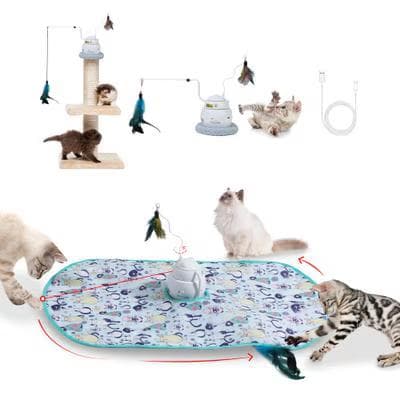
Webvet may earn a commission when you click through to Chewy, at no extra cost to you.
That genetic distinction does not mean every unusual feline trait is harmless. It means the phrase cat Down syndrome is not a veterinary diagnosis. A veterinarian starts with the cat's actual signs, medical history, physical examination, and appropriate testing instead of assigning a human condition from appearance.

The answer is still no if someone asks whether a kitten can be born with Down syndrome or a cat can develop it later. Cats can be born with other conditions. Older cats can also develop medical or cognitive problems. Those conditions have their own names and causes.
Readers looking for the species-specific dog answer can see whether dogs can have Down syndrome. The medical principle is similar: a human diagnostic label should not replace an animal's veterinary evaluation.
Is there a feline equivalent to Down syndrome?
There is no single feline equivalent to Down syndrome. Several unrelated conditions can produce traits that people associate with the phrase, but they do not form one syndrome. Cerebellar hypoplasia and hydrocephalus are two distinct examples. A veterinarian investigates the affected function and the cat's history instead of diagnosing from facial appearance or a broad human label.
Possible categories include:
- congenital differences present at birth
- inherited disorders caused by a particular genetic variant
- neurologic conditions affecting balance, coordination, behavior, or learning
- eye, ear, facial, or skeletal differences
- developmental disruption related to infection, nutrition, toxins, or another pregnancy complication
- illness or injury acquired after birth
Congenital simply means present at birth. It does not always mean inherited. The Merck Veterinary Manual explains that genetic factors, maternal infection, medication or toxin exposure, nutrition, and other influences can affect fetal development. A kitten may therefore have a congenital condition even when no inherited mutation is identified.
A supportive cat bed offers a quiet retreat, while a treat puzzle adds a simple food-based activity.

A plush orthopedic foam mattress that cushions aging joints and pressure points, giving a stiff or trembling senior dog warm, supportive rest.
Webvet may earn a commission when you click through to Chewy, at no extra cost to you.
Calling every unusual kitten a Down syndrome kitten hides those important distinctions. It can also delay the condition-specific care the kitten needs.
What can look like Down syndrome in a cat?
Online descriptions often focus on a broad face, unusual eye position, small ears, poor coordination, slow learning, or a different body shape. None of those observations proves a diagnosis. Breed, ordinary individual variation, injury, vision or hearing impairment, and many medical conditions can affect the same visible trait.
Appearance or behavior cannot diagnose a feline genetic or congenital condition. Searches about feline Down syndrome symptoms describe owner observations, not valid tests. A viral image cannot diagnose a cat either. Appearance-based labels and viral cat images are not diagnoses. Record the function that concerns you. Then let a veterinarian decide which examination or test is appropriate.

| What an owner notices | Possible feline explanations | What a veterinarian may evaluate | Next step |
|---|---|---|---|
| Unsteady walking or tremors | Cerebellar hypoplasia, inner-ear disease, toxin exposure, injury, or another neurologic problem | Gait, reflexes, ears, vision, history, and sometimes laboratory tests or imaging | Arrange a veterinary examination, urgently if onset is sudden |
| Trouble eating or swallowing | Dental pain, oral anatomy, nausea, weakness, or neurologic dysfunction | Mouth, jaw, hydration, weight, swallowing, and neurologic function | Seek prompt care, especially if the cat cannot eat or drink |
| Unusual eye position or apparent vision trouble | Congenital anatomy, eye disease, nerve dysfunction, or normal facial variation | Complete eye and neurologic examination | Do not diagnose from a photo; schedule an examination |
| Slow learning or different behavior | Age, stress, sensory impairment, pain, developmental difference, or illness | Medical history, home behavior, hearing, vision, pain, and neurologic status | Record examples and discuss them with the veterinarian |
| Distinctive facial shape | Breed, individual variation, congenital anatomy, trauma, or other condition | Whole-patient examination rather than facial comparison | Avoid appearance labels and evaluate functional concerns |
This respectful condition-by-condition table separates an observed trait from plausible veterinary differentials, diagnostic next steps, and urgency. Real look-alikes include cerebellar hypoplasia and hydrocephalus, but neither can be confirmed from appearance. By separating a viral appearance label from testable feline conditions and the veterinary next step, the table helps an owner describe function without turning a photograph into a diagnosis.

Two examples sometimes discussed in this context are cerebellar hypoplasia and hydrocephalus. They are real feline conditions, but neither is feline Down syndrome.

Webvet may earn a commission when you click through to Chewy, at no extra cost to you.
Cerebellar hypoplasia
Cerebellar hypoplasia develops when the cerebellum does not form normally. Affected cats may have an unsteady gait, head tremors, or exaggerated limb movements. The condition is often linked to developmental disruption before birth, including maternal infection with feline panleukopenia virus. It is not contagious after the kitten is born, and it is not diagnosed from facial appearance.
Hydrocephalus
Hydrocephalus involves abnormal accumulation of fluid within the brain. Signs can vary and may include altered behavior, seizures, vision problems, or an abnormal skull shape. A veterinarian may need neurologic examination and imaging to investigate it. The Merck Veterinary Manual describes both cerebellar hypoplasia and hydrocephalus among congenital or inherited nervous-system disorders of cats.
The useful question is not, "Does my cat look like it has Down syndrome?" It is, "What function has changed, and what examination can explain it?" Videos of walking, notes about eating, and a timeline of changes are more useful to a veterinarian than a comparison with a viral image.
SponsoredVet care that's always there
Unlimited video calls and messaging with licensed vets for less than a typical vet visit. One membership covers up to five pets.
Use code Pets60
Plans start at $12/month · covers up to 5 pets
- Licensed vets in most states
- Rx for 150+ conditions
- 4.7 on Trustpilot
What disabilities can cats be born with?
Cats can be born with disabilities affecting movement, balance, vision, hearing, feeding, growth, organ function, or neurologic development. These differences can involve many body systems, including:
- the brain or spinal cord
- the eyes or ears
- the heart, palate, or other organs
- the limbs, balance, or movement
- metabolism, feeding, or growth
The word disability describes a functional need, not one shared cause. Severity varies widely:
- Some differences are compatible with a comfortable life after small home adjustments.
- Others require medication, surgery, rehabilitation, close monitoring, or urgent treatment.
A veterinarian must identify the individual condition and determine whether it is stable, treatable, progressive, painful, or likely to benefit from specialist care.
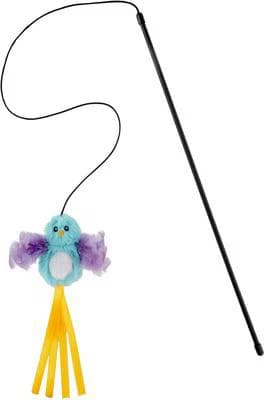
Teaser wand with a feathered bird charm and catnip to trigger your cat's chase-and-pounce instinct.
Webvet may earn a commission when you click through to Chewy, at no extra cost to you.
Many signs overlap, so a remote list cannot identify which condition a cat has. Poor coordination could arise from cerebellar development, an inner-ear problem, impaired vision, weakness, or a new emergency. Reduced response to a person could reflect hearing loss, fear, sleep, pain, or normal feline attention rather than a mental disability.
Veterinary evaluation may include:
- pregnancy, birth, adoption, and early-development history
- a complete physical and neurologic examination
- hearing and vision assessment
- weight, feeding, hydration, and growth review
- blood, urine, or fecal testing when indicated
- diagnostic imaging or referral to a specialist when indicated
The goal is not to force a label. It is to identify treatable problems, understand stable differences, and build a care plan around the cat's comfort and function.
How veterinarians help cats with unusual traits
A veterinarian first determines whether the difference is stable, progressive, painful, or newly acquired. A kitten that has always moved differently but remains bright and comfortable presents a different decision from an adult cat that suddenly falls, circles, stops eating, or has a seizure.
The assessment can also uncover practical needs that are easy to miss. Dental pain may look like feeding difficulty. Vision loss may look like hesitation or confusion. Hearing impairment may look like poor learning. Pain can change posture, grooming, sleep, and social behavior.

Home support should match the diagnosed problem and the individual cat. Depending on veterinary advice, useful adjustments may include:
- nonslip paths between food, water, litter, and resting places
- low-entry litter boxes and stable dishes
- steps or ramps that reduce risky jumps
- predictable furniture placement for a visually impaired cat
- supervised, low-impact play with easy stopping points
- regular weight, skin, dental, mobility, and comfort checks

Enrichment can support quality of life, but it does not treat a genetic or congenital condition. A puzzle toy is appropriate only when it fits the cat's vision, balance, strength, and frustration tolerance. A practical home-support plan may include supervised enrichment, but it must never present enrichment products as treatment. The broader guide to how animal cognition is evaluated also explains why performance should not be reduced to a human diagnostic label.

Follow-up matters because a care plan may change as a kitten grows or an adult cat ages. Ask what signs to track, which changes are expected, how often weight and function should be reassessed, and whether referral to a neurologist, ophthalmologist, rehabilitation professional, or another specialist would help.
Caring for a special-needs cat
A cat can be special needs without having one particular diagnosis. The term may describe an animal who needs medication, environmental changes, mobility support, sensory accommodation, more frequent monitoring, or a quieter routine. It should never be used as a joke or as proof that a cat has a human condition.
Searches about special-needs cats, life expectancy, or how to care for a cat with Down syndrome use an inaccurate label but express valid care concerns. There is no life-expectancy number for that label. Prognosis depends on the cat's actual condition, organ function, mobility, comfort, and access to care.
Quality of life is individual. Owners and veterinarians can track:
- Comfort, appetite, hydration, and grooming.
- Toileting and mobility.
- Interest in familiar activities, sleep, and social engagement.
A cat who does some things differently may still have a rich, comfortable life when pain and medical needs are addressed.
Special-needs cats deserve individualized care without stigmatizing labels. Individualized support needs should be written into a veterinary care plan that identifies daily accommodations, warning signs, follow-up timing, and realistic quality-of-life goals. Respectful care names the affected function, responds to pain or risk, and recognizes the cat as an individual rather than defining the animal by a borrowed human diagnosis.
How vets describe cognitive and neurologic differences
The phrase mental disability is broad and can be stigmatizing when used without a diagnosis. Veterinarians generally describe the function that is affected, such as developmental delay, sensory impairment, seizure disorder, abnormal coordination, or cognitive dysfunction in an older cat. Specific language leads to better testing and better support.
If behavior is the main concern, record each episode in a consistent way:
- what happens before, during, and after
- sleep, appetite, and litter-box use
- medications and recent changes
- video when it is safe to record
This evidence helps the veterinary team distinguish a medical sign from fear, learning history, or normal feline behavior.
Frequently Asked Questions
Can a cat be special needs?
Yes. A cat may need extra medical monitoring, mobility help, sensory accommodation, environmental changes, or daily medication. Special needs describes care requirements, not a diagnosis and not a lesser quality of life. A veterinarian can identify the cat's individualized support needs and create a veterinary care plan covering comfort, safe movement, nutrition, medication, warning signs, and follow-up. The plan should reflect the actual diagnosis and the cat's daily function.
Do cats have mental disabilities?
Cats can have congenital, neurologic, sensory, or age-related conditions that affect learning, behavior, coordination, or awareness. "Mental disability" is not a precise remote diagnosis. Describe the affected function, when the change began, and how it affects daily life. A veterinarian can rule out pain and sensory loss, including vision or hearing impairment, then investigate illness, developmental differences, or neurologic disease. Specific findings lead to more useful support than a broad label.
How can you tell if a cat has Down syndrome?
You cannot tell from a face, photograph, gait, or behavior because cats cannot have human trisomy 21. Features described online as feline Down syndrome symptoms can have many causes, including congenital differences, cerebellar hypoplasia, hydrocephalus, sensory problems, injury, or normal variation. Record the affected function and timeline, then ask a veterinarian for an examination and condition-specific testing rather than diagnosing from appearance.
Can cats be born with Down syndrome?
No. Kittens cannot be born with human Down syndrome because cats do not have human chromosome 21. They can be born with other congenital, genetic, neurologic, sensory, skeletal, or organ conditions. Congenital means present at birth and does not always mean inherited. A veterinarian can identify the actual condition and tailor support to the kitten's comfort, mobility, feeding, growth, vision, hearing, and overall function.

Editor
The Webvet Editorial Team is the in-house group of pet-care editors and writers behind Webvet, operated by Smart Pet Collective. The team researches, writes, and maintains Webvet's pet health, behavior, and medication content. Every article follows a defined editorial process: research from reputable veterinary and scientific sources, careful drafting, mandatory review of medical content by a credentialed veterinarian, and dated publication. Health and medication articles are medically reviewed by a licensed veterinary professional before they go live and are kept current over time.
Veterinarian · BVMS MRCVS
Dr. Pippa Elliott, BVMS, MRCVS, is a veterinarian with nearly 30 years of experience in companion animal practice. Dr. Elliott earned her Bachelor of Veterinary Medicine and Surgery from the University of Glasgow. She was also designated a Member of the Royal College of Veterinary Surgeons. Married with 2 grown-up kids, Dr. Elliott has a naughty Puggle named Poggle, 3 cats and a bearded dragon.
Related reading

Mastitis in Dogs: Symptoms, Causes, Treatment, and Home Care

Cat Pregnancy Week by Week: Signs, Timeline, and What to Expect

Cat in Heat: Signs, How Long It Lasts, and How Often It Happens
