Can Dogs Have Down Syndrome? A Vet Explains
Dogs cannot have the exact human diagnosis of Down syndrome, but congenital and genetic conditions can affect canine development. Learn what veterinarians investigate and when to seek care.

BVMS MRCVS
Medically reviewed by Dr. Pippa Elliott, BVMS MRCVS · Last reviewed

This article contains affiliate links. Webvet may earn a commission when you buy through them, at no extra cost to you.
Can dogs have Down syndrome? No. Down syndrome is caused by extra material from human chromosome 21. Dogs have 78 chromosomes arranged differently. They can still be born with conditions that affect growth, development, movement, hearing, vision, or behavior. Those concerns need a veterinarian's diagnosis, not a label based on physical traits.
A dog with unusual physical traits or developmental differences does not have a confirmed diagnosis based on observation alone. The useful next question is not whether the dog has a human syndrome, but which canine condition, if any, is causing the signs and what care that dog needs.
 Sponsored
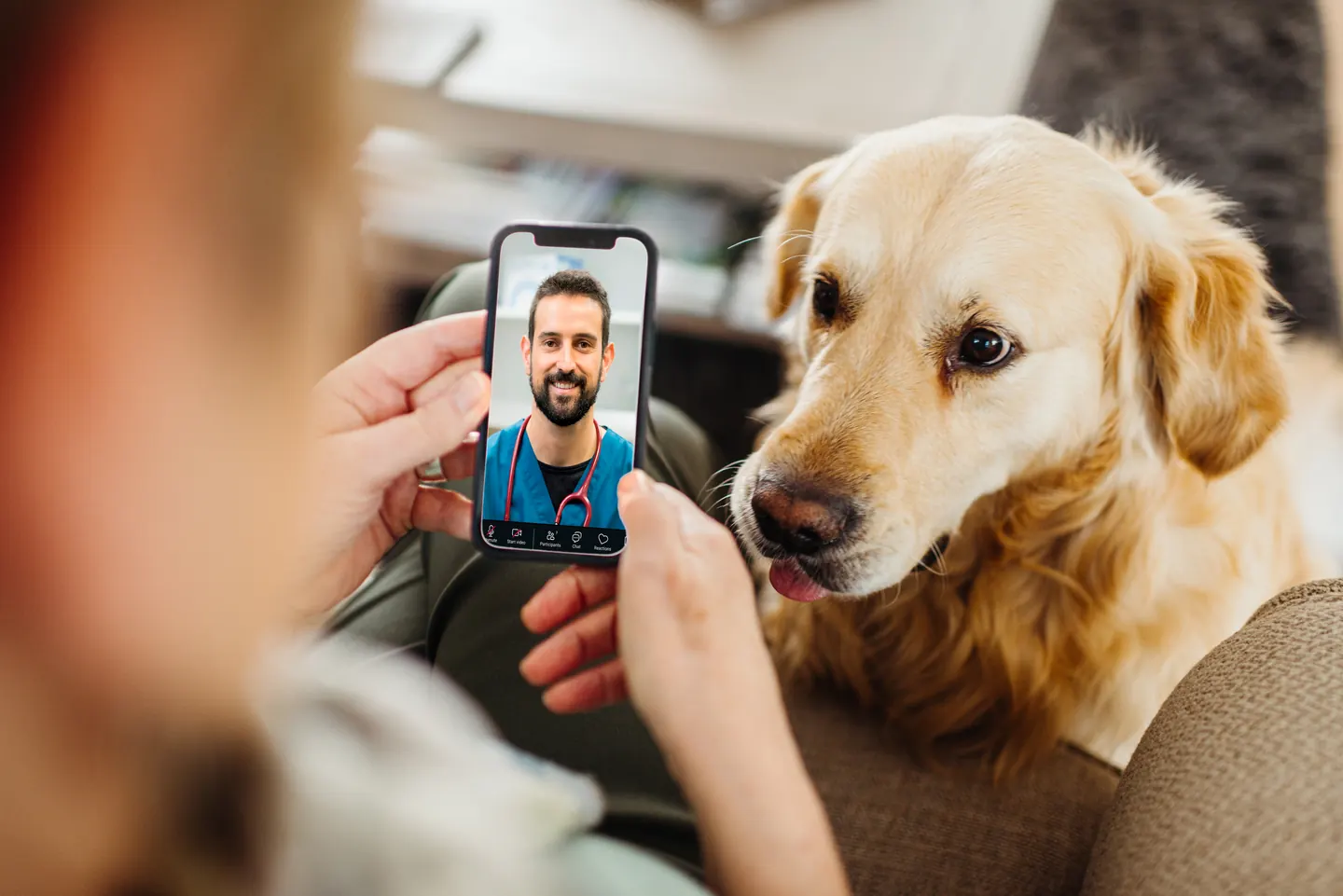
Have a health question about your dog?
Talk to a licensed vet at Dutch over video or message, including nights and weekends.
Use code Pets60
Plans start at $12/month · covers up to 5 pets
- Licensed vets in most states
- Rx for 150+ conditions
- 4.7 on Trustpilot
Can dogs have Down syndrome?
No. A dog cannot receive the exact human diagnosis of Down syndrome because the diagnosis refers to a specific change involving human chromosome 21. The National Human Genome Research Institute defines Down syndrome, also called trisomy 21, as a human chromosomal condition caused by an extra copy of that chromosome.
Dogs organize their genetic material differently. The NHGRI Dog Genome Project reports 78 canine chromosomes: 38 pairs of autosomes plus the sex chromosomes. Humans normally have 46 chromosomes. Dogs therefore have 78 canine chromosomes and a different chromosome complement from humans. That boundary rules out the human trisomy 21 diagnosis while directing a veterinarian toward canine differentials that fit the dog's signs.
That species difference has three practical consequences:
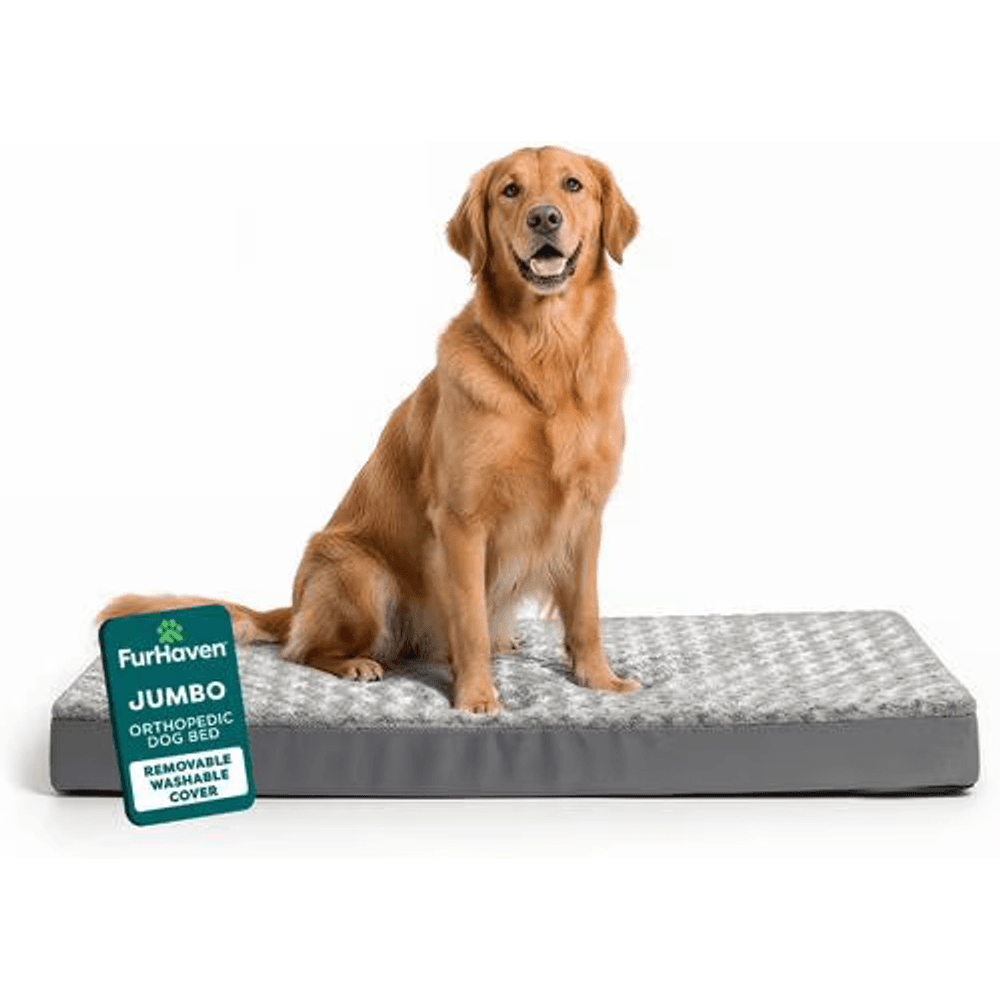
A plush orthopedic foam mattress that cushions aging joints and pressure points, giving a stiff or trembling senior dog warm, supportive rest.
Webvet may earn a commission when you click through to Chewy, at no extra cost to you.
- A canine chromosome change is not automatically equivalent to human trisomy 21.
- Facial traits, body shape, or behavior cannot identify a chromosome abnormality.
- Veterinary testing must target a defined canine condition that fits the dog's history and signs.
Searches such as "down syndrome dog," "canine Down syndrome," and "dogs with Down syndrome" usually reflect a sincere concern about a dog's development. The respectful answer is direct: the human condition does not transfer to dogs, but the observed difference may still deserve veterinary attention.
This distinction matters for both people and pets. Down syndrome is a real human diagnosis, not a casual description for an animal that seems different. At the same time, dismissing a dog's unusual growth, coordination, learning, or sensory function as a harmless quirk can delay a diagnosis that has its own treatment or support plan.
Why Down syndrome is a human diagnosis

Chromosomes are packages of DNA. A trisomy means that an individual has three copies of a chromosome or chromosome segment instead of the usual two. In human Down syndrome, the relevant material is chromosome 21. The condition can affect health and development in varied ways, and no single physical trait describes every person with Down syndrome.
Dogs can also have genetic and chromosomal abnormalities. That broad fact does not create a canine version of every human syndrome. Because species have different chromosome numbers, gene arrangements, development, and diagnostic standards, a similarity in outward traits does not establish biological equivalence.
The phrase "dog with an extra chromosome" is too broad to be a diagnosis. The exact chromosome or segment matters. So do the cells involved and the effect on health. Some genetic changes prevent early development, while others may contribute to a specific canine disorder. Many dogs with an unusual face, size, gait, or learning pattern have no chromosomal abnormality.
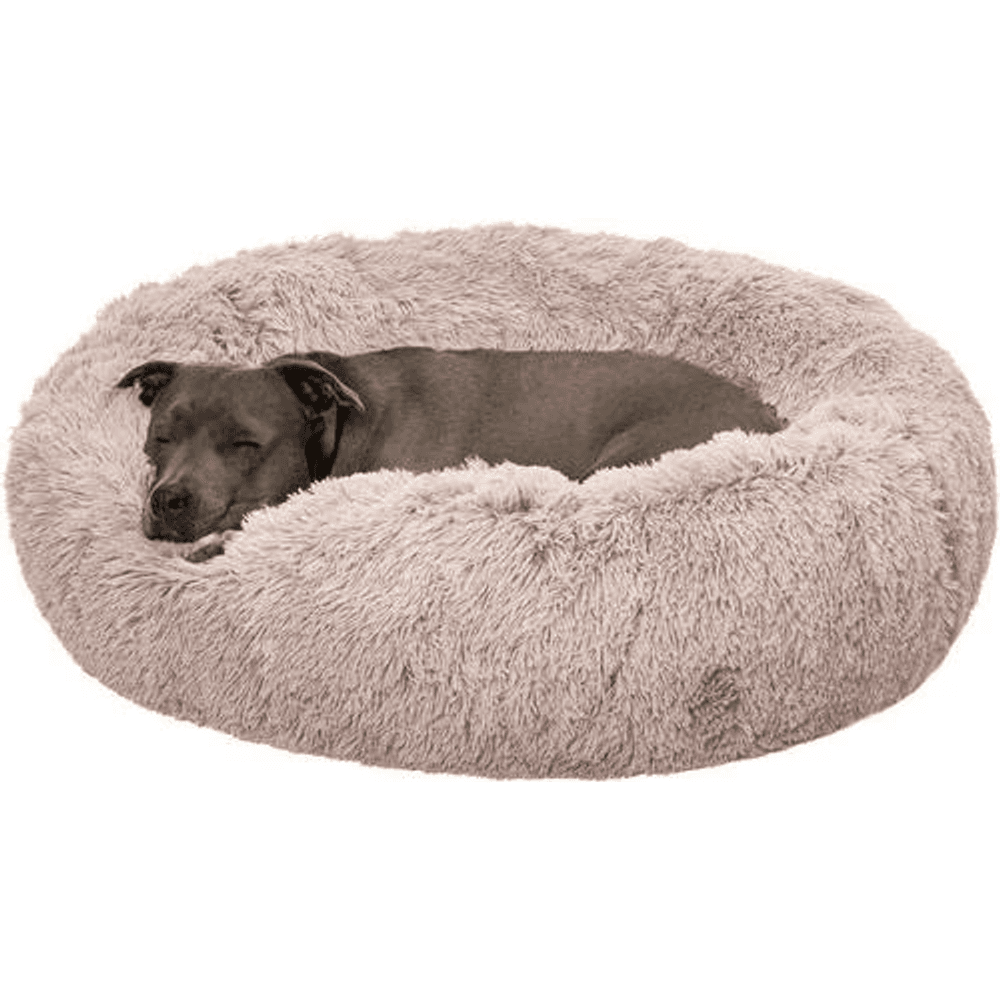
A plush, long-fur donut bolster bed with a raised rim that gives a recovering pet a secure, cushioned place to curl up during the crucial 10 to 14 days after surgery.
Webvet may earn a commission when you click through to Chewy, at no extra cost to you.
Can dogs be born with chromosomal abnormalities?
Yes, chromosomal abnormalities and other genetic changes can occur in dogs. They are not automatically Down syndrome. Veterinary genetics uses disease-specific tests and clinical findings to identify particular inherited conditions. The Orthopedic Foundation for Animals disease resources illustrate why health screening is tied to a defined disease, breed risk, and validated test rather than a general physical impression.
Why a breed's normal traits are not a diagnosis
Skull shape, eye position, leg length, coat, ear set, and body size vary widely among dog breeds. A trait that is expected for one breed may seem unusual to someone familiar with another. Breed conformation cannot prove a developmental disorder, and no breed should be described as having Down syndrome because of its normal structure.
The same rule applies to mixed-breed dogs and puppies whose proportions change as they grow. A veterinarian considers age, breed background, growth records, medical history, neurologic function, and the complete physical examination before recommending a test.
Conditions a veterinarian may investigate instead

A dog's unusual development can have many explanations. The goal is not to find a canine equivalent of Down syndrome. It is to identify the condition behind the signs. Congenital, endocrine, neurologic, sensory, orthopedic, and metabolic problems each require their own diagnostic path. Support or treatment depends on what the veterinarian actually finds.
| Owner observation | Examples a veterinarian may consider | How the next step differs |
|---|---|---|
| Slow growth or puppy-like coat | Pituitary dwarfism, congenital hypothyroidism, chronic disease, inadequate nutrition | Growth history, blood work, hormone testing, and a complete diet review may be needed |
| Enlarged or dome-shaped skull with neurologic changes | Congenital hydrocephalus or another brain disorder | Neurologic examination and diagnostic imaging may be recommended |
| Poor coordination, tremors, or unusual gait | Congenital neurologic disease, orthopedic disease, toxin exposure, or metabolic illness | The urgency depends on onset and severity; testing may include blood work and imaging |
| Reduced response to sound or visual cues | Congenital or acquired hearing or vision loss | Hearing, eye, and neurologic examinations help localize the problem |
| Difficulty learning routines | Pain, anxiety, sensory impairment, sleep disruption, environment, or a neurologic problem | A detailed history and medical assessment come before a behavior label |
Pituitary dwarfism
Pituitary dwarfism is not Down syndrome. It is a rare inherited endocrine disorder in which the pituitary gland does not produce adequate growth hormone and may fail to support other hormones normally. Affected dogs can have proportionate small stature, delayed growth, a retained puppy coat, hair loss, or skin changes.
The Merck Veterinary Manual discussion of juvenile-onset panhypopituitarism explains that diagnosis may involve hormone testing and that treatment decisions have limitations and risks. A veterinarian or veterinary internal medicine specialist should direct that workup.
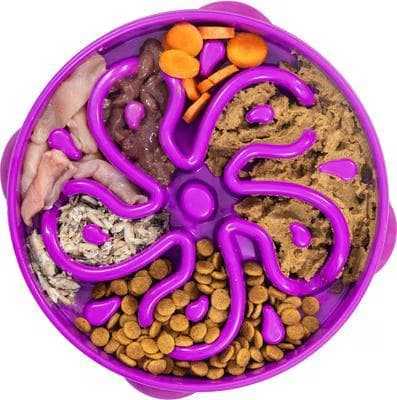
A maze-pattern slow-feeder bowl that makes fast eaters work for each bite, reducing the gulping and swallowed air that trigger regurgitation and vomiting. Holds up to 4 cups.
Webvet may earn a commission when you click through to Chewy, at no extra cost to you.
Congenital hypothyroidism
Thyroid hormone is important for growth and nervous system development. Congenital hypothyroidism can cause poor growth, lethargy, abnormal proportions, delayed tooth eruption, or neurologic changes. It requires veterinary testing. Treatment can be helpful when the condition is recognized, but an owner cannot identify it from a dog's face, size, or energy level.
Congenital hydrocephalus
Hydrocephalus is an abnormal accumulation of cerebrospinal fluid within the brain's ventricular system. Some affected puppies may have a dome-shaped skull, but skull shape alone is not diagnostic. Other possible signs include abnormal behavior, vision problems, seizures, circling, difficulty learning, or poor coordination.
The Merck Veterinary Manual review of congenital cerebral disorders describes neurologic assessment and imaging as important parts of diagnosis. Sudden seizures, collapse, severe disorientation, or rapidly worsening coordination need urgent care.
Other congenital, sensory, and metabolic conditions
Hearing loss, vision disorders, congenital heart disease, liver shunts, orthopedic abnormalities, and other metabolic or neurologic conditions can affect a puppy's development. Some are inherited; others are not. Their signs can overlap, which is why a list of "canine Down syndrome symptoms" cannot replace a medical workup.
A dog may also be healthy and simply have an unusual combination of normal traits. Evaluation is still appropriate when there is impaired function, discomfort, regression, or a meaningful change from that dog's baseline.
 Sponsored
Vet care that's always there
Unlimited video calls and messaging with licensed vets for less than a typical vet visit. One membership covers up to five pets.
Use code Pets60
Plans start at $12/month · covers up to 5 pets
- Licensed vets in most states
- Rx for 150+ conditions
- 4.7 on Trustpilot
When to call your veterinarian
Schedule a veterinary examination if a puppy is not growing as expected, has trouble walking, seems unable to see or hear normally, struggles to eat, cannot keep up with routine activity, or loses a skill it previously had. Bring growth records, previous medical records, and short notes about when each concern began.
There is no reliable checklist of canine Down syndrome symptoms. If you are asking how to know whether a dog has Down syndrome, describe the specific growth, movement, sensory, neurologic, or developmental concern instead. That description helps the veterinarian choose an examination and targeted tests without assuming the human diagnosis.
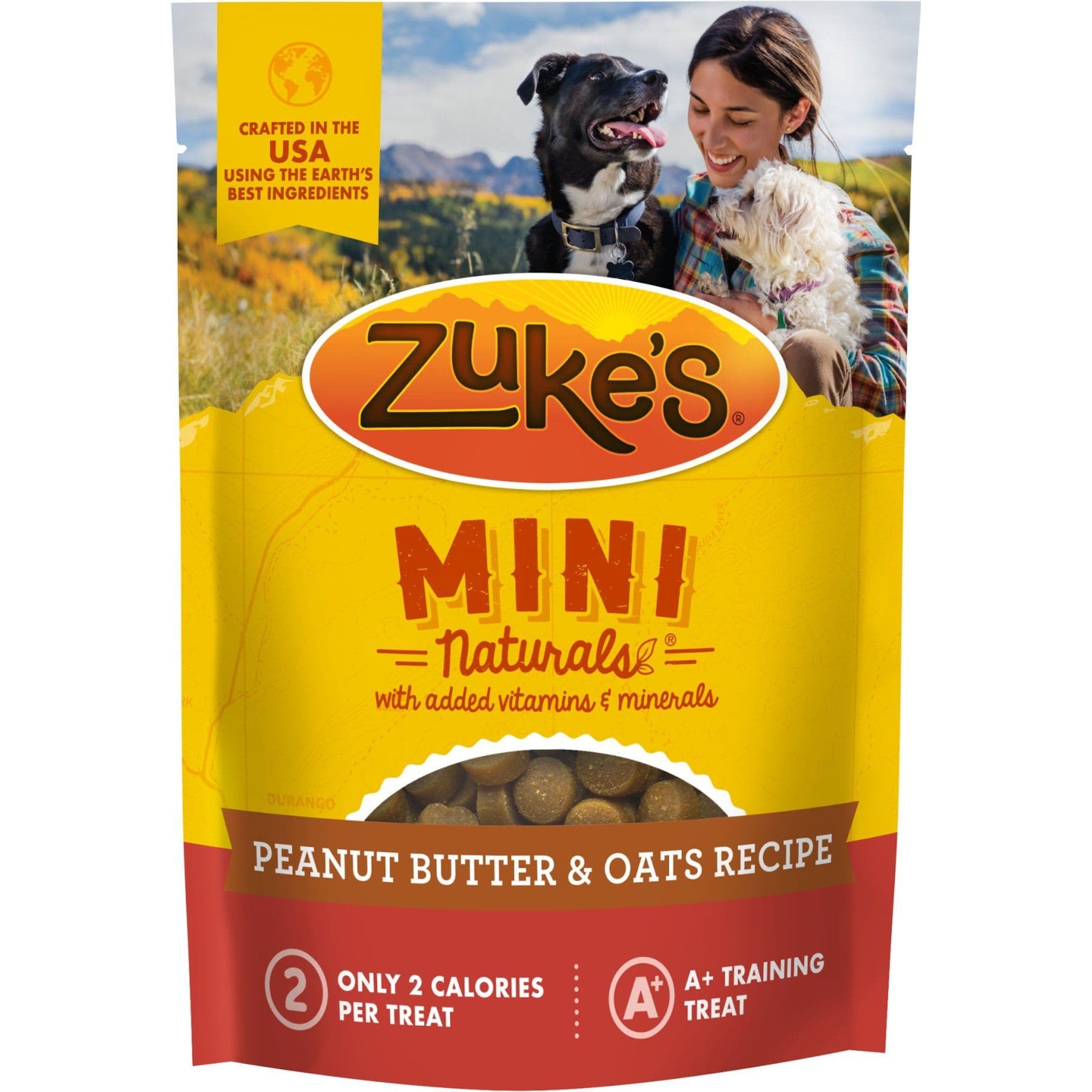
Soft, pea-sized training treats made with peanut butter and oats. Small enough to reward often while keeping treats inside the 10% of daily calories vets recommend.
Webvet may earn a commission when you click through to Chewy, at no extra cost to you.
Contact a veterinarian promptly for a new neurologic change. Seizures, collapse, severe disorientation, sudden inability to walk, repeated vomiting with weakness, breathing difficulty, or rapidly worsening signs can be emergencies.

What the veterinarian may do
The veterinarian may ask about:
- Pregnancy, birth, and littermates, if known.
- Early illness, nutrition, growth, and vaccination.
- Toxin exposure and behavior.
The physical examination may assess:
- Body proportions, heart, and lungs.
- Eyes, ears, teeth, joints, and skin.
- Neurologic function.
A workup starts with history and examination, and those findings determine whether targeted testing is justified. The veterinarian uses the dog's developmental history, growth pattern, movement, sensory function, behavior, and physical examination to choose the next step. Testing should answer a defined canine question instead of trying to prove a borrowed human diagnosis from appearance alone.
Testing depends on the findings. It may include blood and urine tests, thyroid or other hormone tests, hearing or eye evaluation, radiographs, ultrasound, or advanced imaging. Genetic testing is useful only when a validated test exists for a condition that fits the dog's history and signs.
Can these conditions be treated?

There is no product or universal treatment for supposed canine Down syndrome. Care follows the actual diagnosis. A hormone disorder may need prescription medication and monitoring. Hydrocephalus may require a specialist, medication, or surgery in selected cases. Hearing or vision loss may call for home changes and different training cues. Orthopedic problems may need pain control, rehabilitation, or surgery.
Quality-of-life support may include supervised, low-frustration enrichment chosen for the dog's identified needs, comfort, and abilities. Enrichment can support engagement and routine, but it is not treatment for a genetic, endocrine, or neurologic disorder.
Useful home adjustments may include:
- maintaining a predictable daily routine with adequate rest and gentle transitions
- providing nonslip paths and blocking access to unsafe stairs or fall hazards
- keeping food, water, bedding, and toileting areas easy to reach
- using veterinarian-approved mobility support or a harness when safe movement requires help
- matching exercise and reward-based training to the dog's stamina, senses, and coordination
- tracking appetite, sleep, mobility, seizures, and comfort so changes can be reported promptly
- using consistent verbal, visual, or touch cues that fit the dog's hearing and vision
- choosing bowls and resting surfaces that reduce strain without limiting safe independent movement
- reviewing new home adjustments with the veterinary team when function, pain, or stamina changes
Supportive home care should protect comfort with an accessible resting area, stable footing, and enough room to change position. A supportive orthopedic bed may help create that resting space when it suits the dog's mobility and the veterinarian's care plan. A bed, toy, or other product does not treat the underlying condition.
Questions to ask before testing
Ask what condition the veterinarian is trying to confirm or exclude, how reliable the proposed test is, and how the result would change care. A broad panel may return uncertain findings that do not explain the dog's signs. A targeted test chosen after examination is more likely to answer a useful clinical question.
Also ask:
- Which changes should prompt urgent or emergency care?
- Which measurements or symptoms should be tracked at home?
- When is follow-up due, and what would make it necessary sooner?
Growth can be documented with weights and body measurements. Mobility, appetite, sleep, seizures, and sensory responses can be logged by date. Short videos may help when they can be recorded safely, but they supplement rather than replace the examination.
If a diagnosis is chronic, discuss comfort, nutrition, exercise, home safety, rehabilitation, and realistic monitoring. The aim is not to make the dog conform to a typical physical pattern. It is to protect health, reduce pain or distress, and support the dog's best possible daily function.
For broader evidence-based discussion of learning and perception, see canine cognition. If the main concern is social, repetitive, or unusual behavior, read whether dogs can have autism. For persistent hyperactivity and inattention, use the dedicated guide to whether dogs can have ADHD.
Can cats have Down syndrome?
Cats also cannot receive the exact human diagnosis. Feline chromosomes and congenital conditions need their own explanation. Queries such as cat with Down syndrome or Down syndrome cat belong to the dedicated guide on whether cats can have Down syndrome. It explains the feline species boundary, look-alike conditions, and veterinary next steps. Keeping the cat question in its own evidence lane prevents canine chromosome facts from being mistaken for feline diagnostic guidance.
Can dogs have autism?
Autism and Down syndrome are different human diagnoses with different evidence. Canine behavior medicine describes behavior and assesses medical, environmental, and learning factors. WebVet's guide to whether dogs can have autism owns that separate question. It explains the research limits, veterinary differentials, and assessment path. That separate assessment protects owners from treating repetitive, social, or sensory-linked behavior as evidence of a chromosome condition.
Frequently Asked Questions

Frequently Asked Questions
Can dogs be born with special needs?
Yes. Dogs can be born with congenital conditions that affect mobility, growth, hearing, vision, organ function, or learning. "Special needs" is not a diagnosis, and it does not indicate Down syndrome. A veterinarian should identify the condition, assess comfort and function, and help the family build a realistic care plan. Many dogs with disabilities can have a good quality of life with appropriate medical care and environmental support.
Can dogs have mental disabilities?
Dogs can have neurologic, developmental, sensory, or cognitive disorders, but "mental disability" is too imprecise to guide care. Describe the specific concern, such as seizures, poor coordination, loss of a learned skill, reduced response to sound, or a major behavior change. A veterinarian can assess possible medical causes and use more accurate terminology. Never diagnose a dog from physical traits or behavior alone.
How do I know whether my dog needs testing?
Knowing whether your dog needs testing depends on function, progression, and other medical signs. A dog may need testing when a difference affects comfort or normal function, is getting worse, appeared suddenly, or occurs with other medical signs. A single unusual feature in an otherwise healthy dog may not require extensive testing. Your veterinarian can decide which findings are meaningful, select targeted tests when justified, and explain how each result would change care.
Can a genetic test prove that a dog has Down syndrome?
No genetic test can prove that a dog has Down syndrome. A canine DNA panel cannot establish the human diagnosis of trisomy 21. Some tests can identify specific inherited canine variants, but a result is useful only when the test is validated and matches the dog's clinical problem. Ask your veterinarian how a proposed genetic result would change care before purchasing a test.

Editor
The Webvet Editorial Team is the in-house group of pet-care editors and writers behind Webvet, operated by Smart Pet Collective. The team researches, writes, and maintains Webvet's pet health, behavior, and medication content. Every article follows a defined editorial process: research from reputable veterinary and scientific sources, careful drafting, mandatory review of medical content by a credentialed veterinarian, and dated publication. Health and medication articles are medically reviewed by a licensed veterinary professional before they go live and are kept current over time.
Veterinarian · BVMS MRCVS
Dr. Pippa Elliott, BVMS, MRCVS, is a veterinarian with nearly 30 years of experience in companion animal practice. Dr. Elliott earned her Bachelor of Veterinary Medicine and Surgery from the University of Glasgow. She was also designated a Member of the Royal College of Veterinary Surgeons. Married with 2 grown-up kids, Dr. Elliott has a naughty Puggle named Poggle, 3 cats and a bearded dragon.
Related reading

Mastitis in Dogs: Symptoms, Causes, Treatment, and Home Care

Cat Pregnancy Week by Week: Signs, Timeline, and What to Expect

Cat in Heat: Signs, How Long It Lasts, and How Often It Happens
