Can Dogs Have Autism? What Vets Actually See
Dogs are not diagnosed with autism like people are, but repetitive or atypical behavior can warrant veterinary assessment. Learn what the evidence shows and how to help safely.

BVMS MRCVS

This article contains affiliate links. Webvet may earn a commission when you buy through them, at no extra cost to you.
Can dogs have autism? Dogs are not diagnosed with autism spectrum disorder in the same way people are. Some show repeated behavior, unusual social responses, or strong reactions to sensory input. Those observations do not prove autism. A veterinarian first describes the behavior and its effect on daily life. The assessment also checks pain, neurologic disease, sensory loss, anxiety, compulsive behavior, and environmental causes.
There is no accepted owner checklist that can diagnose autism in a dog. Focus on the exact behavior, when it happens, whether it limits normal function, and whether it is new or worsening. That information helps a veterinarian identify a canine medical or behavior problem that can actually be addressed.
 Sponsored
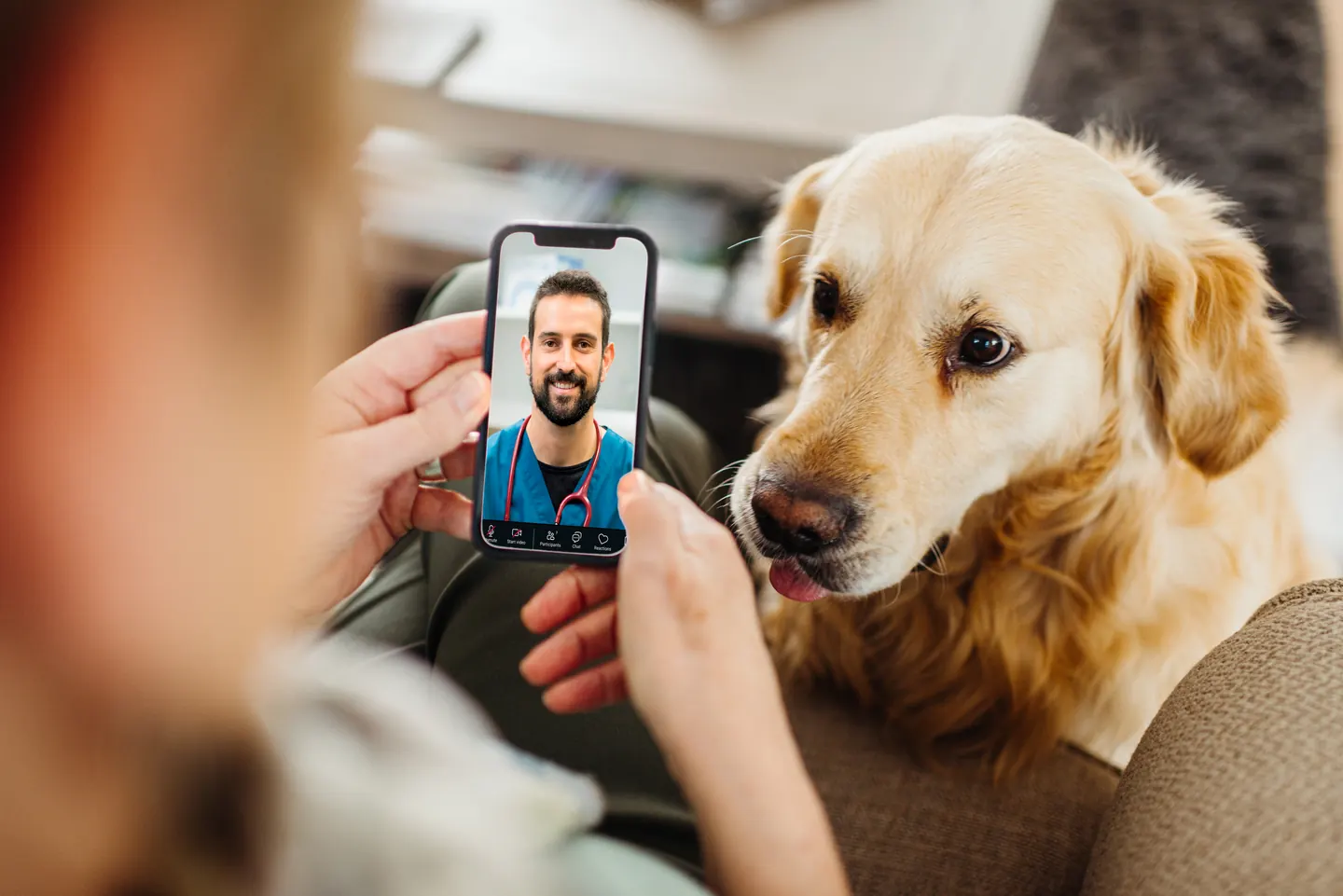
Want a vet's help with your dog's anxiety or behavior?
Talk to a licensed vet at Dutch over video, often the same day. They can recommend treatment and prescribe it when it's appropriate.
Use code Pets60
Plans start at $12/month · covers up to 5 pets
- Licensed vets in most states
- Rx for 150+ conditions
- 4.7 on Trustpilot
Can dogs have autism?

Not as a standard clinical diagnosis equivalent to human autism spectrum disorder. The Centers for Disease Control and Prevention describes autism as a human developmental disability. People with autism vary widely in abilities, communication, behavior, and support needs. A search for an autistic dog must not turn that human diagnosis into shorthand for a dog that is shy, repetitive, independent, or unusual.
Veterinary behavior medicine starts with observations, not a borrowed label. Autism is not a standard clinical diagnosis equivalent to human autism spectrum disorder in dogs. Veterinarians describe what the dog does, measure distress or functional impairment, and assess medical, neurologic, sensory, environmental, anxiety, and compulsive explanations before deciding which support or treatment fits the individual dog.
- Avoid interaction or struggle with routine changes.
- Chase the tail or repeat another behavior.
- Freeze in a busy place or react to touch.
Each behavior has several possible explanations, including:
- Temperament, socialization, fear, or learning history.
- Pain or sensory loss.
- Neurologic disease or compulsive behavior.
Researchers sometimes use phrases such as "autism-like traits" or "canine dysfunctional behavior" for a narrow pattern. Popular accounts may call them dogs with autism, but that is not a universally accepted canine diagnosis. A research model can explore biology shared across species without proving that a pet dog has the human condition.

A plush orthopedic foam mattress that cushions aging joints and pressure points, giving a stiff or trembling senior dog warm, supportive rest.
Webvet may earn a commission when you click through to Chewy, at no extra cost to you.
What canine dysfunctional behavior means
Canine dysfunctional behavior, sometimes shortened to CDB, is a term that has appeared in research and popular discussions of dogs with persistent behavior differences. It is not a simple synonym for autism, and it is not a diagnosis an owner can make through an online quiz. Definitions, study populations, and proposed markers are still limited.
Some studies have focused on repetitive tail chasing in Bull Terriers. A 2011 case-control survey indexed by PubMed compared dogs with and without tail chasing and reported associations within that selected population. It did not establish that all tail chasing is autism, that Bull Terriers as a breed are autistic, or that its findings diagnose an individual dog.
A later exploratory biomarker study indexed by PubMed examined neurotensin and corticotropin-releasing hormone in a narrow canine phenotype. Biomarker association is not the same as a validated clinical test. It should not be used to sell a blood test, diagnose a pet, or claim that a behavior has one proven cause.
What autism-like behavior can mean in dogs

The phrase "autism-like" should signal uncertainty, not a conclusion. Common searches for dog autism signs still describe observations, not a diagnosis. Veterinary care must translate each concern into a specific behavior, context, and list of possible causes.
| What an owner observes | Questions a veterinarian may ask | Possible categories to evaluate |
|---|---|---|
| Repetitive pacing, spinning, licking, or tail chasing | How long does it last, can the dog stop, and is there skin damage or loss of normal activity? | Pain, skin disease, neurologic disease, compulsive behavior, frustration, or learned behavior |
| Avoiding people or dogs | Is this lifelong, context-specific, or a sudden change? Does the dog show fear or pain? | Temperament, inadequate socialization, fear, sensory loss, pain, or previous negative experience |
| Strong reaction to sound, touch, or movement | Which stimulus triggers it, how intense is the response, and how long does recovery take? | Fear, sensory impairment, pain, neurologic disease, or normal individual sensitivity |
| Difficulty adapting to routine changes | Is the response mild preference or severe distress that impairs eating, sleeping, or elimination? | Anxiety, cognitive change, environmental mismatch, or learned predictability |
| Seeming disconnected or slow to respond | Can the dog hear and see? Is there a change in alertness, gait, appetite, or sleep? | Hearing or vision loss, medication effect, metabolic illness, neurologic disease, or fatigue |
Repetitive behavior is not automatically autism
Repetition can be normal. A dog may circle before lying down, carry a favorite object, repeat a trained behavior that has been rewarded, or briefly chase its tail during play. Concern rises when the behavior is frequent, difficult to interrupt, causes injury, replaces eating or sleep, or prevents the dog from engaging with normal life.
The Merck Veterinary Manual overview of dog behavior problems treats compulsive disorders as diagnoses of exclusion. That means medical and other behavior causes must be considered first. For example, repeated licking might reflect allergies or pain. Sudden staring or snapping at the air can have neurologic or gastrointestinal differentials. Circling can occur with ear disease, vestibular dysfunction, brain disease, or anxiety.
Social preference is not a diagnosis
Dogs vary in sociability. Some enjoy greeting unfamiliar people and dogs; others prefer familiar individuals or more space. Breed tendencies, early experience, age, health, and reinforcement history all matter. A dog who does not seek petting is not necessarily impaired. Normal individual variation becomes a clinical concern when behavior causes distress, injury, or functional impairment.
Look for function and change. A lifelong preference for quiet contact may be normal for that dog. Sudden withdrawal, flinching when touched, hiding, irritability, or refusal to move can signal pain or illness. A dog who cannot eat, rest, eliminate, walk, or safely interact because of fear or arousal needs help regardless of the label.
A bolstered bed and an interactive slow feeder are practical tools for predictable rest and low-frustration enrichment.
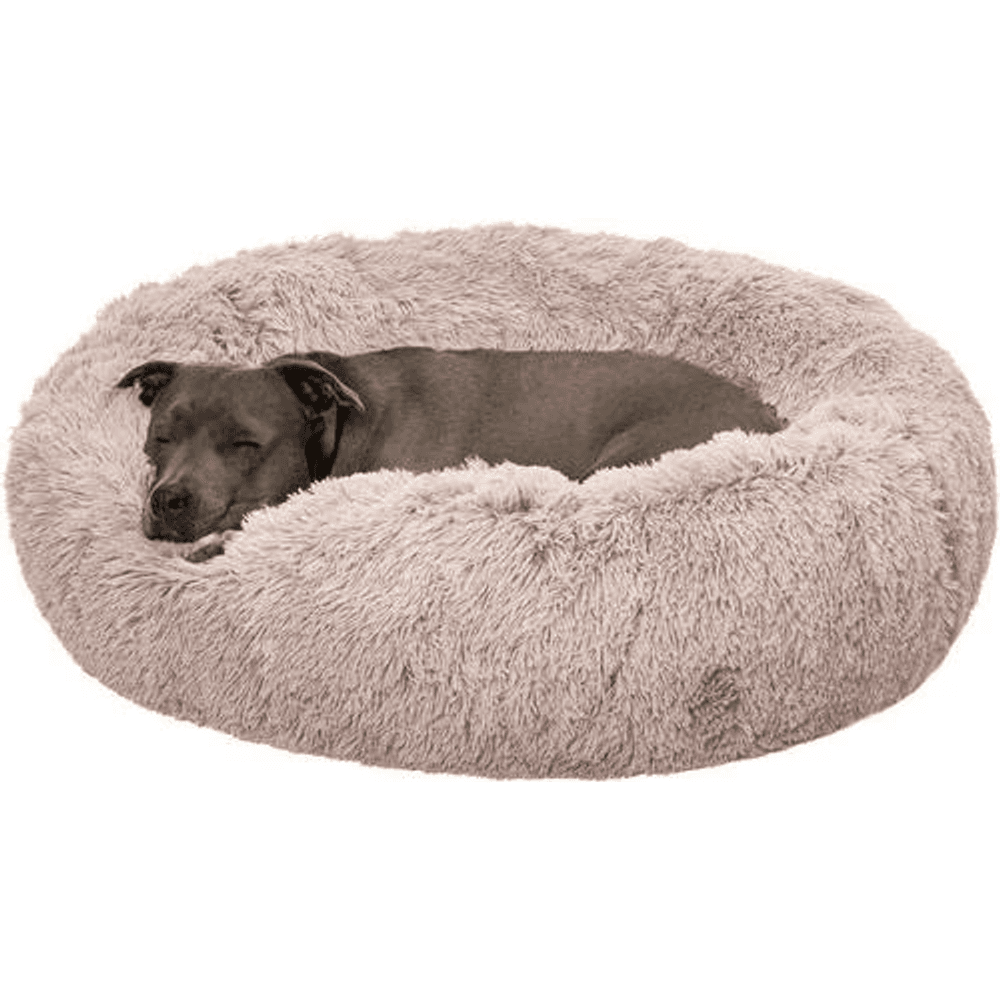
A plush, long-fur donut bolster bed with a raised rim that gives a recovering pet a secure, cushioned place to curl up during the crucial 10 to 14 days after surgery.
Webvet may earn a commission when you click through to Chewy, at no extra cost to you.
Sensory responses need context
A dog can show strong sensory responses without having a developmental disorder. Examples include:
- Startling at fireworks or disliking crowded spaces.
- Resisting nail trimming.
- Avoiding slippery floors.
The veterinary question is whether the response is proportionate, predictable, recoverable, and manageable. Medical context also matters:
- Hearing loss can make a dog seem unresponsive.
- Vision loss can increase startle.
- Ear, dental, skin, joint, or spinal pain can make touch difficult.
Record the trigger, distance, duration, recovery time, and any physical sign. Video can help a veterinarian when it is safe to record, but a clip alone cannot establish a diagnosis.
 Sponsored
Vet care that's always there
Unlimited video calls and messaging with licensed vets for less than a typical vet visit. One membership covers up to five pets.
Use code Pets60
Plans start at $12/month · covers up to 5 pets
- Licensed vets in most states
- Rx for 150+ conditions
- 4.7 on Trustpilot
How veterinarians evaluate atypical behavior

The Merck Veterinary Manual guide to diagnosing behavior problems emphasizes a thorough behavior and medical history, a physical and neurologic examination, and testing when needed to exclude medical causes. This is especially important when a behavior begins suddenly, worsens, or appears with changes in appetite, sleep, movement, awareness, or elimination.
Owners asking what the signs of autism in dogs are need a more useful answer than a symptom checklist. No pattern of social preference, repetition, or sensory response can diagnose autism in a dog. Veterinary assessment starts by describing the behavior, measuring functional impairment, and checking medical, neurologic, sensory, environmental, anxiety, and compulsive explanations.
Step 1: Describe the behavior precisely
Useful notes answer concrete questions:
- What does the dog do from start to finish?
- What happens immediately before and after it?
- Where, when, and how often does it occur?
- How long does an episode last?
- Can food, play, distance, or a familiar cue interrupt it?
- Does it interfere with eating, sleep, elimination, exercise, learning, or safe handling?
- Is there skin damage, weight loss, injury, collapse, or loss of awareness?
Avoid interpretations such as stubborn, manipulative, broken, or autistic in the behavior log. They can hide the sequence the veterinary team needs to see.
Step 2: Review development and environment
The veterinarian may ask about the dog's early rearing, socialization, previous homes, training methods, daily schedule, sleep, exercise, enrichment, household changes, and exposure to frightening events. A puppy who lacks appropriate outlets can be restless. A dog living with unpredictable punishment may freeze or avoid interaction. Neither response proves autism.
Developmental history also matters. A lifelong pattern is different from a sudden change in a mature or senior dog. A behavior that occurs only in one room or around one sound suggests a different investigation than a pattern present in many settings.
Step 3: Check medical and neurologic causes
The physical examination may assess pain, skin, ears, eyes, mouth, joints, heart, lungs, abdomen, and neurologic function. Depending on the history, a veterinarian may recommend blood and urine testing, thyroid assessment, hearing or vision evaluation, imaging, or referral.
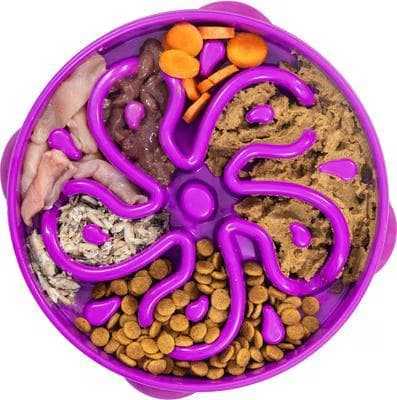
A maze-pattern slow-feeder bowl that makes fast eaters work for each bite, reducing the gulping and swallowed air that trigger regurgitation and vomiting. Holds up to 4 cups.
Webvet may earn a commission when you click through to Chewy, at no extra cost to you.
This step is not a formality. Pain can change social behavior. Skin disease can drive licking. Sensory loss can alter response to cues. Seizures or other neurologic events can be mistaken for odd behavior. Medication effects and metabolic illness can change alertness or activity.
Step 4: Assess functional impairment
Veterinary behavior assessment considers the dog's welfare and ability to function. A behavior is more clinically important when it is persistent, intense, hard to interrupt, unsafe, or prevents normal eating, sleep, movement, elimination, social contact, or learning.
The goal is not to force every dog to be highly social or tolerant of every environment. It is to reduce distress, prevent injury, meet the dog's needs, and support safe daily life.
Step 5: Build the right care team
The primary veterinarian is the starting point. A board-certified veterinary behaviorist may be appropriate for severe, complex, self-injurious, or treatment-resistant cases. A qualified reward-based trainer can help implement skills and environmental changes, but training should not replace medical evaluation when pain, neurologic disease, sensory loss, or severe anxiety is possible.
The American Veterinary Society of Animal Behavior position statements support humane, reward-based methods. Punishment may suppress a warning sign without treating its cause and can increase fear or conflict.
What current canine autism research can and cannot tell us
Research can compare traits across species and test ideas about genes, brain signaling, or development. Canine dysfunctional behavior research can be useful without producing a clinical diagnosis for pets. A dog may model one narrow feature of a human condition without sharing the full condition.
The Bull Terrier studies began with one selected behavior, tail chasing, in a selected population. Researchers then examined patterns and possible biological links. That design cannot show that any dog who spins, avoids eye contact, dislikes touch, or prefers routine has autism. It cannot establish that a whole breed has autism either.
A research association is not a diagnostic test
An association means two findings occurred together more often than expected in the studied sample. It does not by itself prove cause. A proposed biomarker is even further from routine practice unless independent studies show that it reliably distinguishes affected from unaffected dogs, predicts a meaningful clinical outcome, and changes treatment decisions.
Before a veterinary test is clinically useful, researchers need a clear case definition, an appropriate comparison group, repeatable methods, and evidence that the result adds information beyond history and examination. Current canine autism discussions do not provide an accepted blood test, genetic panel, brain scan, or behavior quiz that meets that standard for ordinary veterinary practice.

Soft, pea-sized training treats made with peanut butter and oats. Small enough to reward often while keeping treats inside the 10% of daily calories vets recommend.
Webvet may earn a commission when you click through to Chewy, at no extra cost to you.
Human diagnostic criteria do not transfer by substitution
Human autism assessment considers development and communication in a human social and cultural context. Replacing human behaviors with dog behaviors in the same checklist is not valid. Dogs communicate, learn, and form social relationships as dogs. They also rely heavily on scent, respond differently to eye contact, and vary by breed, early experience, and training history.
A dog who does not hold eye contact may be communicating politely, avoiding conflict, or responding to prior training. A dog who repeats a movement may be playing, coping with frustration, experiencing pain, or showing compulsive behavior. The same outward action can have different functions, so context is essential.
What would make future evidence stronger
Stronger evidence would include larger and more diverse dog populations, prospective studies, consistent definitions, blinded assessment, replication by independent teams, and clear separation of medical, sensory, environmental, and learning explanations. Researchers would also need to show that any proposed category improves welfare or guides treatment better than existing veterinary diagnoses.
Until then, careful language protects both scientific accuracy and the individual dog. It is reasonable to say that researchers study autism-related biological questions in dogs. It is not reasonable to claim that a pet has autism based on a short list of traits.
How to prepare for a veterinary behavior appointment
Good records can shorten the path from a vague concern to a useful plan. For one or two weeks, record:
- The time and location of each episode.
- People or animals present and the behavior sequence.
- Duration and recovery time.
- Changes in appetite, sleep, elimination, or movement.
Record normal days too, so the veterinarian can compare patterns rather than seeing only the most alarming episode.
If recording is safe, take short videos from a distance without provoking the behavior. Do not corner the dog, repeat a frightening sound, touch a painful area, or stage an interaction for the camera. Bring a list of food, supplements, preventives, and medications with exact doses. Include recent household changes and previous training methods.
Write down the decisions you need help making. Examples include whether the dog is in pain, whether testing is appropriate, which situations should be avoided for now, how to protect other pets or children, and whether a veterinary behaviorist referral is warranted. This keeps the appointment focused on function and welfare rather than proving or disproving a borrowed label.
How to support a dog with atypical behavior

Support does not require a human diagnostic label. There is no generic autism-in-dogs treatment or universal canine dysfunctional behavior treatment. Humane support uses predictable routines, reward-based teaching, and management tailored to the identified medical, behavioral, sensory, or environmental cause. The plan should be proportionate to the problem and updated as the veterinary team learns more.
Make the routine predictable, not rigid
Consistent meal, rest, exercise, and elimination opportunities can lower uncertainty. Predictability does not mean forcing the same exposure every day. Build gradual flexibility once the dog feels safe. If a schedule change causes severe distress, discuss it with the veterinarian rather than assuming a personality quirk.
Reduce avoidable overload
Give the dog a quiet, supportive resting area where people do not reach, corner, or disturb it. Use distance from intense sound, crowded greetings, or chaotic play. Prevent rehearsals of self-injurious repetition while preserving appropriate activity and choice. Management protects welfare; it does not prove or treat autism.
Teach with rewards
Reward calm orientation, moving to a mat, checking in, choosing distance, and other useful behaviors. Small training treats can support this reward-based work when they fit the dog's diet. Keep sessions short enough for success. If the dog stops responding, it may be tired, frightened, in pain, or over threshold.
Match enrichment to the dog
Sniffing, food-search games, safe chewing, problem solving, and species-appropriate movement can support many dogs. Enrichment should not become a test the dog repeatedly fails. Choose activities the dog can complete without frustration or injury, and account for medical limitations.
Do not treat a label with products
Calming treats, supplements, collars, pressure garments, and toys do not treat autism. A veterinarian may recommend a specific product as one part of a plan for an identified problem, but marketing language must not substitute for diagnosis. Do not give human medication or another pet's prescription.
Define success by welfare and function
Success does not require changing the dog's personality or making every behavior disappear. A useful plan may help the dog sleep, eat, move, learn, recover from triggers, accept necessary care, and participate safely in family life. Improvements can be gradual, so decide in advance what you will measure.
Track measurable changes such as:
- Episode frequency, duration, and recovery time.
- Injuries, appetite, sleep, and elimination.
- Situations the dog can handle comfortably.
- Medication or environmental changes with dates.
If one measure improves while another worsens, share that with the veterinary team instead of assuming the plan is working or failing overall.
Quality of life applies to the household too. Severe behavior can affect other pets, children, and caregivers. Honest discussion of safety, resources, and feasible management helps the veterinarian build a sustainable plan. It is more respectful than promising a cure for a diagnosis the dog has never received.
For context on normal communication cues, review dog body language. If distress centers on being left alone, discuss possible separation anxiety in dogs with your veterinarian. For the larger science of learning and perception, see canine cognition.
Can dogs have ADHD or autism?
Dogs may show traits that people informally compare with both conditions, but the human diagnoses should not be applied from behavior alone. Questions such as whether dogs can have ADHD or autism belong in separate evidence lanes. Persistent hyperactivity, impulsivity, or inattention needs an impairment-based veterinary assessment. Repetitive, social, or sensory-linked behavior needs its own history, functional assessment, and medical rule-outs.
WebVet's guide to whether dogs can have ADHD owns the hyperactivity and attention question. The answer in either case is not an online label. It is a precise description of behavior, assessment of function, and condition-specific veterinary plan.
Can dogs have Down syndrome?
Down syndrome and autism are different human diagnoses. A dog cannot receive the exact human diagnosis of trisomy 21, and a physical difference should never be used to infer autism. Questions about dogs with Down syndrome symptoms need a chromosome and congenital-condition explanation, not an autism behavior checklist. That evidence boundary is covered in whether dogs can have Down syndrome, which also explains when physical or developmental concerns need veterinary evaluation.
Frequently Asked Questions


Frequently Asked Questions
Can you tell if a dog has autism?
No owner can tell whether a dog has autism from quirks, physical traits, a video, or an online checklist. Describe the exact behavior, identify when it occurs, and note whether it causes distress or limits normal function. A veterinarian can examine the dog, complete a veterinary behavior assessment, rule out medical and sensory causes, and determine whether a recognized canine diagnosis fits. Sudden change, self-injury, seizures, collapse, or loss of function needs prompt care.
Can dogs be neurodivergent?
Neurodivergent is a human social and identity term, not a standard veterinary diagnosis. People may use it informally to acknowledge that dogs vary in learning, sensitivity, and behavior. In clinical care, precise descriptions are safer and more useful. A veterinarian may diagnose a neurologic, sensory, developmental, anxiety, or compulsive disorder when evidence supports it, but the broad label does not identify a cause or treatment.
Does tail chasing mean a dog has autism?
No. Tail chasing does not mean a dog has autism. Brief tail chasing can occur in play. Persistent tail chasing can be associated with pain, skin disease, neurologic problems, frustration, compulsive behavior, or a learned pattern. Narrow research in Bull Terriers found an association in a selected population; it does not make tail chasing a diagnostic sign of autism. Repetitive or injurious behavior warrants veterinary evaluation.
Can a dog be tested for autism?
A dog cannot be tested for autism with a validated routine canine test equivalent to human assessment, so no test can diagnose a pet from a list of traits. Proposed behavior scales or biomarkers remain research tools unless validated for clinical use. A veterinary workup can still be valuable because medical rule-outs may identify pain, sensory loss, neurologic disease, anxiety, or a compulsive disorder with a specific management plan.
Can training cure autism-like behavior in a dog?
Training does not cure autism-like behavior or a borrowed label. Reward-based teaching can support coping and improve daily skills, while management can reduce triggers. If behavior is driven by pain, neurologic disease, sensory loss, or severe anxiety, training alone does not replace medical evaluation. Start with veterinary assessment and coordinate any behavior plan with the dog's medical needs.

Editor
The Webvet Editorial Team is the in-house group of pet-care editors and writers behind Webvet, operated by Smart Pet Collective. The team researches, writes, and maintains Webvet's pet health, behavior, and medication content. Every article follows a defined editorial process: research from reputable veterinary and scientific sources, careful drafting, mandatory review of medical content by a credentialed veterinarian, and dated publication. Health and medication articles are medically reviewed by a licensed veterinary professional before they go live and are kept current over time.
Veterinarian · BVMS MRCVS
Dr. Pippa Elliott, BVMS, MRCVS, is a veterinarian with nearly 30 years of experience in companion animal practice. Dr. Elliott earned her Bachelor of Veterinary Medicine and Surgery from the University of Glasgow. She was also designated a Member of the Royal College of Veterinary Surgeons. Married with 2 grown-up kids, Dr. Elliott has a naughty Puggle named Poggle, 3 cats and a bearded dragon.


